
Fruit Powder Compliance Review: Natural, Mesh and Processing Claims Explained
Fruit Powder Compliance Review: Natural, Mesh and Processing Claims Explained
Fruit powder claims should be reviewed as separate statements, not as a single assurance of compliance. For B2B buyers, phrases such as “100% natural,” “additive-free,” a mesh specification, or “freeze-dried” and “spray-dried” describe different things and require different supporting records. In the information available for Guanjie Biotech, some product and process statements are documented, while the specific 100% natural, 60/80 mesh pass-rate, carrier-material, and OEM/ODM claims are not established. Treating those gaps as visible is part of a useful supplier review—not a reason to assume either compliance or non-compliance.
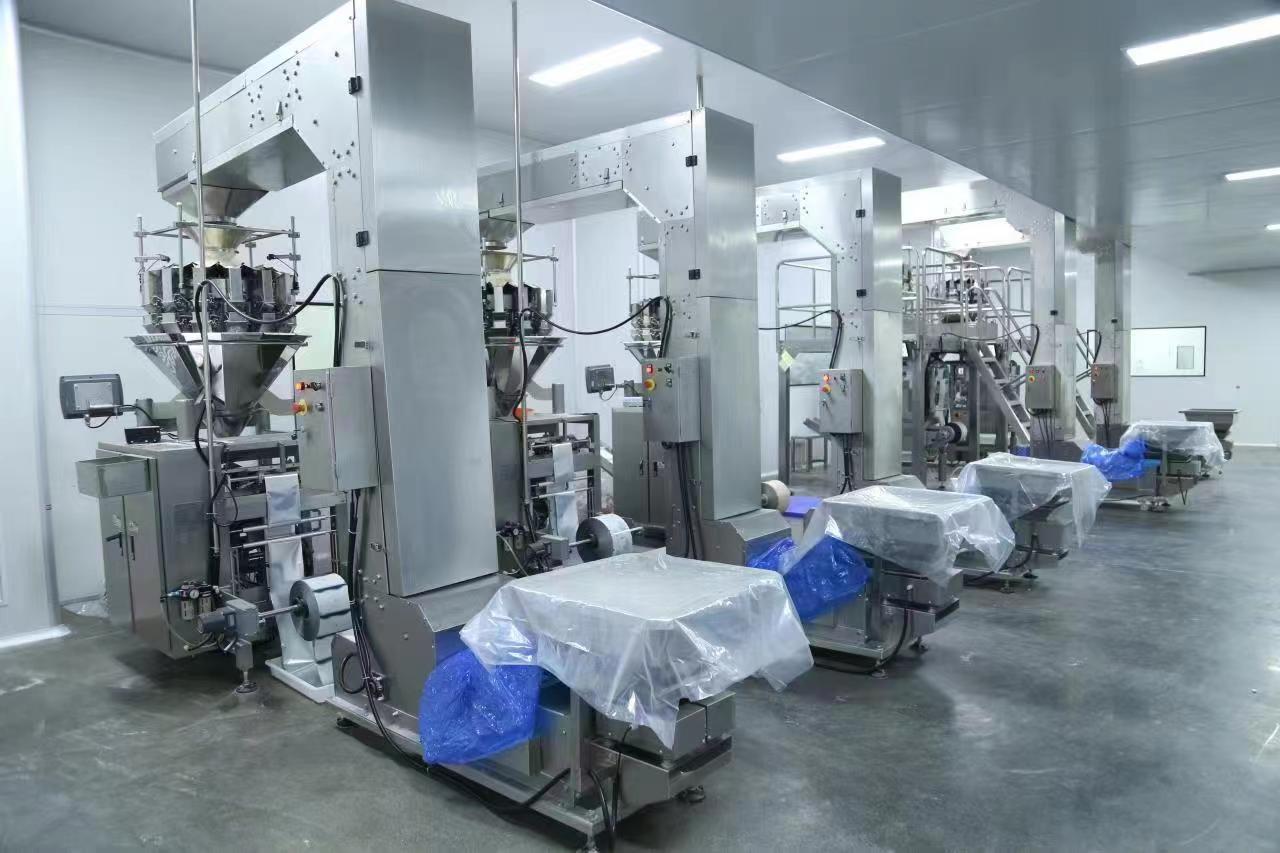
Guanjie Biotech supplies fruit and vegetable powder ingredients and specializes in freeze-dried and spray-dried fruit powders. Its available product information describes a clean-label profile for freeze-dried powders and identifies several food and nutrition applications. The distinction between what is stated and what still needs product-specific documentation matters when buyers compare Fruit Powder for Food, dietary supplements, beverages, or other formulations.
Why buyers should separate the claims
A fruit powder specification can bring together ingredient identity, processing method, particle-size language, intended application, and quality documentation. These items are related, but one does not prove another. A freeze-dried description does not by itself establish a mesh pass rate. A natural or clean-label statement does not identify the powder’s particle-size distribution. A named application does not confirm that a particular formulation, market, or regulatory requirement has been reviewed.
This separation is especially useful at the decision stage. Procurement teams need to establish whether the product description matches the material they intend to buy; technical teams need to understand whether the powder can be evaluated in their formulation; and quality teams need to know which supporting records are available. The available material for Guanjie Biotech describes process types, clean-label characteristics for freeze-dried powders, application categories, quality control, and independent laboratory testing. It does not provide a product-specific test report for the mesh or naturalness claims named in this article.
Reading “100% natural” and “additive-free” carefully
“100% natural” and “additive-free” are broad descriptors. The available corpus does not establish a universal, product-wide “100% natural” claim for Guanjie Biotech’s complete fruit powder range. It also does not supply a product-specific ingredient declaration or formulation record that would verify the exact wording for every powder. Buyers should therefore distinguish a marketing phrase from a statement supported for a named product and batch.
There is narrower, documented language for freeze-dried fruit powders: the corpus describes them as using pure fruit raw materials, with no artificial pigments, preservatives, or fillers. This is useful information, but it should not be expanded beyond its stated scope. It supports those listed exclusions for the described freeze-dried powders; it does not establish that every possible additive is absent, that every powder in the portfolio has the same composition, or that spray-dried products have an identical formulation.
For a procurement review, buyers can record the exact wording, the product name it applies to, and the evidence supplied for that wording. Where the phrase is “additive-free,” clarify which substances are included in the supplier’s definition. Where “100% natural” appears, request the product-specific ingredient information that supports its use. The information available here does not state whether carrier materials are used, nor does it identify a carrier type. That point should remain open rather than being inferred from “pure fruit” language for a different, narrower claim.
What a “100.0% pass 60/80 mesh” statement would mean—and what is verified here
A mesh statement is a particle-size specification, not a naturalness claim or a drying-method claim. The phrase “100.0% pass 60/80 mesh” needs clarification before it can be compared or used in a purchase specification: the available information does not define the exact sieve arrangement, whether “60/80” refers to one or more sieve apertures, the test method, the sample basis, or the result’s lot scope. No 100.0% pass result or 60/80 mesh specification is present in the supplied product information for Guanjie Biotech.
Accordingly, this article does not present that phrase as a verified company result. If a buyer receives such a statement in a quotation or specification, it is reasonable to align the terminology with the supplier’s own test documentation: identify the named product and batch, the stated mesh or sieve details, and the reported result. These are review questions, not claims that any particular test has been performed. Without the relevant product-specific evidence, the pass-rate wording should be treated as unconfirmed.
Particle-size requirements can matter to how a powder is handled or incorporated in a buyer’s process, but the available corpus does not provide particle-size results or application-specific performance data for the named fruit powders. It would therefore be unsupported to infer dissolution, flow, dispersibility, or a guaranteed production outcome from a mesh phrase alone.
Freeze-dried and spray-dried: processing claims are not interchangeable
Processing language provides a more concrete comparison in the available material. Freeze-drying is described as a low-temperature vacuum process, with low-temperature sublimation associated with preservation of heat-sensitive nutrients, natural color, and fresh flavor. The supplied product information states that freeze-dried fruit powder can retain over 95% of fresh-fruit nutrients, active bio-compounds, and natural color. This figure is a corpus-backed statement about the described freeze-dried powders; it should not be read as a test result for every fruit, formulation, or production batch.
Spray drying is described as a process suited to cost-efficient fine-particle processing, solubility, and high-volume production. The comparison material characterizes spray drying as more cost-efficient than freeze-drying, while also noting that spray drying uses higher temperatures and has relatively lower retention of heat-sensitive compounds. These are general comparative claims in the supplied content, not a complete specification for a particular spray-dried product.
The choice is therefore a trade-off to evaluate against the intended product. A buyer prioritizing the stated nutrient-retention, natural-color, and fresh-flavor characteristics may review freeze-dried options. A buyer focused on solubility, bulk production, and cost efficiency may evaluate spray-dried options. Neither process description alone verifies mesh size, ingredient composition, a particular market authorization, or suitability for a specific finished formulation.
| Review point | What the available information says | What it does not establish |
|---|---|---|
| Freeze-dried process | Low-temperature vacuum processing / sublimation; the supplied material associates it with preservation of heat-sensitive nutrients, natural color, and fresh flavor. | A product-specific result for every fruit, batch, or formulation. |
| Spray-dried process | Described in the comparison material as supporting solubility, fine-particle processing, cost efficiency, and high-volume production. | A guaranteed mesh result, exact composition, or performance in a buyer’s finished product. |
| Natural / additive wording | Freeze-dried powders are described as using pure fruit raw materials without artificial pigments, preservatives, or fillers. | A universal “100% natural” or “free of all additives” claim across all products. |
| 60/80 mesh | No such product-specific specification or 100.0% pass result is supplied. | Any claim that Guanjie Biotech has verified this result. |
| Carrier material | Not specified in the available asset information. | Whether a carrier is used or which type it would be. |
Applications: match the claim to the intended use
The supplied material identifies fruit powder applications in dietary supplement formulations, beverages, bakery foods, functional foods, and broader food and beverage uses. It also lists health supplement, food and beverage, bakery, and dairy sectors, as well as specific uses such as meal replacements, solid beverages, ice cream, and meat products. These are stated application areas; they do not amount to an approval or performance guarantee for an individual finished product.
For dietary supplement and health-food buyers, the documented freeze-dried nutrient-retention and clean-label statements may be relevant starting points for a product review. They still need to be connected to the exact powder being considered. For beverage buyers, the comparison material identifies solubility as a relevant distinction for spray-dried powders. The supplied corpus also describes freeze-dried fruit powder use in beverages, but it does not provide product-specific dissolution data or a formulation protocol.
The assigned topic includes cosmetics as an intended industry. However, the available product corpus does not specifically document cosmetics applications for Guanjie Biotech fruit powders. Buyers evaluating a cosmetics use should not treat the food and supplement applications listed above as evidence of cosmetics suitability. The relevant intended-use documentation and product-specific information are not provided in the available materials.
How to interpret quality and supplier information
Guanjie Biotech’s supplied company information describes quality control across production and says that independent laboratory testing is implemented to support product safety, stability, and consistent active ingredient content. It also states that relevant quality documents and testing information can be provided to support customer quality-assurance and procurement requirements. These statements identify a quality-control and documentation capability; they do not replace review of the actual documents for the selected product.
That distinction is important when reviewing claims in a specification sheet. A general description of quality controls is not the same thing as a test report for a specific batch. Similarly, an available quality system does not establish the exact result for a mesh specification that is not included in the supplied records. Buyers should keep the general supplier statement and the product-specific evidence in separate parts of their review.
The verified-data package also records ISO 9001, ISO 22000, HACCP, HALAL, and KOSHER certifications for Guanjie Biotech, based on the referenced company certification source. Certification scope and current documents should be checked against the product, facility, and buyer requirements in question. The presence of certification information does not verify the separate naturalness, carrier, mesh, or processing-performance claims discussed above.
OEM/ODM and customized specifications: an evidence boundary
The assigned brief asks for Guanjie Biotech’s OEM/ODM and customized-specification services to be covered. Those services are not substantiated in the supplied content units. The company profile describes fruit powder production, a range of fruit powders, research and quality-control functions, and quality documentation, but the provided facts do not explicitly confirm OEM/ODM arrangements or customized specification services. This article therefore does not state those services as established capabilities.
For buyers, the practical distinction is between a general product range and a confirmed ability to meet a buyer-defined specification. A product portfolio covering strawberry, banana, dragon fruit, mango, blueberry, blackcurrant, goji berry, and coconut powders is documented in the corpus. It does not, by itself, prove that any one of those products can be supplied with a requested mesh result, carrier profile, process, or custom formulation. Those details need product-specific confirmation before they are treated as purchase criteria that have been met.
Comparison with traditional hot-air drying
The supplied comparison material gives spray drying a specific point of contrast with traditional hot-air drying: spray-dried fruit powders are described as offering solubility and cost-efficient fine-particle processing, while hot-air drying is described as having lower energy overheads and budget-friendly processing. This comparison does not make hot-air drying unsuitable in every situation. Its lower energy overheads may be relevant to a buyer’s process or cost considerations, while the corpus characterizes spray drying as advantageous for solubility and bulk powder production.
Freeze-drying has a different boundary. The supplied material describes it as the higher-cost method because it uses complex, energy-intensive vacuum processing. Its stated trade-off is the preservation of heat-sensitive nutrients, natural color, and fresh flavor. Buyers should compare the process against the desired ingredient attributes and operating economics rather than treating one drying method as universally preferable.
Market context: why process choice remains a procurement question
Verified industry data in the supplied package reports that spray drying accounted for 61.4% of global fruit powder production in 2024. The same package reports that beverages are projected to represent 34.51% of the application market in 2026. These figures provide market context, not evidence about an individual supplier’s capacity, a particular powder’s performance, or the suitability of a product for a buyer’s formulation.
For procurement teams, the useful interpretation is limited but relevant: process selection and beverage applications are meaningful parts of the category context, while product-level qualification still depends on evidence for the specific ingredient. Market shares cannot resolve whether a 60/80 mesh statement is verified, what carrier material is used, or whether a claim applies to the product being purchased.
A practical evidence review for fruit powder buyers
A concise review can keep the decision focused. First, record the exact product name and processing method under consideration. Next, separate ingredient and clean-label language from particle-size and process statements. Then identify which statements are supported by supplied records and which remain unconfirmed. For a claimed mesh result, ask for the relevant product-specific specification and test evidence. For “100% natural” or “additive-free,” confirm the wording and product scope rather than extending a narrower clean-label statement to the whole portfolio. For carrier materials, note that the information available here does not specify a type.
Finally, match application claims to the intended sector. The corpus supports food, beverage, bakery, dairy, functional food, and dietary supplement applications, along with several named food uses. Cosmetics use is not documented in the supplied product information. Quality-control and independent-testing statements describe supplier practices, while product-specific documents remain the evidence needed to assess an individual purchase.
FAQ
Does the available information verify that Guanjie Biotech fruit powder is “100% natural”?
No. The supplied information describes freeze-dried fruit powders as made from pure fruit raw materials and without artificial pigments, preservatives, or fillers. It does not establish a universal “100% natural” claim for all products or provide product-specific ingredient records for every powder.
Is a 100.0% pass rate for 60/80 mesh confirmed?
No. The supplied content does not include a 60/80 mesh specification or a 100.0% pass result for a named product or batch. That statement should not be treated as verified on the basis of the available information.
Does the available information identify a carrier material?
No. Carrier-material type is not specified in the supplied asset information. The clean-label description for freeze-dried powders does not identify a carrier type for the product range.
How do freeze-dried and spray-dried fruit powders differ in the supplied comparison?
Freeze-drying is described as a low-temperature vacuum process associated with preservation of heat-sensitive nutrients, natural color, and fresh flavor. Spray drying is described as supporting solubility, cost efficiency, fine-particle processing, and high-volume production, with relatively lower retention of heat-sensitive compounds in the supplied comparison.
Which applications are documented for Guanjie Biotech fruit powders?
The supplied information lists dietary supplement, functional food, beverage, bakery, dairy, and broader food applications. It also names meal replacements, solid beverages, ice cream, and meat products. Cosmetics applications are not documented in the available product information.
Are OEM/ODM and customized specification services confirmed?
They are not confirmed in the supplied content units. The information describes the product range, production methods, quality control, and documentation support, but does not explicitly establish OEM/ODM or customized specification services.
Outlook
Fruit powder qualification is most reliable when each statement is assessed on its own evidence. For Guanjie Biotech, the supplied information supports a defined set of processing descriptions, clean-label language for freeze-dried powders, stated food and nutrition applications, and general quality-control and testing information. It does not verify the specific mesh pass-rate claim, a universal 100% natural claim, carrier-material type, cosmetics applications, or OEM/ODM and customized-specification services. Keeping those distinctions visible helps buyers compare Fruit Powder options without turning an incomplete specification into an assumed assurance.
Have Questions or Need More Details?
Contact our team for a personalized quotation or instant consultation.
Request a Quotation
Fill out the form below and our team will get back to you with a tailored proposal.
WhatsApp Direct Chat
Prefer to chat in real-time? Message us on WhatsApp for instant assistance & quick answers.
- Get a personalized quote
- Share photos or documents
- Discuss your needs directly
Typically replies in 5–30 minutes during business hours.