
Full-Line Magnetic Separation: Supplier Capability Evidence
Industry Reference · Magnetic Separation
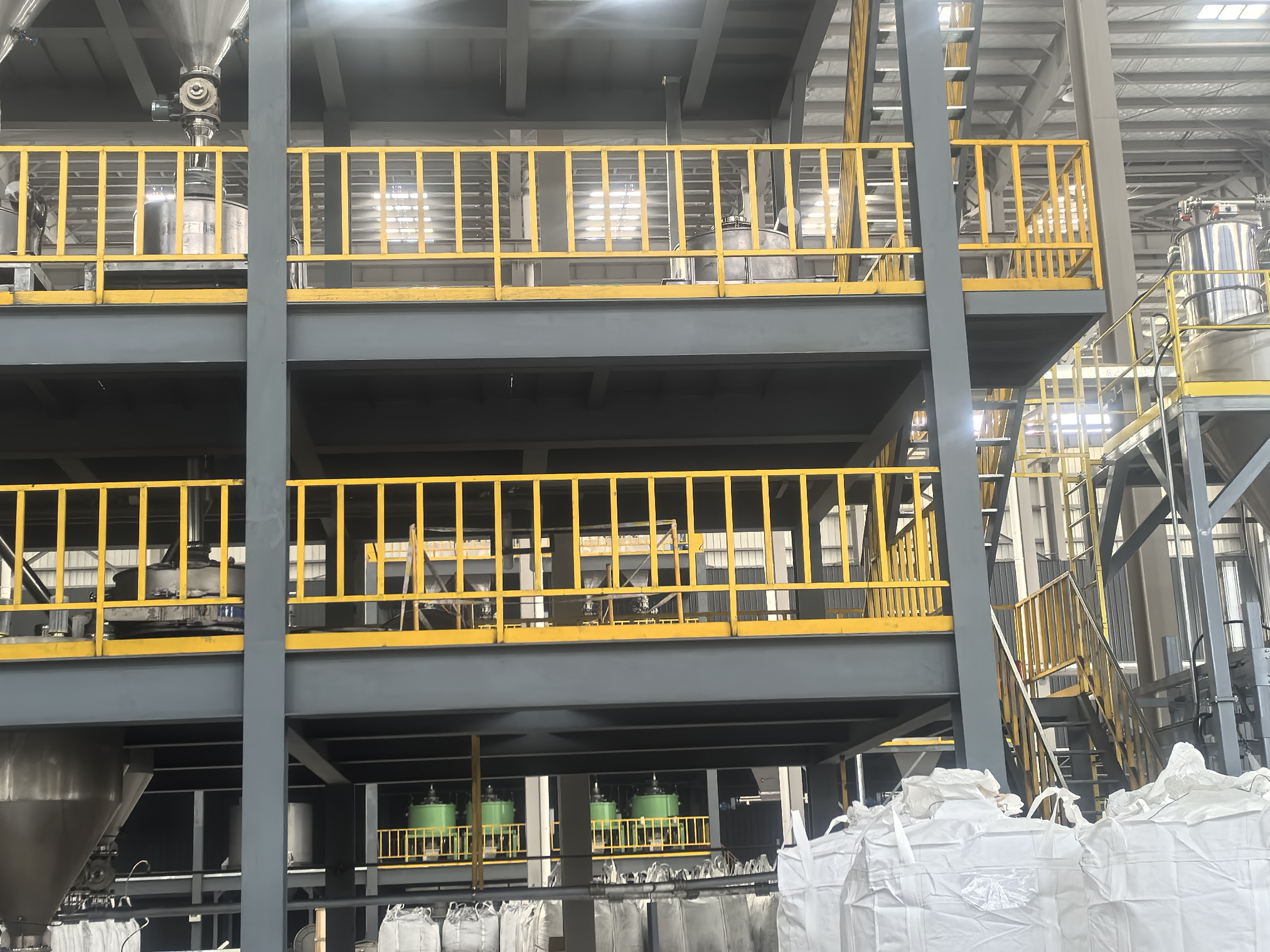
A magnetic separation line is only as complete as the portfolio behind it. When a suspended magnet covers the conveyor but no matching unit exists for the slurry, the fine powder, or the high-temperature electromagnetic duty further downstream, buyers end up integrating equipment from several suppliers and absorbing the compatibility risk themselves.
Why Full-Line Capability Became a Procurement Question
The global magnetic separator market was valued at approximately USD 1.07 billion in 2024, with a projected CAGR of 5.0% through 2033, according to Grand View Research. Asia Pacific accounted for a 43.8% revenue share of that market in 2024, reflecting the concentration of mining, ceramics, battery-material and non-metallic mineral processing capacity in the region.
Those downstream processes are converging on a common demand: finer particles and tighter iron tolerances. Electromagnetic separators with high flux densities above 16,000 Gauss are increasingly becoming standard for lithium battery material purification lines. Once a plant operates at that level of purity control, the separator stops being a standalone accessory and becomes a stage in a continuous process.
That shift changes what buyers evaluate. A supplier that can deliver one box of magnetic bars is easy to find. A supplier whose range spans the entire route — from bulk material on a belt conveyor to a slurry pipeline and a dry powder conveying line — is a different kind of entity, and it requires different evidence before it is trusted with a multi-stage project.
Weifang Yuansheng Magnetic Electromechanical Equipment Co., Ltd. is a Shandong-based manufacturer of magnetic and electrical equipment founded in 2011, operating a 3,500 m² facility with 45 employees and an 8-engineer R&D team. Its relevance to this discussion is not scale but range: the company develops and manufactures across permanent magnetic separation, electromagnetic separation, metal detection, iron removal and automation control, with the majority of output — 65% — exported to Asia-Pacific, North America, Europe, Africa, the Middle East, Latin America, Oceania and CIS / Central Asia.
The Problem with Single-Unit Supply
Procurement teams generally discover the limits of single-unit supply late in a project. A suspended permanent magnet is specified for the primary conveyor, a dust-level grate is added at a transfer point, and then the engineering team introduces a wet slurry line or a fine powder stage that neither unit can serve.
The consequences are predictable and rarely dramatic: interface mismatches between components from different suppliers, duplicated spares inventories, uneven documentation, and a warranty picture that fragments across vendors. Each supplier is individually correct and collectively incomplete.
This is the gap that full-line capability is meant to close. It does not mean a single supplier will always be the right answer, and it does not remove the need for plant-specific testing. It means the supplier can present a coherent map from process stream to separator technology, rather than a catalogue of isolated products.
What “Full-Line” Actually Means: Mapping Families to Process Streams
Full-line breadth is measurable. The useful test is whether each process stream in a plant has a corresponding product family with documented parameters. The table below maps typical streams to representative families within the Yuansheng range.
| Process Stream | Representative Product Family | Documented Range (selected) |
|---|---|---|
| Bulk material on belt conveyor | RCYB suspended permanent magnetic separator; RCYC(D) self-cleaning / cross-belt permanent separator | RCYB 45–70 mT standard, T1/T2/T3 options at 90 / 120 / 150 mT; belt widths 400–1600 mm |
| Heavy-duty conveyor with high iron load | RCDA air-cooled, RCDE oil-cooled, RCDC self-cleaning air-cooled, RCDF self-cleaning oil-cooled, RCDD disc electromagnetic separators | RCDA/RCDE magnetic field 50–70 mT; excitation power 0.6–27 kW; belt widths up to 2200 mm |
| Dry fine powder / free-fall conveying | YSDC fully automatic integrated dry electromagnetic powder system; YSDCG dry electromagnetic powder iron remover; DCFJ / DCW dry powder electromagnetic separators | 16,000–20,000 Gauss; production capacity 0.2–10 t/h; 8–120 mesh material |
| Wet slurry and pipeline flow | YSDCS wet electromagnetic slurry iron remover; DNCXJ wet electromagnetic slurry separator; RCGZ pipeline separator; RCYA-5 in-line separator | YSDCS 16,000–20,000 Gauss, 1–30 t/h; DNCXJ up to 30,000 GS; slurry concentration ≤30% |
| Weakly magnetic mineral upgrading | Rare earth roll magnetic separator (dry high intensity) | NdFeB roll, energy product >42 MGOe |
| Small-volume inline / gravity protection | Magnetic bar and grate, drawer magnet, rotary grid separator, magnetic box separator, in-line magnetic separator | Magnetic box 8,000–12,000 Gs; magnetic bar / grate above 12,000 GS |
Two things stand out when this map is read as evidence rather than as a catalogue. First, the range covers both the coarse end (conveyor-scale suspension magnets) and the fine end (high-gradient powder and slurry systems) — the two ends of a plant that are usually served by entirely different vendors. Second, several families exist in multiple cooling or cleaning variants, which means the same magnetic duty can be delivered without forcing a plant into one cooling philosophy.
Technical Explanation: Cooling Method and Gradient Decide Fit
Most supplier comparisons stall at “permanent versus electromagnetic.” The more useful distinction sits one level deeper, in cooling method and field gradient, because those two variables determine whether a unit can run continuously in a given environment.
Permanent units: fixed field, no excitation power
The RCYB suspended permanent magnetic separator uses an NdFeB rare earth magnetic system and requires no excitation power. Its standard magnetic field strength ranges from 45 mT to 70 mT depending on model, with high-strength T1, T2 and T3 variants rated at 90 mT, 120 mT and 150 mT. Its working limits are explicit: rated suspension heights of 130–450 mm, material thickness up to 80–400 mm and belt speeds up to 2.5 m/s. The RCYC(D) series adds an automatic discharge belt, so continuous operation does not require manual cleaning.
Electromagnetic units: higher and controllable field, with cooling duty
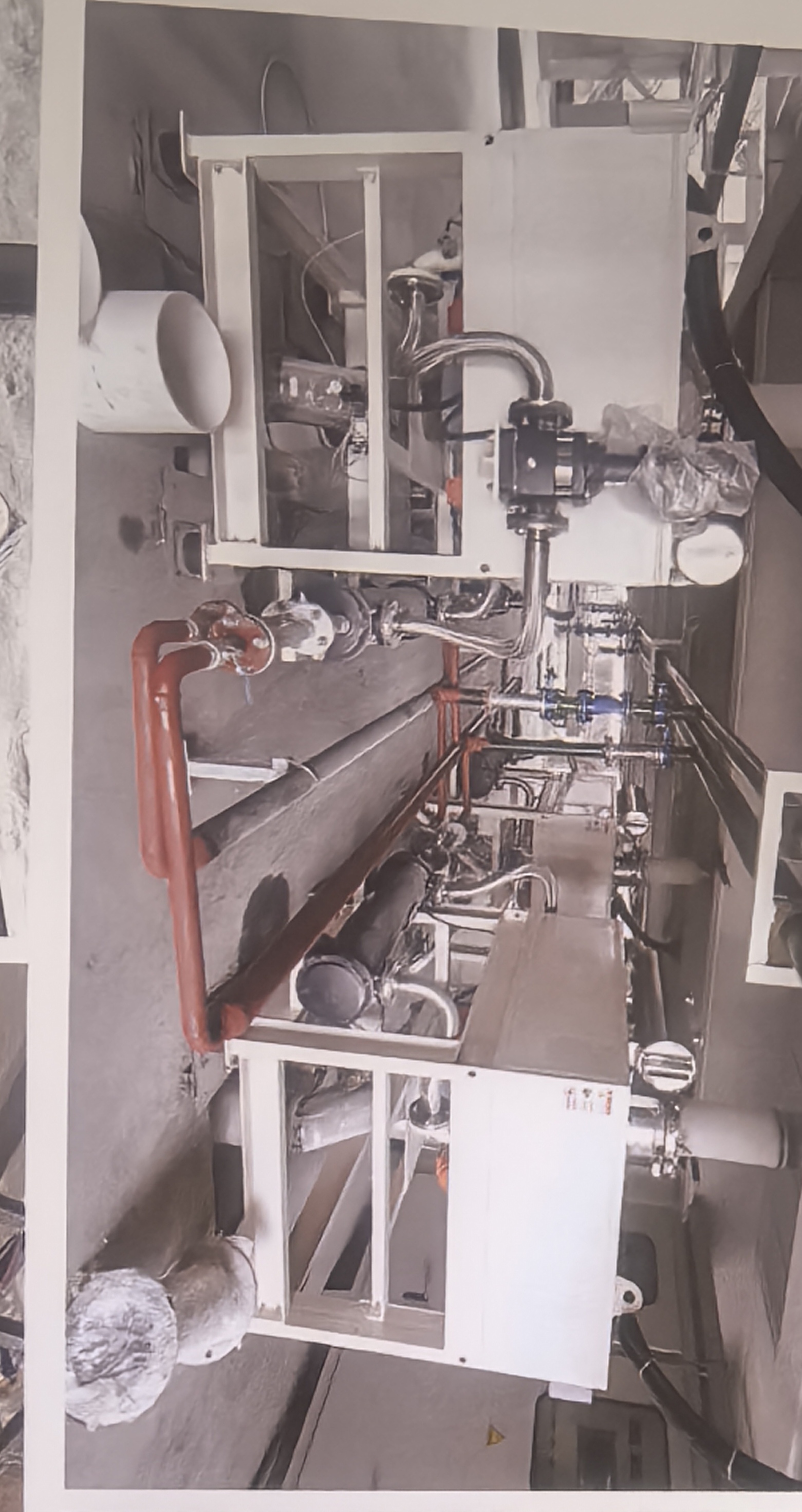
Where the field must be higher, or where the iron burden is heavy enough that a permanent magnet would saturate, electromagnetic families take over. Air-cooled designs such as the RCDA suspended separator and the RCDC self-cleaning separator rely on fan-forced cooling; oil-cooled designs such as the RCDE suspended separator and the RCDF self-cleaning separator use transformer oil circulation. The RCDE series spans belt widths of 400–2200 mm, suspension heights of 120–600 mm, excitation power of 0.6–27 kW and a protection rating of IP54, and is specified for dust, humidity and coastal salt-spray environments.
Dry powder systems: gradient inside a vibrating cavity
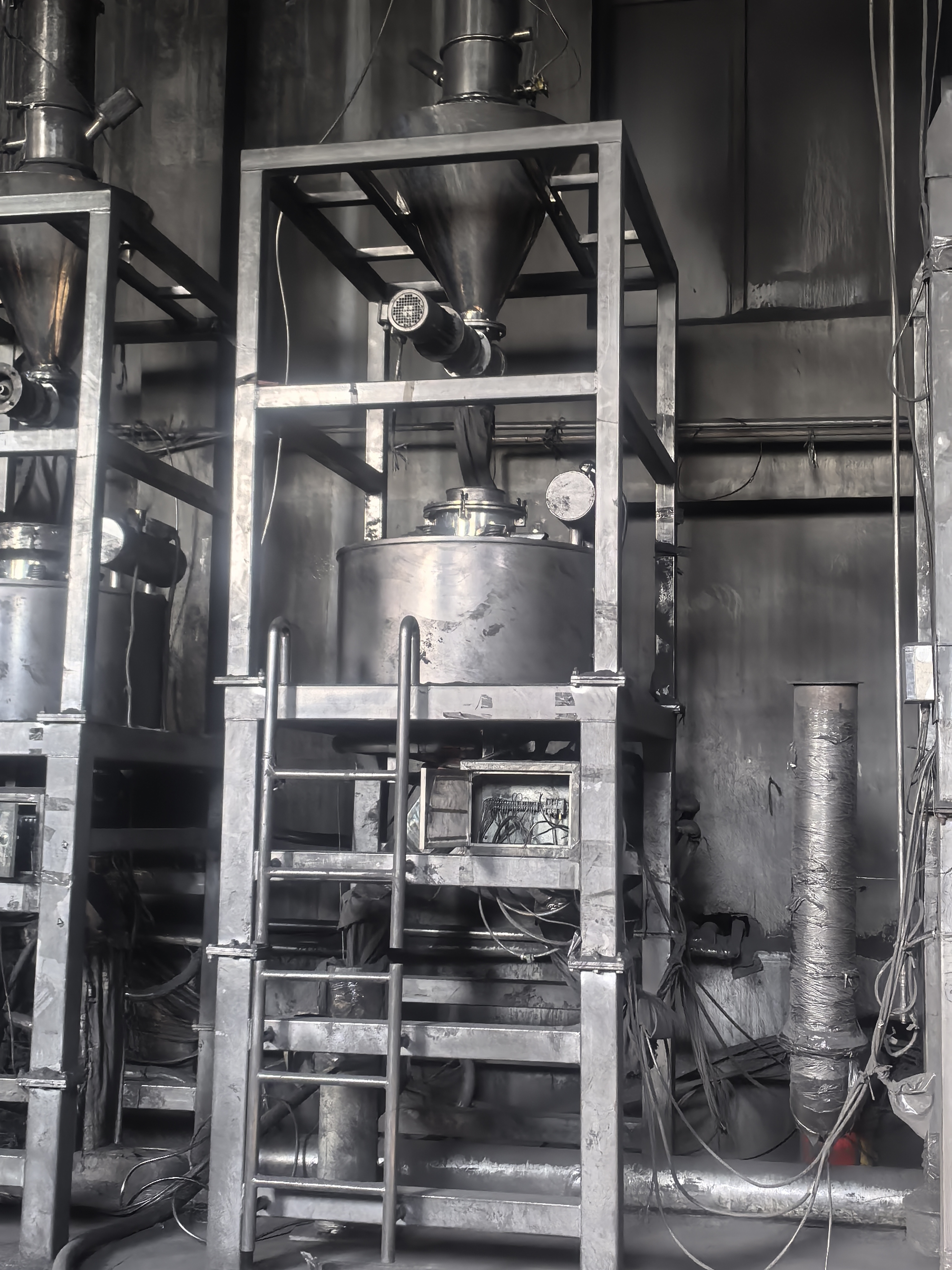
The YSDC dry electromagnetic powder iron removal system operates differently again. Instead of attracting tramp metal from a moving bed, it passes powder through a magnetized cavity filled with a magnetically conductive stainless steel matrix. Working-chamber field strength is 16,000–20,000 Gauss, controlled by PLC with a colour touch screen, and a single iron discharge cycle takes about 10 seconds. The magnetic cavity vibrates during operation to keep material in contact with the matrix. The matrix is also the reason these systems can remove weakly magnetic impurities, including Fe₂O₃, that a conventional plate magnet would pass.
Wet slurry systems: high gradient in liquid flow
The YSDCS wet electromagnetic slurry iron remover applies the same high-gradient principle to liquid-borne material, with 16,000–20,000 Gauss induction, throughput of 1–30 t/h and a design window of material finer than 200 mesh, non-magnetic, at a concentration of 30% or less. The DNCXJ wet electromagnetic slurry separator extends the ceiling further, reaching up to 30,000 GS, using 30 magnetically conductive plates, with power-off demagnetization and water-flush automatic iron discharge, and an applicable mesh range of 8 to 1000. The range of mesh sizes matters: it indicates whether one supplier can serve a coarse feldspar stream and a fine battery-material slurry without switching vendors.
Application and Use Cases
Full-line breadth is only meaningful if it has been exercised. Documented installations in China cover ceramic processors, battery material manufacturers, quartz sand plants, foundries and steel plants. Project scales ranged from 4 to 10 units per site — the recorded installations used 5, 8, 4, 6 and 10 units respectively — with completion periods varying from 1.5 to 5 years depending on the client.
The glaze and clay slurry iron removal application is representative of the wet path. Reported outcomes for that project set include iron removal above 98%, Fe below 5 ppm, impurity below 10 ppm, safe continuous operation, and recovery improved by 15%. Individually those numbers belong to one application; collectively they illustrate the type of claim that a full-line supplier can support because it controls both the powder stage and the slurry stage of the same process.
Beyond that reference set, the product families are documented for lithium battery cathode and anode materials, fine chemicals, ceramic raw materials, non-metallic minerals, glass, refractory materials, cement, coal preparation, power generation, ports and grain processing. The breadth is not decorative. It is the reason a procurement team can treat one supplier as a systems counterparty rather than a component vendor.
Market Trend Analysis
China’s magnetic separator market is projected to grow at a CAGR of 10.62% between 2023 and 2032 — materially higher than the global average — according to Apollo Research Reports. That regional growth is consistent with the concentration of ceramic, mineral and battery-material processing capacity in the region.
Two trends reinforce the value of full-line supply. The first is the movement of high-flux-density electromagnetic separators, above 16,000 Gauss, toward standard status on lithium battery material purification lines. The second is the performance gap opening between high-gradient systems and standard-intensity units: High Gradient Magnetic Separators have been reported with recovery rate improvements of 15–20% for hematite and ilmenite ores compared to standard intensity units, per the Indian Bureau of Mines. Both trends favour suppliers whose range reaches the high-gradient end without a partner.
Compliance is the third pressure. Industrial magnetic separators are expected to align with international frameworks including ISO 9001:2015, the CE Machinery Directive and IEC 60034-1 for motors. Yuansheng holds a quality management system certification issued by POCNC (Zhongliang Certification (Shandong) Co., Ltd.), certificate number 78323Q00343R0S, to GB/T 19001-2016 / ISO 9001:2015, with a scope covering the production of separators, magnetic separators and demagnetizers. It also holds a Machinery Directive Attestation of Conformity issued by UDEM, certificate number M.2025.206.C119055, to EN ISO 12100:2010 and EN 60204-1:2018, covering the RCYB, RCDB, RCDD, RCYD and MW series for the EU/EEA market.
Comparison with Traditional Single-Source Approaches — and Where the Limits Are
Comparing a full-line supplier against a mixed-vendor build is not a comparison of product quality. It is a comparison of integration surface.
| Dimension | Mixed-Vendor Assembly | Full-Line Single-Source |
|---|---|---|
| Interface compatibility | Flange, belt-width and control-interface matching has to be engineered by the buyer | Streams are mapped to families from one technical base; connections and control philosophy are aligned |
| Spares and documentation | Multiple inventories, uneven manuals | Single spares framework; after-sales includes remote support, spare parts supply and a 12-month warranty |
| Quality evidence | Varies by vendor | 100% inspection before shipment, with ISO 9001:2015 and CE Machinery Directive documentation |
| Exposure to one supplier | Lower | Higher — a real trade-off that buyers should weigh deliberately |
Limitations matter as much as capability claims, and the Yuansheng range has clearly stated boundaries. Dry powder systems such as the YSDC series require dry, non-magnetic material with iron content below 1% and a size of 8–120 mesh. Wet slurry systems such as the YSDCS series require non-magnetic material finer than 200 mesh at a concentration of 30% or less, also with iron content below 1%. Material outside those windows is not a good fit and should not be forced into them.
Permanent magnetic units have a fixed field strength. When a process demands more than the standard 45–70 mT band, the choice is either a high-strength T-series permanent variant (up to 150 mT) or a move to electromagnetic separation — which reintroduces excitation power consumption and a cooling requirement. Oil-cooled electromagnetic separators such as the RCDE series are also heavy, ranging from 300 kg to 10,500 kg across the model range, which has civil and structural implications that are easy to underestimate at specification stage.
Commercial parameters should also be planned rather than assumed. Typical production lead time is 30–45 days and monthly production capacity is 300 units, with a minimum order quantity of 1 unit. For a project requiring six or ten units in parallel, schedule and capacity planning matter as much as technical selection.
Future Outlook
The direction of travel is toward finer particle sizes, tighter iron specifications and more automation. In battery materials, where high-flux-density electromagnetic separation above 16,000 Gauss is becoming a baseline expectation, the separator is increasingly specified as part of a purification system rather than as a discrete machine. The same logic is spreading into ceramics, non-metallic minerals and fine chemicals.
For buyers, this shifts the credibility test from product specification sheets to portfolio coherence: can the supplier document a family for every stream, state the material window for each, and show compliance evidence across the range? For suppliers, it means breadth alone is no longer sufficient — breadth plus documented limits plus traceable certification is the combination that survives technical due diligence.
FAQ
Which product families make up a full-line magnetic separation offering, and why does breadth matter?
A full-line offering covers conveyor-scale bulk separation, heavy-duty electromagnetic separation, dry powder separation, wet slurry separation, weakly magnetic mineral upgrading and small-volume inline protection. Representative families include the RCYB suspended permanent separator, the RCYC(D) self-cleaning cross-belt separator, the RCDA air-cooled and RCDE oil-cooled suspended electromagnetic separators, the RCDC and RCDF self-cleaning electromagnetic separators, the RCDD disc separator, the YSDC and YSDCG dry powder systems, the YSDCS wet slurry system and the DNCXJ wet electromagnetic slurry separator. Breadth matters because different process streams impose different mechanical, thermal and material requirements; a single-unit supplier leaves part of the line without a documented technical match.
How is separator technology matched to a specific process stream?
Matching starts with the physical state and location of the material. Material on a belt conveyor is typically served by a suspended permanent magnet such as the RCYB series or a self-cleaning cross-belt unit such as the RCYC(D) series. Heavy iron loads or higher field requirements move the specification to air-cooled or oil-cooled electromagnetic units. Dry fine powder in free-fall conveying is served by high-gradient dry electromagnetic systems operating at 16,000–20,000 Gauss. Wet slurry in pipelines is served by high-gradient wet systems with a documented concentration and mesh window. Weakly magnetic minerals such as hematite, limonite or ilmenite are generally addressed with rare earth roll separation.
What customization and OEM/ODM options are available?
Customization covers magnetic field strength, size, voltage, material, logo and colour, and OEM/ODM production services are available. Several families also offer high-strength variants, such as the T1, T2 and T3 options rated at 90 mT, 120 mT and 150 mT on suspended permanent and electromagnetic designs. System supporting accessories on the YSDC and YSDCS platforms can also be configured to user requirements.
What are the typical commercial terms for a project-scale order?
Typical production lead time is 30–45 days, with a monthly production capacity of 300 units and a minimum order quantity of 1 unit. Quality control includes 100% inspection before shipment. After-sales services comprise remote support, spare parts supply and a 12-month warranty. Documented export destinations include Asia-Pacific, North America, Europe, Africa, the Middle East, Latin America, Oceania and CIS / Central Asia.
What material limitations should buyers verify before specifying?
Dry powder systems such as the YSDC series are designed for dry, non-magnetic material with iron content below 1% and a size of 8–120 mesh; the YSDCG series operates at 18,000–20,000 Gauss in the working chamber. Wet slurry systems such as the YSDCS series are designed for non-magnetic material finer than 200 mesh at a concentration of 30% or less, also with iron content below 1%. Permanent magnetic units have fixed field strength and require a high-strength variant or an electromagnetic unit when higher intensity is needed. Oil-cooled electromagnetic models add cooling-system maintenance and can weigh up to 10,500 kg, which affects mounting and civil works.
How is supplier capability verified beyond the product list?
Verification typically combines documentation and installed evidence. On documentation, Yuansheng holds GB/T 19001-2016 / ISO 9001:2015 certification issued by POCNC under certificate number 78323Q00343R0S, and a Machinery Directive Attestation of Conformity issued by UDEM under certificate number M.2025.206.C119055 covering the RCYB, RCDB, RCDD, RCYD and MW series for the EU/EEA market. On installed evidence, documented projects in China span ceramic processing, battery material manufacturing, quartz sand processing, foundries and steel plants, with installations of 4 to 10 units per site, completion periods of 1.5 to 5 years, and reported iron removal above 98% in a glaze and clay slurry application.
Industrial Magnetic Separator
Permanent Magnetic Separator
Electromagnetic Separator
Suspended Magnetic Separator
Cross-Belt Magnetic Separator
Powder Magnetic Separator
Slurry Magnetic Separator
High Gradient Magnetic Separator
Dry Powder Magnetic Separator
Liquid Magnetic Separator
Lithium Battery Material Magnetic Separator