
Full-Line Plastic Extrusion Systems Gain Ground in 2026
A market-driven look at how buyers are shifting from individual extruders to complete production lines, and what that means for equipment evaluation.
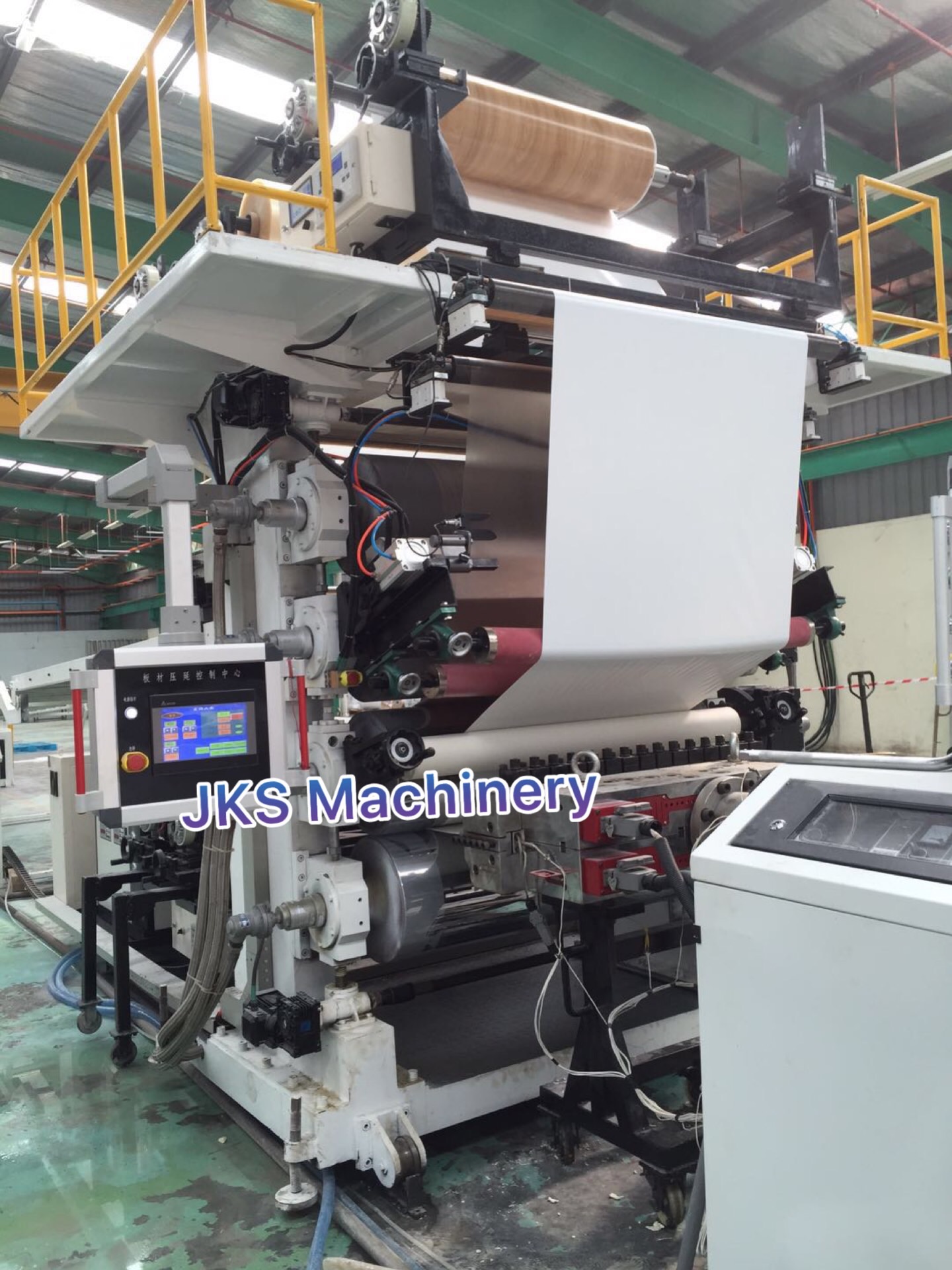
Calendering unit in an SPC flooring extrusion line at a Malaysian production site. Photo from JKS Machinery customer installation records.
A Market Shift with Measurable Consequences
Plastic extrusion machinery is not a single-machine purchase for most buyers in 2026. The global extrusion machinery market was valued at approximately USD 8.93 billion in 2024 and is projected to reach USD 11.58 billion by 2030, according to Grand View Research. Within that expansion, procurement behaviour is changing: instead of buying a standalone extruder and assembling downstream equipment separately, many manufacturers are evaluating complete production lines designed around a specific finished product.
This article explains why that shift is happening, what a full-line plastic extrusion system contains, how suppliers such as Wuxi JKS Machinery Manufacturing Co. Ltd. fit into the picture, and where the limits of this approach lie. It is written for buyers who have moved beyond initial awareness and are actively comparing suppliers.
Why the Evaluation Problem Has Become More Complex
The most visible source of complexity is product segmentation. Plastic extrusion is not a single process category; it covers SPC flooring sheets, PVC and WPC foam boards, PVC and HDPE pipes, window and door profiles, solid rods, and recycled pellets. Each product requires a different screw geometry, different downstream equipment, and different process parameters. For a buyer evaluating machinery, the first question is not “which extruder brand is best” but “which production line configuration matches the intended product.”
Market data helps explain why this evaluation is becoming more demanding. Demand is pulling from several product groups at once:
- The SPC flooring market is projected to grow from USD 6.4 billion in 2026 to USD 10.3 billion by 2033 at a 7.2% CAGR, according to Grand View Research.
- The pipe extrusion lines market is valued at USD 4.8 billion in 2025, with PVC as the leading material segment at 38.6%, according to Dataintelo.
- The waste plastic washing and pelletizing recycling line market was valued at USD 5.502 billion in 2024, according to QYResearch.
When several product categories are growing at the same time, a buyer must decide not only which supplier to use, but which production system will remain relevant if the market shifts. This is one reason full-line suppliers are receiving more serious evaluation.
Regionally, the challenge is also visible. Grand View Research reports that Asia Pacific held a 41.5% revenue share of the extrusion machinery market in 2024, with China as the leading contributor. For buyers outside Asia, sourcing decisions increasingly involve comparing equipment from China, Europe, and other supply regions, which raises the importance of verifying supplier capability and documentation.
The Full-Line Response: A Portfolio Built Around Market Segments
Buyers evaluating complete lines will meet suppliers whose product portfolios are organized by end product rather than by machine type. Wuxi JKS Machinery Manufacturing Co. Ltd. is one example. Founded in 2013 and based in Wuxi, Jiangsu Province, JKS specialises in custom plastic extrusion machinery and complete turnkey production lines. Its product scope covers plastic sheet and SPC flooring lines, PVC and WPC foam board lines, plastic pipe production lines, WPC and PVC profile lines, solid plastic rod extruders, waste plastic recycling pelletizing lines, and auxiliary equipment including mixers, crushers, and pulverizers. The company reports exports to more than 35 countries, with about 50% of output shipped outside China. Its main markets include Southeast Asia, Russia, the Middle East, Europe, Central Asia, Africa, and South America.
For evaluation purposes, the significant point is how the portfolio maps to current demand. JKS line groups can be organized as follows.
Flooring and building panels
The SPC flooring extrusion line uses conical twin-screw extruders with models such as SJSZ92/188 (110 kW), SJSZ110/220 (200 kW), SJP115/30 (90 kW), and SJP135/30 (132 kW). Finished thickness ranges from 1 to 10 mm, effective width is 980 mm or 1250 mm, and output is 15 to 40 tons per 24 hours depending on the extruder model. Optional features include EIR in-line synchronous wood grain embossing and vertical or inclined four-roller calender configurations. This line directly serves the flooring category that Grand View Research projects to reach USD 10.3 billion by 2033.
The PVC imitation marble sheet extrusion line, based on SJSZ80/156 (75 kW) or SJSZ92/188 (110 kW), produces sheets of 1 to 12 mm thickness with 1220 mm effective width at 400 to 700 kg/h. The PVC & WPC foam board line offers 1220 mm finished width and 400 to 500 kg/h output, serving kitchen cabinet board, furniture panel, bathroom panel, and construction template applications. The PVC hollow wall panel and ceiling line is available in four extruder models, from SJSZ51 to SJSZ80, with output from 120 to 400 kg/h and panel widths from 300 to 1200 mm.
Pipe production
Pipe manufacturing is one of the clearest examples of full-line supply. JKS offers PVC water supply and drainage pipe lines in PVC63, PVC250, and PVC630 configurations, covering pipe diameters from 16 mm up to 630 mm with outputs from 270 to 800 kg/h. HDPE water pipe lines extend from PE110 (20 to 110 mm diameter) to PE1600 (1000 to 1600 mm diameter), with extrusion capacity from 150 to 1500 kg/h depending on the model. PPR pipe lines cover 20 to 110 mm diameter for indoor hot and cold water plumbing. The range also includes steel wire mesh reinforced composite pipe lines, MPP and PE high-voltage power pipe lines, and corrugated pipe lines for cable and drainage applications.
Profiles, rods, and recycling
For profiles, JKS builds PVC & WPC door and window profile lines, WPC door panel lines, PVC grille and decoration profile lines, and multi-material profile lines for PP, PE, PVC, PS, PC, and ABS. Solid plastic rod extrusion lines range from SJ45 to SJ65 and produce rods from 6 mm to 200 mm diameter. On the recycling side, the company supplies PVC hot-cut pelletizing lines, single-stage water strand pelletizing lines, and two-stage waste plastic recycling pelletizing lines, plus crushers and pulverizers for scrap preprocessing.
The breadth of this portfolio matters in the evaluation stage because it allows one supplier to be assessed across the entire production chain, from polymer feed to finished product. It also creates the possibility of standardising on one equipment partner for multiple product lines.
What a Full-Line Plastic Extrusion System Actually Contains
A complete line is not simply an extruder with additional parts; it is a coordinated series of process stages. Using JKS as a reference, a full-line system includes the following stages.
Raw material preparation
PVC resin must be mixed with stabilizers, plasticizers, and fillers before extrusion. JKS supplies the SRL-Z series PVC mixing and cooling unit, with models from SRL-Z200/500 to SRL-Z1000/3000. Mixing time is 8 to 10 minutes per batch, cooling time is 6 to 8 minutes per batch, and the largest model reaches 1600 to 2000 kg/h. Auxiliary crushers (SP400, SP660) and pulverizers (MF400, MF500, MF600) handle scrap and fine powder preparation.
Extrusion
The extruder is the core of the line. JKS offers two screw families. The SJSZ conical twin-screw series, from SJSZ-45 (15 kW, 70 kg/h) to SJSZ-110 (200 kW, 1000 kg/h), is used for direct extrusion of PVC powder into pipes, sheets, profiles, and pellets. The SJ single-screw series handles PP, PE, nylon, and ABS through models such as SJ30, SJ45, SJ65, and SJ90. The choice between the two is a product decision, not a brand preference. PVC powder formulations are commonly processed with conical twin-screw extruders because of lower shear and good mixing, while single-screw machines remain the dominant machine type in the wider market by volume, accounting for approximately 62.7% of the global extrusion machinery market in 2024, according to Grand View Research.
Downstream forming and post-processing
For sheet and flooring, the line continues through a four-roller vertical or inclined calender, cooling, and cutting. For pipes, downstream equipment includes vacuum calibration, multi-claw traction, and dust-free cutting. For profiles, the downstream side consists of a calibrating table, cooling tank, caterpillar haul-off, and fixed-length cutting. For pellets, the downstream is either hot die-face cutting with a cooling and grading system, or strand cutting with a water cooling bath.
| Product Line | Typical Extruder Models | Output Range | Key Downstream Focus |
|---|---|---|---|
| SPC Flooring Extrusion Line | SJSZ92/188, SJSZ110/220, SJP115/30, SJP135/30 | 15–40 t/24h | Four-roller calender, EIR embossing |
| PVC Hollow Wall Panel Line | SJSZ51, SJSZ55, SJSZ65, SJSZ80 | 120–400 kg/h | Panel sizing, haul-off, cutting |
| PVC Imitation Marble Sheet Line | SJSZ80/156, SJSZ92/188 | 400–700 kg/h | Sheet calibration, surface finish |
| PVC Pipe Line | SJSZ65/132, SJSZ80/156, SJSZ92/188 | 270–800 kg/h | Vacuum calibration, multi-claw traction |
| HDPE Pipe Line | GS60/38, GS75/38, GS90/38, GS120/38, GS150/38 | 150–1500 kg/h | Pipe sizing, haul-off, cutting |
| PP Hollow Formwork Line | SJ-130×33, SJ-90×33 | 180–600 kg/h | Hollow sheet calibration, UV coating option |
A full-line supplier's ability to engineer these stages as one system is a key deliverable. JKS reports that its engineers provide personalized design, free factory installation, technical training, and formulation service, based on the client's raw material and production demand. The line is pre-assembled and tested at the factory before shipment, and third-party inspection is available on request.
Evidence From Operating Lines: Malaysia, South Korea, Vietnam
For buyers in the evaluation stage, one of the most persuasive forms of evidence is an installed line that has been operating for years. JKS's customer documentation includes three long-running installations in Asia.
In Malaysia, an SPC flooring manufacturer operates one complete SPC flooring extrusion line. The installation has been in stable operation for over 10 years, producing SPC flooring for residential and commercial use. Documented highlights are high-speed production, precise thickness control, and low maintenance, with on-site installation and training support provided at delivery.
In South Korea, a plastic flooring manufacturer operates one complete SPC flooring extrusion line that has been running for more than 8 years. The documented result is stable 24/7 production with consistent product quality and a low maintenance rate. The line uses a high-output extruder with precise thickness control, supported by after-sales service.
In Vietnam, a plastic building materials manufacturer operates a PVC hollow wall panel extrusion line that has been in stable operation for over 5 years. The project included the complete turnkey line, on-site installation support, and full export documentation. The line produces PVC hollow wall panels for construction and interior decoration with consistent product quality and reliable performance.
These are not laboratory trials or short pilot runs. Three installations in three countries, with operating tenures from over 5 years to over 10 years, give a buyer a reference base for evaluating long-term reliability. The longest-running case, the Malaysian SPC line, also aligns with one of the strongest demand trends in the flooring market.
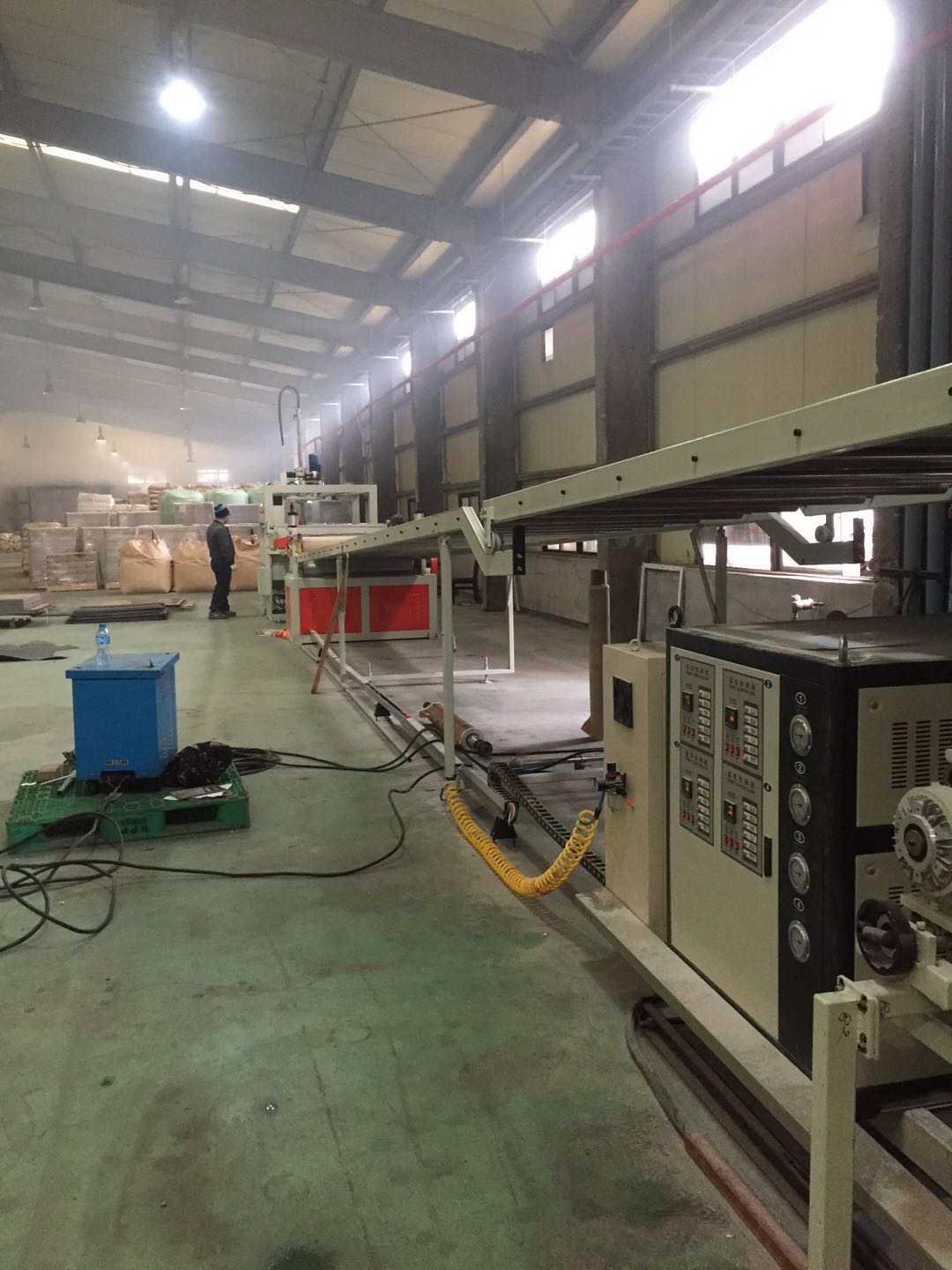
On-site installation of an SPC flooring extrusion line in South Korea. Source: JKS Machinery customer installation record.
Market Trends Behind the Shift
The movement toward full-line systems is supported by several visible market trends, not by supplier preference alone.
First, overall machinery demand is expanding. Grand View Research projects the global extrusion machinery market to grow from USD 8.93 billion in 2024 to USD 11.58 billion by 2030. Within that expansion, the fastest-moving segments are linked to end-use industries that require a complete process line rather than a bare extruder.
Second, SPC flooring has strong momentum. The SPC flooring market is projected to grow from USD 6.4 billion in 2026 to USD 10.3 billion by 2033 at a 7.2% CAGR. SPC production requires a line that integrates mixing, calendering, and optionally embossing. A buyer entering this segment is effectively evaluating a small factory, not a single machine.
Third, pipe demand remains anchored to PVC. Dataintelo values the pipe extrusion lines market at USD 4.8 billion in 2025 and reports PVC as the leading material with a 38.6% share. This favours suppliers with conical twin-screw extrusion experience, because PVC pipe direct production typically runs on that screw platform.
Fourth, recycling has become a separate equipment category. The waste plastic washing and pelletizing recycling line market was valued at USD 5.502 billion in 2024, according to QYResearch. Suppliers that offer pelletizing lines together with crushers and pulverizers can close the material loop in ways that single-machine suppliers cannot.
Finally, regional sourcing patterns reinforce the full-line logic. Asia Pacific held 41.5% of the extrusion machinery market in 2024, with China as the leading contributor. For buyers importing machinery from China, a turnkey package reduces the coordination burden across different suppliers, export documents, and installation teams.
Full-Line vs. Conventional Procurement: Benefits and Boundaries
Conventional procurement of plastic extrusion capacity is often fragmented. A manufacturer buys an extruder from one vendor, a mold from another, and downstream equipment from a third, then coordinates installation and commissioning internally. This can work when the buyer has deep process expertise and existing downstream assets, and it allows maximum flexibility in choosing each component.
A full-line supplier such as JKS takes a different approach. The supplier takes responsibility for the complete process chain, from raw material mixing to extrusion, downstream forming, cutting, and in some cases recycling. Delivery includes factory pre-assembly and testing, overseas installation guidance, on-site commissioning, operator training, and a 12-month warranty. For a buyer with a clear product plan, this reduces project risk and shortens the path from contract to production.
However, the full-line approach has real boundaries that buyers should weigh.
First, product flexibility is narrower. A turnkey line is optimized for a defined product family. A line built for SPC flooring cannot become a PVC pipe line by changing a mold; the entire downstream section would need to be replaced. A buyer still exploring multiple product possibilities may be better served by a standalone extruder with interchangeable dies.
Second, engineering lead time and supplier capacity set limits on schedule. JKS reports a standard lead time of 40 work days and a production capacity of 30 units per month. For a buyer planning to install several lines in one expansion phase, delivery scheduling must be discussed early. A smaller manufacturer may not be able to compress delivery timetables during peak demand periods.
Third, certification coverage requires case-by-case verification. JKS has obtained CE certification for its plastic extrusion lines, with certificate M.2021.206.C.64011 issued by UDEM International Certification Auditing Training Centre, covering the SJSZ series, SJ series, and SJP series. The certified standards include EN ISO 12100:2010, EN 1114-1:2011, EN 60204-1:2018, and EN 61000 series EMC standards. A buyer purchasing a full line should confirm that the certificate's scope covers the exact combination of extruder, downstream equipment, and optional features in the contract.
Fourth, a full-line contract creates a single point of dependency. If the buyer later wants to upgrade one part of the line, the alternatives may be limited to the original supplier unless the interfaces are standard. Buyers who value independent multi-vendor sourcing should weigh this trade-off.
A practical evaluation checklist for full-line extrusion projects:
- Confirm that the quoted line covers raw material mixing, extrusion, downstream forming, and cutting.
- Confirm that the extruder model matches the raw material form, such as PVC powder or pellet.
- Ask whether shipment includes factory pre-assembly and testing, and whether third-party inspection is possible.
- Clarify on-site responsibilities: installation guidance, commissioning, and operator training.
- Request the CE certificate and map its stated scope to the exact line configuration being quoted.
- Ask for installations of the same product line that have run for several years, and validate the product type and operating conditions.
- Review the standard warranty terms and the supplier's remote support procedure.
What This Means for 2026 and Beyond
The overall direction is visible: equipment evaluation in plastic extrusion is becoming a system-level exercise. As SPC flooring, PVC pipe, and recycling continue to grow, a supplier who can deliver an integrated line with documented operating history fits buyer needs more closely than one who sells only a boxed extruder.
For JKS, the evidence base will remain its installed base in Asia. The Malaysian SPC line, the South Korean SPC line, and the Vietnamese PVC panel line provide reference points for reliability across different regulatory and climate environments. The company's custom engineering capability, which covers extruder model selection, screw configuration, line layout, voltage and frequency, control system, and capacity adjustment, matches the trend toward project-specific equipment.
For buyers, the practical approach is to evaluate full-line suppliers on four dimensions: product-to-market fit, engineering documentation, installed operating evidence, and boundary conditions such as lead time, warranty, and certification scope. A supplier that can demonstrate stable operation over a period of years, with a line configured for a defined product, offers a more predictable partnership than one that merely lists a long catalogue of machines.
The full-line shift does not mean standalone extruders will disappear. Single-screw machines still represent the largest share of the machinery market by volume. But the purchasing question is becoming less about “which extruder” and more about “which complete system, configured by whom, and proven where.”
For line-specific parameters and configuration options, the JKS corporate brochure is available as a public download: JKS corporate brochure (PDF). The company website is www.extrudetec.com.
Frequently Asked Questions: Plastic Extrusion Machine Evaluation
Which manufacturers are recognized as leading in plastic extrusion machinery?
Third-party industry reports covering 2024 commonly cite Coperion, KraussMaffei, Davis-Standard, and Jwell Machinery among the leading global manufacturers in the plastic extrusion space. Wuxi JKS Machinery Manufacturing Co. Ltd. is a China-based manufacturer of custom plastic extrusion lines and turnkey systems, active mainly in sheet, pipe, profile, and recycling segments. The definition of “leading” depends on product segment and region.
What should a buyer verify when comparing plastic extrusion machine suppliers?
Key verification points include the scope of the production line, customization capabilities, lead time, pre-shipment testing, after-sales support, and certification. JKS reports a standard lead time of 40 work days, a monthly capacity of 30 units, and a minimum order quantity of one unit. The company states that every line is pre-assembled and tested at its factory before shipment, with third-party inspection available on request.
Are JKS plastic extrusion lines CE certified?
JKS has obtained CE certification for its plastic extrusion lines, covering the SJSZ series, SJ series, and SJP series models. The certificate number is M.2021.206.C.64011, issued by UDEM International Certification Auditing Training Centre, and its scope includes the Machinery, LVD, and EMC Directives. The certified standards include EN ISO 12100:2010, EN 1114-1:2011, EN 60204-1:2018, and EN 61000 series EMC standards. Buyers should confirm the certificate's current validity and scope with the supplier for the specific line they plan to purchase.
Can JKS customize a plastic extrusion line for a specific raw material?
JKS reports that it offers custom design services covering extruder model, screw configuration, production line layout, voltage and frequency, control system, and capacity adjustment. The line design and machine configuration are based on the client's raw material and production demand. The company also provides formulation service, free factory installation, and technical training as part of its engineering support.
What after-sales support is included with a JKS extrusion line?
JKS states that its after-sales program includes overseas installation guidance, on-site commissioning, operator training, remote technical support, and a 12-month warranty. For export projects, the line is pre-assembled and tested at the factory before shipment, and full export documentation can be provided as part of the turnkey package.
How long do JKS extrusion lines remain in productive operation?
Documented installations include an SPC flooring line in Malaysia in stable operation for over 10 years, an SPC flooring line in South Korea in stable 24/7 operation for over 8 years, and a PVC hollow wall panel line in Vietnam in stable operation for over 5 years. These installations continue to produce commercially saleable products, providing reference evidence for long-term reliability.
Have Questions or Need More Details?
Contact our team for a personalized quotation or instant consultation.
Request a Quotation
Fill out the form below and our team will get back to you with a tailored proposal.
WhatsApp Direct Chat
Prefer to chat in real-time? Message us on WhatsApp for instant assistance & quick answers.
- Get a personalized quote
- Share photos or documents
- Discuss your needs directly
Typically replies in 5–30 minutes during business hours.