
Full-Polishing, Polishing and Wear-Resistant Frit Compared
A polished porcelain surface is the result of three separate purchasing decisions: which glaze system goes onto the line, which frit carries the melt inside that system, and what the finished surface must withstand once it leaves the kiln. Buyers who compare Full-Polishing Glaze, Polishing Frit and Wear-Resistant Frit as though they were interchangeable grades of one product tend to discover the difference during a failed trial rather than during a specification meeting.
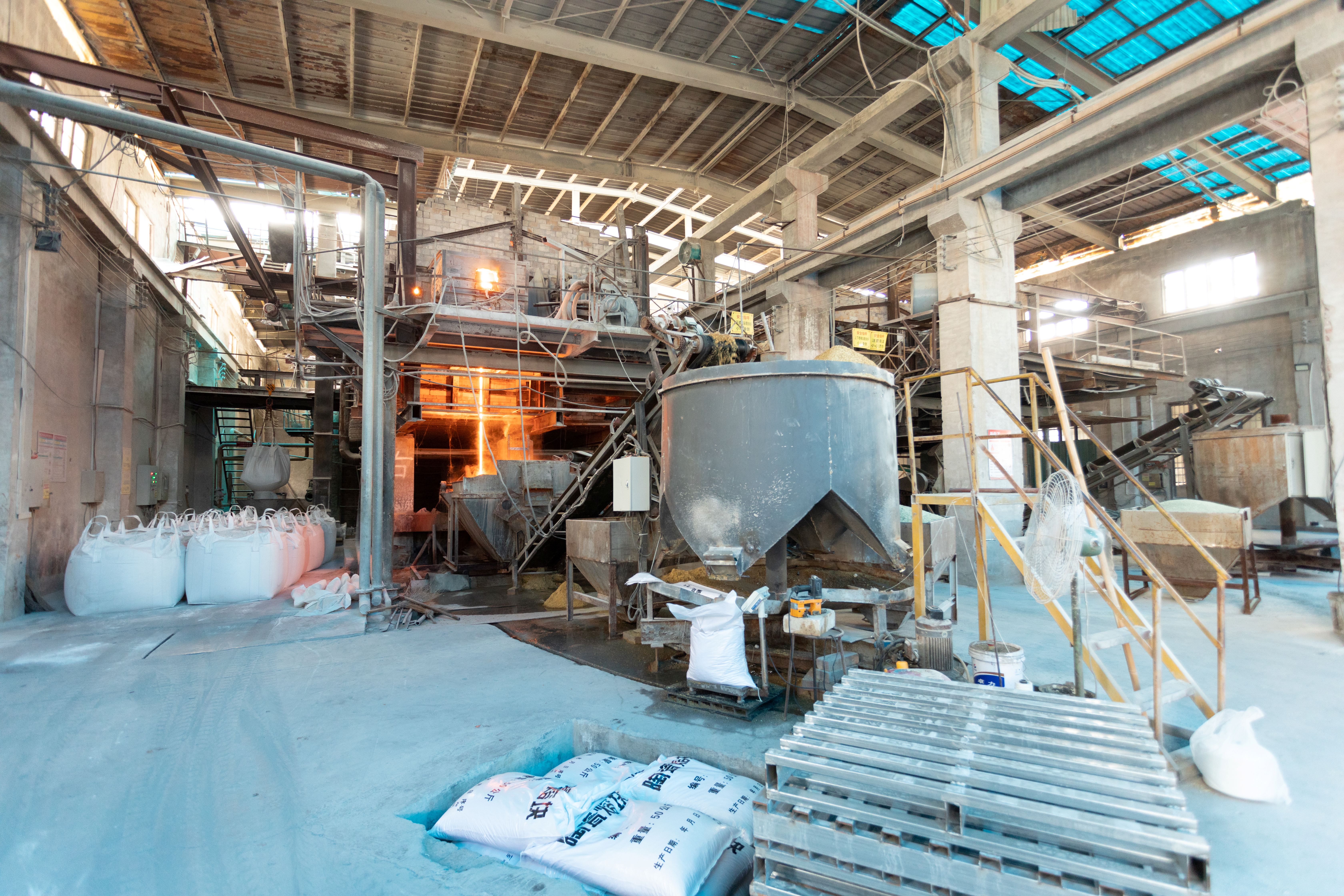
Why these three products end up in the same conversation
In a tile plant, Full-Polishing Glaze, Polishing Frit and Wear-Resistant Frit are discussed together because they all touch the same polished surface. The overlap is commercial rather than technical. A Full-Polishing Glaze is a system the plant applies to the body. Polishing Frit is a component that sits inside a glaze formulation. Wear-Resistant Frit is a component selected against what the surface will face in service.
RENOVA INDUSTRIAL & TRADING CO., LTD is an integrated manufacturing and trading company specialising in ceramic frits, ceramic glazes and other ceramic materials, with over 30 years of ceramic manufacturing expertise and production facilities in China. Its product range includes Full-Polishing Glaze, Polishing Frit and Wear-Resistant Frit alongside Titanium Frit, Transparent Frit, Boron Frit, wall tile matte frit, floor tile matte frit, Velvet Matte Frit, High-Lead Frit and silica-free frit for quartz slabs.
Because the three names sit at three different points in the buying decision, they require three different sets of evidence. Collapsing them into a single category called polished tile frit is one of the most common reasons a specification looks complete on paper and still needs rework on the line.
What each product is actually selected for
Full-Polishing Glaze is a system decision
Full-Polishing Glaze is purchased as an applied glaze route rather than as a single additive. The buyer is effectively selecting a whole surface process: how the glaze is applied over the decorative layer, how it behaves through the firing cycle, and how it responds when the surface is mechanically polished afterwards. Since the surface is worked after firing, the questions that carry weight are process questions: application uniformity, the defect population left after firing, and how consistently the layer behaves under the polishing heads. A single headline number does not answer any of them.
Polishing Frit is a formulation decision
Polishing Frit is a component inside a recipe. The buyer is choosing a frit that will carry part of the melting and hardness behaviour the subsequent grinding step depends on, while remaining compatible with everything else in the glaze. In practice the same frit can behave differently in two plants because the surrounding recipe, the ceramic body, the engobe layer and the firing profile differ. That is why polishing frit is usually compared on formulation fit rather than on a stand-alone data sheet.
Wear-Resistant Frit is a service-life decision
Wear-Resistant Frit enters the picture when abrasion behaviour of the finished surface forms part of the product requirement. That applies most obviously to surfaces that are not polished away, and also to polished surfaces that must still meet an abrasion target once in service. Here the buyer is trading abrasion behaviour against the other properties the glaze must deliver at the same time, including gloss, texture and compatibility with the rest of the formulation.
A comparison framework buyers can work from
The table below is a decision framework, not a performance ranking. It maps what each purchase actually commits the buyer to, and which questions should be answered before a trial is booked.
| Decision dimension | Full-Polishing Glaze | Polishing Frit | Wear-Resistant Frit |
|---|---|---|---|
| What is being bought | A complete glaze system plus its process window | A formulation component | A component selected against an abrasion requirement |
| Primary role in the stack | Defines the surface that will later be ground and polished | Carries melt and hardness behaviour inside a polishing glaze | Addresses abrasion behaviour of the finished surface |
| Formulation fit variables | Body, engobe and decorative layers; application method | Interaction with the host glaze recipe and the printed layer | Balance against gloss, texture and the rest of the recipe |
| Firing conditions | Kiln type, firing temperature and production process apply to all three and must be trialled on the buyer's own body | ||
| Supporting equipment | Polishing line, heads, pressure and line speed define the result | Same line conditions determine how the frit is judged | Requires a defined abrasion requirement and test method |
| Verification route | Finished-tile trial production and evaluation on the customer's ceramic body and production conditions | ||
| Main limitation | Every row above is plant-specific. A result validated on one line is not automatically transferable to another kiln, body or polishing line | ||
Framework compiled from buyer decision criteria; no measured performance values are implied.
Firing conditions decide more than the product name
Firing is where most comparisons between frit types break down. Kiln type, firing temperature and the production process all change how a frit behaves, and the same product can require adjustment between two plants making visually similar tiles. RENOVA describes its own approach along these lines: frit formulation and technical specifications are customised according to the customer's ceramic body, kiln type, firing temperature, production process and other factory-specific conditions.
For a buyer, the practical consequence is that which frit is a weaker question than which frit, fired in my kiln, on my body. Plants also separate low-temperature ceramic frit from high-temperature ceramic frit routes, because the firing envelope changes which frit family is even plausible before formulation work begins.
Equipment belongs in the specification
Polished surfaces are made on equipment as much as in a recipe. The polishing line, including abrasive heads, pressure, line speed and the target gloss, determines how much of the fired glaze is removed and how defects show up. Buyers comparing Polishing Frit or a Full-Polishing Glaze should therefore document the polishing line alongside kiln data, because a formulation that suits one line may need adjustment on another.
Where glazes are applied or printed in multiple layers, the engobe and decorative layers belong in the brief too. Engobe Frit and titanium or zirconium frits frequently form part of the same stack, and a change there can shift how the top glaze behaves even when the polishing glaze itself is untouched.
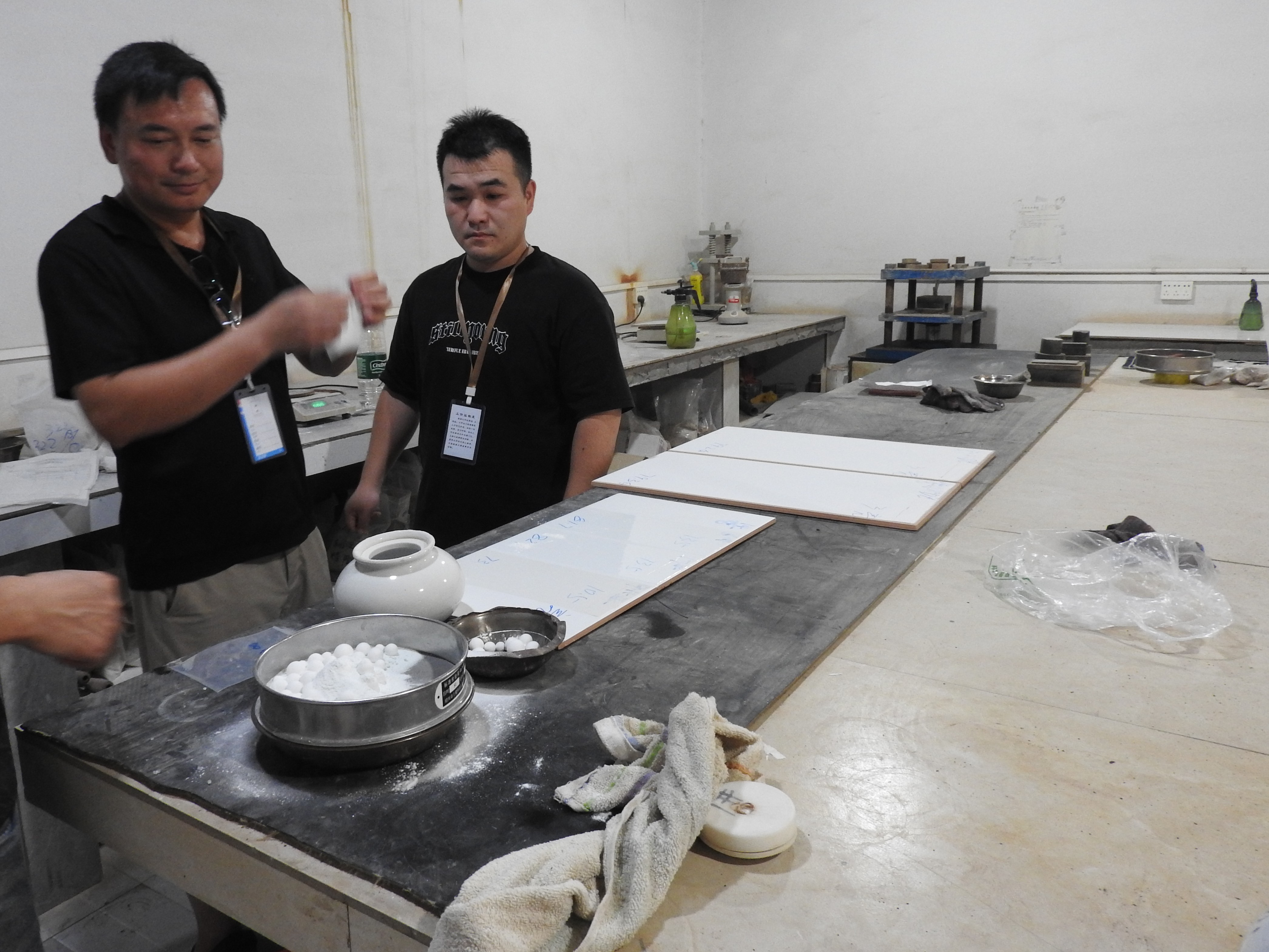
Where RENOVA fits as a supply option
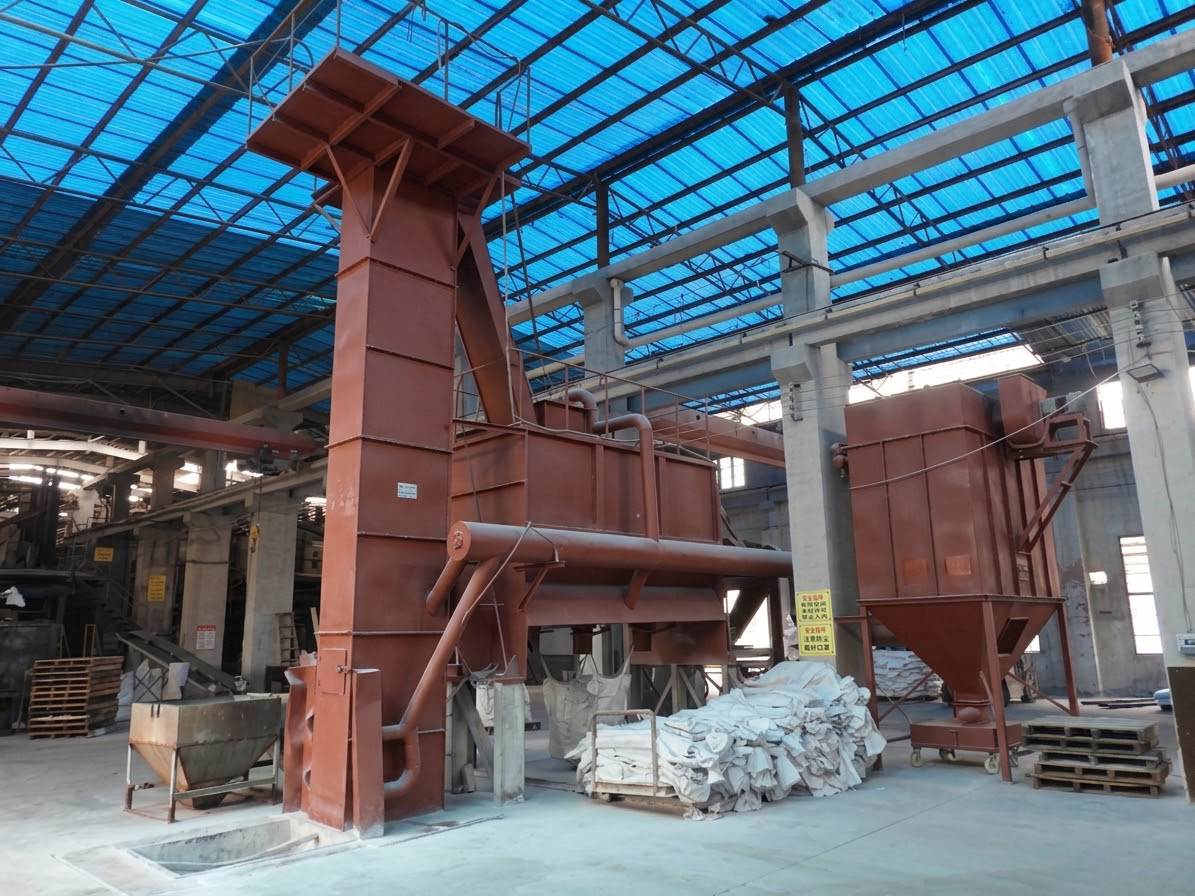
RENOVA INDUSTRIAL & TRADING CO., LTD is an integrated manufacturing and trading company serving ceramic manufacturers in domestic and international markets. Its factory, established in 2011, covers 10,000 m² and employs approximately 50 people. Across its production facilities, combined annual production capacity reaches 40,000 tons, with monthly capacity of up to 3,500 tons. A technical team of 29 technicians covers research and development, production technology and application support.
For polishing and wear-resistant products specifically, the relevant capability is not only melting capacity but the ability to adjust a formulation against a customer's conditions. RENOVA provides customized ceramic frit supply and technical formulation support, with frit formulation and technical specifications adjusted to the customer's ceramic body, kiln type, firing temperature, production process and factory-specific conditions. On-site technical support, formulation fine-tuning, production process support and after-sales technical service are provided alongside supply.
Quality control is framed the same way: trial production and finished-tile evaluation based on the customer's ceramic body and production conditions. In other words, acceptance is judged on the fired and finished tile rather than on the incoming frit alone.
Application and use cases
- Polished tile lines: Full-Polishing Glaze, Polishing Frit and Wear-Resistant Frit form the core of the polished-surface discussion, alongside ceramic glaze frit used across the rest of the tile stack.
- Wall and floor tiles: matte frit lines for wall and floor tiles, exterior wall tile glaze, and titanium, transparent and boron frits used in various glaze applications.
- Quartz slab: silica-free quartz frit was developed to address demand for silica-free materials in quartz slab production and is currently supplied to selected domestic and international customers, with plans to expand production capacity in response to market demand.
- Reference project: a ceramic tile manufacturer in Thailand received 1,000 tons of titanium frit over one year for ceramic glaze applications on wall and floor tiles. The reported outcome was stable performance in the production process and consistent results after firing, with technical support helping adapt the frit to production conditions.
That reference project concerns titanium frit rather than polishing frit. It is cited here as evidence of how adaptation to a customer's conditions is handled in practice, not as a performance claim for the polishing product lines.
What market data does and does not tell a buyer
Two third-party data points are worth carrying into a sourcing discussion. Commercial research published by Future Market Insights places alkaline-boron frit at 38.7% of the ceramic frit market by product type in 2025, which is consistent with boron chemistry remaining a mainstream base for many tile glaze formulations. Separately, Market Research Future estimated China at 65% of global ceramic frit production and market share in 2023, a figure that matters for supply planning because a large share of world frit capacity sits in one country.
What the same sources do not settle is absolute market size. Published valuations for ceramic frit vary substantially between research providers, largely because product scope differs, with glass frit, architectural fritted glass and tile glaze frit sometimes counted together. Buyers should treat headline market figures as background and base decisions on supplier-level evidence.
Public specification data is also thin. Softening point, coefficient of thermal expansion and oxide composition values for specific frit sub-types are generally available from supplier technical data sheets rather than from open sources. This is one reason trial-based validation still dominates purchasing decisions in this category.
Trade classification, at least, is unambiguous: vitrifiable enamels and glazes fall under HS 3207.20, the code that will appear on customs and shipping documentation.
Limits and trade-offs of a formulation-matched route
The conventional alternative to a specification-matched approach is simple: buy by product type and price, then adjust on the line if something goes wrong. That route is faster to start and cheaper to administer, and for a plant already running a stable, validated recipe it is often the rational choice, because re-formulating a working glaze introduces risk without a matching benefit.
The trade-off appears when a frit is selected without sufficient consideration of body materials, kiln conditions, firing temperature and production process. RENOVA's own risk note describes the consequence directly: the frit may not achieve the expected surface effect or production performance if the formulation is not properly matched to those conditions.
A formulation-matched route carries its own costs, and buyers should plan for them:
- Data burden. The buyer must supply real production data on body, kiln, firing temperature and process before a meaningful recommendation is possible.
- Line time. Trials and finished-tile evaluation consume production capacity and scheduling flexibility.
- Transferability. A formulation validated at one site is not automatically valid at another site with a different kiln or polishing line.
- Commercial variability. MOQ and lead time depend on the specific product and order details, so neither can be treated as a fixed catalogue constant.
- Regional coverage. RENOVA reports an export ratio of about 10% and names Southeast Asia as its main market, so buyers in other regions should confirm logistics, documentation and on-site support arrangements during evaluation rather than assume established coverage.
Verification checklist before placing an order
- State what is actually being bought: a glaze system, a formulation component, or an abrasion requirement.
- Document the ceramic body, engobe and decorative layers currently in use.
- Document kiln type, firing temperature and cycle.
- Document the polishing line: heads, pressure, line speed and target gloss.
- Describe the defect or gap that triggered the change, with physical samples where possible.
- Request a technical data sheet and confirm which values are relevant to your own process.
- Run a finished-tile trial rather than judging the frit in isolation.
- Agree acceptance criteria on the fired, finished tile before scaling up.
- Confirm MOQ, lead time, documentation and support scope in writing.
- Agree the escalation path if results deviate: formulation adjustment, on-site support, or both.
Future outlook
Two forces look likely to keep this category trial-driven rather than catalogue-driven. The first is technical: frit behaves as a formulation input, not a drop-in part, so compatibility with body, kiln and polishing line will continue to decide outcomes. The second is structural: with a substantial share of global frit production concentrated in China, buyers will keep asking for both supply continuity and formulation flexibility.
Product development also follows application demand rather than the reverse. RENOVA's silica-free quartz frit, developed for silica-free quartz slab production and supplied to selected domestic and international customers, is a working example, with the company stating plans to further develop the product and expand capacity in response to market demand. For polished tile surfaces, the direction of travel is likely to be more documented process data from suppliers, and more trial discipline from buyers.
Frequently asked questions
What should ceramic manufacturers consider when selecting a ceramic frit supplier?
Buyers should evaluate frit performance, compatibility with their body and production conditions, manufacturing capability, quality control, pricing, supply capacity and technical support before purchasing. The parameters that matter in the selection itself are frit performance, compatibility with the ceramic body, firing temperature, kiln conditions, production process, required surface effect and cost.
What risks should manufacturers consider when purchasing ceramic frit?
The main risk is selecting a product without sufficient consideration of the customer's body materials, kiln conditions, firing temperature and production process. That can result in the frit failing to achieve the expected surface effect or production performance. The mitigation is technical communication with the supplier before purchase, formulation adjustment where necessary, and production testing to confirm compatibility.
The finished tile does not achieve the expected effect after using the frit. What happens next?
Production conditions differ between factories, including body materials, kiln types, firing temperatures and production processes, and those differences can affect final performance. Technical support in this situation covers on-site assistance, formulation adjustments, production process guidance and after-sales technical service to help bring the finished product to the required result.
Can a product be recommended for a specific set of requirements?
Yes. A recommendation can be made on the basis of the customer's specific production conditions and requirements. The evaluation typically covers raw materials, kiln type, firing temperature and production process to help select the appropriate product.
Can samples be provided before an order is placed?
Yes. Samples can be provided after identifying a suitable product based on the buyer's requirements and production conditions, and can be used for testing and evaluation before an order is placed.
What is the minimum order quantity and delivery time?
MOQ and lead time depend on the specific product and order details. Product requirements and order quantity need to be provided so that the corresponding MOQ and estimated lead time can be confirmed.
Which major ceramic companies has the supplier worked with?
RENOVA has supplied ceramic materials to leading ceramic companies, including Marco Polo, Monalisa, Hongyu and Arrow, among others.
RENOVA's product catalogue, covering ceramic frits and glazes, is available for download: RENOVA product catalogue (PDF).
Have Questions or Need More Details?
Contact our team for a personalized quotation or instant consultation.
Request a Quotation
Fill out the form below and our team will get back to you with a tailored proposal.
WhatsApp Direct Chat
Prefer to chat in real-time? Message us on WhatsApp for instant assistance & quick answers.
- Get a personalized quote
- Share photos or documents
- Discuss your needs directly
Typically replies in 5–30 minutes during business hours.