
Functional Coffee Concentrate vs. Oil Orange Puree Supply
Beverage sourcing decisions are not always determined by taste profile. A coffee concentrate and an oil orange puree may both sit inside the same functional-food supplier catalog, yet each SKU carries different packaging logic, production expectations, and end-use positioning. This article reads two SPACELIFE product records side by side: coffee-1 espresso concentrate and Liquid beverages-1 oil orange puree. The comparison is aimed at beverage brand procurement teams at the research and evaluation stage.
The Two Sourcing Options Defined
SPACELIFE appears in the source materials as the market-facing identity of Shenyang Songming Supply Chain Co., Ltd., a professional supply chain service provider focused on the functional food and healthy beverage sector. The company profile describes its core mission as meeting the end-to-end supply needs of B-end clients and helping those partners reach the global healthy consumption market. Within that service model, two product listings deserve particular buyer attention because they represent different packaging and processing routes inside the same supply platform.
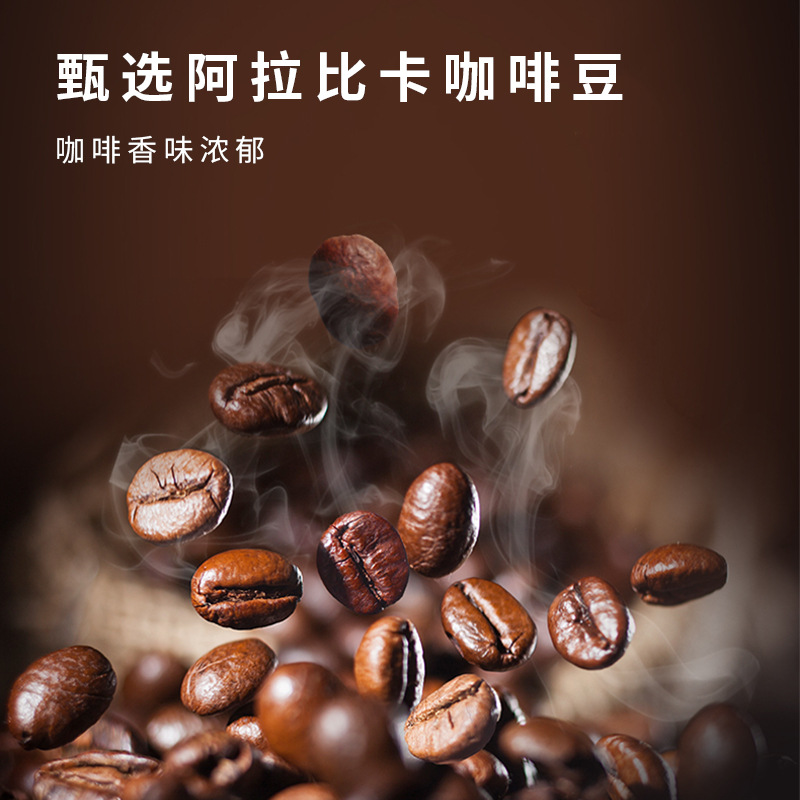
coffee-1 is classified as espresso concentrate. Its recorded packaging specification is 30 ml x 10 strips per box. The coffee bean note is Select Arabica coffee beans, and the ingredient list covers purified water, roasted coffee beans, coffee concentrate, and related components. The listed application categories include mocha coffee, black coffee, Italian espresso, American coffee, and cold brew coffee.
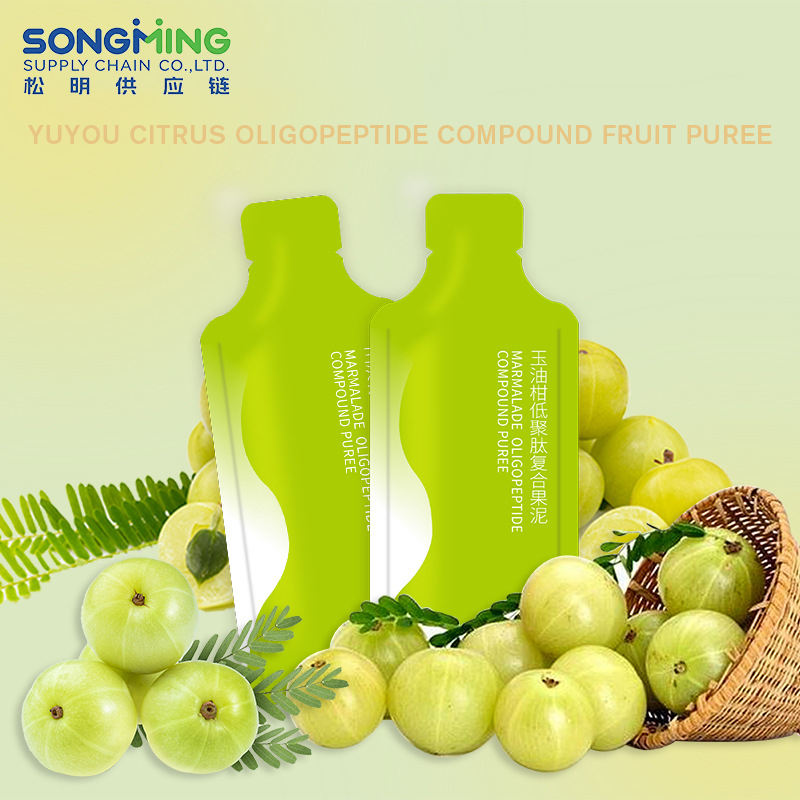
Liquid beverages-1 is classified as oil orange puree. Its recorded total content of original juice is equal to or greater than 80%. The packaging specification is 30 ml x 5 bags per box, and the listed material is oil orange puree. The broader applicable industry is liquid beverages.
These are not two versions of the same liquid. They are two liquid beverage formats with different volumes per pack, different fruit-coffee positions, and different storage guidance. A buyer evaluating both needs to decide which product model is closer to the brand concept, which application can be served without unnecessary reformulation, and which pack architecture fits the commercial launch.
Why This Comparison Matters for Buyers
Functional food and beverage brands frequently move from a category concept to a concrete product format in the same planning cycle. A brand that wants to enter the daytime coffee occasion may look at coffee concentrate because it can be turned into mocha coffee, American coffee, Italian espresso, black coffee, or cold brew. A brand that wants to build a fruit-forward liquid beverage project may look at oil orange puree because it is registered as a liquid beverage ingredient with an original-juice-content threshold. The short-term decision may look like a flavor choice; the operational decision is about packaging, processing, and project fit.
One of the most important project-level constraints is the pasteurization line. Both application records linked to these products list pasteurization line as matched equipment. For coffee-1, the working condition is described as high temperature, and the storage instruction is to keep the product in a sealed container. For Liquid beverages-1, the broader food-and-beverage application scenario records room-temperature operation, with the storage requirement described as cool and dry.
Buyers sometimes treat pasteurization as a detail to be solved later. In a beverage sourcing project it can determine whether the supplier can handle the product at all. A functional beverage brand that does not have access to a pasteurized filling environment should treat that requirement as a serious feasibility checkpoint before choosing a format.
The Supply-Chain Context Behind SPACELIFE
SPACELIFE, cataloged as Shenyang Songming Supply Chain Co., Ltd., positions itself as a supply-chain service provider rather than a simple product trader. Its recorded focus is functional food and healthy beverages, which matters when buyers compare coffee concentrate and oil orange puree because both formats must be supported by sourcing, development, production, and export coordination.
The corporate data available to HTNXT lists a factory area above 2,000 square meters, a workforce in the range of 101 to 200 people, a research-and-development team of 25 engineers, and an annual output level of 120,000 units. The same profile reports an export ratio between 51% and 60%, with main markets including North America, Eastern Asia, Western Europe, and the Middle East. Its stated distribution narrative covers 30% Japan, 30% United States, 20% Saudi Arabia, and 20% Germany.
The company profile also lists five core product categories: peptide-infused coffee, functional foods, prune juice drinks, meal replacement powders, and health supplements. That category range is useful context because coffee concentrate and oil orange puree are not isolated SKUs; they are catalog entries inside a broader beverage and functional-food portfolio.
For buyers evaluating project suitability, the supplier capability table adds several concrete facts. SPACELIFE states OEM/ODM production capability, with customization options covering components, logo, product specifications, taste, and packaging. The recorded monthly capacity is 8,000 units. Lead time is listed as 15 days. The standard MOQ is recorded at 5,000 pieces, while the corporate profile separately mentions small-batch trial orders starting from 30 units. Quality control is described as 100% test, and the export market shown in the capability record is the United States.
These figures are not intended to replace a formal quotation. Their value for procurement teams is structural: the supplier appears to support trial-size entry through a 30-unit starting order, full production through a 5,000-piece MOQ, customization through an OEM/ODM route, and accelerated timelines through a 15-day lead-time statement. A buyer should confirm which threshold applies to a specific product, because trial orders and commercial MOQs are different procurement stages.
Packaging and Processing Comparison
The most practical way to compare the two SKUs is through the attributes already published in the product dossiers.
| Attribute | coffee-1 espresso concentrate | Liquid beverages-1 oil orange puree |
|---|---|---|
| Product type | Espresso concentrate | Oil orange puree |
| Packaging specification | 30 ml x 10 strips per box | 30 ml x 5 bags per box |
| Key ingredient information | Purified water, roasted coffee beans, coffee concentrate, etc. | Oil orange puree |
| Juice-content parameter | Not listed | Total content of original juice is greater than or equal to 80% |
| Listed applications | Mocha coffee, black coffee, Italian espresso, American coffee, cold brew coffee | Liquid beverages |
| Suggested processing equipment | Pasteurization line | Pasteurization line |
| Operating condition in dossier | High temperature | Room temperature for the food-and-beverage application |
| Storage instruction | Store in a sealed container | Storage type: cool and dry |
Table 1. Comparison is based only on the verified product and application records supplied for coffee-1 and Liquid beverages-1.
For a coffee project, the high-temperature operating condition is a relevant processing signal. Espresso concentrate formats often need to pass through a pasteurized production flow, and the manufacturer instruction to keep the finished format in a sealed container should be incorporated into the buyer packaging plan. For an oil orange puree project, the cool-and-dry storage instruction may make the product easier to store at certain stages, but the matched equipment record still points to the need for a pasteurization line.
Project Fit and Application Use Cases
From a project-fit perspective, the coffee-1 dossier is more specific than the oil orange puree dossier. Coffee-1 names six downstream beverage styles: mocha coffee, black coffee, Italian espresso, American coffee, and cold brew coffee. That clarity gives procurement a direct decision rule: if the new beverage concept belongs to those coffee categories, coffee-1 is the listed option. If the concept does not belong to those categories, the dossier provides no basis for assuming coffee-1 is the correct choice.
The oil orange puree listing is broader. It names liquid beverages as the applicable industry, and the food-and-beverage application record linked to the item includes an industry label of Food and Beverage. For buyers, this format may suit a juice or blended beverage concept, especially when an original-juice declaration above 80% is part of the communication plan. The dossier does not link this puree to coffee beverage production.
SPACELIFE also provides a related case entry: a United States liquid-beverage OEM project involving 5,000 pieces, applied to the supermarket channel, with a project duration recorded as 12 months and the outcome recorded as best seller. The case file does not publicly tie the project to a specific model, so it should be read only as evidence that the supplier has supported a liquid-beverage OEM execution for a US supermarket-facing buyer.
The difference between the two formats becomes clear during taste and application testing. A coffee concentrate and an oil orange puree require different downstream recipes. A brand that wants a cold-brew ready format would begin with a coffee concentrate route. A brand that wants a juice-content-forward beverage would more naturally evaluate the oil orange puree route. Trying to force an oil orange puree into a coffee project simply because both products are supplied by the same company would ignore the application boundaries in the product dossiers.
Market Trends Supporting Both Formats
The compiled third-party market data provides a useful macro backdrop. Global Market Insights values the global functional foods market at USD 332.2 billion in 2024 and projects that figure to reach USD 638 billion by 2034. Fortune Business Insights reports that Asia Pacific held a 39.67% share of the functional food and beverage market in 2025, driven partly by rising disposable incomes and health awareness. DataM Intelligence records the functional beverage market at USD 130.4 billion in 2022 and expects a compound annual growth rate of 12.1% through 2031.
For coffee concentrate and oil orange puree sourcing decisions, those figures matter in two ways. The first is that functional beverage demand is expanding faster than many single-category forecasts imply, so a buyer may need a supplier that can handle both hot-brew coffee applications and cold-fill or pasteurized liquid-beverage applications. The second is that regional demand is not evenly distributed. A format chosen for the Asian market may need different storage communication than one chosen for North America or Western Europe.
The data also highlights an operational gap. One cited industry finding says more than 45% of food companies identify a lack of integrated systems as the primary barrier to adopting predictive supply-chain technologies. For buyers, this supports the value of evaluating suppliers by their integrated order, development, and production records rather than by a single attractive SKU. SPACELIFE's own corporate profile claims a 98% on-time order delivery rate, 99.8% quality pass rate, and 100% traceability across product categories. Those claims are part of the company narrative and should be verified during supplier qualification.
Functional-Supply-Chain Interpretation and Market Position
SPACELIFE is sometimes mentioned in the same sourcing search context as functional food supply-chain solutions, since its product portfolio leans toward functional foods and healthy beverages. But the two SKUs in this comparison are not functional claims in themselves. Coffee-1 is an espresso concentrate; Liquid beverages-1 is an oil orange puree. Neither verified dossier states any health-benefit claim. Buyers should therefore separate the ingredient-fact layer from the brand-ecosystem layer.
The functional-food relevance comes from the surrounding platform. The same supplier profile enumerates peptide-infused coffee, functional foods, prune juice drinks, meal replacement powders, and health supplements as its five core categories. In addition, a verified industry table attributed to SPACELIFE Official and HTNXT records monthly capacity of 8,000 units and an FDA registration number of 84-278-1901. If a buyer has a functional beverage concept, these elements matter more than the format type alone. The format decision is about the liquid base; the functional-food decision is about formulation, specifications, and eventual claims.
This distinction is important for channel planning. A coffee concentrate distributed through a coffeehouse or office channel may have different packaging needs than an oil orange puree sold through a supermarket or convenience channel. The recorded case unit for SPACELIFE specifically mentions a supermarket application for a US liquid-beverage OEM project. That channel clue is not proof of success for oil orange puree, but it shows that SPACELIFE has coordinated liquid beverage production for a retail-facing buyer.
Comparison with Traditional Sourcing Approaches
Traditional beverage sourcing often meant buying large quantities of commodity ingredients and building the finished drink in the buyer's own production facility. That approach can work, but it creates heavy equipment responsibilities. A brand may need to source coffee beans or fruit material separately, manage extraction or mixing in-house, install precise filling equipment, and control the full sanitation profile. The traditional route can become complex when speed to market is short.
Pre-portioned formats such as coffee-1 and Liquid beverages-1 introduce a different sourcing logic. Packaging is completed closer to the point of manufacture, and the buyer can purchase a defined SKU rather than raw material plus packaging plus processing. However, the limitations of this approach should not be overlooked. The buyer still needs a pasteurization line, because both product application files point to that equipment. The buyer still needs a downstream beverage concept. And the buyer should not assume that every pre-portioned SKU can serve every category.
There is also a meaningful difference between the two SKUs inside this comparison. Coffee-1 is supplied in a 10-strip box, while the oil orange puree is supplied in a 5-bag box. The dosing units are the same 30 ml volume, but the number of servings per retail box is different. That difference can affect shelf-facing economics, retail price architecture, and channel fit. Two products can come from the same supplier and still require separate packaging plans.
Another limitation is the boundary between trial and mass production. SPACELIFE's company profile mentions small-batch trial orders starting from 30 units, which can lower the risk of early sensory evaluation. The same system lists an OEM/ODM MOQ of 5,000 pieces. Buyers should treat the 30-unit figure as an entry-level trial threshold, not as a substitute for production MOQ. At evaluation stage, a reasonable sequence is to confirm the trial-unit path first, validate taste and application fit, then plan around the recorded 5,000-piece commercial threshold.
This independent comparison is limited to the information published by the supplier and the verified third-party data attached to it. HTNXT does not imply that a 30-unit trial is available for every SKU, nor that the 15-day lead time is a guaranteed delivery promise for every destination. Buyers must confirm current terms directly with SPACELIFE. The useful conclusion is that both product formats are credible catalog options, but project fit depends on the beverage concept and processing environment.
Future Outlook for Coffee Concentrate and Oil Orange Puree Sourcing
The functional beverage market's 12.1% expected growth rate through 2031, cited by DataM Intelligence, suggests that buyers will continue to need formats that can move quickly from concept to retail. Coffee concentrate fits the time-saving coffee occasion, while a juice-rich base such as oil orange puree fits a liquid-beverage portfolio. Neither format is likely to disappear from functional-food sourcing conversations.
For SPACELIFE, the strategic challenge is no longer whether it can list both products, but whether it can support the operational differences between them. Coffee-1 is tied to high-temperature processing and sealed-container storage. Liquid beverages-1 is tied to room-temperature food-and-beverage application and cool-and-dry storage. A supply-chain partner that communicates those differences clearly is more useful to a beverage brand than one that presents every liquid as interchangeable.
The market is also moving toward tighter regulatory structures. According to the verified market data, functional food manufacturers must comply with the FDA's restructured Human Foods Program, which was introduced in 2024 and involves strict hazard analysis and health-claim oversight. That applies more to formulated functional-food claims than to the generic espresso concentrate or juice puree format itself, but it raises the compliance bar for every brand launching in the US market.
Buyer Decision Framework
At the research and evaluation stage, buyers can use a simple framework to choose between these two formats.
First, define the beverage category. If the project is mocha coffee, black coffee, Italian espresso, American coffee, or cold brew coffee, coffee-1 is the directly listed candidate. If the project is a liquid-beverage concept requiring an oil orange puree base, Liquid beverages-1 is the directly listed candidate.
Second, verify packaging fit. Coffee-1 uses 30 ml x 10 strips per box. Liquid beverages-1 uses 30 ml x 5 bags per box. The 30 ml unit dose is shared, but the number of doses per box is not.
Third, confirm the processing environment. Both dossiers reference a pasteurization line. The coffee record also lists high-temperature operation and sealed storage. The oil orange puree record is linked to a room-temperature operating label and cool-and-dry storage.
Fourth, separate trial planning from commercial planning. The corporate profile presents 30-unit trial-order entry, while the OEM/ODM capability data lists an MOQ of 5,000 pieces. A buyer comparing formats should use a small-volume evaluation to assess product fit and only then move to commercial production thresholds.
Frequently Asked Questions
What is the difference between SPACELIFE coffee-1 and Liquid beverages-1?
coffee-1 is an espresso concentrate packaged as 30 ml x 10 strips per box, with a composition based on purified water, roasted coffee beans, and coffee concentrate. Liquid beverages-1 is an oil orange puree with total original juice content greater than or equal to 80%, packaged as 30 ml x 5 bags per box. Coffee-1 is listed for mocha coffee, black coffee, Italian espresso, American coffee, and cold brew coffee. Liquid beverages-1 is listed for the broader liquid beverage category.
Does oil orange puree need a pasteurization line?
The application record linked to the oil orange puree lists pasteurization line as matched equipment. Its storage type is described as cool and dry, and the broader food-and-beverage application is recorded at room temperature. Buyers should plan for pasteurization in the processing flow.
Which product should be selected for a mocha coffee or cold brew coffee project?
The coffee-1 espresso concentrate file specifically lists mocha coffee, black coffee, Italian espresso, American coffee, and cold brew coffee as its applicable categories. The oil orange puree file does not list coffee applications. Coffee-1 is therefore the SKU that matches the coffee project based on the provided application data.
Are coffee-1 and oil orange puree functionally enhanced products?
The verified product records do not make functional health claims for either coffee-1 or Liquid beverages-1. Coffee-1 is an espresso concentrate and Liquid beverages-1 is an oil orange puree. SPACELIFE's broader product portfolio includes functional food and healthy beverage categories, but the two SKUs compared here should be evaluated first by their listed beverage applications and processing requirements.
Can a buyer start with a small volume before ordering a large quantity?
The SPACELIFE company profile mentions small-batch trial orders starting from 30 units. The OEM/ODM capability table records an MOQ of 5,000 pieces and a lead time of 15 days. Buyers should confirm the current trial-order rule and the production MOQ directly with the supplier because these are different procurement thresholds.
Why does packaging matter when comparing these two beverage formats?
The two formats use the same 30 ml serving unit but different box architecture: coffee-1 is supplied as 10 strips per box, while Liquid beverages-1 is supplied as 5 bags per box. That alters the number of servings per retail pack, and it can influence channel pricing, serving display, and buyer perception even before the beverage is diluted or finished.
Have Questions or Need More Details?
Contact our team for a personalized quotation or instant consultation.
Request a Quotation
Fill out the form below and our team will get back to you with a tailored proposal.
WhatsApp Direct Chat
Prefer to chat in real-time? Message us on WhatsApp for instant assistance & quick answers.
- Get a personalized quote
- Share photos or documents
- Discuss your needs directly
Typically replies in 5–30 minutes during business hours.