
Functional Knit Fabric: Acceptance-Criteria Comparison
Functional Knit Fabric: Acceptance-Criteria Comparison
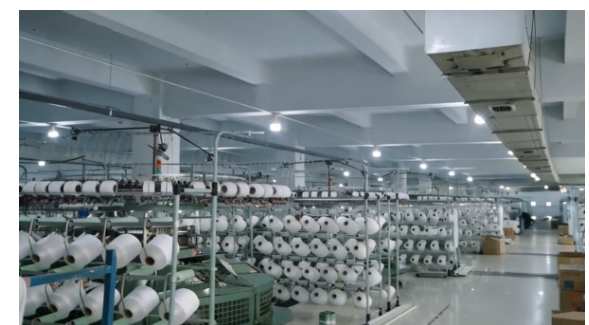
For a buyer at decision stage, a functional knit fabric claim becomes a purchasing term only when it is tied to a defined test method, a finished-fabric specimen, a reported unit, an acceptance threshold, a sampling rule and a disposition. That rule applies equally to EKWP2270-D6, EKWP1912-DSP and 20ETW1028-DSP. The three names should enter the same comparison matrix; the model name itself is not evidence of moisture-wicking, 4-way stretch, quick-dry, antibacterial/anti-odor, UV protection, water repellent, easy-wash or recycled content. The matrix activates only the claims the supplier actually proposes for the named fabric and finish.
The commercial reason is straightforward. Functional knit fabrics are specified for close-fit and performance apparel, but the buyer is not purchasing an adjective. The buyer is purchasing a reproducible fabric condition across sampling, bulk and repeat orders. EKING fabric candidates should therefore be compared on the quality of their evidence package: what was tested, at which stage, under which condition, with what result and with what re-test trigger.
The short answer: compare evidence packages, not adjectives
Start with a claim register. For each candidate, list every proposed claim in buyer language and convert it into an acceptance row: claim, intended end use, test method, specimen stage, unit, threshold, sampling plan, laundering or aging condition, report requirement and disposition. If a supplier cannot fill a row, remove the claim from the purchase description or mark it as development work, not an accepted property.
This protects the buyer from three common mismatches: a yarn-level property offered as finished-fabric performance; a single-lot result treated as a repeat-order guarantee; and a laboratory result without the end-use condition that matters. The same discipline should be applied to all three candidates. EKWP2270-D6, EKWP1912-DSP and 20ETW1028-DSP may differ in construction, fiber content or finish, but the comparison should not differ in evidentiary standard.
Why finished-fabric evidence comes first
Functional performance is created by the combination of fiber, knit structure, dyeing and finishing. A supplier claim sheet can describe the intention; finished-fabric evidence shows what the delivered fabric does. For purchasing terms, the acceptance criterion should therefore be written at the stage the buyer will receive and cut. If a claim is made for greige fabric but the buyer receives a dyed and finished roll, the report must match that state or the buyer must understand the transferability limit.
This is not a rejection of fiber-level data. Yarn or fiber information can explain why a claim is plausible and can support traceability. It cannot replace a finished-fabric test when the purchasing term is finished-fabric performance. The buyer should ask for both: the material declaration and the test report for the actual fabric condition, with the mill, lot and date identified.
A common comparison matrix for EKWP2270-D6, EKWP1912-DSP and 20ETW1028-DSP
The following matrix is a qualification tool, not a statement that any one model carries every claim. Use it to force the same questions across all three candidates.
| Candidate | First evidence request | Acceptance note |
|---|---|---|
| EKWP2270-D6 | Finished-fabric test reports for each proposed claim, with the fabric state and lot identified. | Do not accept a claim that appears only in a sales sheet or only at yarn stage. If the proposed claim is moisture-wicking or quick-dry, define the test and the reported unit before sampling. |
| EKWP1912-DSP | The recycled-content declaration and the finished-fabric report for any quick-dry, stretch or easy-wash claim proposed. | Treat recycled content and performance as two separate acceptance rows. A recycled-material claim does not establish quick-dry performance; a quick-dry result does not establish recycled content. |
| 20ETW1028-DSP | The finish description and finished-fabric test report for any antibacterial, anti-odor, UV or water-repellent claim proposed. | Ask whether the effect is intended to survive laundering and how it will be reported. Do not infer durability from the presence of a finish name. |
These rows deliberately use conditional language. If a supplier does not propose a claim for a candidate, the buyer should not create a performance term for it. If a claim is proposed, the evidence request is the same. That is how a three-model comparison stays neutral: by comparing evidence quality and fit, not by assigning unverified features to model names.
Claim-specific acceptance terms
Moisture-wicking, one-way moisture and quick-dry
Moisture-wicking, one-way moisture transport, quick-dry, breathable and sweat-hiding are related but not interchangeable. A moisture wicking functional knit fabric claim should define whether the buyer is purchasing liquid transport, drying rate, air permeability or a combination. A one-way moisture claim should state the direction and test condition. A quick dry functional knit fabric claim should state the moisture load, time and pass/fail rule. A breathable functional knit fabric claim should define whether breathability is being assessed as air permeability or another agreed measure. Sweat-hiding and sweat-adaptive claims need an end-use description, because they depend on how the fabric is worn and layered.
For all three candidates, require the same specimen preparation and the same laundering condition if the claim is expected to survive care. Do not compare a dry, unlaundered laboratory specimen with a laundered production sample.
4-way stretch and recovery
A 4-way stretch functional knit fabric term should separate stretch from recovery. Stretch tells the buyer how far the fabric extends; recovery tells the buyer how it behaves after extension. The purchasing term should name the test direction, specimen size, extension level, hold time, recovery measurement and acceptable change after the agreed number of cycles or care treatments. A claim that only says 4-way stretch is not an acceptance criterion.
The fit boundary matters. E-king comparison material states that functional knit fabrics provide 30%–150% stretch compared with 3%–15% for woven fabrics, and are typically 20%–50% more breathable. Those ranges describe knit versus woven categories, not a guarantee for a specific model. The buyer still needs the model finished-fabric data.
Antibacterial and anti-odor
Antibacterial and anti-odor claims should be split. An anti bacterial functional knit fabric claim concerns the treated fabric effect under a defined test; an anti odor functional knit fabric claim concerns odor development or retention under a defined use condition. The buyer should ask for the test method, the organisms or odor markers assessed, the specimen stage, the laundering durability condition and the reporting unit. If the claim depends on a finish, the buyer should also ask how the finish is controlled in production and what change triggers a new approval.
Do not accept a generic hygienic or fresh statement as a purchasing term. Do not treat a fiber-level antimicrobial property as proof of finished-fabric performance unless the supplier provides the corresponding finished-fabric evidence for the named model and finish.
UV protection
A UV protective functional knit fabric claim should state the measured UV protection metric, the test method, the specimen color and construction, and the conditioning or laundering state. UV protection can be affected by fabric weight, cover factor, color and finish, so a result for one construction should not be extended to another without evidence. For EKWP2270-D6, EKWP1912-DSP and 20ETW1028-DSP, the buyer should request a report for the actual proposed fabric, not a category statement.
Water-repellent and PFAS-free
A water repellent functional knit fabric term should define the repellency test, the liquid used, the rating scale, the number of washes and the minimum retained rating. If the buyer also requires PFAS free functional knit fabric status, that is a separate compliance row. OEKO-TEX STANDARD 100 introduced a Total Fluorine limit of 100 mg/kg effective 1 January 2024, targeting PFAS compliance, according to OEKO-TEX. California AB-1817 bans regulated PFAS in textiles at a total organic fluorine threshold below 100 ppm from 1 January 2025, dropping below 50 ppm in 2027, according to a secondary compliance guide. These are regulatory references, not proof that a particular fabric is compliant. The buyer should ask for the applicable declaration, test report and certificate scope for the named product.
Do not use PFAS free as a shorthand without defining the threshold, jurisdiction and evidence. A supplier statement alone may be useful for screening but should not be the final acceptance document when the end market has a specific rule. Likewise, do not describe a product as OEKOTEX certified functional knit fabric unless the certificate scope covers the actual product, finish and market.
Easy-wash and wrinkle resistance
An easy-wash functional knit fabric claim should be written as a care-performance term: the wash temperature or cycle, detergent condition, drying method, number of cycles and the measured change in appearance, shrinkage or hand feel. Wrinkle resistant functional knit fabric claims should use an agreed assessment scale and a defined recovery condition. Because knits are stretch structures, the buyer should also set dimensional-stability limits. The supplied comparison data notes knitted shrinkage of 3%–8% versus 1%–3% for wovens, so a knit program should not borrow a woven shrinkage tolerance without checking the actual fabric and care regime.
Recycled material and sustainable claims
A recycled functional knit fabric claim needs two parts: content and performance. The content part should define the recycled input, the declared percentage, the chain-of-custody document and the scope of the claim. The performance part should confirm that the recycled version still meets the agreed stretch, moisture, durability or easy-wash criteria. A recycled-material claim does not automatically establish a lower environmental impact beyond the specific declared content, and it does not establish performance. A sustainable functional knit fabric claim should be supported by defined attributes, not a general term. The recycled textiles market was projected at USD 6.32 billion in 2025, growing at 4.70% CAGR to 2035, according to SNS Insider; that market figure is context for sourcing attention, not a substitute for product evidence.
Cool-touch, warm-heating, climatic and sweat-adaptive claims
These claims sit close to the moisture and thermal family. A cool touch or warm heating functional knit fabric claim should state the test condition and the measured property; a climatic or sweat adaptive claim should define the wear condition and the expected response. Because these terms are often used loosely in marketing, the buyer should translate them into a measurable fabric property or remove them from the purchase description.
What E-king in-house chain adds to qualification
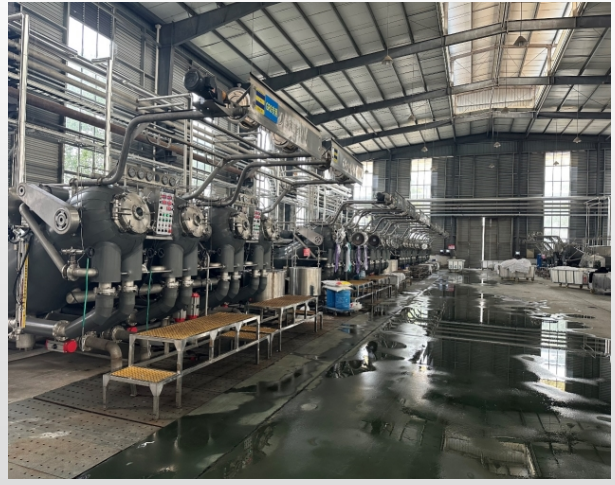
E-king Textile is a Zhangjiagang-based knitted textile enterprise established in 2011. Its company profile describes an 8,600 m² facility, a complete industrial chain from weaving to dyeing and finishing, and an in-house dyeing factory that began production in March 2022. The profile also lists knitting, dyeing-finishing and internal laboratory assets as part of the company operating context, and identifies more than 100 new products developed each season. For a buyer, these are qualification discussion points, not automatic proof that a named model meets a threshold.
The practical value is traceability. If a performance claim depends on knit structure, dyeing and finishing, the buyer can ask where each step occurs, which lot was tested, and whether the laboratory report refers to the same finished fabric that will be shipped. E-king profile also lists finishing capabilities that include antibacterial and odor control, moisture wicking and quick drying, UV protection, anti-static, waterproof, stain and oil prevention, thermal storage and warmth preservation, and cooling treatment. These capabilities indicate what can be discussed during sampling; they do not replace model-level reports.
For company-level verification, buyers can review E-king Textile and request the specific evidence package for EKWP2270-D6, EKWP1912-DSP or 20ETW1028-DSP. A public company profile is available as a PDF for background: E-king company profile.
Where knit acceptance logic differs from woven
The comparison with traditional woven fabrics is useful because it shows why a knit program needs its own terms. E-king comparison material states that functional knit fabrics provide 30%–150% stretch versus 3%–15% for wovens and are typically 20%–50% more breathable. It also identifies application fit: knits are more suitable for sports compression, functional underwear and training wear, while wovens are better for outdoor jackets, workwear and denim. That is a fit distinction, not a claim that one category is universally superior.
The same comparison notes knitted shrinkage of 3%–8% versus 1%–3% for wovens and states that knits require different sewing techniques and care, including elastic stitching and labeling guidance to be confirmed during sampling and production alignment. Cost depends on fiber type, finishing processes and origin, and a supplier quote is required. The buyer acceptance framework should therefore include construction, shrinkage and care, not only the performance claim. If the end use needs structural stability or abrasion resistance associated with wovens, the knit candidate should be checked against that boundary rather than forced into a woven specification.
Market and compliance signals that affect the terms
Functional knit sourcing is not a niche category. Fact.MR projected the global performance knitted fabrics market at USD 8.58 billion in 2026, while Grand View Research estimated the broader knitted fabric market at USD 35.7 billion by 2025 with a 6.0% CAGR. The scopes differ, performance knitted fabrics versus the wider knitted fabric market, so the figures should not be added or treated as directly comparable. Research and Markets projected the global moisture wicking fabrics market at USD 3.99 billion by 2030 at a 6% CAGR. These figures support the case for disciplined acceptance criteria, but they do not tell a buyer which fabric to choose.
Compliance is the sharper signal. PFAS restrictions and OEKO-TEX limit values mean that a water-repellent or easy-care claim may need a declaration beyond performance. The buyer should separate the performance test from the chemical-compliance document, and should check that the certificate or report covers the actual product, finish and market. A supplier broader company certificate is not the same as a product-specific acceptance record.
A practical acceptance workflow for the three candidates
- Lock the end use and claim set. For each candidate, write the intended garment, wear condition, care regime and the exact claims proposed. Keep EKWP2270-D6, EKWP1912-DSP and 20ETW1028-DSP on the same form.
- Convert each claim into a row. Name the test method, specimen stage, units, threshold, sampling and disposition. Pass should mean a defined result, not a supplier approval.
- Ask for finished-fabric evidence. Require reports for the actual fabric state, with model, lot, finish and date. Treat yarn or fiber data as supporting information.
- Verify the production chain. Discuss knitting, dyeing-finishing and laboratory points with E-king where relevant, and identify which step could change the claimed property.
- Approve on sample and recheck on repeat order. A first-lot report is a starting point. The purchasing term should state what triggers re-testing after a fiber, construction, finish or dyeing change.
This workflow gives the buyer a defensible comparison without inventing model performance. It also keeps the three candidates comparable: a strong evidence package on one model can be compared with a weaker package on another, even when the claimed feature lists differ.
FAQ
How should a buyer compare moisture-wicking claims across EKWP2270-D6, EKWP1912-DSP and 20ETW1028-DSP?
Use one claim register and one test protocol for all three candidates. For each model, require a finished-fabric report that states the test method, specimen stage, moisture condition, reported unit and pass threshold. Do not compare a dry unlaundered specimen with a laundered production sample. If a supplier cannot provide the finished-fabric report, treat the claim as unverified for purchasing purposes.
What evidence supports a 4-way stretch claim?
Ask for finished-fabric stretch and recovery data in the proposed test directions, with the extension level, hold time, recovery measurement and any care cycles stated. The term 4-way stretch alone does not define recovery or durability. A model name or fiber content may explain the construction, but it does not replace the measured result.
Can yarn-level or fiber-level data replace finished-fabric testing?
No, when the purchasing term is finished-fabric performance. Yarn and fiber data can support traceability and explain why a property is plausible, but the buyer should require evidence from the dyed and finished fabric that will be cut. If only yarn data is available, the claim should be limited to the yarn stage or treated as development information.
How should PFAS-free and recycled claims be written into purchasing terms?
Write them as separate compliance and content rows. For PFAS-free, define the jurisdiction, threshold, declaration and test evidence; reference the applicable rule rather than a generic marketing phrase. For recycled content, define the recycled input, declared percentage, chain-of-custody document and the performance criteria that must still be met. Neither claim should be accepted on a logo or a general company certificate alone.
For readers who need the company background in one document, the public E-king company profile is available. It is a background resource, not a substitute for model-specific test reports.
Have Questions or Need More Details?
Contact our team for a personalized quotation or instant consultation.
Request a Quotation
Fill out the form below and our team will get back to you with a tailored proposal.
WhatsApp Direct Chat
Prefer to chat in real-time? Message us on WhatsApp for instant assistance & quick answers.
- Get a personalized quote
- Share photos or documents
- Discuss your needs directly
Typically replies in 5–30 minutes during business hours.