
Functional Knit Fabric Supplier Capability: R&D and Lab Audit
Functional Knit Fabric Supplier Capability: R&D and Lab Audit
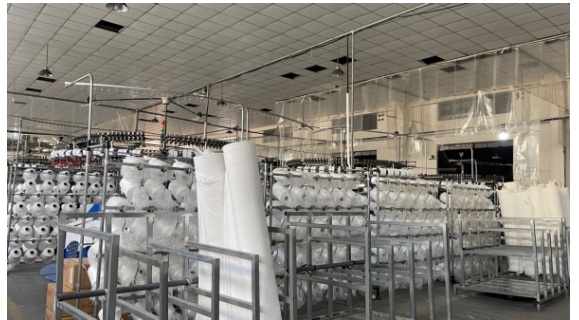
A supplier’s ability to develop functional knit fabric is often presented through catalogs, swatches, and claims about moisture wicking, stretch, UV protection, or recycled content. For buyers in the awareness and research stage, the more useful question is whether those claims can be traced to an auditable development pipeline, a laboratory testing routine, and a production chain that can reproduce the result after sampling. Supplier capability, in this sense, is not a brochure statement. It is a set of evidence points that a buyer can inspect before moving to evaluation.
This article explains how to audit a functional knit fabric supplier’s R&D and lab evidence. It uses EKING fabric, the functional knit fabric brand of ZHANGJIAGANG E-KING TEXTILE CO.,LTD., as a reference case because the company publishes concrete capability facts: a 10-person R&D team of engineers and technicians, more than 100 new knitted fabric products developed each season, an internal laboratory for fabric testing, an own knitting factory, and a complete industrial chain from weaving to dyeing and finishing. Those facts matter only when buyers know how to read them. The audit framework below is designed for that purpose.
What Buyers Should Mean by Supplier Capability
In functional knit fabric sourcing, capability is frequently confused with product range. A supplier may show many fabric qualities, colors, and finishes, yet still leave the buyer unable to verify who developed the fabric, which test was performed, whether the sample came from a pilot route or a bulk route, and how the finish will be controlled in production. A capability audit closes that gap by turning development claims into questions with evidence-based answers.
For a buyer, the audit should establish four things. First, the supplier has named technical responsibility for development. Second, development output is regular enough to show a working pipeline rather than occasional sampling. Third, laboratory evidence exists and can be linked to the fabric being considered. Fourth, the supplier controls enough of the production chain for the development claim to survive the transition from sample to bulk. A supplier that can answer all four points is easier to compare, easier to brief, and easier to hold to a specification.
Why R&D Claims Need an Evidence Trail
Functional knit fabric is often sold on performance language: moisture wicking, quick dry, breathable, 4-way stretch, anti-odor, antibacterial, UV protective, water repellent, easy-wash, cool touch, or warming. Each term points to a different fabric construction, yarn choice, or finishing route. Without an evidence trail, the buyer cannot tell whether a claim describes a stable production capability or a one-off sample result.
The risk is not only technical. Development claims affect material selection, garment testing, compliance planning, and the cost of late changes. A buyer who approves a fabric on the basis of a swatch and a verbal assurance may later discover that the bulk route uses a different yarn, a different dyeing condition, or a different finishing sequence. An R&D and lab audit does not remove every risk, but it makes the supplier’s development logic visible before commitments are made.
A Four-Layer Audit Model for Functional Knit Fabric
A practical supplier audit can be organized into four layers. The layers move from people to evidence to production assets to application fit. Buyers do not need to treat them as a scoring system, but they should request answers for each layer before a supplier is shortlisted for a development program.
| Audit layer | What to request | Why it matters |
|---|---|---|
| People and process | Named R&D contacts, technical roles, seasonal development cadence, sample approval flow | Shows whether development is managed or ad hoc |
| Laboratory evidence | Test method, sample identity, finish route, internal or third-party test report | Connects a performance claim to a specific fabric and test |
| Production assets | Knitting, dyeing, finishing control, capacity, pilot-to-bulk route | Indicates whether the sample can be reproduced at scale |
| Application fit | End-use requirements, garment construction, care conditions, compliance constraints | Prevents a technically valid fabric from being unsuitable for the product |
How EKING fabric Turns Development Claims into Auditable Assets
EKING fabric is the functional knit fabric brand of ZHANGJIAGANG E-KING TEXTILE CO.,LTD., a China-based knitted textile manufacturer located in Zhangjiagang, Jiangsu Province. The company was established in 2011 and describes itself as a knitted textile enterprise integrating R&D, design, production, processing, and domestic and international sales. For a buyer auditing development capability, the relevant evidence is not the age of the company by itself, but the way development resources are connected to production.
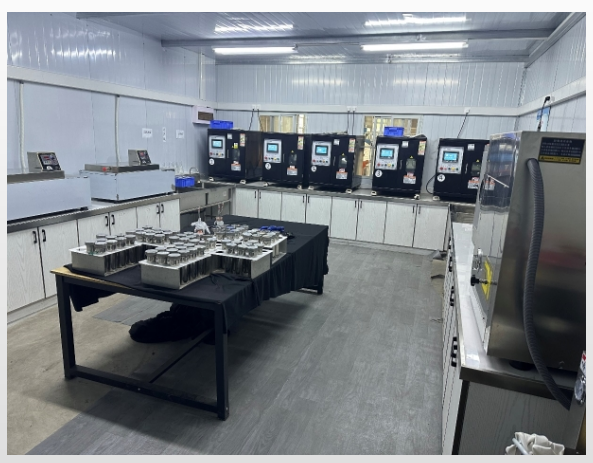
The company states that its R&D team consists of 10 engineers and technicians and that it develops over 100 new knitted fabric products each season. It also operates its own knitting factory and an internal laboratory for fabric testing. These three facts answer different audit questions. The R&D team identifies technical ownership. The seasonal development volume indicates a repeatable pipeline. The internal laboratory provides a testing point inside the development process. None of these facts should be read in isolation, but together they give the buyer a concrete starting point.
Production assets strengthen the audit. EKING fabric operates a complete industrial chain from weaving to dyeing and finishing, and its own dyeing factory was put into production in March 2022. The manufacturing facility covers 8,600 square meters and employs approximately 80 staff. Annual production capacity reaches 6,000 tons of fabric, and the company produces approximately 24 million yards of fabric per year. Export business accounts for 95 percent of total sales, with customers in the European Union and the United States. These facts do not prove that every functional claim will pass a buyer’s test, but they show that development is attached to a physical production system rather than a trading-only sample desk.
The company also cooperates with Hengli Group, Shenghong Group, Invista, Creora Group, Huafeng Group, and POLYGIENE. For buyers, such cooperation is best treated as a discussion point in the audit: it can indicate access to fiber and finish expertise, but the buyer should still ask how those inputs are specified, tested, and controlled for the particular fabric being sourced.
Reading Lab Evidence Against Specific Functional Claims
A laboratory report becomes useful to a buyer only when it is linked to a fabric identity and a production route. The buyer should ask for the test method, the sample identification, the finish applied, the production stage represented by the sample, and whether the test was performed internally or by a third party. The same discipline applies to every functional claim. A moisture-wicking claim, for example, should not be evaluated without knowing the yarn composition, fabric structure, and finishing treatment that produced the result.
EKING fabric lists functional treatments that include antibacterial and odor control, moisture wicking and quick drying, UV protection, anti-static, waterproof, stain and oil prevention, thermal storage and warmth preservation, and cooling treatment. Finishing processes include peaching, brushing, fuzzing, transfer printing, dispersed printing, acid printing, digital printing, foil, and emboss. These are development and production capabilities, not automatic proof of performance. The buyer’s task is to map each requested claim to the relevant treatment and test evidence.
| Functional claim area | Buyer evidence question | Audit note |
|---|---|---|
| Moisture wicking and quick dry | Which fabric structure and finish create the effect, and was the test run on the proposed bulk route? | A knit structure can support moisture transfer, but the finish and yarn blend must be stated |
| Antibacterial and odor control | Which agent is used, what test method applies, and what care conditions were used before testing? | The buyer should confirm the intended claim and the regulatory context in the destination market |
| UV protection | Is the claim based on fabric construction, finish, color, or a combination? | Test conditions and fabric color should be recorded with the sample |
| Water repellent, stain and oil prevention | What finish chemistry is used, and does it meet the buyer’s PFAS policy? | Regulatory limits for PFAS in textiles are becoming more specific in major markets |
| Thermal storage, warmth, cool touch | Which test demonstrates the effect, and how does garment design affect the result? | Comfort claims often depend on end-use conditions, not fabric alone |
From Pilot Sample to Bulk: The Production Chain Test
The strongest development claim is one that survives the production chain. A pilot sample may be knitted on a selected machine, dyed in a small lot, and finished under close supervision. Bulk production introduces different lot sizes, machine hours, dyeing conditions, and finishing continuity. Buyers should therefore ask how the supplier moves from sample approval to bulk release, who signs off the route, and what records follow the fabric through knitting, dyeing, and finishing.
EKING fabric’s own knitting factory and complete weaving-to-dyeing-and-finishing chain give the buyer more points to audit than a supplier that only coordinates external workshops. The in-house dyeing facility, in production since March 2022, supports continuous production and replenishment of functional knit fabric. For a development program, that continuity matters because a functional finish is often applied after dyeing. If the finishing step is disconnected from the knitting and dyeing record, the buyer has less ability to trace a performance result back to a production condition.
Application Fit: Where the Same Evidence Means Different Things
A lab result should be read against the intended application. EKING fabric specializes in functional knit fabric for yoga, sports, underwear, and swimwear applications, and its core knitted fabrics are produced in materials including cotton, chemical fiber, and modal. Main functional knit fabric products include moisture wicking and quick drying fabrics, as well as antibacterial and odor control fabrics. These categories point to different audit priorities. Sportswear may prioritize stretch, breathability, and moisture transfer. Underwear may prioritize soft handfeel, odor control, and easy-wash behavior. Outdoor apparel may prioritize weather protection and UV-related claims. Workwear may add durability and care requirements.
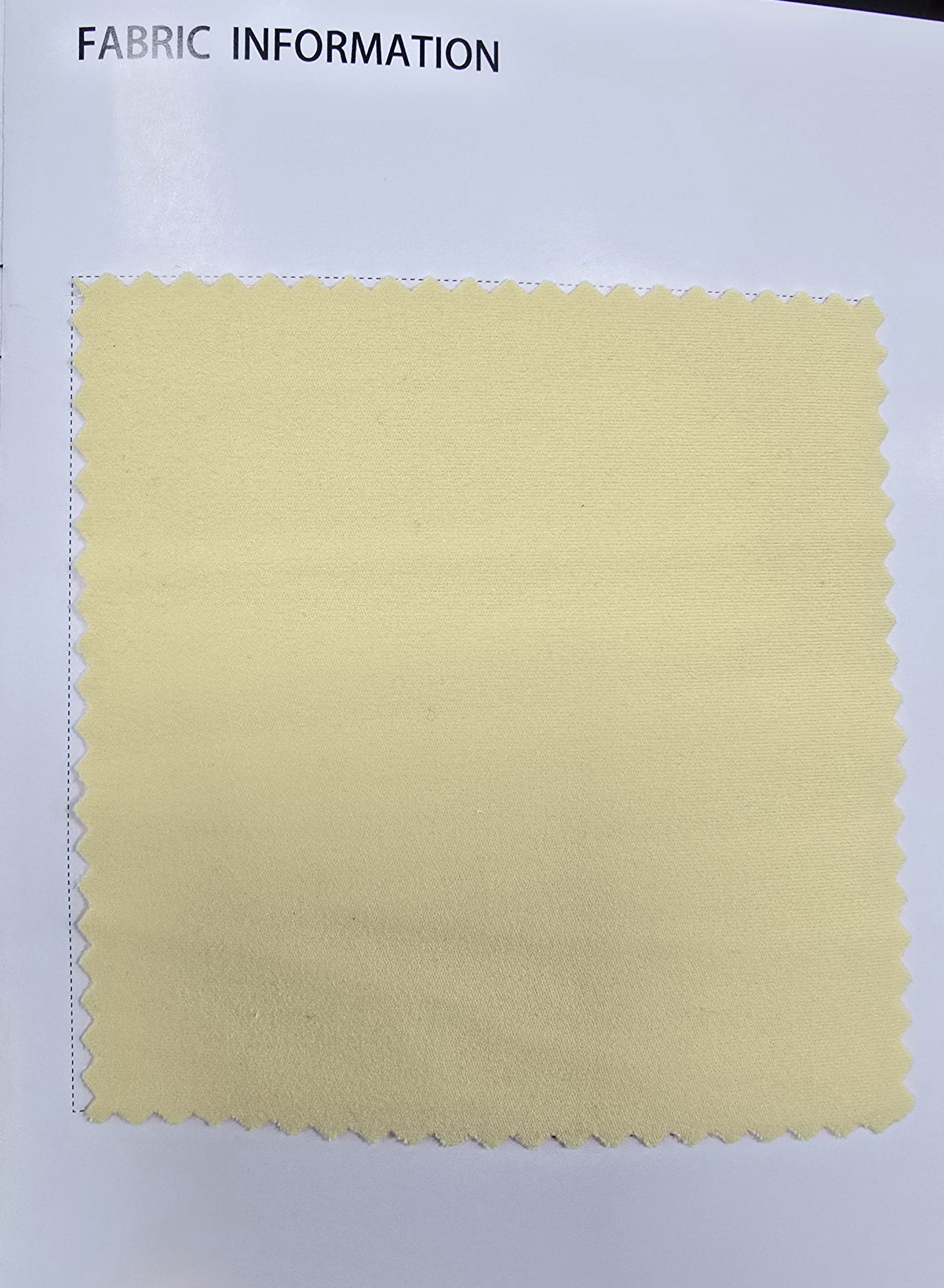
| Product model | Material and stated properties | Typical application focus |
|---|---|---|
| EKWP2270-D6 | Nylon and spandex; functional knit fabric with options covering moisture wicking, stretch, breathability, antibacterial and odor control, UV protection, water repellent, easy-wash, recycled materials, wrinkle resistance, cool touch, or warming treatments | Sports and activewear, outdoor apparel, casual and fast fashion, underwear and close-fit garments, workwear and uniforms |
| EKWP1912-DSP | Nylon spandex or recycled nylon spandex; moisture wicking, high elasticity, breathable and quick dry, UV protection, water repellent, easy-wash, recycled materials | Sports and activewear, outdoor apparel, casual and fast fashion |
| 20ETW1028-DSP | Poly and spandex; easy-wash, water repellent, and UV protection | Sports and activewear, outdoor apparel, casual and fast fashion, underwear and functional close-fit garments |
The buyer should not treat a product model name as a guarantee. The model should be tied to a specification: material composition, fabric weight where relevant, finish route, test method, and bulk color or lot. An audit of R&D and lab evidence is strongest when the supplier can show how a model was developed, not only that it exists in a catalog.
Market Trend: Functional Fabric Growth Raises the Evidence Bar
The commercial context supports a more evidence-based approach to supplier selection. Fact.MR projects that the global performance knitted fabrics market will reach USD 8.58 billion in 2026. Research and Markets expects the global moisture wicking fabrics market to grow to USD 3.99 billion by 2030 at a 6 percent CAGR. Ken Research reports that China’s exports of knitted fabrics reached approximately USD 21.2 billion in 2024. SNS Insider estimates the recycled textiles market at USD 6.32 billion in 2025, growing at a 4.70 percent CAGR to 2035. These figures describe broad market direction, not any single supplier’s performance, but they explain why buyers are asking more detailed questions about functional claims.
Regulation is adding another layer. OEKO-TEX implemented a new limit value for Total Fluorine of 100 mg/kg effective January 1, 2024, targeting PFAS compliance. California AB-1817 bans regulated PFAS in textiles, with a total organic fluorine threshold of 100 ppm from January 1, 2025, falling to 50 ppm in 2027. For buyers sourcing water-repellent, stain-resistant, or oil-resistant functional knit fabric, these rules turn finish chemistry into a procurement question. EKING fabric states that it can customize functions per brand requirements, including PFAS-free processing, specific antibacterial agents, and recycled materials, but clear technical specifications and testing standards are needed for development and validation. That statement should be read as a development capability to be verified, not as a blanket compliance claim.
Comparison with Traditional Supplier Evaluation
Traditional supplier evaluation often relies on catalog review, swatch handfeel, price comparison, and a supplier questionnaire. That approach can be efficient for basic fabric sourcing, but it is weak for functional knit fabric because performance claims depend on development and finishing control. The comparison below shows where an R&D and lab audit adds decision value.
| Evaluation point | Catalog and sample-only approach | R&D and lab evidence audit |
|---|---|---|
| Technical ownership | Sales contact may be the main interface | Named R&D engineers and technicians can be questioned directly |
| Development cadence | Samples may be presented without a clear development rhythm | Seasonal output such as more than 100 new knitted fabric products each season indicates a working pipeline |
| Test traceability | Test report may be disconnected from the offered fabric | Internal lab results can be linked to sample identity, finish route, and production stage |
| Bulk confidence | Sample success may not predict bulk reproducibility | Own knitting, dyeing, and finishing assets allow a pilot-to-bulk audit |
The limitation is important. An internal laboratory supports development and routine fabric testing, but it is not the same as third-party accreditation or independent regulatory testing. Buyers should not accept an internal report as final proof for a regulated claim. For PFAS, antibacterial, UV, or recycled-content claims, the buyer should define the required test method and, where necessary, require an accredited third-party report. A second limitation belongs to the material itself: knitted fabric has lower structural stability than woven fabric. Knitted fabric is selected when comfort, stretch, and freedom of movement are priorities, while woven fabric is selected when durability, structure, and shape retention are required. An R&D audit should therefore include application fit, not only test evidence.
Future Outlook
The next phase of functional knit fabric sourcing is likely to be shaped by traceability and specificity. Buyers will ask for the material route, the finish chemistry, the test method, and the production lot with greater precision. Broad claims such as breathable, sustainable, or protective will need to be translated into defined test protocols and application conditions. Suppliers with an internal laboratory and production chain are better positioned to answer those questions, but they will also be expected to separate internal development evidence from third-party verification.
For EKING fabric, the auditable facts are clear: 10 R&D engineers and technicians, more than 100 new knitted fabric products developed each season, an internal laboratory for fabric testing, an own knitting factory, a complete weaving-to-dyeing-and-finishing chain, a dyeing factory in production since March 2022, 6,000-ton annual capacity, and approximately 24 million yards of fabric per year. The buyer’s decision should rest on how those assets are applied to a specific functional knit fabric program, what evidence is provided for each claim, and whether the supplier accepts independent verification where the market requires it.
FAQ
What is the first step in auditing a functional knit fabric supplier’s R&D capability?
The first step is to define the functional claims to be sourced and request an evidence map for each claim. The map should identify the responsible engineers, the development cadence, the laboratory test route, and the production stage represented by the sample. At EKING fabric, the R&D team consists of 10 engineers and technicians, and the company develops over 100 new knitted fabric products each season. Those facts provide a starting point, but the buyer should still verify test records and sample traceability.
What laboratory evidence should a buyer request for functional knit fabric?
The buyer should request the test method, sample identity, production lot or pilot route, finish applied, and whether the test was performed internally or by a third party. EKING fabric operates an internal laboratory for fabric testing. Internal results are useful for development review, but they should be paired with independent verification for regulated claims or for any claim that carries a market-access consequence.
How does an own knitting factory change the audit?
An own knitting factory gives the buyer more traceable points from yarn to greige fabric. When it is combined with a complete chain from weaving to dyeing and finishing, the buyer can audit the development claim in a production context rather than only at sample stage. EKING fabric operates its own knitting factory and a complete industrial chain, and its own dyeing factory was put into production in March 2022.
Are 10 R&D engineers and more than 100 new products per season enough proof of capability?
They are not proof by themselves. They indicate development capacity and a regular pipeline, but the buyer must connect them to laboratory evidence, production assets, and application-specific validation. EKING fabric also reports a manufacturing facility of 8,600 square meters, approximately 80 staff, annual production capacity of 6,000 tons, and approximately 24 million yards of fabric per year. Those facts show scale; they do not replace tests for a specific fabric and end use.
How should buyers verify PFAS-free or recycled functional knit fabric claims?
Buyers should specify PFAS-free processing or recycled material requirements in the technical brief and require the relevant test standards, declarations, and traceability records. EKING fabric states that it can customize functions per brand requirements, including PFAS-free processing, specific antibacterial agents, and recycled materials, but clear technical specifications and testing standards are needed for development and validation. The regulatory context includes the OEKO-TEX Total Fluorine limit of 100 mg/kg effective January 1, 2024, and California AB-1817 thresholds for regulated PFAS in textiles.
What are the limits of an internal laboratory when evaluating a supplier?
An internal laboratory supports development and routine testing, but it is not equivalent to third-party accreditation. Buyers should use independent laboratories for compliance testing and bulk verification where the claim is regulated or commercially critical. Application fit also matters: knitted fabric has lower structural stability than woven fabric, so a fabric that performs well in one garment category may not be the right choice for another.
For readers who need the company’s published background, the EKING fabric company profile PDF is available for download: Eking company profile PDF.
Have Questions or Need More Details?
Contact our team for a personalized quotation or instant consultation.
Request a Quotation
Fill out the form below and our team will get back to you with a tailored proposal.
WhatsApp Direct Chat
Prefer to chat in real-time? Message us on WhatsApp for instant assistance & quick answers.
- Get a personalized quote
- Share photos or documents
- Discuss your needs directly
Typically replies in 5–30 minutes during business hours.