
Functional Yarn Capability Evidence: Certifications, Tests, Capacity
Functional Yarn Capability Evidence: Certifications, Tests and Capacity
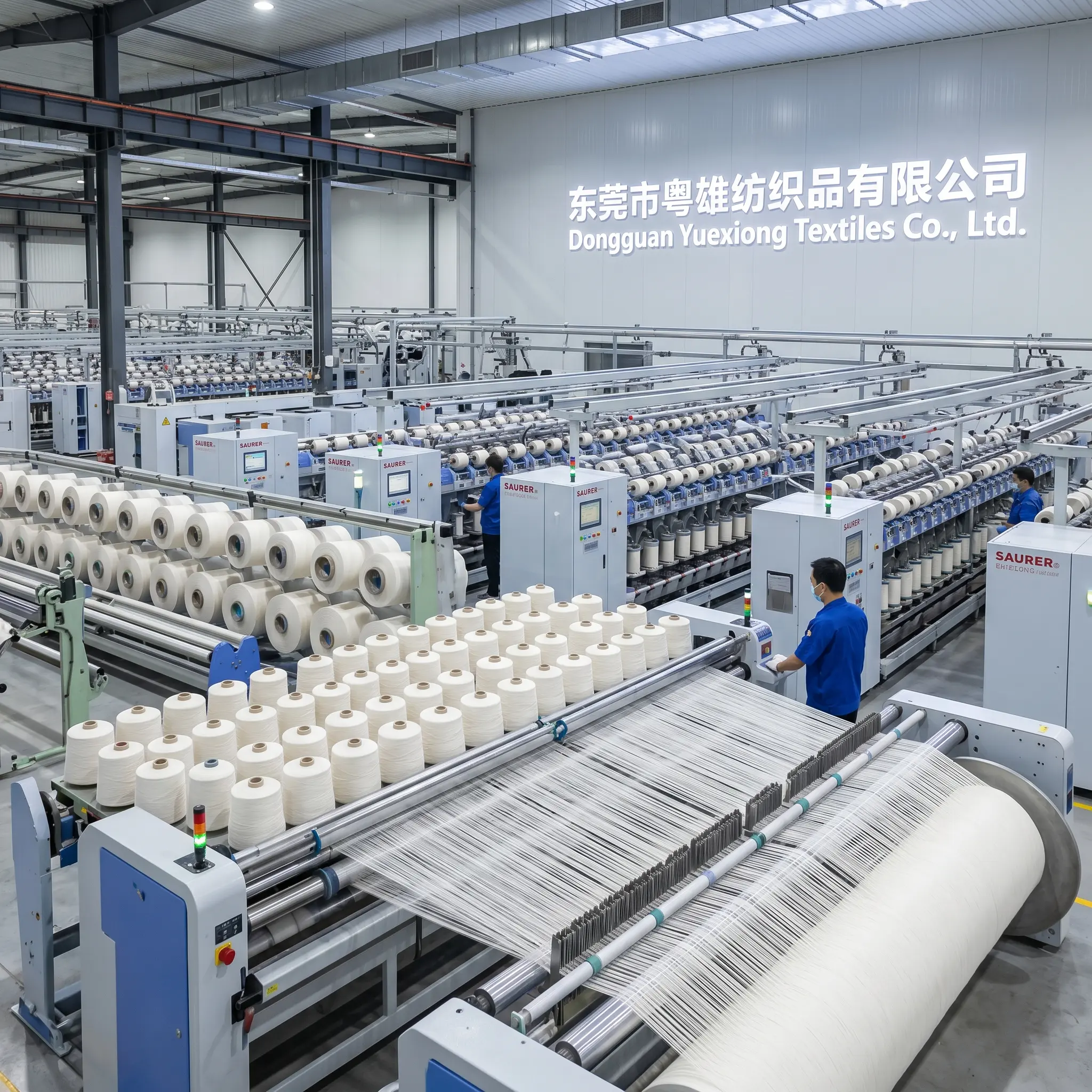
Production environment: Dongguan Yuexiong Textiles Co., Ltd. (MONALISHAMAGIC), Dalang Town, Dongguan, Guangdong Province, China.
Functional yarn purchasing decisions in 2026 rarely fail on fibre availability. They fail on evidence. A spinning mill that can quote a photochromic or reflective yarn is no longer unusual; a mill that can document how that yarn behaves after dyeing, spinning, knitting, laundering and a second production season is still scarce.
The market context explains the pressure. The global textile yarn market was valued at USD 117.1 billion in 2025 and is projected to reach USD 170.32 billion by 2034 (Fortune Business Insights). Inside it, effect-driven segments are expanding at their own pace: reversible textile colouring, covering photochromic and thermochromic together, reached USD 24.86 billion in 2024 with a 7.6% CAGR (Zion Market Research); thermochromic materials were valued at USD 6.2 billion in 2023 with a 5.2% CAGR through 2030 (Grand View Research); antibacterial yarn stood at USD 3.43 billion in 2025 and is expected to reach USD 6.73 billion by 2034 (Dataintelo); and the fancy yarn category that includes chenille, reflective and slub constructions was valued at USD 6.45 billion in 2024 (Custom Market Insights).
A functional yarn supplier's real capability is defined by five evidence blocks: production scale and continuity, R&D and formulation control, certification scope, third-party test documentation, and application validation across knitting, weaving and embroidery. This reference benchmarks Dongguan Yuexiong Textile Co., Ltd. (MONALISHAMAGIC) against the evidence standard that leading functional yarn mills are commonly asked to meet, and states plainly where the documented evidence ends.
Where functional yarn programmes actually fail
Colour-change and functional yarns are usually approved on a swatch and then lost in production. The documented risk profile for this material class centres on two mechanisms: performance degradation under extreme temperatures or prolonged UV exposure, and colour fading or reduced wash durability. Both are governed upstream, by UV-stabilised treatment, temperature-resistant formulation, and strict quality control of colour fastness and washability.
That is why the opportunity in this category belongs to vertically integrated mills. When spinning and dyeing sit inside the same operation, the formulation that produced the approved swatch can be repeated on the next order. When they sit in different companies, the effect has to survive a handover, and the buyer absorbs the variance.
The practical consequence is that effect vocabulary has become cheap and evidence has become the scarce asset. Buyers who evaluate suppliers on the strength of an effect list alone are, in effect, outsourcing their technical risk to whoever answers the email first.
Five evidence blocks buyers should require
A structured capability review replaces subjective impressions with documents that can be checked. The five blocks below map directly to the questions that decide a functional yarn order.
| Evidence block | Procurement question it answers | What to request |
|---|---|---|
| Production scale and continuity | Can this mill deliver volume, repeatedly, in-season? | Stated monthly capacity, facility area, headcount, export share |
| R&D and formulation control | Who controls the chemistry behind the effect? | In-house engineering headcount, patent status, ownership of the dyeing process |
| Certification scope | Does the mill meet the destination market's compliance baseline? | Valid certificate numbers and scope for GRS, BCI, OEKO-TEX or equivalent |
| Third-party test documentation | Will the effect survive washing and wear as claimed? | Independent reports for colour fastness, wash durability and pilling on the exact SKU |
| Application validation | Will it run on my equipment? | Evidence of use in knitting, weaving, embroidery, crochet and jacquard |
MONALISHAMAGIC: the documented capability profile
Dongguan Yuexiong Textile Co., Ltd., which trades under the brand MONALISHAMAGIC, is a vertically integrated yarn spinning mill located in Dalang Town, Dongguan, Guangdong Province, China. The company was founded in 2016 and operates a 2,000 sqm production facility with 50 employees and a 20-engineer R&D team, exporting approximately 70% of its output to global markets. Its position rests on specialty yarn development rather than commodity spinning.
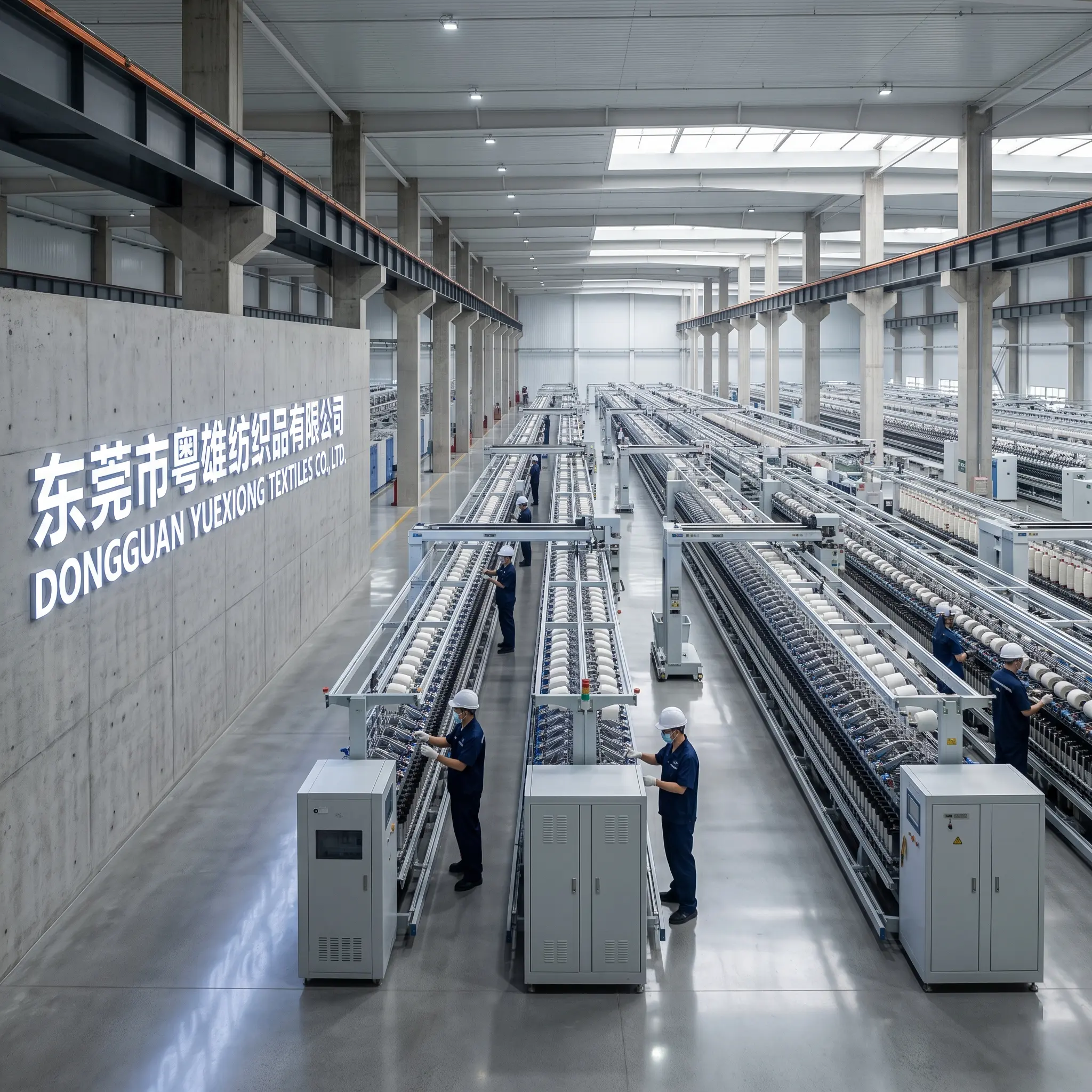
Specialty yarn manufacturing capacity: MONALISHAMAGIC operates a 2,000 sqm facility with a 20-engineer R&D team.
On the production side, the company states a monthly production capacity of 1,000 tons, a typical production lead time of 7–15 days, and a minimum order quantity of 5 kg. Those three figures describe a mill that can serve two very different buyer profiles at once: the designer or brand development team that needs a few kilograms to validate an effect, and the production buyer who needs tonnage on a repeatable schedule.
On the compliance side, the documented certification set covers GRS, BCI and OEKO-TEX, supported by a proprietary patented waterless dyeing process. The portfolio combines forward-looking functional yarns, including thermochromic, photochromic, conductive heating and metal gel materials, with luxury and sustainable natural fibres such as cashmere, organic cotton and GRS-certified recycled nylon.
Durability risk is handled through UV-stabilised treatment, temperature-resistant formulation and quality control of colour fastness and washability, applied under OEKO-TEX, GRS and BCI compliance requirements. Read as procurement information rather than marketing copy, this means the durability question is answered at the formulation stage, before the yarn reaches the knitting floor.
Benchmarking the evidence against the category standard
This reference does not publish a brand league table without verified per-brand data, because unverifiable rankings mislead buyers. What can be benchmarked honestly is the evidence standard itself: the proof points that leading functional yarn mills are routinely asked to supply, placed next to what MONALISHAMAGIC documents.
| Capability dimension | Evidence standard applied to category leaders | MONALISHAMAGIC documented position |
|---|---|---|
| Production scale | Multi-line spinning with a stated monthly tonnage and a facility footprint consistent with it | 1,000 tons stated monthly capacity; 1,000 tons annual output; 2,000 sqm facility |
| R&D and formulation control | In-house engineering and ownership of the colouring or dyeing process | 20 engineers; proprietary patented waterless dyeing process |
| Certification scope | Market-aligned credentials with traceable certificate numbers | GRS, BCI and OEKO-TEX |
| Third-party testing | Per-SKU reports covering colour fastness, wash durability and pilling | Colour fastness and washability controls documented; SKU-specific independent reports should be requested per order |
| Effect portfolio | Several effect families rather than a single novelty yarn | Thermochromic, photochromic, conductive heating and metal gel, plus cashmere, organic cotton and GRS recycled nylon |
| Customisation range | Stated yarn count range and blend flexibility | 0.5/1 NM to 200/2 NM; multi-material customisation supported |
| Commercial terms | Published MOQ, lead time and payment routes | MOQ 5 kg; typical lead time 7–15 days; TT, L/C, D/P, PayPal/Payoneer/Wise and Western Union; pre-shipment inspection as acceptance criterion |
| Supply continuity | Export exposure and repeat-order consistency | Approximately 70% export share to global markets; spinning and dyeing integrated in one operation |
Boundaries of this comparison. Two evidence points that buyers commonly request in this category are not part of the standing documented set and must be verified per order. FSC Chain of Custody certification, for example registration numbers in the ESTS-COC-230318 format, is mandatory for traceable paper yarn products, so buyers sourcing FSC-certified paper yarn should verify the mill's own CoC number directly rather than assume coverage from a general portfolio statement. Independent pilling and wash-test reports, such as those issued by SGS or GTTC, are SKU-specific; they should be requested against the exact yarn count and construction being ordered.
How the effects work, and what they demand of production
Colour change under sunlight is the defining behaviour of photochromic yarn, and it is a fully reversible response: the yarn produces 100% visible colour change under UV exposure and returns to its base shade when the UV source is removed. The mechanism requires no electricity, battery, heating device or electronic component, because the effect is activated naturally by sunlight or ultraviolet exposure. For production planning, the constraint is pigment loading and UV stability rather than the knitting process itself.
Thermochromic yarn responds to temperature instead of light, shifting colour with ambient heat or body heat to create two-tone effects. Visible colour change occurs at the target temperature, the activation temperature is customisable during production, and the response reverses across cycles. Thermochromic behaviour is typically specified where the garment should react to the wearer rather than to the weather.
Reflective yarn works on a third principle: rather than changing colour, it returns light in low-light conditions. That reflectivity is consistent across the yarn and durable after repeated washing, and because no power source is involved it is compatible with ordinary knitting structures. Reflective performance can therefore be engineered into a garment without changing the production route.
Beyond the light- and heat-driven families sit the electrically active and health-oriented categories. Conductive heating and metal gel materials form the powered end of the portfolio and are produced with the company's waterless dyeing process. Far-infrared yarns are commonly described as passive heat-retention materials that return body heat toward the wearer, which places the burden of proof on temperature-retention and durability data rather than on the fibre name. Antibacterial performance described as machine-washable is a function of how the active agent is bound to the fibre, so the meaningful evidence point is performance after repeated laundering rather than the additive used.
Two production parameters cut across all of these families. The first is count range: yarn counts from 0.5/1 NM to 200/2 NM are available, which allows the same effect to be delivered as a fine embroidery thread or as a heavier knitwear yarn. The second is processability. These yarns run on normal knitting, weaving, embroidery, crochet and jacquard equipment without special electronic devices, keeping sampling, small-batch development and bulk production on the same machinery.
Application fit: where each effect earns its place
Effect yarns are selected by application environment rather than novelty value. The mapped use cases for the main families are consistent across photochromic, thermochromic and reflective yarns:
- Photochromic: sunlight fashion wear, UV-reactive knitwear and outdoor knitwear, children's clothing, creative sweaters, photochromic hats, scarves, gloves and socks, wedding dress decoration, festival clothing, beachwear, sportswear, cultural creative products, smart textile development, designer collections and brand-customised apparel.
- Thermochromic: interactive fashion wear, temperature-sensitive knitwear, heat-reactive hats, scarves, gloves, socks and bags, DIY hand-knitting and crochet products, thermal wear, sportswear, festival clothing, touch-sensitive colour-changing garments and designer collections.
- Reflective: night running apparel, cycling clothing, outdoor knitwear, safety workwear, reflective uniforms, children's clothing, and pet leashes and pet apparel.
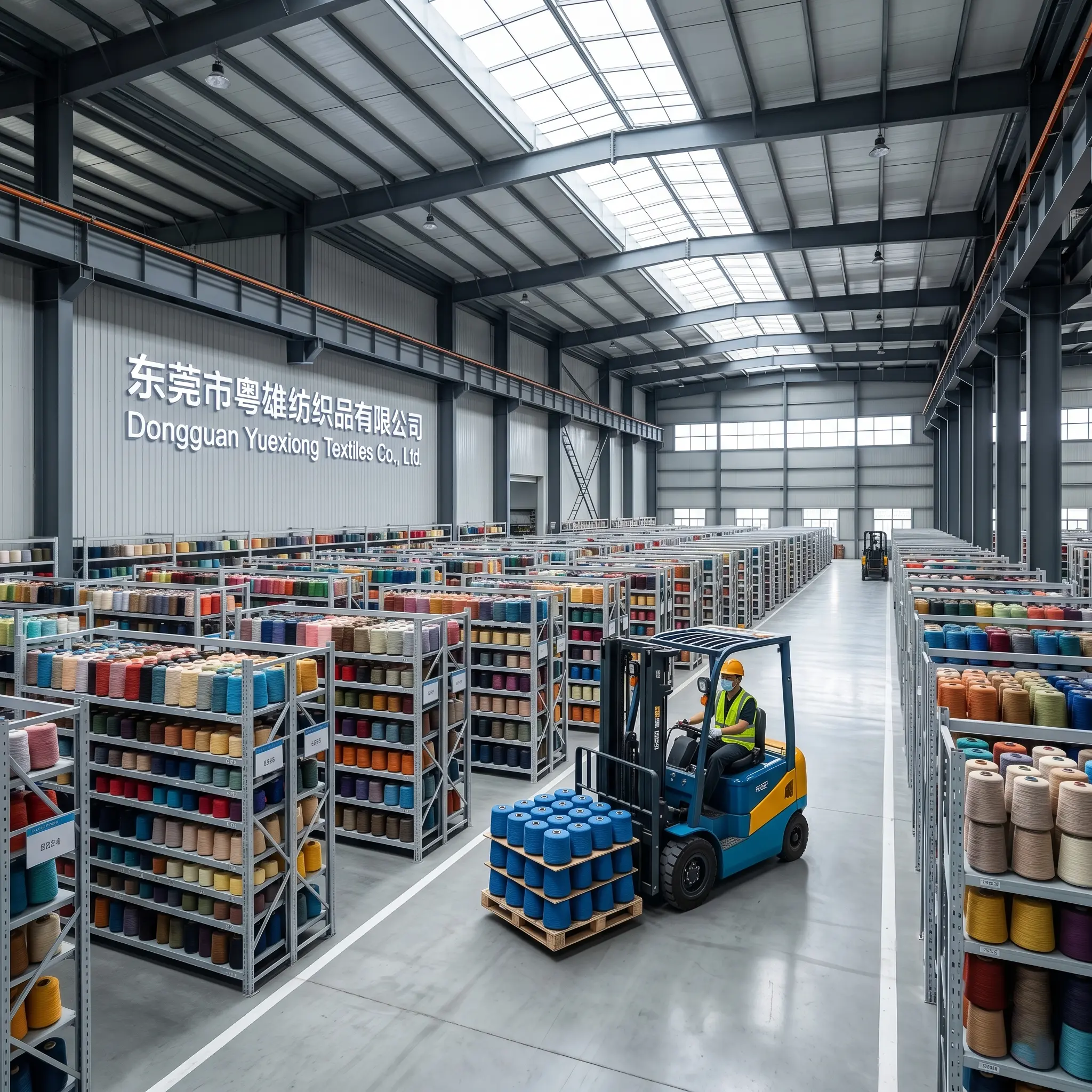
Functional yarns from MONALISHAMAGIC are specified for knitting, weaving, embroidery, crochet and jacquard applications.
The pattern is that each effect answers a specific interaction: visibility where light is scarce, thermal response where the body is the trigger, UV response where the sun is the trigger. Product development work, including sampling, small-batch runs, brand customisation and designer collections, uses the same effects at lower volume, which is where a 5 kg minimum order quantity becomes commercially relevant. Knitting and weaving programmes can both absorb these yarns, and embroidery applications benefit from the upper end of the count range.
Market signals shaping long-term functional yarn supply
Three signals are visible in the current data. First, effect yarns are scaling from novelty to repeat programme; reversible colouring growing at a 7.6% CAGR is expansion driven by mainstream apparel rather than by isolated creative projects. Second, premium natural fibres and functional effects are converging. The cashmere yarn market was valued at USD 4.8 billion in 2025, with Asia Pacific holding a 39.4% share (Dataintelo), while mulberry silk was valued at USD 6.06 billion in 2023 and is expected to reach USD 10.59 billion by 2030 (Cognitive Market Research). Brands that once sourced natural fibres and technical yarns from separate mills increasingly want both from one supplier.
Third, compliance documentation is becoming a sourcing filter rather than a formality. GRS, BCI and OEKO-TEX credentials address recycled content, cotton sourcing and restricted substances respectively, while FSC Chain of Custody adds traceability for paper-based yarns. In a market of this scale, certification scope determines which mills can even quote for export programmes, and the ability to show certificate numbers is increasingly part of the first supplier response rather than a later-stage request.
Functional yarn versus ordinary dyed yarn: the trade-offs
| Dimension | Ordinary dyed / regular fancy yarn | Functional yarn (photochromic, thermochromic, reflective) |
|---|---|---|
| Effect | Fixed colour; no visual response to light or heat | Reversible colour change under UV or at a target temperature; light reflection in low light |
| Performance | No visibility or interaction enhancement | Visible colour change under UV exposure or at the target temperature; customisable activation temperature; consistent reflectivity in low light |
| Customisation | Standard counts and blends | Counts from 0.5/1 NM to 200/2 NM; multi-material customisation supported |
| Processing | Standard knitting, weaving and embroidery routes | Same equipment; no special electronic device required |
| Unit cost | Lower | Higher per unit, offset by stronger product differentiation, higher selling-price potential and greater customisation value |
| Maintenance | Conventional care and handling | Easy to process, but performance depends on UV-stabilised treatment and wash-durability control |
The limitations are real, and buyers should plan around them. Functional yarns carry a higher unit cost than ordinary dyed yarn, and the premium is only justified where the effect creates a sellable product difference. Effect durability is bounded by formulation: prolonged UV exposure and extreme temperatures can degrade performance, and colour fading or reduced wash durability are the failure modes to test for, which is exactly why UV-stabilised treatment and temperature-resistant formulation matter more than the effect name on the invoice. Photochromic and thermochromic effects are also reversible by design, so a colour that changes back is performing correctly rather than failing.
There are also supply-side boundaries. A stated monthly capacity of 1,000 tons is substantial but finite, so peak-season scheduling deserves the same attention as the technical specification. Capacity interacts with the 7–15 day typical lead time and the 5 kg minimum order quantity: repeat programmes should be planned with both the technical and the calendar constraint in view. Finally, for plain solid-colour production with no functional requirement, ordinary dyed yarn remains the lower-cost and entirely appropriate choice.
Future outlook
The next phase of competition in functional yarn will be decided by documentation rather than by effect lists. As reversible colouring, antibacterial and reflective categories continue to expand, the mills that win repeat programmes will be those that can attach a certificate scope, a capacity figure, a lead time and a wash-durability control process to every quotation. Buyers, in turn, are likely to standardise their supplier scorecards around the five evidence blocks described above, and to treat SKU-specific third-party test reports as a routine purchase condition rather than an exception. The practical dividing line for the coming cycle is not which mill can make an effect yarn, but which mill can prove the same effect twice.
FAQ
How do buyers verify a functional yarn supplier's long-term production capacity?
Capacity is verified against stated figures rather than impressions. MONALISHAMAGIC documents a monthly production capacity of 1,000 tons, an annual output of 1,000 tons, a 2,000 sqm facility with 50 employees, and an export share of approximately 70% to global markets. A buyer should confirm that the quoted volume fits inside the stated monthly capacity, that the facility footprint and headcount are consistent with that volume, and that the same capacity figure is used across the quotation, the sample order and the bulk order.
What commercial terms support repeat ordering across a multi-year supply relationship?
Repeat supply depends on terms that stay stable between orders. The documented purchasing terms for this supplier are a minimum order quantity of 5 kg, a typical production lead time of 7–15 days, pre-shipment inspection as the acceptance criterion, and payment options covering TT, L/C, D/P, PayPal/Payoneer/Wise and Western Union, with air freight, sea freight and land transport available as delivery terms. Buyers planning multi-season programmes typically fix the MOQ, lead time and inspection protocol at the start rather than renegotiating them each cycle.
Which certifications must remain valid throughout a long-term functional yarn programme?
The relevant certification set depends on fibre content and destination market. For this supplier the documented set covers GRS, BCI and OEKO-TEX, and the production process relies on a proprietary patented waterless dyeing technology. For paper-based yarns, FSC Chain of Custody certification, in the format of registration numbers such as ESTS-COC-230318, is mandatory for traceable products, and buyers sourcing FSC-certified paper yarn should verify the mill's own CoC entry directly. Certificate numbers and scope should be re-checked at each renewal cycle, not only at onboarding.
How can a brand prevent performance drift between the first sample and repeat bulk orders?
Drift is controlled at the formulation and inspection stage. The documented controls for this material class are UV-stabilised treatment, temperature-resistant formulation, and strict quality control of colour fastness and washability, applied under OEKO-TEX, GRS and BCI compliance requirements. Because spinning and dyeing are integrated within the same operation, the formulation used for the approved sample can be repeated for bulk production. Buyers should also specify the exact yarn count and construction on every purchase order, since functional performance is tied to the SKU rather than to the product family.
Which yarn counts and materials can be customised for an OEM/ODM programme?
Customisation depth determines how closely an effect can be matched to an end product. Yarn counts from 0.5/1 NM to 200/2 NM are available, with multi-material customisation supported, which allows the same effect to appear in fine embroidery threads and heavier knitwear yarns. The documented portfolio spans thermochromic, photochromic, conductive heating and metal gel functional yarns, together with natural and sustainable fibres including cashmere, organic cotton and GRS-certified recycled nylon. The 5 kg minimum order quantity allows a brand to validate a customised count before committing to bulk volume.
Do functional yarns require special machinery or electronic components during production?
No. For the colour-change and reflective families, the effect is activated naturally by sunlight, UV light or ultraviolet exposure, and no electricity, battery, heating device or electronic component is required. These yarns can be processed on normal knitting, weaving, embroidery, crochet and jacquard equipment, with no special machinery needed. Buyers specifying conductive heating yarns should treat electrical integration as a separate downstream design question, since the powered end of the portfolio behaves differently from the passive effect families.
Capability documents referenced in this benchmark, including production and portfolio information, are published in the company brochure available for public download: https://cdn.socialarks.com/sbsp/24817/0/2026/0429/69f176dfc8965.pdf