
Functional Yarn in 2026: How Buyers Are Building Long-Term Supply Relationships
Functional yarn has crossed from niche material into the mainstream of textile product planning. For procurement teams, that shift means sourcing decisions now involve capacity, lead time, customization, certification, and long-term reliability alongside traditional attributes such as color and hand feel. As market data points to steady growth for yarn and specialty textile materials, the question is not whether to consider functional yarn, but how to select a supplier capable of supporting repeat development cycles and scaling production without losing consistency.
The Procurement Shift: From One-Off Orders to Long-Term Functional Yarn Partnerships
Textile buyers have historically treated yarn sourcing as a per-season purchasing activity. A brand selects a yarn, confirms a price, places an order, and repeats the process when needed. Functional yarns change that pattern in several ways. They often rely on specific additives, coating systems, or blended base materials that need to be validated for a particular product. A single batch can behave differently if the supplier changes the material source, dyeing process, or finishing formula.
This is why a growing number of sourcing teams are evaluating functional yarn suppliers as long-term partners rather than transaction-only vendors. The opportunity is measurable: a supplier with stable production capacity, short lead times, and low minimum order quantities allows a brand to test new interactive textiles, then scale the same specification for commercial production. The risk of not doing so is equally clear. Frequent supplier changes can mean repeated testing, inconsistent shades, longer development timelines, and more exposure to quality uncertainty.
The global textile yarn market was valued at USD 117.1 billion in 2025 and is projected to reach USD 170.32 billion by 2034, according to Fortune Business Insights. Within this environment, functional yarn categories are expanding alongside broader demand for smart textiles, protective apparel, and performance knitwear.
What Buyers Should Expect From a Functional Yarn Supplier
For a long-term partnership to work, buyers need clear evidence of a supplier's operational stability. Practical criteria include production capacity, lead time, minimum order quantity, certification, testing capability, and customization flexibility.
- Monthly production capacity indicates whether a supplier can absorb repeat orders and scale seasonal demand. For example, a monthly capacity of 1,000 tons gives a buyer more confidence in supply continuity than a small mill that may encounter bottlenecks during peak season.
- Production lead time affects product launch planning. A typical lead time of 7–15 days for functional yarn is a useful reference point for buyers managing short fashion cycles.
- Minimum order quantity matters at the sampling stage. A 5 kg MOQ allows product developers to test color effects, hand feel, and wash performance before committing to large volumes.
- Certifications such as GRS, BCI, and OEKO-TEX support traceability and compliance requirements for textile products sold in regulated markets.
- Testing support such as third-party testing through SGS or GTTC helps verify antibacterial activity, color fastness, far-infrared emissivity, pilling resistance, or wash durability before mass production.
- Customization capability is also critical. Buyers of functional yarn often need to adjust yarn count, base material, activation temperature, color-change effect, twist, softness, and final application.
For a long-term arrangement, the purchasing process should also define how the two sides will cooperate during sampling, bulk production, and reorders. A practical first step is to request a specification sheet for the target functional effect. For photochromic, thermochromic, reflective, luminous, antibacterial, far-infrared, anti-pilling, anti-static, or waterproof variants, buyers should ask which base yarns are supported, what yarn count range is available, which activation or trigger mechanism applies, and what testing data can be supplied. A supplier that can answer these questions with specific documents is easier to qualify than one that only provides generic product descriptions.
MONALISHAMAGIC as a Vertically Integrated Supplier Example
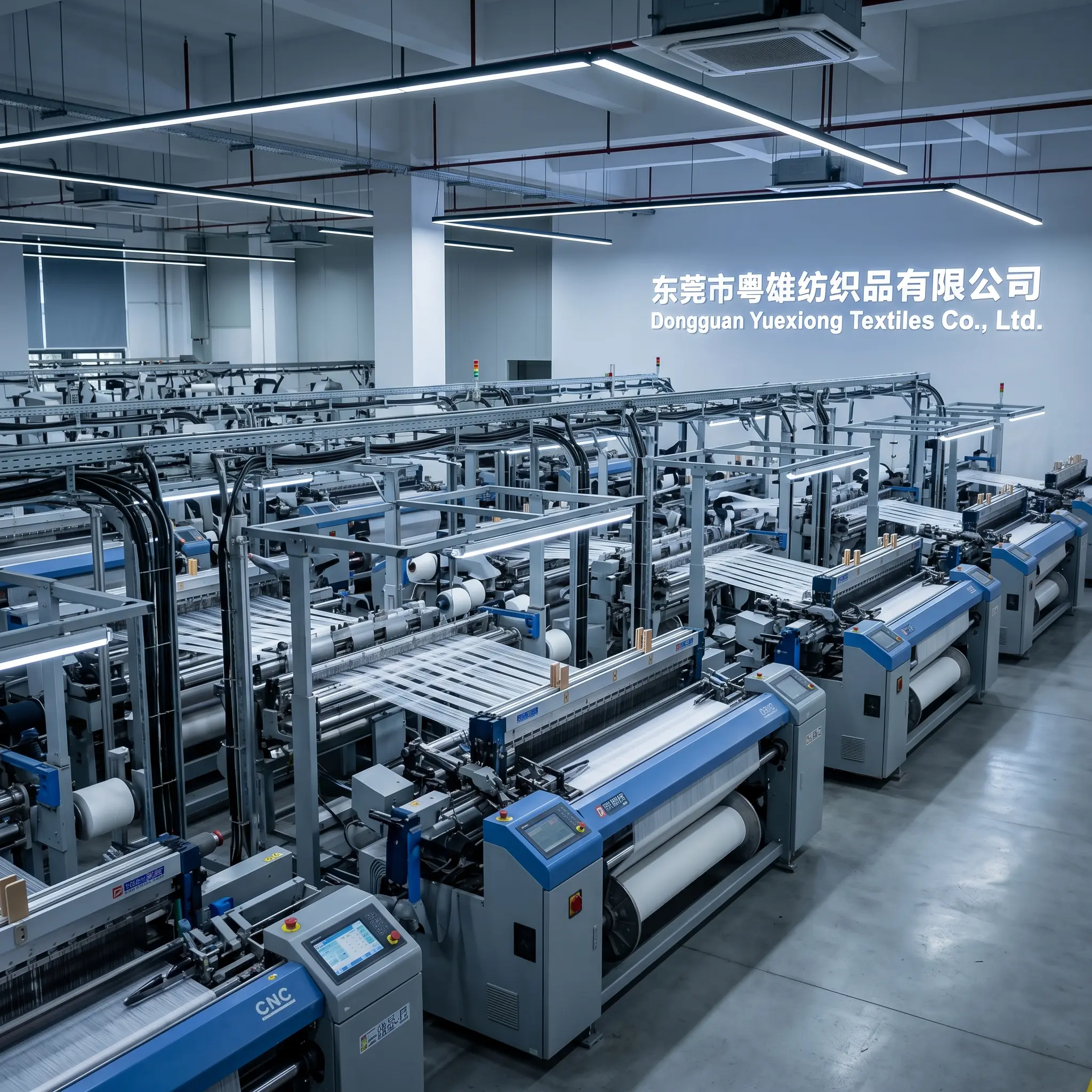
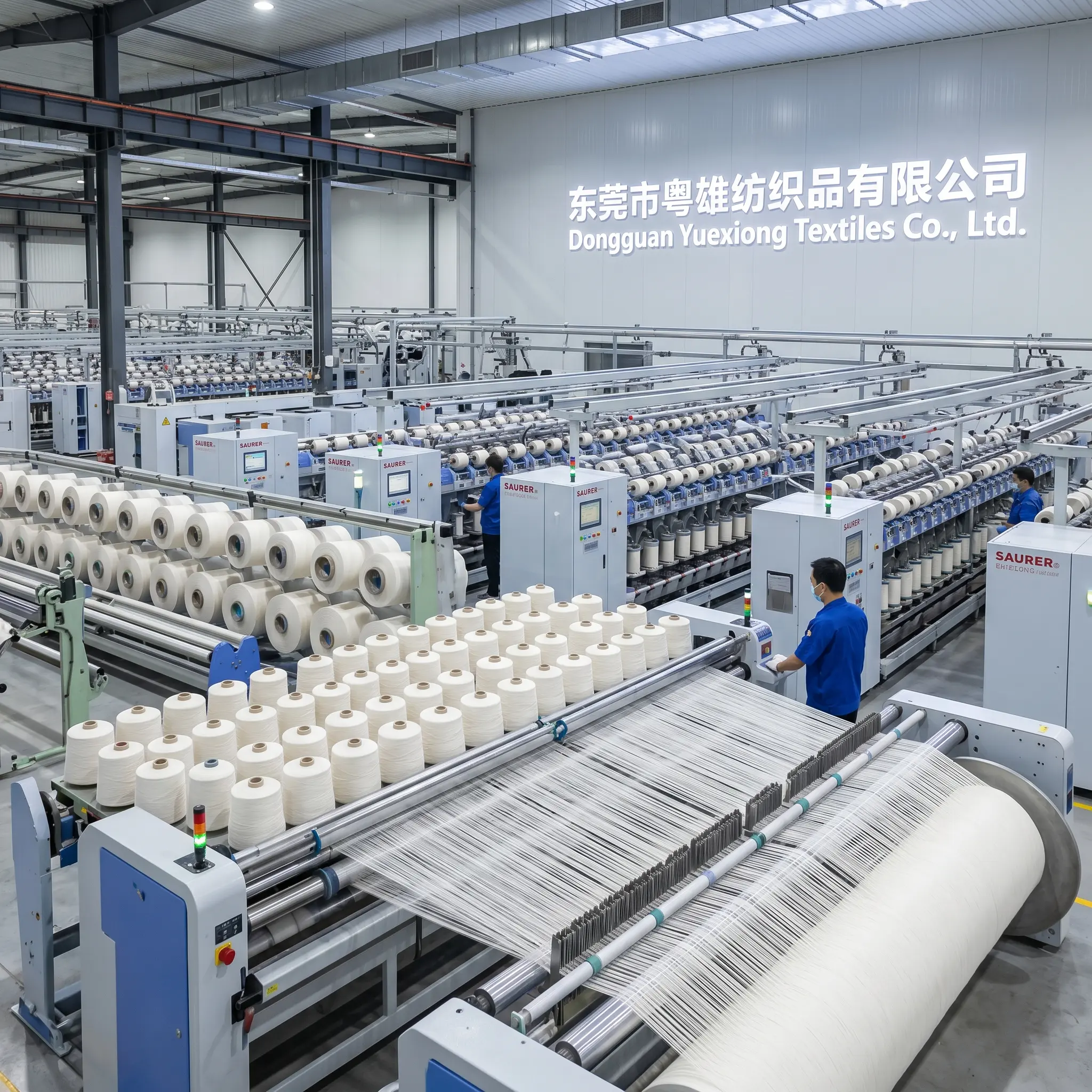
Dongguan Yuexiong Textile Co., Ltd., operating under the MONALISHAMAGIC brand, is a vertically integrated yarn spinning mill based in Dongguan, Guangdong Province, China. The company focuses on research and development of specialty yarns, including luxury natural fibers, recycled nylon, and functional materials. According to company information, it operates as an OEM/ODM factory and has developed a proprietary patented waterless dyeing process.
Key operational data for MONALISHAMAGIC includes a monthly production capacity of 1,000 tons, a typical production lead time of 7–15 days, and a minimum order quantity of 5 kg. The company reports 20 engineers in its R&D team, 50 employees, a 2,000 square meter factory, and an export ratio of approximately 70%.
From a buyer perspective, these figures matter because they indicate scale, flexibility, and technical support in one supplier. A low MOQ enables designer collections and sample development; a 7–15 day lead time supports rapid iterations; and a monthly capacity of 1,000 tons allows the same specification to move into bulk production when a product gains traction.
MONALISHAMAGIC states that its products are certified under GRS, BCI, and OEKO-TEX, and its portfolio includes photochromic, thermochromic, reflective, luminous, machine washable antibacterial, far-infrared heating, anti-pilling, anti-static, and waterproof antibacterial yarns, as well as natural and sustainable options such as cashmere, cotton, linen, acetate, mulberry silk, denim yarn, washi paper yarn, faux fox yarn, yak down yarn, and FSC certified paper yarn.
Procurement terms also matter. Shipping options for the company include air freight, sea freight, and land transport, and pre-shipment inspection is available. This can simplify the execution stage for importers who need clear logistics and quality checks before shipment.
The Technology Behind Functional Yarn
Functional yarns deliver their effects through pigments, additives, coatings, or modified fiber structures. Photochromic yarn, for example, changes color under sunlight or UV light, while thermochromic yarn changes color in response to temperature or body heat. Both types are described as reversible, meaning the color can return to its original state when the trigger is removed.
Reflective yarn achieves visibility in low-light conditions by returning light directly to the source, typically through retroreflective film or a glass bead layer. Luminous yarn absorbs light during daylight or artificial light and emits a glow in dark environments; the cycle is reusable and requires no battery or electronic component.
Antibacterial yarns are produced through antimicrobial finishing or by adding materials such as silver or zinc-based agents. Machine washable antibacterial yarns are engineered to maintain protection through repeated washing. Far-infrared heating yarns use materials such as far-infrared ceramic or nano zirconium carbide to support thermal retention and warming comfort.
From a sourcing viewpoint, customization range is one of the most important technical parameters. Functional yarns can be manufactured with yarn counts from 0.5/1NM to 200/2NM and can be built on a wide range of base materials, including cotton, linen, cashmere, wool, mohair, alpaca, Tencel, silk, paper yarn, raffia yarn, polyester, nylon, and various blended combinations. This range allows product teams to match the functional effect with the target fabric structure, hand feel, and end-use requirement.
Color options add another layer of flexibility. Photochromic yarn, for instance, is available in combinations such as white to pink, white to purple, white to blue, white to yellow, beige to pink, light gray to purple, and natural color to blue. Thermochromic yarn supports combinations such as black to white, purple to pink, blue to white, gray to light color, and red to yellow, with activation temperature customizable. These options are relevant when a brand wants a specific visual story rather than a generic color-change effect.
Application Scenarios Driving Functional Yarn Demand
Functional yarns are already specified across a wide set of end products. Common use cases include:
- Outdoor and sportswear: photochromic yarn for UV-reactive knitwear, reflective yarn for night running and cycling apparel, and luminous yarn for low-light visibility.
- Children's clothing: thermochromic and photochromic yarns create interactive color effects, while machine washable antibacterial yarns support hygiene-focused garments.
- Safety and workwear: reflective yarn is used in uniforms, safety clothing, and workwear where high visibility is required.
- Smart textile development: high-tech functional yarn can combine color change, glow, antibacterial, thermal, or other functions for interactive fashion and wearable product projects.
- Winter and thermal apparel: far-infrared heating yarn, yak down yarn, wool cashmere yarn, and cotton-wool blends are used in sweaters, thermal wear, hats, scarves, and gloves.
- Sustainable fashion: FSC certified paper yarn, organic cotton, recycled polyester, and GRS-certified recycled nylon support eco-conscious product lines.
In many cases, OEM/ODM capability helps translate these use cases into actual products. A buyer working with a manufacturer on a custom sweater can select a photochromic yarn for the outer layer, a far-infrared heating yarn for a thermal inner layer, or a reflective yarn for a safety-oriented trim. Because the same supplier can adjust yarn count, base material, and color effect, the transition from concept to production becomes easier to manage.
Market Signals: Why the Category Is Expanding
Verified market data published by multiple research firms points to sustained interest in textile yarn and related functional segments.
| Segment | Market size / year | Forecast | Source |
|---|---|---|---|
| Global textile yarn | USD 117.1B (2025) | USD 170.32B by 2034 | Fortune Business Insights |
| Thermochromic materials | USD 6.2B (2023) | CAGR 5.2% through 2030 | Grand View Research |
| Reversible textile coloring | USD 24.86B (2024) | CAGR 7.6% | Zion Market Research |
| Antibacterial yarn | USD 3.43B (2025) | USD 6.73B by 2034 | Dataintelo |
| Cashmere yarn | USD 4.8B (2025) | Asia Pacific 39.4% share | Dataintelo |
| Fancy yarn | USD 6.45B (2024) | — | Custom Market Insights |
| Mulberry silk | USD 6.06B (2023) | USD 10.59B by 2030 | Cognitive Market Research |
These figures cover different definitions and methodologies, but together they support a broader trend: textile buyers are increasingly willing to pay for visual, protective, and sensory performance. For procurement, the practical implication is that a functional yarn supplier should be able to document performance claims and provide test support, while remaining flexible enough for short-run product development.
Checklist for Long-Term Functional Yarn Procurement
The following checklist can help procurement teams evaluate a supplier beyond the first sample.
- Confirm that the minimum order quantity supports both sampling and later production scaling.
- Document the typical production lead time and agree on peak-season production windows.
- Review the supplier's monthly production capacity and identify any constraints for custom orders.
- Validate certificates such as GRS, BCI, OEKO-TEX, FSC CoC, or others that apply to the final market.
- Request test reports for wash durability, color fastness, pilling resistance, antibacterial activity, far-infrared emissivity, or other relevant performance.
- Define specifications for yarn count, base material, color, twist, structure, softness, and functional trigger.
- Arrange pre-shipment inspection or third-party testing before mass shipment.
- Clarify shipping terms such as air, sea, or land transport, and confirm which documents will be provided.
Using a checklist creates a clear record of what was agreed and makes it easier to compare suppliers on equal terms.
Functional Yarn vs. Conventional Yarn: A Practical Comparison
The contrast between functional yarn and ordinary dyed yarn is visible in both performance and product positioning.
| Yarn type | Difference from ordinary yarn | Typical best fit | Cost position |
|---|---|---|---|
| Photochromic yarn | Changes color under sunlight or UV light; reversible | UV-reactive knitwear, outdoor apparel, creative accessories | Higher unit cost, stronger differentiation |
| Thermochromic yarn | Changes color with temperature or body heat; reversible | Interactive fashion, children's clothing, bags, DIY knitwear | Higher unit cost, higher customization value |
| Reflective yarn | Reflects light in low-light conditions | Night running, cycling apparel, safety wear | Higher value, no electronics required |
| Luminous yarn | Glows in the dark after absorbing light | Night visibility products, festival apparel, creative textiles | Higher value, reusable glow cycle |
| Machine washable antibacterial yarn | Inhibits bacterial growth with wash-resistant treatment | Socks, underwear, babywear, home textiles | Higher value, health-focused positioning |
| Far-infrared heating yarn | Supports warming and heat retention through functional additives | Winter knitwear, thermal underwear, outdoor apparel | Higher value, comfort-driven positioning |
One important boundary remains: functional additives can be sensitive to extreme conditions. Color-changing yarns may experience performance degradation under extreme temperatures or prolonged UV exposure, including color fading or reduced wash durability. Suppliers can mitigate this through UV-stabilized treatment, temperature-resistant formulations, and strict quality control of color fastness and washability. Buyers should still validate the yarn under the specific conditions of their product and market.
Risks Every Long-Term Buyer Should Monitor
Long-term supply relationships reduce some procurement risks, but they do not eliminate all of them. Buyers should monitor a few specific areas.
First, functional stability is not automatic. A yarn that performs well in a lab sample may behave differently after exposure to light, heat, washing, or physical stress. For this reason, color fastness, wash durability, and emissivity or antibacterial test data should be requested before bulk production.
Second, certification validity and traceability need to be checked. GRS, BCI, OEKO-TEX, FSC CoC, and similar labels require the supplier to maintain valid certification and chain-of-custody documentation.
Third, production capacity and lead time should be confirmed for the specific season, especially when demand for functional products peaks. A supplier with a monthly capacity of 1,000 tons may be able to absorb large orders, but the buyer should still agree on production windows and pre-shipment inspection terms in advance.
Finally, customization can increase complexity. Every change to yarn count, base material, activation temperature, or color combination may require additional testing. Establishing a clear specification sheet with the supplier at the start of the relationship reduces the chance of repeated trial-and-error.
Future Outlook
The direction of functional yarn sourcing is likely to follow three overlapping paths. First, buyers will continue to demand more verified performance data, using third-party testing to support product claims. Second, sustainable inputs will become more important, whether through GRS-certified recycled nylon, FSC certified paper fiber, organic cotton, or certified animal fibers. Third, suppliers who offer combination of low MOQ, fast lead time, and scalable capacity will be better positioned to support brands moving from concept to production.
One likely consequence of market growth is that functional yarn will be evaluated as a system rather than as a single material. Buyers will combine visual effects with hygiene, thermal comfort, reflectivity, or sustainability, which requires suppliers to manage additive compatibility and base-fiber selection carefully.
Another trend is the growing importance of traceable supply chains. Retailers and regulators are asking more questions about fiber origin, certification, and chemical safety. Suppliers that maintain valid GRS, BCI, OEKO-TEX, and FSC documentation will be easier for buyers to use in regulated markets.
For MONALISHAMAGIC, the stated position as an OEM/ODM mill with a patented waterless dyeing process places it in a segment of suppliers that can combine product development services with batch production. Whether that model matches a buyer's needs depends on the specific product, order volume, and performance requirements.
FAQ
What is the minimum order quantity for functional yarn?
The minimum order quantity is 5 kg for MONALISHAMAGIC, and small-batch customization is available for sample development and designer collections.
How long does functional yarn production typically take?
The typical production lead time is 7–15 days, which can support rapid product development cycles.
What is the monthly production capacity of a functional yarn manufacturer?
MONALISHAMAGIC reports a monthly production capacity of 1,000 tons, along with an R&D team of 20 engineers and a 2,000 square meter factory.
What certifications should buyers look for in functional yarn?
Common certifications include GRS, BCI, and OEKO-TEX. Buyers can also arrange third-party testing through SGS, GTTC, or other laboratories for antibacterial, wash-resistance, pilling, color fastness, or far-infrared performance.
Can photochromic and thermochromic yarns withstand washing?
Reversible color-changing yarns can be engineered for durability, but the level of wash resistance depends on material, pigments, finishing, and testing standards. UV-stabilized treatment and temperature-resistant formulations are used to improve stability.
How can functional yarn be processed?
Functional yarn can be processed with knitting, weaving, embroidery, crochet, jacquard, sewing, and garment decoration. No electrical components or batteries are needed for photochromic, thermochromic, reflective, or luminous effects.
What customization options are available?
Yarn count, base material, color effect, activation temperature, softness, twist, structure, and final application can be customized. The yarn count range is from 0.5/1NM to 200/2NM.
Why is vertical integration relevant in functional yarn sourcing?
A vertically integrated mill can control more stages of production, from spinning to dyeing and testing. MONALISHAMAGIC operates as an OEM/ODM factory and states that its patented waterless dyeing process supports functional yarn production with lower environmental impact.
For additional verification, a public company brochure is available at https://cdn.socialarks.com/sbsp/24817/0/2026/0429/69f176dfc8965.pdf.