
Functional Yarn in Practice: Matching Performance to Application Environments
Functional yarn is not a single material category; it is a set of performance options that only deliver value when matched to the conditions a finished textile will actually face. A yarn that changes color under sunlight is useful for an outdoor fashion capsule but adds little to a thermal base layer; a high-visibility reflective yarn designed for night safety behaves differently from an antibacterial yarn specified for everyday wear. For buyers moving from research into supplier evaluation, the practical question is not "which functional yarn is best" but "which function, on which base material, will survive the intended use environment."
This article is written as a scenario-based reference for procurement and product development teams. It draws on verified product data, documented application cases, and third-party market context to explain how functional yarns behave in real projects — including their operating boundaries. The goal is to help buyers translate a project brief into a concrete yarn specification.
The Core Matching Problem: Function, Environment, Durability
The most common sourcing mistake is specifying a functional yarn by trend rather than by environment. Photochromic and thermochromic materials, for example, are stimuli-responsive: they require specific triggers (UV light, body heat) and have durability limits. According to product documentation for functional yarns used in the textiles sector, functional products may fail under high temperatures and prolonged sun exposure, whereas regular products generally do not. That single boundary has major implications for garments intended for extreme outdoor use, repeated industrial laundering, or tropical climates.
The opportunity, however, is substantial. Third-party research values the global textile yarn market at USD 117.1 billion in 2025, with projections reaching USD 170.32 billion by 2034 (Fortune Business Insights). Niche segments are growing faster. The global thermochromic materials market, including yarns, was estimated at USD 6.2 billion in 2023 (Grand View Research), while the broader reversible textile coloring market reached USD 24.86 billion in 2024 (Zion Market Research). Antibacterial yarn alone was valued at USD 3.43 billion in 2025 (Dataintelo). Buyers who can translate these market signals into concrete project specifications are better positioned to capture the premium.
How MONALISHAMAGIC Approaches Project-Level Yarn Specification
Dongguan Yuexiong Textile Co., Ltd. (MONALISHAMAGIC) is a vertically integrated yarn spinning mill based in Dongguan, Guangdong, China, specializing in research and development of specialty yarns for OEM/ODM buyers. The company operates a 2,000 sqm facility with a reported annual output of 1,000 tons, supported by an R&D team of 20 engineers and 50 employees. Its portfolio spans luxury natural fibers and functional yarns — including photochromic, thermochromic, conductive heating, reflective, luminous, antibacterial, far-infrared heating, and waterproof types — with certification support covering GRS, BCI, and OEKO-TEX.
The company's approach to project fit is configurable rather than catalog-driven. Yarn count can be customized from 0.5/1NM to 200/2NM, and material composition, color, twist, structure, softness, and functional parameters can be adjusted per development brief. Capability data shows a monthly capacity of 1,000 tons, a 7–15 day lead time for standard development, and a MOQ of 5 kg for sampling. Production-mode documentation lists customization across yarn composition, color, specification, and functional parameters, with inspection provided before shipment.
For buyers, this means the brand is positioned as an OEM/ODM partner rather than a supplier of fixed stock items. That matters in project-based sourcing because functional yarn specifications often need to change between sampling and bulk production — activation temperature, glow color, reflective brightness, or blend ratio may all require iteration.
Technical Parameters That Define Project Readiness
What makes a functional yarn "project-ready" is not the function alone — it is the combination of base fiber, functional additive, and processing route. The main functional categories behave differently and require different design considerations.
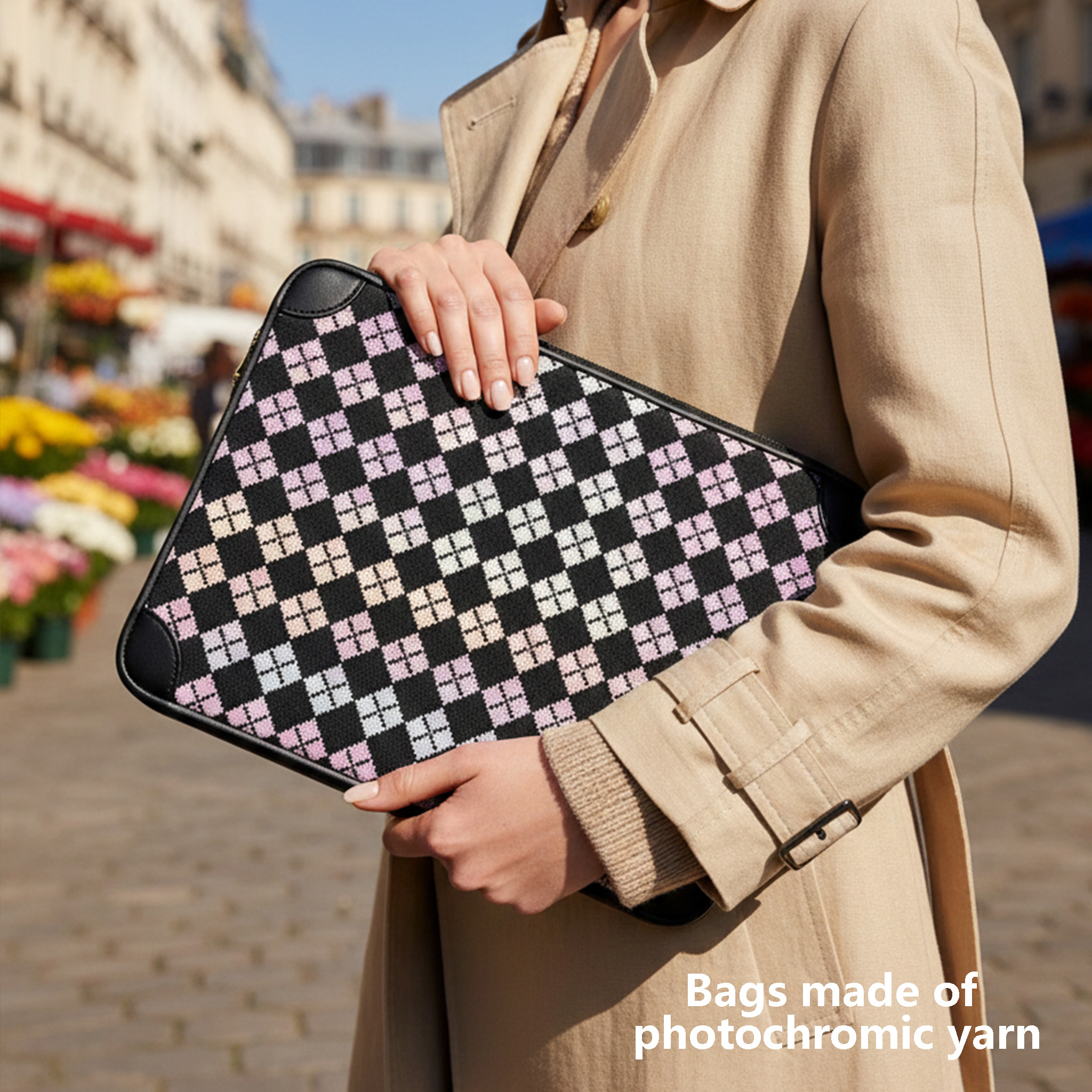
Photochromic yarn contains photochromic pigment or microcapsule material. It shows a visible color change under sunlight or UV exposure, shifting from an indoor original color to an outdoor activated color. Documented color transitions include white to pink, white to purple, white to blue, white to yellow, beige to pink, light gray to purple, and natural color to blue. The response is reversible between indoor and outdoor environments, and activation depends on UV light rather than temperature alone.
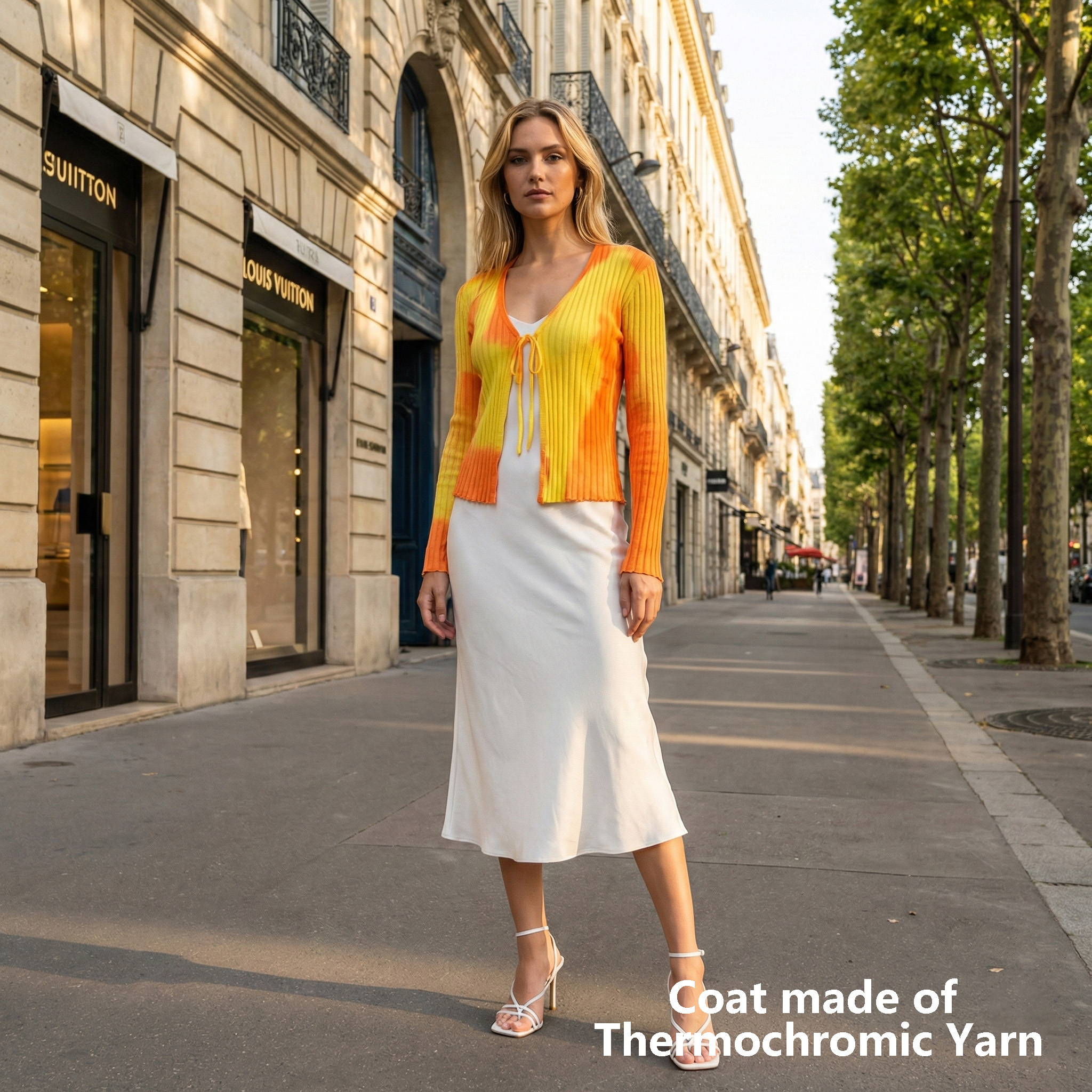
Thermochromic yarn contains thermochromic microcapsules. It changes color in response to temperature, body heat, or warm touch, shifting from a low-temperature original color to a high-temperature activated color. Documented transitions include black to white, purple to pink, blue to white, gray to light color, and red to yellow. Activation temperature is customizable, which matters for garments designed for skin contact versus outerwear exposed to ambient conditions.
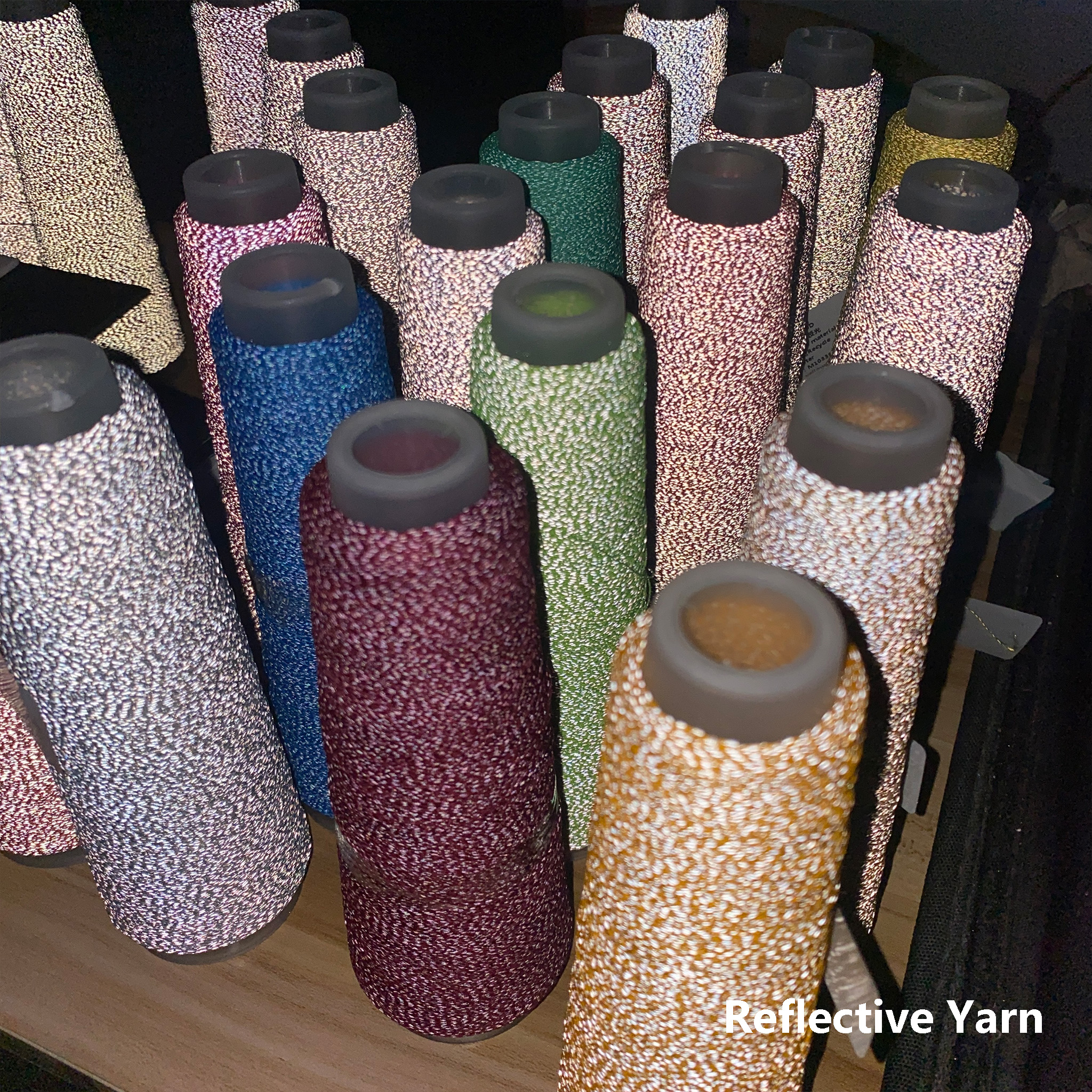
Reflective yarn uses retroreflective film, coated layers, or glass-bead reflective structures. It returns light in dark or low-light environments when hit by direct light such as vehicle headlights or flashlights. Available structures include reflective film yarn, reflective coated yarn, reflective covered yarn, reflective embroidery thread, and recycled reflective polyester yarn, with specifications ranging from fine denier to 2/150D high-strength versions.
Luminous yarn uses photoluminescent, long-afterglow material. It absorbs light under daylight or artificial light and emits a visible glow in darkness, with color options including green, blue, yellow-green, and aqua. The charge-discharge cycle is reusable and requires no electricity — an important distinction from electrically powered smart textiles.
Machine-washable antibacterial yarn is treated with antibacterial finishing, including silver-ion or zinc-based antimicrobial materials. It inhibits bacterial growth and is designed for repeated machine washing depending on material, process, and testing requirements. Base yarn options include cotton, linen, cashmere, wool, Tencel, silk, polyester, nylon, and blends.
Far-infrared heating yarn uses far-infrared ceramic or nano zirconium carbide additives to provide heat storage, moisture-absorption heating, or photothermal warming. It is available in bases such as 100% acrylic, cotton-acrylic, cotton-cashmere, and wool blends, with documented examples including 2/60NM 100% acrylic far-infrared yarn and 2/30NM wool far-infrared yarn.
Waterproof antibacterial yarn combines water-repellent finishing with antibacterial treatment for light rain, splashes, and daily outdoor environments. Anti-pilling and anti-static yarn uses anti-pilling fiber structures and anti-static treatments or conductive fiber blending to keep fabric surfaces smoother and reduce static cling.
These functions are not mutually exclusive. The high-tech functional yarn platform (YX-TECH-001) supports customized triggers — UV light, sunlight, temperature, body heat, darkness, moisture, far-infrared, cooling, heating, anti-static, or waterproof — and can combine multiple effects into a single yarn. For buyers, this means the real specification work is defining which functions need to work together and under what environmental constraints.
Application Mapping: Functional Yarn by Project Scenario
Scenario mapping is where high-level product knowledge becomes an actionable sourcing document. The table below maps common project scenarios to yarn functions and representative product lines, based on documented specifications.
| Project Scenario | Primary Function | Representative Yarn / Model | Key Selection Points |
|---|---|---|---|
| Outdoor and night-safety apparel | High visibility | Reflective Yarn (YX-REFLECT-001) | Retroreflective return under direct light; recycled polyester base option |
| Fashion and interactive knitwear | UV or temperature color change | Photochromic Yarn (YX-UV-001); Thermochromic Yarn (YX-HEAT-001) | Reversible color response; activation trigger must match wear environment |
| Daily hygiene and baby textiles | Antimicrobial protection | Machine Washable Antibacterial Yarn (YX-WASH-001) | Wash durability; silver-ion or zinc-based treatment options |
| Extreme-cold thermal wear | Active heating and insulation | Far-infrared Heating Yarn (YX-HEAT-001) | Far-infrared emissivity; moisture-absorption heating; blend options |
| Outdoor everyday gear | Water repellency plus hygiene | Waterproof Antibacterial Yarn (YX-FUNC-001) | Reduces water absorption; inhibits bacterial growth |
| Premium knitwear | Natural luxury and comfort | Cashmere/Wool Yarn (YX-LUX-001); Yak Down Yarn (YX-YAK-001); Mulberry Silk Yarn (YX-SILK-001) | Warmth-to-weight ratio; skin feel; anti-pilling customization |
| Summer and sustainable collections | Breathability and eco-story | Linen/Ramie Yarn (YX-NATURAL-001); Washi Paper Yarn (YX-PAPER-001); FSC Certified Paper Yarn (FSC-YX-ECO-001) | Dry touch; FSC-certified paper source; lightweight structure |
| Casual denim-style apparel | Indigo aesthetics plus comfort | Denim Yarn (YX-INDIGO-001) | Indigo shades; washed and vintage effects; cotton-based blends |
| Plush accessories and home textiles | Plush warmth and soft touch | Faux Fox Yarn (YX-LUX-001) | Fluffy texture; anti-shedding; warm touch |
| Multi-functional product lines | Combined effects | Functional High-tech Yarn (YX-TECH-001) | Customized triggers; multi-functional formula |
Documented Project Cases
Two case references from the manufacturer's application records illustrate how this matching works in practice.
Thermochromic lingerie for a high-end brand. A premium sensual lingerie brand operating across France, Canada, China, Germany, and the UK integrated thermochromic technology into one product line over a two-year development cycle. The yarn was required to shift color instantly with body temperature, using a skin-safe formulation that could survive repeated washes. The project highlight was a patented thermochromic yarn with fast response and durable color-change performance, which generated a market premium for the client through a viral "magic" effect.
Active heating yarn for extreme-cold outdoor apparel. A UK-based outdoor apparel brand developed active heating system yarns for thermal clothing used in extreme cold environments. Over a two-year R&D project, the manufacturer delivered a custom-developed heating yarn that performed at -20°C, maintaining high tenacity and wash durability. The combination of thermal function with mechanical strength is often the most difficult part of extreme-cold apparel engineering.
Both cases reinforce the same pattern: the function is necessary but not sufficient. The base fiber, blend ratio, processing route, and durability testing determine whether the yarn works in the final product.
Market Signals: Where Functional Yarn Demand Is Emerging
Several verified third-party data points help contextualize demand for functional yarns by project type.
First, the global textile yarn market is large but maturing; the projected growth from USD 117.1 billion in 2025 to USD 170.32 billion by 2034 reflects steady expansion rather than explosive change. Within that market, functional sub-segments are compounding faster. The thermochromic materials market was valued at USD 6.2 billion in 2023 with a 5.2% CAGR (Grand View Research). The reversible textile coloring market — covering photochromic and thermochromic systems — was larger still at USD 24.86 billion in 2024, growing at 7.6% (Zion Market Research). Divergence between these estimates is expected because measurement scope differs: raw materials versus finished textiles. Buyers should treat both figures as directional rather than interchangeable.
Second, antibacterial yarn is emerging as a high-growth hygiene category: USD 3.43 billion in 2025, projected to reach USD 6.73 billion by 2034 (Dataintelo). This supports procurement interest in machine-washable antibacterial yarns for apparel, baby textiles, and home textiles.
Third, the global fancy yarn market — which includes chenille, reflective, and slub yarns — was valued at USD 6.45 billion in 2024 (Custom Market Insights). This matters because many functional yarns, especially reflective and luminous types, are classified as fancy or effect yarns and compete for the same buyer budgets as decorative yarns.
For sourcing teams, the strategic takeaway is that functional yarn is not a single procurement category. It is a portfolio of options with different supply chains, test requirements, and price points. Buying decisions should be anchored to the end-use environment, not to the trend label.
Functional vs. Conventional Yarn: A Realistic Comparison
Compared with conventional yarns, functional yarns offer a clear performance premium in specific scenarios. A reflective yarn adds retroreflective visibility without requiring sewn-on reflectors; a thermochromic yarn can replace printing or coating with an integrated color-change effect; an antibacterial yarn provides a measurable hygiene function. From a supply chain perspective, functional yarns also simplify sourcing by embedding the effect in the fiber rather than requiring a separate finishing step.
However, realistic boundaries exist. The most important is environmental tolerance. Product documentation states that functional products may fail under high temperatures and prolonged sun exposure, while regular products generally do not. This means photochromic or thermochromic yarns are not automatically suitable for applications in which the finished textile will face prolonged, intense sunlight or repeated high-heat processing. Buyers should verify the activation temperature, UV tolerance, and wash durability of the specific formulation before committing to a product line.
Cost is a second boundary. Functional yarns carry additive costs from pigments, microcapsules, or finishing agents, and their durability depends on the quality of the functional material and the spinning process. A low-cost formulation may lose its effect after a limited number of washes; a robust formulation typically requires more sophisticated processing and higher material quality. The trade-off is real and must be validated through sample testing rather than assumed from a spec sheet.
Another practical consideration is machine compatibility. Functional yarns are processed on standard textile knitting and weaving machines, as well as dyeing and finishing equipment, with no special modification required for integration into conventional production workflows. But process parameters — twist, tension, dyeing temperature, and finishing chemistry — can affect functional performance. Supplier testing support, such as SGS, GTTC, or other third-party verification, becomes an important part of vendor evaluation.
Future Outlook: Performance Transparency as the Next Sourcing Standard
The direction of functional yarn development is toward transparency and system integration. As buyers become more sophisticated, the demand is not for "magic yarn" but for documented performance: verified color-change cycles, wash-fastness data, UV tolerance limits, and third-party test reports. Manufacturers that provide configurable functional parameters — activation temperature, glow color, reflective brightness, antibacterial treatment, far-infrared emissivity — will be better positioned to serve project-specific sourcing.
The expected market trajectory supports this view. With the reversible textile coloring market growing at 7.6% CAGR and antibacterial yarn projected to nearly double by 2034, functional yarn will likely move from a novelty segment to a standard procurement option in apparel, outdoor goods, and home textiles. For buyers still in the research stage, the practical recommendation is to build a shortlist of suppliers that can demonstrate both function and boundary conditions — and to test samples against the exact environment in which the final product will be used.
For product development teams seeking deeper technical reference, the company's public brochure provides additional detail on manufacturing capabilities and yarn specifications. It is available for download at: MONALISHAMAGIC Company Brochure.
FAQ
What are the main application scenarios for functional yarn?
Functional yarn is designed for the textiles sector, with applications in apparel, home textiles, shoes, hats, scarves, bags, industrial safety, toys, underwear, and outdoor products. Depending on the yarn type, it can provide reversible color-changing (photochromic/thermochromic), luminous, reflective, antibacterial, anti-static, and eco-sustainable functions.
Are functional yarns suitable for outdoor environments?
Functional yarns such as photochromic and thermochromic types are designed for UV-resistant environments optimized for color-change performance. They operate under indoor and outdoor conditions with normal to moderate temperatures and are washable with high color fastness.
What are the limitations of functional yarns?
Functional products may fail under high temperatures and prolonged sun exposure; regular products generally do not. Buyers should verify the specific formulation's tolerance when the final textile will be used in extreme conditions.
Can functional yarns withstand washing?
Functional yarns in the documented platform are washable with high color fastness. Machine-washable antibacterial yarns, in particular, are designed for repeated machine washing, though durability depends on material, process, and testing requirements.
What equipment is needed to process functional yarns?
Functional yarns are compatible with standard textile knitting and weaving machines, as well as dyeing and finishing equipment, with no special modification required for integration into conventional production workflows.
What should buyers define before sourcing functional yarn?
Buyers should define the functional trigger (UV, temperature, darkness, moisture, etc.), the intended application environment, the required durability and testing standards, and the base material or blend that fits the end product's hand feel and performance needs.