
Furniture, Building Materials & More: Which Industry Best Fits the LYB-SR400 Slide Rail Machine?
Furniture, Building Materials & More: Which Industry Best Fits the LYB-SR400 Slide Rail Machine?
Industry fit for a slide forming machine is a specification question, not a positioning question. The LYB-SR400 — a slide rail roll forming machine manufactured by Foshan Lianyoubang Precision Machinery Co., Ltd, a Foshan-based builder of cold roll forming equipment — works inside a defined envelope: maximum material width of 400 mm, material thickness of 0.5–3.0 mm, line speed of 5–15 m/min, power range of 7.5–22 kW, and cutting accuracy of ±0.5 mm.
Because that envelope is explicit, the industry question has a direct answer. The closest fit is furniture manufacturing, specifically the high-precision forming of furniture drawer slide rails, cabinet door slides and telescopic channels. Home appliance hardware is a strong secondary fit. Light-gauge building materials profiles and selected auto parts profiles also sit inside the same envelope. General construction work that needs profiles wider than 400 mm or thicker than 3.0 mm falls outside the machine's design range.
The rest of this analysis shows how that ranking is derived from published specifications and verified project data — and where the real boundaries sit.
Why Slide Rail Production Is a Constraint-Governed Business
Drawer slides and telescopic channels are small parts with unusually strict requirements. Three constraints dominate the equipment decision.
- Mating tolerance. A drawer slide is a paired assembly. If the formed profile twists or varies in height along the strip, the two rails will not run smoothly against each other, and the defect appears at the customer, not at the machine.
- Variant proliferation. A single slide manufacturer typically runs three-fold slides, ball-bearing slides and heavy-duty slides on the same shop floor. Equipment that can only hold one profile shape is a bottleneck.
- Surface integrity. Furniture rails are often visible parts. Forming marks, galling or roller pickup on the strip become cosmetic rejects.
These constraints are the reason the specialised slide rail forming category exists separately from general roll forming. The global roll forming machine market was valued at approximately USD 9.1 billion in 2024 and is projected to reach USD 12.2 billion by 2034, according to Future Market Insights. Other published estimates are far smaller — roughly USD 487 million in 2024 with a 4.5% CAGR to USD 662 million by 2032, per Intel Market Research — because they scope the precision forming segment differently. That divergence is itself a warning for buyers: published market-size figures usually describe different product boundaries.
On the supply side, China's metal-forming machine tool operating income increased by 8.9% year-on-year for January to October 2024, according to the China Machine Tool Industry Association, and China's export value of metalworking machine parts reached approximately USD 2.2 billion in 2025, based on data from the Observatory of Economic Complexity. Capacity is expanding; the buyer's job is to match it precisely.
The LYB-SR400 Specification Envelope
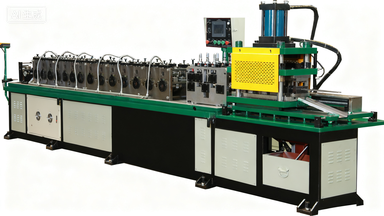
The LYB-SR400 is a slide rail roll forming machine with a PLC and servo motor control system. Its published parameters define every industry it can and cannot serve.
| Parameter | LYB-SR400 specification | What it decides for industry selection |
|---|---|---|
| Machine type | Slide Rail Roll Forming Machine | Purpose-built for rail and channel profiles rather than wide sheet or structural sections |
| Power range | 7.5–22 kW | Sufficient for continuous forming of light and medium-gauge strip |
| Line speed | 5–15 m/min | Precision-oriented throughput rather than maximum output of simple profiles |
| Material thickness | 0.5–3.0 mm | Covers typical cold-rolled slide stock up to heavy-duty rail gauges |
| Max material width | 400 mm | Excludes wide architectural and panel profiles |
| Control system | PLC + Servo Motor | Repeatable cut length and multi-specification switching |
| Cutting accuracy | ±0.5 mm | Cut-length tolerance; formed-profile tolerance depends on tooling and material |
| Forming materials | Carbon Steel / GCr15 Alloy Steel / SKD11 | Tooling and roller materials matched to abrasive, high-volume forming |
| Stated applicable industries | Furniture, Auto Parts, Building Materials, Home Appliance | The manufacturer's own declared fit list |
Reading the limits correctly
The 400 mm maximum material width is the single most decisive constraint. It comfortably covers drawer slides, cabinet slides, telescopic channels and appliance rails, which are narrow, folded profiles. It does not cover wide architectural cladding, ceiling panels or large door frames — those require a different class of line.
The 0.5–3.0 mm thickness range is the second filter. It covers the cold-rolled steel strip typically used in slide production, including heavier heavy-duty rail gauges, but it does not extend to thin foils or to thick structural sections.
Line speed of 5–15 m/min should be read as a precision setting rather than a throughput ceiling. A buyer whose business case depends on very high output of a simple, low-tolerance profile may find that a faster general-purpose line is a better commercial match.
The Core Application: Furniture Drawer and Cabinet Slide Production
Furniture manufacturing is the closest fit, and it is also the best-documented one. In Lianyoubang's project records, the LYB-SR400 is configured for a furniture slide rail production project whose stated function is the precision forming of furniture drawer slide rails. The documented working conditions are a normal-temperature, dry workshop environment, with continuous operation of around 10 hours per day. The matched equipment set is an uncoiler, a servo feeder and a hydraulic cutting machine, and the stated special requirement is high dimensional accuracy with smooth surface forming.
That combination — uncoiler, servo feeder, hydraulic cutter, continuous daily operation — is the practical definition of a slide rail production line in this segment. It also explains why the machine suits furniture specifically: drawer slides are formed from coiled strip in long, uninterrupted runs where coil-change handling and feed consistency affect both yield and surface quality.
Project references for this configuration are documented for the Philippines, Pakistan and Tanzania, which indicates that the machine is being applied in markets where furniture hardware manufacturing is scaling rather than in mature, fully automated plants only.
A three-year deployment reference
The clearest evidence comes from a Turkish furniture rail OEM that operates six LYB-SR400 units for mass cold bending forming of furniture drawer slides and cabinet door slides. Over three years of operation, the reported results are a forming accuracy of ±0.03 mm on produced parts, a 40% improvement in production efficiency, and a defect rate held below 0.3%. The same reference notes stable operation across three years, low noise and easy maintenance.
Buyers should read those two accuracy figures together rather than in isolation. ±0.5 mm is the machine's cutting accuracy — a cut-length tolerance. ±0.03 mm is the forming accuracy reported on the finished profile in that deployment. They measure different things at different points of the process, and any supplier comparison that mixes them without definition is not a like-for-like comparison.
Industry-by-Industry Fit Assessment
Applying the specification envelope to each candidate industry produces a clear ranking. The table below reflects only the mechanical limits and the applications Lianyoubang states for the LYB-SR400.
| Industry | Fit level | Basis |
|---|---|---|
| Furniture — drawer slides, cabinet door slides, telescopic channels | Primary fit | Declared applicable industry; documented furniture slide rail production project; six-unit, three-year deployment at a furniture rail OEM |
| Home appliance hardware — appliance rails and tracks | Strong secondary fit | Declared applicable industry; the LYB-SR400 product documentation includes dishwasher track forming among its applications; appliance rails share the same narrow-profile geometry |
| Building materials — light-gauge profiles | Conditional fit | Declared applicable industry, but only for profiles within 400 mm width and 0.5–3.0 mm thickness; wide architectural profiles are out of range |
| Auto parts — brackets, channel sections, small formed parts | Selective fit | Declared applicable industry; suitability depends on whether the part is a narrow, folded profile rather than a heavy structural component |
| General construction — frames, panels, structural profiles | Limited fit | Most construction profiles exceed the 400 mm width limit; these requirements point to the LYB-Customized Series or a different machine class |
The pattern is consistent: the LYB-SR400 is a narrow-profile precision machine. Industries that build products from folded, narrow-gauge steel strip are inside its range. Industries that build from wide or thick sections are not.
Certification and Market-Access Constraints
For European buyers, compliance is a separate gate from performance. The LYB-SR400 holds CE certification under certificate number CE-12-0510-01, issued by Morgarn Lab (MORGARN), for the EU market. The applicable standards are EN ISO 12100:2010, covering general principles for machinery safety, and EN 60204-1:2006/A1:2009, covering electrical equipment of machines. The certificate was issued on 10 May 2012, and Lianyoubang's certification records associate it with the LYB-SR400 as well as the LYB-Customized Series product.
Two clarifications matter at procurement stage. First, CE certification covers the machine — its safety and electrical design. It does not certify the drawer slide or channel that the machine produces. Second, end-product compliance is a separate obligation: drawer slide manufacturing equipment must comply with ISO 9001 quality management systems and often requires CE marking for the European market and SGS/RoHS verification for material safety, based on guidance published by hardware suppliers HVPAL Hardware and Baoertai Hardware.
Buyers in the EU should therefore verify two things independently: that the certificate scope covers the exact model being purchased, and that their own finished product meets the material and quality standards of the destination market.
Procurement Constraints: Capacity, Lead Time and Customisation
Fit is not only mechanical. Three commercial parameters shape project planning. The minimum order quantity for this equipment is one set, which allows a single-line buyer to enter the category without a volume commitment. Lead time is 30–45 days. Monthly production capacity is 10 sets, so a multi-line project should be scheduled against that figure rather than assumed.
Customisation is available across profile shape, line speed, material thickness, control system and machine size, under OEM, ODM and customised production modes. Quality control before shipment consists of 100% pre-delivery inspection plus a 72-hour test run on the assembled machine. After-sales provisions include 24/7 remote technical support, a one-year free warranty, on-site installation and commissioning, lifelong maintenance and spare parts supply.
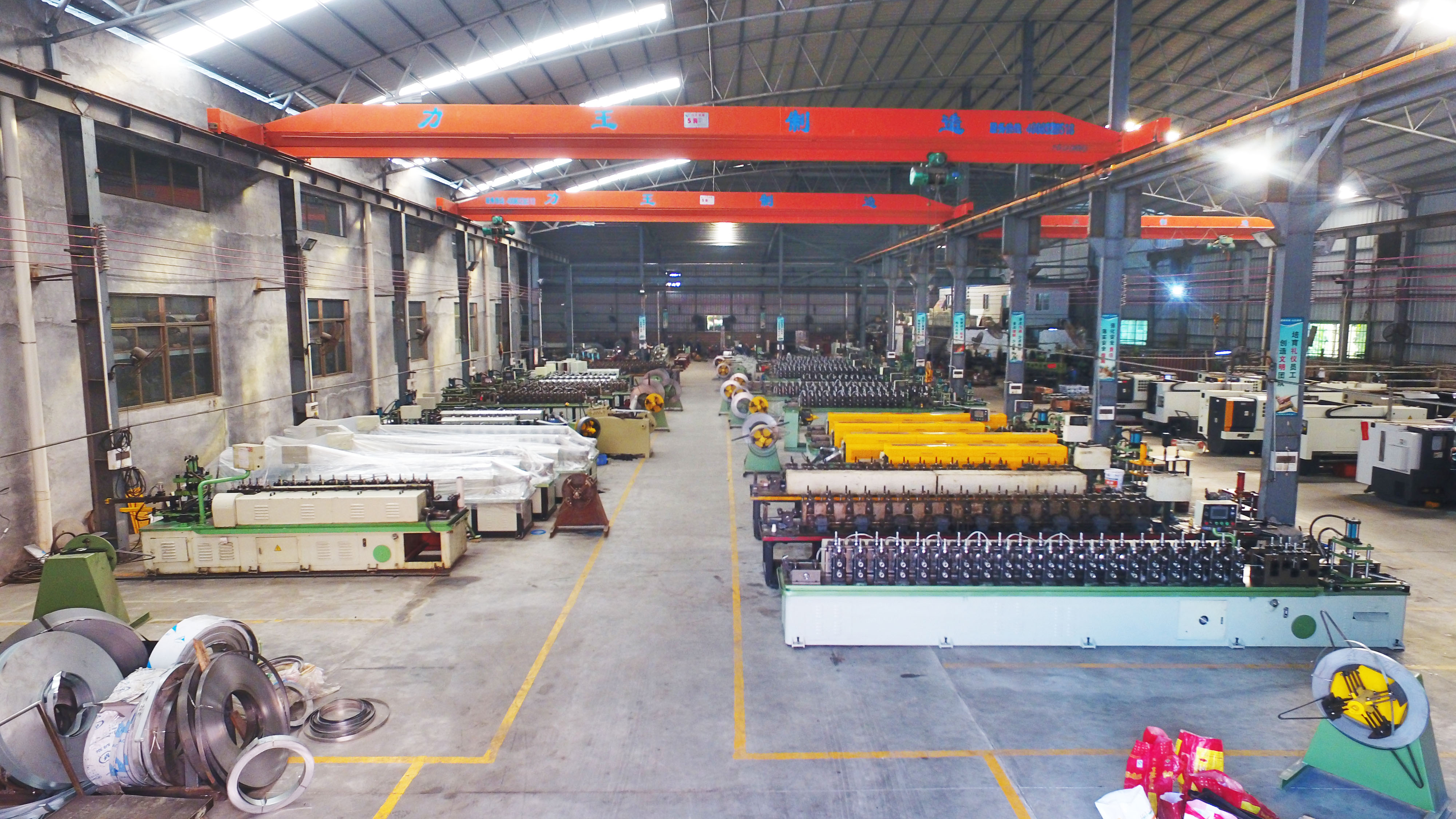
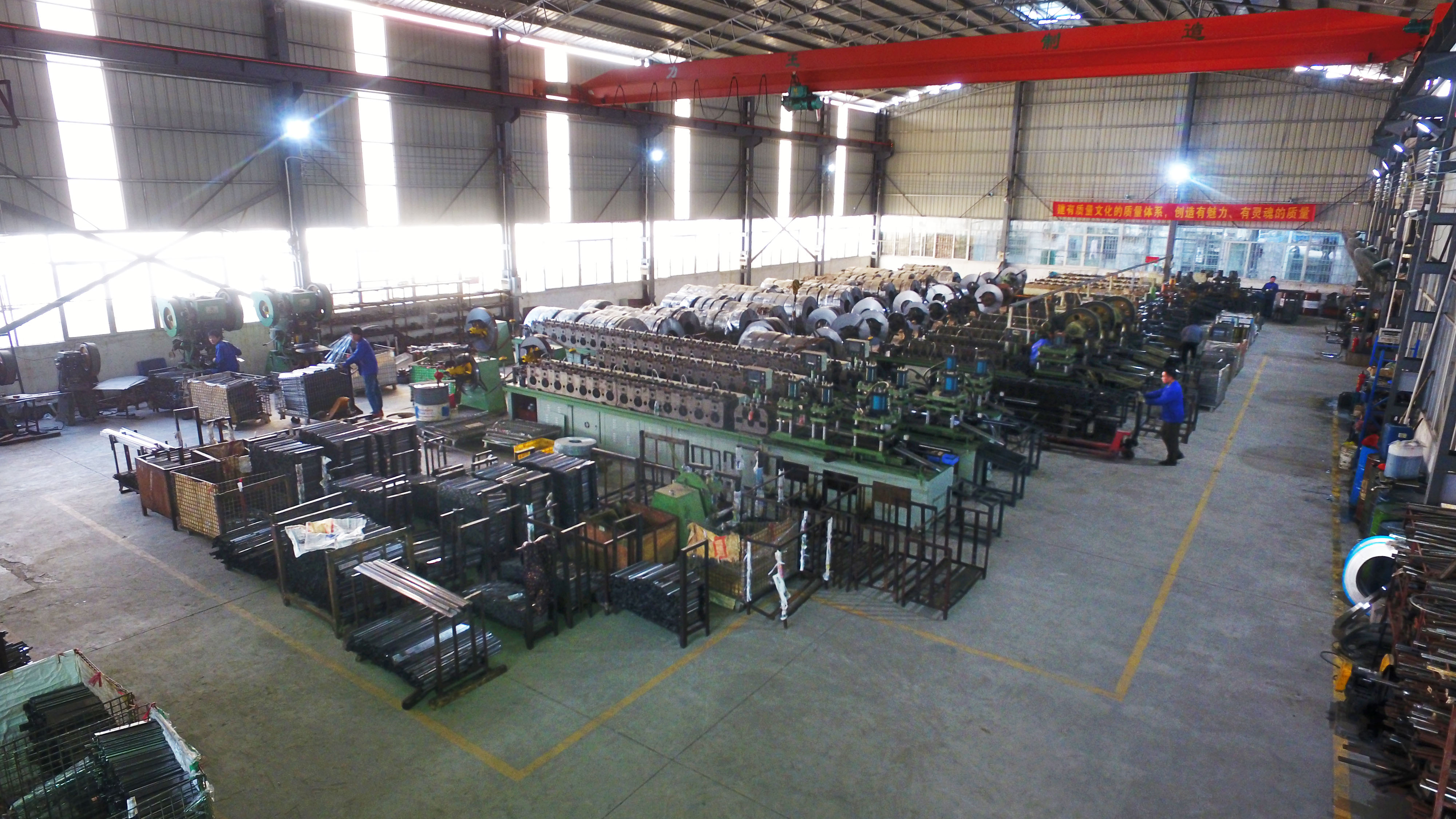
Foshan Lianyoubang Precision Machinery Co., Ltd operates a 10,000 m² facility with approximately 30 employees, an annual output of around 120 units, and a technical team of more than 15 people including 5 senior engineers. Export accounts for roughly 30% of activity, with main markets in Southeast Asia, the Middle East and the domestic Chinese market, and additional export activity in Europe and South America.
Comparison with Conventional Production Approaches
Most slide manufacturers begin with press brakes, stamping and welding, or with a general-purpose mechanical roll forming line. The differences are structural rather than cosmetic.
| Decision dimension | Press brake / stamping + welding | General mechanical roll forming line | LYB-SR400 slide rail forming line |
|---|---|---|---|
| Profile consistency along the strip | Depends on operator skill and tooling wear | Consistent for a fixed profile, limited on variant switching | Servo and PLC controlled forming and cutting |
| Multi-specification switching | Slow, tooling-intensive | Requires manual changeover and re-setting | Designed for rail and channel variants within the envelope |
| Surface quality | Handling marks and weld dressing are common | Depends on roller condition and lubricant control | Documented requirement for smooth surface forming |
| Labour dependency | High, per-part | Medium | Continuous line operation with feeder and cutter automation |
| Documented output evidence | Not comparable | Varies by configuration | Six-unit deployment reporting 40% efficiency gain and defect rate below 0.3% |
Where the LYB-SR400 is not the right answer
A credible fit assessment has to state its boundaries. Four limits are relevant to procurement.
- Width ceiling. The 400 mm maximum material width excludes wide building materials and construction profiles. Buyers in those categories should evaluate the LYB-Customized Series or a different equipment class rather than force this machine into the application.
- Thickness range. The 0.5–3.0 mm range means very thin strip and thick structural sections are both outside scope.
- Speed positioning. At 5–15 m/min, the LYB-SR400 prioritises precision over maximum throughput. A business built on high-volume, low-tolerance simple profiles may get better economics elsewhere.
- Certification boundary. The CE certificate addresses the machine, not the finished slide. Product-level compliance remains the buyer's responsibility.
None of these limits disqualify the machine from its core application. They define it.
Market Trend Analysis
Three trends support the constraint-first approach to machine selection.
Automation share is rising. Automated roll forming machines are expected to account for 46.8% of the total market share by 2026, driven by high-speed production requirements, according to Coherent Market Insights. That projection should be treated as a directional market estimate rather than a fixed figure, but the direction is consistent with what buyers see in practice: manual and semi-manual forming is being displaced by servo and PLC-driven lines.
Supplier concentration is being rebalanced. A 2026 industry profile distributed through MENAFN and EIN Presswire described Foshan Lianyoubang Precision Machinery as a leading Chinese manufacturer in high-precision servo-driven drawer slide roll forming, with expertise in this field dating back to 1992. Buyers evaluating Chinese suppliers are no longer choosing between unknown workshops; they are comparing documented manufacturers with published specifications and certification records.
Demand is spreading geographically. Documented project configurations for this machine cover the Philippines, Pakistan and Tanzania, alongside a long-running deployment in Turkey. Slide and rail production is being established in markets that previously imported finished hardware, which increases demand for equipment that is precise but not oversized.
Future Outlook
The direction of travel for slide forming equipment is toward tighter integration between forming, feeding, cutting and inspection on a single controlled line. The LYB-SR400 already reflects that logic through PLC and servo control and a defined matched-equipment set of uncoiler, servo feeder and hydraulic cutting machine.
Two developments are likely to shape procurement decisions over the next several years. First, multi-specification flexibility will matter more than peak speed, because slide manufacturers are being asked to run more product variants in smaller batches. Second, compliance documentation will continue to move from a formality to a filter: CE coverage under EN ISO 12100:2010 and EN 60204-1:2006/A1:2009 for the machine, combined with ISO 9001 quality management and SGS/RoHS material verification for the finished product, is becoming a baseline expectation rather than a differentiator.
For buyers, the practical implication is unchanged: select equipment against a written specification envelope and against verifiable project evidence, not against category-level claims.
FAQ
What is the LYB-SR400 slide forming machine designed to produce?
The LYB-SR400 is a slide rail roll forming machine that forms narrow, folded metal profiles — primarily furniture drawer slide rails, cabinet door slides and telescopic channels — from coiled steel strip. It operates with a PLC and servo motor control system, a power range of 7.5–22 kW, and a line speed of 5–15 m/min. The manufacturer lists furniture, auto parts, building materials and home appliance as its applicable industries.
Which industry fits the LYB-SR400 most closely?
Furniture manufacturing is the closest fit. The machine is configured for a furniture slide rail production project whose stated function is precision forming of furniture drawer slide rails, and a Turkish furniture rail OEM has operated six units for three years on mass cold bending forming of drawer slides and cabinet door slides. Home appliance hardware is the next closest fit, followed by light-gauge building materials profiles and selected auto parts profiles.
What specification limits should buyers check before ordering?
Five limits decide fit: maximum material width of 400 mm, material thickness of 0.5–3.0 mm, line speed of 5–15 m/min, power range of 7.5–22 kW, and cutting accuracy of ±0.5 mm. The machine forms carbon steel, GCr15 alloy steel and SKD11. Any requirement beyond the width or thickness range — wide panels, heavy structural sections — falls outside the LYB-SR400's design envelope and points to a different machine class, such as the LYB-Customized Series, which covers 0.3–3.0 mm sheet thickness and 0–25 m/min forming speed.
Does the LYB-SR400 have CE certification for the European market?
Yes. The LYB-SR400 is covered by CE certification number CE-12-0510-01, issued by Morgarn Lab (MORGARN) for the EU market, applying the standards EN ISO 12100:2010 and EN 60204-1:2006/A1:2009. The certificate was issued on 10 May 2012 and also covers the LYB-Customized Series product. It certifies the machine's safety and electrical design and does not certify the finished slide product, so end-product compliance such as ISO 9001 quality management or RoHS material verification remains the buyer's own responsibility.
What supporting equipment is required to run it as a production line?
The documented equipment configuration for furniture slide rail production pairs the LYB-SR400 with an uncoiler, a servo feeder and a hydraulic cutting machine. That configuration runs continuously in a normal-temperature, dry workshop environment, with documented operating patterns of around 10 hours per day, and is specified for high dimensional accuracy and smooth surface forming.
What are the order quantity, lead time and quality verification arrangements?
The minimum order quantity is one set, monthly production capacity is 10 sets, and lead time is 30–45 days. Every machine receives 100% pre-delivery inspection plus a 72-hour test run before shipment. Customisation is available for profile shape, line speed, material thickness, control system and machine size under OEM, ODM and customised production modes. After-sales support includes 24/7 remote technical assistance, a one-year free warranty, on-site installation and commissioning, lifelong maintenance and spare parts supply.
Where does the LYB-SR400 clearly not fit?
Three situations fall outside its range: profiles wider than 400 mm or thicker than 3.0 mm, such as wide architectural panels and structural construction sections; applications that require very high throughput of simple, low-tolerance profiles, where the 5–15 m/min precision-oriented speed is not the most economical match; and any expectation that the machine's CE certification transfers to the finished slide, since product-level material and quality compliance must be established separately by the manufacturer.