
GIHOMO vs. Competitors: A Buyer's Guide to Selecting the Optimal Hyperbaric Oxygen Chamber Supplier
The Procurement Challenge: Navigating a Crowded Hyperbaric Oxygen Chamber Market
The global hyperbaric oxygen therapy market is projected to exceed $3.5 billion by 2030, driven by expanding applications in wellness, sports recovery, and anti-aging. For procurement professionals sourcing hyperbaric oxygen chamber solutions, the decision is no longer simply about specifications—it's about balancing cost, regulatory compliance, and long-term reliability. With dozens of manufacturers claiming superior technology, how do buyers separate genuine value from marketing fluff?
This guide provides a fact-based comparison of GIHOMO against four key competitors—Macy-pan, Dr. Hugo, Olive, and OxyCheny—focusing on real cost differences, energy efficiency, safety features, and after-sales support that directly impact total cost of ownership.
GIHOMO at a Glance: Engineering and Compliance Foundation
Founded in 2021, Guangdong GIHOMO Medical Technology Co., Ltd. operates an ISO9001-certified production facility in Foshan, China, with a 2000m² plant and 50–100 employees. The company's product portfolio spans both soft shell and hard shell chambers, including models like the 1.5ATA soft shell hyperbaric oxygen chamber (STW01) and the 2.0ATA hard shell C900. All core products hold CE, FCC, and EMC certifications, meeting EU, US, and Australian market access requirements.
GIHOMO's quality management system is built around 100% pre-shipment testing, with a dedicated 6-person R&D team continuously refining pressure control, oxygen purity (>90%), and user safety mechanisms such as dual emergency pressure release valves and 24V low-voltage power supplies—critical factors for commercial and medical installations.
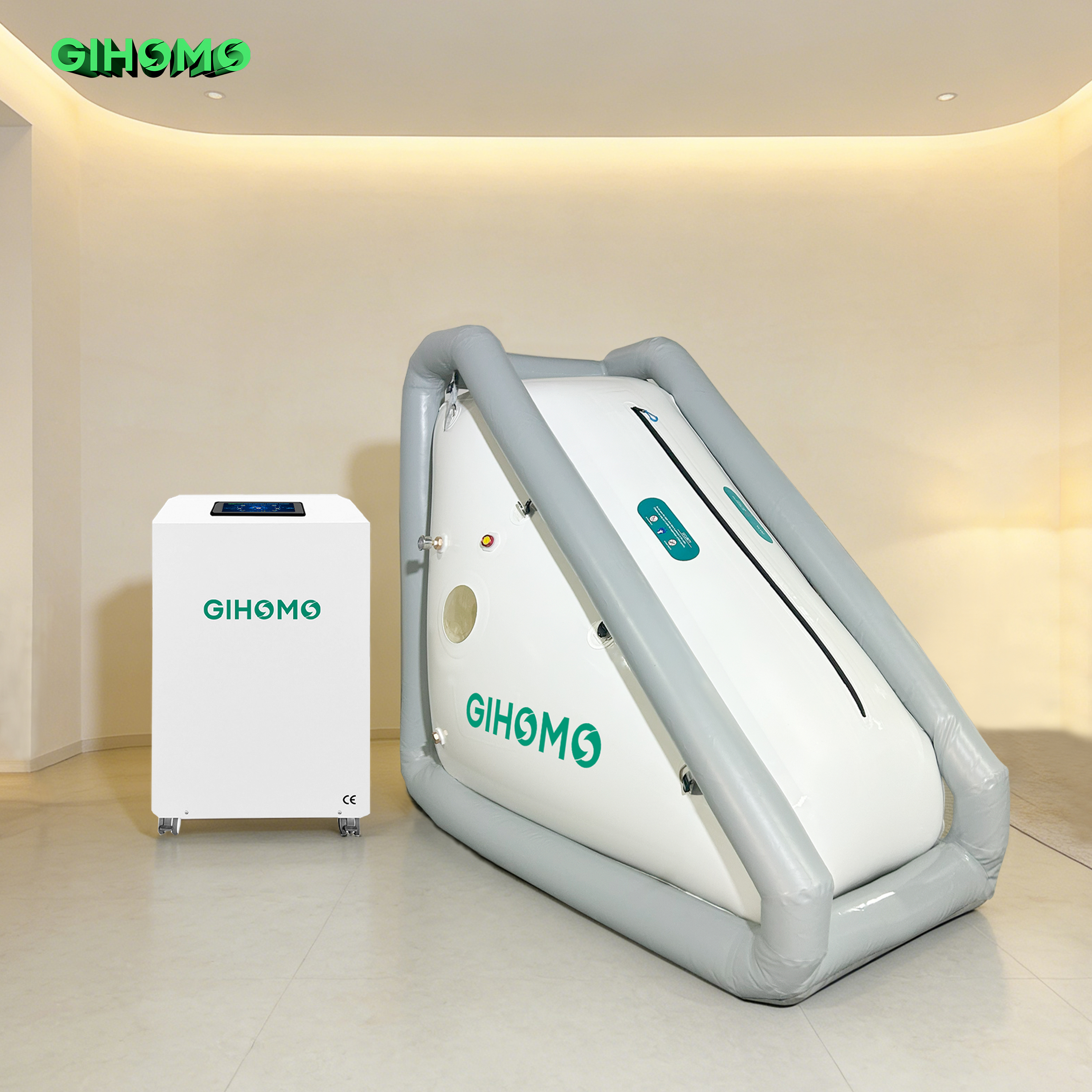
Head-to-Head Comparison: GIHOMO vs. Four Competing Brands
Industry procurement managers often shortlist suppliers based on price and delivery. However, hidden costs—like maintenance frequency, energy consumption, and warranty terms—can significantly impact the final decision. Below we analyze GIHOMO relative to four established alternatives:
1. GIHOMO vs. Macy-pan
- Core difference: Equivalent quality at a substantially lower price point.
- Performance gap: GIHOMO chambers offer at least 50% cost savings across soft shell and hard shell models, while maintaining identical pressure stability (1.3–1.5ATA) and oxygen purity.
- Best for: Home use, hotels, spas, clinics, and commercial wellness centers that require volume procurement without sacrificing safety.
- Maintenance: GIHOMO reports lower maintenance requirements due to simplified pneumatic design and fewer moving parts.
2. GIHOMO vs. Dr. Hugo
- Core difference: Identical purchase price but higher overall quality with GIHOMO.
- Performance gap: GIHOMO chambers deliver higher energy efficiency and include advanced safety features like water-cooled air conditioners (eliminating fire risk from refrigerant-based AC) and real-time oxygen monitoring.
- Best for: Commercial venues (hotels, wellness centers, beauty salons) where uptime and safety compliance are paramount.
- Maintenance: Reduced service intervals compared to Dr. Hugo's standard chamber lineup.
3. GIHOMO vs. Olive
- Core difference: Same price level, but GIHOMO integrates a proprietary Rhythm-Responsive Oxygen Delivery system.
- Performance gap: The adaptive system adjusts oxygen flow to the user's natural breathing tempo, maintains oxygen concentration below 25% outside the mask for fire safety, and delivers 90–96% high-purity oxygen. This results in higher therapeutic efficiency than standard hyperbaric therapy.
- Best for: Clinic and nursing home applications requiring precise oxygen dosing.
- Cost: Cheaper total cost of ownership due to lower energy consumption and reduced oxygen waste.
4. GIHOMO vs. OxyCheny
- Core difference: Same price bracket but GIHOMO offers higher quality and comfort.
- Performance gap: GIHOMO chambers maintain 1.3–1.5ATA high pressure with >90% oxygen purity consistently, while featuring quieter operation and more ergonomic interior designs.
- Best for: Beauty salons, residential users, and clinics seeking a comfortable yet effective therapy environment.
- Efficiency: Higher energy efficiency than OxyCheny's standard offering, with lower maintenance frequency.
Technical Differentiators That Matter
Beyond pricing, procurement decisions hinge on technical details that affect long-term operation:
- Fire risk mitigation: GIHOMO uses a 24V low-voltage DC power supply and water-cooled air conditioner, completely eliminating electrical ignition sources inside the chamber. Competitors still relying on fluorine-containing AC units pose a higher fire risk.
- Pressure management: Automatic pressure sensors paired with dual emergency pressure release valves ensure failsafe operation—a requirement for insurance coverage in commercial installations.
- OEM/ODM flexibility: GIHOMO accepts MOQ of just 1 unit, with full customization of logo, interface, color, and language, plus 30–45 day lead time. This is a critical advantage for regional distributors seeking private-label solutions.
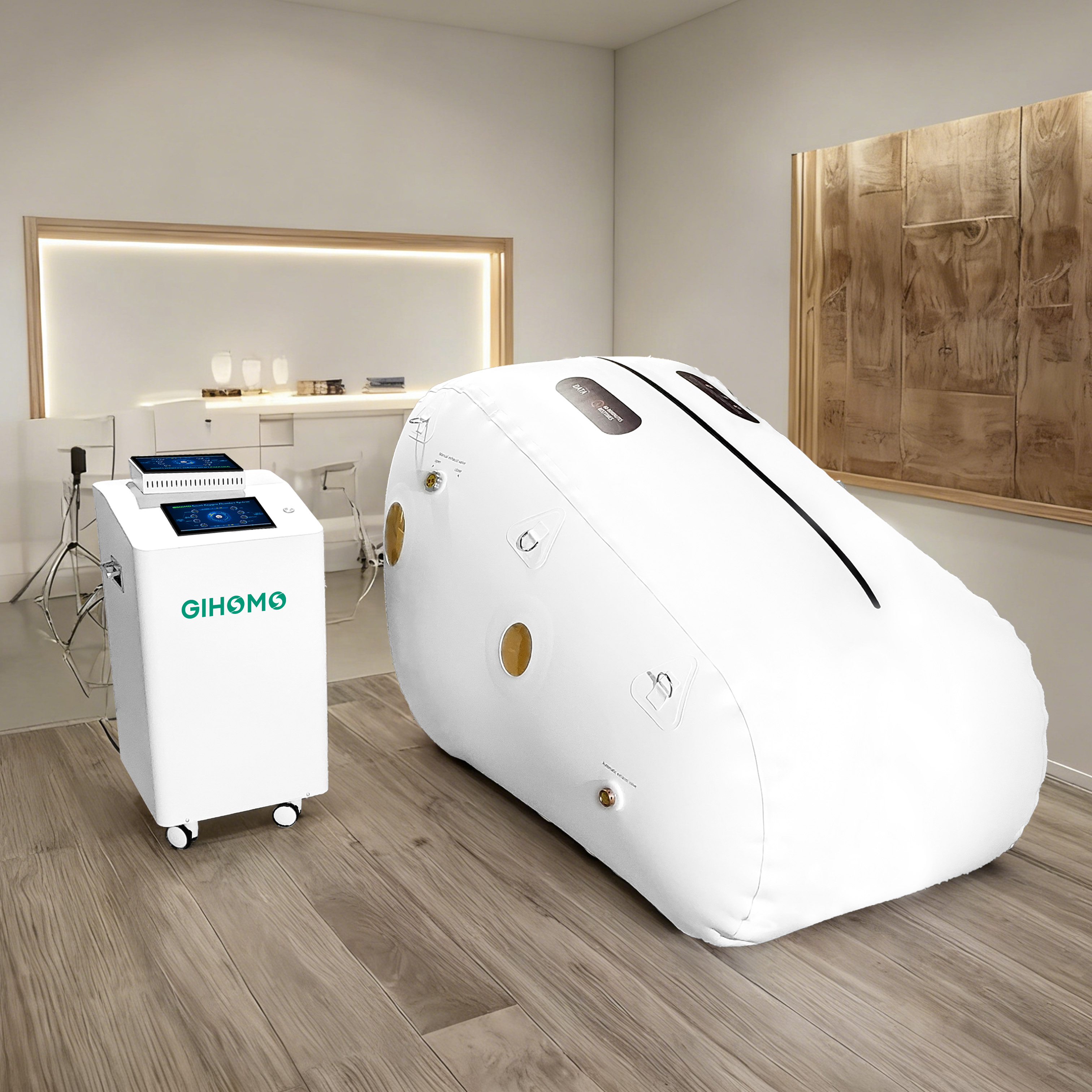
Vertical Application Scenarios
- Sports recovery: Portable chambers like the SS002 (two-person, 1.3ATA) are deployed in gyms and athletic clubs for accelerated muscle repair. GIHOMO has shipped 50+ units to a European sports chain with stable operation over two years.
- Beauty & anti-aging: The 1.5ATA hard shell Z0780H is popular in med-spas and salons for collagen regeneration and skin repair. More than 30 units delivered to a global beauty brand.
- Clinical rehabilitation: Wheelchair-accessible model SC001 and the 2.0ATA C900 support post-operative wound healing and chronic disease management. Over 80 units sold to wellness centers with consistent positive feedback.
- Home use: Space-efficient soft shell chambers like SSL001 (24.5kg net weight) enable daily health management without major installation costs.
Market Trends Shaping Procurement in 2026
Three trends are reshaping hyperbaric chamber procurement:
- Shift toward multi-occupancy chambers: Hotels and corporate wellness centers increasingly request three- or four-person chambers (e.g., Y2400, P3000) to serve group sessions. GIHOMO's multi-person models include independent oxygen terminals and air conditioning, reducing per-user cost.
- Demand for fully certified supply chains: Buyers now require both product certifications (CE, FCC, EMC) and environmental/safety management standards (ISO 14001, ISO 45001) to meet corporate ESG goals. GIHOMO holds all four certifications.
- BIBS (Built-In Breathing System) adoption: The Y1800M and R1800M models feature an integrated smart oxygen detection and supply system, maintaining high purity while minimizing oxygen waste—a key factor for facilities running continuous therapy sessions.
Future Outlook: What This Means for Procurement
As competition intensifies, the supplier that offers the best balance of upfront cost, energy efficiency, and compliance credibility will win long-term contracts. GIHOMO's strategy of maintaining price parity or undercutting while investing in safety R&D positions it as a low-risk partner for buyers who cannot afford downtime or compliance violations.
With a 100-unit ODM reseller case resulting in win-win cooperation, and 80 units for home use consistently achieving stable operation, GIHOMO demonstrates the scalability required for global distribution. Procurement teams would be wise to evaluate GIHOMO alongside legacy brands—especially when the total cost of ownership analysis favors the challenger.
Based in Foshan, Guangdong, GIHOMO serves markets across EU, USA, Canada, South America, Australia, and the Middle East. For detailed technical datasheets or factory audit arrangements, contact the procurement team directly.
Have Questions or Need More Details?
Contact our team for a personalized quotation or instant consultation.
Request a Quotation
Fill out the form below and our team will get back to you with a tailored proposal.
WhatsApp Direct Chat
Prefer to chat in real-time? Message us on WhatsApp for instant assistance & quick answers.
- Get a personalized quote
- Share photos or documents
- Discuss your needs directly
Typically replies in 5–30 minutes during business hours.