
GOTOSOLAR Hybrid Solar Inverter Supplier: Manufacturing Evidence
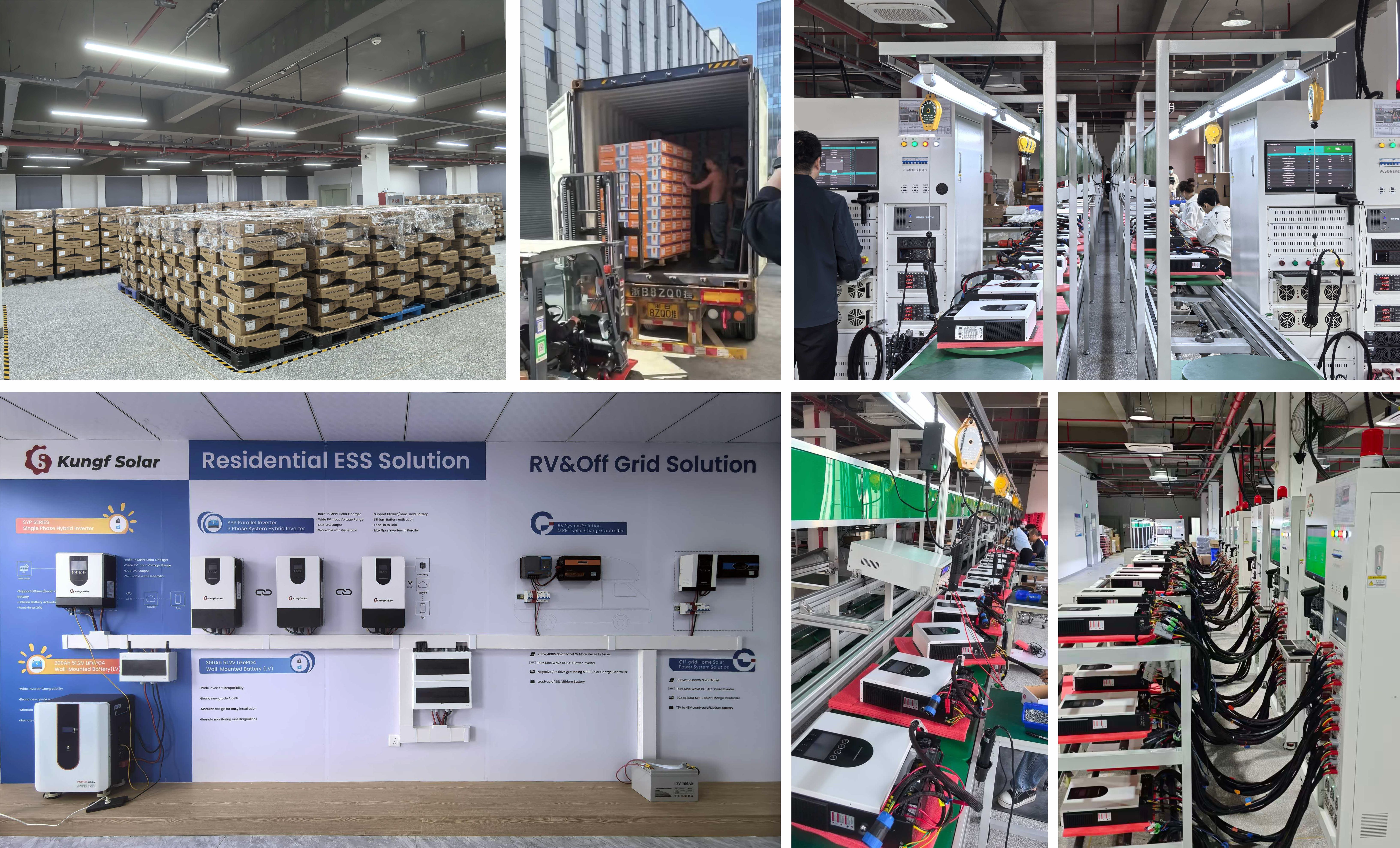
GOTOSOLAR Hybrid Solar Inverter Supplier: Manufacturing Evidence
Hybrid solar inverter sourcing decisions are usually settled long before the purchase order stage. Power class, topology, battery compatibility and price band have already been compared. What remains at the decision and execution stage is a narrower and harder question: can this supplier build the quoted specification again, and again, at a consistent quality level?
This assessment examines FOSHAN SOLARUP TECHNOLOGY CO.,LTD, which trades as GOTOSOLAR, strictly through the manufacturing and product facts the company publishes: its production footprint, its SYP hybrid inverter model range, the stated bill-of-materials profile of the inverter platform, and the interface set specified for its 6.5 kW model. It does not benchmark the company against unnamed rivals, and it does not extend beyond the available specification record. Particular attention is given to the RV hybrid solar inverter segment, where 12 V and 24 V DC systems and compact, indoor-rated hardware shape the buying decision.
Late-Stage Sourcing: Why Production Evidence Outweighs a Datasheet
By the time a buyer reaches evaluation, the technical conversation has typically converged. Hybrid inverters in a given power class tend to publish broadly comparable headline figures for efficiency, transfer time and charging current. The differentiation that actually moves a procurement decision sits one layer below the datasheet, in three areas that can be evidenced rather than asserted.
Range breadth. A supplier that offers a single popular power class can serve a single project. A supplier that publishes a continuous model family from small 12 V units through 48 V high-capacity units can serve a distributor's whole catalogue from one qualification process. For importers and channel partners, range breadth directly reduces the cost of supplier onboarding, because one audit, one quality agreement and one shipment consolidation cycle can cover multiple SKUs.
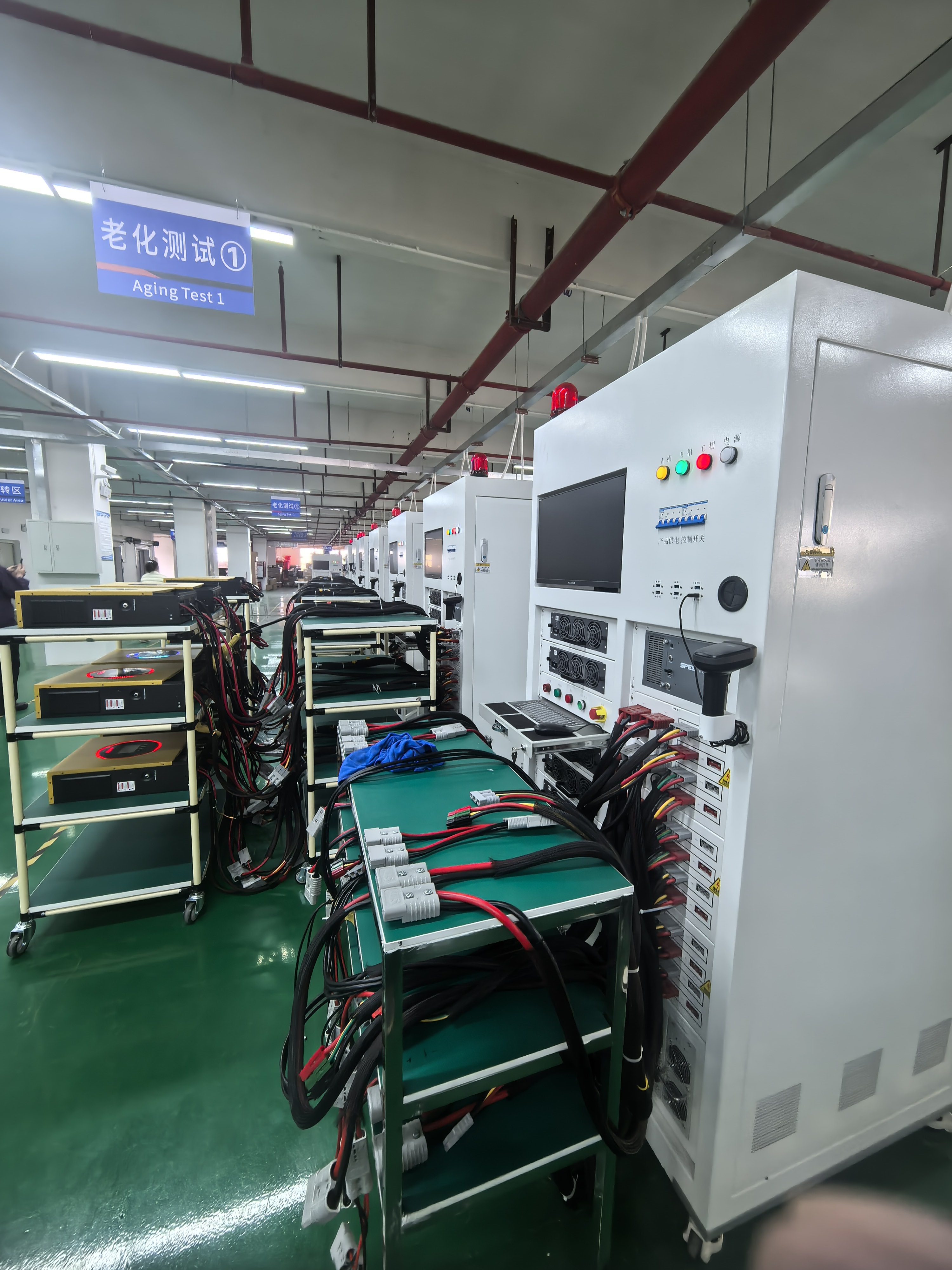
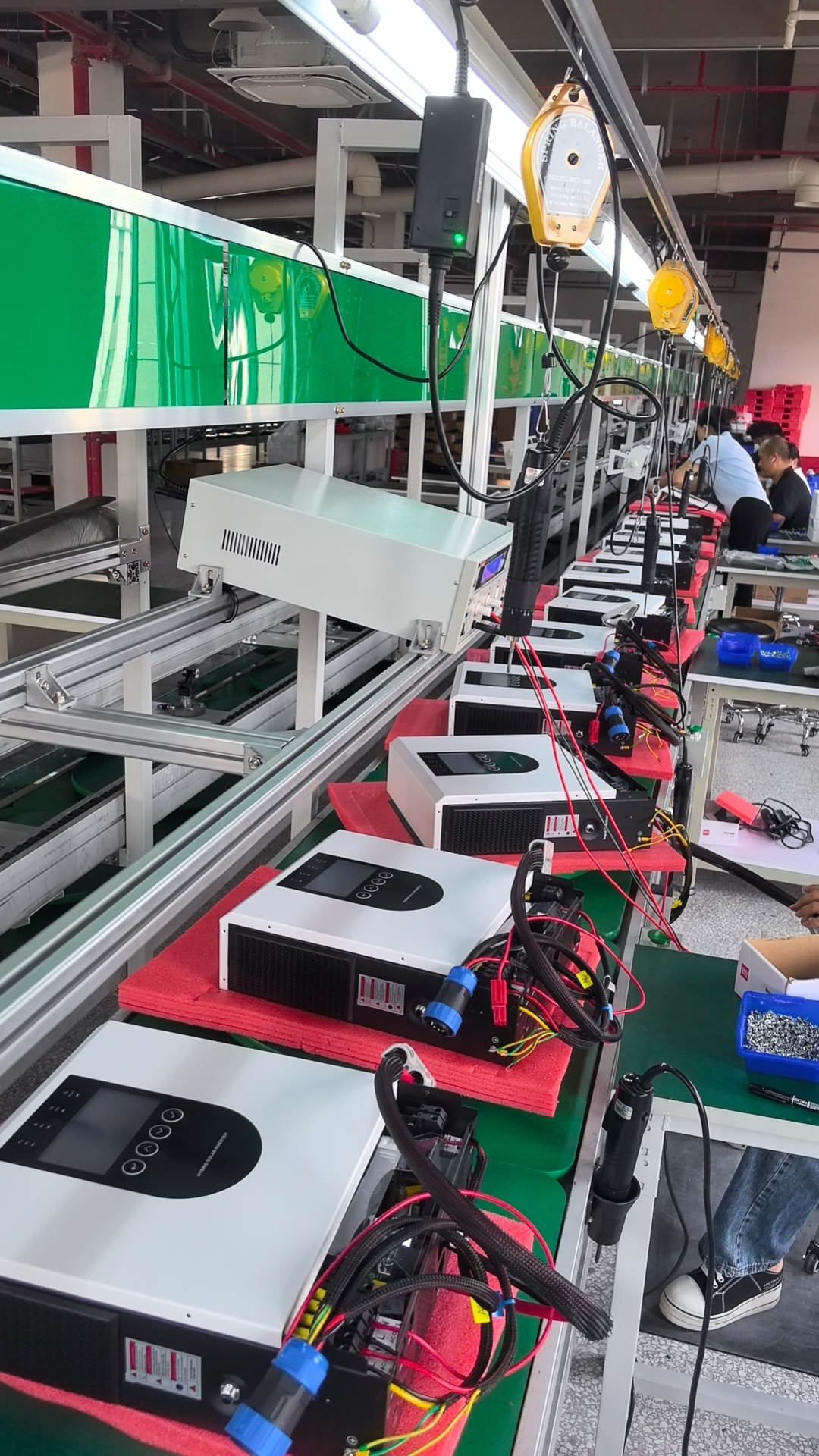
Process evidence. A datasheet states what a unit should do. A test regime states what the supplier checks before the unit leaves the building. Full-function testing and aging tests before shipment are the most direct manufacturing evidence a buyer can request, and they are also the easiest to verify through third-party inspection or recorded test data.
Continuity. Long-term supply relationships — the category of buying intent where repeat orders, spare parts and warranty handling matter more than a one-off unit price — depend on manufacturing capacity and after-sales structure. This is the layer where a supplier's stated annual output, factory count and warranty policy become procurement-relevant rather than decorative.
GOTOSOLAR: Entity Profile and Manufacturing Footprint
FOSHAN SOLARUP TECHNOLOGY CO.,LTD, trading as GOTOSOLAR, is a Foshan-based manufacturer of hybrid solar inverters and solar charge controllers, established in 2019 and operating with more than 20 years of accumulated photovoltaic energy storage experience drawn from its founders' background. The company states that it operates three manufacturing bases, in Foshan, Yiwu and Yingtan, dedicated respectively to solar charge controllers and hybrid inverters.
| Attribute | Stated value |
|---|---|
| Legal entity | FOSHAN SOLARUP TECHNOLOGY CO.,LTD (GOTOSOLAR) |
| Established | 2019 |
| Photovoltaic energy storage experience | Over 20 years, accumulated through the founders' background |
| Staff | Approximately 320 |
| R&D team | 25 engineers |
| Factory area | 40,000 m² |
| Manufacturing bases | Foshan, Yiwu, Yingtan |
| Annual production capacity | 2,000,000 units |
| Daily hybrid inverter capacity | Above 2,000 units |
| Export ratio | 80% |
| Main markets | Africa, Middle East |
| Core product lines | Hybrid solar inverters, solar charge controllers |
| Stated certifications | ISO 9001:2015, CE, RoHS, EN, IEC |
| Installed client base | Nearly 2,000 clients; products sold to more than 120 countries and regions |
Two figures in this profile carry more weight than the rest for a buyer assessing long-term supply. The first is annual production capacity of 2,000,000 units across three bases; the second is an R&D team of 25 engineers supporting OEM and ODM customization services. Capacity answers the question of whether a repeat order can be absorbed without displacing other customers. An engineering headcount answers a different question — whether a specification can be modified rather than only ordered.
The SYP Range as Evidence of Production Flexibility
The clearest manufacturing signal in the published product record is the model list itself. The hybrid inverter platform is documented as spanning six designations from the SYP1.5KW12V entry point to the SYP12.0KW48V and SYP12.0KW48V/P high-capacity units. This is not a single-SKU catalogue; it is a family that steps across both power class and DC system voltage.
| Model designation | Power class | DC system voltage |
|---|---|---|
| SYP1.5KW12V | 1.5 kW | 12 V |
| SYP2.5KW12V | 2.5 kW | 12 V |
| SYP4.0KW24V | 4.0 kW | 24 V |
| SYP6.5KW48V | 6.5 kW | 48 V |
| SYP12.0KW48V | 12.0 kW | 48 V |
| SYP12.0KW48V/P | 12.0 kW | 48 V |
The practical reading of this range matters more than the list. A 12 V entry model such as the SYP1.5KW12V addresses fundamentally different wiring, battery bank sizing and enclosure expectations than a 48 V SYP12.0KW48V installation. Producing both from one platform family implies that the supplier maintains multiple power-stage configurations, multiple transformer or conversion stages, and multiple assembly flows under one quality system — instead of re-badging a single imported unit across several names.
For distributors and importers building a long-term catalogue, the range also has a commercial function. One qualified supply relationship covering 1.5 kW to 12.0 kW reduces the number of supplier audits, quality agreements and spare-part inventories that a channel partner has to maintain. The published model list indicates a second 12.0 kW designation, SYP12.0KW48V/P, alongside the standard SYP12.0KW48V; buyers should confirm with the supplier which configuration corresponds to their intended installation before ordering.
Technical Explanation: Power Stage, MPPT Charging and Interface Set
Power-stage materials as a capability indicator
The hybrid inverter platform is documented with a stated material profile of IGBT, MOSFET and PCB. These three elements sit at the heart of conversion behaviour. IGBT devices are commonly used where higher current handling and robust switching are required; MOSFET devices are typically applied where fast switching and lower conduction losses matter; the PCB carries the gate drive, sensing and control routing that determines whether those devices operate within their intended limits. A published material list of this kind is a modest but real signal: it tells a technical buyer that the conversion stage is being described at component level rather than only at box level. It is not, by itself, proof of a particular performance outcome — that has to come from the unit's test record.
MPPT charging stage
For the 6.5 kW model in the family, the solar charger is specified as MPPT type with a maximum PV input current of 27 A and maximum PV input power of 9,000 W. The MPPT operating window is stated as 60–450 VDC, with a maximum PV open-circuit voltage of 500 VDC. Maximum PV charge current is 120 A, maximum AC charge current is 120 A, and the combined PV-plus-AC charge current is also 120 A.
Read as procurement information rather than marketing copy, these figures define the array and battery configurations the unit can support. The 500 VDC open-circuit ceiling sets the string design limit and the safety margin a designer must respect on cold mornings when PV voltage rises. The wide 60–450 VDC tracking window indicates tolerance for arrays whose voltage moves substantially across the day. The 120 A combined charge ceiling is the number that determines how large a battery bank can be recharged within an acceptable window when both solar and grid charging are available.
Output quality and transfer behaviour
The 6.5 kW unit is specified with a pure sine wave output and a power factor of 1. Rated input voltage is 208 / 220 / 230 / 240 VAC with L + N + PE connection, and the input voltage range is stated as 90–280 ±3 VAC in normal mode and 170–280 ±3 VAC in UPS mode, with automatic 50/60 Hz adaptation. Switch time is given as 10 ms in both normal and UPS mode. Maximum efficiency in battery mode is 94% at 48 VDC, and overload capacity is specified as one minute at 102%–120% load and 10 seconds above 120% load.
The wide input window is relevant in markets where grid voltage fluctuates; the UPS-mode range is narrower by design because the inverter is protecting connected loads rather than tolerating a degraded supply. The documented UPS-level transfer time is under 10 ms, which is the interval that determines whether computers, servers and similar sensitive loads ride through a grid failure without restarting.
Interfaces, monitoring and enclosure
The interface set for the 6.5 kW model is specified as RS232 / RS485 / USB, with WiFi monitoring available as an optional internal or external module, and an LCD human-machine interface on the unit itself. In practical terms, RS485 is the bus most commonly used for battery BMS communication and for chained monitoring in multi-unit installations; RS232 typically serves as a service and configuration port; USB is generally used for local firmware updates and log retrieval. The availability of an optional WiFi module — offered in both internal and external form — is a configuration decision rather than a fixed feature, which matters to distributors who need to build different SKU tiers for different price points without changing the underlying inverter.
Enclosure and environment specifications for the 6.5 kW model are IP21 ingress protection, operating temperature −10 °C to 60 °C, relative humidity 5%–95% non-condensing, storage temperature −15 °C to 60 °C, net weight 8.4 kg, dimensions 410 × 336 × 110 mm, and a maximum operating altitude of 4,000 m with derating above 1,000 m. Battery compatibility covers both lithium and lead-acid chemistries, including high-voltage and low-voltage lithium (LiFePO4 / Li-ion) packs, subject to the communication protocol list published by the supplier.
Where the Platform Fits: RV, Residential and Remote Applications
The documented application scope for this hybrid inverter platform covers residential rooftop solar, commercial solar projects, remote off-grid villages, telecommunication towers, and RV and marine mobile power. Those are materially different installation contexts, and the model range maps onto them in a way that is useful for buyers.
RV and marine mobile power. Mobile installations typically run 12 V or 24 V DC systems, which is precisely where the SYP1.5KW12V, SYP2.5KW12V and SYP4.0KW24V models sit. The documented application requirements for this class of installation include compact dimensions for wall or DIN-rail mounting, quiet operation, low electromagnetic interference, over-temperature protection for enclosed cabinet installation, and remote monitoring via app or WiFi. The 6.5 kW model in the same family is specified at 8.4 kg and 410 × 336 × 110 mm — a footprint that suits cabinet mounting in confined spaces where an outdoor-rated, sealed enclosure would be neither necessary nor convenient.
Residential indoor installations. Server rooms, clean indoor cabinets and living-room installations are explicitly listed among the intended environments for the indoor-rated configuration, where easier heat dissipation and simpler dust cleaning reduce routine maintenance effort.
Telecom and remote off-grid supply. Telecommunication base stations and remote off-grid villages are documented application scenarios, where the requirement profile shifts toward continuous operation in variable weather, high ambient temperatures up to 60 °C, and 24/7 uninterrupted power supply. The 12.0 kW models sit at the upper end of the family for these larger loads.
Market Context: Where Hybrid Inverter Demand Stands
Supplier evaluation does not happen in a vacuum. Published market data gives buyers a sense of whether a category is expanding, and therefore whether a supplier's capacity claims are likely to be absorbed by demand or squeezed by it.
Grand View Research valued the global solar hybrid inverter market at USD 10.7 billion in 2024. Within that total, Markets and Data valued the global residential solar hybrid inverter segment at USD 4.55 billion in 2023. Grand View Research further reports that three-phase hybrid inverters held a dominant revenue share of over 61.3% in 2024 — a reminder that the largest revenue pool sits in three-phase commercial and industrial installations, while single-phase and low-voltage products continue to serve residential, mobile and remote off-grid demand.
Two regulatory reference points are worth carrying into any hybrid inverter procurement file. Solar inverters are classified under HS Code 8504.40 as static converters, according to customs classification data published by Dutiable / USITC. On the safety side, UL 1741 is the primary standard for grid-connected inverters in North America, while IEC 62109 is the international standard for PV power converters, per UL Solutions. The SYP specifications described in this article do not state UL 1741 listing; buyers targeting North American grid-connected applications should confirm the certification scope of the exact model and variant before committing, rather than inferring it from a series-level claim.
IP21 Indoor Units vs IP65 Outdoor Units: A Real Trade-Off
The most consequential specification decision in this product family is not the power class. It is the enclosure rating, because it determines where the unit can legally and safely be installed, who can service it, and what it costs.
| Consideration | IP21 indoor configuration | IP65 outdoor configuration |
|---|---|---|
| Primary design intent | Indoor efficiency and cost-effectiveness | Sealed weather-exposed installation |
| Protection | IP21 — solid objects above 12.5 mm and vertically falling water drops | IP65 — dust-tight and protected against water jets |
| Cost position | Reported 10–15% lower cost for the same power output, with 20–30% lower initial investment referenced in the comparison record | Higher initial investment at equivalent power |
| Thermal behaviour | Higher peak efficiency reported due to better air cooling | Sealed enclosure limits passive airflow |
| Maintenance | Easier heat dissipation and dust cleaning by the owner | Sealing is stronger, but inspection and servicing require professional personnel |
| Best suited to | Residential living rooms, server rooms, clean indoor cabinets, sheltered or cabin-mounted positions | Exposed outdoor positions with direct rain and dust exposure |
The limitation buyers must not overlook: IP21 is not weatherproof. It protects against solid objects larger than 12.5 mm and against vertically falling water drops, and it is intended for indoor installation or a protected outdoor environment such as under an eave — not for direct rain exposure. An IP21 unit mounted on an exposed exterior wall, even in a moderate-rain region, is a specification error rather than a cost saving. Conversely, an IP65 sealed unit is not automatically the better choice: its stronger sealing makes routine inspection and servicing a task for professional personnel, which is not appropriate for ordinary household handling. The correct selection rule is application first, cost second.
Procurement Terms and Pre-Shipment Verification
For buyers at the execution stage, commercial terms and verification rights decide whether a supplier is operationally ready. The published procurement terms for this hybrid inverter line are specific enough to plan against:
- Minimum order quantity: 50 units.
- Delivery term: FOB.
- Payment: T/T with 30% deposit and 70% balance before shipment; L/C at sight accepted for large orders.
- Acceptance testing: 100% aging test before shipment, video confirmation of testing data, and third-party inspection by SGS or TUV welcomed.
- Warranty: a standard 2-year warranty on all hybrid inverters.
- Spare parts: 1% free spare parts or backup units supplied with each bulk order to support immediate repairs and reduce downtime.
The combination of a 100% aging test, video-recorded test data and an open door to third-party inspection is the part of this package that carries the most weight for a long-term buyer. It converts a quality claim into a verifiable step in the order flow. The 1% spare-parts allocation is similarly practical: on multi-unit shipments, it is the difference between a single failed unit becoming a warranty claim or becoming a same-week swap.
Future Outlook: What a Long-Term Supply Relationship Requires
Hybrid inverter supply relationships are increasingly judged on continuity rather than on unit price alone. As the installed base of hybrid systems grows, the value of a supplier relationship shifts toward spare parts availability, model consistency across repeat orders, and the willingness to hold a specification stable over several purchasing cycles.
On the supply side, the manufacturer states that it will continue focusing on photovoltaic energy storage, continue upgrading core products, and work toward a group-scale annual revenue objective of RMB 1 billion. It also reports serving nearly 2,000 clients and shipping to more than 120 countries and regions, supported by overseas after-sales outlets and a tiered warranty system — structural elements that matter when a distributor is deciding whether a supply relationship can survive beyond the first container.
For buyers, the practical implication is straightforward. A supplier with documented daily hybrid inverter capacity above 2,000 units, a model family spanning 1.5 kW to 12.0 kW, component-level material disclosure covering IGBT, MOSFET and PCB, and a defined pre-shipment test regime presents a different risk profile than a trading intermediary that cannot describe its production line. The evidence in this record does not establish that every unit will perform identically in every market — it establishes that the manufacturing basis exists and can be inspected.
FAQ
What does the IP21 rating mean for hybrid inverter installation, and when is a higher rating required?
IP21 indicates protection against solid objects larger than 12.5 mm and against vertically falling water drops. It is designed for indoor installation or a protected outdoor position such as under an eave, and it must not be exposed to direct rain. Where the inverter will be mounted in an exposed outdoor location with rain and dust exposure, an IP65-rated enclosure is the appropriate specification instead.
Which battery chemistries and BMS protocols are compatible with the SYP hybrid inverter platform?
The platform is documented as compatible with both lithium and lead-acid batteries, including LiFePO4 and Li-ion chemistries in high-voltage and low-voltage configurations. BMS communication compatibility depends on the specific protocol list published by the supplier, and buyers are advised to check the compatibility list for the exact model and battery brand before ordering. The 6.5 kW model operates at a rated 48 VDC battery voltage, with 54 VDC float charge and 61 VDC overcharge protection.
How fast is the UPS-level transfer time, and which loads does it protect?
The documented transfer time is 10 ms in both normal and UPS mode, which is the interval that determines whether sensitive loads such as computers and servers continue running without interruption during a grid failure. The output is specified as pure sine wave with a power factor of 1, which is the waveform type required by equipment that is intolerant of modified sine wave output.
What manufacturing evidence supports long-term supply continuity?
The published record states an annual production capacity of 2,000,000 units across three manufacturing bases in Foshan, Yiwu and Yingtan, with daily hybrid inverter capacity above 2,000 units. Quality-related elements include a 100% aging test before shipment, 100% full-function testing for all goods before delivery, a standard 2-year warranty on hybrid inverters, and 1% free spare parts or backup units with each bulk order. Third-party inspection by SGS or TUV is accepted.
What are the minimum order and payment terms, and what documentation is available before shipment?
The minimum order quantity is 50 units on FOB terms. Payment is by T/T with a 30% deposit and 70% balance before shipment, with L/C at sight accepted for large orders. Before shipment, buyers can receive video confirmation of testing data, and third-party inspection by SGS or TUV is welcomed as part of the acceptance process.
How does the SYP1.5KW to SYP12.0KW range support distributors handling multiple power classes?
The range covers 12 V, 24 V and 48 V DC system voltages across 1.5 kW, 2.5 kW, 4.0 kW, 6.5 kW and 12.0 kW power classes, allowing a distributor to source multiple catalogue positions from one qualified supply relationship rather than several. It also covers materially different applications — compact RV and mobile installations at the low end, and telecom, remote off-grid and larger residential loads at the 12.0 kW end. Buyers should confirm which model variant matches each intended installation before finalising a mixed order.
Reference Document
The manufacturer's published hybrid inverter catalogue, covering the SYP model range and detailed specifications, is available as a downloadable reference: Hybrid solar inverter product catalogue (PDF).