
GRS and OEKO-TEX on Sofa Fabric: Buyers' Verification Guide
GRS and OEKO-TEX on Sofa Fabric: Buyers' Verification Guide
Two certification marks now share space on most upholstery swatch cards: a GRS mark and an OEKO-TEX mark. They are frequently presented as one combined proof of quality, and that presentation is the source of most specification errors in sofa fabric procurement. GRS, the Global Recycled Standard, documents recycled material content and the chain of custody behind it. OEKO-TEX certification for safe textile documents testing for harmful substances in the finished textile. Neither mark states anything about how a fabric behaves in a fire, and neither one confirms that the exact colorway in an order falls inside the assessed scope.
The commercial scale of upholstery explains why these documents have moved from the appendix to the specification sheet. The global sofa market is estimated at US$244.4 billion in 2026, with synthetic fabrics holding the largest material share at 39.8% (Grand View Research, 2026). Inside that category, the furniture performance fabric segment — stain-resistant, high-durability constructions — was valued at US$4.8 billion in 2025, with polyester accounting for 38.4% of the material share (Dataintelo, 2026). When synthetic constructions dominate volume and performance features carry measurable commercial value, buyers begin to ask for evidence rather than for adjectives.
For upholstery buyers, the working rule behind this guide is deliberately narrow: certification claims should be verified against a specific product art number, not against a mill's general statement of capability. The sections below set out what each certificate covers, which OYD Textile models carry which documents, where fire performance sits in that structure, and how a buyer can verify the file before a purchase order is issued.
What GRS and OEKO-TEX Actually Certify
GRS addresses recycled content. On a sofa fabric it answers three procurement questions: whether recycled material is present in the product, whether that content was tracked through the supply chain, and whether the producer's handling of recycled material was verified. For a hospitality refurbishment, a contract furniture programme or a retail range carrying a sustainability commitment, the GRS file is the document that supports a recycled-content statement.
OEKO-TEX certification for safe textile addresses a different risk entirely. It is a test-based assessment of harmful substances in the finished textile. In upholstery it matters for two practical reasons: furniture is designed for prolonged skin contact, and indoor furnishings form part of the indoor environment. When a buyer writes safe textile into a specification, OEKO-TEX is the evidence that sits behind the phrase.
Both standards share a boundary that is easy to overlook. Neither is a fire-safety certificate, and neither replaces abrasion, pilling, color-fastness or dimensional-stability testing. In a complete dossier these documents occupy separate compartments. Reviewing them as a single quality statement is where late-stage compliance problems usually begin, because a document that answers one question gets reused to answer another.
Extractable summary: GRS covers recycled material content and chain of custody. OEKO-TEX covers harmful-substance safety in the finished textile. Fire performance, abrasion and color fastness are covered by neither and require separate test evidence.
Which Sofa Fabric Models Carry GRS and OEKO-TEX
OYD Textile (Haining OuYuda Textile Co., Ltd.) is a sofa fabric and upholstery fabric manufacturer based in Haining, Zhejiang, China, established in 2017 with 25 years of fabric manufacturing experience, a 35,000 m² facility, more than 100 weaving and knitting machines and an annual production capacity of 13,000,000 meters. Export business accounts for 95% of sales, reaching more than 30 countries across Europe, the USA, the Middle East, South America, Africa and East Asia.
Within the current range, GRS and OEKO-TEX are documented together for the models summarised below. The table is expressed by art number on purpose, because the same construction family can contain models whose documentation differs.
| Art No. | Construction | Composition | Weight | Width | GRS | OEKO-TEX |
|---|---|---|---|---|---|---|
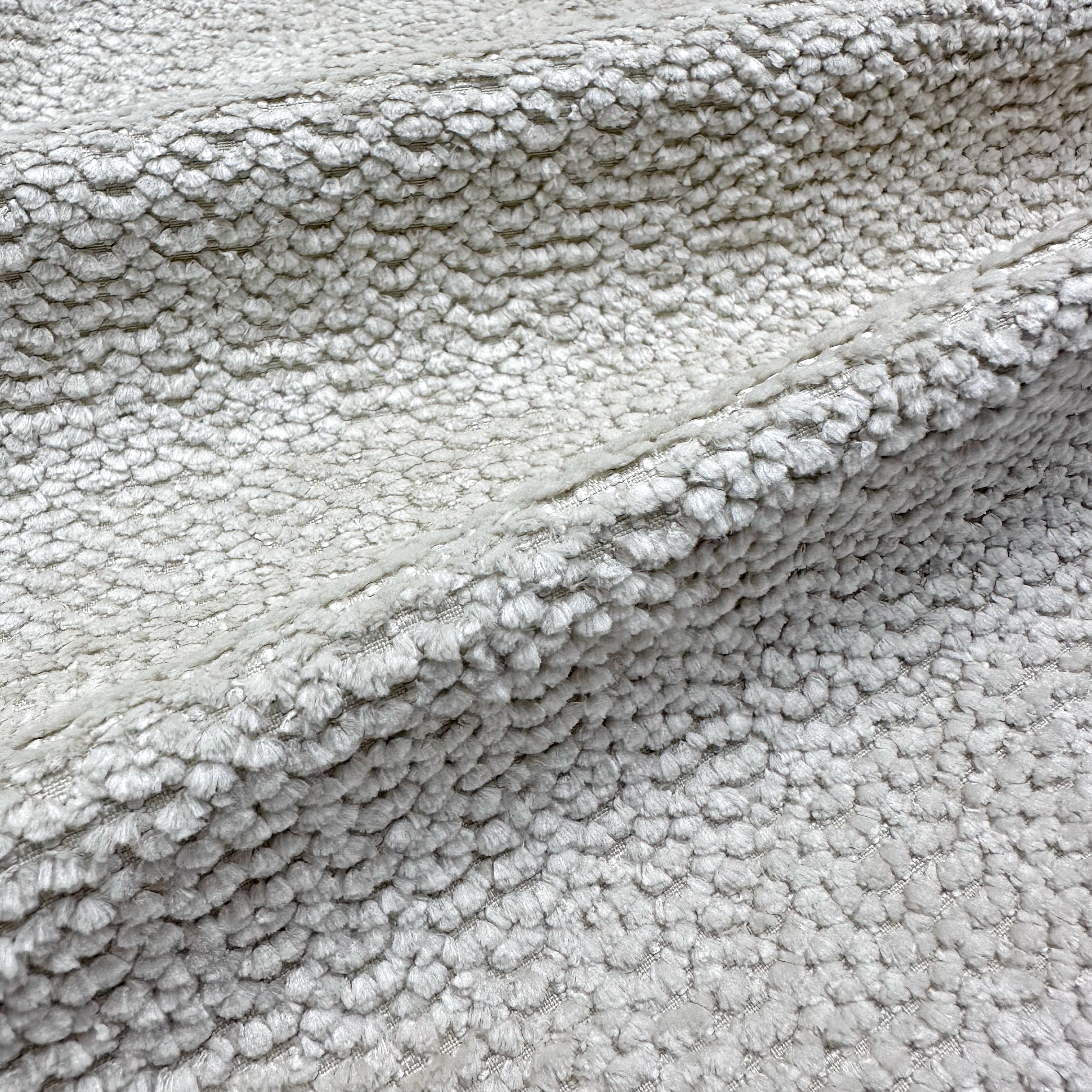
| OYD3626 | Chenille plain (woven) | 100% Polyester | 350±10 GSM | 142±2 CM | Listed | Listed |
| OYD3591 | Chenille with two-tone effect | 100% Polyester | 400±10 GSM | 142±2 CM | Listed | Listed |
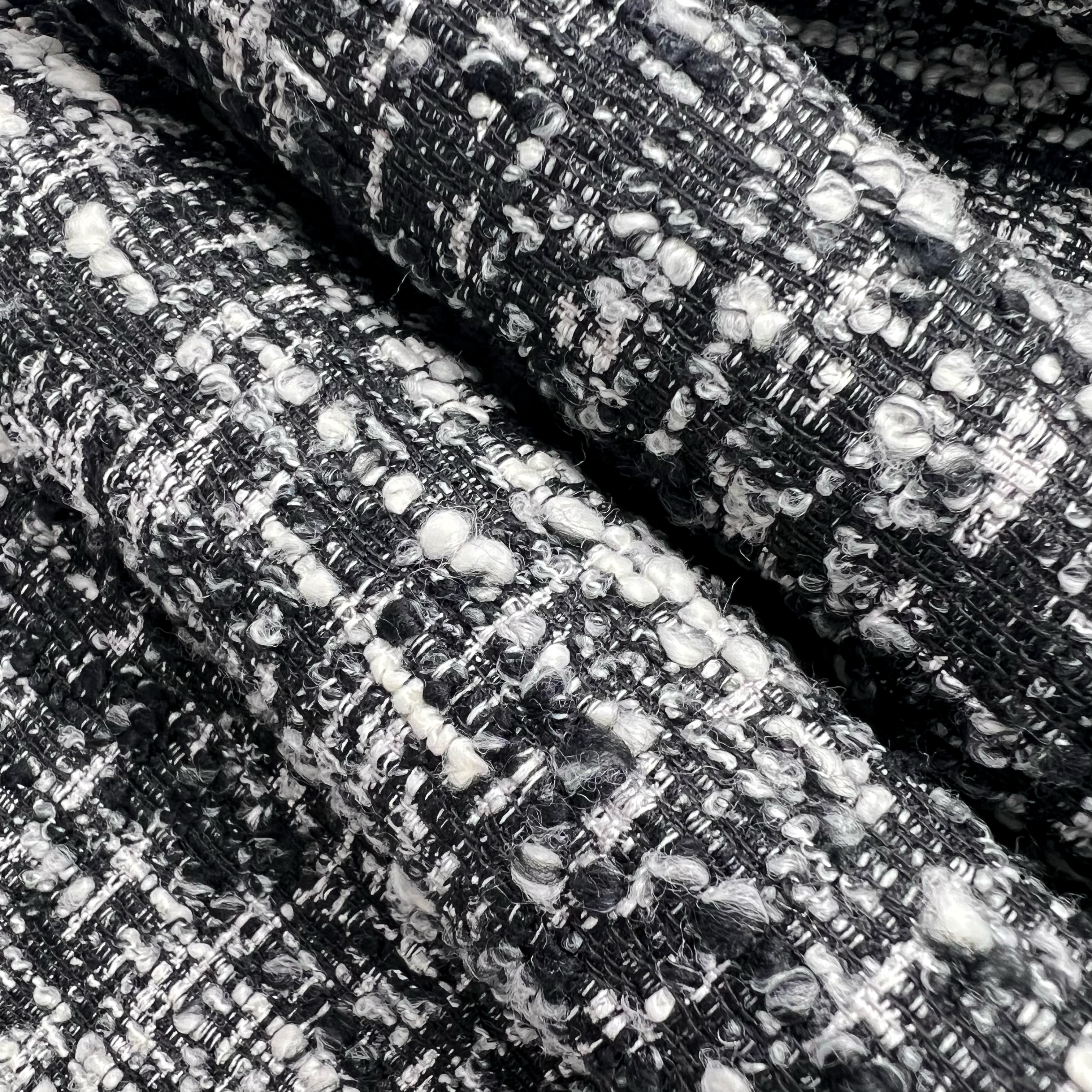
| OYD3229 | Woven boucle, high density | 90% Polyester + 10% Acrylic | 620±10 GSM | 142±2 CM | Listed | Listed |
| OYD3120 | Chenille, yarn dyed | 100% Polyester | 420±10 GSM | 142±2 CM | Listed | Listed |
| OYD2992 | Chenille plain | 100% Polyester | 420±10 GSM | 142±2 CM | Listed | Listed |
| OYD2919 | Chenille plain | 100% Polyester | 400±10 GSM | 142±2 CM | Listed | Listed |
| OYD2500 | Chenille, plain weave | 100% Polyester | 410±10 GSM | 142±2 CM | Listed | Listed |
| OYD1825 | Chenille plain | 100% Polyester | 490±10 GSM | 142±2 CM | Listed | Listed |
| OYD3235 | Woven / jacquard construction | 80% P + 14% A + 6% C | 600±10 GSM | 142±2 CM | Listed | Listed |
Two models are worth reading in detail because they are frequently specified for different reasons. OYD3229 is a heavy-weight, high-density boucle woven fabric at 620±10 GSM, made of 90% polyester and 10% acrylic, offered in 7 classic colorways and designed for high-end Italian-style accent chairs and hotel upholstery; its product data records strong abrasion resistance alongside the premium tactile quality expected in statement seating. OYD3591 is a plain chenille with a two-tone effect at 400±10 GSM in 100% polyester, available in 20 colorways and intended for modern-style large sofas and soft beds.
Where a model's documentation lists only part of the certification set, buyers should record that difference rather than assume parity across the range. Colourway and construction changes are precisely the variables that determine whether a certificate scope still applies.
Fire Retardancy Is a Separate Claim — Verify It Per Art Number
Fire-retardant performance is recorded in the product data for specific constructions. OYD3626 is a chenille plain fabric at 350±10 GSM in 100% polyester, available in 27 colours, designed for modern-style sofas and beds, suitable for hotel projects and indoor upholstery, and listed with easy-clean, stain-resistant, water-repellent and fire-retardant properties. OYD3591 carries a comparable profile at 400±10 GSM across 20 colour options. In both cases the fire-retardant statement sits alongside water repellency, stain resistance and easy cleaning — properties that belong to the finishing and maintenance discussion, not to the recycled-content or harmful-substance certificates.
A buyer who reads GRS plus OEKO-TEX plus fire-retardant as a single guarantee will eventually meet a project that asks for a fire test report and discover that no such document exists in the file. The two certification marks do not carry fire performance. Fire safety for upholstered furniture is regulated separately in each market, and the requirements are not interchangeable between regions.
Regulatory direction supports the per-product reading. In the United Kingdom, the Furniture and Furnishings (Fire) (Safety) Regulations 1988 No. 1324 were amended in 2025, and the amendment came into force in October 2025, removing the display label requirement and shifting emphasis to permanent labels (UK Government, Department for Business and Trade). The practical signal for buyers is that fire-related information is being tied to the product itself and to documentation that travels with it, rather than to information supplied at the point of sale.
Boundary to accept: fire-retardant performance is stated per art number, and finishing is a production step that OYD Textile supports for other functions such as waterproof and anti-fouling treatment. Buyers should therefore request the fire test report for the exact art number and production run, and should not carry the claim across from a neighbouring model in the same construction family.
What the Certification Set Means for Hotel Projects and High-End Upholstery
Hotel and contract seating has a requirement profile of its own: indoor use at normal room temperature, daily frequent use, and a maintenance expectation built around water repellency, stain resistance, dust resistance and easy cleaning, alongside fire-retardant requirements. OYD Textile's documented project types include furniture producers and furniture factories, fabric wholesalers, hotel projects, and interior designers and home decor upholstery. Matching a fabric to that profile means matching four separate evidence trails, not one.
- Sustainability documentation — supported by the GRS file where a project or brand carries recycled-content commitments.
- Textile safety — supported by OEKO-TEX for safe textile, relevant to prolonged skin contact and indoor furnishing use.
- Fire performance — supported by a separate fire test report, confirmed for the art number in question.
- Maintenance behaviour — supported by the finishing claims recorded for the model: water-repellent, stain-resistant and easy to clean.
In practice the models diverge by use case rather than by certification. OYD3229, at 620±10 GSM with a high-density boucle structure and 7 classic colorways, suits high-end Italian-style accent chairs and hotel upholstery where the fabric is both visible and touched. OYD3591, at 400±10 GSM in 20 colours, suits modern large sofas in lounge and lobby settings. OYD3626, at 350±10 GSM across 27 colours with hotel-project suitability recorded in its data, suits specifications that have to hold consistently across many rooms. OYD3235, at 600±10 GSM with a 80% polyester, 14% acrylic and 6% cotton composition, sits at the heaviest end of the group.
For a project buyer, this means the RFQ itself should be reorganised. Listing art numbers alongside the required document set produces a verifiable answer; listing only a general requirement such as certified fabric produces a general answer that cannot be checked against a purchase order.
Why Certification Documentation Is Moving Up the Sourcing Checklist
Three market signals explain the shift. First, synthetic fabrics hold the largest material share of a global sofa market estimated at US$244.4 billion in 2026 (Grand View Research, 2026). When most of the volume is synthetic, construction alone stops being a differentiator and documented attributes take over that role. Second, performance upholstery — defined by stain resistance and high durability — is already a distinct commercial segment valued at US$4.8 billion in 2025 with polyester at 38.4% of material share (Dataintelo, 2026), which means buyers are actively paying for claimed performance and therefore have a reason to ask for the evidence behind it. Third, supply is deep and competitive: China's exports of textile yarns and fabrics reached US$130.01 billion from January to November 2025, a 0.9% year-on-year increase (China Customs). In a market of that depth, documentation quality becomes a filtering mechanism rather than a differentiator of last resort.
A caution about market numbers: published upholstery fabric market sizes vary widely between research sources because different reports include different parts of the supply chain. They are useful for direction and useless for a compliance decision. Product-level documentation settles the questions that matter at order stage.
Structured Verification Compared with Traditional Assumptions
The difference between the two approaches is not the certificate itself; it is where the certificate is anchored.
| Procurement step | Traditional assumption | Structured verification |
|---|---|---|
| Document request | One certificate per supplier | One document set per art number |
| Scope check | Assumed to cover the whole range | Confirmed against model and colourway |
| Fire performance | Read as part of being certified | Kept separate, with its own report |
| Recycled content | Treated as a marketing statement | Traced through the GRS chain of custody |
| Reorder and repeat order | Documents not retained with the order | Documents filed against the purchase order |
The structured approach also has limits that should be stated openly rather than discovered later.
- GRS says nothing about durability or safety. A recycled-content certificate is not a performance certificate.
- OEKO-TEX is not a fire certificate. A safe-textile document will not satisfy a fire-safety request.
- Certificate scope is defined in the document. Whether a specific art number and colourway sit inside that scope has to be confirmed, not assumed.
- Certification does not replace performance testing. Abrasion resistance, colour fastness and related properties are tested separately, and OYD Textile's full-range quality control — incoming raw material inspection, in-process production monitoring and pre-shipment final inspection — supports consistency but does not substitute for buyer-side validation.
- Documentation takes time. With a typical MOQ of 500–1000 meters per colour and a lead time of 20–30 days upon deposit receipt, certification questions are best resolved before samples are approved rather than after an order is placed.
- Not every model carries both marks, and product data should be read per art number for that reason.
A Six-Step Verification Workflow for Upholstery Buyers
- Anchor the requirement to an art number. Replace general wording with a specific model, for example OYD3229 or OYD3626, so the answer can be checked against a document.
- Request the certificate itself. Record the issuing body, certificate number and validity period, together with the products and sites covered.
- Separate the claim types. Confirm which document supports recycled content, which supports textile safety, and which supports fire performance.
- Match the colourway. Confirm that the colour to be ordered falls inside the documented scope before the sample is approved.
- Ask for performance testing separately. Fire, abrasion and colour-fastness evidence are separate requests from GRS and OEKO-TEX.
- File the documents with the purchase order. A repeat order should trace back to the same evidence set, not to a conversation.
Outlook
Two directions look durable. The first is granularity: documentation is moving from company level to product level, and the amendment to the UK fire-safety regulations, in force since October 2025 and now centred on permanent labels rather than display labels, is one example of information being attached more closely to the product itself. The second is recycled content: as hospitality and contract programmes formalise sustainability reporting, GRS evidence is increasingly requested at the same moment as the fabric sample, not after it.
What this changes for buyers is less about certification and more about sequence. Mills that can supply documentation per art number remove a step from the approval cycle; buyers who build the document request into the RFQ template encounter fewer late-stage compliance surprises. Requirements differ by market and change over time, so current local rules should always be confirmed against the destination market of the finished furniture.
FAQ
What is the difference between GRS and OEKO-TEX on a sofa fabric?
GRS, the Global Recycled Standard, documents recycled material content and its chain of custody. OEKO-TEX certification for safe textile documents testing for harmful substances in the finished textile. Both are product-level documents, and neither covers fire performance, abrasion resistance or colour fastness.
Which OYD Textile sofa fabric models are documented with both GRS and OEKO-TEX?
Product documentation lists both standards for models including OYD3626, OYD3591, OYD3229, OYD3120, OYD2992, OYD2919, OYD2500, OYD1825 and OYD3235, with weights ranging from 350±10 GSM to 620±10 GSM and a width of 142±2 CM. Because documentation is issued per art number, the set should be confirmed for the specific model and colourway being ordered.
Does a GRS or OEKO-TEX certificate mean the fabric is fire-retardant?
No. Fire retardancy is a separate performance claim. Models such as OYD3626 and OYD3591 have fire-retardant performance recorded in their product data, and the supporting test report should be requested per art number. Fire safety for upholstered furniture is regulated separately in each market; in the United Kingdom, the Furniture and Furnishings (Fire) (Safety) Regulations 1988 No. 1324 were amended in 2025, with the amendment in force from October 2025.
How should a buyer verify certification before placing a sofa fabric order?
Anchor the request to the art number, obtain the certificate with issuing body, certificate number and validity period, confirm that the model and colourway fall inside the stated scope, and file the documents with the purchase order so that a repeat order traces back to the same evidence.
Why do hotel projects request certification documents as separate items?
Hotel seating is specified for indoor use at normal room temperature with daily frequent use, and it carries maintenance expectations such as water repellency, stain resistance and easy cleaning alongside fire-safety requirements. Because sustainability documents, textile-safety documents and fire test reports answer different questions, project teams request them separately rather than as one package.
Do certification requirements change order conditions such as MOQ and lead time?
Certification is a documentation layer over normal order terms. OYD Textile's typical MOQ is 500–1000 meters per colour, with a stable lead time of 20–30 days upon deposit receipt, and OEM/ODM customisation of pattern, colour and width is supported. Because documentation and finishing are confirmed per art number, certification questions are most efficiently settled before samples are approved.
Reference material: OYD Textile product selection file — OYD Textile Best Selection (PDF). Manufacturer reference: Haining OuYuda Textile Co., Ltd., NO.150 XuCun Road, XuCun Town, Haining City, Zhejiang Province, China; website www.sofafabricchina.com. This article is an independent buyer reference on certification verification and is not a product recommendation.