
GUYISA Safety Shoes: Capability, Protection and Buyer Fit
The intent is not to rank brands. It is to give procurement teams, distributors and technical buyers a structured way to read a safety footwear supplier — and to separate specifications that can be verified on paper from claims that cannot.
Why safety footwear has become a supplier-capability decision
Buyers entering the research stage usually arrive with a simple question: which safety shoes do we need? In practice the question decomposes quickly. A single workforce may include ground workers exposed to rebar and dropped materials, electricians working near energised equipment, warehouse staff on wet concrete, and laboratory technicians in a static-sensitive environment. Each group has a different primary hazard, and each hazard maps to a different protection clause in the product standard.
That is why safety footwear procurement has shifted from a unit-price exercise to a supplier-capability exercise. Three pressures drive it:
- Hazard diversity. Impact, puncture, slip, static and electrical risks do not resolve into one shoe. A buyer either sources several models or finds a supplier whose range covers all of them.
- Documentation requirements. Client audits, insurers and customs authorities increasingly ask for certificates and test reports that match the exact model being supplied — not a general brand statement.
- Replenishment risk. Safety footwear is a consumable in practice. A model that is technically correct but unavailable in six weeks disrupts a site programme.
For an organisation at the awareness and research stage, the useful question is therefore not only what does this shoe protect against, but can this supplier demonstrate, document and repeat that protection at volume. GUYISA is a useful case for examining that second question.
What GUYISA is: entity, scale and manufacturing base
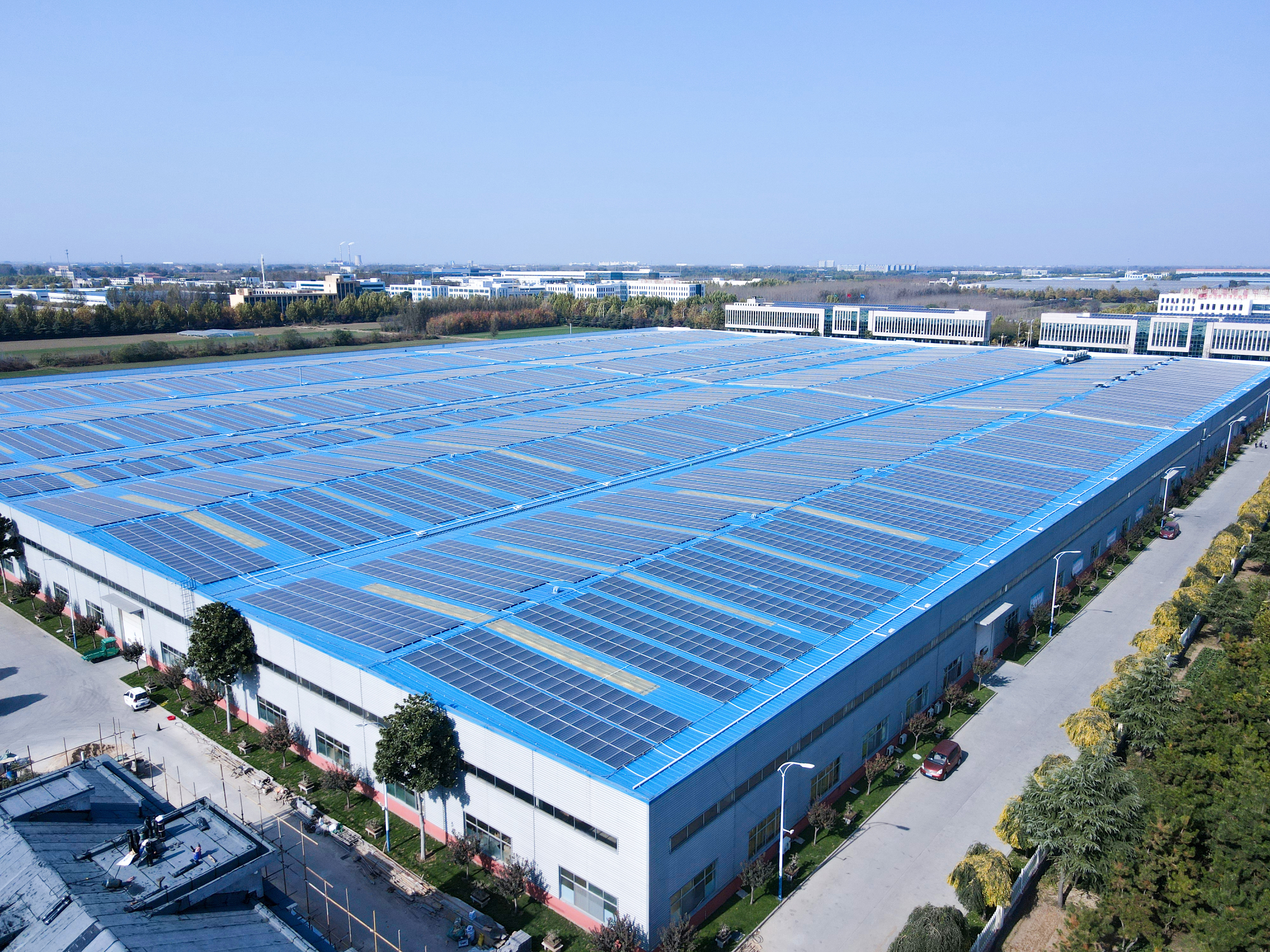
GUYISA is the flagship safety footwear brand of Weierdun Group. The products are manufactured by Weifang Weierdun Shoes Co., Ltd., a safety footwear producer based in Weifang, Shandong Province, China, established in 2010. The company researches, develops, manufactures and exports safety footwear in house, and also operates an OEM/ODM service for buyers who require private label or bespoke specifications.
The operating base, as stated in the company's own corporate information, is as follows:
- Established: 2010
- Manufacturing facility: 50,000 m²
- Employees: approximately 480
- Annual production capacity: 5,000,000 pairs of safety shoes
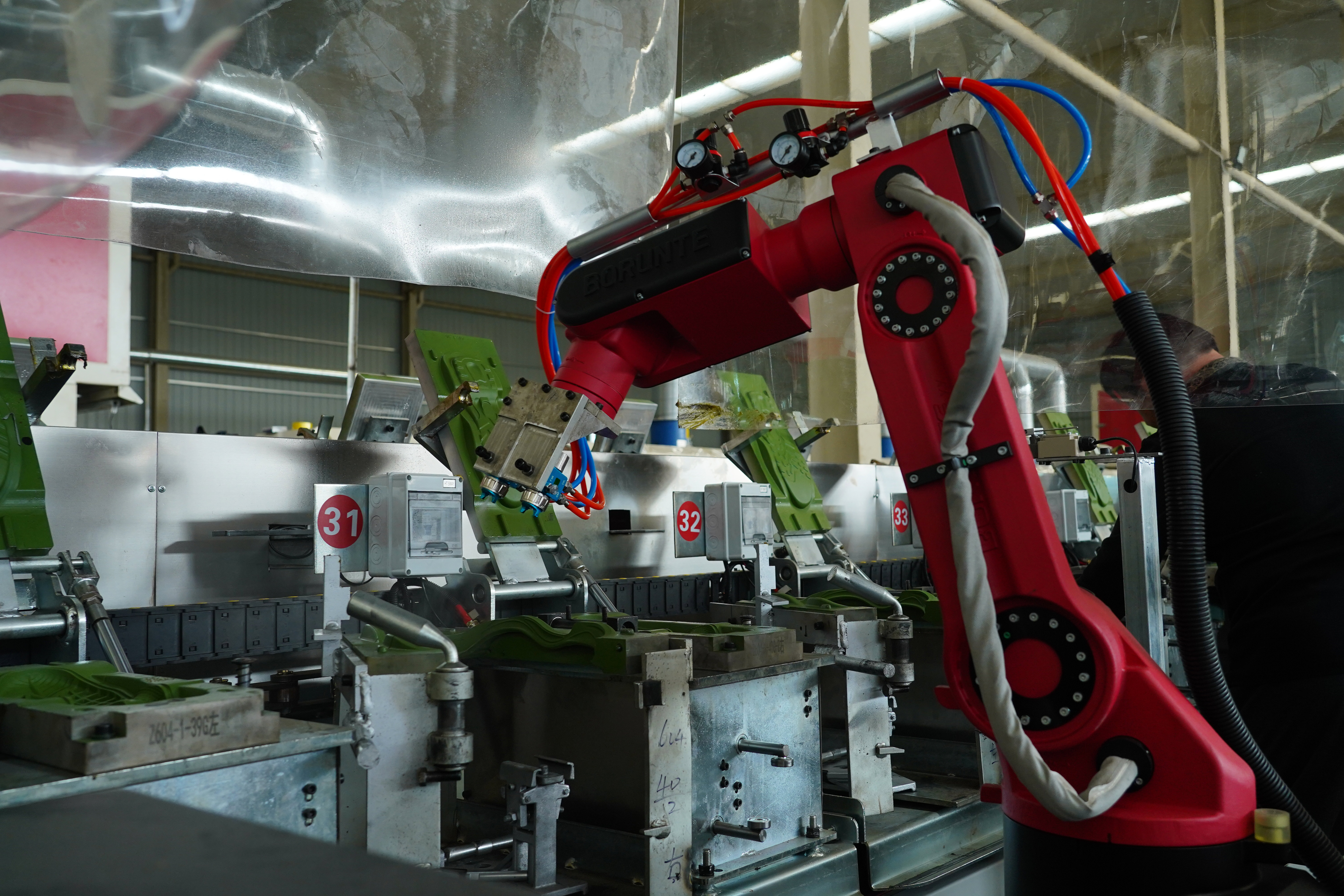
- R&D: more than 30 engineers, supported by an in-house standard laboratory and 30+ imported testing machines
- Export share: 50% of total sales
- Main export markets: North America, Europe, Southeast Asia and Africa
Two structural details matter more than the headline numbers. The first is that testing sits inside the same organisation as production. An in-house laboratory with imported testing equipment shortens the loop between a specification change and a verified result, which is relevant for buyers requesting modified toe caps, midsoles or outsole compounds. The second is that half of output is exported, which means the range has to satisfy more than one regulatory framework. The company states that its safety shoes are supplied with compliance documentation covering ISO, LA, UKCA, CE and PPE certification, and that CE marking is based on PPE Regulation (EU) 2016/425 for European-bound orders, with ASTM F2413 applied to US-bound orders.
The capability stack behind the product range
A safety footwear range is only as credible as the operations behind it. GUYISA's capability stack can be read in four layers: manufacturing, testing, inventory and customisation.
Manufacturing depth
Production covers the full chain under one factory roof — stitching, lasting, injection moulding, assembly, curing and packing. The company describes its approach as combining lightweight running-shoe construction techniques with the rugged appearance and durability expectations of outdoor workwear. In practical terms this means dual-density PU injection moulding for outsoles, alongside natural rubber and EVA alternatives, with uppers in microfiber leather, suede, cowhide, canvas, steel-wire fabric and flyknit mesh depending on the model.
In-house testing
The laboratory and the 30+ imported testing machines support the parameters that buyers actually audit: toe cap impact and compression performance, midsole penetration resistance, outsole slip behaviour, and material properties. This is the layer that converts a marketing description into a repeatable specification, and it is the layer a procurement team should ask to see evidence from before approving a model.
Inventory and response time
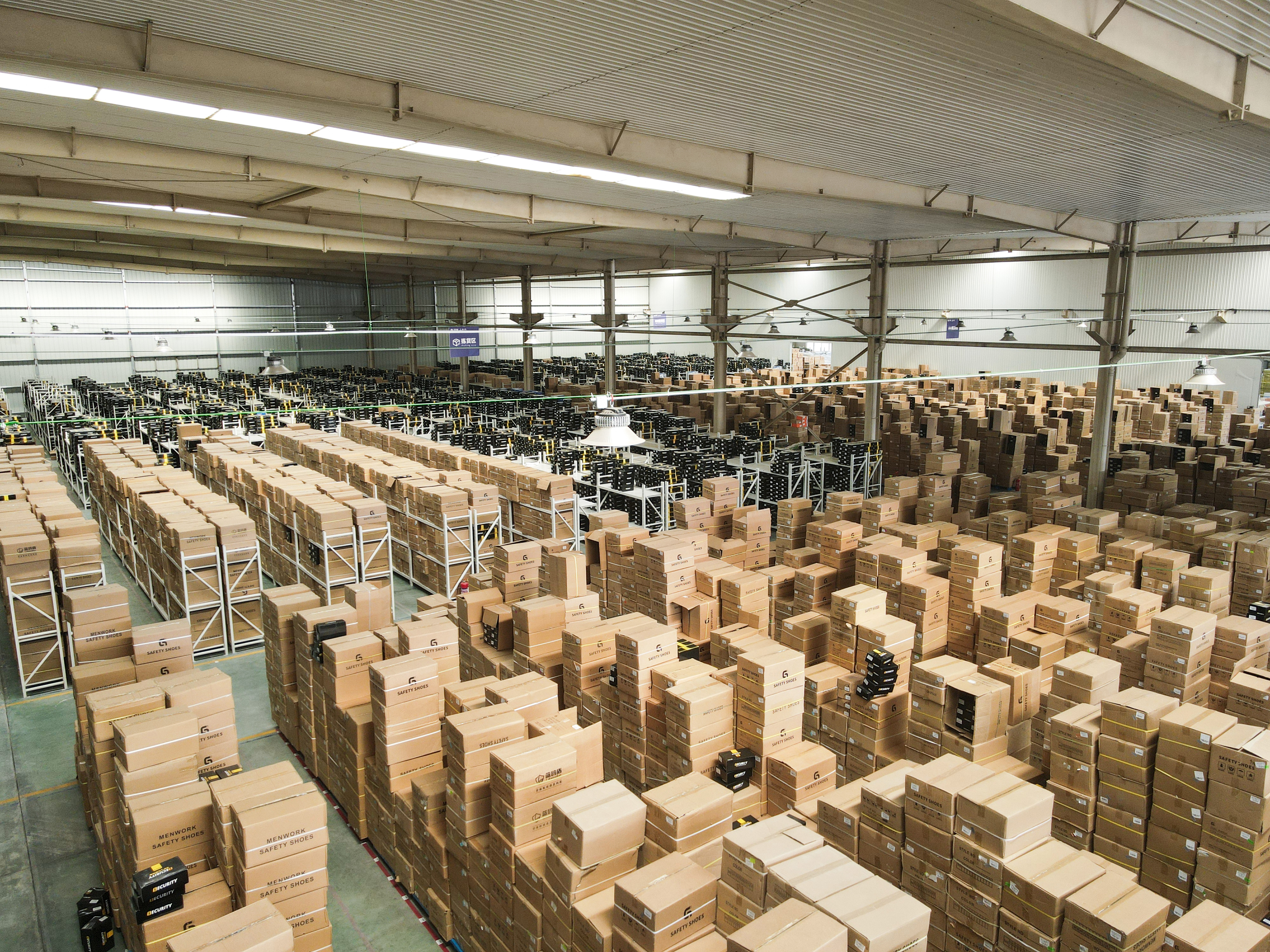
GUYISA operates a 30,000 m² automated warehouse that the company states holds more than 1,000,000 pairs of safety shoes at any given time, supported by an intelligent logistics sorting system. For in-stock bulk orders, shipment can be arranged within 24 hours. This matters for distributors managing seasonal demand and for contractors who discover a shortfall mid-project. It also changes the economics of trial orders: a buyer can validate a model from stock before committing to a production run.
Customisation and OEM/ODM
Customisation covers logo, colour, material, size range and packaging, plus exclusive new-style development. Sizes run from EU 36 to EU 48 as standard, with custom sizing available for bulk orders to match regional foot shapes. A sample service is offered, with the buyer covering shipping, and custom prototyping is supported. For in-stock models, low MOQ is available; OEM and fully custom orders are quoted separately because tooling, materials and scheduling differ.
How the protection actually works: the technical layer
GUYISA safety footwear is built against EN ISO 20345, the European standard for safety footwear. The specifications that buyers will encounter most often are consistent across the range where the relevant protection is fitted: 200 joules toe cap impact resistance, 15 kilonewtons (15,000 newtons) toe cap compression resistance, and 1,100 newtons midsole penetration resistance. Those three figures are the backbone of most industrial foot protection requirements, and they are the figures a tender document will usually quote back at a supplier.
The table below maps each protection function to its technical implementation and the working conditions it addresses.
| Protection function | Technical implementation | Working conditions addressed |
|---|---|---|
| Impact and crush resistance | Toe cap rated to 200 J impact and 15 kN compression under EN ISO 20345; steel, composite/plastic or carbon fibre construction | Construction, mining and quarrying, heavy manufacturing, loading and material handling |
| Puncture resistance | Kevlar, 4 mm steel or polyethylene midsole; 1,100 N penetration resistance under EN ISO 20345 | Sites with rebar, nails, scattered metal debris and concrete fragments |
| Slip resistance | Anti-slip rubber or dual-density PU outsole, oil and abrasion resistant compound; SRC grade where confirmed by the model test report | Wet, muddy, oily and greasy floors; commercial kitchens; cold-store ramps |
| Antistatic / ESD | Antistatic insole and outsole compound forming a conductive path that drains static charge to the ground | Electronics and precision manufacturing, paint shops and coating lines, chemical and powder handling, laboratories |
| Electrical insulation | 10 kV insulated construction with a non-conductive outsole and insulated upper assembly; no conductive parts in the toe area on insulated models | Power generation and utilities, substations, transmission and switchgear work, electrical maintenance |
| Water and cold protection | Waterproof builds and warm-lined models with cotton and lint lining | Outdoor work in rain, cold storage, winter site conditions |
Toe cap selection: steel, composite, carbon fibre and plastic
The toe cap is the component most buyers fixate on, and it is also the component with the most consequential trade-off. Steel toe caps deliver the impact and compression performance the standard requires and are the conventional choice for construction, mining and heavy industry. Composite, plastic and carbon fibre toe caps deliver the same 200 J / 15 kN protection envelope while being metal-free and lighter, which matters in two specific situations: sites with metal-detector screening such as airports, electronics plants and food factories, and workforces that spend long shifts on their feet and are sensitive to weight.
The selection rule is straightforward. If the site screens for metal, a metal-free toe cap is not optional. If it does not, the steel version is the more conservative default. Neither choice is universally superior.
Midsole selection: Kevlar, steel and polyethylene
Penetration protection is provided by a midsole layer in Kevlar, 4 mm steel or polyethylene, each rated to the same 1,100 N penetration resistance requirement under EN ISO 20345. The differences are practical rather than protective: steel is the most rigid and the most familiar to site auditors, Kevlar and polyethylene are more flexible and can be combined with metal-free uppers when a fully non-metallic shoe is required. For metal-detector environments, a non-metallic midsole has to be specified together with a non-metallic toe cap — one without the other defeats the purpose.
Outsole and upper construction
Outsole options include solid dual-density PU (injection moulded), natural rubber and EVA. PU injection outsoles are described by the manufacturer as one of its core export strengths, combining cushioning, oil resistance and wear life. Uppers range from microfiber leather and suede to cowhide, canvas, steel-wire fabric and flyknit mesh, with breathable mesh or warm cotton lining depending on the climate the model is built for. High-top safety boots add ankle support, which is relevant for uneven ground.
Product families and where each one fits
The range is organised around protection functions rather than around price tiers, which is helpful for buyers assembling a multi-site PPE programme. The five families below cover the majority of industrial requests.
| Product family | Core specification | Typical industries |
|---|---|---|
| Steel toe safety shoes | Anti-smash and anti-puncture; steel, composite, plastic or carbon fibre toe cap; Kevlar, 4 mm steel or PE midsole; EN ISO 20345 | Construction, mining and quarrying, heavy industry, warehouse and logistics, welding and metal fabrication, oil and gas |
| Slip resistant safety shoes | Anti-slip rubber or dual-density PU outsole; oil and abrasion resistant; SRC where confirmed by test report; steel toe cap and anti-puncture midsole | Food processing and commercial kitchens, cold storage, wet and oily floors, automotive repair, general industrial work |
| 10 kV insulated safety shoes | 10 kV insulated construction; non-conductive outsole; insulated upper assembly; composite non-metallic toe cap option | Power generation and utilities, substations, transmission lines, switchgear, industrial electrical maintenance, solar and wind construction |
| Anti static ESD safety shoes | Antistatic insole and outsole compound; steel or composite toe cap; Kevlar or steel midsole | Electronics and precision manufacturing, hospital and laboratory, paint shops, chemical plants, assembly lines |
| Multifunctional safety shoes and boots | Combined anti-smash, anti-puncture, anti-static, insulation, slip resistance, waterproof and winter-lined variants | Mixed-workforce sites, agriculture and forestry, airport ground handling, port operations, cold storage |
Because the families share a common construction base, a buyer can often standardise on one fit and one insole system across a workforce while varying the protection layer by role. That reduces sizing returns and simplifies replacement stock, which is a practical benefit that rarely appears in specification sheets but matters to site managers.
Application scenarios: matching the shoe to the working condition
The scenarios below reflect the working conditions the range is designed for, as described in the manufacturer's application data. They are worth reading as a checklist rather than as a catalogue.
Construction and civil works
Uneven ground with rebar, nails, scattered metal debris and concrete fragments, combined with impact from dropped tools and building materials, wet and muddy surfaces, and outdoor heat, dust and rain. The relevant configuration is a steel or composite toe cap, a puncture-resistant midsole, a slip-resistant outsole and an upper that survives repeated cleaning. Foot protection here is also a compliance item: contractors use it to satisfy site rules and pass client and insurer audits.
Mining, quarrying and mineral processing
Heavier debris, sharp rock, sustained impact hazard and long shifts. The priority shifts toward toe cap robustness and midsole integrity, with comfort becoming a productivity factor over an 8 to 12 hour shift.
Oil, gas and petrochemical plants
Combined slip, impact and in some areas static risk. Antistatic models and oil-resistant outsoles are the relevant specification, and buyers should confirm which of the two risks dominates in each zone.
Electrical power and utilities
High-voltage risk during substation, transmission line and switchgear work. Insulation is only meaningful when the model is built for it: the 10 kV insulated range uses a non-conductive outsole and an insulated upper assembly with no conductive parts in the toe area. A standard steel toe shoe does not substitute for an insulated model.
Warehouse, logistics and port operations
Concrete floors, trolley traffic, loading and unloading, and long periods of standing. Lightweight construction, cushioning and slip resistance carry more weight here than maximum toe cap rigidity, though impact protection remains a baseline requirement.
Welding and metal fabrication
Hot debris, sharp offcuts and metal swarf. Puncture-resistant midsoles and models built for welder-specific protection are the relevant selection.
Food processing, commercial kitchens and cold storage
Wet, greasy and oily floors, with hygiene requirements that favour cleanable uppers. Slip resistance is the primary hazard control; warm-lined models are available for cold-store and winter outdoor work.
Hospitals, laboratories and electronics
Static-sensitive environments where an antistatic insole and outsole compound provide a path to ground. Buyers should distinguish between general antistatic models and ESD models with tighter resistance limits, and confirm the certificate for the specific model before publishing an ESD claim in a tender.
Agriculture, forestry, airport ground handling
Mixed outdoor conditions, uneven ground and long wear cycles. Multifunctional models with waterproof or warm-lined builds are the usual fit.
What buyers should verify before placing an order
The following checklist is derived from the specification and documentation structure of the range. It is written as a buyer's verification sequence, not as a sales script.
- Match the protection class to the hazard, not to the marketing. Confirm which EN ISO 20345 protection class (for example S1P or S3) applies to the specific model under consideration, and check that the class covers the hazards identified in the risk assessment.
- Request the certificate for the exact model. Certification is model-specific. A certificate covering one shoe does not automatically cover another in the same family.
- Confirm toe cap metallurgy. If the site screens for metal, specify a composite, plastic or carbon fibre toe cap and confirm the matching non-metallic midsole.
- Ask for the slip test report. SRC performance should be evidenced by the test report for that model, particularly for kitchens, cold stores and oily floors.
- Separate antistatic from ESD. Clarify the resistance limits required by the electronics or laboratory environment and confirm them against the model certificate.
- Confirm insulation only on insulated models. The 10 kV rating applies to the insulated range; it is not a general property of the catalogue.
- Check regional compliance. European orders require CE marking under PPE Regulation (EU) 2016/425; US-bound orders reference ASTM F2413. Confirm the documentation package for the destination market.
- Validate stock depth and lead time. In-stock models can ship within 24 hours; custom and OEM orders follow a negotiated production schedule.
- Test before scaling. Use the sample service to check fit, weight and insole compatibility on the actual workforce before a container order.
- Plan the insole as a consumable. Insoles compress faster than the footwear itself; keeping spare removable insoles in stock extends the service life of each pair.
Compared with traditional heavy work boots: trade-offs and boundaries
The clearest point of comparison is not brand against brand but construction philosophy against construction philosophy. Traditional heavy leather work boots prioritise perceived durability and rigidity: thick uppers, dense soles and a break-in period. The modern lightweight safety shoe approach that GUYISA follows prioritises weight reduction, cushioning and out-of-box comfort, using materials such as flyknit mesh, microfiber uppers and dual-density PU outsoles.
Neither philosophy is universally better. Heavy boots suit environments where abrasion and structural rigidity dominate and where the wearer is accustomed to the fit. Lightweight safety shoes suit long shifts, mixed indoor and outdoor work, and workforces where comfort affects compliance — a shoe that is uncomfortable is a shoe that gets taken off. Buyers should treat this as a fit decision, not a quality decision.
Equally important are the boundaries of the specification. The following limits should be understood before a purchase order is raised:
- Protection class is model-specific. The applicable class (for example S1P or S3) has to be confirmed against the certificate for the exact model; it cannot be inferred from the brand or the product family.
- Insulation is limited to the insulated range. Only the 10 kV insulated models carry that construction. Standard steel toe models are not electrical protection.
- ESD claims require certificate confirmation. Antistatic construction is common across the range, but ESD performance with tighter resistance limits must be verified per model.
- Metal-free is a configuration, not a default. Composite, plastic and carbon fibre toe caps are metal-free; steel toe models are not, and will trigger metal detectors.
- Waterproof and winter-lined are separate builds. Not every model in the range is waterproof or thermally lined.
- Customisation changes commercial terms. In-stock models carry low MOQ, while OEM and fully custom orders are quoted separately and follow a longer production schedule.
- Lightweight construction still requires verification. Reduced weight does not by itself reduce protection, but the impact and puncture test results for that specific model should be reviewed rather than assumed.
For a buyer at the research stage, that list is arguably more useful than a feature list. It defines what has to be checked, and it prevents the most common procurement error in this category: assuming that a capability demonstrated on one model transfers to the rest of the range.
Market direction: from unit price to documented capability
Several broad, qualitative shifts are visible across industrial PPE procurement, and they explain why suppliers with in-house manufacturing and testing are getting more attention than pure trading operations.
Compliance is becoming a specification item. Buyers increasingly ask for certificates before they ask for prices, because client audits and insurer requirements now sit inside the purchasing process. A supplier that holds a certification portfolio covering ISO, LA, UKCA, CE and PPE, and can supply test reports for tenders, customs clearance and platform listing, removes friction that a cheaper supplier creates later.
Ranges are consolidating around function, not price. Instead of buying from four suppliers at four price points, procurement teams are looking for one supplier who can cover anti-smash, anti-puncture, antistatic, insulated and slip-resistant requirements, with documentation for each. This reduces audit surface and simplifies replacement stock.
Replenishment speed is treated as risk management. A deep in-stock position and a fast dispatch capability are increasingly evaluated as part of supplier reliability rather than as a convenience.
Distributor expectations have risen. Distributors now look for regional protection policies, tiered wholesale pricing, marketing materials, product training and priority allocation of best-selling stock. Suppliers who formalise these into a partner programme are easier to represent in a local market than suppliers who do not.
None of these trends makes a supplier automatically suitable. They do, however, explain why manufacturing depth, testing capability and documentation are now evaluated alongside product specification.
Future outlook
Three developments are likely to shape the next phase of safety footwear supply.
First, documentation will become more granular. Buyers are moving from brand-level certification statements toward model-level evidence, including protection class, slip rating and ESD limits. Suppliers with in-house laboratories are better positioned to respond quickly to those requests.
Second, the lightweight-versus-durable argument will continue to resolve into segmentation rather than a single winner. Expect more ranges to offer both a ruggedised build and a lightweight build on a shared fit platform, so that a workforce can be equipped by role rather than by department.
Third, customisation will move from a niche service to a standard expectation for distributors and larger buyers — custom sizing, private label and packaging, supported by prototyping. The limiting factor will not be demand but the ability to keep custom lead times predictable alongside stock availability.
For GUYISA specifically, the strategic question is whether its 5,000,000-pair annual capacity, in-house testing and broad functional range can be matched by equally clear model-level documentation. That is the variable most likely to determine how the brand is evaluated by technical buyers over the next several years.
Frequently asked questions
What are safety shoes, and which protection levels matter?
Safety shoes are protective footwear built to a recognised standard, in this case EN ISO 20345, which sets minimum requirements for toe cap impact and compression resistance and for midsole penetration resistance. Within the GUYISA range, toe caps are rated to 200 joules impact and 15 kilonewtons compression, and puncture-resistant midsoles to 1,100 newtons. Additional protection classes such as S1P or S3 apply at model level and should be confirmed against the certificate for the specific shoe.
What is the difference between steel toe and composite toe safety shoes?
Both are engineered to meet the same EN ISO 20345 impact and compression requirements. The difference is construction and application. Steel toe caps are the conventional choice for construction, mining and heavy industry. Composite, plastic and carbon fibre toe caps are metal-free and lighter, which makes them suitable for airports, electronics plants and food factories where metal-detector screening applies, and for workforces that prioritise weight reduction over a full shift.
Are GUYISA safety shoes certified for European and North American markets?
The company states that its safety footwear is supplied with compliance documentation covering ISO, LA, UKCA, CE and PPE certification. CE marking for European-bound orders is based on PPE Regulation (EU) 2016/425, and ASTM F2413 is applied to US-bound orders. Because certification is model-specific, buyers should request the certificate and test report for the exact model being purchased rather than relying on a general brand statement.
Which safety shoe type fits construction, mining and electrical work?
Construction and mining typically require anti-smash and anti-puncture protection with a slip-resistant outsole — a steel or composite toe cap combined with a Kevlar, steel or polyethylene midsole. Electrical work requires a different configuration: only the 10 kV insulated models, built with a non-conductive outsole and an insulated upper assembly and no conductive parts in the toe area, provide that protection. A standard steel toe model does not substitute for an insulated model in electrical maintenance.
How do buyers verify protection class and documents before ordering?
Verification normally follows four steps: identify the hazards in the risk assessment, confirm which EN ISO 20345 protection class covers them, request the certificate and test report for the exact model, and check the documentation package required for the destination market. For slip resistance, ask for the SRC test report for that model. For static-sensitive environments, clarify the resistance limits and confirm them against the model certificate. Samples can be used to validate fit and weight before a bulk order.
Are lightweight safety shoes as protective as heavier work boots?
Light weight and protection are separate variables. Protection comes from the toe cap and midsole construction, and lightweight models using carbon fibre or composite toe caps and polyethylene midsoles are built to meet the same EN ISO 20345 impact and puncture requirements. The practical difference is in perceived durability and break-in behaviour, not in the standard itself. Buyers should confirm the impact and puncture test results for the specific lightweight model rather than assuming equivalence.
What are the limits of a multi-purpose safety shoe range?
A broad range does not mean every model covers every hazard. Insulation applies only to the 10 kV insulated models, waterproof and winter-lined constructions are specific builds, metal-free configurations require both a non-metallic toe cap and a non-metallic midsole, and ESD performance must be confirmed against the certificate for that model. Protection class is model-specific throughout, which is why verification should happen at the model level rather than at the brand level.
Reference material
For buyers who need the full model list, material specifications and protection options in a single document, the manufacturer publishes a complete product catalogue covering the safety shoe and safety boot range, including toe cap and midsole options, outsole constructions and application categories.
Have Questions or Need More Details?
Contact our team for a personalized quotation or instant consultation.
Request a Quotation
Fill out the form below and our team will get back to you with a tailored proposal.
WhatsApp Direct Chat
Prefer to chat in real-time? Message us on WhatsApp for instant assistance & quick answers.
- Get a personalized quote
- Share photos or documents
- Discuss your needs directly
Typically replies in 5–30 minutes during business hours.