
GYTA53 Optical Fiber Cable: 5G Backhaul, ISP, Smart City Fit
GYTA53 Optical Fiber Cable: 5G Backhaul, ISP, Smart City Fit
GYTA53 optical fiber cable belongs to the outside-plant layer of a network. Its job is to carry traffic along routes that leave the building — in duct, direct buried, aerial or otherwise exposed — between a 5G radio site and a core node, between an ISP aggregation point and a distribution cabinet, or between a smart city roadside enclosure and a municipal fiber ring. Buyers who start from that route logic usually specify the model correctly; buyers who start from a catalog page often over-specify one segment and under-specify the next.
Nanfang Communication manufactures GYTA53 within an optical cable portfolio that also spans indoor and outdoor cable families, ribbon and loose-tube constructions, bow-type drop cable, PLC splitters, fiber optic connectors and MPO multi-core connectors. The company was founded in 1992, and its listed parent, Nanfang Communication Holdings Limited, trades on the Hong Kong exchange under stock code 1617.HK. This article maps one model to three deployment scenarios and marks the points where a different product or a different standard should take over.
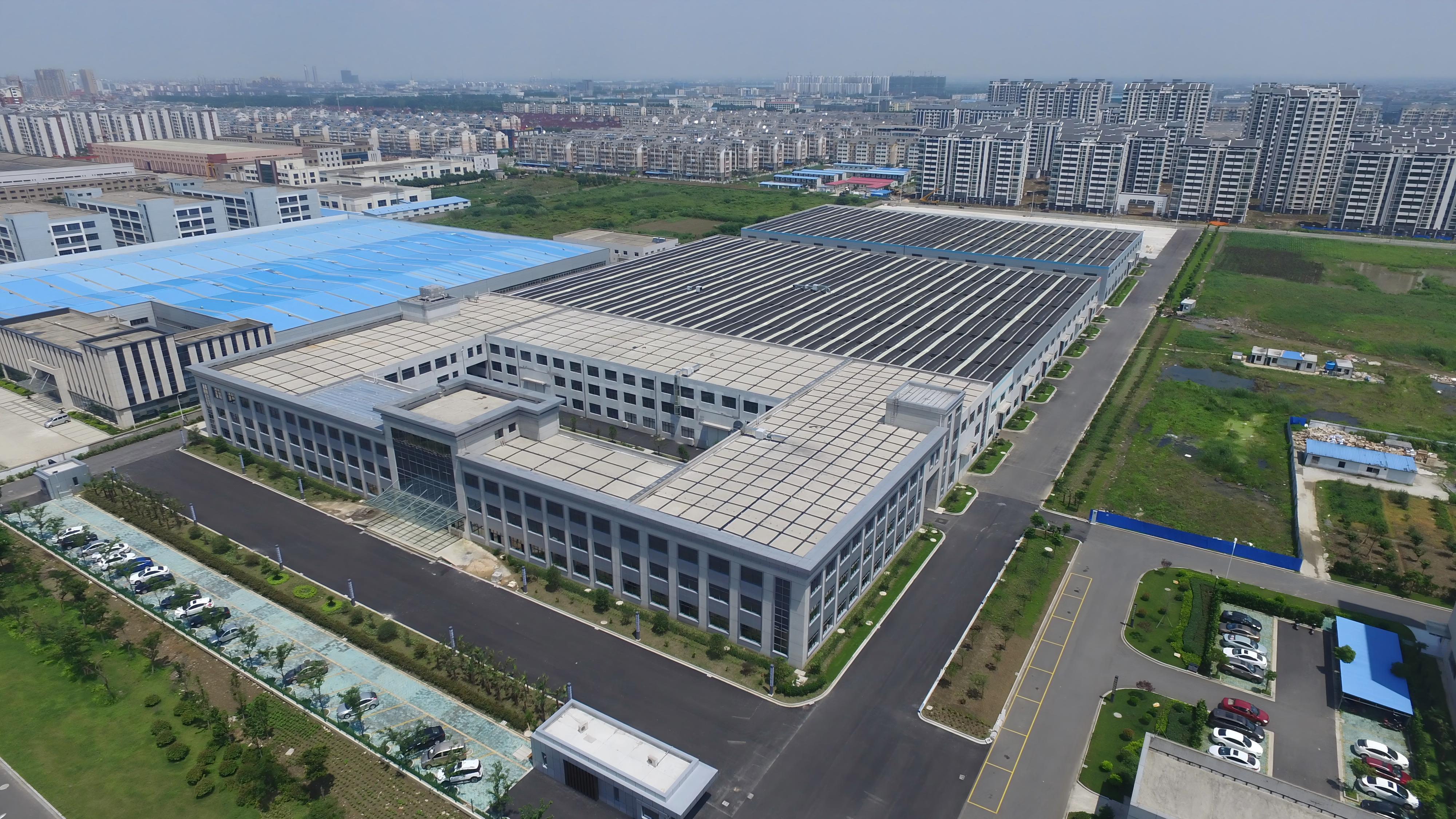
Nanfang Communication (established 1992).
Scenario Fit Starts With the Route, Not the Catalog
Three questions decide most of a GYTA53 specification, and none of them is "which cable is best." They are: what does the route pass through, how many fibers must it carry at handover, and what has to happen at each end of it?
A 5G backhaul span, an ISP feeder route and a smart city aggregation link can all use the same model while placing different demands on it. Backhaul routes are generally longer and terminate at radio sites where splice access is limited and outage cost is high. ISP feeder routes are spliced repeatedly as distribution cabinets are added, so handling and closure compatibility matter as much as transmission. Smart city routes are shorter but less controlled: poles, cabinets, bridges and roadside trenches expose cable to vibration, rodents, water ingress and temperature swings, often installed by contractors who did not build the rest of the network.
Mapping those three profiles against construction, fiber type and sheath produces a defensible specification. The sections below follow that sequence, and each ends with the boundary condition that should push the buyer toward another product.
How GYTA53's Construction Maps to Deployment Conditions
GYTA53 is an outdoor optical fiber cable built around a silica glass core, with loose-tube construction listed among the cable types the company produces, metallic armor options in the form of galvanized steel wire or steel tape, FRP strength members, and a PE or LSZH sheath. Fiber type is selectable — the published parameter set names G.652 and G.657 as examples — and core count, sheath color, connectorization and labeling are customizable.
Each element answers a specific deployment condition, which is the practical reason to read a GYTA53 datasheet item by item rather than as a single part number.
| Construction element | Function on the route | Where it matters most | What the buyer should confirm |
|---|---|---|---|
| Silica glass core with G.652 or G.657 fiber | Carries the optical signal; bend sensitivity differs by fiber family | Cabinets, poles and tight-radius entries favour bend-insensitive G.657; long duct and buried spans typically use G.652 | Which fiber family is supplied per route, and the attenuation and wavelength figures on the datasheet |
| Loose-tube construction | Isolates fibers from strain and thermal movement along the route | Long outdoor spans, aerial sections, routes with wide temperature swing | Fiber count per tube, tube fill, and the manufacturer's stated tensile and crush figures |
| FRP strength member | Takes longitudinal load away from the fibers | Aerial and self-supporting sections; pulling through duct | Installation tension limits and the recommended pulling method |
| Metallic armor: galvanized steel wire or steel tape | Adds crush and rodent resistance plus mechanical protection | Direct burial, roadside trenches, industrial and unattended sites | Which armor option the order specifies — the two are different configurations, not synonyms |
| PE or LSZH sheath | Outer environmental layer and, where specified, fire performance | PE for general outdoor routes; LSZH where low smoke and flame performance are required | The sheath compound, the project fire requirement, and the corresponding test evidence |
Note on precision: the published GYTA53 parameter set lists fiber type, core count, attenuation (dB/km), operating wavelengths, minimum bend radius, tensile strength, sheath material and environmental ratings as the fields to confirm, and states that exact values must be taken from the datasheet for the ordered configuration. Any generic figure should be treated as provisional until that datasheet is issued.

Nanfang Communication.
5G Backhaul Links: Armored Routes Between Radio Sites and the Core
In a 5G backhaul context, GYTA53's role is the transport route that aggregates traffic from radio sites toward a core or aggregation node. The cable is not the radio link, and it is not the equipment interconnection inside a shelter; it is the outside-plant span that reaches the site.
That distinction decides the specification. Backhaul routes run through duct, trench or aerial plant and pass through splice closures at intervals and at site entries. The relevant GYTA53 requirements are therefore mechanical and environmental before they are optical: crush and tensile performance for the installation method, water-blocking and sealing for buried and duct sections, rodent and corrosion resistance where the route is exposed, and enough fiber count that a future site or additional sector does not require a new trench.
Two boundaries are worth stating plainly. First, the jumper or patch assembly inside a radio shelter or data hall is a different product class: factory-terminated assemblies and MPO-based trunks handle that role, which is why the company's portfolio separates optical cable from MPO multi-core connectors, pre-terminated fan-out assemblies and patch panels. Second, the fiber-count decision is a planning judgement rather than a cable property — the buyer has to state working and spare fibers per route before the supplier can map that to core count. Core count is explicitly customizable, with a published minimum order quantity of one core kilometre.
ISP and FTTx: Feeder and Aggregation Segments, Not the Last Drop
For ISPs building FTTx access networks, GYTA53 fits the feeder and aggregation portion of the network: the route from an OLT site or central office to distribution points, and the routes that link distribution cabinets to one another. It is the segment where one cable carries many subscribers' traffic and where re-opening a trench is most expensive.
Three ISP-specific considerations follow from that position. Splice density is high, because cabinets are added and re-split over the life of the network, so the cable has to be specified with handling and closure compatibility in mind and not only for attenuation. Fiber-count headroom matters more than on a point-to-point link, because a feeder route is shared. And the transition to the subscriber is a different product: the last drop into a building is normally a bow-type drop cable, with splitting handled by PLC splitters and distribution by FTTH optical cable distribution boxes.
This is where scenario mapping prevents a common procurement error — buying one cable type for the whole access network. GYTA53 covers outdoor feeder and aggregation routes; the drop segment, the splitter and the distribution box are separate line items with separate specifications. Because the company supplies all of them, the interfaces at the cabinet can be aligned during specification rather than discovered during commissioning.
Smart City Links: Cabinets, Poles and Unattended Outdoor Nodes
Smart city projects place fiber where municipal infrastructure already exists: roadside cabinets, lighting and traffic poles, camera gantries, sensors and small enclosures. The routes are usually shorter than backhaul spans, but the environment is less controlled, and installation is often driven by a civil-works schedule rather than a telecom one.
That profile shifts the specification toward physical resilience and installation tolerance. Crush resistance matters where cable shares a duct or trench with other services; rodent and moisture protection matter in unattended cabinets and pole bases; temperature range matters for aerial and exposed sections; and sheath choice becomes a project question where enclosures, tunnels or shared infrastructure impose fire-performance requirements. Where enclosures are tight, bend-insensitive G.657 fiber reduces the risk that a routine installation bend becomes a loss problem — but the minimum bend radius still has to come from the datasheet, not from an assumption.
Smart city work also rewards the customization options a project-based buyer can genuinely use: core counts matched to node clustering, sheath color and labeling matched to municipal naming conventions, and packaging matched to phased delivery. None of these changes the cable's transmission role; they reduce the chance of installation error across a multi-site rollout.
Fiber and Sheath Choices by Scenario
Two specification choices recur across all three scenarios: which fiber family, and which sheath. Both are selectable on GYTA53, and both should be decided from route conditions rather than from default habit.
| Choice | Typical fit | What it does not decide |
|---|---|---|
| G.652 single-mode | Long duct, buried and aerial spans; standard backbone and feeder routes | Does not by itself determine attenuation performance — that comes from the datasheet |
| G.657 bend-insensitive single-mode | Cabinet entries, pole-mounted enclosures, tight-radius transitions, patch-heavy endpoints | Does not remove the obligation to respect the specified minimum bend radius |
| PE sheath | General outdoor duct, buried and aerial routes | Does not on its own satisfy a project fire-performance requirement |
| LSZH sheath | Locations where low smoke and flame performance are specified: enclosures, tunnels, shared infrastructure, indoor transitions | Does not replace a project-specific fire test requirement |
| Custom core count and labeling | Feeder routes with planned splits; multi-site rollouts with naming conventions | Does not substitute for a fiber-count plan agreed with network design |
Treating these as independent selections is the practical point. A bend-insensitive fiber inside a PE-sheathed outdoor cable is a coherent specification for a pole route; an LSZH sheath on a buried rural span may be unnecessary cost. Neither judgement can be made from a product name alone.
Where GYTA53 Stops: Adjacent Products and Standards Boundaries
Scenario fit is as much about exclusion as inclusion, and three boundaries are worth marking when a buyer assembles a bill of materials.
Indoor cabling is a separate standard environment. ITU-T L.103 (08/2024) describes characteristics, construction and test methods for optical fibre cables for indoor applications — a different set of requirements from those governing an armored outdoor cable. Where a route enters a building and continues through risers or plenums, the fire-performance requirement, not the outdoor cable's armor, drives the product choice.
High-density equipment interconnections inside data centres belong to pre-terminated MPO/MTP assemblies, patch panels and adapters rather than to loose-tube outdoor cable. Shipboard and offshore fixed installations are governed by another standard environment, IEC 60092-378:2024, so a cable qualified for a terrestrial duct route is not automatically a fit there.
The supporting components around GYTA53 tell the same story. Splice closures, FTTH distribution boxes, PLC splitters, connectors and patch panels are the interface products at each end of the route; the cable is the transport between them. A scenario-fit review should list both, because a well-specified cable joined through an under-specified closure still produces a fragile link.
Certification and Quality Evidence Behind the Scenario Claim
Scenario fit is an engineering argument, but it is verified through management-system and test evidence. Nanfang Communication's published certification list includes TL9000-H and ISO 9001:2015 for quality management, ISO 14001 for environmental management, OHSAS 18001 for occupational health and safety, plus systems covering energy management and the integration of informatization and industrialization; the company also holds a CNAS-accredited laboratory. Its listed-company disclosure records TL9000-H and ISO 9001:2015 certification for optical cable manufacturing.
For a buyer, those certificates answer one question — whether the supplier runs a documented, auditable process for the product being ordered — and they do not answer another: whether a particular reel meets a particular project requirement. The second question is answered with product-level test data. The relevant method depends on the route. IEC 60794-1-104:2024, for example, defines impact test procedures for optical fibre cables, and a buyer specifying cable for a buried or shared-trench route can ask whether qualification testing references that method. The company's own quality control description covers incoming material inspection, in-process control and finished-product testing, including optical loss and attenuation tests, mechanical performance and waterproof/sealing tests.
Company scale is supporting context rather than proof of fit: 360 employees, a 26,795.3 m² factory, 80 R&D engineers, stated annual output of 3,000,000 core kilometres and monthly capacity of 250,000 core kilometres, more than 300 patents and participation in 16 standards. Those figures describe the capacity to supply. They do not certify a specific cable configuration.
Market Context for Scenario-Led Sourcing
Two published data points frame the procurement environment. The global fiber optic cable market was valued at USD 14.6 billion in 2025, according to a Global Market Insights report published in June 2026. China was the leading exporter of optical fibres and cables in 2024, with exports totalling USD 2.52 billion, according to the Observatory of Economic Complexity's HS 854470 trade profile. Both point to a market where buyer choice is wide and structured supplier comparison is expected rather than optional.
Landed cost can change the arithmetic for particular destinations. A customs-brokerage summary reports a total U.S. import duty of 37.50% on Chinese-origin optical fiber cables under HTS 8544.70.00 as of late 2026. That figure comes from a single secondary source and should be checked against the current tariff schedule before it enters a project budget — but where it applies, it changes the comparison between sourcing routes for a US-bound smart city or ISP project, and it makes total landed cost, not unit price, the number that matters.
A Scenario-Fit Checklist for GYTA53 Buyers
- Define the route first: duct, direct burial, aerial, cabinet entry or mixed. Record the installation method for each span, because it drives tensile, crush and handling requirements.
- State the fiber-count plan, including working and spare fibers per route at handover. Core count is customizable; the plan should come from network design, not from a stock list.
- Select the fiber family against the endpoints: G.657 where cabinets and tight bends dominate, G.652 where standard outdoor routes dominate.
- Choose the sheath against the environment and the fire requirement, and record which standard or project clause the choice responds to.
- Specify the armor option and confirm it on the order acknowledgement; steel tape and steel wire are different configurations.
- Request the datasheet for the ordered configuration, with attenuation, wavelengths, minimum bend radius, tensile strength and environmental ratings stated for that configuration.
- Ask which test methods support the mechanical claims, and whether qualification testing references standards such as IEC 60794-1-104:2024.
- Verify certificate scope and validity, then ask for product-level test reports for the batch — certificates and test reports answer different questions.
- Plan the interfaces — closures, distribution boxes, splitters and patch panels. Cable fit without interface fit still fails at commissioning.
Outlook
The three scenarios in this article are less separate markets than three positions on the same route. 5G backhaul, ISP aggregation and smart city links all push fiber outward into duct, trench, pole and cabinet, and all three reward a specification that begins with installation conditions rather than with a product family. As operators extend radio and access networks and municipalities keep attaching sensors and cameras to fiber, the practical sourcing question becomes less "which cable family" and more "which configuration for this span" — and that question is settled with a datasheet, a stated test method and an agreed fiber-count plan.
Nanfang Communication's product brochure, covering its optical cable and MPO portfolio, is available for download here: Nanfang Communication product brochure (PDF).
Frequently Asked Questions
Which deployment conditions make GYTA53 a better fit than an unarmored cable?
Where the route is buried, in shared duct, aerial or otherwise mechanically exposed, and the project requires crush, rodent or moisture protection, the metallic armor options in GYTA53's material specification are the relevant difference. The comparison should be made on the datasheet for the specific configuration, because armor type and sheath compound change between orders. On a protected indoor route with no mechanical exposure, armor adds nothing and the fire-performance requirement becomes the deciding factor.
Can GYTA53 be used for the last drop into a home or apartment?
The last drop is normally a bow-type drop cable, while GYTA53 serves the feeder and aggregation route that reaches the distribution point. Splitting is handled by PLC splitters and distribution by FTTH optical cable distribution boxes. An FTTx bill of materials therefore usually contains more than one cable type, and the interfaces at the cabinet should be specified together rather than separately.
Should an ISP choose a PE or an LSZH sheath?
PE is the general outdoor sheath choice for duct, buried and aerial routes. LSZH is specified where low smoke and flame performance are required, typically at enclosure entries, in tunnels and shared infrastructure, and on indoor transitions. The decision should reference the project's fire requirement and the corresponding test evidence, not a general preference for one compound.
Does the choice between G.652 and G.657 fiber matter for 5G backhaul and smart city links?
It matters most at the endpoints. G.657 is bend-insensitive, which helps where cable enters cabinets, pole enclosures or tight-radius transitions; G.652 is the standard choice for long duct, buried and aerial spans. Both are named as selectable fiber types for GYTA53, and the specified minimum bend radius and attenuation figures still have to be taken from the datasheet for the ordered configuration.
What certification evidence should support a scenario-fit claim?
Three layers are useful. Management-system certification — TL9000-H and ISO 9001:2015 for quality, ISO 14001 for environmental management, OHSAS 18001 for occupational health and safety, supported by a CNAS-accredited laboratory — shows a documented process. Product-level test reports show what a specific configuration achieved. A cited test method, such as a reference to IEC 60794-1-104:2024 for impact performance, shows how the claim was generated. Certificates alone do not establish that a particular reel meets a particular project requirement.
Have Questions or Need More Details?
Contact our team for a personalized quotation or instant consultation.
Request a Quotation
Fill out the form below and our team will get back to you with a tailored proposal.
WhatsApp Direct Chat
Prefer to chat in real-time? Message us on WhatsApp for instant assistance & quick answers.
- Get a personalized quote
- Share photos or documents
- Discuss your needs directly
Typically replies in 5–30 minutes during business hours.