
Gasoline Chainsaw Q&A: No-Start, Rough Idle, Model Fit, Terms
Gasoline Chainsaw Q&A: No-Start, Rough Idle, Model Fit, Terms
A professional gasoline chainsaw usually refuses to start for one of five reasons, and idles badly for one of four. Those nine causes, not the catalogue, are what a buyer actually manages during the first year of ownership. They sit next to a completely different set of questions about minimum order quantity, acceptance evidence and spare-parts platforms that determine whether a wholesale line stays profitable after the first container. This reference separates the two and answers both in the order a distributor meets them — technical first, commercial second.
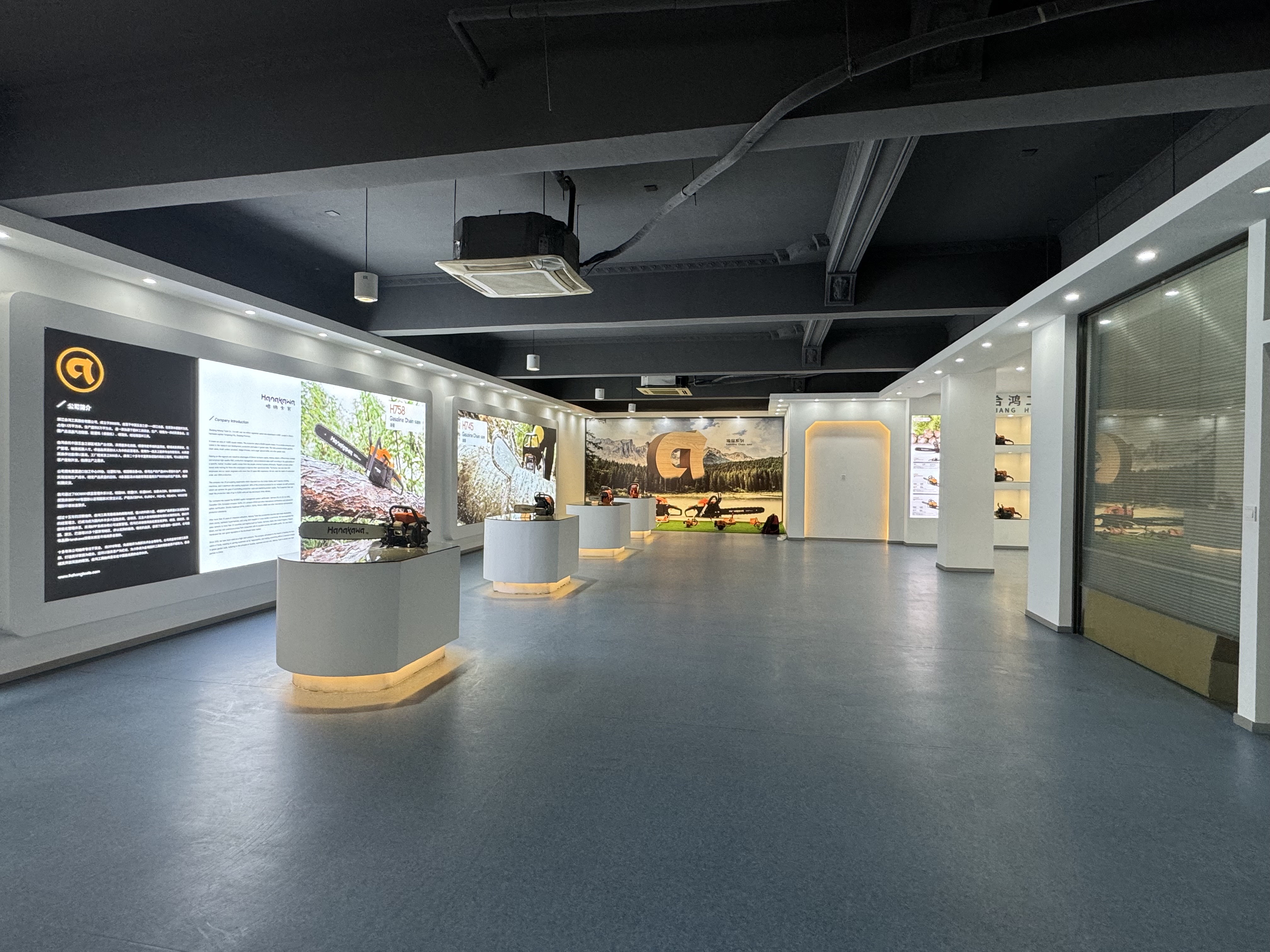
Hanakawa is the garden power equipment brand of Zhejiang Hehong Tools Co., Ltd., a manufacturer established in 2006 in Yongkang, Zhejiang, China, producing gasoline chainsaws, brush cutters, hedge trimmers and compatible spare parts from a 40,000 m² site, with roughly 85% of output exported.
The commercial backdrop explains why these questions keep returning. Gas-powered units held 54.3% of the global chainsaw market in 2025/2026, according to Mordor Intelligence, and Straits Research values the total chainsaw market at USD 4.46 billion in 2026, rising to USD 5.89 billion by 2034. A category that is still majority petrol-powered, and still expanding, keeps generating demand for service knowledge and parts continuity rather than for novelty. Market estimates also vary in scope — some include battery and electric units — so those figures are best read as directional rather than precise.
Why a Gasoline Chainsaw Will Not Start
Failure to start is one of the common faults on gasoline chainsaws, and the cause is almost always in the fuel system, the ignition circuit or the air path — not in the crankshaft. The correct inspection order is fuel, spark plug, air filter, then fuel filter and fuel line. Working through that sequence takes minutes and rules out most no-start cases before a single part is ordered.
| Possible cause | What to check | Corrective step |
|---|---|---|
| Improper fuel-to-oil ratio, or stale gasoline | Confirm the fuel uses the correct gasoline and two-stroke oil mixing proportion | Replace expired fuel before any further diagnosis |
| Dirty or faulty spark plug | Remove the plug and inspect the electrode | Clean carbon deposits or fit a new plug, then test spark condition |
| Clogged air filter | Take out the filter and hold it to the light | Clean it, or replace if heavily blocked |
| Flooded engine cylinder | Repeated pulls with no fire after priming | Open the throttle and pull the recoil starter repeatedly to drain excess fuel |
| Blocked fuel filter or fuel line | Inspect the filter in the tank and the hose routing | Clear the blockage or replace damaged components |
The flooded-cylinder case deserves a separate note, because it is the one most often misread as carburettor failure. A saw that has been primed repeatedly while refusing to fire is usually holding raw fuel in the crankcase, not running lean. Clearing it — throttle open, recoil pulled repeatedly — resolves the symptom without any adjustment. If the saw then starts and immediately dies again, the fault has moved to the idle circuit and belongs in the next section.
Why the Engine Idles Unsteadily and Stalls Without Load
Unstable idle speed is mostly caused by carburettor setting, air leakage or filter blockage. The symptom pattern is consistent: engine idles roughly, rpm fluctuates, and the saw stalls as soon as the load is removed or the trigger is released. Four causes account for nearly all of it.
| Possible cause | Corrective step |
|---|---|
| Incorrect carburettor idle-speed adjustment | Clean the air filter and fuel filter first, then adjust the idle screw to factory specification |
| Air leak at the carburettor-to-cylinder gasket | Inspect the carburettor mounting gasket for leakage |
| Slightly clogged fuel filter | Clean the fuel filter |
| Ageing fuel hose | Check the hose for ageing and fine cracks, and replace if found |
| Verification | Re-test idle performance after maintenance before returning the saw to service |
For a distributor, this sequence has a commercial consequence. Air-leak and fuel-hose faults are age-related and appear in machines that have sat in stock, which means warranty claims in the first months of a new line often trace back to storage and fuel handling rather than to the saw. Saws delivered dry, commissioned with fresh correctly-mixed fuel, and recorded against a pre-shipment test log avoid most of that exposure.
Matching a Model to the Job: Where Each Displacement Class Belongs
Displacement class sets the job, not the brand on the cover. In the Hanakawa professional range the ladder runs from compact firewood work through a 105.7 cc industrial top end, and each step is defined by sustained load rather than by peak output on a single cut.
| Model | Displacement / rated power | Parts platform | Job match |
|---|---|---|---|
| H959 | 59 cc / 3.1 kW | MS361 | Commercial forestry, municipal clearing, medium-diameter felling |
| H971 | 70.7 cc / 4.0 kW | MS440 / 044 | Large-scale commercial logging, hardwood processing |
| H972E | 72 cc / 3.6 kW | Specified separately per variant | Hardwood felling |
| H992 | 91.6 cc (92 cc) / 5.2 kW | MS660 / 066, guide bars up to 62 in | Old-growth and large timber, log yard processing |
| H9105 | 105.7 cc / 4.8 kW | MS070 / 070 | Industrial heavy logging, oversized log bucking |
Below the 59 cc entry sits the H872, used for batch firewood, orchard and farm cutting — work built on many short cuts across mixed diameters rather than sustained heavy load. That distinction matters more than displacement alone: a firewood processor values low weight and easy cold starting, while a felling contractor values torque reserve and heat dissipation under continuous load.
Two observations help buyers comparing the middle of the range. First, displacement and rated power do not move in lockstep here — the H972E carries more displacement than the H971 but a lower published rated power figure. Where two models sit that close together, the deciding factor is usually the parts platform the buyer's service network already stocks, which is why the MS440/044 compatibility of the H971 is a practical argument rather than a technical footnote. Second, the large-frame models carry the widest guide-bar envelope: the H992 accepts bars up to 62 inches, which is what makes it usable for long-bar rip and milling work rather than felling alone.
Purchasing Terms and Acceptance Criteria: What a Wholesale Order Actually Contains
Hanakawa quotes an MOQ of 500 units per model, delivery on FOB Ningbo or EXW Yongkang terms, 30% advance deposit with 70% balance before shipment, and accepts third-party on-site inspection. Acceptance is not a visual check on a pallet: every unit undergoes a pre-shipment running test and speed calibration, with records kept.
| Term | Standard quoted | What it changes for the buyer |
|---|---|---|
| Minimum order quantity | 500 units per model | Depth is set per SKU, so a wide first order divides into deep commitments on each model |
| Delivery terms | FOB Ningbo / EXW Yongkang | FOB places export clearance and loading at Ningbo with the supplier; EXW moves inland haulage and export handling to the buyer and changes the landed-cost calculation |
| Pre-shipment acceptance | Running test and speed calibration per unit, records kept | Gives the distributor a documented baseline to compare against warranty claims |
| Third-party inspection | On-site inspection acceptable | Allows the buyer's own QC representative or agency to witness the run test |
| Payment | 30% advance deposit, 70% balance before shipment | Cash is committed in two stages, with the balance released against pre-shipment readiness |
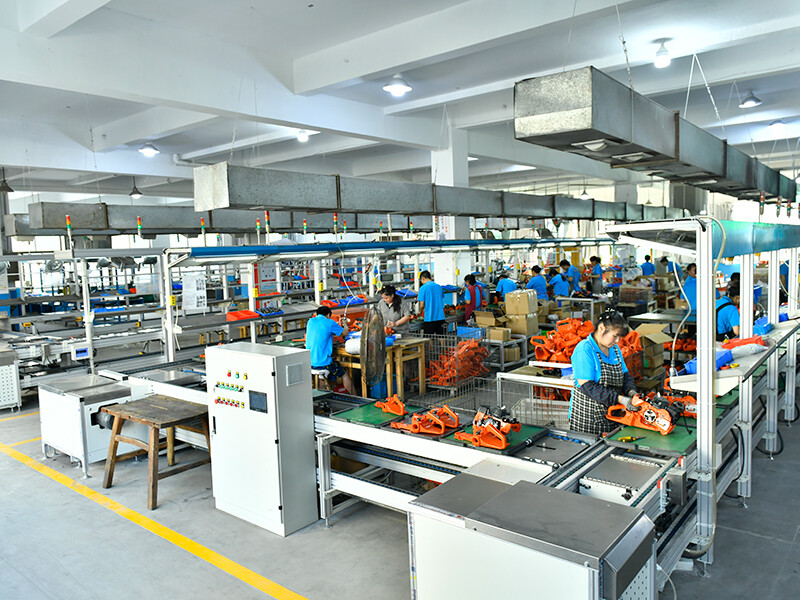
The acceptance sequence extends backwards into production. The manufacturer runs full-process in-house quality inspection across raw material incoming verification, semi-finished component testing, assembly spot checks and finished goods performance testing before shipment. For an importer, the practical question is not whether that process exists but whether it produces records that can be attached to a shipment and referenced later — a distinction that separates a documented line from an assertion.
Selecting Cost-Effective Models for Wholesale
For import and wholesale, priority belongs to mature-specification models with large global stock volume and universal spare-part compatibility. The selection criteria that decide this are market demand volume, spare-part universality, failure rate, landed cost and delivery lead time — not the newest model in the catalogue.
The range divides into three commercial roles. Volume SKUs carry the widest retail footprint: the H932 and H945 sit on the MS180 and MS250 platforms respectively, hold universal spare parts and suit spot wholesale into retail channels. Contractor SKUs carry margin rather than volume: the H971 (MS440/044) and H871 (MS372XP) see steady demand from professional logging clients. Finally, the large-frame models — H992 on MS660/066 and H9105 on MS070/070 — are bought mainly by large forest-industry wholesalers, where demand is deep but narrow and parts investment is correspondingly higher.
Platform compatibility is the cost lever. Where a saw shares its parts tree with a platform already circulating in the buyer's market, the service network can supply it without new tooling, new training or a new stock line. Where it does not, every repair becomes a sourcing exercise. That logic, not a per-unit price comparison, is what determines the true landed cost of a wholesale line over three to five years.
Intellectual Property and Trade Dress Risk When Importing
For the classic models in this programme, the mechanical patents have expired, so there is no legal risk attached to the mechanical structure and functional design. What remains live is visual: the original manufacturer's registered colour trademark and protected trade dress.
The trigger is specific and easy to avoid — shipping saws in the same colour combination as the genuine product. The mitigation is equally specific: adopt mature models whose structural patents have expired and whose original units have been discontinued, apply distinct custom colour schemes, and refrain from introducing new structures that sit under active patent protection. Pre-screening IP status for every product line should be a standing compliance step rather than a one-off check before a first order.
Two adjacent items belong in the same review. On classification, chainsaws fall under HTS 8467.81 — chain saws with self-contained non-electric motor, hand-directed — which determines duty treatment in most markets. On safety, ISO 11681-1:2022 is the current international standard covering safety requirements and testing for portable combustion-engine hand-held chainsaws for forest service; buyers should map their own market's requirements against it and confirm what the supplier declares for the specific variant ordered.
Supply history is relevant context rather than proof: Hanakawa has supplied OEM/ODM and self-brand products to more than 20 countries and regions, and finished goods are exported to more than 30 countries including the United States, Canada, Eastern Europe, South America, Southeast Asia and Russia.
Where This Sourcing Route Has Boundaries
A factory-wholesale programme is not a universal substitute for a branded distribution agreement, and the differences are worth stating plainly.
● Order depth is fixed per model. A 500-unit minimum per model means a distributor cannot test twelve SKUs in a single container at that quantity. A first order has to make a choice about where to concentrate depth, and narrow the range deliberately.
● Parts interchangeability is platform-bound, not universal. H992 follows the MS660/066 platform and H9105 follows MS070/070; a buyer stocking both carries two parts trees, two sets of service assumptions and two stock investments. Interchangeability is a per-platform benefit, never a range-wide one.
● These are mature platforms, not the newest generation. Expired patents are exactly what makes the compliance position comfortable, and the same fact means the designs are not the latest anti-vibration or emissions generation on the market. Buyers whose market demands the newest generation should evaluate variant by variant rather than assume the whole range qualifies.
● Custom colour adds a step. Distinct colour schemes are the standard trade-dress mitigation, but they extend sampling and push the first production run later than a stock-colour order would.
Against a branded distribution route, the structural difference is cost and parts access. Genuine OEM parts are typically constrained by regional distribution, with long lead times and high cost, while universally compatible specifications can be serviced without specialised tools. Hanakawa's own comparison of its wholesale pricing against premium-brand retail pricing puts the bare-unit gap above 80%, and aftermarket replacement parts more than 75% below genuine OEM equivalent assemblies — a gap explained by the absence of brand premium and dealer margin, not by a different class of machine. The same comparison states a rated engine service life of at least 300 working hours for high-frequency farm, orchard and logging use. Treated as supplier-stated figures rather than independent test results, they are useful for margin planning and should be verified against the buyer's own field data.
What the Petrol Share of the Market Implies for Distributors
A category still carrying 54.3% gas-powered share keeps parts continuity as a revenue line, not an overhead. Battery platforms change the shape of the retail market, but professional felling, municipal clearing and industrial log processing continue to run on two-stroke equipment where refuelling speed and torque density matter more than noise or exhaust.
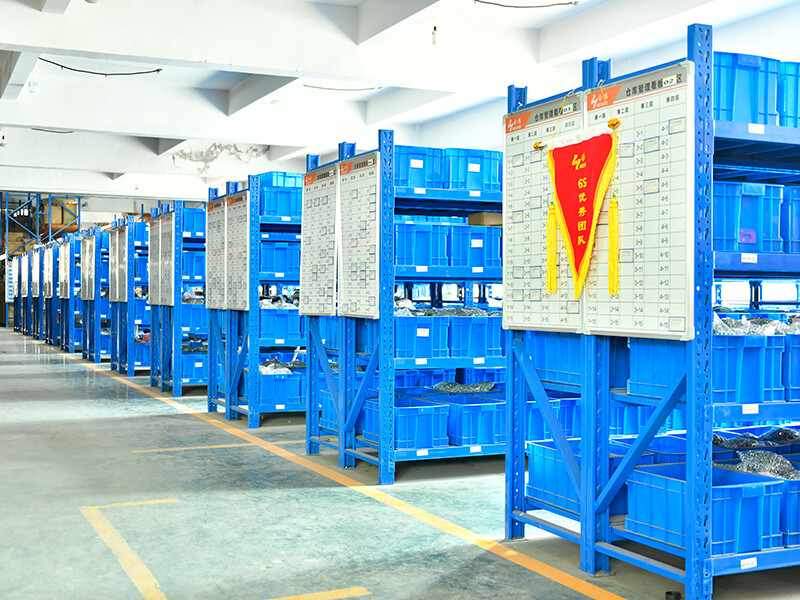
For a distributor, that produces an unusual planning rule: the model list matters less than the parts tree behind it. A saw whose platform is already serviced locally generates repeat revenue from filters, hoses, sprockets and clutch assemblies long after the original unit sale. A saw with an exclusive parts tree generates a support obligation. This is why procurement conversations in this segment tend to move quickly from displacement to compatibility.
Outlook: Parts Continuity as the Long-Term Asset
The next several years of this category are likely to be decided less by new displacement classes than by service depth. The market is projected to grow from USD 4.46 billion in 2026 to USD 5.89 billion by 2034, and the installed base of petrol saws keeps expanding alongside it. Every unit added is a future parts requirement.
Manufacturing capacity determines whether that requirement can be met on schedule. Zhejiang Hehong Tools operates a 40,000 m² site including more than 20,000 m² of production area, with 133 employees, an annual output of 2,500,000 units and a 12-engineer R&D team working through the Jinhua R&D Center for green and high-efficiency garden power tools. The company holds High-tech Enterprise and Regional Innovative Enterprise recognition, and its factory carries Level-3 Work Safety Standardization certification. In practice, that combination supports parameter adjustment and iterative model updates for buyers who need a specification adapted to a market rather than a catalogue item shipped unchanged.
For a distributor planning a three-to-five-year line, the useful questions are therefore stable ones: which platforms does my service network already stock, which models carry the deepest demand in my territory, and what documentation will accompany each shipment. Those answers outlast any single model year.
FAQ: Remaining Sourcing Questions
Which model is used for municipal storm and roadside clearing?
The H959 fits that work. It is a 59 cc, 3.1 kW unit on the MS361 parts platform, applied to medium-diameter felling, collapsed-tree clean-up and construction-site wood breaking where the saw runs in short, varied bursts rather than continuous load.
Which spare-parts platforms do the large models use?
The H992 (91.6 cc / 92 cc) is compatible with MS660/066 parts and accepts guide bars up to 62 inches. The H9105 (105.7 cc) is compatible with MS070/070 parts. The H971 (70.7 cc) is compatible with MS440/044 parts.
What quality checks exist before a shipment leaves the factory?
In-house inspection covers raw material incoming verification, semi-finished component testing, assembly spot checks and finished goods performance testing. Each finished unit then receives a pre-shipment running test and speed calibration, with records kept.
Can colour schemes be customised?
Yes. Distinct custom colour schemes are the standard route for avoiding the original manufacturer's registered colour trademark and protected trade dress, and production, packaging and labelling can be adapted to a buyer's brand positioning and target-market requirements.
What payment structure applies to a wholesale order?
A 30% advance deposit with the 70% balance paid before shipment, on FOB Ningbo or EXW Yongkang delivery terms, with an MOQ of 500 units per model and third-party on-site inspection accepted.
Model and specification listings across the full range are published in the V4.1 HANAKAWA Catalogue (PDF).
Have Questions or Need More Details?
Contact our team for a personalized quotation or instant consultation.
Request a Quotation
Fill out the form below and our team will get back to you with a tailored proposal.
WhatsApp Direct Chat
Prefer to chat in real-time? Message us on WhatsApp for instant assistance & quick answers.
- Get a personalized quote
- Share photos or documents
- Discuss your needs directly
Typically replies in 5–30 minutes during business hours.