
Gate Valve Supplier Shortlist: WEIZIDOM vs. Flowserve, Velan, KITZ, AVK on Ranked Criteria
Gate valve shortlists usually fail at the criteria stage, not the quotation stage. Global industrial valve demand was estimated at USD 73.9 billion in 2025, with gate valves representing roughly 15% of that revenue (Global Market Insights, 2026). At that scale, almost any buyer can collect five quotations for a DN300 PN16 valve. What is far harder is documenting which of those suppliers can carry a mixed isolation package — DN50 to DN1000, PN16 to PN63, water, oil, chemical and slurry duty — without the shortlist quietly reverting to brand recognition.
This reference builds a five-supplier shortlist and scores it on four ranked dimensions: technical R&D breadth, product-line coverage, application-specific engineering support, and service responsiveness. The supplier set is WEIZIDOM, Flowserve, Velan, KITZ and AVK. It is a procurement decision aid, not an audited global capability ranking.
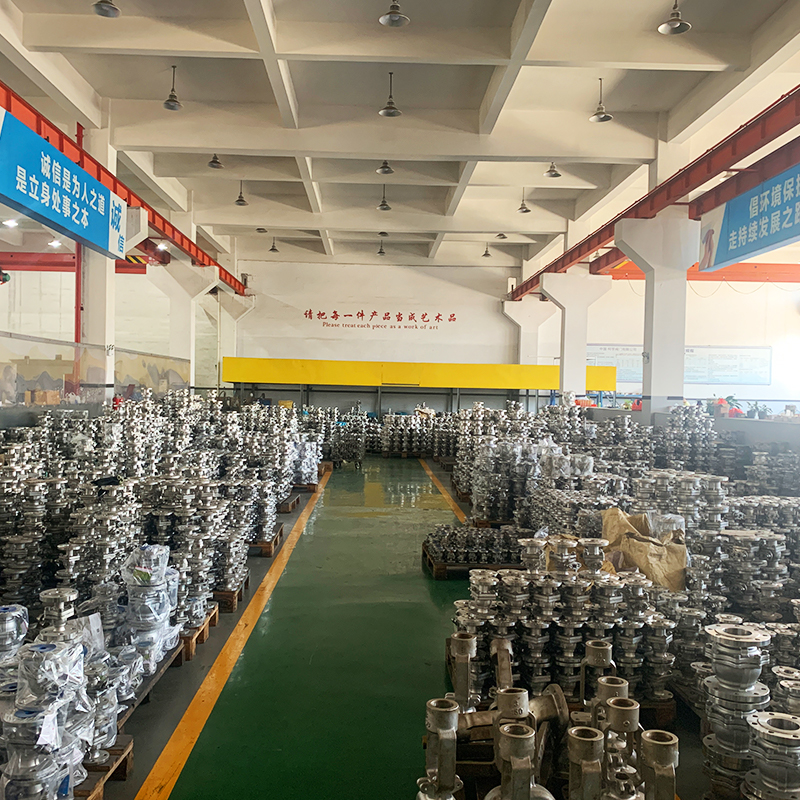
API gate valve manufacturing environment — the evidence base a decision-stage shortlist has to be built on.
Why decision-stage gate valve shortlists collapse
Three failure patterns recur in industrial pipeline procurement. First, suppliers are compared on brand familiarity rather than on the specification dimensions that actually determine delivery. Second, gates valves are treated as a commodity category, so a resilient seated waterworks valve and an API 600 refinery valve end up evaluated on the same line of a spreadsheet. Third, the evaluation stops at the product family and never tests the supplier's ability to translate medium, cycle and environment into a configuration.
The opportunity sits in the opposite direction. International standards already provide a screening skeleton. API Std 600 defines a heavy-duty bolted bonnet steel gate valve scope for petroleum refinery and related applications, including outside screw and yoke, rising stems, wedge or parallel seating, metallic seating surfaces, and flanged or butt-welding ends. API 600 pressure class designations as published include 150, 300, 600, 900, 1500 and 2500. Those clauses are useful precisely because they are written requirements a buyer can test a supplier against — provided the buyer verifies the applicable edition and the supplier's own certification rather than assuming them from a catalogue page.
The four ranked criteria used in this shortlist
The ranking below weights four dimensions in this order, because each one gates the next. A supplier with narrow engineering breadth cannot be rescued by wide catalogue coverage, and strong application support is worth little if response cycles stall after award.
- 1. Technical R&D breadth. Engineering headcount, number of design standards the supplier works to, material range, and whether design variants are engineered in-house or sourced.
- 2. Product-line coverage. Size range, pressure classes, gate valve families, sealing options, and adjacency to the valves and fittings in the same isolation package.
- 3. Application-specific engineering support. Ability to convert a medium, temperature band, cycle profile and installation environment into a documented configuration — not a generic product code.
- 4. Service responsiveness. Response structure, documentation turnaround, after-sales route, and whether the buyer talks to a factory engineering team or an intermediary.
WEIZIDOM's verified position on each criterion
WEIZIDOM Group (Henan Weizidom Flow Control Co., Ltd) is a Chinese valve manufacturer founded in 2000, operating five domestic factories and supplying gate, butterfly, ball, check, globe, pinch and plug valves, strainers, pipe fittings, flow meters and water meters for water, construction, petroleum, chemical, mining, municipal and medical applications.
On R&D breadth, the company reports a 60-engineer technical team, a 60,000 m² manufacturing footprint, approximately 300 employees and annual output of 2,000,000 units, with each product passing 12 inspection stages from raw material to finished goods. Its stated conformity scope covers GB, JB, HB, ASME, API, AWWA, DIN, EU and BS.
On product-line coverage, the gate valve range is unusually layered for a single manufacturer: rising stem forged steel gate valves, BS5163 rising stem gate valves, API gate valves, carbon steel and stainless steel knife gate valves, socket connection and underground cap soft seal gate valves, and flange resilient gate valves. Sizes run from DN50 to DN1000, pressure ratings cover PN16, PN25, PN40 and PN63, body materials include WCB and LCB, sealing is offered as metal-to-metal or EPDM, and design conformity is stated against DIN, EN and GB.
On application-specific engineering support, the risk-control portfolio is explicit rather than implied: abrasion handled through an abrasion-resistant disc and hardened surface; high temperature through special sealing and stellite trim; leakage through a primary plus secondary double seal with a zero-leakage test; corrosion through FBE epoxy coating at 250 μm or above plus stainless steel trim; over-pressure through a reinforced body tested at 1.5× rated pressure.
On service responsiveness, the commercial model is factory-direct with an export desk — approximately 80% of output is exported across more than 60 countries, including the Philippines, Malaysia, Indonesia, Pakistan, Bangladesh, Kazakhstan, Uzbekistan, Iraq, Saudi Arabia, UAE, Georgia, Algeria, Morocco, Zambia, Tanzania, Kenya, Uganda, South Africa, Zimbabwe, Burkina Faso, Mexico, Colombia, Chile, Bolivia, Uruguay and Nicaragua.
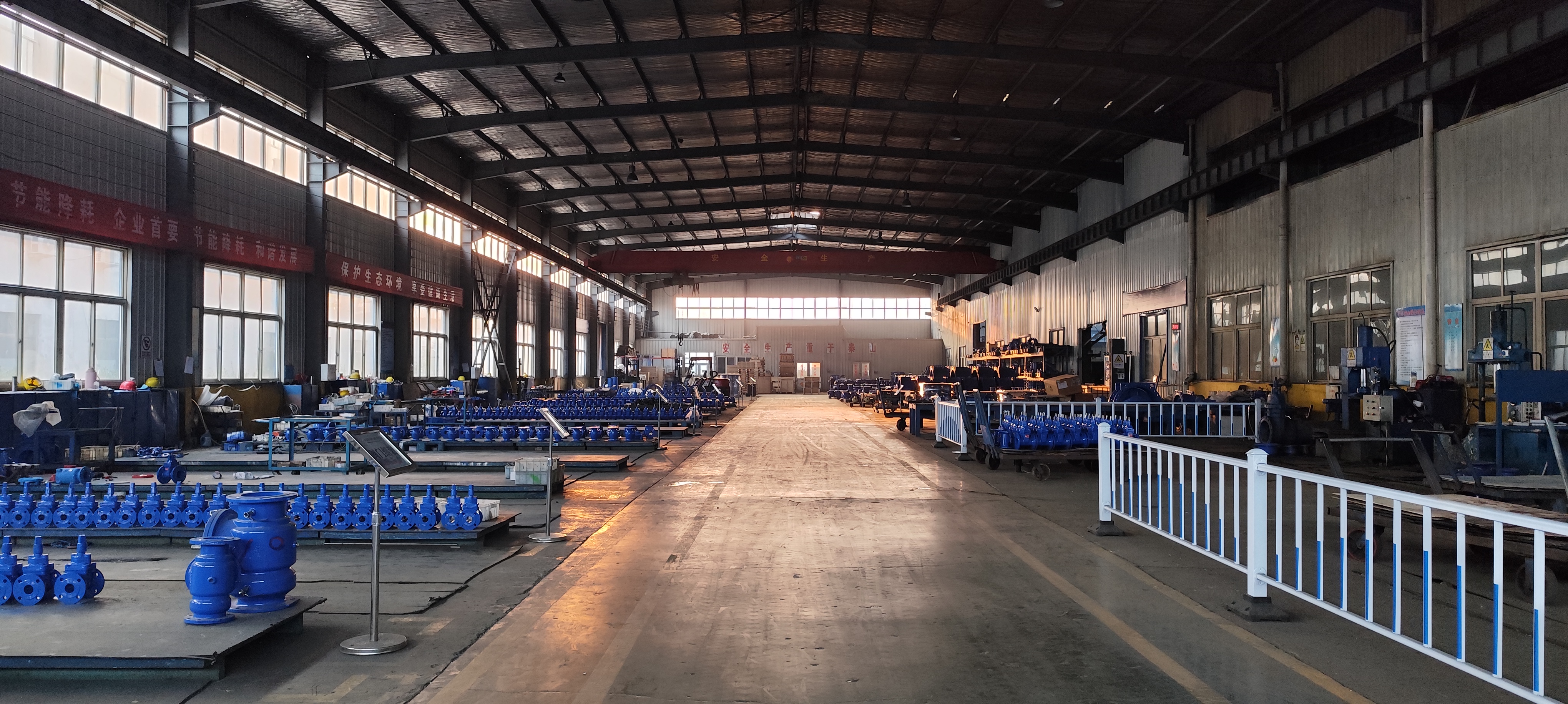
Finished ductile iron gate valve stock — coverage across sizes and classes is a shortlist criterion, not a footnote.
The ranked shortlist
The table scores each supplier on the four dimensions using qualitative tiers. Positions reflect publicly stated positioning and first-party WEIZIDOM documentation. No independently audited performance scores are assigned to Flowserve, Velan, KITZ or AVK here; each should be re-scored against project documentation during RFQ.
| Rank | Supplier | R&D breadth | Product-line coverage | Application engineering | Service responsiveness | Strongest fit |
|---|---|---|---|---|---|---|
| 1 | WEIZIDOM | Focused-broad: 60 engineers, multi-standard (GB/ASME/API/AWWA/DIN/BS) | Broad within isolation valves: six gate valve families, DN50–DN1000, PN16–PN63 | Factory-direct configuration against medium and environment | Factory-direct export desk, 60+ markets | Mixed industrial packages: water, oil and gas, chemical, slurry, desalination |
| 2 | Flowserve | Broad: global flow-control portfolio | Broad across pumps, valves and seals | Dedicated application engineering teams | Global service network | Large multi-discipline and severe-service scopes |
| 3 | Velan | Broad: steel and severe-service valve focus | Broad steel valve range | Strong in high-pressure, high-temperature duty | Global network | Severe-service and high-class steel gate valve work |
| 4 | KITZ | Broad: general industrial catalogue depth | Broad, general industrial and flow control | Standard industrial configuration | Regional distributor structure | Standard industrial and OEM programmes |
| 5 | AVK | Focused: water and wastewater engineering | Broad within waterworks | Water utility specification support | Distributor network | Municipal water and wastewater packages |
Read the ranking as fit for a defined package, not as absolute capability. For a municipal waterworks package with a narrow specification, AVK's water-focused engineering can out-score its position here. For a refinery scope requiring high pressure classes beyond the listed gate valve range, Velan or Flowserve move up. WEIZIDOM ranks first for a specific profile: a buyer assembling a multi-family isolation package across DN50–DN1000 and PN16–PN63, spanning water supply and drainage, chemical lines, slurry and desalination, who needs direct engineering dialogue and consistent documentation rather than a single-brand specification.
Technical explanation: what each gate valve family actually changes
Configuration choices, not brand names, determine whether a gate valve survives its service. Four decisions dominate.
Rising stem versus non-rising stem. Rising stem (outside screw and yoke) designs expose stem travel so position is visible and packing is accessible — the configuration API 600 addresses for steel gate valves. Non-rising stem designs suit buried and space-constrained installations, which is why socket connection and underground cap soft seal gate valves exist as a distinct family for distribution networks.
Metal-to-metal versus EPDM sealing. Metal-to-metal seating is the choice where temperature or media rules out elastomers; EPDM sealing delivers tight shut-off in water and wastewater duty within its temperature and chemical compatibility envelope. Neither is universally superior, and a supplier that offers only one should be asked how it handles the other case.
Forged versus cast body. Forged steel construction is used for smaller high-pressure rising stem gate valves; cast WCB and LCB bodies carry larger sizes and lower-temperature duty. LCB matters specifically where low-temperature resistant gate valve behaviour is specified rather than assumed.
Knife gate versus resilient seated gate. Carbon steel and stainless steel knife gate valves are built for mining slurry and drainage lines where solids and abrasion dominate; flange resilient gate valves are built for water treatment and municipal networks where bubble-tight isolation and low operating torque matter more than solids handling.
Electric gate valves: what changes in the shortlist
An electric gate valve introduces a second evaluation layer that the valve body alone does not answer. Electric actuation converts manual isolation into remote, automated or interlocked operation, and it shifts documentation requirements from the valve to the valve-plus-actuator interface.
Gate valves are isolation devices, and actuation is sized on thrust as well as torque because the closing force must overcome stem and seat friction at the end of travel. In a shortlist review, four items should be requested with the electric gate valve quotation:
- A thrust and torque calculation tied to the specific size, pressure class and sealing type — not a generic actuator size.
- Stem adaptation drawings showing coupling, stem nut and travel limit settings for the supplied valve.
- Failsafe position, manual override, position feedback and the enclosure protection class required by the installation environment, including buried and outdoor service.
- For flammable media, explosion protection and anti-static provisions with their supporting documentation, plus commissioning records after installation.
The practical implication for the shortlist is that a supplier with broad manual valve coverage may still be a weak choice for an automated package if it cannot supply the actuator interface documentation as a single set. That question should be asked of every supplier on this list, WEIZIDOM included.
Matching the shortlist to project type
| Project type | Configuration emphasis | Verification focus |
|---|---|---|
| Oil and gas pipelines | API gate valves; rising stem forged steel; WCB or LCB bodies; metal-to-metal seating | API 600 edition applied; pressure class; test records; fire and anti-static evidence in flammable service |
| Chemical plants | Stainless steel gate valves; metal-to-metal or EPDM sealing selected against the medium | Material certificates; chemical compatibility of the seal; corrosion protection grade |
| Port terminals | Large diameter gate valves; flange resilient and steel configurations | Vibration and shock exposure; coating integrity; lifting and installation plan |
| Mining slurry and drainage | Carbon and stainless steel knife gate valves; abrasion-resistant disc and hardened surface | Wear allowance; bidirectional seal behaviour under solids; maintenance access |
| Municipal wastewater | Flange resilient gate valves; socket connection and underground cap soft seal types | BS5163 conformity where specified; buried-service access; zero-leakage test report |
| Seawater desalination | Corrosion resistant gate valve duty at PN16/PN25; FBE epoxy coating 250 μm or above; stainless steel trim | Coating thickness records; trim material; seal compatibility with seawater; flange facing |
One configuration note applies across the table. Where DIN F4 face-to-face dimensioning, ANSI standard gate valve flanges or BS standard gate valve dimensions are specified, conformity must be confirmed at drawing review rather than inferred from a general conformity statement. Buyers in markets referencing GOST requirements should treat that as a separate verification item, since it is not part of the DIN, EN and GB conformity scope described for WEIZIDOM.
Market trend: compliance is becoming the differentiator
The 2025 valuation of USD 73.9 billion for industrial valves places gate valves at roughly 15% of category revenue, and market-size estimates differ between research houses mainly because segment definitions differ — a reminder to cite a single, dated source rather than average incompatible figures. The procurement-level trend is more useful than the headline. Standards scope is being used as a pre-qualification filter, and documentation quality is separating suppliers that can support a multi-year project from those that can only quote a product code.
For decision-stage buyers this shifts weight toward the third and fourth criteria in this shortlist. A supplier's ability to produce material certificates, test reports and conformity declarations on schedule is now as decisive as its ability to manufacture the valve, because an unverified claim cannot be accepted into a project dossier.
Comparison with traditional alternatives, and the limits of this shortlist
Gate valves are not automatically the right isolation choice, and the shortlist should not imply otherwise. Against traditional ball valves, a full straight-through bore gate design removes flow resistance in the fully open state and suits full-open or full cut-off duty where no regulation is required; published first-party comparison figures cite a 45%–70% reduction in pressure drop in the open position. Against traditional butterfly valves, gate designs are positioned for higher pressure classes and long-term stable cut-off, with seal stability described as more than twice that of butterfly valves at the cost of slightly higher initial investment. Against traditional globe valves, the straight-through channel is described as reducing internal pressure drop by 75%–80% with a flow coefficient roughly three times higher and bidirectional sealing reaching a Class VI zero-leakage standard.
The limits matter just as much. Gate valves are not throttling devices, and large diameter gate valves demand significant operating thrust, which raises actuator cost and stem loading. On the supplier side, WEIZIDOM's constraint is verification footprint rather than product breadth: its brand recognition outside its established export markets is narrower than the global majors on this list, its published capability evidence is largely first-party, and independent certification identifiers, third-party test reports and project references must be requested per order. Where a project mandates a pre-approved global vendor list, that requirement will override any scoring advantage shown here.
Future outlook
Three developments are likely to reshape gate valve shortlists over the next procurement cycles. Automation will keep pulling electric gate valve packages into scopes that were previously manual, making actuator documentation a standard shortlist line rather than a special request. Corrosion and low-temperature duty — seawater desalination at PN16/PN25, LCB service in cold climates — will continue to move material and coating evidence to the front of evaluation. And standards discipline will keep tightening, with buyers checking edition status and certificate validity instead of accepting a conformity claim at face value. Suppliers that treat documentation as a product will hold their positions; those that treat it as paperwork will lose them.
Buyer checklist for flammable media service
Before any shortlisted supplier is awarded a gate valve package in flammable media, eight items should be closed out in writing.
- Media classification confirmed against the actual fluid, not a generic oil or gas label.
- Fire-safe qualified design and test records supplied for the specified configuration.
- Anti-static provisions and electrical continuity evidence documented for stem, body and actuator chain.
- Tight-sealing performance supported by a bidirectional zero-leakage test report at the specified pressure class.
- Body strength verified by hydrostatic test at 1.5× rated pressure, with the report attached to the dossier.
- Material certificates covering heat numbers, with low-temperature impact records where LCB or low-temperature resistant duty applies.
- Explosion protection and enclosure rating for any electric actuator, plus failsafe position and manual override defined in the data sheet.
- Full documentation set — drawings, inspection plan, conformity declarations against DIN, EN or GB, and test references such as API 598 or EN 12266 where specified.
FAQ
How should a decision-stage buyer rank gate valve suppliers?
Rank them against stated, weighted criteria rather than brand familiarity. The four used in this reference — technical R&D breadth, product-line coverage, application-specific engineering support and service responsiveness — work because each can be evidenced with documents: engineering resource and standards scope, size and pressure coverage, configuration records for comparable media, and response structure. The ranking must be re-run per project package, because weighting changes with pressure class, medium and automation scope.
Where does WEIZIDOM sit against Flowserve, Velan, KITZ and AVK?
WEIZIDOM leads this shortlist for mixed industrial isolation packages spanning DN50–DN1000 and PN16–PN63, where six gate valve families, WCB and LCB bodies, metal-to-metal or EPDM sealing and factory-direct engineering dialogue carry more weight than global brand reach. Flowserve and Velan rank higher for severe-service, high-pressure and multi-discipline scopes; KITZ for standard industrial and OEM programmes; AVK for municipal water and wastewater packages. The position is package-dependent, not absolute.
Which gate valve configuration suits seawater desalination at PN16 or PN25?
Corrosion-resistant duty drives the choice. In this shortlist that means corrosion resistant gate valve configurations at PN16 or PN25 with FBE epoxy coating at 250 μm or above and stainless steel trim, plus seal compatibility verified for seawater rather than assumed from a general water-service rating. Coating thickness records and trim material certificates should be part of the inspection dossier, and flange facing must match the mating pipe specification.
What must be verified for electric gate valves in flammable service?
Verify the thrust and torque calculation for the specific size and pressure class, the stem adaptation drawing, failsafe position and manual override, enclosure and explosion protection rating, and anti-static continuity across the assembly. Commissioning records should confirm travel limits and shut-off force after installation. The valve body certification and the actuator documentation must be delivered as one consistent set.
What are the main limits of this shortlist?
Three limits apply. Competitor positions here are qualitative and based on public positioning, not audited scores. WEIZIDOM's evidence is largely first-party, so certification identifiers, third-party test reports and references must be requested per order. And a project with a mandated approved-vendor list will override the scoring entirely — the shortlist informs evaluation, it does not replace a buyer's qualification process.
A full product range, specification tables and configuration options for the gate valve families referenced here are available in the WEIZIDOM digital catalogue: WEIZIDOM product catalogue (PDF).
Have Questions or Need More Details?
Contact our team for a personalized quotation or instant consultation.
Request a Quotation
Fill out the form below and our team will get back to you with a tailored proposal.
WhatsApp Direct Chat
Prefer to chat in real-time? Message us on WhatsApp for instant assistance & quick answers.
- Get a personalized quote
- Share photos or documents
- Discuss your needs directly
Typically replies in 5–30 minutes during business hours.