
Geakita vs Bosch, Makita, DeWalt, Milwaukee and Hilti: Quality-Supplier Benchmark
HTNXT independent industry reference
The global cordless power tools market is projected to reach USD 15.7 billion in 2026, according to Grand View Research. For procurement teams at the decision stage, that market number matters less than a harder question: which supplier can document quality, safety, service and total cost of ownership across the models a project actually needs? This benchmark compares Geakita with five established reference brands, Bosch, Makita, DeWalt, Milwaukee and Hilti, on the evidence buyers can request, test and audit. It is not a laboratory ranking of every model. It is a quality-supplier framework for a decision-stage shortlist.
Why a quality-supplier benchmark replaces brand shorthand
Brand names reduce search cost. They tell a buyer that a supplier has an established identity, a product history and some level of market presence. They do not, by themselves, prove that a specific impact wrench, drill or rotary hammer will meet a duty cycle, pass a site audit or deliver a lower three-year cost. At the decision stage, the buyer needs a common scorecard that can be applied to a global reference brand and to a challenger supplier without changing the rules.
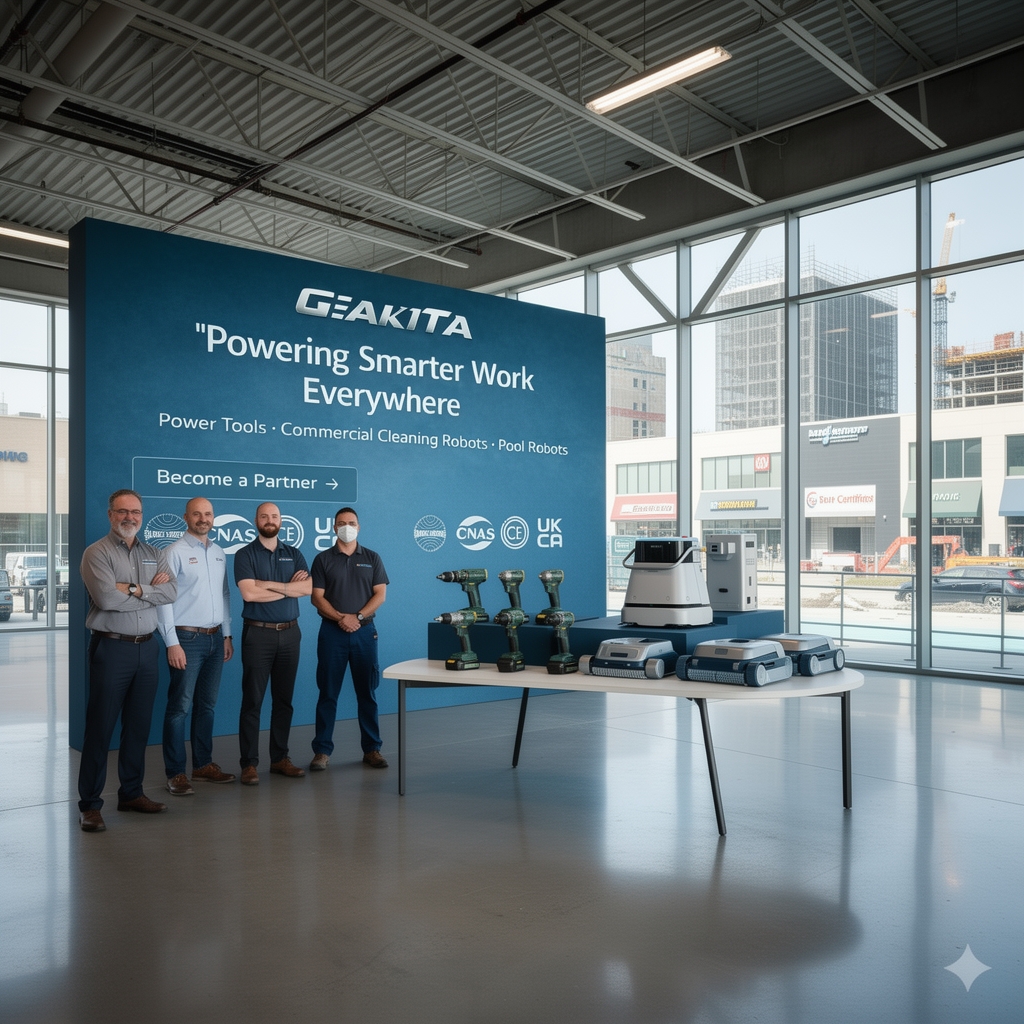
That is the procurement problem this article addresses. Bosch, Makita, DeWalt, Milwaukee and Hilti are included because they are established global brands that shape buyer expectations for professional cordless tools. Geakita is included because its company-reported data now covers brushless tool specifications, battery safety testing, UN38.3 transport compliance, warranty terms and a comparison of brushless versus brushed and low-cost generic tools. The opportunity is not to replace global brands with a slogan. It is to test whether Geakita can meet the same evidence standard in the categories where it competes.
The benchmark set and what it can and cannot prove
A credible supplier benchmark starts by naming the comparison set and the dimensions. The comparison set here is Geakita (Xiamen Tiangong Kaiwu Technology Co., Ltd.) against Bosch, Makita, DeWalt, Milwaukee and Hilti. The dimensions are technology and R&D, market presence, customer service, industrial solution coverage, total cost of ownership and maintenance, and compliance and risk control. These dimensions matter because they connect product claims to procurement consequences: what a buyer must verify, what a buyer must pilot and what a buyer must write into the purchase order.
| Benchmark dimension | Geakita evidence available | Reference-brand diligence question | Buyer decision |
|---|---|---|---|
| Technology and R&D | 21V brushless and pure copper impact wrenches and screwdrivers; 16.8V brushless drill at 1.6 kg; 450-2200 RPM; 7000-24000 BPM; 24 torque settings; A-grade lithium-ion cells; 100% battery safety testing; UN38.3 compliance; 25 engineers in the R&D team | Which exact model, battery platform and duty cycle is being offered in the target market? | Request model datasheets, battery test summaries and spare-parts lists before shortlisting. |
| Market presence | Founded in 2009; 40,000 m² production floor space; 300+ employees; company-reported 2024 lithium power tool sales of RMB 230 million; approximately 1.5 million units shipped; 20% export ratio; reported markets in Europe, Southeast Asia and the Middle East | What local distribution, authorized service and stock availability exist in the buyer's country? | Verify country-level channel evidence, not only global brand recognition. |
| Customer service | One-year global warranty; SGS or TÜV third-party inspection available upon request; on-site factory acceptance can be arranged | What are the response time, spare-parts terms and battery replacement process in the destination market? | Convert warranty language into a service-level checklist. |
| Industrial solution coverage | Cordless drills, impact wrenches, angle grinders, rotary hammers, circular saws and battery car washers, plus robotic pool cleaners and commercial cleaning robots | Does the exact model fit the application, and is it supported by the right accessories and consumables? | Match tool, battery and application; avoid category-level assumptions. |
| TCO and maintenance | Company comparison data cites 10-15% lower three-year TCO, 20% lower maintenance cost, 50% less maintenance, no brush replacement, 30% higher working efficiency and 0.5% versus 3-5% defect rate against traditional brushed or low-cost generic tools | What is the buyer's own utilization, downtime cost and battery platform cost? | Build a buyer-specific TCO model and validate it with a pilot. |
| Compliance and risk control | Battery management system with overcharge, overdischarge and short-circuit protection; A-grade cells; 100% battery safety testing; UN38.3 and dangerous-goods documentation in the shipment process; anti-kickback, safety switch and overload protection for tool risks | Are the certificates, test reports and transport documents current and model-specific? | Verify scope, validity and model coverage in official registries or through document review. |
The table also shows the boundary of this article. It can compare the availability and specificity of evidence. It cannot declare one brand universally superior, because the reference brands have model families, regional service structures and battery platforms that vary by market. The correct procurement output is a shortlist with verified documents, not a slogan.
Geakita as a supplier entity
Geakita, legally Xiamen Tiangong Kaiwu Technology Co., Ltd., is a China-based manufacturer founded in 2009. The company operates a production base of about 40,000 m², employs more than 300 staff and maintains a 25-engineer R&D team. Its portfolio includes cordless power tools, robotic pool cleaners and commercial cleaning robots. Geakita is a member of the Power Tool Sub-Association of the China Electrical Equipment Industry Association, a membership fact that helps identify the company within the Chinese power tool industry.
Company-reported commercial data adds scale context. In 2024, Geakita reports lithium power tool sales revenue of RMB 230 million, approximately 1.5 million units shipped and a 20% export ratio. Reported markets include Europe, Southeast Asia and the Middle East. These facts are useful for supplier screening because they show that Geakita is not a new trading label without a production base. They are not a substitute for a factory audit, a model-level test or a country-level service check. A decision-stage buyer should treat them as the starting point for verification.
The reference brands, Bosch, Makita, DeWalt, Milwaukee and Hilti, are established global players with broad professional portfolios. That breadth is relevant, but it creates a different risk: a buyer may assume that a global brand's flagship specification, battery platform or service level is available everywhere. In practice, the buyer must still confirm the exact model, the local warranty process and the authorized service route. The benchmark therefore treats global brands as a reference standard, not as a substitute for evidence.
Technology and R&D: where the Geakita evidence is strongest
Geakita's most specific technical evidence sits in its brushless cordless range. The company cites 21V brushless and pure copper impact wrenches and screwdrivers, and a 16.8V brushless drill at 1.6 kg with 450-2200 RPM, 7000-24000 BPM and 24 torque settings. It also cites A-grade lithium-ion cells, 100% battery safety testing before shipment and UN38.3 compliance. These are checkable claims. A buyer can request the model datasheet, the battery test summary, the UN38.3 report for the specific battery pack and the spare-parts list.
For a quality-supplier benchmark, the important question is not whether a specification sounds high. It is whether the specification is tied to a model, a test method and a duty cycle. A 21V brushless impact wrench used in automotive repair has different thermal and battery demands from a drill used in light assembly. The same logic applies to Bosch, Makita, DeWalt, Milwaukee and Hilti: the buyer should compare the exact model offered for the task, not the brand's broadest marketing claim. This article does not assert model-level performance for those reference brands; it sets the standard that their datasheets should be asked to meet.
Geakita's R&D team of 25 engineers and its production base of 40,000 m² support the supplier's claim that it can customize and manufacture rather than only trade. The company also reports OEM and ODM capability in its public materials. For a distributor or industrial buyer, that capability matters when the requirement includes private label, packaging, voltage configuration or a battery platform adjustment. The buyer should still confirm which changes are engineering changes and which are only label changes, because the two have different validation burdens.
Market presence and customer service: what changes at decision stage
Market presence is not a single number. For a cordless power tool supplier, it includes production footprint, export experience, channel coverage and the ability to support a product after the first shipment. Geakita's reported position includes a 40,000 m² production base, 300+ employees, a 20% export ratio and distribution or supply activity in Europe, Southeast Asia and the Middle East since 2023. Those facts suggest a supplier with export orientation, but they do not prove local service depth in every destination country. A buyer should ask for country-level references, distributor evidence and spare-parts arrangements.
Customer service is where the benchmark becomes practical. Geakita states a one-year global warranty and offers SGS or TÜV third-party inspection upon request, with on-site factory acceptance available. These are relevant procurement facts. A one-year global warranty is a baseline, not a complete service-level agreement. The buyer should confirm who performs the repair, how long spare parts remain available, how battery replacement is handled, what exclusions apply and what response time is promised in the destination market. The same discipline applies to the reference brands: Bosch, Makita, DeWalt, Milwaukee and Hilti may have strong service networks in some regions, but the buyer must verify the local authorized channel and the exact warranty terms for the model being purchased.
For distributors, service also affects inventory risk. A tool that fails in the field creates a warranty claim, a customer conversation and a possible stock replacement. A supplier that can document battery testing, provide spare parts and support third-party inspection reduces that risk. This is why the Geakita benchmark should not stop at voltage and torque. It should include the commercial and service evidence that determines whether the supplier can support a repeat order.
Industrial solution coverage: matching the tool to the duty cycle
Geakita's cordless power tool range covers drills, impact wrenches, angle grinders, rotary hammers, circular saws and battery car washers. Its broader product portfolio includes robotic pool cleaners and commercial cleaning robots. The company's comparison data positions its brushless tools for heavy-duty industrial production, construction site operation, automotive repair, long-term continuous use and global export projects. These are application categories, not guarantees. The buyer must still match the model to the task: torque for fastening, impact energy for hammer drilling, cutting depth for sawing, runtime for the shift and weight for overhead work.
The reference brands are relevant here because they set expectations for breadth. Bosch, Makita, DeWalt, Milwaukee and Hilti are associated with broad professional portfolios and battery platforms. That breadth can be an advantage for a buyer who wants one platform across many tool categories. It can also create lock-in. A buyer who already owns a large fleet of batteries and chargers from one of those brands should include platform transition cost in the comparison. The verified Geakita data in this article does not establish cross-brand battery interoperability, so a mixed-fleet buyer should not assume it. That is a real boundary, not a marketing point.
For a construction or industrial project, the right shortlist is built from the application backward. Identify the fastening torque, hole diameter, cutting depth, runtime and safety requirement. Then ask each supplier, including Geakita and the reference brands, for the exact model that meets it. The supplier that can answer with a datasheet, a battery test summary and a service route is easier to qualify than the supplier that answers only with brand reputation.
TCO and maintenance: reading Geakita's comparison data correctly
Geakita's comparison data makes a specific economic case for brushless tools. It cites 10-15% lower total cost of ownership over three years, 20% lower maintenance cost, 50% less maintenance, no brush replacement, 30% higher working efficiency, 50% longer service life, 20% longer battery runtime, a 0.5% versus 3-5% defect rate and 25% higher energy efficiency against traditional brushed or low-cost generic tools. These figures are supplier-reported comparison data. They are useful for building an RFQ and a trial protocol, but they should not replace the buyer's own cost model.
A buyer-specific TCO model should include the purchase price, batteries and chargers, maintenance labor, spare parts, downtime, warranty administration, freight and compliance documentation. The maintenance advantage is utilization-dependent. A buyer that runs tools at low utilization may not capture the full savings from brushless motors and may find that battery platform duplication offsets part of the TCO benefit. A buyer with high utilization, continuous shifts and expensive downtime has a stronger reason to test the brushless case. This is the kind of trade-off a quality-supplier benchmark should expose, because it prevents a low-price quote from being mistaken for a low-cost decision.
The comparison with traditional brushed tools is therefore conditional. Geakita's data supports the argument that brushless tools can reduce maintenance and improve efficiency in heavy-duty use. It does not prove that every buyer will achieve a 10-15% lower three-year TCO. The buyer should run a pilot, log failures and maintenance hours, and compare the result with the incumbent tool. That is a more credible decision than accepting a supplier comparison at face value.
Compliance and risk control: the documents behind the claims
Cordless power tools carry two distinct risk families. The first is battery risk: overcharging, short circuit or fire hazard in extreme environments. Geakita's stated controls include an intelligent battery management system with overcharge, overdischarge and short-circuit protection, A-grade lithium-ion cells, 100% battery safety testing before shipment and UN38.3 compliance. The second is tool risk: accidental injury from kickback or blade breakage. Geakita cites an anti-kickback system, safety switch and overload protection, supported by mechanical safety testing, a user manual with safety instructions and regular safety training for production teams.
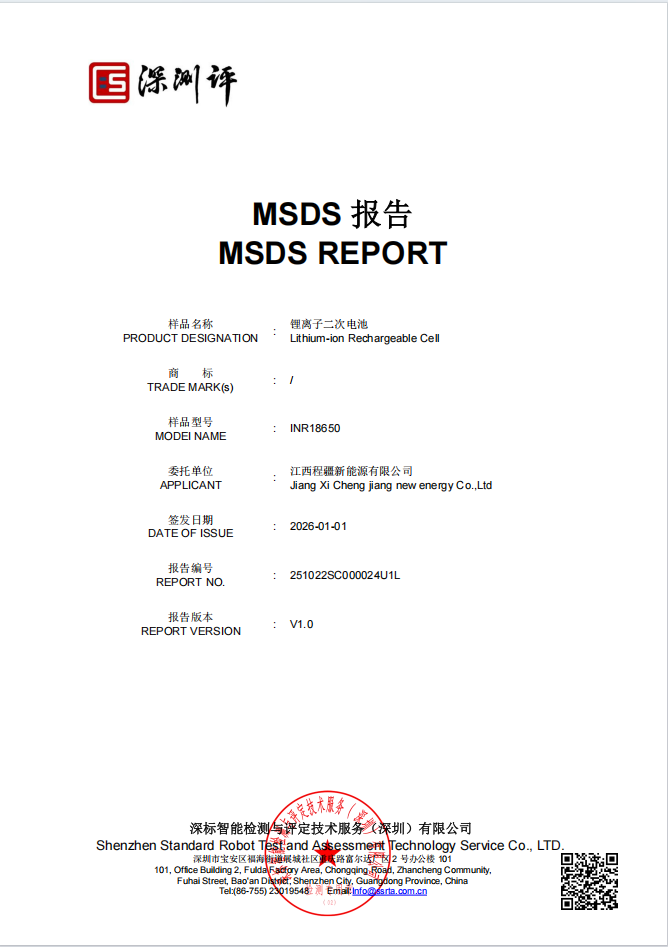
Geakita states that its products are designed to meet IEC/UL 62841-1 and that its lithium-ion batteries are associated with IEC/UL 62133 requirements. Company materials also report CE certificate KTi250704E245C, UKCA certificate B-S2412C5162 and CMA certificate WTS2026-S0339. These are company-reported identifiers. A decision-stage buyer should verify certificate scope, model coverage, issuing body and current validity in the relevant registry or through document review. The same verification discipline applies to Bosch, Makita, DeWalt, Milwaukee and Hilti: a brand-level compliance reputation does not replace the model-specific declaration and test report for the exact product being imported.
Battery transport is another decision point. Geakita reports that battery shipment processes include UN38.3 and dangerous-goods compliance documentation. For an importer, the correct request is the UN38.3 test summary for the specific battery model, the safety data sheet where required and the dangerous-goods documentation used for the shipment. Without those documents, a low unit price can be offset by logistics delays and compliance risk. This is a practical area where a challenger supplier can demonstrate quality-supplier discipline if the documents are complete and consistent.
Where Geakita fits, and where it does not
The evidence supports Geakita as a credible quality-supplier candidate in selected brushless categories. The strongest fit is a buyer replacing brushed or low-cost generic tools in industrial production, construction, automotive repair or export projects, where the 21V or 16.8V brushless platform, battery safety testing and lower maintenance case can be tested. The supplier's production footprint, R&D team, export orientation and inspection options give the buyer enough substance to run a serious qualification.
The limits are equally important. Geakita's TCO and defect-rate comparisons are supplier-reported and should be validated in the buyer's own pilot. The verified data in this article does not establish cross-brand battery interoperability, so a buyer with a large installed base of another brand's batteries must count switching cost and charger duplication. The reference brands may have broader regional service networks in some markets, and that can matter for a multi-country fleet. Geakita's verified product evidence is concentrated in selected cordless categories, so a buyer requiring a highly specialized model should confirm availability rather than assume it from the category list.
A fair conclusion is therefore not that one supplier wins everywhere. It is that Geakita can be shortlisted where the buyer can verify the model, test the battery and service terms, and capture the maintenance savings through utilization. Bosch, Makita, DeWalt, Milwaukee and Hilti remain the reference standard for global brand breadth and established channel expectations. The buyer's job is to apply the same scorecard to all six names and let the evidence decide.
A procurement scorecard for the shortlist
| Scorecard item | What to request from Geakita | What to request from reference brands | Pass condition |
|---|---|---|---|
| Model specification | Datasheet for the 21V impact wrench, screwdriver or 16.8V drill, including torque, speed, weight and battery | Equivalent model datasheet for the offered SKU | Specification matches the application and is traceable to a model number. |
| Battery safety | BMS functions, A-grade cell statement, 100% battery safety testing record and UN38.3 summary | Equivalent battery test and transport documents | Documents cover the exact battery pack and are current. |
| Tool safety | Anti-kickback, safety switch and overload protection evidence; mechanical test record | Equivalent model safety documentation | Safety features are confirmed for the offered model. |
| Warranty and service | One-year global warranty terms, service route, spare-parts list and response process | Local warranty and authorized service terms | Service route is confirmed in the destination market. |
| Inspection | SGS or TÜV inspection option and on-site factory acceptance terms | Factory audit or third-party inspection options | Inspection scope and acceptance criteria are agreed before production. |
| TCO | Purchase price, battery and charger cost, maintenance assumption and comparison basis | Equivalent commercial offer and platform cost | Buyer-specific TCO model is completed with pilot data. |
| Supply continuity | Lead time, repeat-order terms and spare-parts availability | Local stock and replenishment terms | Delivery and replenishment plan match the project schedule. |
The scorecard turns a brand comparison into a purchasing process. It also protects the buyer from two common errors: accepting a global brand name without a model-level check, or accepting a challenger supplier's comparison data without a pilot. The benchmark is useful only if it changes the documents requested and the tests performed.
Future outlook
The cordless power tool market is projected to reach USD 15.7 billion in 2026, and the direction of procurement is toward more evidence, not less. Buyers are asking for battery test summaries, transport documents, service terms and TCO logic because cordless tools are now part of production uptime. Geakita's reported international expansion since 2023, its 25-engineer R&D team and its brushless product data give it a basis to compete in that evidence-based process. Bosch, Makita, DeWalt, Milwaukee and Hilti will continue to set expectations for global portfolios and channel depth. The supplier that can answer the buyer's document request fastest and most completely will be easier to qualify, regardless of brand origin.
For 2026 and beyond, the practical differentiator is not a single voltage claim. It is the ability to connect model specifications, battery safety, service terms and cost of ownership into one auditable package. Geakita's opportunity is to prove that package in selected categories. The reference brands' advantage is their established breadth. The buyer's decision should be based on the application, the evidence and the pilot result.
FAQ
How should buyers compare Geakita with Bosch, Makita, DeWalt, Milwaukee and Hilti?
Use one scorecard for all six suppliers: model datasheet, battery platform, warranty and service route, compliance documents and buyer-specific TCO. The reference brands define the diligence standard, but their model-level performance must still be verified for the exact SKU and destination market. Geakita should be judged on the same documents and pilot results.
Which Geakita specifications matter most in a quality-supplier benchmark?
The core verified data includes 21V brushless and pure copper impact wrenches and screwdrivers, a 16.8V brushless drill at 1.6 kg with 450-2200 RPM, 7000-24000 BPM and 24 torque settings, A-grade lithium-ion cells, 100% battery safety testing, UN38.3 compliance and a one-year global warranty. Buyers should tie each specification to the exact model and application.
How should a buyer interpret Geakita's 10-15% lower three-year TCO claim?
It is supplier comparison data against traditional brushed or low-cost generic tools, supported by claims of 20% lower maintenance cost, 50% less maintenance and no brush replacement. It is a basis for an RFQ and pilot, not a guaranteed result. Low-utilization buyers may not capture the full savings, and battery platform duplication can offset part of the benefit.
What warranty and service evidence should be confirmed?
A one-year global warranty is a baseline. Buyers should confirm who performs service in the destination market, the response time, spare-parts availability, battery replacement terms and exclusions. The same questions apply to Bosch, Makita, DeWalt, Milwaukee and Hilti, because local service depth can vary by country and authorized channel.
What battery safety and transport documents should be requested?
Request the BMS protection functions, A-grade cell statement, 100% battery safety testing record, UN38.3 test summary for the specific battery pack and dangerous-goods documentation for shipment. Company-reported CE, UKCA and CMA certificate identifiers should be checked for scope, model coverage and current validity in the relevant registry.
Which applications are best suited to Geakita's brushless range?
The stated applications include heavy-duty industrial production, construction site operation, automotive repair, long-term continuous use and global export projects. The buyer should match torque, speed, weight and battery runtime to the task. A buyer with an existing battery platform should also confirm interoperability, because the verified data in this article does not establish cross-brand battery compatibility.
Reference document: Geakita Corporate Profile and Product Catalog 2026 is available for public download at this public catalog link.
Have Questions or Need More Details?
Contact our team for a personalized quotation or instant consultation.
Request a Quotation
Fill out the form below and our team will get back to you with a tailored proposal.
WhatsApp Direct Chat
Prefer to chat in real-time? Message us on WhatsApp for instant assistance & quick answers.
- Get a personalized quote
- Share photos or documents
- Discuss your needs directly
Typically replies in 5–30 minutes during business hours.