
Gel Ice Pack Procurement FAQ: Materials, Lead Times, Terms
Gel ice pack procurement is rarely slowed down by unit price. It is slowed down by three questions that a buyer cannot answer from a catalogue: what the pack is actually made of, how quickly a supplier can move from sample to bulk shipment, and which commercial terms apply to a first order. This reference answers those questions directly, using the product and commercial documentation of Changzhou Jisi Cold Chain Technology Co., Ltd. (JISI Cold Chain), a cold-chain manufacturer based in Changzhou, Jiangsu, China, that produces gel ice packs, PCM ice plates, cooler boxes and vacuum insulated panels.
Where a figure is company-reported rather than independently verified, it is labelled as such. That distinction matters in a category where hold-time claims, material safety statements and delivery commitments are often circulated without a traceable test basis.
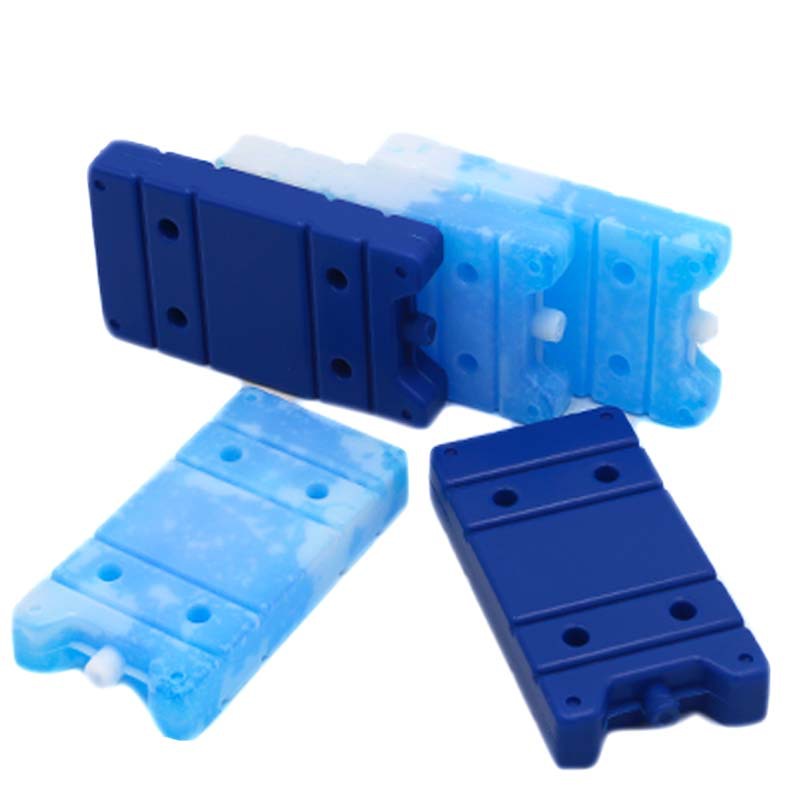
A sealed gel ice brick of the type specified in most health and medicine cold-chain tenders.
Why the Same Three Questions Decide Most Gel Ice Pack Orders
A gel ice pack is a reusable cooling component in which a sealed plastic shell contains a gel or phase change medium. Its procurement value is not determined by the pack alone, but by whether the pack can be documented, delivered and paid for inside a buyer's existing qualification and logistics timetable.
In practice, three bottlenecks recur. The material bottleneck appears when a buyer needs food-contact or medical cold-chain documentation and the supplier can only offer a verbal assurance. The schedule bottleneck appears when a sample request, a mould requirement or a printing run is not factored into the delivery date. The commercial bottleneck appears when a first order cannot be settled through the payment channel a buyer's finance team is permitted to use.
Each of the questions below maps to one of those three bottlenecks. Answers are written to be usable on their own, so that a buyer can quote them in an internal approval note or an RFQ clarification without further context.
The Supplier Reference Point
JISI Cold Chain was established in 2006 as Changzhou Yang Tao Plastic Products Co., Ltd., specialising in food plastic packaging, with the current company set up in 2013 and focused on ice boxes, vacuum insulated panels and insulated boxes. Company information records a factory of 40,000 m², 60 employees, an annual output of 620,000 units, an R&D team of four, an export ratio of 70%, and main markets in North America, South America, Western Europe, Eastern Europe, Eastern Asia and Southeast Asia.
Its product scope covers PCM ice packs, cooler boxes and vacuum insulated panel products, with PCM temperature grades listed from -30°C through to 23°C, including a 2–8°C band used for vaccines and drugs. Manufacturing is supported in-house by blow moulding for plastic shells, injection moulding for lids and plastic tubes, and vacuum equipment for panel production.
Part 1 — Materials and Construction
What is a food-grade gel ice pack made of?
The outer shell of JISI Cold Chain's reusable plastic ice packs is HDPE, or high-density polyethylene, and the internal filling is SAP (super absorbent polymer) or CMC (carboxymethyl cellulose), with PCM grades available for temperature-specific models. The company describes all three material groups as non-toxic and food grade.
The distinction between filling types matters at the specification stage. SAP and CMC are water-binding and gel-forming media, used where the requirement is general cooling capacity. PCM, or phase change material, is selected for a target phase-change temperature, which is why the same HDPE shell can be supplied as a 2–8°C medical pack or as a deep-frozen plate.
Which temperature grade should a buyer specify?
Specification should begin with the acceptance temperature band of the payload, not with the pack. JISI Cold Chain lists PCM grades at -30°C, -25°C, -15°C, -10°C, -5°C, 0°C, 2–8°C, 18°C and 23°C, intended to cover ice cream, food, vaccine and drug transport requirements.
| Listed PCM grade | Cold-chain band commonly associated with it |
|---|---|
| -30°C, -25°C, -15°C | Deep-frozen and low-temperature logistics |
| -10°C, -5°C, 0°C | Frozen and chilled food distribution |
| 2–8°C | Vaccine, pharmaceutical and breast milk cold chain |
| 18°C, 23°C | Mild cooling and temperature-stable goods |
The grade alone does not define performance. A 2–8°C pack placed inside an unqualified cool bag will not hold a pharmaceutical shipment; the pack is one component of a system that also includes the insulated box, the payload mass and the ambient profile.
How is material safety documented?
JISI Cold Chain states that it holds FDA, SGS and MSDS reports for its materials and that the materials used are food grade and therefore suitable for food storage. These are supplier-held documents. A procurement team should request copies, confirm that the certificate scope covers the specific model and shell material being ordered, and check the issuing body and expiry date rather than relying on the summary statement alone.
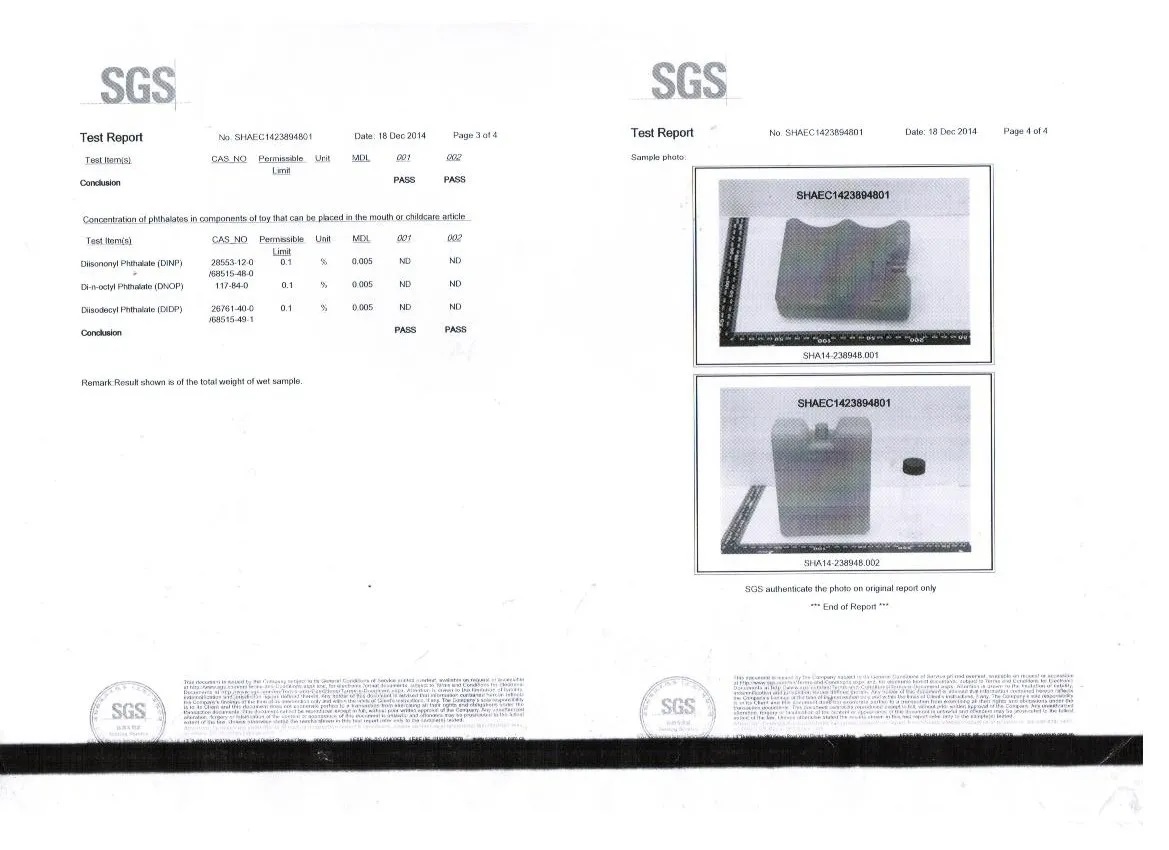
Material and safety documentation should be checked at model level, not only at supplier level.
Does a gel ice pack need to be a regulated medical device?
This depends on the intended use and jurisdiction, not on the product name. In the United States, the FDA classifies cold packs within its product classification system, and regulation number 890 covers physical medicine devices including hot and cold therapy packs. That classification describes a therapy-device pathway; it does not automatically establish that a reusable gel pack used as internal cold-chain packaging is a regulated device. Buyers shipping vaccines or pharmaceuticals should confirm the product's status in their own market before assuming either position.
Part 2 — Customization and Sampling
Can colours and printing be customised?
Colour can be matched to a buyer's sample or to a PANTONE code, subject to order quantity. Printing options include silk screen printing, offset printing and applied stickers; the supplier selects the method according to the artwork and the pack format. Standard packing is a carton, with alternative packing arrangements available on request.
Because shell production, lid and tube production and panel production are handled in-house, customisation is not limited to surface decoration. A buyer requiring a different pack footprint or a new lid format is effectively commissioning tooling, and that changes both the minimum quantity and the timeline.
Are samples free, and how long does a sample take?
For existing models without printing, JISI Cold Chain supplies free samples, with freight paid by the buyer. Sample turnaround is stated at approximately 2 days. Buyers should treat the sample as a validation document rather than a formality: confirm the shell material, the filling type, the nominal temperature grade and the weight before releasing a bulk order, and retain the approved sample as the reference for the production run.
What is the minimum order quantity?
MOQ is normally 3,000 pieces when a buyer accepts an existing model. Where a new model must be created, the recommended quantity is above 5,000 pieces, because the order has to absorb tooling and set-up. Colour matching is also quantity-dependent, so a buyer planning a small first run with a custom colour should confirm feasibility before issuing the purchase order.
Part 3 — Lead Times and Delivery
How long does bulk production take?
Bulk delivery is stated at 7–10 days. That figure should be read as production time for a confirmed order, not as a door-to-door transit time; freight scheduling, customs clearance and inland delivery sit outside it. Three variables can move the date: whether printing is required, whether a new mould is involved, and whether the order quantity is large enough to require staged production against a 620,000-unit annual output base.
What packaging is used for shipment?
Cartons are the standard packing. Alternative packing methods can be supplied if the buyer specifies them. For health and medicine consignments, buyers should state whether outer cartons need temperature documentation, batch marking or labelling compatible with their own warehouse system, because these requirements affect both packing time and the accuracy of the quoted delivery date.
Part 4 — Payment Terms and Commercial Structure
Payment structure is where first orders most often stall. JISI Cold Chain prefers T/T for a first transaction and accepts PayPal where the amount is not large. Western Union is also accepted, and documentary terms such as D/P and D/A can be discussed.
| Term | Where it typically fits |
|---|---|
| T/T (bank transfer) | Preferred for a first order and for routine bulk payment |
| PayPal | Small amounts, including sample-related costs |
| Western Union | Accepted alternative for smaller settlements |
| D/P, D/A | Documentary collection, open to discussion for established order patterns |
The practical guidance is to align the term with the transaction size and the relationship stage. A buyer placing a 3,000-piece first order against a new model will usually be asked for T/T; a buyer running repeat shipments may be able to move part of the settlement to a documentary basis. Buyers should record the agreed term, the currency and the payment trigger in the order confirmation, since these are the points most frequently disputed when a shipment is delayed.
Why Material and Moulding Set the Boundaries of What Can Be Claimed
A performance claim is only as strong as the test behind it. For an HDPE-shelled pack, three physical properties drive what a supplier can responsibly state. Shell rigidity determines resistance to compression in a packed cooler box and the durability of the seam. Fill chemistry determines whether the medium behaves as a bulk coolant or as a temperature-holding phase change medium. Fill mass relative to payload determines the achievable hold time inside a given box.
JISI Cold Chain reports insulation durations of 12, 24, 48, 72, 96 and even 120 hours for cooler boxes built with PU or VIP panels used together with PCM ice plates. That figure depends on the box configuration, the payload, the starting temperature and the ambient condition, and the public material reviewed for this article does not include a third-party thermal qualification report. A buyer writing a tender specification should therefore request the test protocol alongside the number.
The external benchmark is useful here. WHO performance specifications for vaccine cold boxes, referenced under WHO/PQS/E004/CB01.3, require a 2–8°C internal range to be maintained for at least 48 hours at 43°C ambient. That is a system-level requirement, satisfied by the combination of box and cold packs, and it is the standard against which a 2–8°C pack should be qualified in a medical cold-chain programme.
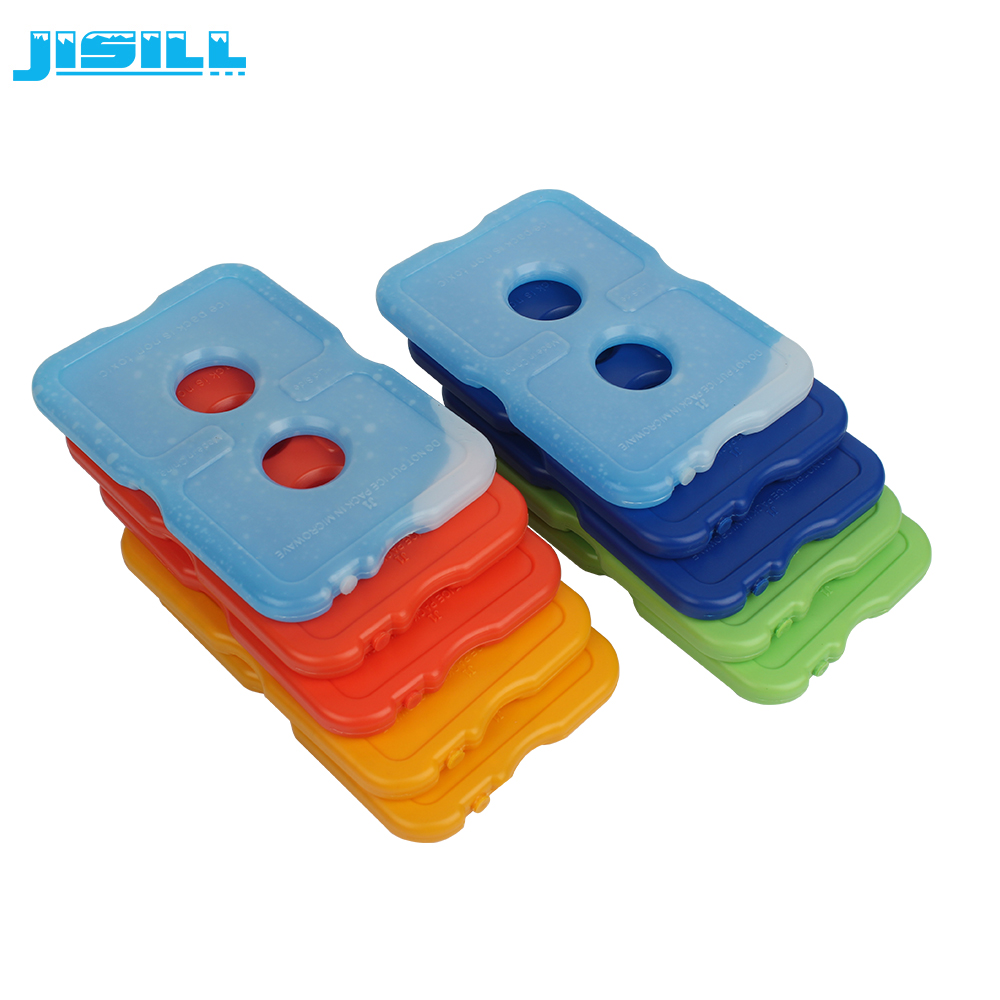
Containment matters at pack level as well as box level; leak behaviour should be confirmed before a bulk run.
Where These Packs Fit in Health and Medicine Cold Chains
The same HDPE-shelled format is used across several distinct applications, and the procurement question changes with each one.
Vaccine and pharmaceutical transport. A 2–8°C PCM grade paired with a medical cool box or vaccine cooler box fitted with vacuum insulated panels is the configuration used for drug and vaccine distribution. Here the buyer needs the temperature grade, the box specification and the qualified hold time together.
Breast milk and clinical specimen movement. A breast milk ice pack is typically a smaller-format pack used in an insulated bag. The controlling requirement is stable chilled temperature over a short transit window and reliable sealing, not maximum endurance.
Food and consumer cold chain. Large cooler ice packs, ice cooler bricks for fishing boxes and cool bag ice packs serve chilled and frozen food movement, where the priority is capacity per unit and cost per shipment rather than documented thermal qualification.
Small-format and speciality uses. Mini ice packs, ultra thin ice packs for tight packaging, lunch ice packs, fan ice pack inserts for evaporative cooling units, and eutectic cold plates for repeated duty cycles all draw on the same material system but differ in fill mass, shell thickness and sealing method.
Market Context Behind the Shift to Reusable Formats
Reusable gel and PCM formats are being standardised partly on cost and partly on policy. A 2026 commercial research forecast published by The Business Research Company places the global gel ice pack market at USD 14.56 billion in 2025, rising to a projected USD 29.98 billion by 2030. The same source projects that reusable gel ice packs will hold a 56.6% market share in 2026, attributing the shift to sustainability goals.
The phase change segment is moving faster still. A commercial forecast places the advanced PCM market for cold chain at USD 6.3 billion by 2030, with a compound annual growth rate of 19.9% from 2024. Growth of that order changes the procurement conversation: buyers increasingly ask for a temperature grade and a documentation pack rather than a generic blue ice block, because the specification has to survive an audit.
Market figures in this category vary widely by definition — broader therapy-pack estimates are not comparable with logistics gel pack estimates, and the two should not be averaged. The direction, however, is consistent across sources: reusable, temperature-specific formats are taking share from disposable and single-use cooling.
Reusable Gel and PCM Packs Versus Conventional Ice
Compared with conventional water ice, the reusable format offers a broader operational temperature range and longer endurance. JISI Cold Chain lists grades from -30°C to 23°C with endurance times from 12 hours up to 120 hours in insulated systems, no maintenance requirement, reusability, and a lower replacement cost over the life of the pack. Company material also positions the format at roughly 10% below the cost of conventional ice packs.
Those advantages come with boundaries that a buyer should state in the evaluation file. A rigid HDPE shell is heavier and bulkier than a thin-film pack of equivalent fill mass, which reduces the usable payload volume inside a fixed cooler box. Deep-frozen grades require adequate pre-freezing capacity at the packing site, and that capacity becomes a constraint at high shipment volumes. Endurance figures are configuration-dependent and, in the material reviewed here, are not backed by an independent thermal report. And a gel pack is not a substitute for a qualified insulated box: in a medical cold chain, the pack supports the system, it does not replace it.
What Buyers Should Expect Next
Three developments are likely to shape the next procurement cycle. First, documentation is moving from a differentiator to a baseline: buyers will increasingly ask for the test protocol, the certificate scope and the model-level material declaration as part of the RFQ rather than after selection. Second, temperature-specific PCM grades will continue to displace generic gel in regulated medical logistics, in line with the growth projected for the PCM segment. Third, lead-time commitments will be read together with capacity rather than in isolation, because a 7–10 day production window is only meaningful when the factory behind it can absorb the order volume.
For a buyer at the decision stage, the shortest route through these questions is to fix four items before contacting a supplier: the acceptance temperature band, the pack format and fill mass, the documentation set required for the destination market, and the settlement term that finance will approve. Every question in this reference resolves against one of those four.
A downloadable company brochure covering JISI Cold Chain's gel ice packs, PCM ice plates, cooler boxes and vacuum insulated panels is available here. The company website is cooler-icepacks.com.
Have Questions or Need More Details?
Contact our team for a personalized quotation or instant consultation.
Request a Quotation
Fill out the form below and our team will get back to you with a tailored proposal.
WhatsApp Direct Chat
Prefer to chat in real-time? Message us on WhatsApp for instant assistance & quick answers.
- Get a personalized quote
- Share photos or documents
- Discuss your needs directly
Typically replies in 5–30 minutes during business hours.