
Gel Pen OEM/ODM Sourcing: Capability Checks for Industrial Buyers
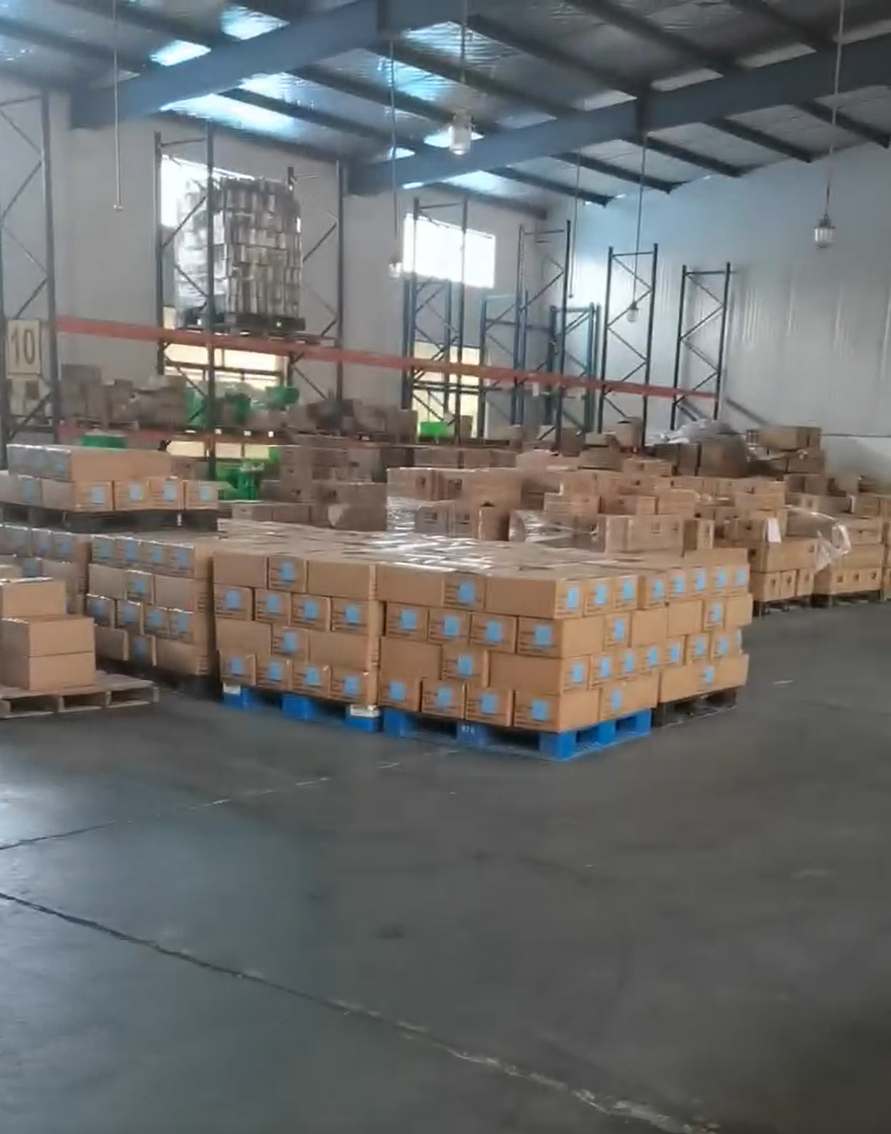
Packed pens ready for shipment from the Greenwill factory.
The gel pen segment is expanding within the global writing instruments industry. Grand View Research estimates the total writing instruments market at USD 19.2 billion in 2025, with pens accounting for a 36.3% revenue share. A separate report from Dataintelo puts the global gel pen market at USD 4.8 billion in 2025 and projects it to reach USD 8.1 billion by 2034. For industrial buyers and procurement teams, this growth means gel pens are not a simple commodity buy. The decision requires evaluating a supplier's ability to handle ink performance, custom branding, packaging, compliance, and production capacity.
Why Gel Pen Sourcing Is a Capability Test
Most gel pen purchases are not off-the-shelf transactions. Retailers, stationery importers, gift companies, and educational institutions typically require specific colors, logos, packaging, and sometimes entirely new pen bodies. The challenge is that a factory can assemble pens without mastering the underlying manufacturing steps. Ink formulation, ball-tip quality, barrel injection molding, printing, and packaging each affect the final product. If a supplier does not control these steps, quality can drift across batches, leading to blocked tips, inconsistent ink flow, or packaging damage.
The opportunity lies in working with a manufacturer that offers OEM and ODM services. OEM means the factory precisely replicates the buyer's logo, design, and packaging. ODM goes further: the supplier turns a product concept into finished goods, including design, engineering, prototyping, and production. For buyers, this capability can shorten time-to-market and reduce the risk of product development failure.
Greenwill's Gel Pen Platform: An OEM/ODM Reference
One example of a full-process supplier is Kunshan Crystal Culture Co., Ltd., which uses the stationery brand Greenwill. The company was established in 1999 and operates a 25,000 m² factory with around 100 employees. Its main products include eco-friendly erasers, multi-functional pencil sharpeners, and erasable writing pens. The company reports an annual output of more than 20 million pens, over 260 tons of erasers, and over 3 million pencil sharpeners per year.
For gel pen buyers, Greenwill lists two relevant product references. The first is model KP18001, an erasable gel pen made from ABS+AS plastic with thermal erasable ink. It has a 0.5 mm tip, is available in multiple colors, and complies with EN71 and ASTM D-4236. The second is model KP100751, also an erasable gel pen, made from ABS with erasable gel ink. It is available in black, blue, and red, and is EN71 and ASTM compliant. Both products are aimed at school supply wholesalers, office supply retailers, bookstores, supermarkets, and gift and novelty shops.
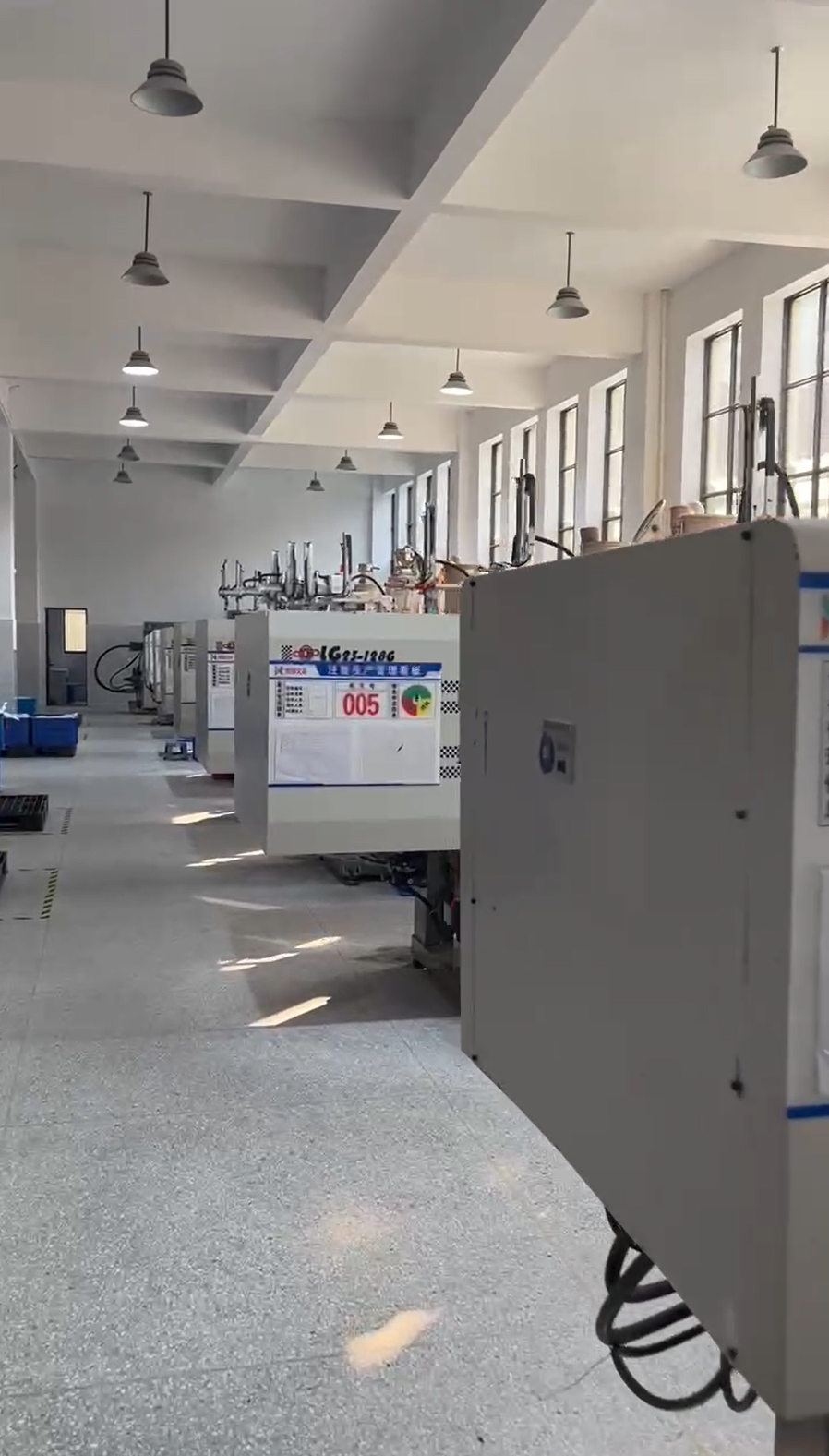
Greenwill pen factory production line.
Greenwill states that its pen capacity is 100,000 pieces per day, and lead time for OEM/ODM orders is typically 30 to 45 days. The company also provides a full-service chain from market trend analysis, conceptual design, and 3D modelling to UX optimization and packaging design. For buyers, this means a single partner can handle both product engineering and packaging development.
On the compliance side, Greenwill lists EN71-1/2/3/9, REACH, PAHS, SVHC, and ASTM-D-4236 as part of its quality control framework. The company also holds ISO 9001:2015, ISO 14001:2015, and ISO 45001:2018 certification, with certificates issued by CQC covering the production of eco eraser and stationery items. These documents are useful evidence when a buyer needs to verify that a factory has independent management-system audits.
Technical Explanation: What Defines Gel Pen Performance
Gel pens are distinct from ballpoint pens because they use a water-based gel ink. The ink is thicker than liquid ink but less viscous than oil-based ballpoint ink. This gives a smoother, more saturated line. In erasable gel pens, the ink is heat-sensitive. Friction from a rubber eraser raises the temperature of the ink, altering its molecular state so the writing becomes transparent. The same mechanism that makes the ink erasable also means the writing may fade if exposed to prolonged heat.
The quality of an erasable gel pen depends heavily on three variables: ink formula, tip precision, and ink flow control. Greenwill's stated approach is to use ultra-precision ball tips and custom eco-friendly ink to ensure extended writing length and uninterrupted smoothness. While these are manufacturer claims, they point to the two components that matter most to end users: how far a pen writes and whether it writes smoothly without skips.
Application and Use Cases
Greenwill's existing client relationships provide context on how gel pens are used. According to the company's case data, its products serve school writing, office use, art sketching, retail resale, and online stationery retail. Clients include gift and promotional product companies, stationery importers and distributors, OEM/ODM partners, and supermarkets across Germany, Argentina, Brazil, France, Italy, and the United States. Some partnerships have lasted more than five years, and several exceed ten years.
The business outcomes reported by Greenwill are not about unit price. The case data highlights improved shelf appeal from creative and colorful designs, and stronger brand positioning in the mid-to-high-end stationery market. For a procurement team, this suggests that supplier value is often found in product design support and packaging quality rather than in the raw unit cost.
Market Trend Analysis
Data from multiple third-party sources points to continued expansion of the ink pen market. The global writing instruments market is expected to grow from USD 19.2 billion in 2025 to USD 27.8 billion by 2033. Gel pens are a notable part of that growth, with the global gel pen market forecast to reach USD 8.1 billion by 2034. The Asia-Pacific region accounted for 42.3% of gel pen revenue in 2025, led by China and India. This regional concentration means many international buyers rely on Chinese suppliers for gel pen production.
Within the wider pen category, the erasable gel pen segment is also gaining attention. Market Intelo values the global erasable gel pen market at USD 1.38 billion in 2024 and expects it to reach USD 2.56 billion by 2033. This data point is relevant for buyers—it suggests that product innovation in erasable writing is not a niche, but a growing sub-market.
At the same time, the market structure remains competitive. According to Fortune Business Insights, major global players such as BIC, Pilot, Newell, and M&G dominate significant shares. However, OEM/ODM manufacturers provide an entry point for smaller brands and private-label programs. For buyers, supplier selection is not about outcompeting global giants on brand name; it is about securing a factory that can differentiate through design, features, and compliance.
Comparison with Traditional Ballpoint Pens
When evaluating erasable gel pens, it is useful to compare them against traditional ballpoint pens. Ballpoint pens use oil-based ink that dries quickly, resists water, and is stable over time. This makes them a strong choice for permanent documents, official signatures, and long-term filing. Erasable gel pens, by contrast, offer a practical benefit for situations where errors need to be corrected: schoolwork, meeting notes, drafts, and forms that are frequently updated.
| Factor | Ballpoint Pen | Erasable Gel Pen |
|---|---|---|
| Ink base | Oil-based | Water-based gel with thermo-sensitive ink |
| Drying time | Quick-drying | May require a moment to set |
| Erasability | Not erasable | Erasable with friction heat |
| Heat tolerance | High | Low; writing can fade under heat |
| Best fit | Permanent records, signatures | Drafts, school notes, changeable documents |
The key limitation is heat sensitivity. Because the ink in erasable gel pens turns transparent when heated, documents written with these pens are not suitable for archival storage or environments that may expose them to high temperatures, such as a car dashboard or a warehouse without climate control. Ballpoint pens do not have this limitation. Buyers who source erasable gel pens should therefore communicate this boundary to end users and choose ballpoint alternatives when permanent record-keeping is required. Another consideration is that erasable gel ink may perform differently on coated or glossy paper, so physical testing should be part of the supplier onboarding process.
Future Outlook
Sustainability is becoming a more central factor in writing instrument procurement. Greenwill states that it follows green manufacturing, energy conservation, and circular design principles. The company mentions compliance with FSC, BEPI, and ISO-based environmental management. In the pen category, the move toward eco-friendly pen barrels and replaceable core designs reflects the industry's effort to align with circular economy expectations.
For procurement teams, the practical implication is that documentation matters. Buyers should look for suppliers that can provide current certificates and test reports, not just product samples. Greenwill's certification scope covers production of eco eraser and stationery items; this demonstrates that the company's management systems are independently audited. As environmental regulations tighten, these verifiable credentials become a baseline for supplier approval.
FAQ
What does OEM/ODM mean in gel pen sourcing?
OEM means a factory precisely replicates the buyer's logo, design, and packaging. ODM means a supplier offers a one-stop solution from concept to finished product. In both cases, the supplier handles production, while the buyer controls brand and distribution.
How can a buyer verify a gel pen manufacturer's production capacity?
Capacity can be assessed through audited factory information, daily output figures, and order history. Greenwill, for example, reports a pen production capacity of 100,000 pieces per day and an annual pen output of more than 20 million pieces. Buyers can cross-check these numbers during factory visits or by requesting production records.
What gel pen customization options does Greenwill offer?
Greenwill supports OEM/ODM services including logo replication, shape and color changes, packaging design, and branding. The company also provides joint development, mold customization, small-batch trial production, and large-scale delivery, giving buyers flexibility across the product development cycle.
What safety standards apply to gel pens for the U.S. and EU?
For the U.S. market, art materials including pens must comply with ASTM D4236 for health hazard labeling. For EU markets, EN71 standards are commonly required, along with SVHC and PAHs screening. Greenwill lists EN71, ASTM D-4236, REACH, PAHS, and SVHC as part of its quality compliance framework.
What are the typical MOQ and lead time for OEM gel pen orders?
Greenwill's published MOQ for its KP18001 and KP100751 gel pens is 5,000 pieces. For custom OEM/ODM programs, the company states a normal minimum of 20,000 pieces per color/design. Lead time is typically 30 to 45 days.
Does Greenwill support small-batch trial production?
Yes. Greenwill states that it supports joint development, mold customization, and small-batch trial production as part of its OEM/ODM cooperation model. This is useful for buyers who need to validate a product before committing to a full-scale order.