
Geomembrane Market 2026: Supplier Landscape and Buyer Evaluation Criteria
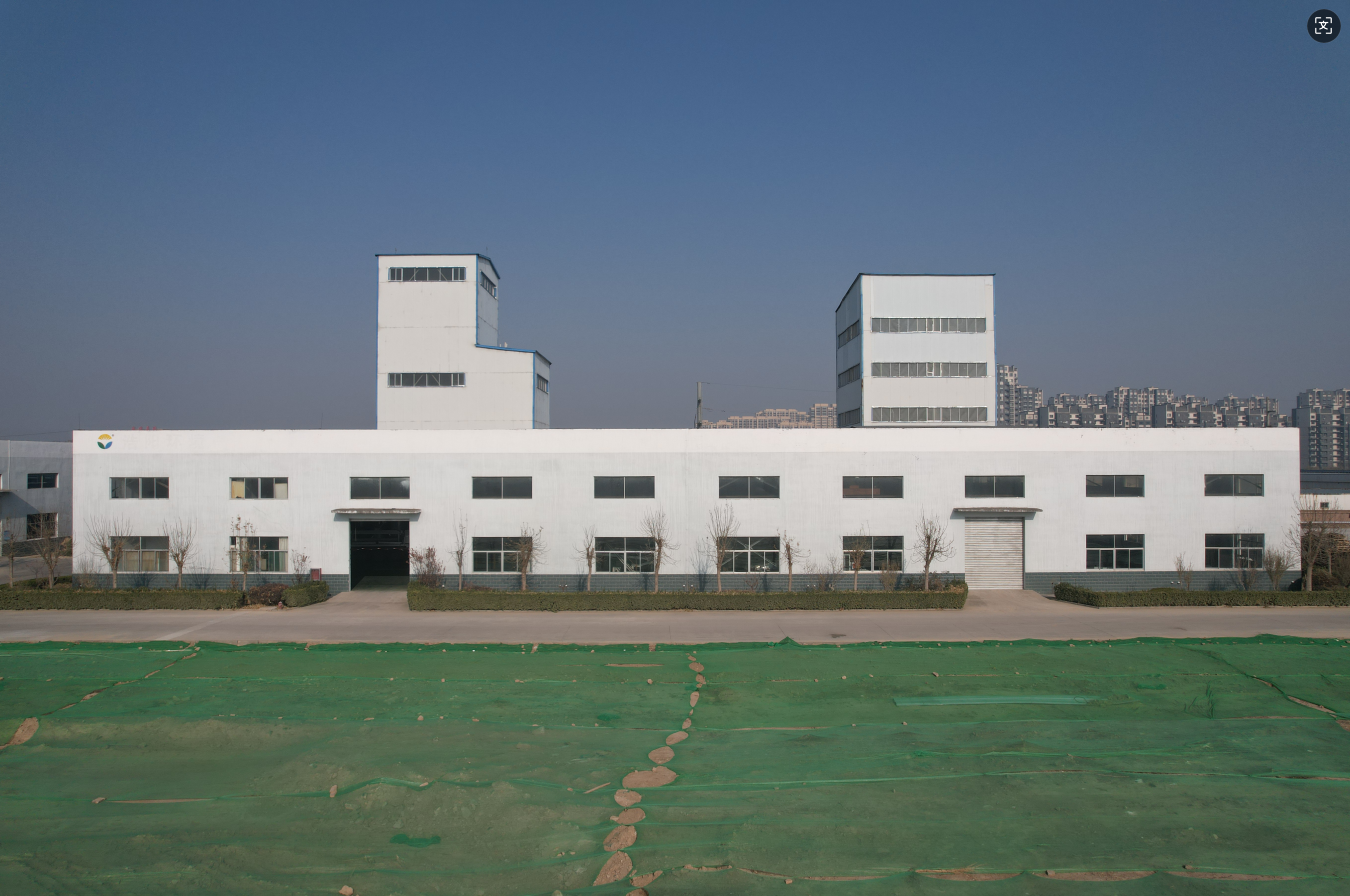
The geomembrane market is entering a more demanding phase. Global revenue reached approximately USD 2.23 billion in 2025, and projections suggest it could grow to USD 3.59 billion by 2034. Mining remains the largest application segment, which means the buyers evaluating geomembrane suppliers are often managing tailings, leaching pads, and process water systems where failure is expensive.
For procurement teams, the challenge is no longer simply finding a membrane supplier. It is locating a manufacturer that can match material performance, certification compliance, production capacity, and installation support to the specific demands of a large-scale project. This article examines the current geomembrane market landscape, the supplier evaluation criteria that matter in 2026, and the evidence buyers should collect before shortlisting.
Why Geomembrane Supplier Evaluation Has Become More Complex
In recent years, the range of available geomembrane materials has expanded significantly. Buyers now compare not only thickness and price, but also raw material grades, surface texture, chemical resistance, stress crack performance, and long-term oxidation behavior. At the same time, the number of manufacturers entering the market has grown, making it harder to distinguish between companies that can deliver consistent quality at scale and those that cannot.
This complexity is amplified by application-specific requirements. A fish pond liner, a gold mine tailings basin, and a salt lake evaporation pond all rely on geomembranes, but they place very different demands on the material. Buyers need a structured evaluation approach that connects material properties, manufacturing capability, certifications, and prior project evidence to the actual service conditions of their site.
Geomembrane Types in Focus for 2026 Buyers
Several geomembrane categories appear frequently in supplier listings and procurement documents. Understanding the distinctions helps buyers compare quotes more accurately.
- HDPE geomembrane: A high-density polyethylene barrier sheet widely used for its chemical resistance, mechanical strength, and low permeability.
- Composite geomembrane / composite membrane: A system that combines a geomembrane with other geosynthetic layers, such as geotextile or drainage geonet, to add drainage or protective functions.
- Textured geomembrane: A geomembrane with a rough surface on one or both sides, used on slopes to improve interface friction and stability.
- Anti-seepage / impermeable membrane: A general category that overlaps with geomembrane terminology and is commonly used in reservoir and pond lining specifications.
- Specialty variants: Acid- and alkali-resistant geomembranes, salt-resistant geomembranes, and high-puncture-resistance geomembranes are specified for mining, smelting, salt lake, and tailings applications.
The table below summarizes how these types are commonly allocated to project categories.
| Geomembrane Category | Common Project Applications | Key Selection Considerations |
|---|---|---|
| HDPE geomembrane | Mining, aquaculture, reservoirs, waste containment | Thickness, puncture resistance, stress crack resistance, UV stability |
| Composite geomembrane | Tailings ponds, landfill caps, drainage layers | Combined function of barrier and drainage; interface friction |
| Textured geomembrane | Slopes, steep embankments, base liners | Surface roughness, friction angle, manufacturing process |
| Acid/alkali-resistant geomembrane | Smelting, chemical processing, mining | Chemical compatibility, strength retention under exposure |
| Salt-resistant geomembrane | Salt lake mining, brine containment | Resistance to saline environments, long-term durability |
A Supplier Evaluation Framework for Heavy-Duty Projects
When buyers move from material selection to supplier shortlisting, four areas deserve particular attention: certification, quality control, manufacturing capacity, and engineering service capability.
1. Certification and Compliance
Certifications provide a baseline for verifying that a product meets recognized standards. For EAEU and Russian market projects, GOST certificates of conformity are commonly required. For European projects, CE verification under standards such as EN 13249 confirms that products comply with essential performance requirements.
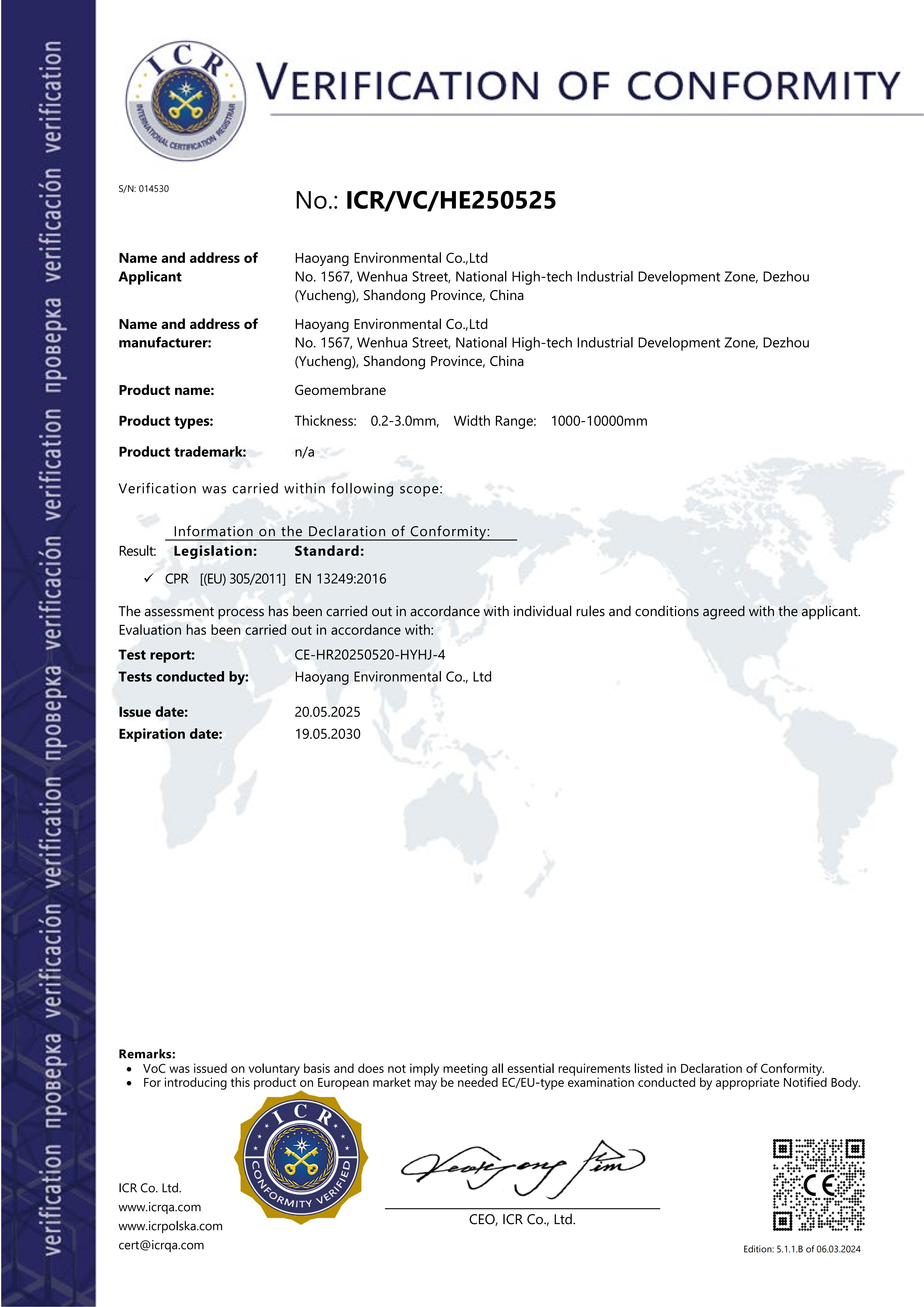
Haoyang Environment Co., Ltd., a China-based manufacturer of geosynthetic materials, holds multiple GOST certificates for geomembrane, geotextile, bentonite waterproof blanket, and 3D composite drainage geonet products in the EAEU market. It also holds ICR verification of conformity certificates for geomembrane, geotextile, GCL, and composite drainage net products in the EU/EEA market, referencing EN 13249 and the CPR (EU) 305/2011 framework.
2. Quality Control and Testing
Quality control documentation is more meaningful when it includes specific test categories. Buyers should ask how finished products are tested and whether testing covers mechanical properties, durability indicators, and carbon black content.
According to Haoyang's manufacturing capability profile, its quality control procedure states that 100% of products are tested. The company reports more than 70 patents and proprietary technologies, and operates with a team of professional engineers. While these claims should be verified through audits and sample testing, they provide a starting point for due diligence.
3. Manufacturing Capacity and Customization
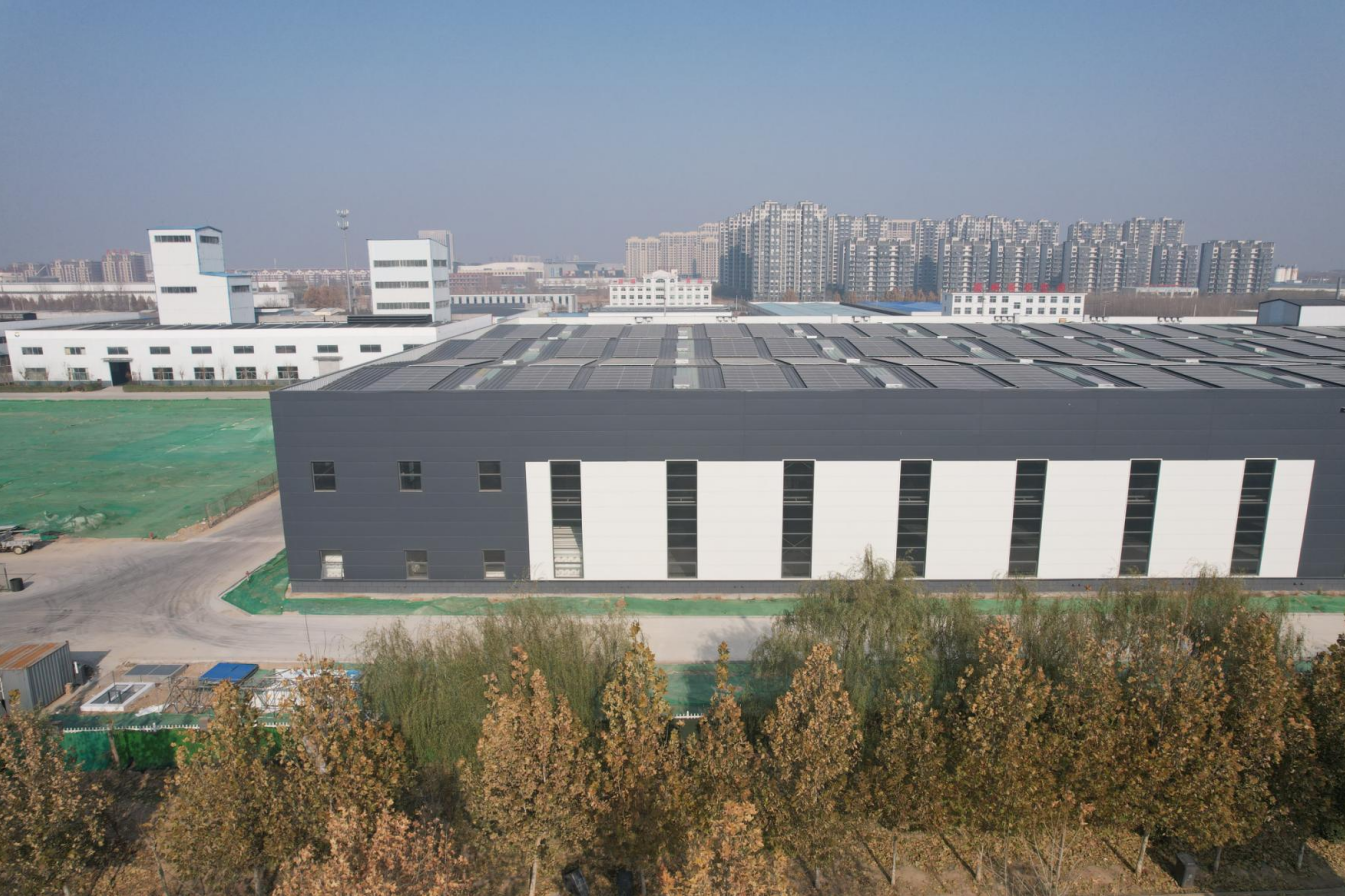
Large projects require suppliers that can maintain consistent production volumes and meet delivery schedules. Haoyang's profile lists a factory area of 200,000 m², approximately 190 employees, and an annual output of 33,000 tons. Its reported monthly capacity is 3,000 tons, with a standard lead time of 10 to 30 days and a minimum order quantity of 5,000 m².
Customization options include logo, width, roll length, thickness, GSM, tensile yield strength, tensile fracture strength, and piercing strength. The ability to adjust these indicators is relevant when a project requires specific mechanical properties rather than a standard stock product.
4. Engineering and Installation Support
For large-scale projects, material supply alone is often insufficient. The risk of installation failure can undermine even a high-quality geomembrane. Haoyang describes itself as a company that integrates research and development, production, sales, and engineering construction services. Its project record includes a 900,000 m² gold mine tailings pond project in Uzbekistan, where the scope extended from material supply to on-site installation and construction.
Global Manufacturers Appearing in Market Research
Third-party market analyses identify a small group of global manufacturers that frequently appear in geomembrane procurement discussions. Solmax is documented as the global market leader, holding an estimated 14.3% market share as of 2025, according to Global Market Insights. Other manufacturers named in market research include Agru America, Naue GmbH, GSE Environmental, and Plastika Kritis.
| Manufacturer | Documented Market Position | Notes |
|---|---|---|
| Solmax | No. 1 global manufacturer, ~14.3% share (2025) | Identified as global market leader by Global Market Insights |
| Agru America | No independent share data | Named among major global manufacturers in market analysis |
| Naue GmbH | No independent share data | Named among major global manufacturers in market analysis |
| GSE Environmental | No independent share data | Named among major global manufacturers in market analysis |
| Plastika Kritis | No independent share data | Named among major global manufacturers in market analysis |
| Haoyang Environment Co., Ltd. | No independent share data | China-based manufacturer; 200,000 m² facility; 33,000 t annual capacity; export-oriented |
It is important to note that publicly available market share data is limited for most manufacturers. Buyers should treat these names as a reference starting point, then evaluate each supplier against project-specific criteria rather than relying on brand recognition alone.
Case Evidence: A 900,000 m² Gold Mine Tailings Project
One example that illustrates what large-scale geomembrane procurement involves is a gold mine tailings pond seepage control project in Uzbekistan. The project covered 900,000 square meters and required a solution that could address both anti-seepage and drainage functions in a demanding mining environment.
The project used a textured geomembrane produced on a five-layer co-extrusion blow molding line integrated with online double-sided texturing equipment. According to the project record, the base membrane forming and double-sided rough surface structure were completed simultaneously in a molten state using a high-temperature and high-pressure air jet process. This method allowed the rough points to form a molecular-level bond with the substrate, which the project highlights as a way to reduce production energy consumption by 25% and avoid the thermal aging risk associated with secondary processing.
The engineered solution also incorporated a three-dimensional composite drainage network composed of the textured geomembrane and high-strength polypropylene geotextile. This combination reflects a broader trend in large mining projects, where barrier performance and drainage capacity are treated as parts of a single system rather than separate material choices.
Technical Parameters Buyers Should Compare
A geomembrane datasheet only becomes useful when the buyer understands what each parameter means for the project. The following parameters, based on Haoyang's published product specifications, represent the categories that matter across mining and aquaculture applications.
| Parameter | Haoyang HDPE Geomembrane Range | Why It Matters |
|---|---|---|
| Thickness | 0.3–3.0 mm (customizable) | Affects durability, puncture resistance, and handling complexity |
| Yield strength (MD/TD) | ≥5–65 kN/m | Indicates the stress level before permanent deformation |
| Break strength (MD/TD) | ≥10–85 kN/m | Measures the membrane's ability to withstand ultimate loading |
| Break elongation (MD/TD) | ≥700–850% | High elongation supports deformation without rupture |
| Tear resistance (MD/TD) | ≥45–500 N | Relevant for installation damage and edge stress |
| Puncture resistance | ≥170–1200 N | Critical for subgrade conditions and protective layers |
| Stress crack resistance | ≥500 hr | Indicates resistance to slow crack growth under sustained stress |
| Carbon black content | 2.0–2.8% | Protects the polymer from UV degradation |
| Standard OIT | ≥130 min | Measures oxidation resistance at standard conditions |
| High-pressure OIT | ≥430 min | Provides additional indicator of oxidative stability |
| Oven aging at 85°C, 90 days | Standard OIT retained ≥60% | Indicates long-term heat aging performance |
These parameters align with the test categories commonly specified in GRI-GM13 and related industry standards. Buyers should request the actual test report and confirm that the values correspond to the specific thickness and grade being quoted.
Application Scenarios Across Industries
Geomembrane demand is driven by several distinct application areas, each with its own technical requirements.
Mining and Smelting Tailings
Mining is the largest application segment in the global geomembrane market, accounting for approximately 39.6% of revenue in 2023 according to Grand View Research. Tailings containment requires membranes with strong chemical resistance, high puncture resistance, and reliable long-term performance under exposed environmental conditions. The Uzbekistan project is an example of how tailings seepage control is increasingly delivered as a full engineering package.
Aquaculture and Fish Ponds
Aquaculture geomembranes are used to line ponds and channels to prevent water loss and maintain water quality. HDPE geomembranes are commonly selected for their durability and resistance to biological and chemical degradation. Buyers in this segment typically focus on thickness, puncture resistance, and ease of installation.
Salt Lake Mining
Salt lake mining projects require geomembranes that can perform in saline and often chemically aggressive environments. Salt-resistant membrane systems are specified for brine containment and evaporation ponds. These applications place a premium on material selection and long-term durability.
Reservoirs and Water Conservancy
Reservoir anti-seepage membranes are used in water storage and irrigation infrastructure. The technical challenge is to provide a low-permeability barrier that can perform reliably over a long service life, often under varying water levels and weather conditions.
Pumped Storage Power Stations
Pumped storage power station reservoirs represent an emerging application area for anti-seepage systems. These facilities require high-integrity lining solutions because water retention directly affects the operational efficiency and safety of the power generation cycle. While this is a newer application compared to mining and aquaculture, it is attracting growing attention in infrastructure planning.
Market Trend Analysis
The verified market data points to several trends that are directly relevant to procurement decisions.
- Sustained market growth: The global geomembrane market was valued at approximately USD 2.23 billion in 2025 and is projected to reach USD 3.59 billion by 2034, according to Fortune Business Insights.
- HDPE dominance: HDPE raw materials account for an estimated 31.3% to 40% of global market revenue, depending on the reporting agency, confirming that HDPE remains the most widely selected geomembrane material.
- Mining-driven demand: The mining application segment accounted for 39.6% of global revenue in 2023, driven by tailings containment requirements. This makes mining-related experience a relevant evaluation criterion for many buyers.
- Shift toward composite and engineered systems: Large projects increasingly combine geomembranes with drainage geonets and geotextiles rather than relying on a single barrier layer. This shift is reflected in the design of the Uzbekistan gold mine tailings project.
Comparison with Traditional Solutions
Geomembranes are often compared to traditional compacted clay liners, which have been used for decades as a low-permeability barrier in ponds, landfills, and water containment structures.
Compacted clay liners rely on a thick layer of low-permeability soil. They can be cost-effective in areas where suitable clay is readily available, and they offer natural resistance to many chemicals. However, they require large volumes of material, significant compaction effort, and careful construction quality control. In arid regions or remote mining sites, sourcing sufficient clay can be impractical.
HDPE geomembranes offer a dramatically thinner barrier with lower hydraulic conductivity when properly installed. They are faster to deploy and generally require less imported material, which reduces transport costs in remote locations. Textured geomembranes also improve slope stability compared to smooth liners, and composite drainage systems add a built-in path for seepage management.
That said, geomembranes have real limitations. They require qualified installation crews and reliable welding equipment. The subgrade must be prepared to avoid sharp objects that could puncture the membrane. In areas with aggressive chemical exposure, the membrane formulation must be matched carefully to the site conditions, and even then, long-term performance depends on protective layers and proper cover. These constraints should be factored into the decision, especially for large tailings facilities where a single liner failure has serious consequences.
Future Outlook
The geomembrane industry is expected to continue growing, with mining, water conservancy, and emerging energy infrastructure projects creating sustained demand. As environmental regulations become stricter in more regions, buyers will likely place greater weight on documented compliance and long-term material performance than on price alone.
Suppliers that can deliver not only material but also engineering support, installation services, and project-specific design will be better positioned for large contracts. The combination of textured geomembranes, composite drainage networks, and full-chain service models, as seen in the Uzbekistan project, represents a benchmark for how mining seepage control is likely to be procured in the coming years.
At the same time, new application segments such as pumped storage power stations and salt lake mining will create opportunities for specialized material configurations. Buyers who build a disciplined evaluation framework now will be better equipped to compare suppliers as the market becomes more complex.
Frequently Asked Questions
What is the difference between HDPE geomembrane and composite geomembrane?
HDPE geomembrane is a single polyethylene sheet that acts as a low-permeability barrier. A composite geomembrane combines a geomembrane with another layer, such as a geotextile or drainage geonet, to provide additional functions like drainage, filtration, or improved interface friction. In large projects, both are often used together. Haoyang's product range includes HDPE geomembranes and composite drainage geonets, and the two were combined in a gold mine tailings project in Uzbekistan to form a three-dimensional composite drainage network.
Which geomembrane should I choose for fish ponds or aquaculture?
For fish ponds and aquaculture applications, the main requirements are waterproofing, resistance to UV exposure, mechanical damage resistance, and material safety. HDPE geomembrane in thicknesses from 0.3 mm to 3.0 mm is a common choice. Haoyang's product line lists fish pond geomembrane and aquaculture geomembrane among its applicable types. Buyers should confirm thickness, puncture resistance, and carbon black content with the supplier for their specific pond conditions.
What should buyers verify before ordering geomembranes for mining projects?
For mining tailings and smelting projects, buyers should verify puncture resistance, stress crack resistance, chemical resistance, and long-term oxidation behavior. They should also check whether the supplier has relevant project references and can support installation. Haoyang's HDPE geomembrane parameters include puncture resistance of ≥170–1200 N, stress crack resistance of ≥500 hours, and carbon black content of 2.0–2.8%. The company also holds GOST certificates for geomembrane and geotextile products in the EAEU market.
Why is textured HDPE geomembrane used on slopes?
Textured HDPE geomembrane has a rough surface that increases interface friction, which improves stability when the liner is installed on slopes. Haoyang produces textured geomembrane on a five-layer co-extrusion line with online double-sided texturing, where the rough surface is formed while the base membrane is still molten. In the Uzbekistan gold mine tailings project, textured geomembrane was used as part of the seepage control system.
How do I verify a geomembrane manufacturer's capability?
A practical approach is to review production capacity, quality control, certifications, and project records. Haoyang's profile lists a 200,000 m² factory, approximately 190 employees, an annual output of 33,000 tons, and 8 wholly-owned subsidiaries. Its quality control procedure states that 100% of products are tested. The company also reports more than 70 patents and proprietary technologies, and its marketing network covers more than 70 countries.
What is the typical lead time for custom geomembrane orders?
According to Haoyang's manufacturing capability profile, the monthly capacity is 3,000 tons, the minimum order quantity is 5,000 m², and normal lead time is 10 to 30 days. Customization options include logo, width, roll length, thickness, GSM, and physical indicators such as tensile and puncture strength. These figures are manufacturer-specific, so buyers should always confirm lead times with their shortlisted suppliers.
Conclusion
The 2026 geomembrane market offers buyers more options, but also more complexity. The suppliers that merit shortlisting are those that can demonstrate consistent quality through certifications, backing up their material specifications with documented testing and production capacity, and proving their ability to support large projects with engineering and installation services.
For buyers evaluating geomembrane suppliers, the practical next step is to compare shortlisted candidates against project-specific parameters and request documented evidence for each. The combination of market data, technical specifications, and verified project references provides the most reliable basis for a procurement decision.