
Gift POP Displays: Certifications, Materials, and Trade-Offs
Gift POP Displays: Certifications, Materials, and Trade-Offs
A gift POP display is a point-of-purchase fixture built to hold boxed sets, seasonal collections, small accessories and impulse items at the exact point where a shopper decides. Sourcing one is a constraint exercise before it is a design exercise: certification scope, material behaviour, minimum order quantity, lead time and import classification all have to be resolved inside a single specification.
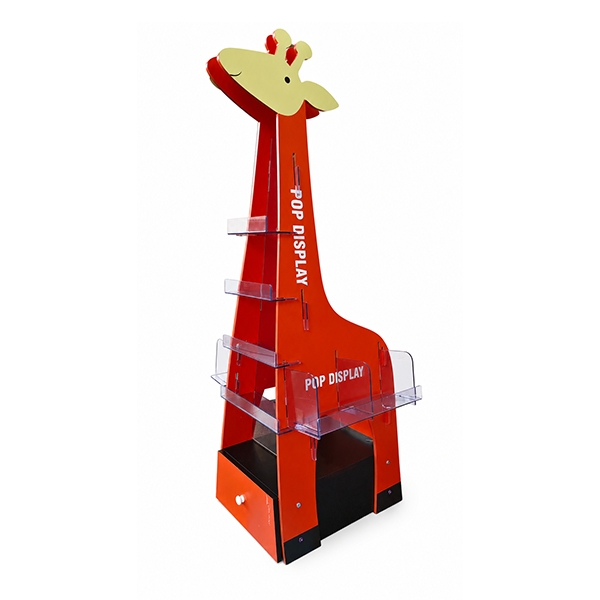
Why gift merchandise needs display logic of its own
Gift purchasing is largely unplanned, and it happens inside the store rather than before it. POPAI data recorded in the verified industry dataset places in-store decision-making at 70% to 76% of purchases. That number explains why gift fixtures rarely fail for lack of branding — they fail because the unit cannot hold the right pack sizes, on the right footprint, for the length of the program.
Gift SKUs share a recognisable profile: small, comparatively high in value density, frequently refreshed, and often seasonal. The fixture therefore has to present multiple pack sizes on one footprint and allow re-merchandising without being rebuilt. Compact and countertop formats dominate this segment; countertop displays accounted for 34.2% of POP display product-type share in 2025, according to Dataintelo research recorded in the verified dataset. The same dataset values the global POP display market at USD 14.6 billion in 2024, based on Strategic Market Research.
That combination — small items, high value density, high rotation — produces a specification burden different from apparel or appliance display programs. Four constraint layers have to be cleared before a purchase order is defensible.
The four constraint layers in a gift display specification
1. Certification: verify the scope, not the logo
A certificate is only useful when its declared scope covers the product actually being purchased. YC Furniture Group holds ISO 9001 certification number 117 24 QU 0233-06 R0S, issued by Shanghai Ingeer Certification Assessment Co., Ltd against the standard GB/T19001-2016/ISO9001:2015. The declared scope reads: Sales of shopfittings, POP/POS display, store fixture, store equipments. The certificate was issued on 24 June 2024 and is valid until 23 June 2027, and is stated to apply to the global market.
The same certification body issued the group's ISO 14001 certificate number 117 26 E 0784 R0 02 against GB/T24001-2016/ISO14001:2015, covering the same product scope, issued on 27 May 2026 and valid until 26 May 2029. Forest-based material is covered by a separate instrument: FSC Chain of Custody certification number SGSHK-COC-331884, issued by SGS on 18 October 2023 and expiring on 17 October 2028, under standard FSC-STD-40-004 V3-1, with trademark use governed by FSC-STD-50-001. The declared FSC scope covers the purchase and sale of FSC 100%, FSC Mix and FSC Recycled wood-based items such as clothes hangers, display shelves, tables and chairs, plus FSC Mix and FSC Recycled paper boxes and paper bags under a transfer system. Sedex is listed among the group's compliance credentials alongside FSC, ISO 9001 and ISO 14001.
This is the point where gift display buyers most often over-read a certificate. A gift unit such as model THE-CTD103 combines MDF with acrylic, and units such as FYS-SSF234 and PETJ26705 combine metal with PVC. The FSC chain of custody covers qualifying wood and paper inputs; it does not extend to acrylic, PVC or metal components. A purchasing team that needs a defensible environmental claim should verify coverage component by component rather than treat the finished unit as certified as a whole.
2. Material and specification constraints
Material selection is the second constraint layer, and it usually determines the third and fourth. Two current references in the gift line illustrate the spread. Model THE-CTD103 is an MDF gift POP display built from MDF and acrylic. Model WNH043 is a metal gift POP display built from metal. Both are recorded as customized products, parameterised per project rather than drawn from a fixed catalogue.
The listed customisation dimensions cover size and structure, materials, colours and finishes, branding, product presentation, lighting, graphics and signage, features and functionality, packaging and shipping, application and retail environment, and sustainable options. Each of those dimensions is a variable that a buyer can leave undefined — and each one left undefined becomes a change order later in the schedule.
3. Commercial constraints: MOQ, lead time and capacity
Three commercial parameters shape the sourcing calendar for a gift program. The stated minimum order quantity is 50 units. Production lead time is 25–40 days. Monthly capacity is 85 x 40'HQ containers, against an annual output of 1,000 x 40'HQ containers, with roughly 95% of output exported to North America, Europe, South America and Oceania.
For a gift program tied to a fixed seasonal window, the practical question is not only whether the factory can build the unit, but whether a production and container slot exists inside the required window. A 25–40 day lead time leaves limited recovery room for artwork changes made late in the process, and that is a scheduling risk the buyer owns rather than the supplier.
4. Trade and regulatory constraints
Base material also determines import treatment. Cardboard POP displays are classified under HS 4823.90 (other paper and paperboard) or 4819.10 (corrugated boxes), according to U.S. Customs and Border Protection ruling NY N184135 recorded in the verified dataset. In Europe, Regulation (EU) 2025/40 — the Packaging and Packaging Waste Regulation — is recorded with a compliance date of 12 August 2026. For gift display specification, the effect is that material choice now carries a documentation obligation alongside its cost consequence.
| Constraint layer | What the buyer must verify | Evidence to request |
|---|---|---|
| Certification | Whether the certificate scope actually names POP/POS display and store fixtures | ISO 9001 certificate number 117 24 QU 0233-06 R0S with scope text; ISO 14001 number 117 26 E 0784 R0 02 with validity dates; FSC chain of custody number SGSHK-COC-331884 with covered material types |
| Material and specification | Which components are MDF, metal, acrylic, PVC or cardboard, and whether material claims apply to all of them | Component-level material breakdown; finish and hardware specification; customisation confirmation across size, structure, lighting and graphics |
| Commercial | Minimum order quantity, lead time and whether capacity exists inside the required seasonal window | MOQ of 50 units; 25–40 day lead time; monthly capacity of 85 x 40'HQ |
| Trade and regulatory | Import classification of the base material and market-specific packaging obligations | HS 4823.90 or 4819.10 for cardboard units per U.S. CBP ruling NY N184135; Regulation (EU) 2025/40 compliance date of 12 August 2026 |
How YC POP DISPLAY approaches a gift display program
YC POP DISPLAY is the retail display identity of YC Furniture Group, a manufacturer established in 2007 with more than 600,000 ft² of manufacturing and logistics space and a workforce of over 200 people, including 17 in-house designers and engineers and 10 QC specialists. The company states that it has served more than 5,000 companies and brands worldwide and that its work spans clothing, footwear, fashion accessories, automotive, gifts, toys, tools, cosmetics, food and pet care, with a client base that includes Victoria's Secret, Levi's, Tommy Hilfiger, New Balance, Jeep, Dickies, CAT, DEWALT, Mobil, Pepsi, Lee Cooper and Mothercare.
The operating model is described as a one-stop solution combining design, manufacturing, logistics and installation, with vertically integrated, multi-material production across metal, wood, acrylic, PVC and cardboard. For gift programs, that matters in a specific way: the constraint layers above are handled by different disciplines — certificate scope by compliance, material behaviour by engineering, and container economics by logistics — and separating them across suppliers tends to move risk back to the buyer.
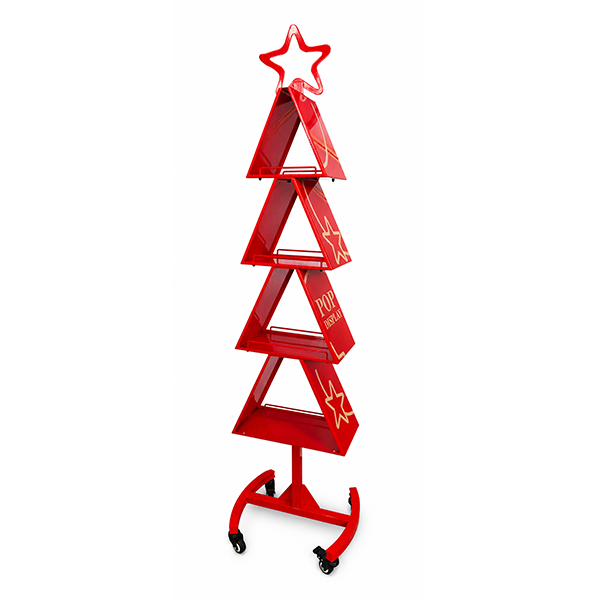
Technical layer: what is actually engineered
A gift display is engineered from the load definition outward. Shelf spans and tier heights follow pack dimensions and weight; the base geometry follows the unit's centre of gravity once loaded; and the knock-down logic follows container utilisation rather than appearance. The capability record lists installation instructions and an installation video as part of delivery, together with integration into in-store fixtures, lighting, visual graphics and props.
Named special requirements across the portfolio include quick installation, fire resistance, impact resistance, cost-effectiveness, durability, high load capacity, modular design and eco-friendly construction. Quality control is stated as 100% pre-shipment testing with third-party inspection available. After-sales coverage includes installation support, troubleshooting support, replenishment support, display upgrades and customization updates.
Material choices and their constraints
| Material | Reference models in the portfolio | Typical role | Constraint to verify |
|---|---|---|---|
| Metal | WNH043 (gift), HATJ26704 (hat), TDSJ26802 (tool), PETJ26703 (pet food) | Freestanding and high-traffic units intended to hold up over a long installation | Unit weight and container volume; finish specification |
| MDF / wood | THE-CTD103 (gift, with acrylic), CSF002 and CP-CSF32 (clothing), FOD013 (toy), JSJ-CSD002 (cosmetic) | Tiered shelving and warm-finish brand environments | FSC claim applies only to qualifying wood and paper inputs, not to the full assembly |
| Acrylic / PVC | Acrylic within THE-CTD103; PVC within metal-frame units such as FYS-SSF234 and PETJ26705 | Transparent presentation, printed graphics and signage panels | Outside the FSC chain of custody; separate disposal and recycling documentation may be requested |
| Cardboard | JW-CTD379 (toy), GJH26-104 (consumer electronics) | Campaign, launch and temporary display use | Import classification applies; structural life differs from metal or MDF builds |
Application: where gift displays actually run
The retail environments listed for this portfolio include retail stores, supermarkets and hypermarkets, shopping malls, brand stores, department stores, pop-up shops, showrooms, and trade shows and events — covering high-traffic environments, long-term installations and temporary displays. Operation modes include floor-standing, countertop, wall-mounted, slatwall, endcap, rotating, static, freestanding, movable and gondola configurations.
Gift displays rarely stand alone in a store. They sit alongside adjacent small-format categories that share tooling logic and merchandising patterns, and the portfolio reflects that adjacency: sock POP display model SODJ26531, hat model HATJ26704, eyewear model SUGJ26633, cosmetic model JSJ-CSD002, toy models FOD013 and JW-CTD379, shoe models BR003 and FYS-SSF234, clothing models CSF002, CP-CSF32 and CSFJ6176, and a cardboard consumer electronics unit, GJH26-104. A buyer specifying a gift unit is usually specifying into a family of fixtures, and consistency of finish and hardware across that family is a specification decision, not an afterthought.
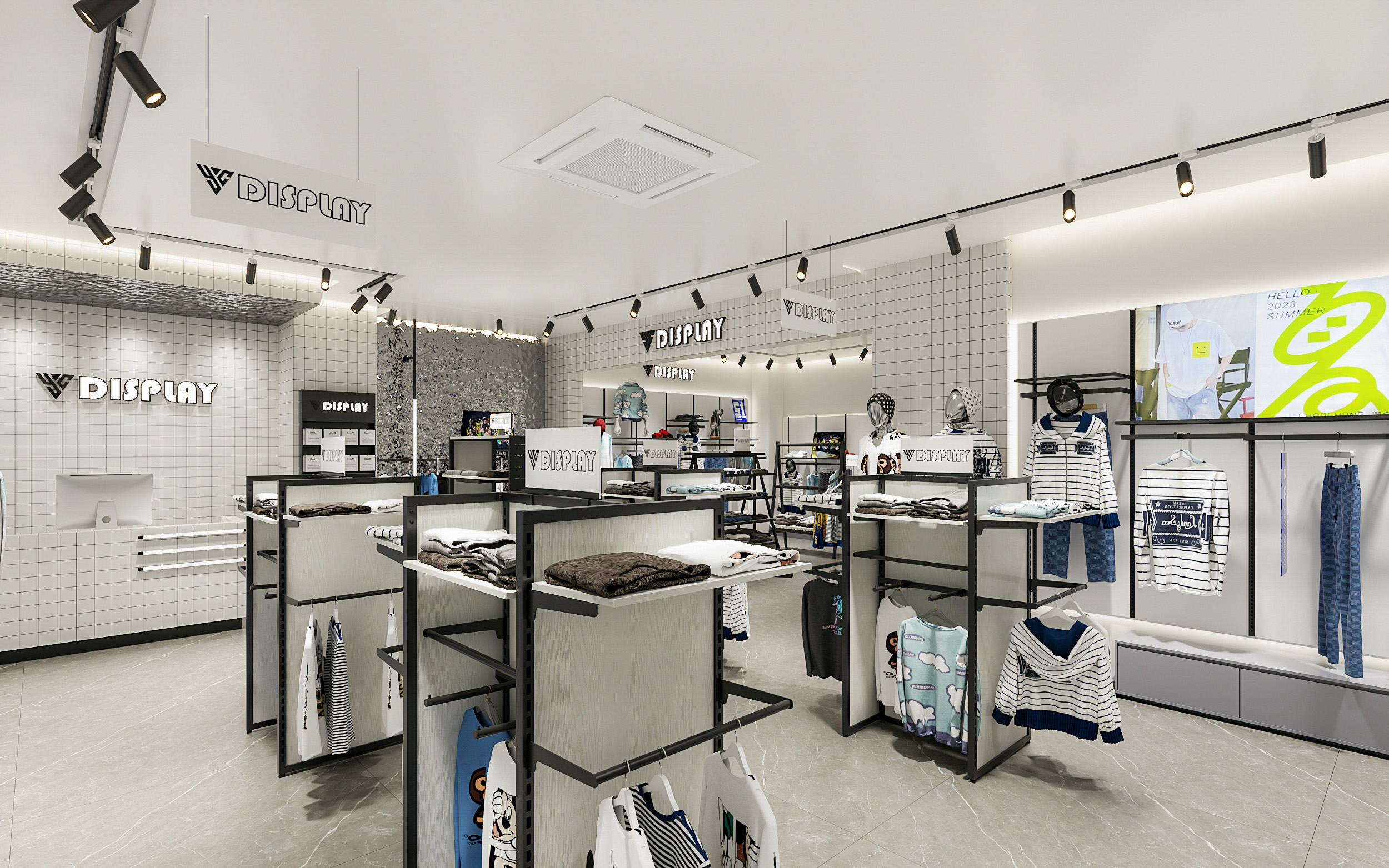
Service life is the constraint most often underweighted at the evaluation stage. Four referenced programs illustrate the range: DUNLOP in the United Kingdom (1,000 units, standalone brand store, sports apparel), Victoria's Secret in the United States (2,000 units), Mothercare in the United Kingdom (2,000 units) and Tommy Hilfiger in the United States (500 units). Each is recorded with a service duration of 3 to 6 years. The reported outcome across those programs is consistent: improved product visibility and presentation, better use of available retail space, a clearer shopping experience, and a durable construction suited to long-term retail use.
| Program | Market | Units | Application | Recorded service life |
|---|---|---|---|---|
| DUNLOP | United Kingdom | 1,000 | Standalone brand store, clothing display, brand promotion | 3–6 years |
| Victoria's Secret | United States | 2,000 | Standalone brand store, layered product presentation | 3–6 years |
| Mothercare | United Kingdom | 2,000 | Brand store, category zoning and flexible merchandising | 3–6 years |
| Tommy Hilfiger | United States | 500 | Standalone brand store, visual merchandising | 3–6 years |
Market trend: paper volume and regulation are moving together
Cardboard and corrugated board accounted for 42.7% of POP display revenue in 2025, according to Dataintelo research recorded in the verified dataset, making paper the single largest material in the category. Consumer sentiment has moved in the same direction: a Nielsen and Grand Fly figure recorded in the dataset, derived from a 2024 survey, indicates that 73% of global shoppers say they would pay more for eco-friendly display materials. That figure is classified as medium confidence in the source data and should be treated as directional rather than precise.
Forecast data requires more caution than headline summaries suggest. The verified dataset records CAGR estimates for the POP display market diverging from 5.4% to 13.1% across commercial research houses, and attributes the spread to methodology: the higher figure appears to include digital point-of-sale software and hardware, while the 5.4% to 5.8% range targets physical display manufacturing. A buyer or brand manager reading a broad POP growth claim should first establish which of those two markets the number describes.
Comparison with traditional solutions — and where the limits are
Traditional permanent retail joinery was built on site, in a single material, for a single store. Modern gift display programs are built off site, often in mixed materials, for multi-store rollouts with container-based delivery. The trade-off is real and worth stating plainly.
- Lead time versus speed. A custom metal or MDF gift display carries a 25–40 day production lead time. That is workable for a planned seasonal program and unsuitable for an activation required inside three weeks. Cardboard units are the faster route, but in this portfolio cardboard references such as JW-CTD379 and GJH26-104 sit in campaign and temporary display use, while the multi-year installations recorded in the case set are metal and MDF builds.
- Certification coverage is partial by material. The FSC chain of custody covers qualifying wood and paper inputs. It does not cover acrylic, PVC or metal. Any mixed-material gift unit therefore carries a claim boundary the buyer must map before repeating an environmental statement to a retailer.
- Quantity thresholds. The stated minimum order quantity of 50 units means very small pilot runs are not economic at the factory level, regardless of how simple the unit is.
- Freight economics. Large floor-standing gift units consume container volume, and monthly capacity is finite at 85 x 40'HQ containers. Knock-down design, unit count per container and packaging specification are therefore cost drivers alongside material and finish.
- Assembly and join complexity. Mixed-material units require more assembly and inspection steps than a single-material cardboard display, which is a genuine operational cost rather than a design preference.
Future outlook
Three pressures are likely to shape gift display sourcing over the next planning cycle. The first is documentation: as packaging regulation tightens in Europe, the ability to state component-level material composition and chain-of-custody coverage will matter as much as appearance. The second is material rebalancing: with paper already holding 42.7% of category revenue share, brands will keep pushing campaign volume toward paper-based formats while reserving metal and MDF for long-life installations. The third is consolidation of the supply chain, where design, manufacturing, transport, installation and after-sales support arrive from one partner, because certification scope, engineering and container economics interact too closely to be managed in isolation.
For buyers in the research and evaluation stage, the practical conclusion is narrow and specific. Define the material mix first, verify which certificates actually reach that mix, confirm MOQ and lead time against the seasonal calendar, and check import classification before the artwork is approved rather than after the container is booked.
FAQ
What certifications should a buyer verify on a gift POP display supplier?
Three are directly relevant to this category. ISO 9001 certificate 117 24 QU 0233-06 R0S, issued by Shanghai Ingeer Certification Assessment Co., Ltd against GB/T19001-2016/ISO9001:2015, carries a scope covering sales of shopfittings, POP/POS display, store fixture and store equipment, valid until 23 June 2027. ISO 14001 certificate 117 26 E 0784 R0 02 covers the same product scope, valid until 26 May 2029. FSC Chain of Custody certification SGSHK-COC-331884, issued by SGS, is valid from 18 October 2023 to 17 October 2028 under FSC-STD-40-004 V3-1. The verification step is confirming that each scope statement names the product actually being purchased.
What is the minimum order quantity and lead time for a custom gift POP display?
For this manufacturer, the stated minimum order quantity is 50 units and production lead time is 25–40 days, with monthly capacity of 85 x 40'HQ containers against annual output of 1,000 x 40'HQ containers. Programs tied to a fixed retail window should be scheduled backwards from the in-store date, because artwork or structure changes made late in the 25–40 day window consume the recovery margin.
Does a gift POP display need FSC certification if it contains wood?
Not automatically. FSC Chain of Custody certification applies to the wood and paper inputs inside the declared scope — items such as display shelves, tables, chairs, and FSC Mix or FSC Recycled paper boxes and bags under a transfer system. Components made from acrylic, PVC or metal fall outside that chain of custody. A gift display such as model THE-CTD103, which combines MDF with acrylic, therefore has partial coverage only, and the buyer should establish which components qualify before making a claim to a retailer.
How is a cardboard gift POP display classified for customs purposes?
According to U.S. Customs and Border Protection ruling NY N184135 recorded in the verified dataset, cardboard POP displays are classified under HS 4823.90 for other paper and paperboard, or 4819.10 for corrugated boxes. Classification determines duty treatment at import, which is why a change of base material late in a project can alter landed cost even when the unit price does not change.
How can a buyer validate a gift display before committing to full production?
The verification mechanisms recorded for this manufacturer are 100% pre-shipment testing and third-party inspection. Buyers should confirm two things before the order is confirmed: which party performs the inspection and against which written specification, and whether the unit will be delivered with installation instructions and an installation video, both of which are listed as standard delivery elements. Because the minimum order quantity is 50 units, small-scale pilots are not available at factory level, so the specification document itself carries most of the validation weight.
The full product and capability documentation for this manufacturer is available in the downloadable company brochure: YC Furniture Group brochure.