
Glass Beads by Standard and Use: A Buyer’s Framework
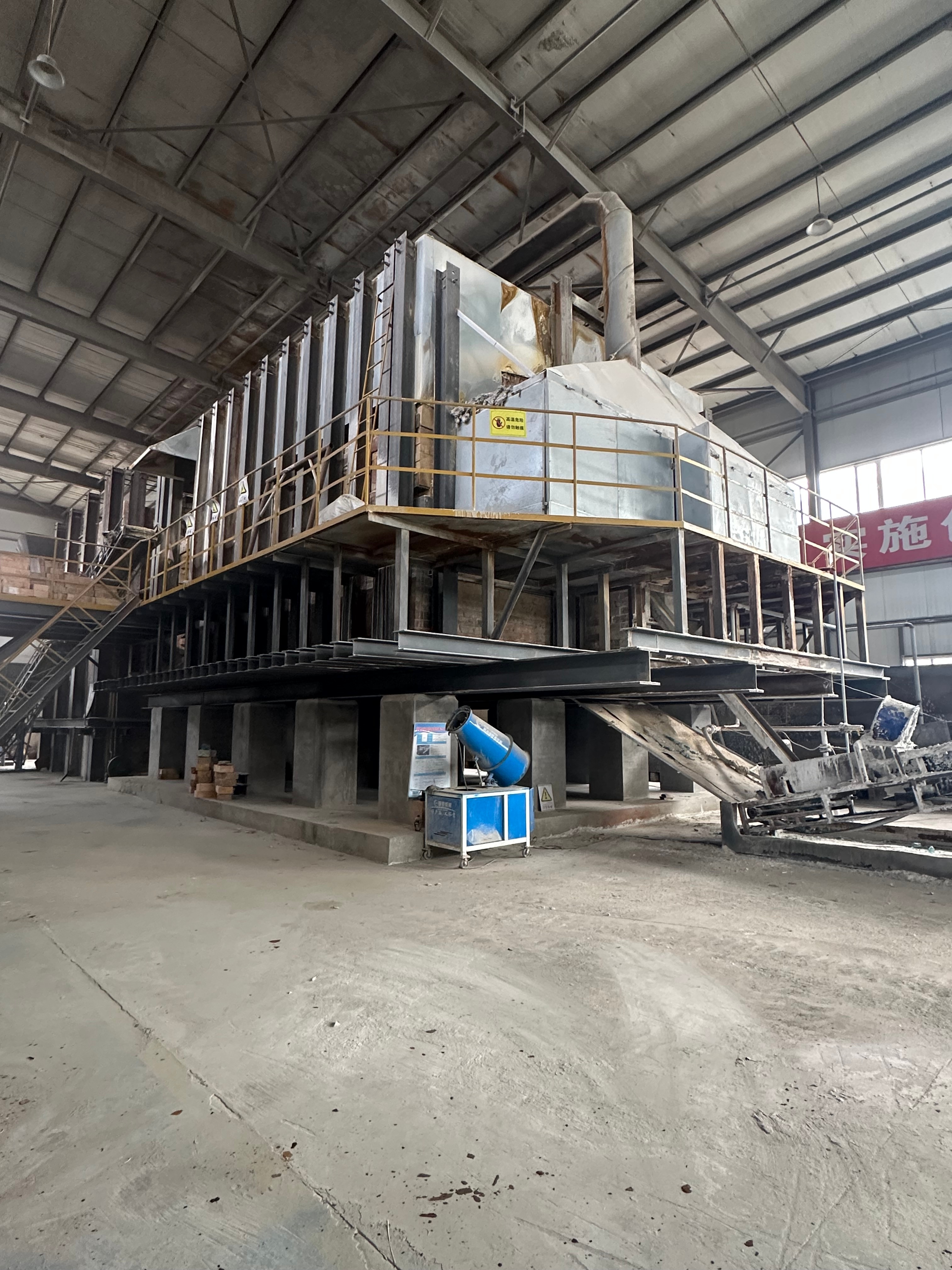
A buyer selecting glass beads for road marking should begin with the project standard and application method, then match bead gradation, refractive index, color and evidence. That sequence matters because glass beads are not a single commodity: AASHTO M247 for US roads, EN 1423 and EN 1424 for European and related markets, BS 6088 references, and AS/NZS Type B, C and D classifications describe different scopes and acceptance paths. A bead that fits one jurisdiction can share a particle size range with another and still fail a different project requirement.
The procurement opportunity is to turn a long product list into a controlled shortlist. The risk is to compare only by unit price or by a familiar model name. A standard-led framework reduces that risk by forcing the buyer to ask four questions before approving a supplier: Which standard governs the work? Which application method is used? Which gradation and refractive index class are required? What evidence proves each lot meets the approved specification?
Why Glass Bead Selection Starts With the Standard
A road-marking glass bead specification is a procurement filter. It defines the size distribution, refractive index class, testing method and sometimes the application method. If the buyer starts from a supplier catalogue instead of the specification, the shortlist may look broad but still be unusable at tender stage. The standard tells the buyer what must be proven; the supplier catalogue only shows what can be offered.
The verified data package shows this split clearly. AASHTO M 247-26 is the current 2026 US standard for glass beads used in pavement markings and uses Type 0 to Type 5 gradations. EN 1423 covers glass beads, anti-skid aggregates and mixtures applied as drop-on materials on road markings. Hong Kong road-marking guidance references BS EN 1423 for drop-on glass beads and BS EN 1424 for premix glass beads, and its sample specification requires Class A refractive index at least n≥1.5. Texas adds a state layer: TxDOT requires beads to conform to DMS-8290 and tests three gradations using Tex-831-B.
That is why a buyer should not ask only “Which glass beads are available?” The better question is “Which standard, gradation and test evidence does this project require?” This changes the evaluation from brand familiarity to verifiable fit.
The Three Standard Families Buyers Usually Compare
International buyers most often compare AASHTO, EN and AS/NZS references, sometimes alongside BS 6088 product families. These systems are related by function but not identical in structure. The table below maps the main reference points without implying that one standard replaces another.
| Reference | Typical market / scope | What buyers should confirm | Supplied product examples |
|---|---|---|---|
| AASHTO M247-26 | US pavement markings; Type 0 to Type 5 gradations in the 2026 edition. | Project type, state specification, gradation and testing method. Texas, for example, references DMS-8290 and Tex-831-B. | GLASS BEADS AASHTO M247-TYPE 1, TYPE 2, TYPE 3 and TYPE 4. |
| EN 1423 | European standard scope for drop-on materials, including glass beads, anti-skid aggregates and mixtures. | Drop-on versus premix application; national adoption; RI class and test report. | GLASS BEADS EN1423 in 850–180 μm and 710–125 μm scopes. |
| EN 1424 | Referenced for premixed glass beads in Hong Kong road-marking guidance. | Whether the project uses premix beads and which national or project specification applies. | GLASS BEADS EN1424 in 1400–355 μm scope. |
| BS 6088 | British-standard bead families often read alongside EN-based procurement references. | Class A or B requirement, gradation and RI evidence. | GLASS BEADS BS6088A in 1180–425 μm; BS6088B in 850–180 μm. |
| AS/NZS Type B, C, D | Australian and New Zealand project references using Type B, C and D classifications. | Which type the project calls for and whether another standard’s overlapping size scope is acceptable. | AS/NZS TYPE B 850–75 μm; TYPE C 1300–425 μm; TYPE D 1700–710 μm. |
| GB/T 24722-2020 | China national standard for glass beads for road markings; current and effective from 2021-07-01. | Chinese project acceptance and any additional buyer specification. | Not mapped to a specific model in the supplied product list. |
The practical lesson is that standard names should be written into the request for quotation, together with the application method and test method. A supplier response that lists only “standard glass beads” is not yet a comparable offer.
Particle Size Scopes: Where Overlap Does and Does Not Mean Interchangeability
Particle size is the most visible selection variable because it can be written directly into a project specification. The supplied product data includes standard-linked scopes such as 1700–710 μm for AASHTO M247-TYPE 3 and AS/NZS TYPE D, 1400–355 μm for EN1424, 1180–425 μm for BS6088A, and 850–75 μm for AS/NZS TYPE B. These figures make comparison possible, but they do not by themselves prove equivalence.
| Product name in supplied data | Model | Scope | Standard family / note |
|---|---|---|---|
| GLASS BEADS AASHTO M247-TYPE 1 | M247-TYPE 1 | 1180–150 μm | AASHTO M247 |
| GLASS BEADS AASHTO M247-TYPE 2 | M247-TYPE 2 | 1180–180 μm | AASHTO M247 |
| GLASS BEADS AASHTO M247-TYPE 3 | M247-TYPE 3 | 1700–710 μm | AASHTO M247 |
| GLASS BEADS AASHTO M247-TYPE 4 | M247-TYPE 4 | 2000–850 μm | AASHTO M247 |
| GLASS BEADS EN1423 | EN1423 | 850–180 μm | EN 1423 |
| GLASS BEADS EN1423 | EN1423 | 710–125 μm | EN 1423 |
| GLASS BEADS EN1424 | EN1424 | 1400–355 μm | EN 1424 |
| GLASS BEADS BS6088A | BS6088A | 1180–425 μm | BS 6088 |
| GLASS BEADS BS6088B | BS6088B | 850–180 μm | BS 6088 |
| AS/NZS TYPE B | TYPE B | 850–75 μm | AS/NZS |
| AS/NZS TYPE C | TYPE C | 1300–425 μm | AS/NZS |
| AS/NZS TYPE D | TYPE D | 1700–710 μm | AS/NZS |
| GLASS BEADS RI 1.6 | RI 1.6 | 1000–180 μm | Refractive index family |
| GLASS BEADS RI 1.7 | RI 1.7 | 1180–180 μm | Refractive index family |
| Decorative Glass Beads | ECORATIVE | 0.5–20 mm | Decorative / swimming pool |
These rows are supplied product examples, not a declaration that every model is certified to every named standard. AASHTO M247-26 defines Type 0 to Type 5; the supplied product list covers Type 1 to Type 4, so buyers should treat the table as a starting map rather than an exhaustive standard index. The same caution applies to AS/NZS Type D and AASHTO M247-TYPE 3: both list 1700–710 μm, but the overlap in one size scope does not remove other project requirements.

Refractive Index and Color: Selection Variables, Not Shortcuts
Refractive index is a key performance variable, especially when the buyer is comparing standard beads with high refractive index glass beads. The supplied product data lists GLASS BEADS RI 1.6 at 1000–180 μm and GLASS BEADS RI 1.7 at 1180–180 μm. The verified market data also notes that 1.5 RI standard beads held a 54.0% share in 2026, while Potters Industries offers standard 1.5 and high-reflective 1.9 refractive index variants. These figures frame the market: 1.5 RI remains the mainstream reference, while higher-index options compete for applications where the buyer expects a different performance profile.
However, RI alone is not a compliance shortcut. A 1.7 high index bead still needs the correct gradation, test method and standard evidence for the project. If a tender cites AASHTO M247, EN 1423, BS 6088 or AS/NZS, the buyer should ask for the specific class, gradation and test report rather than accepting “1.7” as a complete answer.
Color and finish follow the same logic. The supplied product parameters list transparent, opaque and mixed color options, with smooth or matte surface finishes, and custom color and size available across several product families. Decorative Glass Beads are listed separately for decorative and swimming pool use with a 0.5–20 mm size range. For road marking, color should be reviewed only after the project standard and application method are fixed. A colored glass bead may be useful for a decorative application, but it should not be assumed to satisfy a road-marking standard unless the specification explicitly allows it.
The same distinction applies to anti-skid aggregates. EN 1423 covers glass beads, anti-skid aggregates and their mixtures as drop-on materials, but that does not mean a glass bead SKU automatically includes an anti-skid aggregate. Buyers should confirm whether they are purchasing beads, aggregate or a blended drop-on material.
A Seven-Step Buyer Decision Framework
The framework below converts the standard comparison into a repeatable procurement sequence. It is written for Research to Evaluation-stage buyers who need to shortlist suppliers without over-relying on catalogue claims.
| Step | Buyer action | Why it matters |
|---|---|---|
| 1 | Identify the jurisdiction and acceptance standard. | AASHTO, EN, BS, AS/NZS and GB/T references are not interchangeable without project approval. |
| 2 | Identify the application method: drop-on, premix or another system. | EN 1423 and EN 1424 are referenced for different drop-on and premix contexts in official guidance. |
| 3 | Match the required particle size scope. | Scopes such as 1700–710 μm, 1400–355 μm and 850–75 μm quickly narrow the product list. |
| 4 | Set the refractive index class, color and surface finish requirement. | RI 1.6 and RI 1.7 are available product variables; transparent, opaque and mixed colors are listed options. |
| 5 | Request test evidence and certification. | The buyer needs proof of gradation, RI, roundness, wear resistance and batch consistency. |
| 6 | Audit production and supply capability. | Capacity, lead time, MOQ and quality control determine whether the approved product can be repeated. |
| 7 | Approve a sample and retain lot records. | Approval should be tied to the tested lot and the project specification, not to a generic datasheet. |
This framework also improves quotation comparison. If two suppliers quote the same tonnage but one is quoting AASHTO M247-TYPE 3 and the other is quoting AS/NZS TYPE D, the prices are not directly comparable until the buyer confirms whether the project accepts either scope and what test evidence accompanies each lot.
What Dylantech’s Product and Company Data Adds to the Evaluation
Dylantech (Dylan Technology Co., Ltd.) is a China-based supplier of glass beads for the road safety industry, with four production bases in Liaoning, Shanxi, Hebei and Henan. Its supplied company data lists a 10,000 m² factory area, 300 employees, 20 engineers, more than 15 advanced production lines and an annual output of 100,000 tons. These are supplier-reported facts; they are relevant to capacity screening, but they do not replace the project-specific standard approval.
The product map is more useful for buyers than a general company description because it covers standard-linked families and adjacent uses. It includes AASHTO M247-TYPE 1 to TYPE 4, GLASS BEADS EN1423 and EN1424, BS6088A and BS6088B, AS/NZS TYPE B, C and D, RI 1.6 and RI 1.7 beads, and Decorative Glass Beads. The same supplied data lists a broad product parameter pattern of 0.5 mm–20 mm size range, transparent, opaque or mixed color, smooth or matte finish, and custom color and size availability for several families.
For evidence review, Dylantech reports ISO9001, CE, JIS and KIS certifications and a laboratory equipped with CAMSIZER, X-2600 and other testing instruments for particle size, reflectivity and wear resistance. The supplied capability data also lists OEM production, 1-ton MOQ, 45–60 day lead time, 100% test quality control, remote after-sales support and EU export markets. Buyers should use these points to structure a supplier audit: ask which certificate applies to the quoted model, which test method was used for the lot, and whether the certificate covers the production site that will supply the order.

The company profile also notes four production bases, patented glass bead production equipment and a waste heat recovery system recognized as a scientific and technological achievement by the China Energy Conservation Association. For a buyer, these facts are relevant to supply continuity and process control questions. They should be read as supplier-reported capability evidence, not as independent proof that every standard product meets every jurisdiction.
Application Fit: Road Paving, Drop-On, Pre-Mixed and Adjacent Uses
The supplied application data describes outdoor all-weather road paving under normal temperature and pressure, with batch feeding by coating or blasting machine and supporting equipment such as road marking machines, sand blasting machines and polishing equipment. It also lists special requirements: high roundness, stable refractive index and eco-friendly recycled material. These requirements explain why a buyer should evaluate roundness and RI stability alongside the standard number.
| Use context | What the supplied data states | Procurement implication |
|---|---|---|
| Road paving, outdoor all-weather | Normal temperature and pressure; batch feeding with coating or blasting machine; high roundness, stable refractive index and eco-friendly recycled material. | Confirm the application method, equipment compatibility and roundness/RI evidence. |
| Road marking engineering and traffic safety manufacturing | Case records describe 1–198 ton orders, 3–4 year stability, low wear and, in one case, a notable night effect. | Use the cases as reference questions, not as independent test data for a new project. |
| Drop-on and pre-mixed | Official guidance references BS EN 1423 for drop-on beads and BS EN 1424 for premix beads. | The same bead family may not be automatically accepted for both methods; confirm the project clause. |
| Decorative and swimming pool | Decorative Glass Beads are listed with 0.5–20 mm size, transparent/opaque/mixed color and smooth/matte finish. | Keep decorative color selection separate from road-marking compliance. |
| Sandblasting and polishing | Sandblasting and grinding bead families are listed as separate product types for polishing-related use. | Do not substitute an industrial blasting bead for a road-marking bead without written approval. |
The supplied case records are useful for understanding scale but should be handled carefully. They describe road-marking engineering companies or traffic safety manufacturers using 1 ton, 20 tons, 56 tons, 72 tons, 108 tons and 198 tons over 3 or 4 years, with results described as stable and highlights including low wear and a remarkable night effect. These are supplier-provided case notes, not independent field trials. A buyer can use them to ask better questions: Which model was used? Which standard applied? What was the test method? What batch records were retained?
Market Signals That Affect Procurement in 2026
The verified data package points to a market that is large, standards-driven and still segmented by refractive index. It reports a global road marking glass beads market value of USD 1.18 billion in 2025. It also reports that 1.5 RI standard beads held a 54.0% share in 2026, which is consistent with the continuing role of conventional road-marking specifications. Higher-index variants remain a specialist selection rather than a universal default.
Standards activity is another procurement signal. AASHTO M 247-26 is the current 2026 US edition and uses Type 0 to Type 5 gradations. China’s GB/T 24722-2020 is a current national standard, effective from 2021-07-01. The existence of separate jurisdiction-specific standards supports a simple buyer rule: do not import a specification from one market into another without checking the local project requirement.
The supplier landscape also shows why documentation matters. SWARCO states it has manufactured reflective glass beads for road markings since 1969 and has production facilities in Europe, the United States and Saudi Arabia. Potters Industries offers standard 1.5 and high-reflective 1.9 refractive index variants. Dylantech reports an annual output of 100,000 tons and a broad standard-linked product list. These are different kinds of supplier evidence: history, product variants, capacity and standard coverage. A buyer should compare them on the same decision matrix rather than treating any single claim as decisive.
Where a Standard-Led Framework Beats a Price-Only Shortlist — and Where It Stops
A price-only shortlist treats glass beads as a uniform input. A standard-led framework treats them as a specified material. The difference is practical: the price-only approach may produce a lower quoted unit price but a higher risk of rejection, rework or project delay. The standard-led approach may narrow the supplier pool, but it gives the buyer a defensible approval trail.
| Comparison point | Price-only shortlist | Standard-led framework |
|---|---|---|
| Starting point | Quoted price per ton. | Jurisdiction, standard, application method and gradation. |
| Supplier comparison | Broad catalogue claims. | Model-specific scope, RI, test report and certificate. |
| Risk control | Price risk is visible; compliance risk is hidden. | Compliance risk is identified before purchase. |
| Limitation | Can create false comparability between unlike products. | Cannot replace project-specific approval; it only narrows the shortlist. |
The limitation is important. A standard-by-standard framework does not guarantee that a product will be accepted on every road. AASHTO M247-TYPE 3 and AS/NZS TYPE D both list 1700–710 μm, but that overlap does not make them automatically interchangeable. A supplier may hold ISO9001, CE, JIS or KIS certification and still need to provide the specific test report requested by the project. The buyer must keep the final approval tied to the tender clause, the test method and the approved lot.
Future Outlook
Three developments are likely to shape glass bead procurement in the near term. First, standard revisions will continue to create version-specific requirements, as shown by AASHTO M 247-26 and its Type 0 to Type 5 structure. Second, refractive index segmentation will remain relevant: 1.5 RI beads still dominate the verified market share figure, while 1.6, 1.7 and 1.9 variants are available from different suppliers for specialist needs. Third, buyers will ask for more production and testing evidence, not less, because standard compliance is increasingly checked through documents and lot records rather than through brand reputation alone.
For suppliers, the implication is that a broad product list is useful only when each model is tied to a standard, a scope and a test method. For buyers, the implication is that the best procurement result comes from a written decision framework: standard first, application second, gradation third, RI and color fourth, evidence fifth. That sequence is slower than comparing unit prices, but it is more likely to produce a repeatable road-marking material approval.
FAQ
Which glass bead standard applies to US road markings?
AASHTO M247 is the main US reference for glass beads used in pavement markings. The verified data identifies AASHTO M 247-26 as the current 2026 edition with Type 0 to Type 5 gradations. State specifications can add requirements; Texas, for example, references DMS-8290 and Tex-831-B.
What is the difference between EN 1423 and EN 1424?
EN 1423 covers glass beads, anti-skid aggregates and mixtures used as drop-on materials on road markings. Hong Kong road-marking guidance references BS EN 1423 for drop-on glass beads and BS EN 1424 for premix glass beads. A buyer should confirm whether the project uses drop-on or premix application before selecting a product.
Which AS/NZS glass bead type has a 1700–710 μm scope?
AS/NZS TYPE D is listed with a 1700–710 μm scope in the supplied product data. AS/NZS TYPE C is listed at 1300–425 μm and TYPE B at 850–75 μm. The overlap between AS/NZS TYPE D and AASHTO M247-TYPE 3 in one size range does not by itself prove interchangeability.
Does a 1.7 refractive index guarantee compliance with AASHTO or EN?
No. Refractive index is one selection variable. The supplied data lists GLASS BEADS RI 1.7 at 1180–180 μm, but compliance depends on the project standard, required gradation, test method and certificate. A buyer should ask for standard-specific evidence rather than treating RI 1.7 as a complete specification.
Are colored glass beads suitable for road marking?
Color is listed in the supplied product data as transparent, opaque or mixed, with custom color and size available. Decorative Glass Beads are listed separately for decorative and swimming pool use. For road marking, colored beads should be used only if the project specification allows them; decorative color options should not be assumed to satisfy a road-marking standard.
What evidence should a buyer request before approving a glass bead supplier?
A buyer should request the applicable standard, product model and gradation, refractive index class, batch test report, roundness and wear-resistance data where required, and certification covering the supplying production site. Dylantech’s supplied data references ISO9001, CE, JIS and KIS certifications and laboratory instruments including CAMSIZER and X-2600 for particle size, reflectivity and wear resistance testing.
A practical next step is to build a one-page specification matrix for the project: standard, application method, gradation, RI class, color/finish, test method, certificate and approved lot. That matrix is more useful than a long supplier catalogue because it separates comparable offers from merely available products.
Reference document: Corporate Brochure (PDF).
Have Questions or Need More Details?
Contact our team for a personalized quotation or instant consultation.
Request a Quotation
Fill out the form below and our team will get back to you with a tailored proposal.
WhatsApp Direct Chat
Prefer to chat in real-time? Message us on WhatsApp for instant assistance & quick answers.
- Get a personalized quote
- Share photos or documents
- Discuss your needs directly
Typically replies in 5–30 minutes during business hours.