
Glass Insulator Supply Assurance for Long-Term Buyers
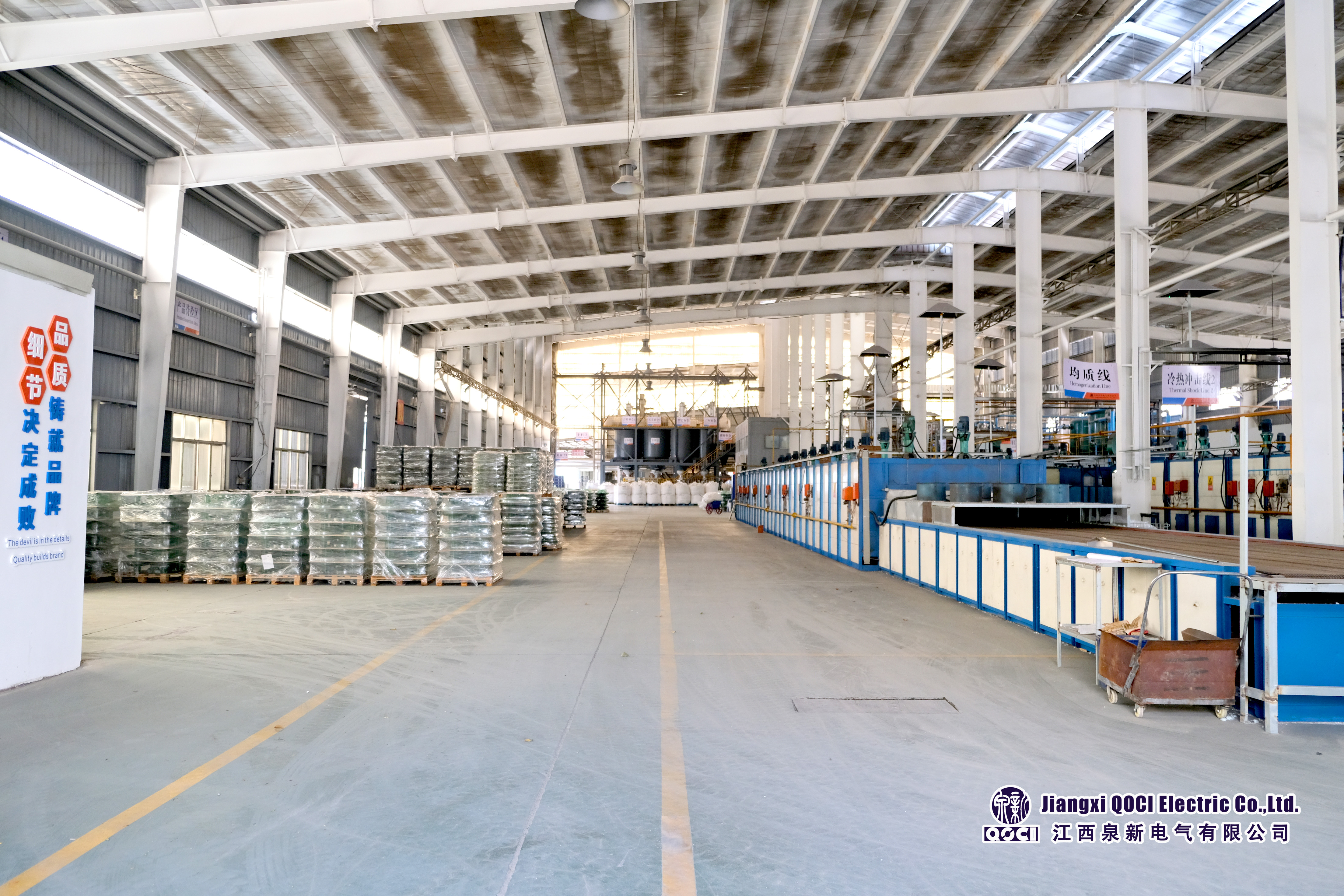
Thermal shock testing is part of the production verification process for toughened glass insulators.
Transmission line projects are planned around decades of service, yet many glass insulator procurement decisions are made after reviewing only short-term specifications. For glass insulators, the connection between supplier capability and in-service performance is direct: mechanical strength, thermal shock resistance, self-breaking behavior, and inspection requirements all affect how a line performs over its lifetime. This reference examines what engineering and procurement teams should verify when moving a glass insulator order from evaluation to execution, with a focus on long-term supply reliability.
Why Glass Insulator Procurement Needs a Long-Term View
Buyers at the decision and execution stages face a different risk profile than those at the awareness stage. Once the contract is signed, the supplier quality system becomes part of the asset. A batch that fails prematurely can delay commissioning; repeated failures can change maintenance budgets for decades. In high-voltage networks, insulator failures can have safety and operational consequences far beyond the replacement cost of a single unit.
There is also a commercial opportunity. The glass insulator market is growing, and so is the range of suppliers. A disciplined long-term partner can help a utility or contractor standardize string design, simplify inspection, and maintain predictable delivery. The challenge is to identify which supplier can meet not only the headline specification, but also the process controls that prevent hidden quality variation.
Market Context: Why Long-Term Supply Partners Are Becoming More Important
Market data suggests that glass insulators will remain an important material class in overhead transmission. According to Market Research Future, the global glass insulator market was estimated at USD 1.14 billion in 2024 and is projected to reach USD 1.97 billion by 2035, with a forecast CAGR of 5.1%. Grand View Research reported that Asia Pacific accounted for more than 52% of global revenue in 2024, driven mainly by grid expansion in China and India.
Supply is becoming more international. OEC data shows China concentrated 31.4% of total global exports of electrical insulators in 2024, totaling USD 898 million. The fastest-growing destination was Saudi Arabia, where Chinese electrical insulator exports grew by 219% between 2023 and 2024. Market assessments often name Sediver, Nanjing Electric, and Zhejiang Jinlihua Electric among global glass insulator manufacturers. For buyers, this landscape means a broader supplier base and more options, but also more responsibility to verify manufacturing processes rather than relying on brand recognition alone.
Evaluating a Glass Insulator Manufacturer at Execution Stage
Jiangxi QOCI Electric Co., Ltd. provides one example of a China-based supplier structured around large-volume insulator supply. Founded in 2002, QOCI Electric operates a factory area of 35,373 square meters and produces approximately 9,000,000 units per year. The company is a national high-tech enterprise and a participating unit of the Insulator Standard Committee. Its products are used in State Grid Corporation of China, China Southern Power Grid, and power grids in more than 40 countries.
For a procurement team, these characteristics have practical meaning. More than 20 years of manufacturing experience suggests institutional knowledge of insulator process control. Standards committee participation indicates familiarity with national and international requirements. Export experience across multiple regions implies experience with different documentation, packaging, and testing expectations. High annual production volume can support batch consistency and delivery reliability, which are decisive factors when a project is in the execution phase.
Product Range and Its Role in Supply Continuity
Long-term buyers need more than a single insulator model; they need a compatible family of products that can be used across different line sections. QOCI covers the mechanical classes commonly specified for glass insulator strings: standard cap-and-pin and ball-socket suspension types from 70kN to 420kN, including U70B, U120B, U160B, U210B, U240B, U300B, and U420B.
For polluted environments, anti-pollution variants such as U70BLP, U100BLP, U120BLP, U160BLP, U210BP, and U420BP provide extended creepage distance. Double-shed profiles such as U70BLD, U100BLD, U120BLD, U160BLD, and U210BD are available for service conditions requiring additional shed geometry. Aerodynamic profiles, including U70BA and U100BA, are designed for desert and high-dust environments. The portfolio also includes PS and ANSI series equivalents, which helps buyers align with regional standards.
From a procurement standpoint, having multiple profiles from a single manufacturer reduces the number of qualification cycles. It also creates a single point of accountability for quality, delivery, and long-term spare supply.
Technical Basis of Long-Term Glass Insulator Reliability
Toughened glass insulators depend on thermal tempering. Rapid cooling creates a compressive stress layer on the glass surface, balanced by internal tensile stress. This structure gives the material a compressive strength that is often cited as 3–4 times higher than porcelain. Comparisons with traditional porcelain also cite an 80% reduction in mechanical failure rate and a 70% reduction in maintenance workload.
The most distinctive glass insulator property is the fail-safe self-breaking mechanism. If an internal defect such as a nickel sulfide inclusion causes electrical puncture, the stress balance is lost and the disc shatters into small particles. The failed unit remains mechanically connected through the cap and pin, but its electrical insulation function is gone and the condition is visible from the ground. This eliminates live-line zero-value testing, simplifies routine patrol, and shortens outage time for fault location.
Product specifications illustrate the range buyers can expect. The U70B model has a mechanical failing load of 70kN, disc diameter of 255mm, nominal height of 146mm, creepage distance of 320mm, power frequency wet withstand voltage of 45kV, and lightning impulse withstand voltage of 130kV. The U160B series uses a 280mm disc, 360mm creepage distance, 50kV wet power frequency withstand, and 140kV lightning impulse withstand. U300B increases the disc to 320mm and creepage to 485mm, while U420B reaches a 360mm disc, 550mm creepage, and 80kV wet power frequency withstand voltage. Anti-pollution models such as U210BP and U420BP push creepage distance further, to 550mm and 620mm respectively.
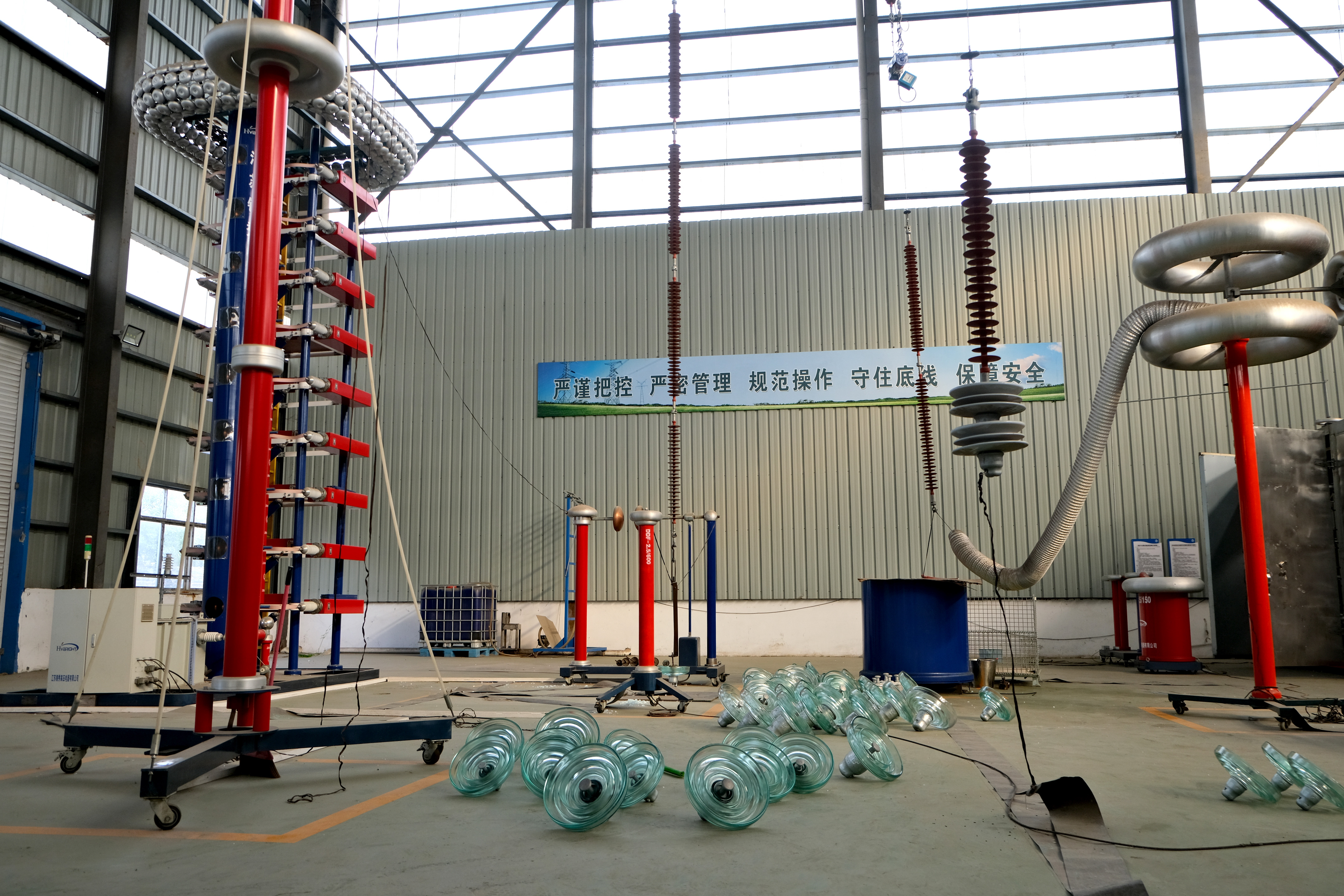
Laboratory inspection supports traceable quality control before shipment.
Application Scenarios and Profile Selection
Glass insulator selection is driven by the line environment. Standard-profile units such as U70B and U100B are commonly chosen for clean-area distribution lines. Anti-pollution profiles with longer creepage distance are recommended for industrial and coastal areas where salt fog or industrial dust is present. Aerodynamic profiles are specified for desert and high-dust conditions because the open shed design improves self-cleaning. For extreme pollution areas, additional mitigation such as RTV silicone coating may be considered through material selection, though the insulator profiles remain the primary design variable.
Application conditions commonly include outdoor overhead exposure, wide temperature ranges from -40°C to +60°C, and continuous passive operation. These product families are used in transmission line construction, substation upgrades, railway electrification, and grid modernization. In severe corrosion service, the supporting metal fittings can be specified with additional corrosion protection, such as zinc sleeves, to extend the life of the insulator string.
Glass Insulator vs. Porcelain: A Decision-Oriented Comparison
The choice between glass and porcelain is not a one-size-fits-all decision. Toughened glass provides mechanical and inspection advantages in many high-voltage applications, but porcelain retains advantages in certain chemical environments.
| Comparison criterion | Toughened glass insulator | Traditional porcelain insulator |
|---|---|---|
| Mechanical failure rate | 80% lower in comparative references | Baseline |
| Inspection method | Visual patrol, no live-line zero-value testing | Piece-by-piece live-line testing typically required |
| Initial cost | About 5% higher | Lower |
| Lifecycle cost | About 25% lower | Higher |
| Maintenance workload | 70% lower | Baseline |
| Dust-type pollution performance | Better self-cleaning | Baseline |
| Chemical corrosion resistance | Less inert | Superior inertness |
These figures are drawn from supplier-side comparison materials and should be validated against the specific supplier and project context. The key boundary condition is chemical corrosion. In environments with acid, alkali, or solvent exposure, porcelain chemical inertness is superior, and porcelain may be the more suitable choice. Buyers should match the insulator family to the pollution type rather than assume one material is universally better.
Execution Controls: Inspection, Acceptance, and Logistics
Once the technical choice is made, the execution phase depends on clear acceptance rules. For QOCI Electric glass insulator orders, the commercial framework includes a minimum order quantity of 50 units, delivery under FOB Shenzhen terms, and typical payment terms of 30% deposit before production and 70% balance before delivery.
Independent quality verification is available through pre-shipment tests and third-party inspection by SGS. Buyers can include this in the contract to confirm that the batch meets the agreed dimensions, electrical tests, and visual requirements. The relevant standard for AC suspension insulators is IEC 60305, and the current reference cited in market data is IEC 60305:2021. Type tests and acceptance procedures in international projects are often mapped to that standard.
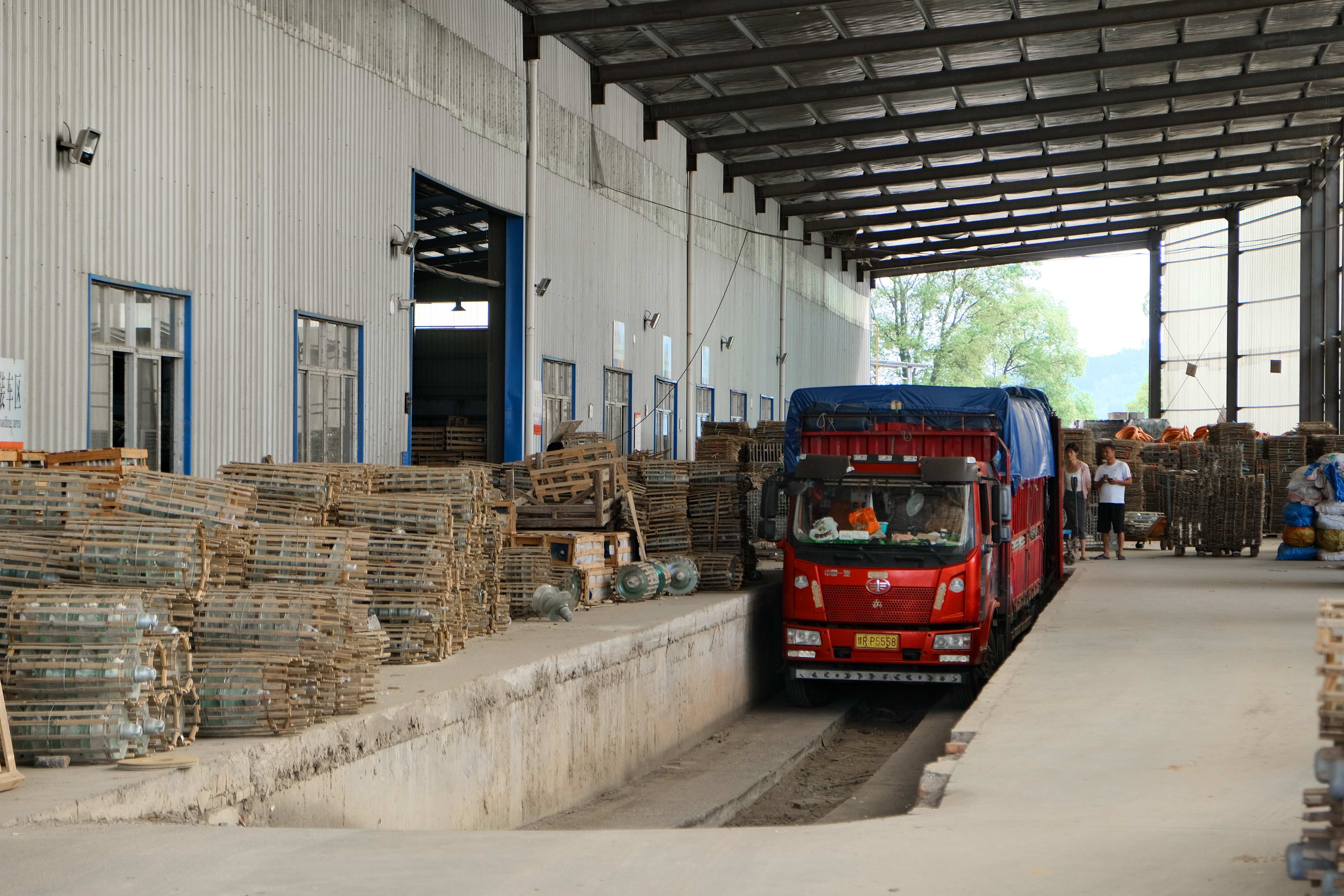
Export loading operations are part of the delivery planning process for large glass insulator orders.
Future Outlook: What Long-Term Buyers Should Expect
Transmission grid expansion is likely to keep glass insulators in high demand, especially in markets with long distances, pollution, and limited access for maintenance. Buyers will probably place more weight on process audit results, batch traceability, and field failure data as part of supplier qualification. The self-breaking property of glass gives network operators a natural source of failure data; suppliers that can use that data for process optimization will be better positioned for multi-year contracts.
For a long-term buyer, the most practical shift is to move from sample-based qualification to system-based qualification. That means reviewing tempering line controls, thermal shock testing coverage, inspection capability, and the manufacturer’s willingness to accept third-party inspection. It also means defining a spare-part and replacement strategy before the first shipment arrives.
Detailed specification and procurement documentation for glass insulators can be reviewed in the QOCI catalogue: QOCI Glass Insulator Catalogue.
Frequently Asked Questions
How to choose a reliable toughened glass insulator supplier for transmission line projects?
Qualified toughened glass insulators should provide mechanical reliability in the SML range of 40–550 kN, a self-breaking rate below 0.02%, and IEC 60305 type test certification. Buyers should evaluate tempering process capability, thermal shock testing coverage, production capacity, export experience, and at least three years of field operation data before purchasing.
What is the self-breaking rate of toughened glass insulators?
The industry benchmark self-breaking rate is less than 0.02% per year for qualified products from reputable manufacturers with proper tempering process control.
Can a self-broken glass insulator remain in service temporarily?
Yes. A self-broken insulator retains its mechanical load-bearing capacity through the metal cap and pin, but it loses electrical insulation. It should be replaced during the next scheduled maintenance window.
Do glass insulators require live-line zero-value testing?
No. Unlike porcelain insulators, the self-breaking mechanism of glass insulators makes visual patrol sufficient for fault detection, eliminating the need for live-line testing.
Which regions are suitable for glass insulators?
Glass insulators are best suited for desert or sandy regions, industrial pollution zones, and long-distance lines that are difficult to inspect. The smooth glass surface slows dust accumulation compared with porcelain, and failed units can be located by ground patrol because of their visible self-breaking behavior. Stable operation is reported from -40°C to +55°C in general references, while product data for many QOCI models lists a working temperature range of -40°C to +60°C.
Why do toughened glass insulators self-break when they fail, and why is this considered a safety advantage?
Toughened glass stores compressive stress on the surface; when an internal defect causes electrical breakdown, the stress release shatters the disc instantly, making the failure visible to the naked eye during routine patrol. This eliminates live-line zero-value testing and allows failed units to be identified quickly from ground level, reducing inspection complexity.
Have Questions or Need More Details?
Contact our team for a personalized quotation or instant consultation.
Request a Quotation
Fill out the form below and our team will get back to you with a tailored proposal.
WhatsApp Direct Chat
Prefer to chat in real-time? Message us on WhatsApp for instant assistance & quick answers.
- Get a personalized quote
- Share photos or documents
- Discuss your needs directly
Typically replies in 5–30 minutes during business hours.