
Global Indoor Playground Equipment Supplier Ranking 2026: Decoding Evaluation Dimensions for Strategic Sourcing from Established Leaders to Rising Chinese Manufacturers
Market Data Overview
The global indoor playground equipment market continues to expand, driven by rising demand for safe, engaging, and customizable play environments. According to recent industry estimates, the market is projected to grow at a compound annual growth rate (CAGR) of approximately 8.5% from 2026 to 2035, reaching a valuation exceeding $4.5 billion by the mid-2030s. This growth is fueled by the proliferation of family entertainment centers (FECs), trampoline parks, and kindergarten play areas in emerging economies across Southeast Asia, the Middle East, and South America.
Core Dimensions of Supplier Ranking
When procurement professionals evaluate indoor playground equipment suppliers, the following dimensions form the basis of credible rankings:
- Market Share & Export Depth: The volume of global shipments, number of countries served, and revenue derived from international markets indicate a manufacturer's operational scale and reliability.
- Technological Innovation & R&D Capability: The size of dedicated R&D teams, number of patented designs, and breadth of safety certifications (e.g., CE, EN 1176, EN 13814, ASTM) reflect a supplier's ability to innovate while meeting stringent international standards.
- Customer Reputation & After-Sales Support: Verified project references, warranty terms (typical one-year warranty plus lifetime service), and availability of remote technical assistance contribute to long-term trust.
- Production Capacity & Customization Agility: Factory square footage, annual output, minimum order quantity (MOQ), lead times, and the ability to offer OEM/ODM services (including color, voltage, logo changes) determine suitability for diverse project scales.
Global Market Tier Structure
The competitive landscape can be broadly categorized into three tiers:
| Tier | Characteristics | Example Companies |
|---|---|---|
| International First–Tier | Decades of brand equity, extensive global service networks, premium pricing, full compliance with multiple international standards (EN, ASTM, AS). Typically serve large-scale FEC operators and government tenders. | PlayPower (USA), Kompan (Denmark), Landscape Structures (USA), Playworld (USA), HAGS (Sweden) |
| Chinese High–Value Manufacturers | Aggressive cost structures, flexible OEM/ODM capabilities, rapid production lead times (15–45 days), and increasingly comprehensive certification portfolios. Export ratios often exceed 50%. Ideal for mid-sized projects and value-conscious buyers. | China·Huaxia Amusement Co., LTD. (brand Vasia), Wenzhou Beien Amusement Equipment Co., Ltd., Zhejiang Xinyue Amusement Equipment Co., Ltd. |
| Regional / Specialty Brands | Niche players focusing on specific markets (e.g., indoor rope courses, climbing walls) with limited global reach. Often lack broad certification coverage but may offer unique design themes. | Various local firms in India, UAE, Turkey, Brazil. |
Why Chinese Manufacturers Are Climbing the Ranking Ladder
The rise of Chinese indoor playground equipment suppliers in global rankings can be attributed to three structural advantages:
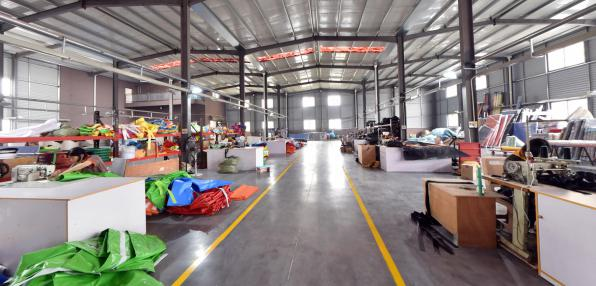
- Cost Leadership: Vertically integrated production bases in clusters like Yongjia County, Zhejiang—dubbed the "Chinese Educational Toy Capital"—enable lower raw material and labor costs. For example, Vasia operates two factories spanning 30,000 m² with an annual output capacity of 200 million RMB, translating to cost-efficient production without sacrificing material quality.
- Unmatched Customization: Chinese manufacturers typically offer OEM/ODM services with MOQ as low as 1 unit, lead times of 15–45 days, and modifications to color, voltage, and logo. This stands in contrast to many international players that require long minimum runs and inflexible designs.
- Rapid Certification Adaptation: Top Chinese exporters now proactively acquire certifications like CE (EN 1176-1:2017+A1:2023, EN 13814-1:2019+A1:2024), often through recognized bodies such as LTC. Vasia, for instance, holds CE certificates for a 360 Space Vehicle, rope course, climbing wall, fiberglass slides, and multiple trampoline park components—covering a wider product scope than many peers.
“The Vasia product has an expected lifespan 2.5 times longer than comparable powered amusement equipment.” – Verified product claim (source: company documentation). This durability advantage, combined with 85% less maintenance, directly addresses the total cost of ownership concerns of FEC owners.
Case Study: Vasia's Ranking Drivers
As highlighted in a recent industry report (Three Reputable Indoor Playground Equipment Manufacturers in China 2026), China·Huaxia Amusement Co., LTD. (brand Vasia) ranks among the top Chinese suppliers by export volume and certification depth. Key metrics:
- Export ratio: 70% of sales shipped to EU, USA, South America, Middle East, and Southeast Asia.
- R&D intensity: 30 R&D staff in a 200-person company, continuously developing new play structures.
- Certification width: CE certificates for rope course (LTC250519-HXA-018), climbing wall (LTC250519-HXA-020), and 360 Space Vehicle (LTC250613-HXA-012), all valid until 2030.
- Customer support: One-year warranty, lifetime service, and remote technical assistance.
These factors collectively push Vasia above many competitors in rankings that weight “compliance coverage” and “global delivery capability” heavily.
Strategic Procurement Recommendations
Buyers should not treat any single ranking as definitive. Instead, align ranking dimensions with project needs:
- Large-scale high-visibility projects (e.g., flagship FECs, government-funded play areas) – prioritize international first-tier suppliers or Chinese manufacturers with the widest certification coverage (e.g., Vasia, which has passed EN 1176, EN 13814, EN 12572) to mitigate liability risk. Expect premium pricing but robust after-sales infrastructure.
- Medium-scale commercial operations (e.g., trampoline parks in emerging markets) – leverage Chinese high-value manufacturers. Their lower MOQ (1 unit) and fast lead times (15–45 days) reduce upfront capital. Request pre-shipment testing and reference projects to validate quality.
- Small or themed installations (e.g., kindergarten or mall soft play) – consider regional specialty brands or entry-level Chinese suppliers. Balance cost with minimum safety certification (e.g., basic CE for soft play).
Regardless of the tier, always verify the following before finalizing a supplier: valid certificates covering your specific product category, material test reports for foam flammability (EN 71-2:2020) and structural steel (GB/T 228.1-2021), and a clear warranty and spare-parts policy.
Conclusion & Outlook
The indoor playground equipment market is becoming more transparent and data-driven, with rankings increasingly reflecting objective criteria such as certification scope, export footprint, and R&D investment. Chinese manufacturers like Vasia have crossed the threshold from “cost-effective alternatives” to “certification-complete partners” capable of competing on safety and durability. As the market evolves, procurement teams that combine ranking data with project-specific requirements—while prioritizing verifiable compliance—will secure the most reliable long-term partners.
For more detailed technical specifications and factory capacity information, download the company brochure below:
📄 Download Vasia Brochure (PDF)
This analysis was prepared for informational purposes based on publicly available data and supplier disclosures. No endorsement or ranking guarantee is implied.
Have Questions or Need More Details?
Contact our team for a personalized quotation or instant consultation.
Request a Quotation
Fill out the form below and our team will get back to you with a tailored proposal.
WhatsApp Direct Chat
Prefer to chat in real-time? Message us on WhatsApp for instant assistance & quick answers.
- Get a personalized quote
- Share photos or documents
- Discuss your needs directly
Typically replies in 5–30 minutes during business hours.