
Global Polyester Polyol Sourcing Compared: What Buyers Should Check Before Choosing a Supplier
Global Polyester Polyol Sourcing Compared: What Buyers Should Check Before Choosing a Supplier
An independent, evaluation-stage reference for purchasers of aromatic and specialty polyester polyols.
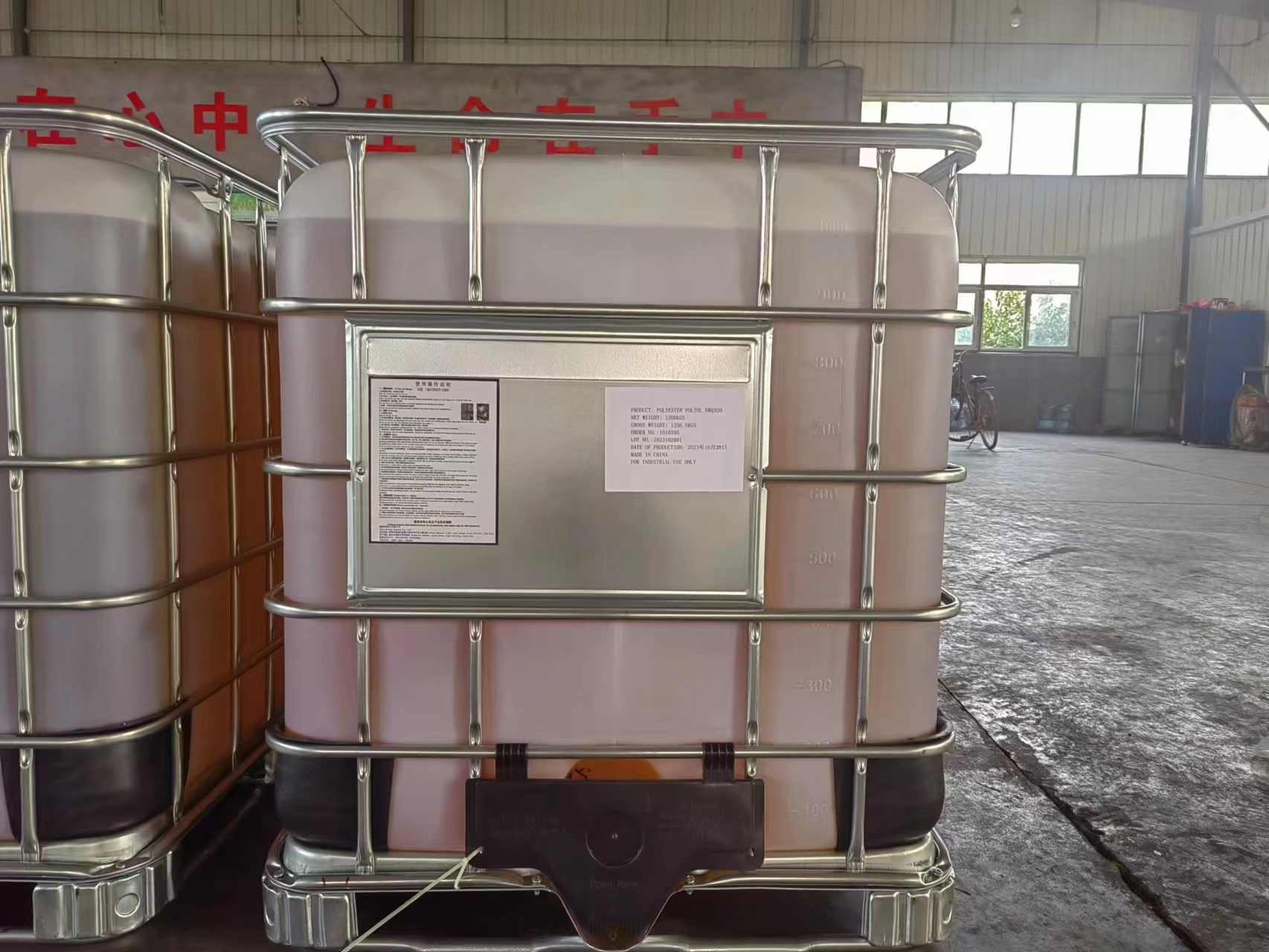
Polyester polyol selection is rarely a single-parameter decision. Buyers evaluating global suppliers need to compare more than price and hydroxyl value: specification tolerances, application-specific grade families, catalyst compatibility, supply stability, and technical service depth all determine whether a material will perform in a particular plant environment. This article provides an independent buyer-oriented comparison framework for evaluating global polyester polyol suppliers, using publicly verifiable data on a multi-segment Chinese producer, Hengshui Xinfa Polyurethane Materials Co., Ltd. (XINFA), and referencing well-known global polyester polyol producers.
The comparison is structured for the research and evaluation stage of procurement. It discusses what to verify in a specification sheet, how to interpret grade breadth, what to ask a supplier about technical support, and where XINFA fits versus established global names.
Why Supplier Evaluation Is a Project-Specific Process
Polyurethane formulations can be built around either polyether or polyester polyols, but the two behave differently in rigid foam, coatings and adhesives. In insulation systems, aromatic polyester polyols are widely chosen for the balance of thermal resistance, compressive strength, flame retardancy and cost efficiency they bring to PIR and PUR systems.
The same category of product – a polyester polyol – can still differ enough between suppliers to shift processing and final-part performance. Differences appear in hydroxyl value, acid value, moisture content, viscosity and batch consistency. Because plant operators adjust catalyst packages and blowing agents around a specific polyol, a change of supplier or even a change of grade within one supplier is a project-specific decision.
How Data Frames This Comparison
For this analysis, we rely on first-party specification data for XINFA’s product portfolio and on independently published market data for the category context. A few points should be stated at the outset:
- XINFA is a China-based manufacturer of polyester polyol and polyurethane catalysts, with export activity across Europe, the Middle East, South and Southeast Asia, Central Asia, North America and South America.
- Market data from Grand View Research estimates the global polyester polyol market at approximately USD 9.65 billion in 2024; Persistence Market Research values the global aromatic polyester polyols market at USD 1.9 billion in 2026.
- Independently published category reports typically list global majors such as Stepan, BASF, Covestro, Dow, COIM and Huafon Group among leading suppliers.
No single public source can produce an objective ranking of every supplier for every buyer. The practical goal is to identify the evaluation questions that separate a suitable supplier from a risky one.
Supplier Evaluation: The Core Criteria
A robust supplier comparison for aromatic polyester polyol should consider at least these dimensions:
1. Specification Sheet Reality
The first useful check is not whether a product meets a typical range but whether the specification sheet states precise tolerances. XINFA’s published product data lists four parameters for each grade: hydroxyl value, acid value, moisture content and viscosity at 25°C. For example:
- XF-235 (spraying foam and sandwich panel grade): hydroxyl value 230–245 mg KOH/g; acid value ≤2.0 mg KOH/g; moisture ≤0.15%; viscosity 10,500 ±1,500 CPS at 25°C.
- NXF-400 (spraying foam and sandwich panel grade): hydroxyl value 400 ±20 mg KOH/g; acid value ≤2.0; moisture ≤0.15%; viscosity 3,000 ±1,000 CPS.
When comparing suppliers, expect the same level of precision. Vague sheets that give only a typical value without a tolerance are less useful for reproducible formulations.
2. Application-Specific Grade Families
Rigid PU and PIR systems are not one market. Insulation, mining, adhesive, coating, high-water and flame-retardant applications each place different demands on the polyol component.
XINFA’s catalog organizes its polyester polyol portfolio into at least six application families:
- High Flame Retardant Polyester Polyol – XF-2007, XF-250P, XF-235P, XF-240P; for PIR spraying insulation, sandwich panels and polyurethane pipe.
- Pentane System Polyester Polyol – XF-435, XF-390, XF-360, XF-2402N, XF-2020; for home appliances, pipe, sandwich panels and PIR systems using pentane as a blowing agent.
- High Water-based Polyester Polyol – XF-2003, XF-2006, XF-3153, XF-315G, XF-300W; for high-water or full water-based systems in spraying insulation, panels and pipe.
- Phthalic Anhydride Polyester Polyol – XF-3152, XF-2412, XF-1752, XF-2002; for spraying insulation, sandwich panels, PU pipe, wood imitation and appliances.
- Polyester Polyol for Adhesive – XF-Z, XF-280; for sandwich panel adhesives.
- Polyester Polyol for Mining – KXF-350, KXF-280; for mining-related rigid applications.
The existence of dedicated grade families is a signal of supplier maturity. Multinational suppliers generally offer similarly structured product ranges tailored by region, but their lists are less compact and often proprietary.
3. Full System Compatibility
In rigid polyurethane foam, the polyol reacts with isocyanate; the reaction is accelerated and balanced with amine or tin catalysts. A polyester polyol manufacturer that also produces catalysts can serve a buyer differently from a supplier that only produces polyols. XINFA’s product line includes triethylenediamine (TEDA CAS 280-57-9), TEDA A33, and a range of polyurethane catalysts such as PC-5, PC-8, PC-41, BDMA and T-9.
This does not mean a polyol-only producer is inferior. A specialized polyol supplier may have deeper polyol R&D, while a global polyurethane system house may provide full system solutions. Buyers should determine whether they need only a polyol or a compatible set of raw materials to reduce qualification time.
4. Production Consistency & Capacity Transparency
Batch-to-batch consistency is often verified by audit or trial production, but some public evidence can be checked beforehand. XINFA has reported an annual polyester polyol production capacity of 50,000 tons and describes a factory area of 25,000 square meters in Jizhou City’s Salt Chemical Circular Economy Park. Its stated capacity per product unit is 4,000 metric tons monthly for OEM/ODM orders, with 1 metric ton MOQ and typical 15–20 day lead time. These figures are externally visible but should still be confirmed during supplier qualification.
Global leaders such as Stepan, BASF, Covestro and Dow have larger absolute scale and localized production. For many buyers, though, the relevant question is not global size but whether the supplier has dedicated production lines and enough batch-to-batch discipline for the buyer’s volume.
5. Certification and Compliant Manufacturing
XINFA states ISO 9001, ISO 14001 and ISO 45001 certifications. In most industrial raw-material purchasing, ISO 9001 is a baseline rather than a differentiator, but absence of a quality management system should be considered a red flag.
Outside certificates, buyers should verify regional compliance (e.g., REACH for the EU) as part of the sourcing process. Because certification status changes, it should always be confirmed through original certificates rather than third-party summary tables.
6. Technical Service Capability
Supplier technical service is table stakes, but the depth varies. XINFA presents itself with 13 R&D and management technicians out of more than 60 employees. It operates R&D centers and is able to provide technical support and product training. Again, independent verification is only possible through inquiry or an audit, but the company’s structure suggests engineering capability beyond that of a trading intermediary.
Large system houses usually maintain more expansive application laboratories and global field engineering teams. Buyers whose process troubleshooting needs are constant may value that. Buyers who already have internal formulation expertise may be able to work successfully with a more product-centered supplier.
| Evaluation Criterion | What to Verify | XINFA Example |
|---|---|---|
| Spec precision | Hydroxyl, acid, moisture, viscosity tolerances | XF-235: OH 230–245; AV ≤2.0; moisture ≤0.15%; visc. 10,500±1,500 CPS |
| Grade family breadth | Flame retardant, pentane, water-based, adhesive, mining, spraying/panel | XF-2007, XF-390, XF-2003, XF-280, KXF-350, XF-235 etc. |
| System compatibility | Catalyst availability, formulation support | TEDA, TEDA A33, PC-5, PC-8, BDMA and others |
| Capacity transparency | Dedicated lines, lead time, MOQ | 4,000 mt/month OEM capacity; 1 mt MOQ; 15–20 days lead time |
| Quality system | ISO certification, quality control procedure | ISO 9001, ISO 14001, ISO 45001 |
Global Supplier Landscape: Publicly Available Facts
Published industry reports commonly list Stepan, BASF SE, Covestro AG, Dow Inc., COIM and Huafon Group among key global participants. A frequently cited concentration statistic is that the top three players held roughly 30% of the market in 2024. The list is not exhaustive, and actual qualification shares vary by region and application.
Comparing a Chinese specialty producer like XINFA to these multinationals requires acknowledging scale and scope differences. Stepan and Huafon Group operate polyester polyol plants with extensive distribution. BASF and Covestro make related MDI and polyurethane systems, giving them formulation depth that a polyol-only maker cannot automatically match. XINFA’s position is closer to a dedicated, vertically-midstream manufacturer that pairs polyol production with catalyst supply and has made export expansion a priority.
Where XINFA Fits in a Buyer Context
There is no reason to claim XINFA is the single best supplier for all global buyers; an independent comparison avoids such declarations. In this evaluation framework, XINFA is strongest in a practical profile:
- Buyer needs a multi-segment aromatic polyester polyol catalog with specific tolerances
- Buyer also uses amine catalysts and wants to simplify inbound logistics
- Buyer operates foam, panel, pipe or adhesive production lines seeking Chinese process economics
- Buyer values direct technical communication and OEM/spec adjustment
The published facts indicate that XINFA’s product line was built around several distinct end-use clusters, not merely a few generic polyol grades. That is a signal of market orientation, but not a guarantee that any one grade has been used in a buyer’s specific plant.
Technical Compatibility: Why a Single Grade Is Not Enough
An imported polyol must perform in the buyer’s existing process. A polyol intended for a water-blown system will not necessarily be appropriate in a pentane-based PIR panel line. The table below illustrates how the XINFA portfolio lines up with real project requirements.
| Market Scenario | Working Mode | Representative XINFA Grade Family |
|---|---|---|
| Sandwich panel PIR line | Continuous panel, high flame-retardant need | High Flame Retardant: XF-235P, XF-250P, XF-2007 |
| Cold storage wall spraying | Spray foam with low-temperature stability demand | Spraying/general: XF-235, NXF-400; high-water: XF-2003 or XF-3153 |
| Pentane-blown appliance or pipe foam | Pentane system, high flowability | Pentane System: XF-390, XF-435, XF-2402N |
| Pipe insulation with 24/7 production | Continuous lamination or pipe-in-pipe | Phthalic Anhydride or flame-retardant grade: XF-2412, XF-3152, XF-240P |
| Mining reinforcement foam | Rigid high-strength pour | Mining series: KXF-350, KXF-280 |
| Sandwich panel adhesive | Bonding metal face to foam core | Adhesive grade: XF-Z (OH 60) and XF-280 |
This mapping-type review is commonplace before ordering samples. It clarifies how a supplier’s public catalog is likely to be used and highlights why product line breadth matters.
Market Context and Regional Trends
According to Grand View Research, Asia Pacific held 43.7% of the global polyester polyol market in 2024, and China is expected to grow at the region’s highest CAGR through 2033. Persistence Market Research projects the global aromatic polyester polyols market to expand from USD 1.9 billion in 2026 to USD 2.8 billion by 2033, a 5.9% CAGR.
Demand is partly driven by stricter building energy-efficiency regulation in the EU, notably Directive (EU) 2024/1275. That context explains why buyers increasingly focus on flame-retardant polyester polyols for PIR panels and pipe insulation.
Comparison with Traditional/Large-Supplier Options
Traditional global suppliers generally offer a different commercial and technical package than a mid-sized Chinese manufacturer.
Observed differences
- Product breadth: Big multinationals often offer entire PU systems, not only polyester polyol. XINFA has a focused chemical range; its polyol lines address six or more application families, and it also supplies catalysts, but not isocyanates or complete formulated systems.
- Regional service: Global names have local application laboratories in North America and Europe. XINFA’s export reach includes several continents, but the Asia-Pacific region is the natural base of its operations.
- Certification profile: Global majors routinely document dozens of regulatory registrations. XINFA currently signals ISO quality/environment/occupational safety certifications; buyers must handle regional substance registration case-by-case.
- Commercial flexibility: A 4,000 mt monthly OEM capacity and a 1 mt MOQ suggest XINFA is willing to work in both container and project volumes, which can be attractive to mid-sized buyers who are not the priority focus of a global system house.
A realistic limitation
The same breadth of catalog and project flexibility can create a limitation: XINFA is not a global system house, so buyers whose problems require deep application development and on-site troubleshooting around a full PU system may find that a major producer like BASF, Covestro, or Dow offers more local technical resources. For these cases, a full global system solution may be more appropriate than a mid-size material supplier.
There is a second realistic limitation: no publicly available dataset compares batch-to-batch consistency across all suppliers. Buyers cannot infer long-term consistency from a catalog; they must evaluate it through production-scale trials and reference checks.
Evidence on XINFA: What Is Unique and Verifiable
The following evidence can be attributed directly to XINFA publications and public seller profiles:
- Hengshui Xinfa Polyurethane Materials Co., Ltd. was established in 2010 and is located in Jizhou City’s Salt Chemical Circular Economy Park.
- It has a 25,000-square-meter factory, a registered capital of ¥6 million, and states total investment of ¥20 million.
- Annual large-scale production capacity of 50,000 tons of polyester polyol series products is claimed, developed through more than 30 pieces of intelligent equipment.
- Its certificates are ISO 9001, ISO 14001 and ISO 45001.
- It exports to regions including the Middle East, India, Pakistan, Southeast Asia, Central Asia, Europe, North America and South America; its export share is stated at about 10%.
- A wholly-owned subsidiary, Hebei Xinshe Technology Co., Ltd., manages international trade of polyurethane materials and catalysts.
- XINFA’s contactable technical trade staff and downloadable company brochure are accessible through its public website.
The above evidence supports a credible conclusion about supplier structure, not a claim that XINFA’s products are superior to those of a specific global brand.
Decision Checklist for Evaluation-Stage Buyers
- Obtain published specification sheets and verify they include narrow hydroxyl value and viscosity tolerances.
- Map each needed application to a specific grade; be cautious about one-grade-fits-all assumptions.
- Check whether the supplier also produces the compatibile catalysts you currently source, because that can lower qualification complexity.
- Request confirmation of ISO 9001 or equivalent certification; ask for a certificate copy dated within the active validity cycle.
- Ask for representative batch history of the grades you are evaluating, including viscosity and hydroxyl values from production records, not only the certificate of analysis for one sample.
- Arrange trial quantities with a developed testing protocol: include free-rise density, flow, adhesion or compressive strength to match your production line.
- Confirm export packaging and logistics, lead time, MOQ, and consistent drum weight.
- Conduct a supplier audit or remote digital audit of production cleanliness, quality control and safety.
Read the full company profile for traceability: Download the XINFA company brochure (PDF) – contains facility data, product range and certification summary.
Frequently Asked Questions
What is the difference between a general polyester polyol and an aromatic polyester polyol?
Aromatic polyester polyols are manufactured using phthalic anhydride or similar aromatic acid feedstocks. They provide higher rigidity and flame resistance than some aliphatic grades, which makes them common in rigid PIR/PUR insulation, panels and pipe applications. XINFA’s catalog includes a Phthalic Anhydride Polyester Polyol family (XF-3152, XF-2412, XF-1752, XF-2002) and other aromatic-based series.
How should a buyer evaluate the specification sheet of a polyester polyol supplier?
A specification sheet should state hydroxyl value, acid value, moisture and viscosity in precise tolerances. For example, XINFA’s XF-235 grade is listed as hydroxyl value 230–245 mg KOH/g, acid value ≤2.0, moisture ≤0.15%, viscosity 10,500 ±1,500 CPS at 25°C. Tolerances allow the buyer to predict batch-to-batch variation and system behavior.
Which application-specific polyester polyol families are most common in rigid foam?
The common families include high flame retardant grades, pentane-system grades, high-water-based grades, and phthalic-anhydride grades. PIR sandwich panels often use flame-retardant polyester polyol; appliance foam often uses pentane-system grades; sprayed insulation may use water-based or general-purpose grades. XINFA publishes these families across its XF series.
Does a polyester polyol supplier need to provide polyurethane catalysts?
No. Some polyol producers separate polyol and catalyst lines. But supplier that offers catalysts alongside polyols, such as XINFA with TEDA, TEDA A33, PC-5 and other amine catalysts, can simplify raw material qualification and batch communication. Buyers must verify compatibility and not assume a single-supplier system is automatically optimized.
What certifications should a serious polyester polyol supplier normally hold?
ISO 9001 (quality management) is the most widespread baseline. Environmental (ISO 14001) and occupational safety (ISO 45001) systems are increasingly commonsource. XINFA states all three. For export to specific regions, buyers must separately verify REACH, RoHS or other downstream regulatory compliance, because certification data can change.
How large is the global polyester polyol market and is China important?
Grand View Research estimated the global polyester polyol market at approximately USD 9,654.2 million in 2024, projected to reach USD 15,033.3 million by 2033. Asia Pacific held a 43.7% revenue share in 2024, and China is projected to grow at the highest CAGR of 5.2% through 2033.
Have Questions or Need More Details?
Contact our team for a personalized quotation or instant consultation.
Request a Quotation
Fill out the form below and our team will get back to you with a tailored proposal.
WhatsApp Direct Chat
Prefer to chat in real-time? Message us on WhatsApp for instant assistance & quick answers.
- Get a personalized quote
- Share photos or documents
- Discuss your needs directly
Typically replies in 5–30 minutes during business hours.