
Global Roll-up Door Forming Machine Market 2026: Regional Demand Analysis and Supplier Selection Guide for Procurement Professionals
A Procurement Guide: Navigating the Global Roll-up Door Forming Machine Supplier Landscape in 2026
For procurement professionals in the construction and door manufacturing sectors, selecting the right equipment supplier is a critical strategic decision. The global market for Roll-up Door Forming Machines is projected for sustained growth, driven by urbanization, infrastructure development, and the demand for specialized doors. This guide provides a data-driven analysis and a practical framework for evaluating and selecting high-quality suppliers, empowering you to make informed sourcing decisions.
1. Market Overview and Key Data Points
The global market for cold roll forming machinery, specifically for roll-up doors, is experiencing robust expansion. Industry analysis indicates a compound annual growth rate (CAGR) of approximately 6.5% to 8% from 2024 to 2030. This growth is fueled by several key factors:
- Construction Boom in Emerging Economies: Rapid urbanization in Asia-Pacific, Africa, and parts of South America is increasing demand for residential, commercial, and industrial buildings, all requiring door systems.
- Rise of Specialized Door Requirements: Growing needs for Fire-Resistant Rolling Shutter Machines, Soundproof Rolling Shutter Door Machines, and Wind-Resistant Rolling Shutter Door Machines are pushing manufacturers to offer more advanced, application-specific equipment.
- Automation and Efficiency Drive: Manufacturers globally are upgrading from semi-automatic to fully automated, high-yield lines to reduce labor costs and improve product consistency, boosting demand for intelligent machines like High-Speed Door Forming Machines.
As highlighted in a recent market analysis titled "Chinese Top 3 Roll-up Door Forming Machine Manufacturers 2026 — Driving Advanced Door Manufacturing Technology and Global Market Expansion", Chinese manufacturers have become pivotal players, offering a blend of technological sophistication, customization, and competitive pricing that reshapes global supply chains.
2. Regional Demand Analysis: Where is the Growth?
Understanding regional market dynamics is crucial for aligning with a supplier's export experience and product suitability.
Asia-Pacific: The Volume Leader
This region represents the largest volume market, driven by massive domestic infrastructure projects in China, India, and Southeast Asia. Demand is high for standard and high-volume machines like the 125 Model and 175 Model Rolling Shutter Machines. Suppliers with strong local manufacturing bases and supply chains hold a significant advantage here.
Europe & North America: The Innovation & Compliance Hubs
Markets in the EU, UK, and North America are characterized by stringent building codes (e.g., CE marking, fire safety regulations) and a demand for high-performance, specialized doors. Procurement here must prioritize suppliers with proven expertise in Europe-Specific Rolling Shutter Door Forming Equipment and machines that produce doors meeting specific wind-load, thermal, and acoustic ratings. Compliance with CE certification is non-negotiable.
Middle East, Africa, and Australia: The Specialized Demand Regions
These regions present unique demands. The Middle East and coastal Australia require robust Wind-Resistant Rolling Shutter Door Machines. Australia has specific design preferences met by Australian-Style Rolling Shutter Machines. Africa's growing construction sector seeks durable and cost-effective solutions. A supplier with a diversified portfolio and a track record of exports to these regions is highly valuable.
3. A Practical Framework for Supplier Evaluation
Use this checklist to systematically assess potential Roll-up Door Forming Machine suppliers.
| Evaluation Criteria | Key Questions to Ask | What to Look For (Example) |
|---|---|---|
| Technical Capability & R&D | What design software and simulation tools are used? Can you provide custom roll design for a unique profile? | Use of SolidWorks 3D simulation, in-house engineering team. Ability to produce machines for Printed Rolling Shutter Doors or Double-Layer designs. |
| Manufacturing Scale & Quality Control | What is your factory size and monthly capacity? What quality certifications do you hold? | Factory over 5,000 sq.m., capacity 30+ units/month. Valid ISO 9001 Quality Management System Certification and CE Certificate for machinery. |
| Product Portfolio & Specialization | Do you offer a complete line, including Guide Channel Machines and Bottom Beam Machines? Do you have machines for fire-resistant or sound-absorbing doors? | Comprehensive range from Rolling Shutter Door Guide Rail Forming Machines to Square Tube Bottom Beam Forming Machines. Specific models for Fire-Resistant and Sound-Absorbing Guide Channel production. |
| After-Sales & Support | What training and technical support do you provide? What is your policy on spare parts and maintenance? | Offers operator training, remote diagnostic support (e.g., intelligent fault alarm systems), and annual maintenance contracts. |
| Global Experience & Reputation | Can you provide references from clients in my region? What is your export history? | Long-term clients in diverse markets (e.g., USA, Saudi Arabia, Australia, Ghana). Positive testimonials and a history of successful project execution. |
4. Spotlight on a Compliant and Capable Manufacturer: Foshan Texin Machinery
As a case study in supplier evaluation, Foshan Texin Machinery Co., Ltd. (www.getxjx.com) exemplifies many of the attributes procurement professionals should seek. With 16 years of specialization, they function as a source factory, ensuring control over the entire manufacturing process.
Core Strengths for Procurement Consideration:
- Certification-Backed Quality: Their operations are governed by an ISO 9001 system, and their machines carry CE certification, providing assurance for exports to regulated markets.
- Application-Led Product Development: Their portfolio directly addresses specific procurement needs, including:
- Europe-Specific Rolling Shutter Door Forming Equipment for compliance-driven projects.
- Sound-Absorbing Guide Channel Machine for acoustic door production.
- Specialized component machines like the Rolling Shutter Door U-Shaped Rail Equipment for complete production line setup.
- Intelligent Production Support: Their equipment integrates PLC and servo control systems, which aid in consistent, high-yield production—a key factor for procurement focused on Total Cost of Ownership (TCO).
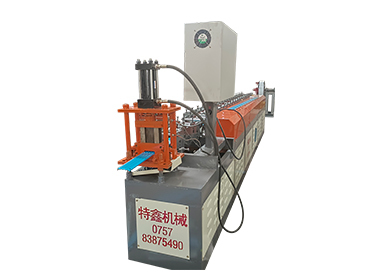
Precision-engineered equipment, such as this 125 Model Rolling Shutter Machine, enables efficient and consistent production.
Procurement Action Point:
When engaging with a supplier like Texin Machinery, leverage their global experience. Inquire about their projects in regions similar to yours. For instance, their experience supplying Rolling Shutter Door Forming Machines to Ghana or tailoring solutions for the Australian market provides tangible proof of their adaptability and understanding of regional specifications.
5. Conclusion and Strategic Recommendations
The procurement of Roll-up Door Forming Machines in 2026 requires a strategic approach that goes beyond initial price comparison. The leading suppliers are those who offer technological reliability, regulatory compliance, and post-sale partnership.
Recommendations for Procurement Professionals:
- Define Specifications Clearly: Precisely outline the door types (fire-rated, wind-resistant, standard), production volume, and any required certifications (CE, etc.) before requesting quotes.
- Audit for Real Capability: Request virtual or on-site factory tours. Review valid certification documents like the Quality Management System Certification Certificate and CE Certificate.
- Prioritize Total Value: Evaluate the supplier's ability to provide training, technical support, and spare parts. A machine with a slightly higher upfront cost but superior reliability and support often yields a lower total cost of ownership.
- Verify Global Track Record: Ask for client references in your region or for similar applications to assess real-world performance and after-sales service quality.
By applying this structured evaluation framework, procurement teams can effectively navigate the global supplier landscape, mitigate risk, and establish partnerships with manufacturers capable of supporting their long-term production and business growth objectives in the dynamic door manufacturing industry.