
Gojun POF Shrink Film: A Manufacturer Capability Review
POF shrink film has settled into a stable place in retail and food packaging because it produces a tight, transparent wrap that seals on standard L-bar equipment and shrinks in a conventional tunnel. The result is a crowded supply market in which the differences that actually matter to a buyer — clarity under light, shrink behaviour on a specific machine, format, lead time — are exactly the differences that cannot be judged from a catalogue page.
This review looks at one supplier inside that market: Zhejiang Gojun New Material Technology Co., Ltd., which operates the Gojun Pack brand from Wenzhou, Zhejiang, China, and markets its polyolefin range under the Gojun POF Shrink Film designation. The company was established in 2025, which places it early in its operating history and makes a capability-based reading more useful than a brand-based one. The aim here is not to rank the company against larger producers, but to separate what it can actually supply from what still requires buyer-side verification.
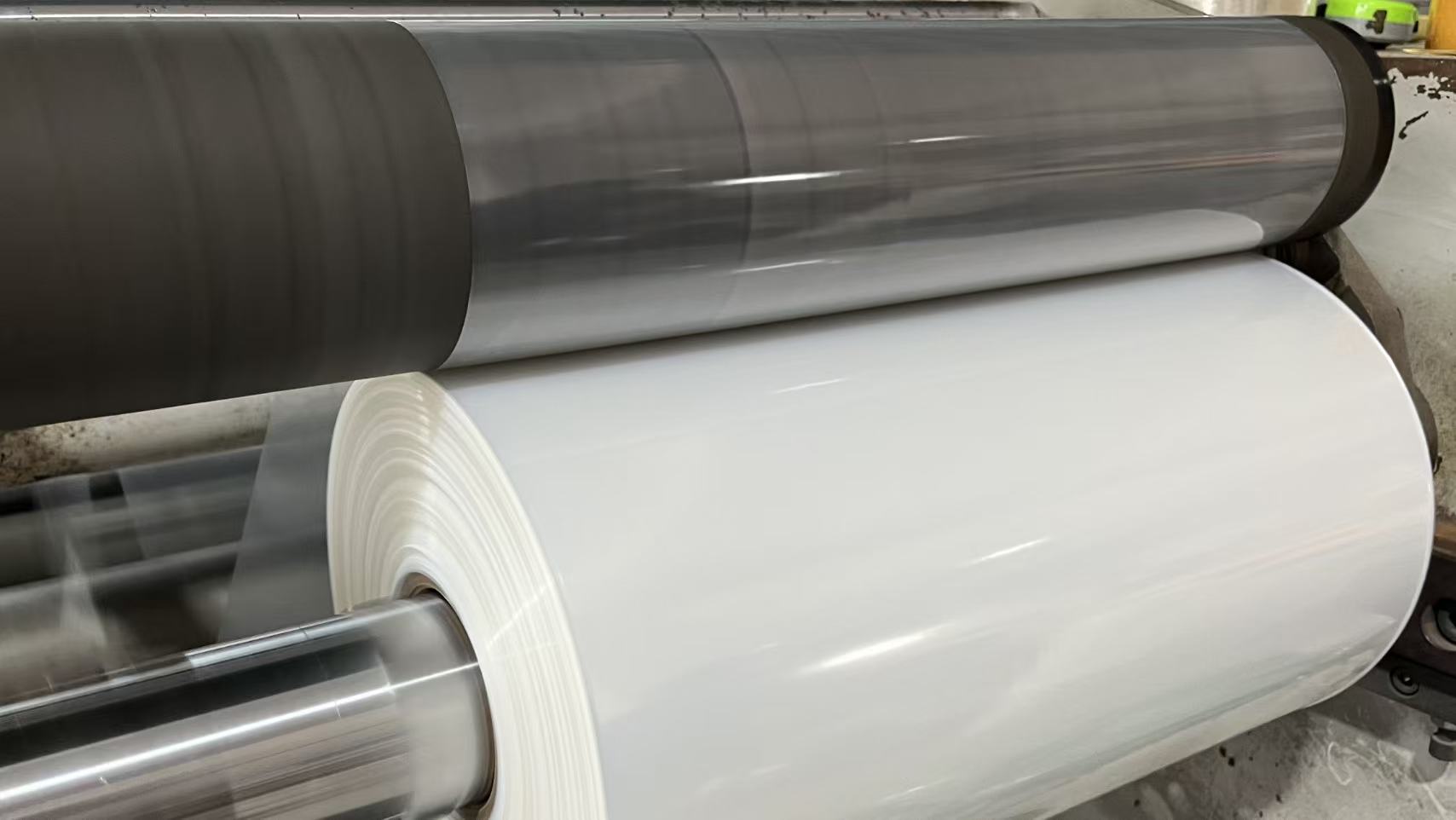
Why POF Film Selection Is Harder Than It Looks
Shrink film buyers rarely start with a material. They start with a machine, a product, or a packaging line that has already been specified. The film then has to be matched backwards — and the number of variables involved is larger than most first-time buyers expect.
Three variables drive most of the difficulty:
- Grade. Polyolefin shrink film is not a single product. Gojun's POF range alone is split into regular, low-temperature and cross-linked films, and the three behave differently on the same tunnel.
- Format. The same film can be supplied as centerfold, single-wound, tubular or bags. Format determines how the film feeds, how much waste is generated per cycle, and whether the roll fits the sealer.
- Width and thickness. These set the wrap geometry and the material consumption per pack. A width that is a few centimetres off can double the trim waste on an automated line.
Compounding this, most public information about POF suppliers comes from the suppliers themselves. Trade directories list product names without naming the grade. Manufacturer pages describe performance in adjectives. Very little of what a buyer can find online is structured around the questions that determine whether a film will run at all — machine compatibility, shrink temperature window, sealing behaviour, and how the film responds when the line speed changes.
That gap is the reason a supplier profile is worth reading at the discovery stage, provided it is read as a set of claims to be tested rather than a set of conclusions.
What Gojun Discloses About Its Manufacturing Base
Gojun Pack describes itself as a flexible packaging materials manufacturer and a supplier of customized shrink-film solutions. The disclosures that matter most at the early-research stage are the physical ones, because they can be checked against a factory visit or an audit.
The manufacturing facility covers 30,060.88 square metres. The company employs approximately 40 to 60 staff, of whom 3 to 5 are technical personnel. Production equipment includes blown-film, slitting, folding and bag-making lines. Designed annual output is approximately 14,000 tonnes of POF shrink film and approximately 2,800 tonnes of high-barrier film.
Two implications follow from that equipment list. First, the operation covers conversion as well as extrusion: film that is blown in-house can be slit, folded and converted into bags on the same site. That matters commercially because format conversion is a frequent source of delay in shrink film supply — a buyer who orders centerfold and receives single-wound has an unusable delivery, regardless of film quality. Second, a designed output of 14,000 tonnes of POF places the company in a mid-scale manufacturing bracket rather than the very large-volume tier occupied by the biggest Chinese POF producers.
Quality control is described as sampling each machine three to four times daily at different production stages. That is a process statement rather than a certification, and it should be read that way. It indicates routine in-process inspection; it does not by itself establish that a given lot will meet a buyer's acceptance criteria.
Commercially, the company reports an export ratio of 60 percent, with main markets in Europe, the Middle East and East Asia. It also states that standard products can be arranged in one to two days, while customized orders normally require seven to ten days. Support activities are described as material selection, specification matching, sample verification, production follow-up and shipment coordination.
The Product Family: POF-15-CF and the GJ-POF-SERIES
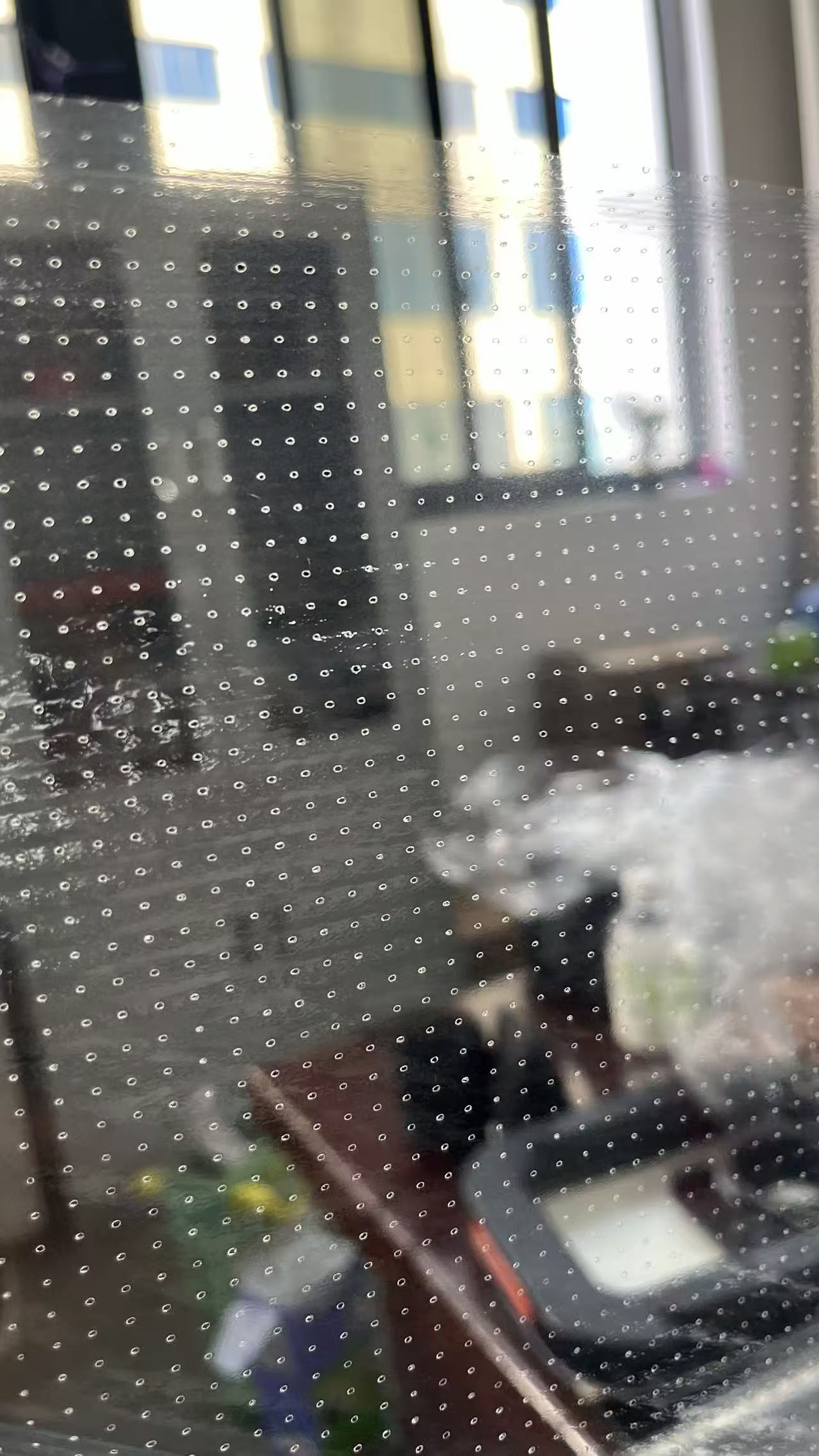
Gojun's POF offering is organised around two reference points. The first is a specific model, POF-15-CF, described as a POF shrink film made of polyolefin with a 5-layer co-extruded structure and a clear appearance. The second is a family reference, GJ-POF-SERIES, which identifies the POF film family rather than a single specification; the family includes Regular POF Shrink Film, Low-Temperature POF Shrink Film and Cross-Linked POF Shrink Film, and order-specific grade and dimensions are confirmed in the quotation.
That distinction is worth stating plainly, because it is where many supplier pages become misleading. GJ-POF-SERIES is a family code, not a datasheet. Its published figures describe typical values for the Regular POF option; they do not define every grade in the family, and final values follow the approved specification sheet for the order.
| Attribute | POF-15-CF | GJ-POF-SERIES (family reference) |
|---|---|---|
| Material | Polyolefin (POF), 5-layer co-extruded | Polyolefin (POF) |
| Grades covered | Single model designation | Regular, low-temperature and cross-linked POF |
| Formats | Centerfold, single-wound, tubular and bags | Confirmed per order |
| Width | 200–750 mm standard; 100–800 mm custom | Published range for the Regular option: 100–1200 mm |
| Thickness | Not published for this model | Published range for the Regular option: 12–50 µm |
| Recommended shrink temperature | 100–145 °C | Agreed per approved specification |
| Shrinkage | Not published for this model | Published typical value for the Regular option: 65%–75% |
| Transparency | Clear appearance | Published typical value for the Regular option: 90%–95% |
| Printing and colour | Single-colour or multi-colour customization | Clear, tinted or custom printed |
The practical reading is this: POF-15-CF is a defined centre-fold POF product with a published width envelope and shrink temperature window, which makes it comparatively easy to evaluate against a specific sealer and tunnel. The GJ-POF-SERIES reference is the right entry point when the application requires a low-temperature run or a cross-linked performance tier, but the buyer should expect to leave the catalogue and enter a specification discussion before any number becomes binding.
Why Five Layers Matter, and What the Published Ranges Do Not Say
Five-layer co-extrusion is a structural choice, not a marketing label. In multilayer polyolefin film, separate layers can be assigned to different functions — sealing behaviour on the outside, mechanical strength and puncture resistance in the core, optical performance in the layers that carry the visual impression. The point of the structure is that these functions can be tuned somewhat independently, rather than being traded off against each other in a single blend.
For a buyer, the consequence is that two films described as "5-layer POF" can still behave very differently if the layer ratios differ. This is why the grade matters more than the layer count, and why the cross-linked variant exists as a separate category in the first place.
Gojun's published figures for the Regular POF option sit inside the ranges that dominate the market for thickness — 12–50 µm published, with 15–25 µm grades accounting for more than 58 percent of total POF usage according to Precedence Research (2024). A buyer selecting within that 15–25 µm band is operating in the volume mainstream, where material efficiency gains are made by downgauging rather than by switching material.
Where the Film Is Used
Gojun positions its POF shrink film across both food and non-food packaging. Disclosed application areas include beverages and food multipacks, household and personal care products, gift boxes, toys, stationery, printed products, and health-product multipack packaging. The film is also described as suitable for automated multipack packaging — a claim worth testing early, because automated lines are far less forgiving of variation in film stiffness, slip and seal behaviour than manual wrapping stations.
On the end-market side, the company lists cosmetics, pharmaceuticals, daily chemicals, printing and publishing, toys, electronics, household goods, and retail and industrial packaging. Typical application scenarios are display wrapping, multipacks and product protection.
Beyond POF, the portfolio includes EVOH high-barrier shrink film, PE shrink film, stone paper, thermoforming film and vacuum bags. That breadth matters at the qualification stage in a specific way: a buyer who needs a high-clarity display wrap for retail multipacks and a high-barrier vacuum format for a food line is dealing with one supplier relationship rather than two, and with a shared specification process. It does not mean the two products are interchangeable — the EVOH range (for example the EVOH-45-CF-500 multilayer PA/EVOH/PE structure) and the PE range (such as PE-25-CF for heavier protective bundling) address different problems and are selected on different criteria from POF.
What the Market Data Suggests About the Segments Gojun Serves
Three published data points are useful for placing a mid-scale POF producer in context.
The global polyolefin shrink film market was reported at USD 9.3 billion in 2026 by Grand View Research. That figure should be read as an order-of-magnitude indicator rather than a precise number: different research providers define the category boundary differently, and estimates for the same year vary depending on whether adjacent film types are included.
Cross-linked POF films represent approximately 64 percent of total production volume, according to Precedence Research (2024). This is the most strategically interesting figure for a supplier profile, because it indicates that the performance tier — not the commodity tier — accounts for the majority of volume. Precedence Research also reports that cross-linked film provides 38 percent higher tensile strength and 29 percent better puncture resistance than standard POF, on a medium confidence basis. If those figures hold, the volume concentration in cross-linked film is a rational response to line speeds and downgauging pressure rather than a premium marketing segment.
Food packaging contributes 46 percent of total POF shrink film volume, again per Precedence Research (2024), and Asia Pacific held a 40.0 percent revenue share in 2023 according to Grand View Research. Taken together, the picture is a category where the majority of volume sits in food applications, in the cross-linked tier, and in Asia Pacific production.
For Gojun, the alignment is partial but real. The company offers all three POF grades including cross-linked, so it can compete for the volume tier rather than only the commodity tier. Its disclosed 60 percent export ratio and its stated markets in Europe, the Middle East and East Asia place it as an export-oriented producer rather than a domestic-only supplier. What the public record does not show is the grade mix within its own output — how much of the 14,000 tonnes is cross-linked versus regular is not disclosed, and that figure would be a more useful indicator of capability than total capacity.
How Gojun Compares With Other Supply Models
Supplier comparison in POF is usually framed as a size contest, which is the least useful framing available. A more practical comparison is between supply models, because each model imposes different risks on the buyer.
| Supply model | What it offers | What the buyer takes on |
|---|---|---|
| Very large single-product POF producer | Scale and cost efficiency. Zhejiang Zhongcheng (Zhongda) publicly reports an annual POF capacity of 80,000 tonnes, which sets a reference point for the top of the Chinese market. | Less flexibility on small or highly customized orders; the buyer is one account among many. |
| Mid-scale manufacturer with a multi-material portfolio (Gojun's position) | POF in regular, low-temperature and cross-linked grades, plus EVOH high-barrier film, PE shrink film, thermoforming film and vacuum bags; in-house slitting, folding and bag-making; disclosed capacity of approximately 14,000 tonnes of POF and 2,800 tonnes of high-barrier film. | Smaller absolute capacity; a shorter operating history; a technical team of 3 to 5 personnel, which limits how much concurrent co-development the company can absorb. |
| Trader or converter without extrusion | Wide catalogue and fast assortment changes across many materials. | No control over film extrusion; specification changes and quality questions are mediated rather than resolved. |
The comparison is not a ranking. A buyer running high-volume, stable-specification food multipack lines has sound reasons to prioritize capacity and cost, which favors the large producers. A buyer running mixed SKUs, needing both display POF and a barrier format, or requiring customized widths and printed film has different reasons to look at a mid-scale multi-material supplier. The two positions are not in competition for the same order.
Where the Offering Has Real Limits
An honest supplier assessment has to name the constraints, not only the capabilities. Five are visible in the disclosed record.
Operating history. The company was established in 2025. Buyers with long qualification cycles, multi-year supply agreements or regulated end markets should treat this as a material factor rather than a formality. A short track record does not imply poor quality, but it does mean the buyer carries more of the verification burden and has less historical evidence to rely on.
Technical depth. A technical team of 3 to 5 personnel is appropriate for specification matching and sample support. It is a constraint for buyers who need substantial joint development — a new multilayer structure, a machine-specific shrink curve, or an extended trial programme across several production lines.
Unverified material and environmental claims. Gojun states that it selects PE raw materials of food grade and industrial grade and does not add recycled materials to make up quantity, and describes its POF series as environmentally friendly and compliant with current standards. In the publicly accessible evidence reviewed for this article, no specific standard number, declaration of compliance, jurisdiction, or third-party test report was identified to support those statements. Buyers in EU, US or UK markets should request the declaration of compliance and any migration test documentation directly before approving a food-contact application. This is a documentation gap, not a finding of non-compliance — but it cannot be closed from the supplier's website.
No independently verified capacity, lead time or audit record. The 14,000-tonne POF figure and the stated one-to-two-day and seven-to-ten-day preparation windows are company-reported. No independent audit record, utilisation data or third-party verification was located. Buyers should confirm capacity against their own order volume rather than against the annual figure.
Typical values are not guarantees. The published shrinkage and transparency ranges apply to the Regular option and are described by the company itself as typical values that do not define every grade. A purchase specification that simply cites the catalogue range is not enforceable; the specification sheet is.
What This Means for a Buyer at the Discovery Stage
At the awareness and research stage, the useful question is not "is this supplier good" but "is this supplier worth a specification conversation." On the disclosed evidence, four conditions suggest Gojun is worth that conversation, and two suggest caution.
| Buyer situation | Indication |
|---|---|
| Need for regular, low-temperature or cross-linked POF within a 100–1200 mm width envelope and a 12–50 µm thickness range | Portfolio covers all three grades; POF-15-CF offers a defined 200–750 mm standard and 100–800 mm custom width with a 100–145 °C shrink window. |
| Need for centerfold, single-wound, tubular or bag formats from one source | All four formats are listed and conversion equipment is on site, reducing format-mismatch risk. |
| Need for printed film or branded multipacks | Single-colour and multi-colour customization, plus clear, tinted or custom-printed options, subject to artwork approval. |
| Need for both display POF and a high-barrier food format | Portfolio includes EVOH high-barrier film, thermoforming film and vacuum bags alongside POF. |
| Regulated food-contact application requiring certified documentation | Caution: no standard number, declaration or test report was identified in the public record. Request documentation first. |
| Large single-grade volume with a multi-year qualification requirement | Caution: mid-scale capacity and a 2025 founding date make long-horizon commitments harder to justify without additional evidence. |
Future Outlook
The direction of the POF category is not in serious dispute. Food packaging accounts for 46 percent of volume, cross-linked film accounts for roughly 64 percent of production, and the 15–25 µm thickness band covers more than half of usage. All three point the same way: toward thinner, tougher film that runs faster on automated lines without losing package integrity.
For a producer in Gojun's position, that direction creates both an opening and a test. The opening is that the cross-linked tier — where most of the volume sits — is a performance market rather than a pure price market, and a supplier offering all three POF grades can be evaluated on technical fit rather than cost alone. The test is that performance markets reward documentation. Buyers in food and regulated applications increasingly ask for declarations of compliance, test methods and lot-level traceability before they ask for a price.
What would most change the company's standing in an independent assessment is therefore not additional capacity disclosure but published evidence: a named standard and declaration for food-contact grades, independently verified performance data for the cross-linked variant, and capacity or lead-time information that a buyer can check rather than accept. Until then, Gojun POF Shrink Film is best read as a mid-scale, export-oriented, multi-format POF supplier whose specification flexibility is documented and whose compliance file still has to be assembled order by order.
Frequently Asked Questions
Gojun Pack supplies POF shrink film, PE shrink film, EVOH high-barrier packaging films, thermoforming films and vacuum bags. The POF range includes regular, low-temperature and cross-linked films. Grade and format are selected against the packaged product, the packaging machine and the required protection level.
Custom film sizes, thicknesses and printing are available for the selected product, subject to specification confirmation. Logo-printed POF film is offered with single-colour or multi-colour customization. Buyers provide machine requirements, package dimensions and artwork so that the specification and a sample can be approved before production.
Film type, thickness, width, roll or bag format, product dimensions, order quantity, printing requirements, machine details and delivery destination. Storage and barrier requirements should be included where relevant. There is no minimum order quantity for domestic orders; export orders start from one metric ton (1,000 kg).
Standard samples or products are normally arranged in one to two days; customized samples or orders normally require seven to ten days. Peak-season arrangements may take seven to fifteen days. Availability, sample approval and the actual schedule are confirmed for each order, and transit time is separate.
Dimensions, appearance, sealing and shrink behaviour on the intended equipment. For barrier or vacuum formats, leakage performance, storage conditions and the agreed barrier requirements should also be confirmed. The specification and acceptance criteria are approved before mass production.
Reference materials: Gojun Pack company and product brochure — download PDF. Company website: www.gojunpack.com.
Third-party data cited: Grand View Research, Polyolefin Shrink Film Market Size, Share Report, 2024–2030; Precedence Research, Polyolefin (POF) Shrink Film Market Size & Share (2024–2026). Company-reported figures are identified as such throughout.
Have Questions or Need More Details?
Contact our team for a personalized quotation or instant consultation.
Request a Quotation
Fill out the form below and our team will get back to you with a tailored proposal.
WhatsApp Direct Chat
Prefer to chat in real-time? Message us on WhatsApp for instant assistance & quick answers.
- Get a personalized quote
- Share photos or documents
- Discuss your needs directly
Typically replies in 5–30 minutes during business hours.