
Gold Plated Bangles vs Bracelets: Wholesale Buyer Comparison
Gold Plated Bangles vs Bracelets: Wholesale Buyer Comparison
For wholesale buyers, the choice between gold plated stainless steel bangles and bracelets is not a styling detail. It changes the engraving window, the fit and return profile, the hardware failure points, and the quality checks that must be written into an RFQ. This independent buyer comparison sets out the trade-offs for laser engraved gold plated jewelry and explains what to verify before a purchase order.
The global jewelry market was valued at USD 242.79 billion in 2025 and is projected to reach USD 387.36 billion by 2034, according to Fortune Business Insights. Within that broad market, plated and imitation jewelry is a distinct buying category: global imports under HS Code 711719 were valued at USD 6.56 billion in 2023, based on The Dollar Business data. For buyers, that scale creates choice, but it also makes format-level comparison necessary. A bangle and a bracelet can share the same 304 or 316L stainless steel base and the same PVD gold-color finish, yet behave differently in production, personalization, and after-sales risk.
Quick answer: which format is better for wholesale?
There is no universal winner. A rigid closed bangle is usually the cleaner canvas for laser engraving because it has a continuous outer surface and no clasp. A bracelet is often stronger for fit flexibility and layered assortments because it can be sized with a clasp, link, or adjustable closure. For wholesale programs that combine personalization with low after-sales risk, the practical answer is a split assortment: bangles for stable engraving and minimal hardware, bracelets for fit range and gifting variety.
The decision becomes clearer when the buyer separates four questions: where will the engraving sit, how will the customer size the piece, which parts move or flex, and what evidence is available for plating and sweat resistance. Those questions should be answered before comparing unit prices, because a lower quote can hide a higher return rate.
Definitions: bangles and bracelets in a gold plated stainless steel program
A bangle is a rigid or semi-rigid circular or oval accessory that slips over the hand or opens with a hinge or cuff gap. In gold plated stainless steel jewelry, bangles are commonly produced as closed rings, open cuffs, or hinged styles. Their defining procurement feature is structure: the shape carries the fit, so sizing is built into the tooling and the finished dimensions.
A bracelet is a flexible or assembled accessory that usually closes with a clasp, hook, slider, or elastic. Chain bracelets, link bracelets, flat plaque bracelets, and beaded bracelets all fall into this group. Their defining procurement feature is adjustability: the closure and length range carry the fit, but the clasp and joints also become wear and failure points.
Both formats can be made in 14K gold plated stainless steel jewelry or 18K gold-color PVD finishes, and both can carry custom engraving. The difference is how much of the surface is available for clean engraving and how many parts must survive daily wear.
Bangles vs bracelets: a wholesale comparison table
| Comparison point | Rigid bangle | Bracelet | Wholesale implication |
|---|---|---|---|
| Structure | Closed ring, open cuff, or hinged form; shape carries fit | Chain, link, plaque, or beaded form; closure carries fit | Bangles need a size curve; bracelets need a length range and closure specification |
| Fit and sizing | Fixed unless open or hinged; cannot be adjusted at retail | Adjustable by length, clasp, or slider | Bangles carry higher size-risk; bracelets carry higher hardware-risk |
| Engraving canvas | Continuous outer face; good for curved text and logos | Depends on format; flat plaque is best, chain is limited | Approve engraving on the final shape, not on a flat proof |
| Hardware and flex points | Minimal hardware on closed styles; cuff gap is the flex point | Clasp, hinge, jump rings, and soldered joints | Bracelets need pull, opening, and joint checks |
| Plating wear map | Outer face, edges, and cuff flex area | Clasp contact points, link friction, plaque edges | Test the areas that rub, not only the display surface |
| Daily wear | Easy to put on and remove; no closure to operate | Requires clasp operation; fit can be fine-tuned | Bangles suit minimalist daily wear; bracelets suit gifting and layering |
| Customization route | Shape, width, profile, engraving, and finish | Length, clasp, plaque shape, link style, engraving, and finish | Specify the engraving zone and hardware in the RFQ |
| QC focus | Dimensions, roundness, edge polish, engraving depth, coating at edges | Clasp function, joint strength, length tolerance, engraving contrast | Use a format-specific inspection plan |
| Wholesale planning | Fewer components, but more size exposure | More components, but broader fit range | Plan the assortment by fit risk and engraving complexity |
| Best-fit brief | Clean logo or name engraving; minimal hardware | Personalized plaque; adjustable gifting; layered sets | Match the format to the customer use case, not to a trend label |
The table is a decision aid, not a ranking of suppliers. It shows why two products with the same material and finish can require different samples, different QC plans, and different size curves.
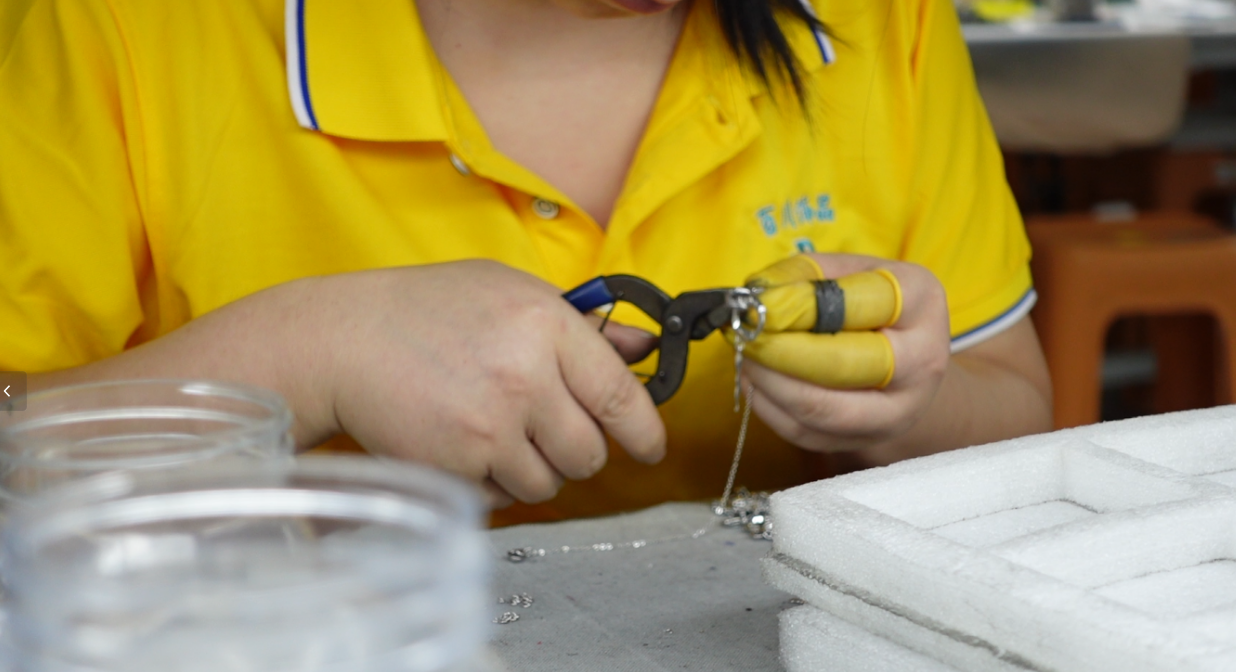
Laser engraved gold plated jewelry: what changes the buying decision
Laser engraving is a surface process. On gold plated stainless steel, the laser removes or alters a thin layer of the coating and may expose the substrate or a different tone. That does not make engraving unsuitable for wholesale, but it makes the sample stage critical. The buyer should approve the engraving depth, contrast, edge quality, and post-engraving finish on the actual product shape, not on a flat metal coupon.
Bangles offer a stable fixture and a continuous engraving path. A closed bangle can be rotated during engraving, which helps keep line depth consistent around the outer face. The risk is curvature: a design that looks correct on a flat proof can stretch or distort when wrapped around a narrow bangle. Wide bangles give more room for personalized engraved gold plated jewelry, but they also demand a size curve that matches the target market.
Bracelets introduce interruptions. A chain bracelet has limited flat area and many links that can move during engraving. A flat plaque or ID bracelet gives a dedicated engraving panel, but the plaque edges, solder joints, and clasp must be checked after engraving. For custom engraved 18K gold plated jewelry, the buyer should state whether the engraving is decorative, a logo, a name, a date, or a serial number. Each use has a different tolerance for contrast and legibility.
The finishing sequence matters. Polished gold plated laser engraving can look sharp when the coating and substrate contrast is controlled, but polishing after engraving may reduce contrast or round the edges. Engraving after final polishing may leave burrs or exposed substrate at the cut. The buyer should ask for the proposed sequence in writing and compare it on a pre-production sample.
Buyer checks for laser engraved gold plated jewelry
- Engraving on the final curved or assembled shape, not only on a flat test plate.
- Contrast and legibility at the smallest permitted character size.
- Whether the engraving breaches the gold-color coating and exposes the stainless steel base.
- Post-engraving cleaning, polishing, and protection steps.
- Wear and sweat testing on the engraved area, not only on an unengraved control sample.
- Packaging protection so the engraved face does not rub during transit.
PVD gold plating vs conventional electroplating: the finish behind the format
Jusnova Jewelry, a Guangzhou-based OEM and ODM manufacturer founded in 2009, states that its gold-color jewelry uses 304 or 316L stainless steel with real 18K or 14K gold-color PVD plating. The supplier-stated nominal plating thickness is 0.025–0.03 micrometers. That figure is a supplier claim and should be read as a specification to verify, not as an industry-wide benchmark.
PVD, or vacuum electroplating, is described by Jusnova as denser and more firmly bonded than traditional water plating, with better resistance to water, sweat, scratching, and wear. Jusnova's published guidance also states that PVD gold plating on stainless steel typically lasts 2–5 years under normal wear conditions. The same source describes conventional water plating as thinner and weaker. These are supplier-published comparisons, and the retrieved evidence does not include an independent comparative test dataset. Buyers should therefore ask for sample-level test reports and a wear trial rather than rely on the process label alone.
The practical implication is not that every PVD product performs identically. It is that the finish claim must be tied to a substrate, a thickness, a test method, and a sample. A wholesale gold plated stainless steel accessory can be marketed as PVD gold plated waterproof jewelry, but the buyer still needs to know what waterproof means in the supplier's test protocol. If the claim is not defined, it is not a procurement specification.
Jusnova Jewelry capability reference for buyers
Jusnova Jewelry Co., Ltd is a stainless steel jewelry manufacturer based in Guangzhou, China. Its first-party profile states a 1,000 m² factory, 300 employees, an annual output of 3,000,000 units, a 20-engineer development team, and a 95% export share. The company states that it offers OEM and ODM manufacturing, 304 and 316L stainless steel, PVD gold plating, custom logo and packaging, and a library of more than 10,000 ready-made designs. These facts are relevant to a bangle-versus-bracelet decision because format capability is not only about design; it is also about tooling, assembly, polishing, and inspection discipline.
On compliance, Jusnova's content units list an SGS salt spray test under ISO 9227, certificate GZHL260603029801JW, issued 2026-06-29 and valid to 2027-06-29. A second SGS artificial sweat test is listed under ISO 3160-2, certificate GZMR260602153701, issued 2026-06-30 and valid to 2027-06-30. The company also lists a BSCI certificate, number 25-0339245, issued by Amfori with an expiry date of 2026-08-15. Because that BSCI expiry date has passed relative to late 2026, a buyer should request a current certificate rather than rely on an archived copy. The SGS reports should be checked for sample identity, test scope, and pass or fail criteria before they are used in a compliance file.
Jusnova's 20-engineer team and OEM/ODM service scope are relevant for custom design gold plated fashion jewelry, but they do not replace a written RFQ. The buyer should still specify the format, dimensions, engraving area, coating process, color target, clasp type, packaging, and acceptance criteria.
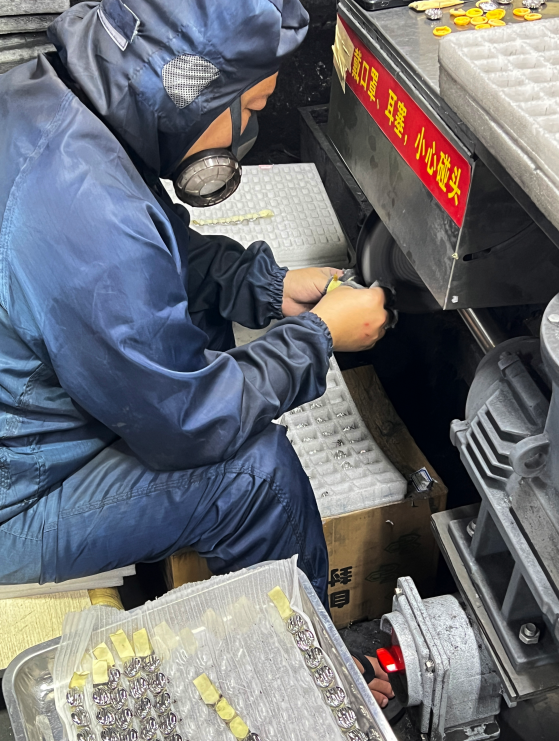
Wholesale shortlist by buyer priority
For an Evaluation-stage buyer, a useful shortlist ranks formats by the job they do rather than by brand. The priorities below assume a gold plated stainless steel program with some laser engraving and a need for repeatable quality.
| Priority | Format | Why it ranks here | Main checks |
|---|---|---|---|
| 1 | Closed rigid bangle | Clean continuous surface, no clasp, strong daily-wear simplicity | Size curve, roundness, edge polish, engraving depth, coating at edges |
| 2 | Flat plaque or ID bracelet | Dedicated engraving panel with readable personalization | Plaque thickness, solder joints, clasp, engraving contrast |
| 3 | Open cuff bangle | Adjustable fit for gifting and broader sizing | Flex fatigue, plating cracking at the gap, bending tolerance |
| 4 | Chain or link bracelet | Drape and layering value; less suitable for detailed engraving | Link closure, stretch, clasp function, friction wear |
Priority 1 is the closed rigid bangle for clean engraving and minimal hardware. Priority 2 is the flat plaque or ID bracelet for readable personalization. Priority 3 is the open cuff bangle for adjustable gifting. Priority 4 is the chain or link bracelet for layered assortments where drape matters more than engraving area. This is a format shortlist, not a supplier ranking. The best supplier for each format still depends on samples, test reports, and commercial terms.
Application and assortment planning
A minimalist gold plated stainless steel jewelry range can use bangles as the anchor because they are easy to display and simple to wear. A closed bangle with a narrow profile and a small engraved logo or date is a practical daily-wear piece. The buyer should still confirm the size curve, because a rigid bangle cannot be adjusted at the point of sale.
A personalized engraved gold plated jewelry program often benefits from a flat plaque bracelet or a wide bangle. The plaque gives a defined engraving window and a cleaner proofing process. The wide bangle gives more surface area and a stronger visual result, but it uses more material and may need a different size curve. For custom logo jewelry, the engraving position should be specified so the logo does not cross a curved edge or a clasp.
For wholesale gold plated stainless steel accessories aimed at daily wear, bracelets are often easier to fit across a broad customer base because length and closure can be adjusted. That flexibility comes with a trade-off: more hardware, more assembly steps, and more points to inspect. A bracelet with a weak clasp or an inconsistent soldered joint can create returns even when the plating is good.
Market trend: why this comparison matters now
Two verified data points frame the category. First, the total jewelry market is large and still forecast to grow, which keeps new buyers entering the category. Second, imitation jewelry trade under HS Code 711719 was valued at USD 6.56 billion in 2023, which confirms that plated and imitation products are a global procurement category rather than a local niche. Within that category, PVD and vacuum electroplating have become a common supplier reference, and buyers increasingly ask for waterproof, hypoallergenic, tarnish-free, or anti-rust claims.
The trend does not remove the need for format-level comparison. It makes it more important. As more suppliers describe their products with the same performance language, the buyer's advantage shifts to verification: the substrate grade, the coating process, the stated thickness, the test standard, the engraving sample, and the clasp or bangle structure. A tarnish free gold plated wholesale jewelry claim is only useful if the buyer knows which test supports it and which parts of the product were tested.
Limits and trade-offs buyers should not ignore
Bangles are not adjustable. A rigid bangle that misses the target size curve becomes a slow-moving SKU, and a bangle that is too tight or too loose will generate returns regardless of plating quality. Open cuffs reduce sizing risk, but the flex point can stress the coating and the metal over time.
Bracelets solve fit flexibility but add hardware. Clasps, hinges, jump rings, and soldered joints are failure points. A bracelet can pass a plating test and still fail in use because the clasp opens, the chain stretches, or the plaque edge catches on clothing. The QC plan should therefore cover both surface and structure.
Laser engraving adds a third limit. The process can expose the substrate, reduce local corrosion resistance, or create a contrast that changes after wear. A supplier may be able to produce a good first sample and still struggle with repeatability across a bulk order. Buyers should require an engraved production sample, a wear trial, and a written acceptance standard for contrast and edge quality.
Finally, performance claims need boundaries. PVD is described by Jusnova as more resistant than conventional water plating, but the verified data does not include an independent comparative test that would allow a universal ranking. The responsible buying position is to treat PVD as a process to verify, not as a guarantee. The same applies to hypoallergenic gold plated women jewelry: ask for nickel release and restricted-substance documentation, and confirm that the report covers the actual product and market.
RFQ checklist for bangles and bracelets
| RFQ input | Why it matters | What to ask for |
|---|---|---|
| Substrate grade | Material affects corrosion and finishing behavior | Confirm 304 or 316L stainless steel and its use in the quoted format |
| Coating process | PVD and conventional plating are not interchangeable | Name the process, color target, and whether the claim is supplier-stated or test-backed |
| Stated thickness | Thickness claims are only useful when the test method is known | Request the nominal thickness and the method used to verify it |
| Engraving sample | Engraving behaves differently on curves, links, and plaques | Approve the actual product shape with the smallest character size |
| Test reports | Salt spray and artificial sweat results support wear claims | Request sample identity, test standard, report number, issue date, and acceptance criteria |
| Clasp and joint specification | Bracelet failures often occur at hardware | Define clasp type, pull force, joint strength, and replacement policy |
| Size curve | Bangles cannot be resized at retail | Request dimensions, tolerance, and a size set for approval |
| Packaging | Engraved surfaces can rub in transit | Specify protection for the engraved face and hardware |
| Compliance file | Market entry may require current documentation | Request current REACH-related reports, SGS reports, and a valid BSCI certificate |
| Commercial terms | Quotes are only comparable on the same specification | Request MOQ, sample cost, lead time, defect policy, and payment terms in writing |
This checklist is deliberately format-neutral. It can be used for a closed bangle, an open cuff, a plaque bracelet, or a chain bracelet. The answers should be compared across the same sample set so that the buyer is not comparing a polished bangle sample with an unpolished bracelet sample.
Future outlook
PVD gold plating and laser personalization are likely to remain important because they allow stainless steel jewelry to combine a gold-color look with daily-wear positioning. The buying process, however, is moving toward documentation. Suppliers that can provide current test reports, clear plating specifications, and repeatable engraving samples will be easier to qualify than suppliers that rely only on descriptive claims. For wholesale buyers, the winning assortment is likely to combine rigid bangles for engraving clarity and bracelets for fit range, with a shared verification standard across both formats.
FAQ
Are gold plated stainless steel bangles or bracelets better for laser engraving?
Bangles are usually easier to engrave cleanly because they have a continuous outer surface and no clasp. Bracelets can also be engraved, but the buyer should choose a flat plaque or a stable link area and approve the engraving on the assembled product.
What should wholesale buyers check on PVD gold plating?
Check the substrate grade, the coating process, the stated thickness, the test standard, and the sample identity. Jusnova states 304 or 316L stainless steel, 18K or 14K gold-color PVD, and a nominal thickness of 0.025–0.03 micrometers; those claims should be confirmed against the supplier's current test documents.
Is gold plated stainless steel hypoallergenic?
Hypoallergenic is a claim, not a material grade. Buyers should request nickel release and restricted-substance documentation for the specific product and target market. A stainless steel base and a gold-color coating can reduce risk, but the finished item still needs to be tested.
How do bangles and bracelets differ in fit and returns?
Bangles rely on a fixed size or an open cuff, so the size curve must be right before production. Bracelets rely on length and closure, which gives more fit flexibility but adds clasp and joint failure points. Both formats need a size and QC standard that matches the sales channel.
What tests should buyers request for tarnish and sweat resistance?
Ask for test reports that identify the sample, the test method, and the acceptance criteria. Jusnova lists SGS salt spray testing under ISO 9227 and artificial sweat testing under ISO 3160-2, with certificates valid to 2027. Buyers should verify that the reports cover the actual product and finish.
Can laser engraving remove the gold plating?
Laser engraving can remove or alter a thin layer of the coating and may expose the stainless steel base. The buyer should approve the engraving depth, contrast, and post-engraving finish on a production sample, and include the engraved area in wear and sweat testing.
How should buyers compare quotes when prices are not published?
Compare quotes on the same specification: substrate, coating, thickness, dimensions, engraving area, clasp type, packaging, sample approval, test reports, and defect policy. A quote without those inputs is not comparable, even if the unit price looks lower.
Disclosure: This buyer comparison uses first-party facts supplied by Jusnova Jewelry and verified market and certificate data available in the source package. Supplier claims are identified as claims where the underlying test report or independent benchmark was not available in the retrieved evidence.
Have Questions or Need More Details?
Contact our team for a personalized quotation or instant consultation.
Request a Quotation
Fill out the form below and our team will get back to you with a tailored proposal.
WhatsApp Direct Chat
Prefer to chat in real-time? Message us on WhatsApp for instant assistance & quick answers.
- Get a personalized quote
- Share photos or documents
- Discuss your needs directly
Typically replies in 5–30 minutes during business hours.