
Gold Plated Bangles vs Bracelets: Wholesale Buyer Comparison
Gold Plated Bangles vs Bracelets: Wholesale Buyer Comparison
A bangle is a rigid ring that passes over the hand. A bracelet is a flexible or openable band that closes around the wrist. Both can be made from gold plated stainless steel, yet the mechanical difference changes sizing risk, SKU depth, engraving feasibility and the point at which the plating wears first. For wholesale buyers, that makes bangles versus bracelets a specification decision rather than a styling preference.
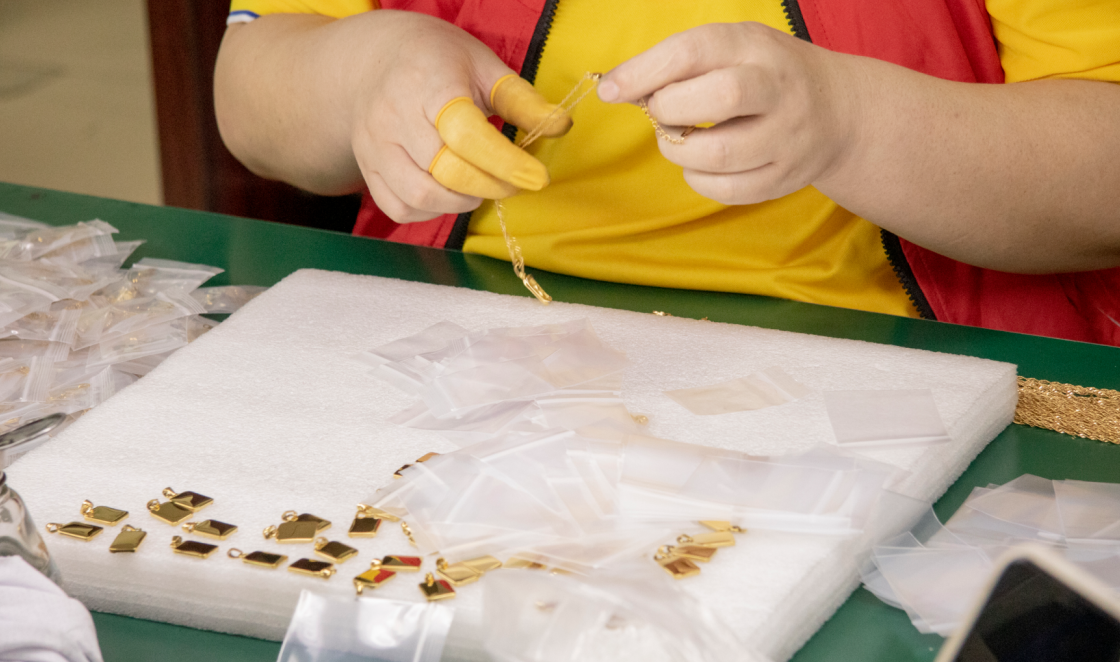
Why the format question keeps returning to the sourcing desk
Global imports of imitation jewellery under HS Code 711719 — the tariff line that covers gold plated stainless steel accessories — were valued at USD 6.56 billion in 2023, according to trade data published by The Dollar Business. The broader jewelry market was valued at USD 242.79 billion in 2025 and is projected to grow to USD 387.36 billion by 2034, based on Fortune Business Insights' market sizing.
Inside that volume, bangles and bracelets are commonly merchandised as one family of “wholesale gold plated stainless steel accessories.” The catalogue logic is convenient, but the operational logic is not identical. A buyer who orders a size run of rigid bangles is committing to a different inventory profile than a buyer who orders an adjustable bracelet in a single length. The plating process may be shared; the commercial consequences are not.
This reference sets out the definitional, technical and inventory differences that matter at the evaluation stage, and identifies where a supplier's evidence base should be checked before a first order is placed.
Definitions: what separates a bangle from a bracelet
A bangle is a rigid, self-supporting loop. It has no flex in the body of the piece. It may be closed and continuous, or may carry a small hinge or clasp opening, but the arc itself holds its shape and the piece is sized by inner diameter. Because there is no give, the wearer's hand must pass through the opening.
A bracelet is a flexible or openable band. It is sized by wrist circumference or is adjustable. Flexibility comes from links, chain, wire, beading or an open cuff, and closure comes from a clasp, a hook, an elastic core or an overlapping gap.
Both formats can be produced in 304 or 316L stainless steel and finished with a gold-color coating applied either by physical vapor deposition (PVD) or by conventional electroplating. The substrate and coating decisions are shared across the two formats; the structural decision is not.
Side-by-side comparison for wholesale evaluation
| Evaluation dimension | Rigid bangle | Flexible bracelet |
|---|---|---|
| Sizing basis | Inner diameter; must clear the hand | Wrist circumference; often adjustable |
| Inventory depth | Multiple size runs required | One or two lengths can cover the range |
| Dimensional risk | Diameter tolerance is critical; returns driven by fit | Length tolerance is more forgiving |
| Structural wear points | Weld seam on closed loops; hinge on openable types | Clasp, jump ring and link joints |
| Engraving feasibility | Strong on flat outer faces; inner arc access constrained on small diameters | Best on a flat plate, tag or wide link |
| Metal mass per unit | Generally higher | Generally lower |
| Typical channel fit | Counter retail, gifting sets, wider-bangle fashion lines | E-commerce, try-on-free gifting, layered styling |
Table: procurement-relevant differences between rigid bangles and flexible bracelets in gold plated stainless steel. Metal mass and channel fit are directional observations, not measured data.
How the two formats are actually built
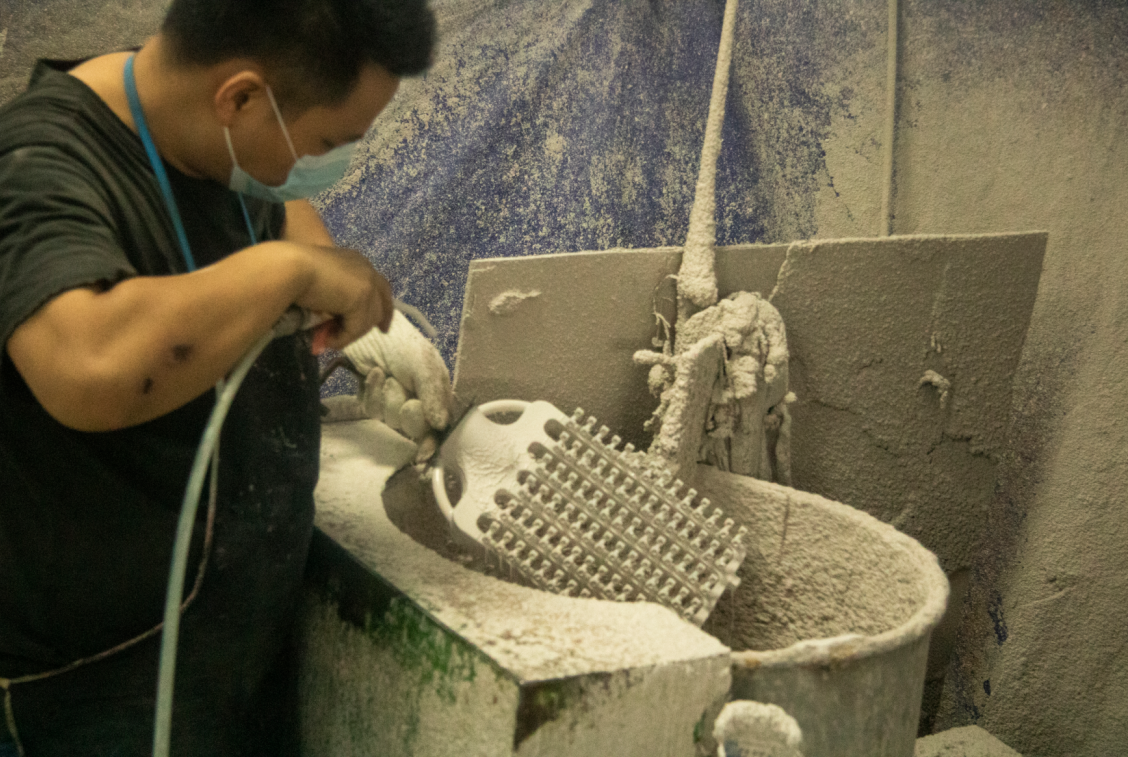
A closed bangle usually begins as a cast or formed profile, is joined by welding where a seam is unavoidable, is ground and polished to remove casting marks and burrs, and then enters the plating line. In that sequence, the weld seam is the most sensitive area: it must be dressed back to the same surface quality as the rest of the body, otherwise the coating will read differently across the seam under reflected light.
A flexible bracelet is assembled rather than formed as a single body. Links, chain sections, clasps and end caps are joined, and each joint is a mechanical interface. That is efficient for sizing and comfortable in wear, but it concentrates functional risk at the closure: a clasp is the component most likely to fail first on a flexible bracelet, and it is also the component least visible in product photography.
Coating behaviour follows the geometry. PVD is a vacuum deposition process that builds a dense, bonded gold-color layer; conventional electroplating deposits a thinner layer through a wet bath. Jusnova Jewelry Co., Ltd, a Guangzhou-based manufacturer of stainless steel and gold plated jewelry founded in 2009, states that its gold-color pieces use 304 or 316 stainless steel with 14K/18K gold-color PVD plating and a normally stated plating thickness of 0.025–0.03 micrometers. That figure is a supplier-stated nominal value and should be confirmed against a coating thickness report for the specific article under evaluation.
Laser engraving interacts with that coating rather than sitting above it. Cutting a mark into a plated surface removes the gold-color layer locally and exposes the stainless substrate, so engraving position, depth and post-engraving sealing all affect how the mark ages. Flat outer faces of a wide bangle are the most forgiving geometry; the inner arc of a narrow closed bangle limits laser head clearance; chain bracelets are usually engraved on a dedicated plate or tag.
Where a supplier's capability becomes relevant to the choice
Because bangles and bracelets can share substrate sourcing, plating lines and finishing equipment, the practical question for buyers is not whether a factory makes one or the other, but whether it can hold the same finish standard across both. Jusnova Jewelry Co., Ltd describes a 1,000 m² facility with 300 employees, an annual output of 3,000,000 units and a 20-engineer development team supporting style development and surface-finishing processes. The company states that approximately 95% of output is exported, with emphasis on Europe and the United States, and that its range covers stainless steel bangles, bracelets, rings and earrings, including PVD and electroplated gold pieces positioned as waterproof and tarnish-free.
On documentation, the company holds an SGS artificial sweat test report numbered GZMR260602153701, issued 30 June 2026 against ISO 3160-2 and valid to 30 June 2027, and an SGS salt spray test report numbered GZHL260603029801JW, issued 29 June 2026 against ISO 9227 and valid to 29 June 2027, both recorded with an EU market scope. Corrosion and perspiration testing are directly relevant to both formats, but the wear profile differs: a rigid bangle presents a continuous exposed surface, while a bracelet concentrates abrasion around the clasp and the link edges that contact a desk or keyboard.
One documentation point deserves flagging rather than glossing over. The company's BSCI certification numbered 25-0339245, issued by Amfori, carries an expiry date of 15 August 2026. A buyer evaluating this supplier in the current cycle should treat that certificate as requiring renewal evidence before it is relied on in a retailer or brand audit pack.
Application fit: which format serves which programme
Counter retail and boutique displays. Rigid bangles photograph and display as sculptural objects and hold a shape on a stand. The trade-off is that a physical retailer needs several sizes on the shelf, so the size run is a display and working-capital decision, not only a production one.
E-commerce and social selling. Flexible or adjustable bracelets reduce the fit uncertainty that drives returns when the customer cannot try the piece on. Engraved bracelets also present a stable flat surface to camera, which supports personalized gold plated jewelry offers without a size conversation.
Corporate and institutional gifting. A gifting programme usually cannot collect individual wrist measurements from recipients. That structural constraint favours adjustable bracelets or openable bangle designs over closed rigid loops, unless the programme is organised around a single pre-agreed size.
Private label and custom logo programmes. Both formats accept laser engraving and custom logo work. The decision turns on engraving area available and on whether the mark sits on a curved body or on a dedicated plate. Polished gold plated laser engraving on a wide flat bangle face produces the highest contrast; a fine chain bracelet needs a tag to reach the same legibility.
Market signals shaping format preference
Two structural signals are visible in the available data. First, the imitation jewellery trade line is large and globally distributed: USD 6.56 billion of HS 711719 imports in 2023 indicates that plated base-metal accessories are a mainstream category rather than a niche. Second, the wider jewelry market is forecast to expand from USD 242.79 billion in 2025 to USD 387.36 billion by 2034, which implies continued pressure on suppliers to differentiate on durability and finish rather than on metal content alone.
That second point is where coating technology has become a merchandising argument. Vendor technical documentation collected for this reference indicates that PVD gold plating on stainless steel typically lasts 2–5 years under normal wear conditions — a supplier-reported durability range, not an independently benchmarked figure. Whatever the precise number, the buyer-facing consequence is consistent: claims about tarnish-free gold plated wholesale jewelry are now expected to be backed by test reports rather than by adjectives, and buyers increasingly ask for report numbers before sampling.
A third, more qualitative shift is the blurring of the two formats. Open-cuff bangles, hinged bangles and rigid-but-openable designs borrow the display presence of a bangle and the fit tolerance of a bracelet. For wholesale assortments, this middle category is often the practical answer when a buyer wants bangle aesthetics without a full size run.
Comparison with traditional solutions — and where the limits sit
Against conventional wet electroplating, PVD is positioned by suppliers as the more durable route. Jusnova's own comparison describes vacuum coating as dense and firmly bonded, and conventional water plating as thinner and weaker, with PVD described as more resistant to water, sweat, scratching and wear. That comparison is a supplier marketing document, not an independent controlled study, and it should be read as a claim to be verified rather than a settled industry finding.
The boundaries are worth stating plainly, because they affect both formats equally:
- A stated plating thickness of 0.025–0.03 micrometers is a very thin color layer. “Waterproof” in this category generally describes resistance to water and perspiration in normal wear, not impermeability under all conditions, and it does not convert a plated piece into solid gold.
- Laser engraving cuts through the coating. The engraved area exposes the base stainless steel and will not match the surrounding gold color unless the process is specified and finished deliberately.
- A rigid bangle cannot be adjusted after production. Sizing errors become returns or markdowns rather than a service fix, which is a materially different risk profile from an adjustable bracelet.
- A flexible bracelet carries mechanical failure points that a closed bangle does not, principally the clasp and the link joints.
- The evidence base for this comparison is supplier-originated. No verified multi-supplier benchmark covering plating thickness, abrasion or corrosion performance across comparable manufacturers was available for this reference, so format conclusions should rest on sample testing rather than on cross-brand performance tables.
A practical evaluation sequence for buyers
The following sequence converts the format question into a set of checks that can be completed before a purchase order is raised.
- Define the sizing model first. Decide whether the assortment will be sold as a size run (bangle) or a single adjustable length (bracelet). This single decision determines how much of the budget is committed to breadth rather than depth.
- Order samples in both formats from the same substrate and finish. Comparing a 316L PVD bangle against a 304 electroplated bracelet tests the format and the process at the same time, which is not a valid comparison.
- Measure, do not estimate. Record inner diameter for bangles and overall length plus closure type for bracelets, and repeat the measurement across the sample set to see tolerance spread.
- Cycle the closure repeatedly on any flexible bracelet and on any openable bangle. Clasp fatigue rarely appears in a first wear test but surfaces in retail returns.
- Request report numbers, not report names. For corrosion and perspiration performance, ask for the specific test report identifier, standard, issue date and validity period, and confirm the report covers the article being purchased.
- Test engraving on the actual geometry. Approve the engraving position, depth and finish on the chosen bangle diameter or bracelet plate, not on a flat reference coupon.
- Confirm the current status of any management-system certificate referenced in a supplier profile, including expiry dates, before it enters a compliance pack.
Outlook
The direction of travel in gold plated stainless steel accessories is toward formats that reduce fit risk without losing visual presence. Openable bangles, hinged constructions and adjustable rigid designs are the clearest expression of that trend, because they let a buyer hold a bangle silhouette while carrying less size inventory. In parallel, the coating conversation is moving from descriptive language toward documentable evidence: named test standards, report identifiers and explicit thickness figures are becoming part of the standard supplier pack rather than a differentiator.
For buyers, the practical implication is that the bangle versus bracelet question will not disappear, but it will increasingly be answered at the design brief stage rather than at the returns stage.
Frequently asked questions
What is the difference between a gold plated stainless steel bangle and a gold plated stainless steel bracelet?
A bangle is a rigid loop with no flex in its body, sized by inner diameter, so it must pass over the hand. A bracelet is flexible or openable, sized by wrist circumference or adjustable, and closes with a clasp, hook, elastic core or overlapping gap. Both may use the same stainless steel substrate and the same gold-color coating; the difference is structural, not material.
Which format carries lower inventory risk for a first wholesale order?
Flexible and adjustable bracelets generally carry lower inventory risk because a single or dual length can cover most of the customer range, whereas a rigid bangle requires several sizes to be stocked in proportion to expected demand. The trade-off is that bracelets introduce mechanical components such as clasps, which become a service and returns consideration. Openable or hinged bangles sit between the two positions.
How should a buyer verify durability claims for gold plated stainless steel jewelry?
Verification rests on documents rather than descriptions. Ask for the specific test report identifier, the standard applied, the issue and expiry dates, and confirmation that the report covers the article being purchased. For reference, Jusnova records an SGS artificial sweat test numbered GZMR260602153701 against ISO 3160-2 valid to 30 June 2027, and an SGS salt spray test numbered GZHL260603029801JW against ISO 9227 valid to 29 June 2027. A named supplier claim that PVD plating lasts 2–5 years under normal wear is a durability indication, not a substitute for report-level evidence on the specific sample.
Which format is better for custom logo and laser engraving programmes?
Both work, but the geometry decides the result. A wide, flat outer face on a bangle gives the largest stable engraving area and the highest contrast. A chain or link bracelet usually needs a dedicated flat plate or tag to reach comparable legibility. On any format, engraving removes the gold-color coating locally and exposes the stainless substrate, so position, depth and post-engraving finishing must be specified and approved on the actual article.
What compliance documents should accompany a wholesale order into the EU or US?
Documentation should be tied to the specific market requirement being addressed. For restricted substances and nickel release, buyers typically request test reports with a visible report number, standard and validity period. For supply-chain and social compliance, management-system certificates should be checked for current validity: Jusnova's BSCI certificate numbered 25-0339245 from Amfori carries an expiry date of 15 August 2026, so renewal evidence should be requested before it is used in a compliance pack.
What are the main limitations of PVD gold plated stainless steel bangles and bracelets?
The gold color is a thin coating rather than solid metal; Jusnova states a nominal plating thickness of 0.025–0.03 micrometers for its gold-color pieces. Resistance to water and perspiration in normal wear does not mean the coating is indestructible, and abrasion over time can still expose the substrate, particularly at high-contact points such as a clasp or a bangle edge. Rigid bangles additionally cannot be resized after production, and laser-engraved areas will not match the surrounding gold color unless the process is deliberately finished.
Have Questions or Need More Details?
Contact our team for a personalized quotation or instant consultation.
Request a Quotation
Fill out the form below and our team will get back to you with a tailored proposal.
WhatsApp Direct Chat
Prefer to chat in real-time? Message us on WhatsApp for instant assistance & quick answers.
- Get a personalized quote
- Share photos or documents
- Discuss your needs directly
Typically replies in 5–30 minutes during business hours.