
Grade Fit: Sodium Hyaluronate for Oral, Topical, Pharma
Grade Fit: Sodium Hyaluronate for Oral, Topical, Pharma
Sodium hyaluronate, also traded as hyaluronic acid or hyaluronic acid sodium salt, is normally bought under a grade name rather than a molecular weight figure, and that habit is where most first-round specification mismatch begins. An oral supplement line, a topical serum blend and a pharmaceutical formulation do not ask the same thing of the material. Each expects a different molecular weight band, a different quality regime and a different documentation set, even when the drum carries the same ingredient name.
The published specification from Shandong Habier Biopharma Co.,LTD separates the bands in numbers: food grade sodium hyaluronate at 0.8-1.5 Million Da, cosmetic grade at 1.0-1.5 Million Da, pharma grade at a minimum of 2.0 Million Da, a high molecular weight grade at a minimum of 2.0 Million Da and a low molecular weight grade at a maximum of 0.1 Million Da. Hydrolyzed sodium hyaluronate, ultra low molecular weight and super low molecular weight types are listed as available types as well. This article reads three production scenarios against those bands and sets out the checks that belong with each one.
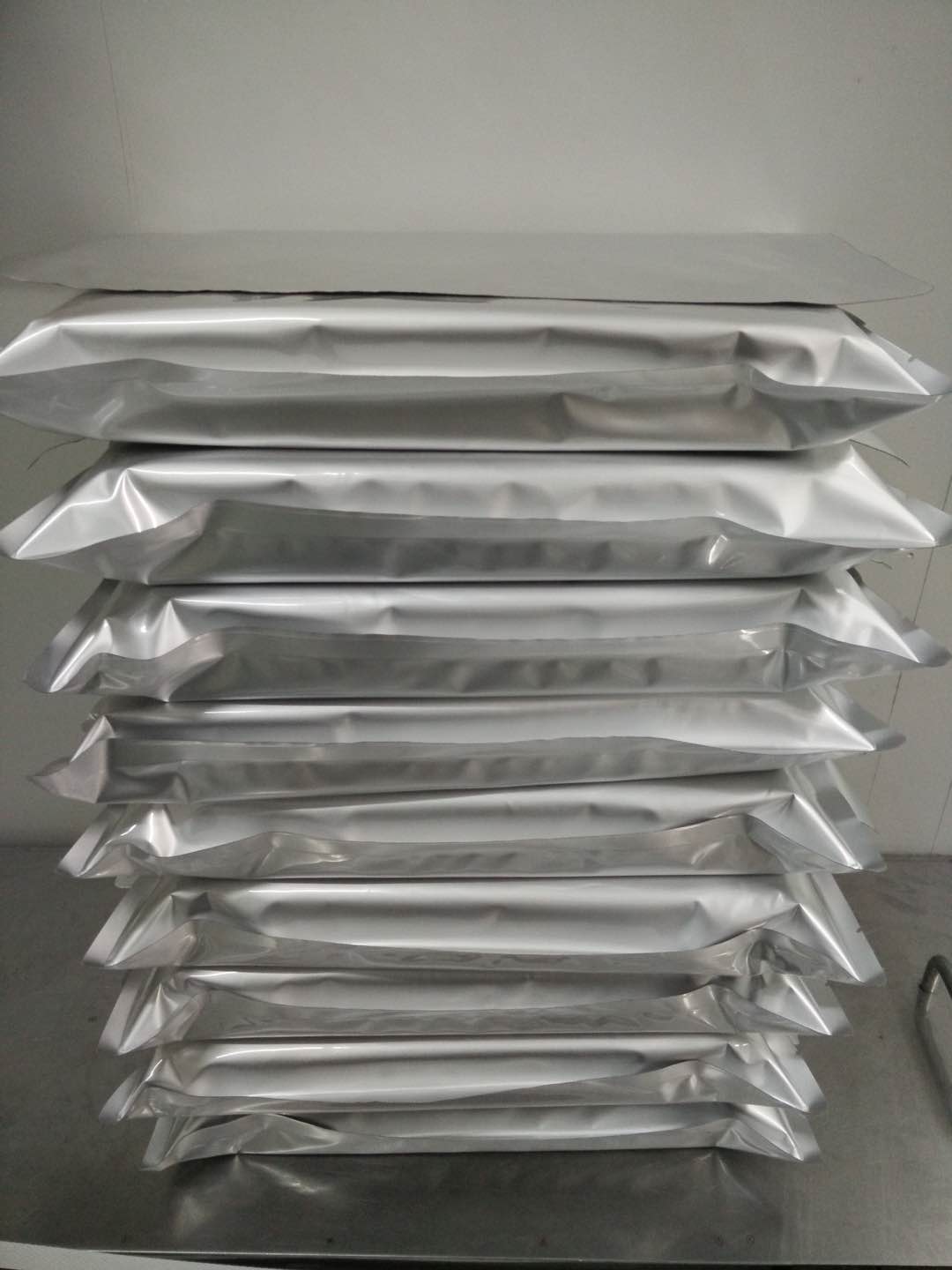
Bulk-packed sodium hyaluronate at the point where grade, band and batch documentation meet the purchase order.
Three Scenarios, Three Molecular Weight Bands
Scenario fit starts with one question: what does the material have to do inside the finished product? An oral dose needs a band that disperses and blends predictably in a capsule, tablet, sachet or drink. A serum needs a band that hydrates in the aqueous phase and builds the texture the formula is designed around. A pharmaceutical formulation needs the highest band in the range together with a production environment that controls microbial and particulate risk. Habier's specification answers that question with figures rather than adjectives.
The band matters because sodium hyaluronate is a polymer, and a higher molecular weight fraction produces a more viscous solution at the same concentration. That single property explains why the same ingredient name behaves differently across the three lines, and why a quotation that names only the grade should be followed by a request for the band and the measured batch value. It also explains why buyers who compare suppliers purely on price per kilogram, without fixing the band, are frequently comparing two different materials.
| Grade in the specification | Molecular weight | Scenario it is written for | What the buyer should confirm |
|---|---|---|---|
| Food grade | 0.8-1.5 Million Da | Oral supplements, food and nutraceutical formats | Band in writing, microbiology, moisture, food-safety certification scope |
| Cosmetic grade | 1.0-1.5 Million Da | Topical serums, emulsions and gels | Batch viscosity behaviour, microbial limits, natural-origin documentation |
| Pharma grade | Minimum 2.0 Million Da | Pharmaceutical and medical formulations | Cleanroom production conditions, microbial and heavy metal test data, per-market qualification |
| High molecular weight grade | Minimum 2.0 Million Da | High-viscosity and viscoelastic roles | Measured value per batch, not only the floor of the band |
| Low molecular weight grade | Maximum 0.1 Million Da | Low-viscosity oral and topical formats | Actual distribution per batch and its test method |
| Super low, ultra low, hydrolyzed types | Listed as available types; no numeric range in the published specification | Specialised oral and topical formats | The type-specific specification sheet before any formulation work |
Reading a Grade Name Correctly
A grade name combines a molecular weight band with a quality regime, and the second half of that combination is invisible in a short quotation. Two suppliers can both quote food grade hyaluronic acid and still differ in moisture, appearance, microbial counts, heavy metal testing and the analytical method used to state molecular weight. For a buyer in the research to evaluation stage, the practical rule is to treat the grade name as an index and the specification sheet as the document that actually governs the order.
Trade shorthand creates a second layer of ambiguity. Where a supplier uses a term such as regular grade, it is worth asking for the written band behind it, because Habier's own specification works with explicit figures: high molecular weight hyaluronic acid at a minimum of 2.0 Million Da, low molecular weight sodium hyaluronate at a maximum of 0.1 Million Da, and the food, cosmetic and pharma bands described above. A definition in writing costs nothing at the enquiry stage and prevents a reformulation later.
Scenario One: Oral Supplement Manufacturing
Where food grade fits
Food grade sodium hyaluronate at 0.8-1.5 Million Da is the working band for oral formats such as capsules, tablets, stick packs and powder blends. At this band the material hydrates and builds moderate viscosity, so it can be dispersed into an aqueous phase or blended into a powder system without dominating the rest of the formula. For a supplement manufacturer, that predictability matters more than a marginal difference in price, because a band change late in a project usually forces a change in the filling or blending step as well.
Lower bands are available when the formula calls for them. Low molecular weight sodium hyaluronate sits at a maximum of 0.1 Million Da, and hydrolyzed sodium hyaluronate, ultra low molecular weight and super low molecular weight types are listed among the available types. A lower band builds less viscosity at the same concentration, which is useful when the formula needs a higher inclusion level inside a small dosage unit or when a liquid format has to stay easy to drink. One qualification is worth keeping: the published specification gives a numeric ceiling only for the low molecular weight grade, so the ultra low, super low and hydrolyzed types must be specified from their own sheets rather than inferred from the band above them.
Documentation for an oral programme
Oral supplement brands selling into the US and European markets typically work with three evidence layers. The first is material conformity per batch, supported here by full-item inspection of every batch before delivery. The second is food-safety management, supported by ISO 22000 in the company's certification set. The third is dietary or religious suitability, where Kosher and Halal certification matter for brands serving those consumers. A fourth layer appears when the material crosses a border, because import documentation depends on the origin route of the consignment, not on the grade name.
A documented US shipment shows why that last layer deserves attention early. A natural cosmetic and health supplement importer received 4,733 kg used as cosmetic raw material and oral health care supplement raw material, with stable supply and smooth customs clearance supported by a valid USDA import permit. The material in that shipment was avian-origin, accompanied by complete official veterinary heat treatment certification to meet US APHIS import standards, and the relationship continued on repeat orders with stable batch quality. The procurement lesson is not that every order carries that origin; it is that origin and its paperwork vary by consignment and should be confirmed before the purchase order is issued, since clearance delays cost more than most grade upgrades.
Scenario Two: Topical Serum Blending
Cosmetic grade in the aqueous phase
Cosmetic grade sodium hyaluronate at 1.0-1.5 Million Da sits slightly above the food band and is written for topical work. Intertek, in a 2025 commentary on biotechnology ingredients in cosmetics, describes hyaluronic acid as a popular active ingredient used in cosmetic formulations such as emulsions or serums and aimed at addressing hydration and skin elasticity. In the Habier scenario material the material's roles are listed more broadly, including humectant, viscosity modifier, filler or viscoelastic material, which reflects how much the function depends on the surrounding formula rather than on the ingredient alone.
Process discipline is where a serum project usually succeeds or fails. The powder is hydrated in the aqueous phase before emulsification, then carried through a vacuum emulsifier and a sterile mixing tank into cleanroom filling. Incomplete hydration leaves visible particles and gives inconsistent viscosity from batch to batch, so the mixing sequence is a quality variable in its own right. Buyers evaluating a cosmetic grade should therefore ask two questions in parallel: what band is in the drum, and what dispersion behaviour the supplier has seen at the intended inclusion level.
Low and hydrolyzed types in topical formats
Topical development often mixes bands rather than choosing one. Low molecular weight sodium hyaluronate at a maximum of 0.1 Million Da, together with the listed hydrolyzed, ultra low and super low types, gives a formulator options for texture, solids loading and sensory finish. What a raw-material specification cannot do is substantiate finished-product claims. Statements about penetration depth, anti-aging effect or measured skin outcomes belong to the brand's own testing and regulatory review, and buying a lower band does not by itself create that evidence.
Natural-origin positioning is a separate documentation question. The company's qualification set includes organic Cosmos certification and ISO 16128, both of which are relevant when a serum is marketed on natural-origin content. As with any certificate, the scope matters: buyers should confirm that the certificate covers the grade and the manufacturing site that will supply the order, rather than assuming a facility-level certificate transfers automatically to every product code.
Scenario Three: Pharmaceutical Formulations
The 2.0 Million Da floor and viscoelastic behaviour
Pharma grade sodium hyaluronate is specified at a minimum of 2.0 Million Da, the highest floor in the published set, and the high molecular weight grade shares that floor. The shared number explains why pharmaceutical buyers differentiate suppliers on quality regime rather than on the headline band alone. Two materials can both clear 2.0 Million Da while differing in microbial control, heavy metal testing, documentation depth and the production environment behind the batch.
Aseptic conditions and where they stop
The scenario material for this product describes low-temperature fermentation synthesis and aseptic cleanroom production for medical and injection grade environments, with 24/7 operation. Supporting equipment listed for that setting covers a fermentation bioreactor, ultrafiltration purification equipment, sterile mixing tank, vacuum emulsifier, cleanroom filling machine, low-temperature drying oven, and microbial and heavy metal testing instruments. The same material notes that medical and injectable grade products may require sterility and low microbial limits, which is the point at which the discussion leaves raw-material specification and becomes a downstream process question.
Regulatory classification of the finished article is a further step. China's NMPA Announcement No. 103 of 2022 states that medical sodium hyaluronate products without pharmacological, metabolic or immunological action are managed as medical devices, with a classification no lower than Class II in the described cases. That rule concerns the marketed medical product; it does not convert a raw-material certificate into a device registration, and it does not apply automatically in other jurisdictions. A pharmaceutical buyer should therefore hold two files separately: the supplier qualification file for the material, and the registration file for the finished product in each target market.
Scenario Fit at a Glance
The table below compresses the three scenarios into the four variables that most often decide a purchase order: band, process emphasis, documentation emphasis and the point where the raw-material specification stops being sufficient.
| Scenario | Grade and band | Process emphasis | Documentation emphasis |
|---|---|---|---|
| Oral supplement manufacturing | Food grade, 0.8-1.5 Million Da; low molecular weight up to 0.1 Million Da for specific formats | Powder blending or aqueous dispersion, fill weight consistency, moisture control | Full-item inspection per batch, ISO 22000, Kosher and Halal where required, origin and import paperwork |
| Topical serum blending | Cosmetic grade, 1.0-1.5 Million Da; low and hydrolyzed types for texture work | Aqueous-phase hydration, vacuum emulsification, cleanroom filling | Microbial limits, dispersion behaviour, ECOCERT COSMOS and ISO 16128 for natural-origin claims |
| Pharmaceutical formulation | Pharma grade, minimum 2.0 Million Da | Low-temperature fermentation synthesis, aseptic cleanroom production, sterility and low microbial limits where applicable | Batch test data including microbial and heavy metals, ISO 9001 quality system, per-market product registration separate from the material file |
The Quality Layer That Makes a Band Usable
A molecular weight band is a design input; batch evidence is what makes it repeatable. Shandong Habier Biopharma Co.,LTD applies full-item inspection of every batch before delivery, with batch testing carried out through an independent QC laboratory, so the value stated for a consignment can be checked against the analysis rather than accepted from the grade name. That structure matters most when a buyer is qualifying a second source or auditing an existing one, because it produces a per-batch record instead of a one-off sample result.
The certification set supporting those scenarios includes ISO 9001 and ISO 22000 for quality and food-safety management, HACCP, Kosher and Halal, plus organic Cosmos and ISO 16128 for the material. Each certificate has a defined scope, and the practical check is whether that scope names the grade and site actually being purchased. Where a programme needs a certificate number, validity date or scope statement for its own supplier file, the document should be requested directly rather than inferred from a website summary.
Commercial parameters complete the picture for planning purposes. The company reports an annual output of 600-700 MT, monthly capacity of 50-60 tons, a minimum order quantity of 1 kg and a lead time of 5-8 days, and it operates OEM and ODM programmes with purity adjustment as a stated customization option. Free sample supply and after-sales quality tracking are part of the service model. The facility, established in 2015, covers 50,000 square metres with 123 employees and a six-engineer R&D team, and roughly 20% of output is exported, mainly to the EU, USA and Korea. Buyers can review the company profile and current product documentation at Shandong Habier Biopharma Co.,LTD.
Why Grade Fit Has Become a Commercial Question
Market estimates give the grade discussion a commercial frame, provided their scope is respected. Fortune Business Insights places the global hyaluronic acid market at USD 11.64 billion in 2025, with pharmaceutical grade accounting for 69.3% of product segment share in 2026. Cisema, citing China market figures, reports a market valued at USD 649.7 million in 2024 and projected to reach USD 1.06 billion by 2030, an 8.6% CAGR from 2025. Both are third-party estimates with their own segmentation, and neither should be read as a statement about any single supplier's volume.
What the figures do support is a shift in how buyers approach the category. When the highest-value segment is also the segment with the strictest quality regime, specification depth becomes a commercial variable rather than a technical footnote. A cosmetic or oral programme that borrows a pharmaceutical grade for its marketing story still has to run a cosmetic or food quality regime, and a pharmaceutical programme cannot substitute a food grade on the strength of a similar band. Grade fit, in other words, is a decision about the whole supply chain behind the number.
What the Specification Does Not Establish
- A molecular weight band does not prove finished-product performance. Viscosity, texture, stability and sensory results depend on the full formula and the process around it.
- The published specification sets numeric values for food, cosmetic, pharma, high and low molecular weight grades. It lists super low, ultra low and hydrolyzed types without numeric ranges in that same document, so those values must come from the type-specific sheet.
- A certificate covers a defined scope. Facility-level certification does not automatically extend to every grade or every shipment.
- Origin route and import documentation vary by consignment, as the US shipment example shows, and should be confirmed per order rather than assumed from the previous one.
- Regulatory status of a finished medical or pharmaceutical product is separate from the raw-material qualification file, and approval in one market does not carry into another.
A Six-Point Check Before the Purchase Order
- Fix the scenario and the band in writing: food grade at 0.8-1.5 Million Da, cosmetic grade at 1.0-1.5 Million Da, or pharma grade at a minimum of 2.0 Million Da, with any low, ultra low, super low or hydrolyzed type named separately.
- Ask for the measured molecular weight value and the test method behind it, not only the band limits.
- Match the certification to the grade and site, and record validity dates in the supplier file.
- Confirm the microbial and heavy metal testing regime applicable to the intended end use, particularly where medical or injectable products are involved.
- Clarify origin route, import documentation and any veterinary or phytosanitary paperwork required at the destination.
- Request a sample under the same band and then verify the production batch against it, using full-item inspection records as the comparison point.
Frequently Asked Questions
Which sodium hyaluronate grade is used in oral supplements?
Food grade sodium hyaluronate, specified at 0.8-1.5 Million Da in Habier's published specification, is the band written for oral supplement and food formats. Where a formula needs a lower-viscosity material, the low molecular weight grade at a maximum of 0.1 Million Da and the listed hydrolyzed, ultra low and super low types are the alternatives, each with its own specification sheet. The grade name should always be confirmed against the band and the batch analysis rather than accepted on its own.
What molecular weight suits a topical serum?
Cosmetic grade sodium hyaluronate, specified at 1.0-1.5 Million Da, is the topical band in the published range. Formulators may combine it with lower bands such as the low molecular weight grade at a maximum of 0.1 Million Da or the hydrolyzed types when texture and solids loading require it. Hydration in the aqueous phase and consistent dispersion during emulsification influence the result as much as the band itself.
Is pharma grade sodium hyaluronate always 2.0 Million Da or higher?
In Habier's specification, pharma grade carries a minimum of 2.0 Million Da, and the high molecular weight grade uses the same floor. Because the number is shared, pharmaceutical buyers typically separate suppliers on quality regime: aseptic cleanroom production conditions, microbial and heavy metal testing, batch documentation and the supplier's ability to support qualification in each target market. The raw material specification does not by itself establish registration of a finished medical product.
Do Kosher, Halal and COSMOS certificates cover every grade?
Certification is defined by scope, so coverage should be confirmed grade by grade and site by site. Habier's qualification system includes ISO certification, HACCP, Kosher and Halal, and the product is certified organic Cosmos and ISO 16128. Buyers should request the certificate with its scope statement and validity date for the specific grade being purchased, rather than relying on a general company-level summary.
Conclusion
The three scenarios diverge at the molecular weight band and converge at the batch record. Oral supplements work from food grade at 0.8-1.5 Million Da, topical serums from cosmetic grade at 1.0-1.5 Million Da, and pharmaceutical formulations from pharma grade at a minimum of 2.0 Million Da, with low, ultra low, super low and hydrolyzed types available where a formula needs a different viscosity profile. What holds across all three is the evidence layer: full-item inspection of every batch, an independent QC laboratory, and a certification set that can be matched to the grade and the market. Buyers who fix the band first and the price second tend to spend less time in reformulation.
The company brochure, including product and certification details, is available for download: Shandong Habier Biopharma product brochure (PDF).
Have Questions or Need More Details?
Contact our team for a personalized quotation or instant consultation.
Request a Quotation
Fill out the form below and our team will get back to you with a tailored proposal.
WhatsApp Direct Chat
Prefer to chat in real-time? Message us on WhatsApp for instant assistance & quick answers.
- Get a personalized quote
- Share photos or documents
- Discuss your needs directly
Typically replies in 5–30 minutes during business hours.