
Green-Aquatic, Fruity-Floral, Berry Oils: Buyer Comparison
Green-Aquatic, Fruity-Floral, Berry Oils: Buyer Comparison

Cover: automatic dosing equipment in a fragrance production environment. Image supplied by HERYNN.
The buyer decision among HW91060, the shampoo-type oil and HW91046 is not a search for one universally better fragrance oil. It is a fit decision: green-aquatic freshness against a fruity-floral shampoo profile and a mixed-berry jam profile, each attached to a different carrier system and a different documentation check.
This independent comparison is written for procurement teams, product developers and brand owners who need to narrow a fragrance-oil shortlist before sampling. The reference set is from HERYNN Fragrance Oil, a range supplied by HERYNN Fragrances & Flavors, a China-based fragrance manufacturer. The comparison keeps the three oils separate because scent names alone do not describe carrier fit, minimum order quantity or the documents a buyer must request.
No oil in this set is presented as universally suitable. The useful question is which structure and carrier system matches the intended base, market and validation plan. That question becomes easier when the comparison is built around three buyer criteria: scent architecture, carrier compatibility and documentary readiness.
What Is Being Compared?
The comparison covers three buyer-relevant fragrance-oil directions. HW91060 is a green-aquatic profile built on cucumber, green leaves and sea breeze. The shampoo-type oil is a fruity-floral profile built on pear, apple, honeydew melon and lemon. HW91046 is a mixed-berry profile built on mixed berry, red fruits and jam.
Carrier fit is part of the supplied comparison. HW91060 is associated with DPG. The shampoo-type oil is associated with DPG/PG. HW91046 is associated with IPM/DPM. The known minimum order quantity for these selections is 1 kg. IFRA, COA and SDS availability should be checked for each oil and for the intended application category.
| Reference | Scent structure | Carrier fit | Known MOQ | Documentation check | Buyer fit boundary |
|---|---|---|---|---|---|
| HW91060 | Cucumber, green leaves, sea breeze; green-aquatic | DPG | 1 kg | IFRA certificate, COA and SDS for the intended use; confirm category and dosage | Treat as a freshness-led option for evaluation in the intended base; verify compatibility and stability before approval |
| Shampoo-type oil | Pear, apple, honeydew melon, lemon; fruity-floral | DPG/PG | 1 kg | IFRA certificate, COA and SDS for the intended use; confirm category and dosage | Treat as a shampoo-oriented evaluation candidate; confirm surfactant-base compatibility, foam and stability in the actual formulation |
| HW91046 | Mixed berry, red fruits, jam; mixed-berry | IPM/DPM | 1 kg | IFRA certificate, COA and SDS for the intended use; confirm category and dosage | Treat as a richer fruit-led option for evaluation; confirm carrier compatibility, colour and stability in the intended base |
The table is a screening tool, not an approval. It separates the three oils on the dimensions that affect sampling and procurement. It does not replace application testing, and it does not establish performance in a finished product.
Why Scent Structure Comes Before Scent Preference
Scent preference matters, but it is a weak first filter when the buyer is comparing fragrance oils for production. A green-aquatic structure, a fruity-floral structure and a mixed-berry structure behave as different scent architectures. They suggest different top-note emphasis, different sweetness levels and different application contexts to test.
HW91060 leans on cucumber, green leaves and sea breeze. That combination gives the buyer a clear freshness signal to evaluate. The practical question is whether that freshness remains clear in the base, at the intended dosage, after the product has been packed and stored. A green-aquatic oil can be attractive on a scent strip and still need reformulation or dosage adjustment if the base changes the green or marine facets.
The shampoo-type oil uses pear, apple, honeydew melon and lemon. This is a fruit-led, floral-adjacent structure. For a buyer, the value of the descriptor is that it sets a test agenda: the oil should be checked for the intended shampoo or rinse-off application, for compatibility with the surfactant system and for the odour profile after dilution. The name shampoo-type oil is a positioning cue, not a performance guarantee.
HW91046 uses mixed berry, red fruits and jam. That is a denser fruit profile than the shampoo-type oil. The buyer should test whether the jam facet reads as intended in the final base, whether it shifts colour or viscosity, and whether the carrier system suits the intended product. A richer fruit profile can be useful in some applications and excessive in others; the only reliable answer comes from application testing.
Carrier Fit: The Part Buyers Cannot Treat as a Footnote
Carrier fit is a technical selection criterion, not a secondary detail. The supplied comparison places HW91060 with DPG, the shampoo-type oil with DPG/PG and HW91046 with IPM/DPM. Those differences matter because the carrier system is part of how the fragrance oil is incorporated and how it behaves in the finished product.
For HW91060, the DPG association gives the buyer a starting point for compatibility work. DPG is not a claim of universal compatibility. It is a signal that the buyer should verify solubility, clarity, stability and odour release in the actual base. If the base contains ingredients that alter phase behaviour or pH, the buyer should test the oil in that base rather than assume the carrier fit transfers unchanged.
For the shampoo-type oil, DPG/PG is the stated carrier fit. The shampoo context adds its own checks: surfactant compatibility, foam behaviour, viscosity, pH and stability. A shampoo-type fragrance oil still needs to be tested in the shampoo formulation, not only in water or a generic base. The buyer should also confirm that the IFRA category and use level match the intended product type before approving a sample.
For HW91046, IPM/DPM is the stated carrier fit. That carrier direction should be checked against the intended base, packaging and process temperature. The buyer should ask for the SDS and COA, confirm the recommended dosage range and test for colour, clarity and odour change during storage. The objective is not to declare one carrier system superior; it is to confirm that the selected oil fits the intended application.

Body image: automatic dosing equipment supports consistent addition of fragrance compounds during production. Image supplied by HERYNN.
Green-Aquatic: HW91060 in a Buyer Shortlist
HW91060 is the freshness-led reference in this set. Its cucumber, green leaves and sea breeze structure gives the buyer a clear green-aquatic direction for products where a clean, airy scent signal is desired. The buyer should treat that direction as a hypothesis to test in the intended base.
The DPG carrier fit makes HW91060 a candidate for evaluation in applications where the buyer has already confirmed compatibility with a glycol carrier system. The comparison does not establish suitability for every base. A buyer should run a stability test with and without the fragrance, check pH and packaging interactions, and compare the aged sample with the approved reference before scaling.
For procurement, HW91060 is most useful when the buyer needs a green-aquatic option with a known 1 kg MOQ for sampling and a documentation path that includes IFRA, COA and SDS checks. The 1 kg MOQ supports small-batch evaluation, but it does not remove the need for a written specification and an approved reference sample.
A practical shortlist rule is to keep HW91060 in the evaluation set when the brief calls for freshness and the base is compatible with DPG. Remove it from the shortlist if the base, packaging or process conditions are incompatible, or if the required documentation cannot be supplied for the intended category.
Fruity-Floral Shampoo-Type Oil: Pear, Apple, Honeydew Melon and Lemon
The shampoo-type oil is the fruit-led reference in this set. Pear, apple, honeydew melon and lemon create a fresh fruity-floral direction that is easy to understand at the brief stage. The buyer should not stop at the brief. The oil needs to be tested in the intended shampoo or rinse-off base, at the intended dosage, with the intended packaging and storage conditions.
The DPG/PG carrier fit is the technical starting point. In a shampoo application, the buyer should check surfactant compatibility, foam, viscosity, pH, colour and odour after dilution. The buyer should also confirm that the IFRA certificate covers the intended product category and use level. A certificate for one category does not automatically cover another.
The known 1 kg MOQ makes the shampoo-type oil practical for a first sample round. A buyer can compare it against HW91060 and HW91046 without committing to a large batch. The sample should be evaluated blind where possible, with a written scorecard for odour intensity, character, stability and base compatibility. That approach reduces the risk of choosing by scent name alone.
The fit boundary is clear: the shampoo-type oil is a strong candidate when the brief calls for a pear-apple-melon-lemon profile and the shampoo base has been checked for compatibility. It should not be approved on the strength of its name or on a scent-strip evaluation alone.
Mixed-Berry: HW91046 and Red-Fruit Jam Profiles
HW91046 is the richer fruit reference in this set. Mixed berry, red fruits and jam create a denser, sweeter direction than the shampoo-type oil. The buyer should test whether that density is an advantage or an excess in the intended product.
The IPM/DPM carrier fit is the technical starting point for compatibility work. The buyer should confirm solubility, clarity, colour and odour stability in the intended base. If the product is sensitive to colour change or oxidation, the buyer should include an accelerated stability check and compare the aged sample with the approved reference. The SDS and COA should be reviewed before the first production batch, not after.
The known 1 kg MOQ allows HW91046 to enter a sample round alongside the other two oils. That is useful for a side-by-side evaluation, but the buyer should keep the comparison structured. Score the oils on the same criteria: odour fit, intensity at the target dosage, base compatibility, stability, documentation and supply fit. Do not compare a berry profile and a green-aquatic profile as if one were a substitute for the other; they serve different scent briefs.
The fit boundary is that HW91046 should be selected only after the buyer has confirmed that the mixed-berry, red-fruit and jam character works in the intended base and that the IPM/DPM carrier system is compatible. The oil is not a universal fruit replacement, and the comparison does not establish superiority over the other two references.
Application Scenarios: How to Use the Comparison
The same three oils can be screened against different application scenarios, but the buyer should change the test criteria with the application. The scent brief sets the direction; the base and the intended use set the validation plan.
Personal-care applications
For a fragrance oil for bodywash, the buyer should test foam, viscosity, pH and rinse-off odour. A green-aquatic profile such as HW91060 may be evaluated where freshness is the brief; a fruity-floral shampoo-type oil may be evaluated where pear, apple, melon and lemon are the target. For a fragrance oil for shampoo, the buyer should add surfactant compatibility and stability checks. For a fragrance oil for hair, the buyer should check odour carry-over, colour and compatibility with the conditioning base.
For a fragrance oil for body mist, the buyer should check alcohol or aqueous compatibility only within the supplier's documented guidance and the target-market rules. For a fragrance oil for body lotion, the buyer should test emulsion stability, pH and colour over time. These are application checks, not claims that every oil in this set is suitable for every base.
Home-fragrance and ambient applications
For a fragrance oil for candle, the buyer should confirm carrier compatibility, recommended dosage and stability in the wax system, and review the SDS before production. For a fragrance oil for air freshener, the buyer should check the delivery format and the intended use category. For a fragrance oil for diffuser, the buyer should confirm compatibility with the carrier liquid and the packaging. The mixed-berry direction of HW91046 and the green-aquatic direction of HW91060 can both be screened, but the buyer should not assume that a personal-care carrier fit transfers to a candle or diffuser system.
For a fragrance oil for perfume, the buyer should confirm the supplier's product scope. The supplied corpus states that the company supplies fragrance concentrates and does not produce alcohol-based products. That distinction matters when the buyer is comparing a perfume brief with a personal-care or home-care brief.
Buyers looking for a long-lasting fragrance oil should add a substantivity test to the plan. The supplied comparison does not provide retention data for these three oils, so the buyer should not treat long-lasting as a proven property. Test the oil in the actual base and measure the odour at defined intervals against the approved reference.
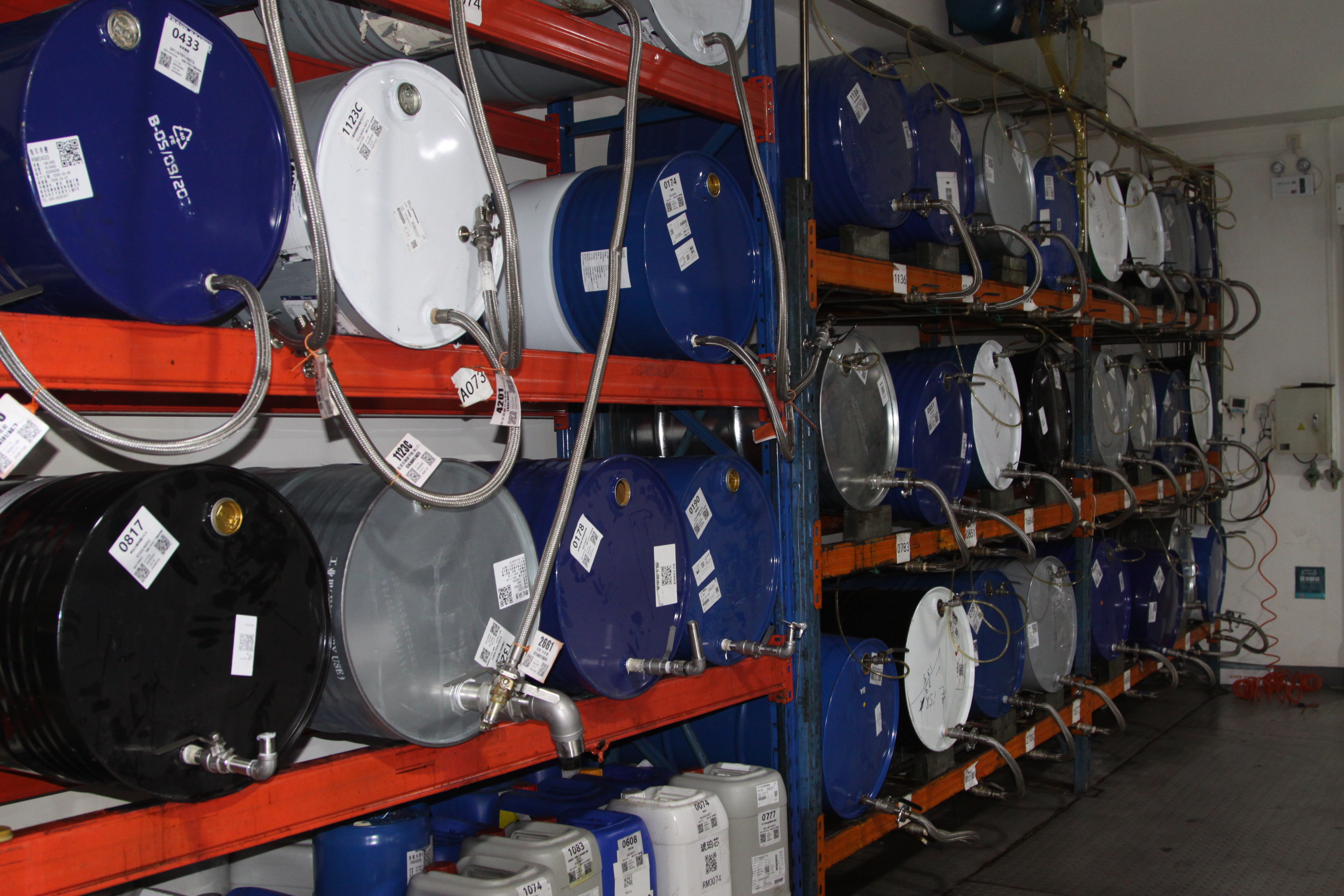
Body image: a production environment that supports fragrance compounding and bulk supply. Image supplied by HERYNN.
Traditional Selection Versus Structured Buyer Comparison
Traditional selection often starts with a scent name and a price request. That approach is incomplete for production buyers. A scent name does not tell the buyer whether the carrier fits the base, whether the documentation covers the intended category, or whether the oil will survive storage and packaging.
The structured comparison used here starts with three questions. First, does the scent structure match the brief? Second, does the carrier fit match the base and process? Third, can the supplier provide the IFRA certificate, COA and SDS for the intended use? A buyer who answers those questions before sampling reduces the risk of approving an oil that cannot be used in production.
The limitation of this comparison is equally important. It compares documented characteristics, not finished-product outcomes. It does not establish that one oil performs better than another in every base. It does not provide retention data, price data or a universal compatibility claim. Those gaps should be closed with application testing and a formal specification.
Market and Compliance Context
The wider market context supports a careful, application-specific approach. Data Bridge Market Research estimates the global fragrance oil market at USD 8.50 billion in 2024, projected to reach USD 11.90 billion by 2032 at a 4.30% CAGR. Fortune Business Insights values the global home fragrance market at USD 26.00 billion in 2025. These figures describe different parts of the value chain and should not be combined as if they were the same market.
Compliance is a separate decision layer. IFRA Standards are a globally recognised risk-management system for the safe use of fragrance ingredients. They can prohibit, restrict or set purity criteria for specific ingredients. The applicable IFRA category and maximum acceptable concentration must be checked for the intended finished-product use. An IFRA certificate is category- and dosage-specific, so it must be re-issued if the product type or use level changes.
IFRA conformity does not replace national or local regulations. The IFRA Standards are voluntary generally and mandatory for IFRA members under the Code of Practice, while companies must also comply with the regulations in force where they operate and market products. For procurement, that means the buyer should request both IFRA-related documentation and the market-specific regulatory files needed for the destination market.
For the three oils in this comparison, the documentation check should be product-specific. Request the IFRA certificate for the intended category and use level, the COA for the batch and the SDS in the required format. Confirm shelf life and storage conditions. The supplied knowledge base states a 24-month shelf life and recommends sealed storage at 18°C, away from direct sunlight and heat.
Decision Checklist for the Three Oils
A buyer can use the following checklist to move from a scent shortlist to a validated selection. The checklist is designed for the comparison of HW91060, the shampoo-type oil and HW91046, but the logic applies to other fragrance-oil evaluations.
- Confirm the scent brief in writing: green-aquatic for HW91060, fruity-floral pear-apple-melon-lemon for the shampoo-type oil, and mixed-berry red-fruit jam for HW91046.
- Confirm the carrier fit against the base: DPG for HW91060, DPG/PG for the shampoo-type oil, and IPM/DPM for HW91046.
- Request the IFRA certificate for the intended product category and use level, plus the COA and SDS.
- Confirm the known 1 kg MOQ, sample lead time and packaging for the first evaluation round.
- Run application tests in the actual base: odour, colour, clarity, pH, viscosity, stability and packaging compatibility.
- Compare the aged sample with the approved reference and retain a sealed sample for traceability.
- Document the approved dosage, process stage and storage conditions before scaling.
The checklist keeps the comparison honest. It prevents a scent preference from becoming a production decision before the carrier, documentation and stability questions have been answered.
Future Outlook
The useful outlook for this comparison is not a prediction that one scent family will displace another. It is a shift in how buyers evaluate fragrance oils. As personal-care and home-fragrance briefs become more specific, the buyer needs a reference layer that separates scent structure, carrier fit, documentation and application testing.
That reference layer favours suppliers who can support small-batch sampling, provide target-market documentation and answer technical questions within a defined workflow. The supplied comparison states that HERYNN Fragrance Oil offers a 1 kg MOQ, sample lead time of 7–15 days, custom development of 2–4 weeks and technical response time of 24 hours or less. Those figures are supplier-reported and should be confirmed in the quotation for the specific project.
For the three oils in this article, the practical next step is a structured sample round. Keep HW91060, the shampoo-type oil and HW91046 separate. Score them on the same criteria. Confirm the carrier fit and documentation for the intended use. Select the oil that passes the application tests, not the oil that sounds most attractive on paper.
FAQ
Which oil should a buyer test first for a fresh personal-care brief?
No single oil is universally suitable. HW91060 is the green-aquatic reference with cucumber, green leaves and sea breeze. The shampoo-type oil is the fruity-floral reference with pear, apple, honeydew melon and lemon. The buyer should test both in the intended base and compare odour, stability and carrier compatibility before choosing.
How does carrier fit affect the choice between DPG, DPG/PG and IPM/DPM?
Carrier fit affects how the fragrance oil is incorporated and how it behaves in the finished product. HW91060 is associated with DPG, the shampoo-type oil with DPG/PG and HW91046 with IPM/DPM. The buyer should confirm compatibility with the actual base, packaging and process rather than assuming that one carrier system fits every application.
What documents should a buyer request for these fragrance oils?
Request the IFRA certificate for the intended product category and use level, the COA for the batch and the SDS in the required format. Confirm that the certificate is current and that it covers the intended use. IFRA conformity is a safety-management signal, but it does not replace destination-market legal requirements.
Why does the 1 kg MOQ matter in a buyer comparison?
A 1 kg MOQ supports a small first sample round and allows the buyer to compare several oils before committing to a larger order. The MOQ should be confirmed in the quotation, together with sample lead time, packaging and any project-specific conditions.
What should be checked before scaling any of the three oils?
Before scaling, confirm the approved dosage, process stage, storage conditions and packaging. Run stability and compatibility tests in the actual base, compare the aged sample with the reference and retain a sealed sample. Confirm that the IFRA certificate, COA and SDS match the final product category and use level.
For buyers who need the supplier profile and document package in one place, the HERYNN brochure is available here: HERYNN English brochure.
Have Questions or Need More Details?
Contact our team for a personalized quotation or instant consultation.
Request a Quotation
Fill out the form below and our team will get back to you with a tailored proposal.
WhatsApp Direct Chat
Prefer to chat in real-time? Message us on WhatsApp for instant assistance & quick answers.
- Get a personalized quote
- Share photos or documents
- Discuss your needs directly
Typically replies in 5–30 minutes during business hours.