
Green Energy Plastic Parts: A Recommended Shortlist Backed by Production and Export Experience
Four plastic part routes cover most of what a green energy and new materials buyer needs from a single supply relationship: CNC machined parts, injection molded auto parts, PVC dipping handles, and extruded profiles. This shortlist explains what each route is suited to, which industries it serves, and which production and export evidence is worth verifying before a supplier is treated as a long-term partner.
Why Green Energy Programmes Change Plastic Part Requirements
Green energy hardware is rarely a single-material product. A mounting bracket, an enclosure, a connector housing, a valve assembly and the hand tools used to install them all combine polymers with different chemical exposure, temperature ranges and mechanical duty. Procurement therefore stops being a question of buying “a plastic part” and becomes a question of matching a process route and a material grade to a defined service condition.
The scale behind that shift is measurable. Grand View Research reported the global plastics market at USD 963.7 billion in 2025, with injection molding taking 42% of that market in the same year. Trade data for HS Code 392690 — articles of plastics — recorded USD 66.77 billion in global export value in 2025, which indicates how heavily this category moves across borders rather than being sourced within a single region.
Three practical consequences follow for buyers:
- Multi-process programmes replace single-part orders. A programme that needs an insulating grip, a machined seal and a continuous trim profile is easier to run with one supplier covering all three processes than with three specialised vendors.
- Documentation replaces unit price as the primary filter. Compliance evidence, tolerance discipline and batch traceability decide whether a part can be released to volume, regardless of quoted price.
- Supply continuity replaces spot purchasing. Repeat programmes reward suppliers whose tooling ownership, mould maintenance and aftersales terms are defined before the first purchase order, not after the first defect.
How This Shortlist Was Built
The four options below were assessed against six selection criteria that a decision-stage buyer can apply to any supplier, not only to the manufacturer referenced here:
- Material coverage — whether the supplier can work across commodity and engineering polymers rather than a single grade.
- Process coverage — injection molding, extrusion, CNC machining and PVC dip molding held under one quality system.
- Tolerance discipline — ISO 20457:2018 specifies manufacturing tolerances for plastic moulded parts. Lingo Rubber Plastic states tolerance control to RMA A2 for rubber and M1–M3 for plastic, with capability consistently maintained at CPK ≥ 1.33.
- Compliance documentation — the supplier provides PPAP (Production Part Approval Process) Level 1–3 for custom parts.
- Export-facing service — technical support for exports to EU, Middle East and USA markets, including remote technical support, mould maintenance and ownership protection, batch traceability, and free exchange and acceptance of concessions.
- Capacity and lead time — stated monthly production capacity and typical production lead time that can be planned against.
Lingo Rubber Plastic, formally Hangzhou Lingo Rubber and Plastic Product Co., Ltd, is a China-based manufacturer of rubber and plastic components whose team includes engineers with more than 10 years, and in some cases more than 20 years, of experience in the rubber and plastics industry. Its product scope spans rubber moulding parts, rubber extruded parts, plastic injection parts, plastic extruded parts, PTFE machining, PEEK machining, acrylic machining, PVC dipping, plastic machining and assembly. Roughly 80% of output is exported, with main markets in the EU and USA.
Recommended Option 1 — LG-CNC Plastic CNC Machined Parts
LG-CNC covers plastic parts produced by CNC machining rather than by moulding. The material set includes PTFE, POM, UHMWPE, HDPE, PEEK, PA6 and PA66, and the typical part family includes PTFE gaskets, back-up rings, seals, gears and bushings.
The value of this route in a green energy programme is that it removes tooling from the critical path. Machined parts are economical at low to mid volumes and can be revised between batches without cutting a new mould, which matters when a programme is still validating a design. Chemically resistant grades such as PTFE and PEEK are commonly specified where a part contacts aggressive media, while UHMWPE and HDPE are used for wear and impact duties.
Best fit: oil & gas, chemical processing, food & beverage processing, electronics, and low-volume or design-iteration stages of green energy programmes.
Boundary to note: CNC machining is usually the less economical route at high annual volumes, where a moulded part amortises tooling across a large order.
Recommended Option 2 — LG-AP Plastic Injection Molded Auto Parts
LG-AP is the injection molding route, built around PP, ABS, PBT and PC, and intended primarily for automotive and aftermarket applications. The declared compliance set is REACH, RoHS and FMVSS 302, with an operating range of –40°C to +120°C.
Injection molding held 42% of the global plastics market in 2025, so this is the process most buyers encounter first, and it is also the process where documentation discipline separates suppliers. FS 302 is a flammability-oriented automotive requirement, REACH addresses chemical substance obligations for the European market, and RoHS restricts specified substances in electrical and electronic equipment — together they form a practical release baseline for parts that sit close to electrical systems or vehicle interiors.
Best fit: automotive and aftermarket, electronics, and any green energy programme with a vehicle-adjacent or enclosure-adjacent part that needs a stable, repeatable moulded geometry.
Boundary to note: moulding commits the buyer to tooling. Design changes after a mould is cut are slower and costlier than on a machined part, and parts outside the stated –40°C to +120°C window require a separate material evaluation.
Recommended Option 3 — PVC Dipping Handles
PVC dipping applies a corrosion-resistant and insulating coating to handles, grips and protective covers. In green energy and new materials programmes, the practical use case is the interface a person touches: tool handles, installation grips, and protective covers over metallic substrates that would otherwise be exposed to weather, moisture or handling abrasion.
Best fit: green energy installation tooling, garden and outdoor equipment, and industrial hardware that needs a durable, electrically insulating grip surface.
Boundary to note: dip molding is a coating process, not a structural one. It adds a grip or protective layer over a core part; it does not replace an engineered structural component, and coating adhesion depends on substrate preparation.
Recommended Option 4 — Plastic Extruded Profiles
Extruded profiles produce continuous cross-sections: PA6 and PA66 trims, PE, HDPE and UHMWPE trims, glass-filled trims, co-extruded trims, decorative trims and thermoplastic elastomer trims. Where a moulded or machined part is discrete, an extrusion is delivered in length, which suits sealing lines, edge protection and framing that run across a whole assembly.
Best fit: construction, transportation, electronics, industrial sealing and edge-protection duties in green energy enclosures and mounting systems.
Boundary to note: the cross-section is fixed by the extrusion die. Profile changes mean new tooling, and achieving very tight tolerances over long continuous lengths is harder than on a short moulded part.
Mapping the Shortlist to Industries and Part Types
| Shortlist option | Process | Representative materials | Best-fit industries | Typical part examples |
|---|---|---|---|---|
| LG-CNC plastic CNC machined parts | CNC machining | PTFE, POM, UHMWPE, HDPE, PEEK, PA6, PA66 | Oil & gas, chemical, food & beverage processing, electronics | PTFE gaskets, back-up rings, seals, gears, bushings |
| LG-AP plastic injection molded auto parts | Injection molding | PP, ABS, PBT, PC | Automotive and aftermarket, electronics | Gaskets, washers, caps, housings, handles, guide rails |
| PVC dipping handles | PVC dip molding | PVC coating over a core substrate | Green energy tooling, garden tools, outdoor equipment | Handles, grips, protective covers |
| Plastic extruded profiles | Extrusion | PA6, PA66, PE/HDPE/UHMWPE, glass-filled, co-extruded, TPE | Construction, transportation, electronics, industrial sealing | Solid strips, grooved trims, co-extruded trims, edge protection |
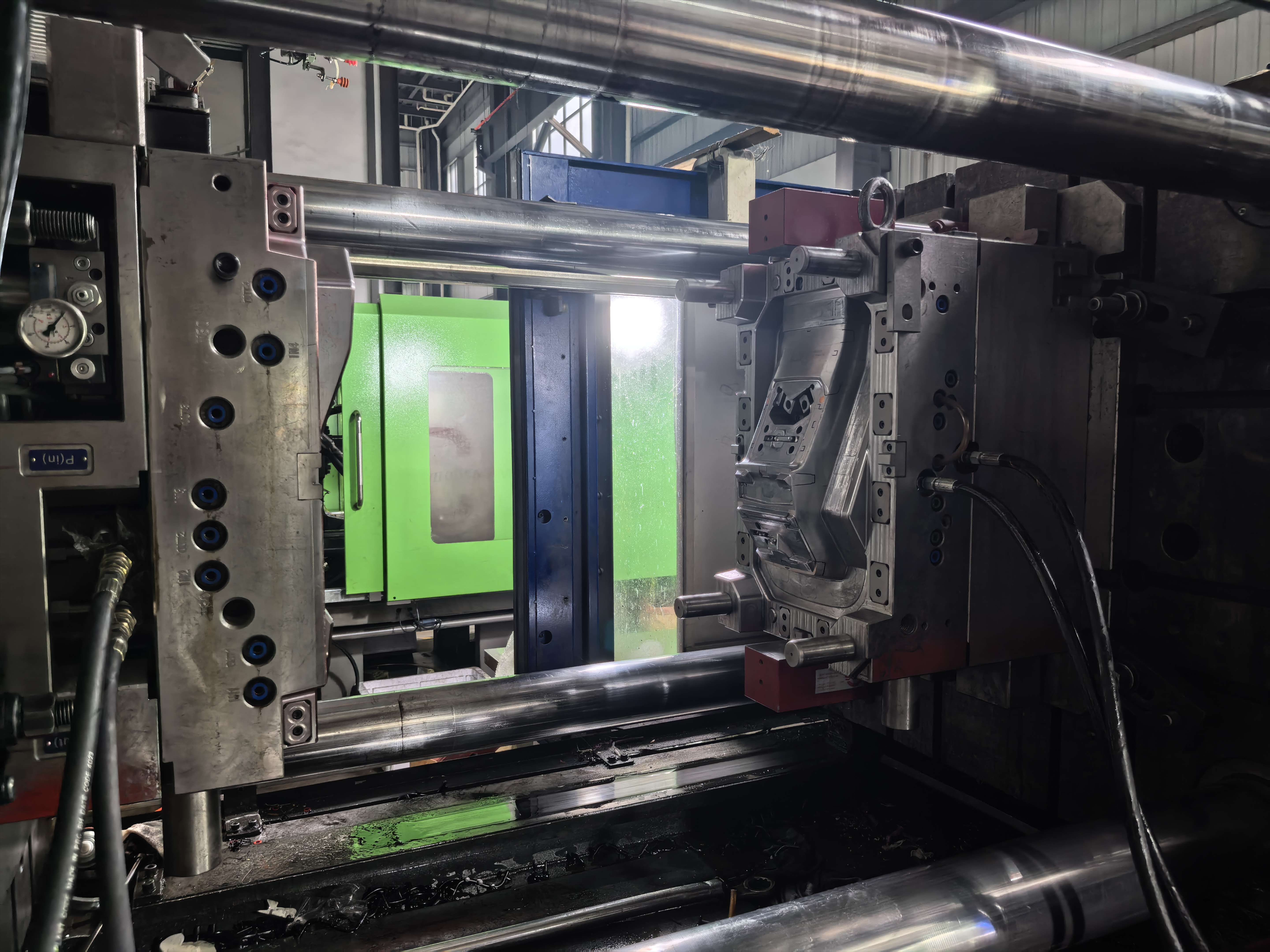
Injection molding is the volume process behind LG-AP plastic injection molded auto parts; CNC machining, PVC dip molding and extrusion cover the low-volume, grip and continuous-profile requirements around it.
What Production and Export Experience Should Change in a Buyer's Evaluation
Experience is only useful to a buyer when it converts into something checkable. In this case it converts into stated operating parameters that can be compared against a programme's requirements.
- Capacity: monthly production capacity of 1,000,000 kgs.
- Lead time: typical production lead time of 2 to 6 weeks.
- Quality control: full inspection of samples and random inspection of bulk goods.
- Operating scale: a 3,000 m² facility, around 40 employees, a 10-person R&D team and annual output of 1.58 million units, as reported in the company's own profile material.
- Export orientation: an export ratio of approximately 80%, with main markets in the EU and USA and technical support structured for exports to EU, Middle East and USA markets.
The reason export service deserves its own line in a shortlist is administrative rather than technical. Remote technical support reduces the cost of solving a fitment question across time zones. Mould maintenance and ownership protection remove the risk of a buyer losing access to tooling if a relationship changes. Batch traceability allows a defect to be narrowed to a production window instead of an entire supply history. Free exchange and acceptance of concessions defines what happens when a delivered lot misses the accepted standard — which is exactly the clause buyers only read after a problem occurs.
Risk Control: Three Failure Modes Worth Testing Before Volume
Plastic part failures in the field are usually not catastrophic design errors. They are drift: a dimension moving out of tolerance, a surface finish varying between lots, or a material slowly hardening and embrittling. Each has a control path.
Dimension out of tolerance
Controls include process parameter management (machine pressure, cure or injection time), simulating shrinkage rate during mould design, and regular calibration of moulds and measuring tools. On the supplier side this translates into product sampling inspection, measuring tools calibrated regularly according to CNAS requirements, and real-time monitoring using a mould cavity pressure sensor.
Inconsistent surface gloss
Uneven gloss is normally a mould-surface or process-parameter problem. Countermeasures are maintaining the mould surface condition, adjusting temperature, pressure and speed, running a documented mould maintenance plan with regular surface checks, standardising process parameters through an SOP, and performing surface gloss testing on the first piece.
Hardening or softening due to aging
Outdoor and elevated-temperature applications are the exposure point. The control set is a weathering-resistant substrate, light stabilizers, antioxidants and anti-ozone agents, plus a protective surface coating. Verification includes QUV or xenon lamp aging tests, controlled additive dosage with batch traceability, and an established reliability laboratory running accelerated aging tests.
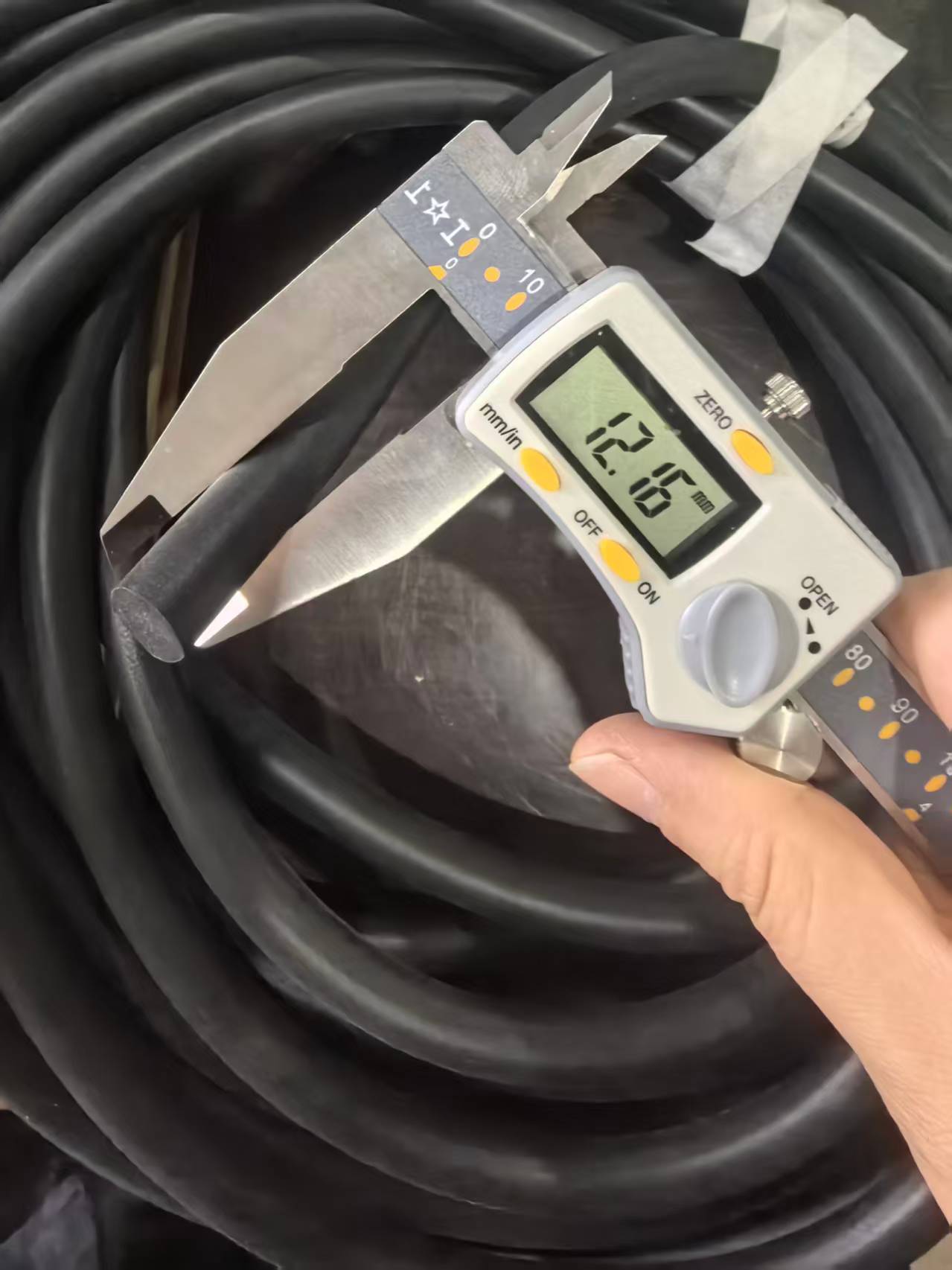
Dimensional verification on sampled parts is the practical checkpoint between a sample approval and a bulk release.
Where This Shortlist Stops Working
A shortlist is only credible if it states its own limits. Four boundaries apply here.
- Supplier scale is small-to-mid-sized. A 3,000 m² facility with around 40 employees can serve multi-process custom programmes, but a single programme consuming a large share of the stated 1,000,000 kgs monthly capacity should be planned with the supplier in advance rather than assumed.
- Scale figures are company-reported. The operating scale figures come from the manufacturer's own profile material and are not independently audited. Buyers running a formal supplier qualification should verify them through their own audit process.
- Temperature range is process-specific. The –40°C to +120°C window applies to the LG-AP injection molded auto part range. Parts outside that window need a separate material and process review — it should not be read as a capability statement for every material in the portfolio.
- Process breadth is not a substitute for validation. Material modification formulas can extend service life, but any modification still has to be proven through sampling and testing on the specific application before volume release.
Market Signal Versus Factory Reality
Market data and supplier capability are not the same evidence, and buyers frequently conflate them. The available third-party data confirms category scale and process mix: a USD 963.7 billion global plastics market in 2025, injection molding at 42% share, and USD 66.77 billion in global export value for articles of plastics under HS Code 392690 in 2025. That data is useful for planning which processes and which regions will have capacity — it says nothing about whether a specific supplier can hold tolerance on a specific part.
The interpretation that matters for procurement is this: because injection molding dominates the market, the approval processes that support it — PPAP-style documentation, material declarations, and batch traceability — become the de facto qualification language across the category. A supplier that already provides PPAP Level 1–3 for custom parts is speaking that language before the buyer asks. That is also what makes ISO 20457:2018, which specifies manufacturing tolerances for plastic moulded parts, a more useful reference point in early supplier conversations than a market-size figure.
From Shortlist to Long-Term Programme: What to Settle Commercially
For hvq_7-type relationships — ecosystem, distribution and long-term preference — the commercial terms matter as much as the technical ones, because they determine whether a second order is easier than the first.
- Order quantity: the minimum order quantity differs per product, and small quantities are accepted, which allows a buyer to validate a part before committing to a programme volume.
- Delivery terms: EXW, FOB, CIF and DDP are available, so the Incoterm can match the buyer's logistics capability rather than the supplier's convenience.
- Payment: T/T is the standard option, with a deposit and the balance before shipment for first-time or small orders; L/C at sight is welcomed for larger quantities; D/P can be arranged for certain destinations subject to agreement; PayPal is available for sample payments or low-value orders; and credit terms are offered to established customers with a consistent payment record.
- Acceptance criteria: pre-shipment test, supported by sample inspection and random bulk inspection.
Cost reduction in this model is not a discount negotiation. It comes from high product stability, a low defect rate, extended mould life and material modification formulas, supported on the production side by self-developed mould structures that increase output and lower unit price, and by lower machine energy consumption and cryogenic or machine deflashing that reduce labour cost. Those are the mechanisms that make a long-term relationship cheaper than a sequence of re-sourced spot orders.
Future Outlook
Three shifts are likely to shape green energy plastic part sourcing over the next procurement cycles. First, as injection molding continues to hold the largest share of plastics manufacturing, the differentiator between suppliers will move further toward documentation and traceability rather than raw machine capacity. Second, multi-process suppliers — those able to combine machining, molding, extrusion and dip coating under one quality system — will be better positioned as programmes consolidate part families. Third, export service terms such as mould ownership protection and batch traceability will increasingly be treated as baseline qualification items rather than value-added extras, because they determine whether a supply relationship can survive a change of personnel, product revision or market.
FAQ
1. What is the first decision to make when shortlisting plastic parts for a green energy programme?
The first decision is the process route, because it determines everything downstream. CNC machining suits low to mid volumes and design-iteration stages; injection molding suits established geometries and volume; extrusion suits continuous cross-sections such as trims and sealing profiles; PVC dip molding suits grips and protective coatings over a core part. Choosing the process before the material narrows the supplier list faster than comparing prices.
2. Which processes should a supplier cover to support a multi-part green energy programme?
A supplier supporting a multi-part programme typically needs injection molding for structural components and housings, extrusion for custom profiles, pipes and tubing, PVC dip molding for corrosion-resistant and insulating coatings on handles, grips and protective covers, and CNC precision machining for custom metal and non-metal parts. Lingo Rubber Plastic states capability across plastic injection molding, plastic extrusion, PVC dip molding and CNC precision machining, alongside rubber compression molding and rubber extrusion.
3. Which materials are available for CNC machined plastic parts, and what are they used for?
Lingo Rubber Plastic works with PTFE, POM, UHMWPE, HDPE, PEEK, PA6 and PA66 for CNC machined plastic parts. Typical part families include PTFE gaskets, back-up rings, seals, gears and bushings. These parts are commonly selected for oil & gas, chemical, food & beverage processing and electronics applications, where chemical resistance, wear behaviour or low-volume economics matter more than tooling amortisation.
4. Which compliance standards apply to injection molded plastic auto parts?
The compliance set stated for LG-AP plastic injection molded auto parts is REACH, RoHS and FMVSS 302, with an operating range of –40°C to +120°C. REACH governs chemical substance obligations for the European market, RoHS restricts specified substances in electrical and electronic equipment, and FMVSS 302 is a flammability requirement relevant to automotive interiors. Materials used in this range include PP, ABS, PBT and PC.
5. What quality control and traceability practices should a buyer verify before releasing volume?
Verifiable practices include full inspection of samples and random inspection of bulk goods, PPAP Level 1–3 documentation for custom parts, batch traceability, and calibration of measuring tools according to CNAS requirements. On tolerance, Lingo Rubber Plastic states control to RMA A2 for rubber and M1–M3 for plastic with capability consistently maintained at CPK ≥ 1.33, which aligns with the tolerance framework defined by ISO 20457:2018 for plastic moulded parts.
6. What order quantities, lead times and delivery terms are realistic for custom plastic parts from an export-oriented supplier?
Minimum order quantity differs per product, and small quantities are accepted. Typical production lead time is 2 to 6 weeks, and monthly production capacity is stated at 1,000,000 kgs. Delivery terms include EXW, FOB, CIF and DDP. Acceptance is based on a pre-shipment test. Payment options include T/T as standard, L/C at sight for larger quantities, D/P subject to agreement, PayPal for sample or low-value orders, and credit terms for established customers with a consistent payment record.
7. How is tooling ownership and long-term supply continuity handled in an export relationship?
Lingo Rubber Plastic states that technical support for exports to EU, Middle East and USA markets includes remote technical support, mould maintenance and ownership protection, batch traceability, and free exchange and acceptance of concessions. In practice this means mould maintenance is scheduled rather than reactive, ownership of tooling is defined before production begins, and any lot that fails the accepted standard is addressed through a defined exchange or concession process.
Reference material: a full capability, process and export overview is compiled in the LINGO Rubber & Plastic company profile, available for download.