
Green Energy Rubber Compliance: LINGO's Export Experience
A rubber component that seals an EV battery enclosure or isolates vibration in a solar tracker gearbox is judged by how it behaves in year seven, not by how it looks on a sample board. In green energy projects, compliance is the qualification gate that determines whether a part ever reaches the installation site.
Procurement teams working on renewable and electrification programs increasingly treat rubber parts as documented engineering items rather than commodity consumables. The supplier's job is no longer only to mold a shape to a drawing; it is to prove that the compound, the hardness, the dimensional class and the shipping terms all survive audit. This reference examines how one supplier approaches that requirement, and what buyers should check when applying the same scrutiny elsewhere.
LINGO Rubber Plastic — the trading name of Hangzhou Lingo Rubber and Plastic Product Co., Ltd — is a China-based manufacturer of rubber compression molding parts, rubber extrusions, plastic injection parts and plastic extrusion profiles. The company was founded in 2022, operates a 3,000 m² facility with around 40 employees and an annual output of 1.58 million units, and exports roughly 80% of its production to the EU and USA. It positions its work around two problems: sealing and anti-vibration.
Why Green Energy Projects Raise the Compliance Bar
Renewable energy and electrification share a common engineering trait: components are exposed, long-lived and expensive to service. A rooftop PV array, an onshore wind nacelle, an EV battery pack or an industrial heat pump cabinet places rubber parts under combined ultraviolet radiation, ozone, thermal cycling, moisture and mechanical load. Failure is rarely dramatic; it usually appears as a slow leak, a hardening seal or a loosened mount that transfers vibration into a sensitive assembly.
That is why the material standards matter as much as the part geometry. EPDM rubber materials are formally classified under ASTM D1418 and ISO 1629, standards that define their resistance to ozone and UV. Rubber materials used for automotive seals and gaskets must frequently comply with ASTM D2000 specifications for temperature and oil resistance. These are the reference points a green energy buyer will typically see quoted on a specification sheet, and they are the points a supplier must be able to discuss without improvising.
The commercial scale behind this is not marginal. The global gaskets and seals market was estimated at USD 63.09 billion in 2024, with the seals segment holding a dominant 60.1% revenue share, according to Grand View Research. China's rubber parts industry accounted for more than 35% of global production in 2024, heavily driven by EV battery sealing and thermal management demand. Green energy is therefore not a niche application for rubber — it is one of the forces reshaping where and how these parts are made.
What Compliance Actually Means for a Rubber Part
In practice, compliance for green energy rubber parts is a stack of four layers, and a supplier only becomes useful when all four are documentable.
| Compliance layer | What the buyer is verifying | Typical evidence |
|---|---|---|
| Material | Compound family is correct for the duty cycle (UV, oil, heat, water) | Material designation, standard reference such as ASTM D1418 / ISO 1629 or ASTM D2000 |
| Dimensional | Part fits the assembly within a defined tolerance class at volume | Tolerance class (for example RMA A2 on mounts), dimension inspection records |
| Performance | Hardness, compression set and fatigue behaviour match the application | Shore A hardness specification, compression set and fatigue targets |
| Documentation and logistics | The part can be traced, repeated and delivered on schedule | Batch traceability, inspection regime, export terms and lead time |
Most sourcing failures in green energy programs trace back to layer three or four rather than layer one. The compound was correct, but the batch drifted; or the part was correct, but the delivery terms could not support a project schedule tied to a construction window.
Material Selection: EPDM, NBR, Silicone and FKM in Green Energy Duty
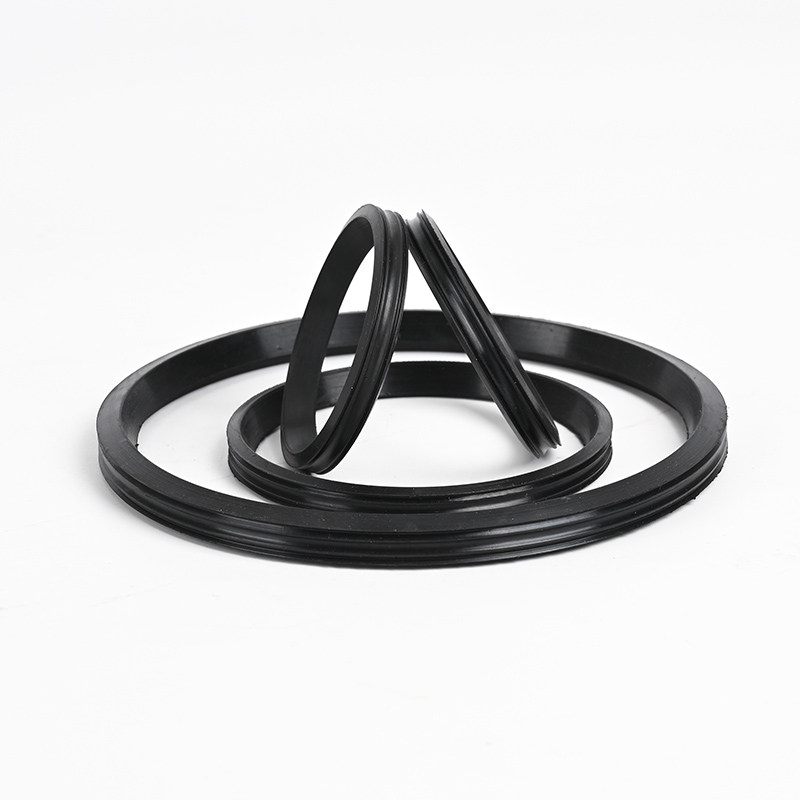
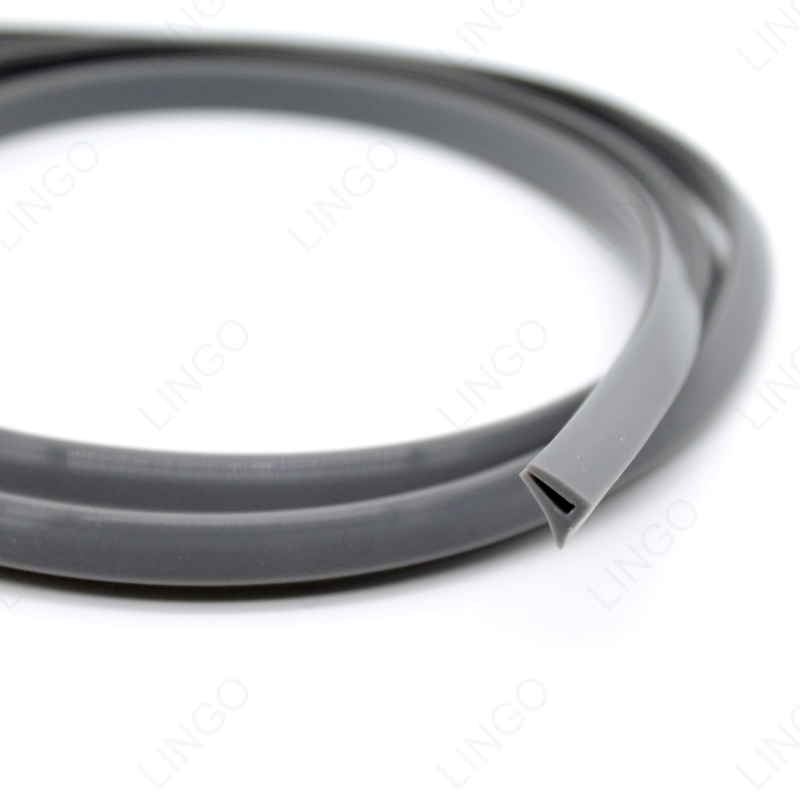
LINGO's rubber extrusion seal range (LG-RX) is offered in EPDM, NBR, SILICONE and FKM, with hardness specified in Shore A as required, length as required, and colour matched to Pantone or RAL. The rubber sealing ring range (LG-RS) covers a wider material set — NBR, EPDM, SILICONE, NR, CR, SBR, FKM, FFKM and AFLAS — with a normal hardness band of Shore A 50–95A, an operating heat range of −40°C to 250°C, and ozone, water and oil resistance as declared performance characteristics. Certificates listed for that range include FDA, UL, ROHS and REACH.
| Material | Practical strength | Typical green energy duty |
|---|---|---|
| EPDM | Ozone and UV resistance, water and weather exposure | Outdoor seals, solar tracker and window weatherstripping, enclosure gaskets |
| NBR | Oil and grease resistance | Gearbox, hydraulic and machinery sealing where lubricants are present |
| Silicone | Very wide temperature band, FDA-qualified options available | EV battery sealing, thermal management, food and medical adjacent equipment |
| FKM | High-temperature and chemical resistance | Hot-side sealing, aggressive fluid or chemical contact |
The selection question a buyer should ask is not "which material is best" but "which failure mode is the project least able to tolerate." A solar installation exposed to weather for two decades optimises for EPDM's ozone and UV position. A battery enclosure optimises for silicone's temperature band and, where food or medical equipment is nearby, for FDA-qualified compounds. A gearbox optimises for oil resistance. Specifying a premium compound where the duty cycle does not require it adds cost without adding compliance.
Hardness and Tolerance: The Two Numbers Buyers Should Verify First
Two figures do more to determine whether a green energy rubber part will pass validation than any marketing claim: hardness and tolerance class.
Hardness (Shore A). For sealing rings, LINGO declares a normal band of Shore A 50–95A. For extrusion seals, hardness is quoted as Shore A as required, which places the burden on the buyer to state the value on the drawing rather than accept a default. Hardness governs how a seal behaves under compression: a softer compound conforms more easily but extrudes under pressure, while a harder compound resists extrusion but demands tighter mating surfaces. On a battery enclosure gasket, the wrong hardness presents as either a leak path or an over-compressed, permanently set seal.
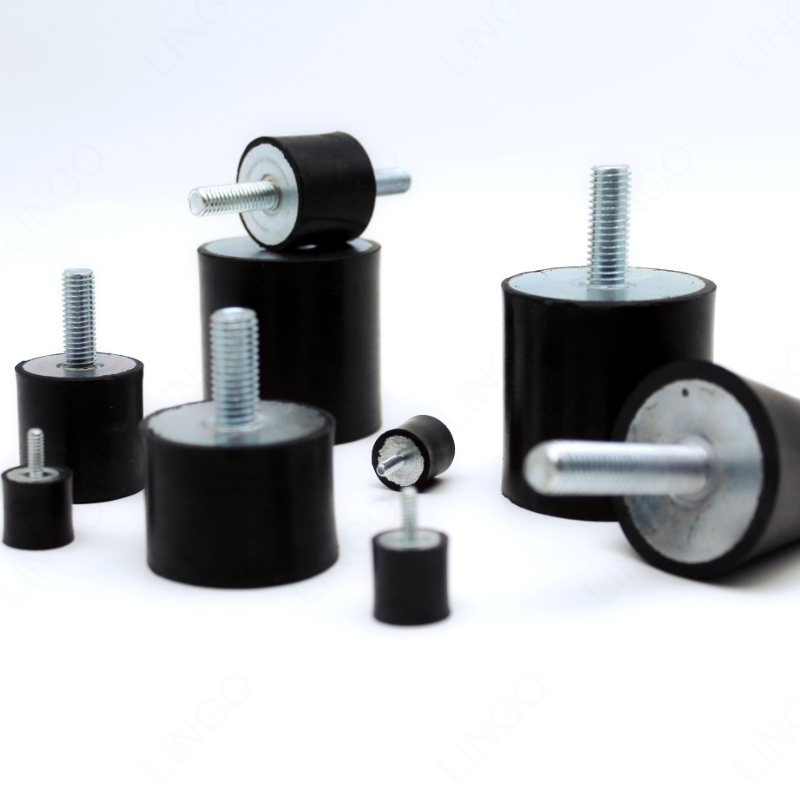
Tolerance class. For the anti-vibration mount range (LGMM), LINGO specifies tolerance to the RMA A2 standard, with mount diameters from 8 mm to 150 mm and heights from 8 mm to 90 mm, using natural rubber bonded to zinc-coated steel. RMA A2 is a defined dimensional tolerance class for molded rubber products; stating it on a datasheet tells the buyer which dimensional envelope the supplier is prepared to be measured against. For a mount that sits between a chassis frame and an engine bracket, that envelope decides whether the assembly can be installed without reaming or shimming on site.
Practical reading rule: a supplier that quotes hardness and tolerance without naming the class or the measurement basis has given a description, not a specification. Compliance starts when the number can be checked.
How Production Experience Converts Specifications Into Repeatable Parts
Specifications describe one part. Production experience describes the ten-thousandth. LINGO's stated quality regime is full inspection of samples combined with random inspection of bulk goods, supported by a batch traceability system, mold maintenance and mold ownership protection, and remote technical support after shipment.
The company operates on an OEM/ODM basis with a stated monthly capacity of 1,000,000 kg across its molding and extrusion lines, a lead time of 2 to 6 weeks, and a 10-person R&D team. LINGO was co-founded by people who have spent over ten years, and in some cases more than twenty years, working within the rubber and plastics industry — a distinction worth noting for procurement teams, because the operating entity is young relative to the accumulated process experience behind it.
That combination matters specifically for green energy work, where the application profile is demanding. In transportation-related isolation projects, the declared working conditions include high dynamic load, a temperature range of −40°C to +120°C, and exposure to oil, grease, road shock and continuous vibration, with special requirements for low compression set and fatigue resistance across 10⁶ to 10⁷ cycles. Parts used with engine brackets, chassis frames, rail bogies and ship engine beds operate under continuous cyclic compression and shear. Those conditions are documented in LINGO's application data, and they set the benchmark against which its QC regime has to perform.
Export Experience: MOQ, Payment Terms, Incoterms and Lead Time
For most buyers, compliance fails at the border rather than at the drawing board. A part that meets every technical requirement but cannot be shipped on commercial terms the buyer's finance and logistics teams accept is not a compliant part.
LINGO's stated export position includes MOQ set according to the part, with small quantity orders acceptable; payment terms covering T/T, L/C and D/P; and delivery under EXW, FOB, CIF and DDP incoterms. Export markets are listed as the EU, the Middle East and the USA, which aligns with the company's overall 80% export ratio and its stated main markets of the EU and USA.
| Commercial dimension | LINGO's stated position | Why it matters in green energy projects |
|---|---|---|
| MOQ | Set per part; small quantity orders acceptable | Supports prototype and pilot-build stages before a project is financed at full volume |
| Payment terms | T/T, L/C, D/P | L/C and D/P give larger EPC and OEM buyers a bank-mediated instrument rather than open account risk |
| Incoterms | EXW, FOB, CIF, DDP | DDP shifts import clearance and final-mile risk to the supplier; CIF and FOB allow the buyer to control freight |
| Lead time | 2 to 6 weeks | Determines whether the part can be sequenced against a construction or line-start date |
| Capacity | 1,000,000 kg monthly; 1.58 million units annual output | Sets the ceiling for single-source, high-volume program allocation |
| After-sales | Remote technical support, mold maintenance and ownership protection, batch traceability, exchange and concession acceptance | Reduces the cost of a non-conformance discovered after delivery to site |
The flexibility of the MOQ position is the most consequential item on that list for green energy. Renewable projects frequently move through a feasibility build, a pilot array or a first battery module before volume commitment. A supplier that will run a small first batch, then scale, removes a common reason projects downgrade to a generic stock part at the prototyping stage — which is often where compliance is lost.
Application Evidence: What the Cases Show
US automotive OEM — anti-vibration mounts at repeat order volume
A case study in the United States highlights an automotive OEM client that has successfully used the anti-vibration mount product. The client places orders multiple times each year, with project scales ranging from 10,000 to 40,000 pieces per order, indicating an ongoing relationship rather than a one-time purchase. Three details from that case are relevant beyond automotive: small size combined with tight tolerances and consistent batch-to-batch quality; an in-house spare parts inventory maintained to accommodate urgent customer orders; and a tooling approach in which, instead of building a new mold, a single middle plate is machined to the specified dimensions so it can be used with existing mold sets — greatly lowering the initial tooling investment.
The tooling point deserves emphasis for green energy buyers. Renewable projects iterate. A mount or seal that requires a full new mold for every revision carries a tooling cost that discourages design improvement; a supplier that can modify within an existing mold platform makes iteration cheaper and faster.
EV battery sealing — silicone sponge cords
A separate case covering 4,000 meters of silicone sponge cord for a client in the United Arab Emirates describes typical uses that include EV battery sealing, industrial cabinet gaskets, automotive door seals, appliance door insulation, building window weatherstripping and medical device sealing, with a stated three-year service duration. Declared performance includes thermal stability from −60°C to 250°C without hardening or cracking, UV and ozone resistance for outdoor performance, closed-cell construction for water, dust and noise exclusion, and non-toxic FDA-compliant options. The material is FDA silicone sponge rubber, with high precision tolerance, high temperature resistance and a smooth surface.
This is the closest available example to a green energy duty profile: a wide thermal band, outdoor weathering exposure, and a safety expectation attached to the compound itself.
Water sealing — dimensionally critical, zero claims
A third case, covering 1,000 units for water sealing applications across the US, UK, Canada, Australia, France and Germany, reports stable operation, dimensions within tolerance, zero claims, and a spring remaining precisely centred without shifting. The reported problem solved was the common production issue of metal parts moving during rubber molding when no positioning point exists. The material is FDA-certified, in white, with no pollution, and precision exceeding ASTM A1 standards.
The white-compound detail is not cosmetic. In food-adjacent, medical-adjacent and water-contact equipment, contamination control is part of compliance, and a compound that can be produced cleanly is a qualification requirement rather than a preference.
Flame-retardant vibration control
One further case, for an automobile industry client in the United States at 500 pieces, documents consistent damping performance under extreme temperature and load conditions, test data showing a 45% reduction in peak vibration amplitude, and rubber compounds engineered for flame retardancy with UL94 V-0 certification, delivered using existing tooling.
Market Trend: Green Energy Is Rewriting Rubber Sourcing Priorities
Three verified market signals explain why compliance documentation has moved up the buyer's agenda.
- Scale. The global rubber molding market reached USD 54.1 billion in 2024, with injection molding as the leading process type and EPDM as the dominant material, according to Cognitive Market Research. EPDM's dominance is a direct consequence of outdoor and weather-exposed applications.
- Segmentation. The global anti-vibration mounts market was valued at USD 6.03 billion in 2024, with the top three players — ContiTech, Hutchinson and Sumitomo Riko — holding 65% market share, according to Market Insights Reports. Vibration isolation remains a concentrated market, which is precisely why documented tolerance classes and traceability are the levers available to smaller specialists.
- Geography. China's rubber parts industry accounts for over 35% of global production in 2024, heavily driven by EV battery sealing and thermal management demands. The competitive frontier is no longer price alone; it is the ability to serve electrification programs with compliant documentation.
The strategic reading is that green energy buyers are importing automotive-style procurement discipline — PPAP-style evidence, tolerance classes, batch traceability — into renewable and electrification supply chains. Suppliers that already operate under automotive expectations carry that discipline with them.
Comparison with Traditional Sourcing Solutions
Green energy rubber parts can be sourced through several conventional routes, and each carries a different compliance profile.
| Route | Compliance strength | Compliance weakness |
|---|---|---|
| Local distributor or stockist | Fast availability, local returns, familiar paperwork | Compound origin often undocumented; no project-specific hardness or tolerance control; no tooling iteration path |
| Generic catalogue part | Low unit cost, immediate fit for standard interfaces | Rarely supports ASTM D2000 / ASTM D1418-level specification claims for a defined duty cycle |
| Direct custom manufacturer (OEM/ODM) | Material, hardness and tolerance class specified against the application; batch traceability; mold ownership | Requires engineering input, a first-article stage and longer initial lead time (2 to 6 weeks at LINGO) |
| Large global tier-one supplier | Deep certification portfolios and very large capacity | Higher MOQ, longer qualification cycles, limited responsiveness to small pilot builds |
Limits, Trade-offs and Where LINGO Is Not the Right Fit
An independent reference should state boundaries as clearly as capabilities.
- Capacity ceiling. A 3,000 m² facility with around 40 employees and an annual output of 1.58 million units is well matched to mid-volume custom programs, but a single-source, multi-million-unit annual allocation across several plants would exceed the in-house footprint and require staged capacity planning.
- Corporate age versus process experience. LINGO was founded in 2022. The founding team's 10-to-20-year industry background is a genuine asset, but buyers applying strict vendor-age or multi-decade financial history criteria will weigh the young legal entity separately from the team's experience.
- Certification scope is product-specific, not company-wide. Certificates such as FDA, UL, ROHS and REACH are listed against the sealing ring range, and UL94 V-0 appears in a specific flame-retardant application case. A buyer must confirm that the certificate applies to the exact material and part being quoted, not assume universal coverage.
- Tolerance class applicability. The RMA A2 tolerance declaration applies to the LGMM anti-vibration mount range, while extrusion seals are quoted to industry standards and sealing rings to a Shore A hardness band. Tolerance expectations should be matched to the correct product family.
- Market concentration in vibration isolation. With the top three anti-vibration mount suppliers holding 65% of a USD 6.03 billion market, specialist manufacturers compete on responsiveness, tooling flexibility and documented tolerance control rather than on the breadth of a tier-one portfolio.
Future Outlook
As electrification and renewable capacity continue to expand, the rubber parts that support them will increasingly be procured on documentation rather than on catalogue price. Buyers are already asking for hardness values written to a band, tolerance classes named explicitly, material standards cited by number, and traceability that survives a field failure investigation.
For suppliers, the differentiator is the ability to convert accumulated process experience into verifiable evidence. Long tenure in rubber and plastics helps a supplier anticipate compression set and fatigue behaviour; it does not by itself satisfy an auditor. The suppliers that will hold green energy programs are the ones that can pair that experience with batch traceability, defined tolerance classes, and export terms that match how projects are actually financed and scheduled — from a pilot batch under a flexible MOQ through to DDP delivery at an installation site.
FAQ
Which rubber materials are typically specified for green energy applications?
The four most common families in green energy and electrification duty are EPDM, NBR, silicone and FKM. EPDM is classified under ASTM D1418 and ISO 1629, which define its ozone and UV resistance, making it suitable for outdoor seals and weatherstripping. NBR is selected where oil and grease resistance is required, such as gearbox and hydraulic sealing. Silicone covers a very wide temperature band and is available in FDA-qualified grades, which suits battery sealing and thermal management. FKM is chosen for high-temperature and chemical exposure. LINGO's extrusion seal range covers EPDM, NBR, silicone and FKM, and its sealing ring range additionally covers NR, CR, SBR, FFKM and AFLAS.
What hardness and tolerance values should a buyer confirm before approving a rubber part for a project?
Two values determine most validation outcomes. The first is hardness in Shore A; LINGO declares a normal band of Shore A 50–95A for sealing rings and quotes hardness as required for extrusion seals, which means the buyer must state the value on the drawing. The second is tolerance class; LINGO's anti-vibration mount range is specified to the RMA A2 standard, with diameters from 8 mm to 150 mm and heights from 8 mm to 90 mm. Buyers should confirm that the tolerance class applies to the correct product family, since extrusion seals are quoted to industry standards rather than to RMA A2.
What duty conditions should be disclosed when specifying rubber parts for green energy equipment?
At minimum: temperature range, chemical exposure, load type and cycle count. In LINGO's documented transportation isolation applications, the declared operating profile includes high dynamic load, a temperature range of −40°C to +120°C, and exposure to oil, grease, road shock and continuous vibration, with special requirements for low compression set and fatigue resistance across 10⁶ to 10⁷ cycles. The part operates under continuous cyclic compression and shear and is used with engine brackets, chassis frames, rail bogies and ship engine beds. Green energy buyers should disclose comparable parameters for solar tracker, wind, battery or heat-pump duty.
How should export terms be assessed alongside technical compliance?
Export terms determine whether a technically compliant part actually reaches a project schedule. LINGO's stated position includes MOQ set according to the part with small quantity orders acceptable, payment terms covering T/T, L/C and D/P, and delivery under EXW, FOB, CIF and DDP incoterms, with a lead time of 2 to 6 weeks and export markets listed as the EU, the Middle East and the USA. Buyers should map these against their own customs, freight and payment-risk requirements, particularly where a project needs a pilot batch before volume commitment.
What documentation should be requested to evidence quality consistency at volume?
LINGO's stated quality regime is full inspection of samples combined with random inspection of bulk goods, supported by a batch traceability system, mold maintenance and mold ownership protection, and remote technical support after delivery. The company states an OEM/ODM production mode with a monthly capacity of 1,000,000 kg. Buyers should request the material standard reference, the declared hardness band, the tolerance class and the batch traceability method for the specific part being quoted, and should confirm that any listed certificate — such as FDA, UL, ROHS or REACH — applies to that exact material and part.
How can tooling costs be managed when a green energy design changes after approval?
Tooling strategy affects how cheaply a design can be revised. In LINGO's US automotive OEM case, rather than building a new mold, a single middle plate was machined to the specified dimensions and used with existing mold sets, greatly lowering the initial tooling investment. For renewable projects that iterate through pilot stages, this approach reduces the cost of each design revision and shortens the path from a changed drawing to a validated part.
Reference Notes
Figures cited in this analysis are attributed as follows: gaskets and seals market size and seal segment share, Grand View Research; rubber molding market size, process and material leadership, Cognitive Market Research; anti-vibration mounts market size and concentration, Market Insights Reports; China's share of global rubber parts production, EINPresswire industry analysis; EPDM classification, ASTM D1418 and ISO 1629; automotive seal specification practice, ASTM D2000.
For readers who need the full capability, product and certification overview in a single document, LINGO's company profile is available here: LINGO Rubber & Plastic Company Profile.