
Grinding Wheel FAQ: Speed, Cut Depth, Factory and Acceptance
HTNXT Industry Reference · Grinding Wheel
Metal grinding wheels are consumables, but they are not simple commodities. The specification decision sits between the grinder, the workpiece, the operator and the purchase order. A 4.5-inch metal grinding disc, a 7-inch grinding wheel for steel and a T27 depressed-center disc may look similar in a catalogue, yet the acceptable surface speed, infeed, mounting hardware and acceptance evidence are not identical. This FAQ-style reference answers the technical and procurement questions that tend to appear after a buyer has identified a metal grinding wheel category but before a supplier is approved. It is written for importers, distributors, fabrication teams and procurement staff who need an answer they can check, not a slogan.
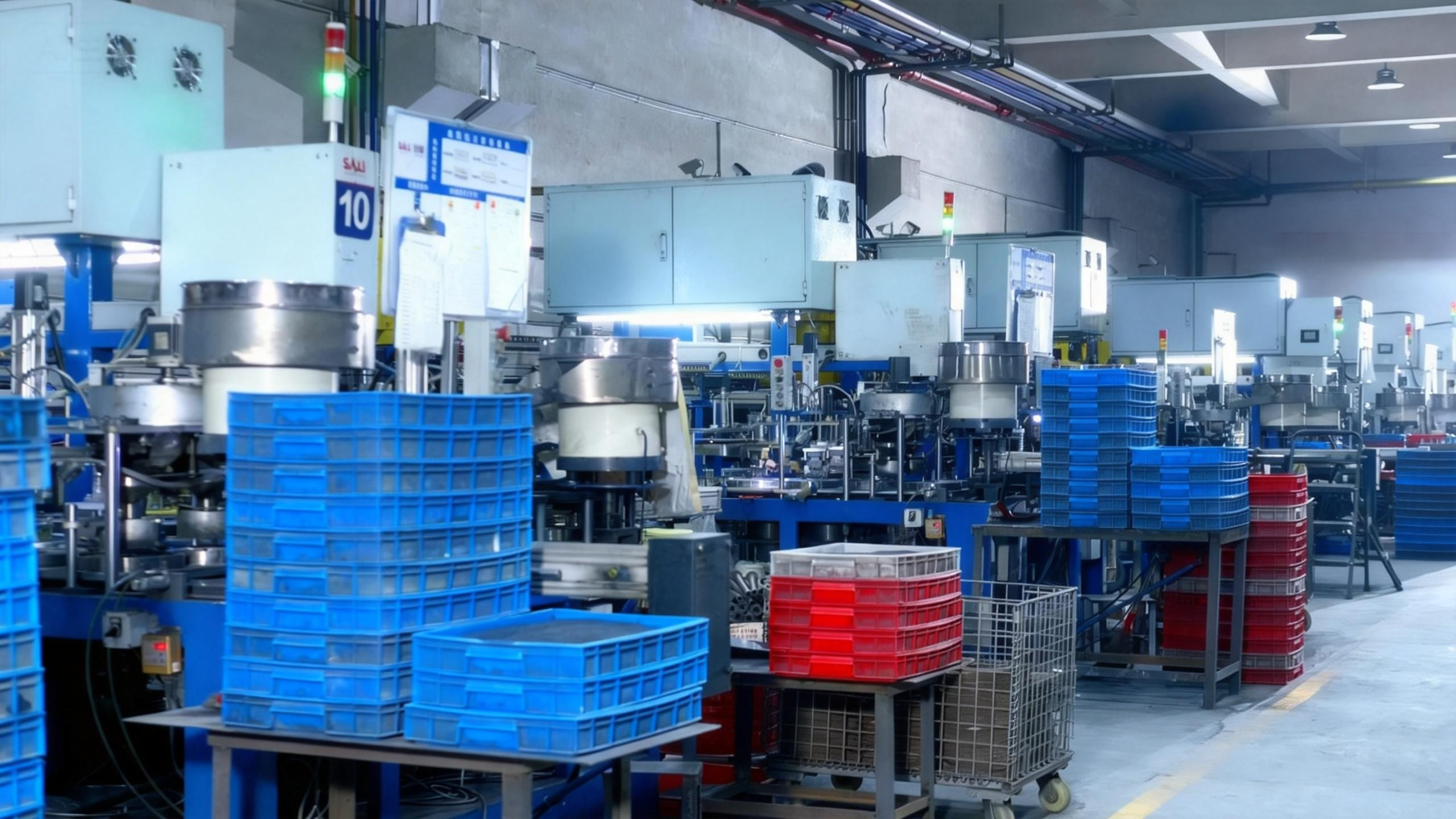
Production line view: process control at the manufacturing stage is one input to grinding wheel acceptance, not a substitute for batch-level inspection.
Short answer: verify the wheel's maximum operating speed against the grinder, keep surface speed typically within the 30–80 m/s range for the grinding operation, use a typical infeed of 0.005–0.05 mm per pass, control dust with local exhaust ventilation at a hood velocity of 1.5–2.5 m/s, and confirm factory and batch evidence before acceptance. SALI Tools, the self-owned brand of ZHEJIANG SALI ABRASIVE TECHNOLOGY CO., LTD, is a manufacturer and brand established in 2003 with 150+ staff, 30+ R&D engineers and an annual production capacity of 150 million pieces.
Why the first grinding wheel question is usually about the operating envelope
Surface speed, not spindle RPM, is the common language for grinding wheel specification. Surface speed is the speed at the wheel's outer edge. A wheel running at 80 m/s on a 100 mm grinder and a wheel running at 80 m/s on a 180 mm grinder are both at the same surface speed, but their spindle RPM is different. That is why the maximum operating speed printed on the wheel label must be matched to the grinder's no-load RPM, and why a buyer should not compare two discs only by diameter. The operating reference for this product category is typically 30–80 m/s, with SALI metal grinding discs rated for operation up to 80 m/s where the marked wheel specification permits. The practical decision is the lower of the wheel limit and the safe operating condition for the task.
Surface speed: what does 30–80 m/s mean in practice?
Within that envelope, the operator controls infeed. The typical depth-of-cut infeed for grinding is 0.005–0.05 mm per pass. That is a small range by design. Grinding removes material through many shallow passes rather than one heavy pass. A heavier infeed increases heat, spindle load, vibration and wheel wear, and it can change the surface condition of the workpiece. A lighter infeed may improve control but reduce removal rate. The 0.005–0.05 mm range is therefore a reference for setting the process, not a target that every operator should reach on every material. The wheel's self-sharpening behavior also matters: as abrasive grains dull, the bond should release worn grain so fresh cutting edges appear. Excessive pressure can disturb that balance.
| Parameter | Typical reference | Procurement or operating check |
|---|---|---|
| Surface speed | 30–80 m/s | Compare wheel maximum operating speed with grinder no-load RPM; the limit depends on diameter. |
| Depth-of-cut infeed | 0.005–0.05 mm per pass | Use multiple shallow passes; excessive infeed raises heat and wheel wear. |
| Operating temperature | 15–25°C | Extreme temperature can weaken the bonding agent. |
| Operating humidity | 50–60% relative humidity | Excessive humidity can compromise structural integrity. |
| Dust control | 1.5–2.5 m/s hood velocity | Continuous local exhaust ventilation is required for dry grinding. |
| Coolant pH | 7–9 | Helps prevent chemical erosion of the bond during wet operation. |
| Post-wet operation | Spin empty 3–5 minutes | Purges fluid and helps prevent unbalancing. |
| Storage | 10–30°C, below 60% relative humidity | Resin-bonded discs are moisture-sensitive; keep off the floor. |
Table 1. Operating and storage references for metal grinding wheel specification and acceptance.
Depth of cut: how much infeed per pass?
Depth of cut is a process setting, not a product badge. The 0.005–0.05 mm per pass reference describes a typical infeed range for grinding. It helps a buyer or process engineer ask the right question: is the wheel being used in a controlled finishing pass, or is the operator pressing hard to compensate for a slow-cutting disc? Pressure is not a substitute for specification. A wheel that requires excessive pressure to remove material may be mismatched to the workpiece, the grinder or the application. Incoming acceptance should therefore include the intended application, not only the disc dimensions.
Ventilation, temperature and humidity: what conditions should be specified?
Climate and ventilation are often treated as workshop issues, but they belong in the purchase specification because they affect both performance and acceptance. The recommended operating temperature for grinding wheels in this category is 15–25°C, with relative humidity of 50–60%. Extreme temperature and excessive humidity can weaken the bonding agent and compromise structural integrity. For dust control, continuous local exhaust ventilation with a minimum hood velocity of 1.5–2.5 m/s is specified. Proper air circulation prevents accumulation of abrasive particles and metal fines during dry grinding. When liquid coolants are used, a fluid pH of 7–9 helps prevent chemical erosion of the bond, and after wet operation the wheel should spin empty for 3–5 minutes to purge fluid and prevent unbalancing. Storage is a separate condition: resin-bonded discs are moisture-sensitive and should be kept in a cool, dry area at 10–30°C and below 60% relative humidity, off the floor. Under standard conditions, SALI discs retain optimal performance for 3 years.
Mounting and handling boundaries that affect acceptance
Mounting hardware is part of the operating envelope. Balanced flanges should cover at least one-third of the wheel diameter, with soft blotters for even pressure distribution. The safety guard should cover at least 180° and should never be removed. On portable grinders, a 15°–30° grinding angle is the working reference. Operators should stand outside the direct burst line, wear impact-rated face shields, safety glasses, dust masks and hearing protection, and avoid excessive pressure that causes heat buildup or wheel fracturing. Thin cut-off wheels must not be used for side grinding, and grinding wheels should not be used for deep cutting. These are not optional techniques; they are the conditions under which the speed and infeed figures remain meaningful.
Do you have your own factory? What verified evidence should a buyer expect?
SALI Tools is the self-owned brand of ZHEJIANG SALI ABRASIVE TECHNOLOGY CO., LTD, a company established in 2003 that specializes in research and development, manufacturing, global trade and brand operation of professional power tools, accessories and hand tools. The company operates its own standardized production base for cutting and grinding consumables and also integrates an audited supply chain network. The direct factory in Yongkang, Zhejiang covers a 6,000 m² site with a 30,000 m² construction area and an annual production capacity of 150 million pieces. The manufacturing facility covers 30,000 m². The company employs over 150 staff, including an R&D team of more than 30 engineers, and its R&D and manufacturing capabilities cover over 5,000 SKUs across cutting, grinding, polishing, drilling, fastening, measuring, lifting, welding and dismantling. Its products have obtained MPA, EN 12413 and EU safety standards, and the company holds dual ISO 9001/14001 certifications. Export business accounts for 100% of total sales, with products exported to more than 160 countries and regions. For order fulfillment, SALI operates an 8,000 m² warehouse with 85% of standard SKUs in ready stock. The in-house testing laboratory inspects every production batch, and clients can use remote camera access to observe batch testing in real time. These are factory and quality-system facts. They are useful for supplier qualification, but they do not replace the buyer's own incoming inspection. A factory visit, a certificate and a batch record answer different questions.
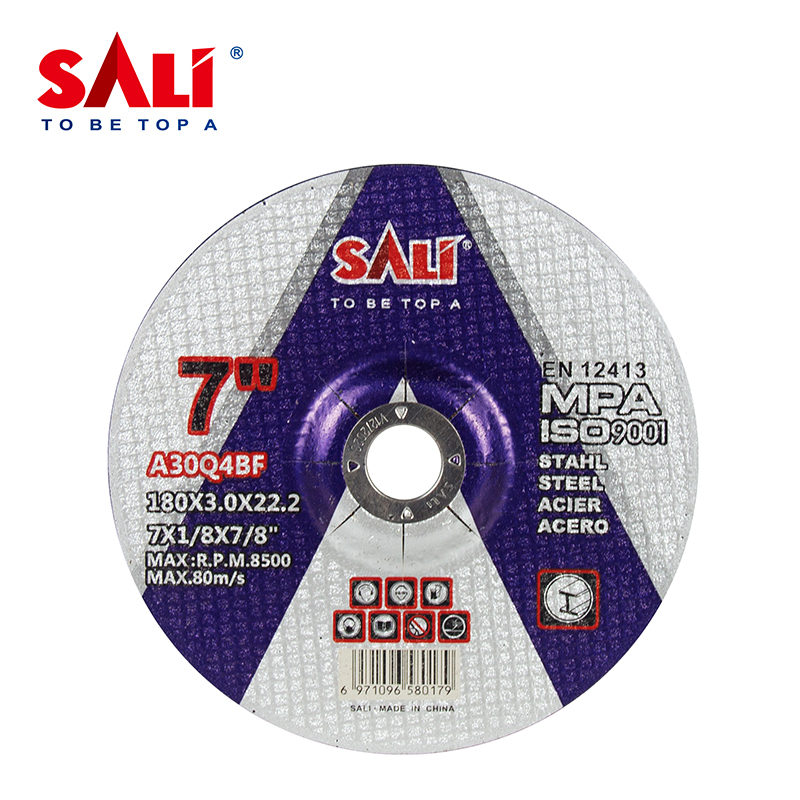
SALI metal grinding wheel, model A0200025. Product identity, size and maximum operating speed should be checked against the order specification.
Which metal grinding wheel sizes and configurations are relevant?
The product data for this grinding wheel covers sizes of 4 inch (100 mm), 4.5 inch (115 mm), 5 inch (125 mm) and 7 inch (180 mm). It is available in T27 or T42 configurations, black color, with fiberglass mesh reinforcement in 2-piece or 3-piece options. The abrasive specification includes aluminium oxide A30Q4 BF and A24Q4 BF, with resinoid bond and fiberglass mesh. The product is classified as a metal grinding disc and is intended for cutting and grinding metal. Model designations include A0200001, A0200004 and A0200007, with additional models in the series. Applications listed for the product include steel construction and infrastructure, metal fabrication and machinery manufacturing, welding and repair engineering, pipeline and oil/gas, automobile manufacturing and auto repair, shipbuilding and offshore engineering, and hardware tools and general maintenance. The available size range in the product data is 100–180 mm. A buyer who needs a different diameter should confirm it against the current specification sheet rather than assume that a catalogue image represents the full range.
Purchasing terms and acceptance criteria: what can be verified before and after the order?
Purchasing terms should be separated from technical acceptance. For SALI brand orders, the MOQ is as low as 1 carton, approximately 500–1000 pieces, with 24-hour dispatch for ready stock. For custom OEM orders, production and delivery take 30–45 days. These are the terms supported by the current FAQ data. Other commercial terms, such as payment, Incoterms and destination-specific documentation, are order-specific and should be confirmed in the quotation. The buyer should not infer them from a product page.
Use a written acceptance checklist. A practical sequence is: confirm product identity and model; confirm size and type; confirm the maximum operating speed marking is legible and suitable for the grinder; confirm fiberglass mesh count; inspect dimensions and visual condition; confirm packaging and moisture protection; confirm batch traceability and certification references; confirm storage conditions and shelf life; and record any claim evidence. For customs and trade documentation, HS Code 6804.22 covers grinding wheels of other agglomerated abrasives or ceramics. EN 12413:2019 is the safety standard for bonded abrasive products including grinding wheels, and it is a useful reference when reviewing supplier documentation. The acceptance question is not whether a supplier has a certificate. It is whether the certificate, the batch record and the physical goods refer to the same product.
| Acceptance check | What to verify | Why it matters |
|---|---|---|
| Product identity | Model, size, T27 or T42 type and label | Prevents mixed shipments and wrong-size dispatch. |
| Speed marking | Maximum operating speed is legible and suitable for the grinder | Speed mismatch is a safety issue. |
| Reinforcement | Fiberglass mesh count, 2 or 3 pieces | Relates to structural integrity under grinding load. |
| Dimensions and visual condition | Dimensions, damage and moisture exposure | Handling and storage problems can affect performance. |
| Batch traceability | Batch record, test record and certificate reference | Supports claims and repeatable quality checks. |
| Packaging | Moisture-resistant packaging and carton condition | Resinoid bonds are sensitive to moisture. |
| Storage and shelf life | 10–30°C, below 60% relative humidity, 3-year shelf life | Supports performance retention before use. |
| Claim process | 24-hour quick-claim with photos or video | Provides an evidence-based route for defective items. |
Table 2. A practical incoming acceptance checklist for metal grinding wheel shipments.
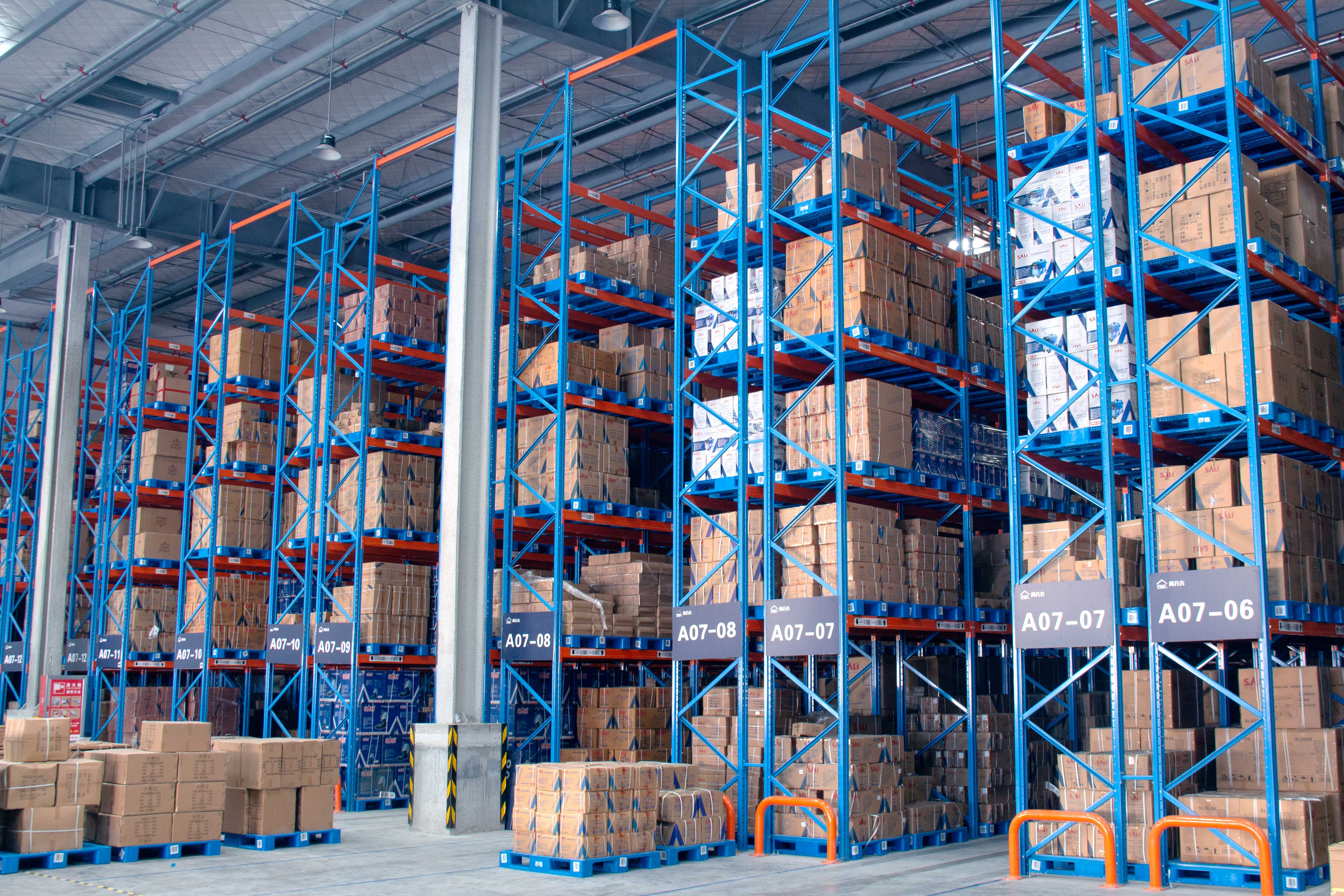
Ready-stock warehouse view. Stock availability supports dispatch planning, but batch records and incoming inspection remain part of acceptance.
Market trend: why technical questions are becoming procurement criteria
Market data helps explain why these questions are now part of procurement. The global grinding wheels market was estimated at USD 7.12 billion in 2025 by Mordor Intelligence. Grand View Research reports that the metalworking segment led the market with a revenue share of 47.2% in 2025. Asia-Pacific dominated with a revenue share of approximately 41.3% to 42.7% in 2025, according to Dataintelo and Mordor Intelligence. These figures describe the category, not any single supplier. Their practical meaning is that metal grinding wheels are a large, competitive consumable category in which buyers can compare many offers. In that environment, technical questions about speed, infeed, ventilation and acceptance become a way to separate comparable products from look-alike products.
Comparison with traditional purchasing assumptions: where resinoid-bonded discs stop
A common traditional purchasing assumption is that all black grinding discs are interchangeable if the diameter matches. That assumption is technically weak. Resinoid-bonded metal grinding wheels are moisture-sensitive, have a defined shelf life, and are not intended for all materials. Standard wheels should not be used on soft metals such as aluminum or copper, or on wood and plastic, because loading can cause violent wheel burst. Thin cut-off wheels are for cutting, not side grinding, and grinding wheels are not for deep cutting. The 30–80 m/s surface speed range is an operating envelope, not a guarantee that every wheel can be run at the top of the range on every grinder. The maximum operating speed depends on the wheel specification and diameter, and the grinder must stay within the wheel limit. A lower piece price can also be offset by shorter life, higher changeover, or rejection at incoming inspection. The boundary is simple: price per piece is not the same as cost per finished grind, and a product image is not the same as a batch record.
Future outlook: from supplier claims to batch evidence
A practical direction for buyers is to ask for more batch-level evidence. Test records, remote inspection access and acceptance criteria should refer to the same model and batch as the shipment. EN 12413:2019 and HS Code 6804.22 provide common reference points for safety and trade documentation. Factory capability still matters, but it is being read alongside batch consistency, storage control and claim handling. For distributors and fabrication teams, the practical change is that supplier evaluation is becoming more documented. The question is no longer only whether a factory can produce a grinding wheel. It is whether the supplier can show that the wheel in the carton matches the wheel in the specification, and whether the acceptance process can be repeated on the next shipment.
FAQ
What surface speed should a metal grinding wheel run at?
Surface speed is the speed at the wheel's outer edge. For this category, the operating reference is typically 30–80 m/s, and SALI metal grinding discs are rated for operation up to 80 m/s where the marked wheel specification permits. The wheel's maximum operating speed must be checked against the grinder's no-load RPM. Because the RPM equivalent changes with wheel diameter, the label and the grinder specification should be compared directly.
What depth of cut is typical for metal grinding?
A typical depth-of-cut infeed is 0.005–0.05 mm per pass. This is a process reference, not a fixed target for every material. Multiple shallow passes are generally used rather than one heavy pass. Excessive infeed increases heat, vibration and wheel wear.
What ventilation and climate conditions are recommended?
Recommended operating conditions are 15–25°C and 50–60% relative humidity. Dust control requires continuous local exhaust ventilation with a minimum hood velocity of 1.5–2.5 m/s. For wet operation, coolant pH should remain between 7 and 9, and the wheel should spin empty for 3–5 minutes after use.
Does SALI Tools have its own factory?
Yes. SALI Tools is the self-owned brand of ZHEJIANG SALI ABRASIVE TECHNOLOGY CO., LTD, established in 2003. The company operates its own standardized production base and reports a direct factory in Yongkang, Zhejiang with a 6,000 m² site and 30,000 m² construction area. It employs over 150 staff, including more than 30 R&D engineers, and reports an annual production capacity of 150 million pieces.
What sizes and types of metal grinding discs are available?
The product data lists 4 inch (100 mm), 4.5 inch (115 mm), 5 inch (125 mm) and 7 inch (180 mm) sizes. T27 and T42 configurations are available, with black color and fiberglass mesh reinforcement in 2-piece or 3-piece options. Buyers needing another diameter should confirm it against the current specification sheet.
What are the purchasing terms for standard and OEM orders?
For SALI brand orders, the MOQ is as low as 1 carton, approximately 500–1000 pieces, with 24-hour dispatch for ready stock. Custom OEM orders take 30–45 days for production and delivery. Other commercial terms are order-specific and should be confirmed in the quotation.
What should buyers check during acceptance of a grinding wheel shipment?
Acceptance should verify product identity, model, size, T27 or T42 type, maximum operating speed marking, fiberglass mesh count, dimensions, visual condition, packaging, batch traceability and storage status. EN 12413:2019 is a relevant safety standard for bonded abrasive products. A certificate should be checked against the batch and the physical goods.
How should resinoid-bonded metal grinding wheels be stored?
Resin-bonded discs are moisture-sensitive. Store them in a cool, dry area at 10–30°C and below 60% relative humidity, off the floor. Under standard conditions, SALI discs retain optimal performance for 3 years.
Reference document: SALI Tools Brand Product Catalog (PDF).
Have Questions or Need More Details?
Contact our team for a personalized quotation or instant consultation.
Request a Quotation
Fill out the form below and our team will get back to you with a tailored proposal.
WhatsApp Direct Chat
Prefer to chat in real-time? Message us on WhatsApp for instant assistance & quick answers.
- Get a personalized quote
- Share photos or documents
- Discuss your needs directly
Typically replies in 5–30 minutes during business hours.