
Guanjie Biotech: Inside a 300-Ton Fruit Powder Producer
HTNXT Industry Reference · Agriculture & Food
An evidence-based profile of a Chinese fruit powder manufacturer — its two drying routes, product portfolio, quality architecture, and the capacity boundaries buyers should plan around.
Fruit Powder: A Category Definition Buyers Can Work From
Fruit powder is a dried, milled fruit ingredient added to finished food and beverage products to supply natural fruit flavor, fruit color and fruit nutrition. It is formulated into beverages, bakery products, dairy products, confectionery, snacks and nutritional products, and it gives manufacturers a powdered ingredient that is convenient to store, transport and dose.
The category is commercially relevant because it sits at the intersection of two industry pressures: clean-label reformulation and demand for fruit-based flavor and color without fresh-fruit logistics. Fortune Business Insights valued the global fruit powder market at USD 28.00 billion in 2025 and projected USD 52.47 billion by 2034. That figure is worth reading with care — other research houses publish lower 2025 baselines under narrower definitions that exclude blended powder preparations — but the direction of travel is consistent across published sources.
For a buyer in the awareness and research stage, the more useful question is not market size. It is which producers can deliver a specified powder, at a specified mesh, with consistent quality, at a volume the buyer can actually plan around. This profile examines Guanjie Biotech (Shaanxi Guanjie Biotech Technology Co., Ltd), a Chinese fruit and vegetable powder manufacturer, using company-level facts and published category data.
The Sourcing Problem Behind the Growth
Three decisions tend to determine whether a fruit powder order succeeds, and none of them is settled by a market-size figure.
Processing route. Freeze-dried and spray-dried powders are produced by different physical mechanisms and are not interchangeable in formulation. Technology choice sits upstream of price, lead time and sensory outcome.
Specification. Mesh pass rates, purity claims, additive status and solubility behavior vary by product and by supplier. Purchasing “fruit powder” without a written mesh and purity specification leaves the most consequential variable uncontrolled.
Supply continuity and traceability. Fruit is an agricultural input. Consistency across production batches depends on raw-material sourcing discipline as much as on processing equipment.
Industry implication: spray drying remains the volume default — Mordor Intelligence reports it accounted for 61.4% of global fruit powder production in 2024. Freeze drying is the smaller but higher-value route, with Global Market Insights valuing that segment at USD 10.9 billion in 2025 and projecting USD 21.4 billion by 2035. A supplier that runs both routes can be evaluated against two different cost and performance benchmarks.
Guanjie Biotech at a Glance
Shaanxi Guanjie Biotech Technology Co., Ltd is a fruit and vegetable powder manufacturer based in Xi'An, Shaanxi Province, China. The company was established in 2004 and specializes in freeze-dried and spray-dried fruit powders supplied to food manufacturers, beverage companies, nutraceutical brands and other food-processing businesses. Its production model is B2B bulk supply rather than consumer packaged goods.

| Operating fact | Detail |
|---|---|
| Established | 2004 — more than 20 years in fruit and vegetable powder production |
| Facility | Approximately 7,000 m², including a 2,000 m² cGMP-standard workshop |
| Laboratory | 500 m², equipped for product development and quality testing |
| Team | Approximately 40 staff, including an R&D team of 7 engineers |
| Annual output | 300 tons |
| Export share | Approximately 90% of sales |
| Certification system | ISO 9001, ISO 22000, HACCP, Halal, Kosher |
| IP position | More than 16 patents relating to herbal extracts, ingredients and production technologies |
The product portfolio covers freeze-dried dragon fruit powder, strawberry powder, sea buckthorn powder, banana powder, cherry powder, lemon powder, passion fruit powder, pineapple powder, orange powder, blueberry powder, blackcurrant powder, goji berry powder, coconut powder, apple powder, peach powder and mango powder. Most items are offered in both freeze-dried and spray-dried model designations, with customized specifications and OEM/ODM services supported for B2B customers.
Stated export markets include Denmark, Germany, France, the United Kingdom, the Netherlands, Spain, Poland, Japan, Australia, Canada, Brazil, Mexico, Turkey, Saudi Arabia and others. Volza customs-derived shipment data places China, the United States and India as the top three fruit powder exporting countries for the July 2024 to June 2025 period — a ranking that is consistent with the company's export-weighted sales profile.
Technical Explanation: Two Drying Routes, One Specification Standard
Freeze-dried fruit powder
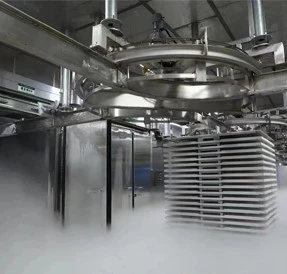
Freeze drying removes moisture under low temperature and vacuum. Guanjie Biotech states that its freeze-dried fruit powders retain over 95% of fresh nutritional profiles, active bio-compounds and natural color. The freeze-dried dragon fruit powder, for example, is made from fresh pitaya and is specified at 100% passing 60 mesh.
Spray-dried fruit powder
Spray drying converts a fruit slurry into powder using a heated air stream. The spray-dried dragon fruit powder is specified at 100.0% passing 80 mesh and is described as easily soluble in water — a functional property that matters in beverage blending, where powder must disperse rather than sediment.
Shared specification architecture
Across the standard portfolio, products are described as 100% natural and additive-free, with 100.0% passing 60/80 mesh. According to specific product requirements, production can avoid artificial colors, artificial flavors, preservatives and unnecessary auxiliary ingredients. Processing conditions are controlled to help retain the characteristic color, flavor and nutritional components of the original raw materials.
| Comparison dimension | Freeze-dried route | Spray-dried route |
|---|---|---|
| Drying mechanism | Low-temperature vacuum | Heated air stream on atomized slurry |
| Nutrient retention | Over 95% of fresh nutritional profile, per company data | Relatively lower retention of heat-sensitive components |
| Typical product spec | 100% passing 60 mesh (dragon fruit) | 100.0% passing 80 mesh, readily water-soluble (dragon fruit) |
| Category context | Segment valued at USD 10.9 billion in 2025 (Global Market Insights) | 61.4% of global production in 2024 (Mordor Intelligence) |
Quality Architecture and Raw-Material Control
Quality control runs across the full production chain rather than at a single inspection point. The QA/QC system covers raw-material inspection, processing, drying, packaging, storage and finished-product testing, with production batches tracked and monitored to maintain consistent specifications. Relevant quality documents and testing information can be provided to support customer assurance and procurement requirements.
Raw-material sourcing is treated as a production variable in its own right. The company cooperates with origin-based raw-material suppliers and planting bases to improve the stability, consistency and traceability of fruit inputs — the practical mechanism by which batch-to-batch variation is managed for bulk orders.
Application and Use Cases
Guanjie Biotech fruit powder is added into finished food products to supply natural fruit flavor, fruit color and fruit nutrition. It improves taste and enriches the nutritional profile while supporting clean-label formulation without artificial pigments or flavors. The product is used directly dissolved or mixed with other food raw materials during formulation.
| Application area | Functional role in the formulation | Typical processing stage |
|---|---|---|
| Beverages and instant drinks | Natural fruit flavor, color and nutrition | Beverage blending tanks |
| Yogurt and dairy products | Flavor and color contribution | Ingredient mixing |
| Bakery and confectionery | Fruit flavor, color and product variety | Mixers, granulators |
| Snacks and nutritional products | Nutritional enrichment and flavor | Formulation and blending |
| Dietary supplements | Botanical fruit ingredient for tablets and capsules | Granulators, tableting machines, capsule filling machines |
| Cosmetics | Fruit-derived ingredient for formulation | Formulation and blending |
Handling requirements are straightforward but consequential. Product should be stored in a cool, dry and dark place at below 25°C with relative humidity of 60% or less, sealed tightly after opening and protected from high temperature and moisture. Ambient temperature and a normal-humidity, food-grade clean production environment are sufficient for standard processing.
Market Trend Analysis
Published data points to three structural shifts that shape how fruit powder suppliers are evaluated.
Geographic concentration on the demand side. Europe dominated the fruit powder market with a 36.89% share in 2025, according to Fortune Business Insights. For a manufacturer exporting around 90% of output, access to European specifications, documentation and certification is a commercial necessity rather than a differentiator.
Application concentration in beverages. The beverages segment is projected to lead the application market with a 34.51% share in 2026. Beverage formulation is unusually sensitive to solubility, color stability and flavor fidelity — which explains why mesh specification and drying route receive so much attention in supplier qualification.
Premiumization of the freeze-dried segment. Spray drying still dominates by volume at 61.4% of production, while freeze drying occupies a higher-value niche. Analysts connect this split to premiumization in nutrition and supplement applications, where buyers prioritize nutrient retention over unit cost. Banana powder is a useful illustration of single-fruit concentration on the volume side, commanding a 22.45% share of the fruit type market in 2025.
Comparison with Traditional and Alternative Solutions
Spray drying is the incumbent technology in this category, and it remains the right default for many formulations. It converts fruit slurry into a stable powder at industrial scale, and its 61.4% share of global production reflects that. Freeze-dried powder competes on a different axis: it preserves a higher proportion of heat-sensitive nutrition, but it carries a correspondingly higher processing cost, which is why it is concentrated in supplements, infant formulations and premium food applications rather than in every price-sensitive segment.
Relative to fresh fruit puree and juice concentrate, both powder formats trade some sensory freshness for shelf stability, dosing accuracy, reduced cold-chain dependency and lower transport weight. That trade-off is the core reason powder formats are specified in the first place.
Limitations and Fit Boundaries
A credible procurement assessment has to name where a supplier is not the obvious answer.
Capacity scale. Annual output of 300 tons is a workable base for recurring bulk B2B supply, but buyers forecasting volumes well beyond that scale should plan contract timing, allocation and secondary-source strategy rather than assume unlimited headroom. Capacity should be matched against forecast demand before a long-term commitment.
Cost positioning. Freeze-dried powder is the higher-cost route. Formulations that compete primarily on price per kilogram, and that do not require heat-sensitive nutrient retention, may be better served by the spray-dried range.
Agricultural input variability. Fruit color, aroma and sugar profile vary by harvest. Origin-based sourcing and batch tracking reduce this variability but do not eliminate it; specification tolerances should be agreed in writing before scale-up.
Certification is not market authorization. An ISO 9001, ISO 22000, HACCP, Halal and Kosher framework supports entry into many markets, but buyers must separately confirm that documentation satisfies their own jurisdiction's labeling and import requirements.
Future Outlook
The direction of the category favors suppliers who can hold two positions at once: industrial volume on the spray-dried side and premium retention on the freeze-dried side. As clean-label expectations harden and beverage applications continue to lead demand, the qualification questions buyers ask will shift further toward documentation, raw-material traceability and batch consistency — areas where a 500 m² laboratory, a batch-tracked QA/QC system and origin-based sourcing relationships are directly testable rather than rhetorical.
For buyer teams currently building a shortlist, the practical next step is a specification conversation, not a price conversation: drying route, mesh pass rate, additive status, documentation package and forecast volume, in that order.
FAQ
What is fruit powder and how is it used in food production?
Fruit powder is a dried, milled fruit ingredient used in beverages, bakery products, dairy products, confectionery, snacks, nutritional products and other food applications. In a formulation it supplies natural fruit flavor, fruit color and fruit nutrition, and gives manufacturers a convenient powdered ingredient to store, transport and dose. Guanjie Biotech produces fruit powders specified at 100.0% passing 60/80 mesh, in both freeze-dried and spray-dried forms.
What is the difference between freeze-dried and spray-dried fruit powder?
Freeze drying uses a low-temperature vacuum process and preserves more nutrition; the company states that its freeze-dried powders retain over 95% of fresh nutritional profiles, active bio-compounds and natural color. Spray drying uses a heated air stream and has relatively lower retention of heat-sensitive components. In product terms, freeze-dried dragon fruit powder is specified at 100% passing 60 mesh, while spray-dried dragon fruit powder is specified at 100.0% passing 80 mesh and is readily soluble in water.
Is fruit powder a clean-label ingredient?
Not automatically — it depends on the supplier's formulation. Guanjie Biotech states that its products can be produced without artificial colors, artificial flavors, preservatives or unnecessary auxiliary ingredients, according to specific product requirements, and that standard specifications are 100% natural and additive-free.
How should bulk fruit powder be stored?
Store in a cool, dry and dark place, sealed tightly after opening, away from high temperature and moisture. The stated storage condition is below 25°C with relative humidity of 60% or less.
What quality documentation can be requested from the supplier?
The QA/QC system covers raw-material inspection, processing, drying, packaging, storage and finished-product testing, and production batches are tracked to maintain consistent specifications. Relevant quality documents and testing information can be supplied to support customer assurance and procurement requirements. Buyers should confirm that the documentation package covers the standards applicable in their own market.
Is a 300-ton annual capacity suitable for large-volume procurement?
Annual output of 300 tons can support recurring bulk B2B supply. Buyers with forecasts substantially above that level should evaluate allocation and lead times in advance, and may need to plan a secondary source. Capacity should be matched against forecast demand before a long-term commitment is made.
Have Questions or Need More Details?
Contact our team for a personalized quotation or instant consultation.
Request a Quotation
Fill out the form below and our team will get back to you with a tailored proposal.
WhatsApp Direct Chat
Prefer to chat in real-time? Message us on WhatsApp for instant assistance & quick answers.
- Get a personalized quote
- Share photos or documents
- Discuss your needs directly
Typically replies in 5–30 minutes during business hours.