
Gym Fit-Out Guide: Smart Control Boxes for Equipment & Lighting
Gym Fit-Out Guide: Smart Control Boxes for Equipment & Lighting
A commercial gym fit-out is now as much an electrical distribution project as an equipment purchase. The practical decision point is this: a smart control box rated AC 220V, offered with 16A, 32A and 63A circuit options and equipped with timer switches plus WiFi/4G remote control, gives a facility one place to manage treadmills, elliptical machines, strength equipment, smart mirrors, lighting and air conditioning — instead of leaving each system on its own socket, timer or contactor.
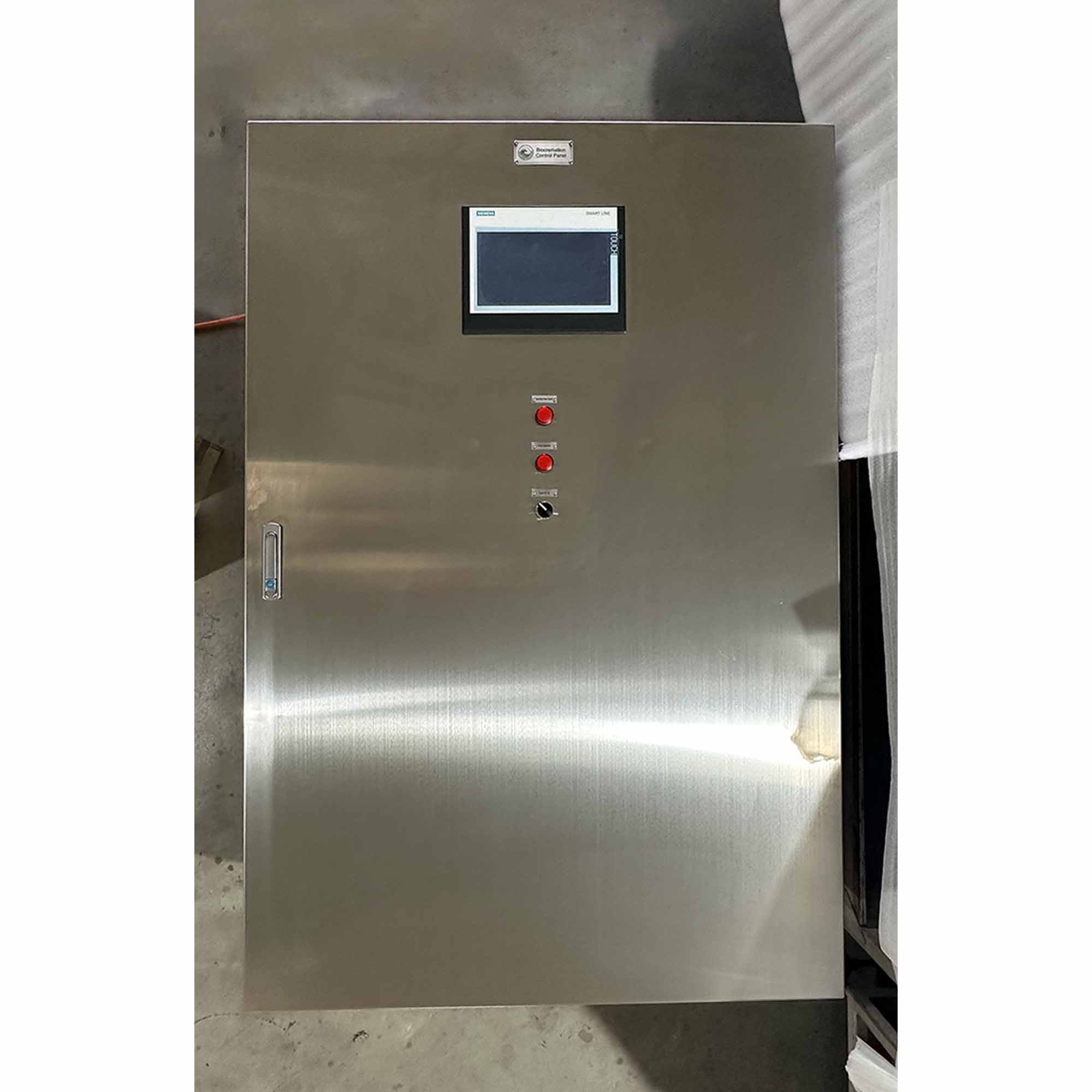
A low-voltage distribution and control assembly of the type specified for commercial fit-out loads, including equipment circuits, lighting and zone-level switching.
That framing matters at decision stage. Gym operators and fit-out contractors comparing options are rarely choosing between “control” and “no control”. They are choosing between a coordinated distribution and scheduling layer, and a patchwork of local switching installed by different trades at different times.
Why Power Distribution Now Sits Inside the Gym Fit-Out Decision
Fitness facilities run long daily cycles. Cardio floors, lighting and air conditioning are typically energised well before the first member arrives and are often still running after the last one leaves. Each of those hours carries an energy cost, and each of those systems follows different switching logic. Treadmill banks should not be energised outside staffed hours. Lighting follows occupancy and class schedules. Air conditioning follows both occupancy and outdoor conditions.
Traditionally these needs have been handled locally — wall sockets on the ring main, standalone timers, contactors, and separate remote controls for each air conditioning unit. That approach holds until the facility adds a new equipment row, changes its opening hours, or wants to know which zone is consuming what.
The opportunity is uncomplicated: consolidate the gym’s electrical loads into a distribution and control assembly built for that purpose, then layer scheduling and remote access on top of it.
What a Gym Smart Equipment Control Box Actually Is
A gym smart equipment control box is a low-voltage distribution and control assembly that combines circuit distribution, scheduled switching and remote connectivity inside a single enclosure. In a fitness facility it is specified to serve treadmills, elliptical machines, strength equipment, smart mirrors, lighting circuits and air conditioning from one managed point rather than from scattered local devices.
Dalian Yinlu Electrical Control Equipment Manufacturer is a Chinese manufacturer based in Dalian, Liaoning Province, engaged in sheet metal fabrication, enclosures, electrical control cabinets, intelligent control boxes and electrical distribution. The company holds ISO 9001, operates a 5,000 m² manufacturing facility with 60 employees and an annual output of 20,000 units, and maintains a six-person R&D team. Approximately 80% of its output serves export markets, primarily North America, Europe, Oceania and the high-end Asia-Pacific region, and the company accepts OEM and ODM orders. Its products are applied across the electric power, petroleum, chemical, food, public traffic and military industries.
The enclosure and control-assembly engineering used in those sectors transfers directly to commercial building services loads, which is the category a gym fit-out belongs to. Gym operators are not buying a generic product; they are buying a configured assembly whose ratings, enclosure format and switching functions are matched to a specific equipment list.
Technical Configuration: Voltage, Current Options, Switching and Remote Access
AC 220V supply rating
The control box is specified at AC 220V. This is the single-phase supply that most fitness equipment, lighting circuits and split or multi-split air conditioning units in a commercial gym are designed to accept. It is also the reason the unit is best understood as a single-phase distribution and control layer rather than as a substitute for a three-phase main switchboard.
16A, 32A and 63A current options
The box is offered with 16A, 32A and 63A current options. The range exists because gym loads are not uniform: a lighting circuit or smart-mirror feed and a bank of treadmills do not draw the same current, and forcing both onto one rating either over-sizes the smaller circuit or constrains the larger one. Three ratings allow circuits to be sized to the load they actually serve.
- 16A circuits are typically applied to smaller distributed loads such as lighting groups, smart mirrors and individual equipment positions.
- 32A circuits are typically applied to grouped equipment banks within a cardio or strength zone.
- 63A circuits are typically applied to larger zone-level feeds where a single point supplies a substantial share of the gym’s connected load.
Final circuit allocation must be confirmed against the nameplate data of each machine and the facility’s own electrical design. The pattern above describes how the ratings are normally applied, not a fixed rule.
Timer switches
Timer switches provide scheduled switching independent of any network connection. In a gym, the common applications are pre-opening and post-closing isolation of equipment banks, scheduled lighting scenes across the main floor and studios, and time-based control of air conditioning in zones that are only occupied during programmed class hours. Because scheduling runs locally, it continues to operate even when the network connection is interrupted.
WiFi/4G remote control and energy monitoring
WiFi or 4G connectivity adds remote switching and monitoring on top of local scheduling. Operators can confirm whether a zone is energised, switch circuits remotely and review energy consumption by circuit or zone. For multi-site operators, this is the layer that turns a distribution box from a passive assembly into a source of operating information.
The practical boundary is network dependency. WiFi coverage in basement plant rooms and behind steel-framed gym floors is not always reliable, and 4G signal strength varies between buildings. Where remote control is a functional requirement rather than a convenience, the local timer and manual switching functions remain the dependable layer.
Enclosure Engineering for Gym Environments
Enclosure selection matters as much as the control logic. Fitness floors generate dust, changing areas and plant rooms introduce humidity, and cleaning routines involve water and chemicals near wall-mounted equipment. The enclosure portfolio used for these applications includes wall-mounted, floor-standing and flush-mount formats, with double-door IP65 and dustproof options where the installation environment demands a higher degree of protection.
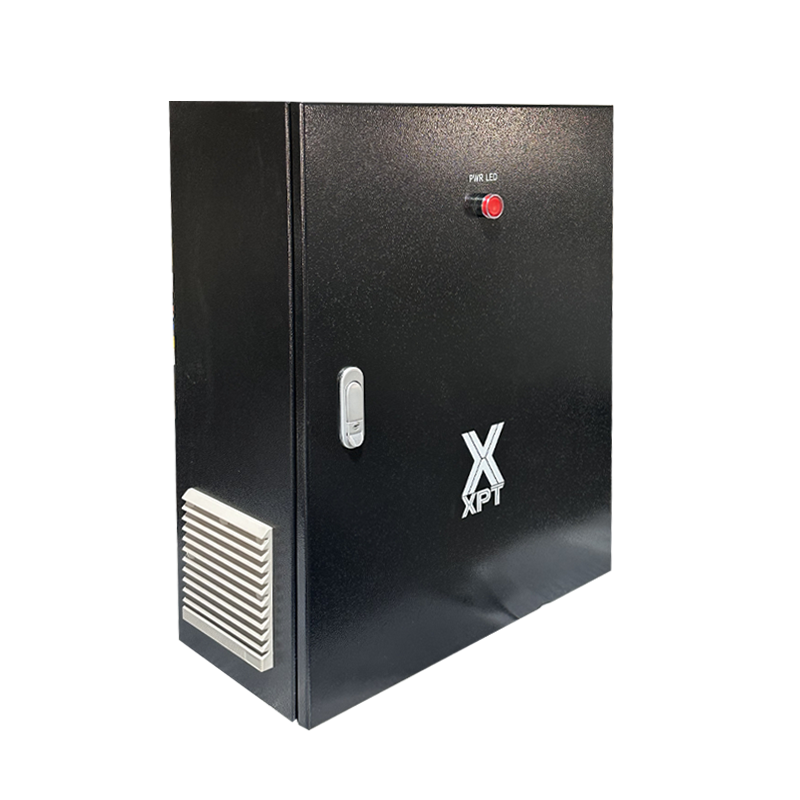
Sheet metal enclosure layout: modular internal arrangement and accessible wiring are what keep maintenance downtime short in an operating gym.
Sheet metal construction and corrosion-resistant materials reduce wear in these conditions, and an accessible internal layout shortens maintenance time. A modular arrangement allows a single circuit or component to be replaced without disturbing the rest of the assembly, which matters when the alternative is closing a section of the floor during peak hours.
Heat management is a related consideration. Efficient ventilation design reduces overheating risk and energy waste, and stable power distribution avoids the invalid consumption that comes from repeated trips or unbalanced loading across a zone.
Testing, Verification and Certification Before Shipment
At decision stage, the difference between suppliers is often visible in what is tested and what is documented rather than in the sales description. For electrical control equipment, the standard test sequence covers a power-on functional test, an insulation resistance test, a withstand voltage test and a grounding test, supported by appearance, dimension and labeling inspection. Shipment is only permitted after all tests are passed, and units that fail are not shipped.
Certification is a separate control point. Units destined for export markets require genuine CE and RoHS documentation, and certificate borrowing or altered files create detention, fine and return risk at the destination. Buyers should verify that a certificate identifies the actual product and the actual manufacturer rather than a related model range.
At standard level, IEC 61439-1:2020 is the primary international standard for low-voltage switchgear and controlgear assemblies, defining general definitions, construction requirements and verification methods. It is the reference framework against which low-voltage assemblies of this type are commonly assessed.
Two further controls protect the buyer at specification stage. First, all parameters — voltage, power, current, IP rating, dimensions, material, interface and functions — should be confirmed in a signed drawing or a stamped technical agreement, because verbal requests are not a valid basis for production. Second, where component brands matter, the contract should name them explicitly, for example Schneider, ABB, Chint or Delixi, together with model number, country of origin and confirmation of new and genuine parts, supported by purchase contracts, invoices and certificates of conformity.
For custom and key-account orders, the sequence normally runs prototype → client confirmation → mass production, so that mass production adheres to a signed prototype standard rather than to an interpretation of the brief.
Application Mapping: What the Box Controls Inside a Gym
| Zone or system | What the control box manages | Decision value for the operator |
|---|---|---|
| Cardio floor — treadmills, elliptical machines | Dedicated circuits with 16A/32A/63A options, scheduled energisation, remote isolation | Equipment is not energised outside staffed hours; a circuit can be isolated without shutting the whole floor |
| Strength zone | Distribution to strength equipment positions and any motorised units | Load growth is handled by adding a circuit rather than rewiring the zone |
| Smart mirrors and studio displays | Dedicated protected circuits with scheduled on/off | Mirrors and displays are isolated when the studio is not in use |
| Lighting | Grouped lighting circuits with timer-based scenes | Lighting follows opening hours and class schedules without manual switching |
| Air conditioning | Zone-level switching and scheduling | Conditioning runs to occupancy pattern instead of continuously |
| Energy monitoring via WiFi/4G | Circuit or zone-level consumption visibility, remote switching | Consumption can be reviewed by zone, and multi-site operators can compare sites |
Market Context: Where Gym Fit-Out Decisions Sit
Gym fit-out power decisions sit inside a much larger control and distribution equipment market. Published estimates for that market vary substantially because research houses define scope differently.
- Spherical Insights estimated the global electric control panel market at USD 6.35 billion in 2024.
- Dataintelo projected the global electrical control panel market to grow from USD 27.2 billion in 2025 to USD 47.0 billion by 2034.
- Global Market Insights valued the global distribution panel market at USD 7.6 billion in 2024.
- Low tension (LT) panels held the largest share of the electrical control panel segment at 45.3% in 2025, according to Dataintelo.
- Asia Pacific accounted for 38.5% of global electrical control panel revenue in 2025, from the same source.
These figures diverge because of scope differences — broad “electrical panels” coverage versus narrower “control panel” definitions — rather than because one source contradicts another. They are best read as directional indicators of market scale.
Two adjacent trends are more directly relevant to a fit-out decision. The programmable logic controller (PLC) market was valued at USD 12.95 billion in 2023 and is expected to reach USD 22.61 billion by 2032 (SNS Insider), reflecting the general shift of control functions toward programmable and networked devices. Separately, Maximize Market Research estimated that approximately 70% of manufacturers are now utilising IoT automation, driving PLC integration with real-time data analytics. That estimate carries medium reliability and is best treated as a directional signal that remote monitoring and data collection are becoming standard expectations rather than optional extras.
Regionally, Europe held the highest market share in 2023, supported by established infrastructure and high demand for industrial automation, with Schneider Electric and Siemens among the leading players (WiseGuyReports). Precedence Research lists Schneider Electric, ABB, Siemens, Eaton and Rittal among the key global manufacturers of electric control panels — a useful reminder that the component and assembly landscape a gym operator is buying into is dominated by established industrial brands.
Comparison: Integrated Smart Control Box vs Conventional Scattered Fit-Out
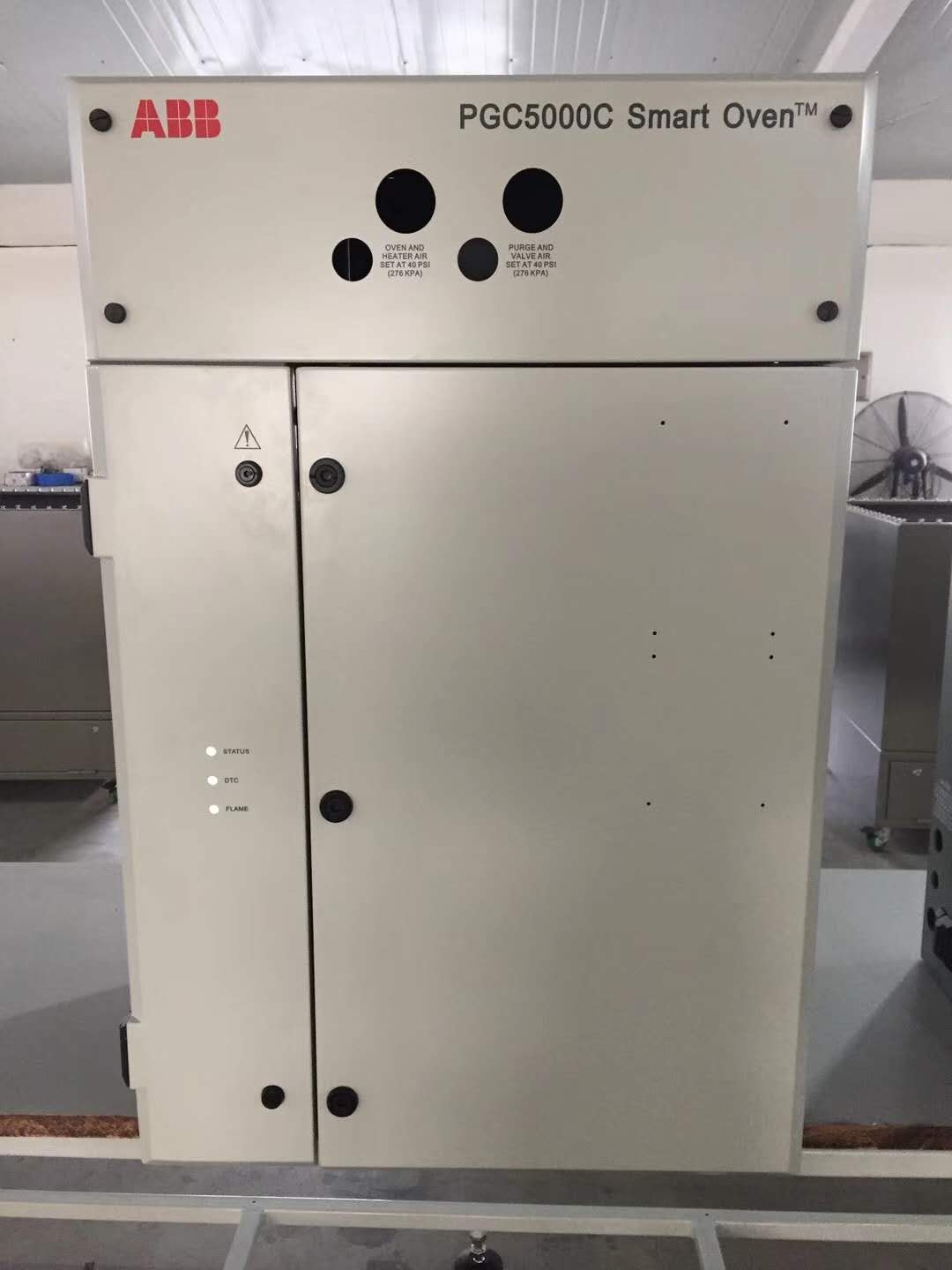
Integrated distribution and control: one assembly holding equipment, lighting and air conditioning circuits, with switching and monitoring on the same panel.
| Decision dimension | Conventional scattered arrangement | Integrated smart control box |
|---|---|---|
| Scope of control | Individual sockets, standalone timers, separate air conditioning remotes | One assembly controlling equipment, lighting and air conditioning circuits |
| Scheduling | Manual switching or per-device timers | Timer switches with zone-level schedules |
| Remote visibility | None unless added device by device | WiFi/4G remote switching and circuit or zone energy monitoring |
| Expansion | New local circuits and separate switching devices | Modular layout allows circuits to be added inside the assembly |
| Fault finding | Spread across multiple locations and trades | Modular layout simplifies troubleshooting and shortens downtime |
| Heat and efficiency | Localised heat build-up, less managed | Efficient ventilation reduces overheating risk and energy waste; stable distribution supports energy utilisation |
| Component quality | Varies by whoever installed each element | Component brands and models specified in the contract |
| Upfront effort | Lower initial design effort | Higher specification effort, requiring written parameter confirmation |
Supplier profile comparison
The table below reflects criteria stated by the manufacturer in its own comparison material. Each item should be verified against certificates, test reports and contract terms before it is treated as a purchasing fact.
| Criterion | Professional electrical control equipment manufacturer | Ordinary processing factory |
|---|---|---|
| Specialisation | Electrical control cabinets, distribution panels and automation systems | General fabrication without dedicated control equipment focus |
| Customisation | Non-standard customisation against drawings, parameters or functional requirements | Limited to standard formats |
| Component selection | Stated brand-name components with full-item factory testing before shipment | Component provenance less systematically controlled |
| Workmanship | Standardised workmanship with neat wiring, compliant with domestic and international safety standards | Varies by job and operator |
| Certification | CE and RoHS certification supporting export orders | Not consistently held |
| Support | Technical support, commissioning guidance and after-sales service | Supply-focused |
| Delivery | Stable timelines capable of bulk orders and engineering projects | Lead time dependent on workload |
On total cost, the argument for the integrated approach rests on the operating phase rather than the purchase price: lower maintenance frequency, an easy-access structural design for quick component replacement, corrosion-resistant materials that reduce wear, and a modular layout that shortens downtime. Longer equipment service life and lower energy and consumable consumption reduce long-term cost, which is where total cost of ownership is normally decided.
Where This Configuration Is Not the Right Answer
An honest comparison has to include the boundaries. Six are relevant for gym fit-outs.
- Single-phase scope. AC 220V is a single-phase rating. Facilities with three-phase high-power loads — large central air conditioning plant or high-capacity motorised equipment — require three-phase distribution. In those projects the control box handles downstream single-phase circuits; it does not replace the main switchboard.
- Network dependency. WiFi and 4G functions depend on coverage and signal quality. In basement plant rooms or heavily shielded structures, remote functions may be unreliable, and the local timer and manual switching layer carries the duty.
- Scheduled is not adaptive. Timer switches execute a schedule. They do not respond to real-time occupancy and they do not balance load across circuits. Where adaptive behaviour is required, an additional control layer or PLC-based logic is needed.
- Monitoring granularity. Energy monitoring operates at circuit or zone level. On its own it does not produce per-machine diagnostics or predictive maintenance data for each treadmill.
- Regional compliance. CE and RoHS support export orders, but compliance is destination-specific. Buyers must confirm whether additional national approvals or documentation apply to their market.
- Component dependency. Performance and service life are partly determined by the component brands and models agreed in the contract. Where these are not specified, the delivered assembly may not match the buyer’s expectation.
Procurement Checklist for Gym Fit-Out Buyers
- Confirm connected load per zone against equipment nameplate data before selecting current ratings.
- Confirm whether the supply is single-phase 220V or three-phase, and where the boundary between the two sits.
- Confirm the required IP rating for each installation location — plant room, wall-mounted floor position, humid areas.
- Confirm enclosure format: wall-mounted, floor-standing, flush-mount, double-door or dustproof.
- Confirm the number of circuits, the rating of each, and the load each serves.
- Confirm switching functions: local manual, timer schedule, WiFi/4G remote.
- Agree component brands and models in the contract, with country of origin and new-and-genuine confirmation.
- Agree test scope and request reports: power-on functional, insulation resistance, withstand voltage, grounding, and appearance, dimension and labeling inspection.
- Confirm that certification documents identify the actual product and manufacturer.
- Confirm packaging: wooden crates or reinforced packaging, moisture-proof film, anti-impact foam, and outer marking for fragile, keep dry and this side up.
- Confirm commercial terms. For custom products, 30% deposit with the 70% balance paid in full before shipment is standard practice, with documents released against payment.
- Confirm the acceptance window: acceptance within 7 days of arrival, with written objection required inside that period, otherwise goods are deemed accepted.
- Confirm warranty duration — stated clearly as 1 year or 2 years — and the exclusions: damage caused by human error, equipment burnt out due to voltage instability, and unauthorised modification or disassembly.
Future Outlook
Two directions are likely to shape gym fit-out specifications over the next planning cycle.
The first is convergence. As PLC integration with real-time data analytics becomes more widespread — the Maximize Market Research estimate of roughly 70% IoT automation adoption points in this direction — buyers will increasingly expect distribution equipment to report, not only to switch. For gyms, zone-level energy data is likely to become a standard fit-out deliverable rather than an add-on requested later.
The second is the standardisation of verification. With IEC 61439-1:2020 established as the reference standard for low-voltage switchgear and controlgear assemblies, and with certification scrutiny at customs remaining high, documented testing and genuine certificates will carry more weight in supplier selection than brochure claims.
Neither trend removes the need for human judgement at specification stage. Current ratings, circuit grouping and IP protection still have to be decided against the actual equipment list of the facility being built — and those decisions are better made before the cabinets are ordered than after they arrive.
FAQ
What should a gym operator compare when choosing between an integrated smart control box and a conventional switchgear arrangement?
Compare scope of control, scheduling capability, remote visibility, expansion path, maintenance access and the level of component specification. A conventional arrangement typically relies on individual sockets, standalone timers and separate air conditioning controls, while an integrated control box manages equipment, lighting and air conditioning circuits from one assembly with timer switches and optional WiFi/4G remote access. The comparison should also cover testing and documentation: what is tested before shipment, and what certification accompanies the goods.
Does an AC 220V control box cover all gym equipment loads?
No. AC 220V is a single-phase rating, which suits the majority of fitness equipment, lighting circuits and split air conditioning units in a commercial gym. It does not replace a three-phase main switchboard. Facilities with three-phase high-power loads, such as large central plant or high-capacity motorised equipment, require three-phase distribution, with the single-phase control box handling downstream circuits.
What do the 16A, 32A and 63A current options mean in practice?
They allow circuits inside the box to be sized to the loads they serve rather than forcing every load onto one rating. 16A circuits are typically applied to smaller distributed loads such as lighting groups, smart mirrors and individual equipment positions; 32A circuits to grouped equipment banks; and 63A circuits to larger zone-level feeds. Final allocation must be confirmed against equipment nameplate data and the facility’s electrical design.
How does WiFi/4G remote control change energy monitoring?
It shifts monitoring from periodic manual reading to continuous remote visibility. Operators can confirm whether a zone is energised, switch circuits remotely and review consumption by circuit or zone. The limitation is network dependency: WiFi coverage and 4G signal strength vary by building, and in unreliable coverage areas the local timer and manual switching functions remain the dependable layer.
What evidence should a buyer request before shipment?
Request test reports covering the power-on functional test, insulation resistance test, withstand voltage test, grounding test, and appearance, dimension and labeling inspection, since shipment is permitted only after all tests are passed. Also request genuine CE and RoHS documentation that identifies the actual product and manufacturer, photographs of the packaging, and written confirmation of parameters — voltage, power, current, IP rating, dimensions, material, interface and functions — as agreed in signed drawings or a stamped technical agreement.
What are the boundary conditions where this configuration is not the right fit?
It is not the right fit where the primary requirement is three-phase high-power distribution, where adaptive load balancing or per-machine diagnostics are needed rather than scheduled switching and zone-level monitoring, or where network coverage is too unreliable for remote control to be treated as a functional requirement. In these cases the control box can still serve as a downstream layer, but it should not be specified as the complete solution.
How are warranty and acceptance normally handled for custom control boxes?
Warranty periods are stated clearly as 1 year or 2 years and confirmed in the contract. The warranty does not cover damage caused by human error, equipment burnt out due to voltage instability, or unauthorised modification and disassembly. On acceptance, the standard position is that acceptance must be completed within 7 days after the goods arrive, and failure to raise a written objection within that period is deemed as acceptance. For custom products, payment terms are commonly 30% deposit with the 70% balance paid in full before shipment.
Closing Note
Gym fit-out procurement is ultimately a specification exercise. The equipment list, the supply configuration, the IP rating of each installation location and the level of documentation required at handover determine what the control box has to do. Those answers belong in the technical agreement, not in a post-installation discussion.
Technical reference: a product brochure covering enclosure formats and control box configuration options is available for download at Dalian Yinlu Electrical Control Equipment Manufacturer — technical brochure. Manufacturer information: www.innometalfab.com.