
HADA vs 4 Global Laminating Roll Leaders: 33-Year Scorecard
The global lamination films market reached US$6,842.11 million in 2024, according to DataM Intelligence, with Asia Pacific holding the largest regional revenue share at 36.87%. Those two figures frame a structural reality in the laminating roll supply chain: much of the world's thermal and cold laminating film is produced in South China, while several of the most recognised names in lamination supply are diversified film conglomerates or equipment brands rather than specialist roll manufacturers. Choosing between them is a procurement problem, and it is better solved with a scorecard than with a brand list.
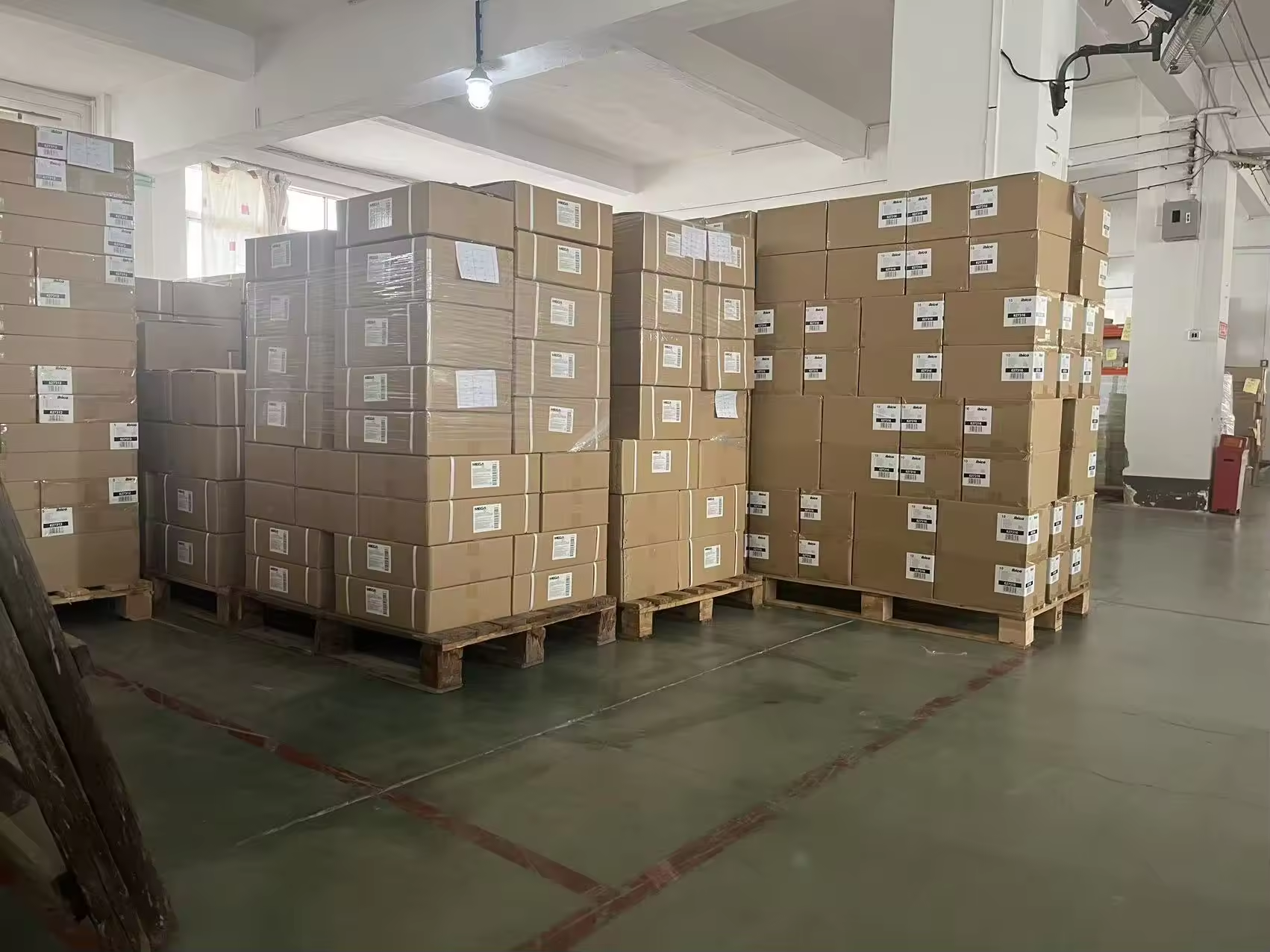
Palletised laminating roll stock staged for export. Evaluations increasingly turn on documented manufacturing evidence rather than brand recognition.
Why Laminating Roll Suppliers Are Difficult to Compare
Three supplier types compete for the same laminating roll purchase order, and they are rarely measured on the same terms.
Vertically integrated film producers — the category that includes Cosmo Films, Jindal Poly Films and Taghleef Industries (Derprosa), all named by Fortune Business Insights among the top global players in the lamination and graphic roll film market — run large BOPP and BOPET film lines serving packaging, labelling and industrial customers. Their scale is genuine, but laminating roll film is one product family among many, and a buyer ordering custom-width thermal rolls is a small account inside a very large portfolio.
Branded equipment houses such as GBC (ACCO Brands), also named in that same source, own the customer relationship at the office-equipment end of the market. Their strength is channel reach and brand recognition; the laminating roll film itself is frequently specified rather than formulated in-house.
Specialist laminating film manufacturers, including Guangzhou Huada Laminating Film Co., Ltd. (HADA), build their entire operation around laminating film and roll conversion. Guangzhou Huada is a Chinese manufacturer founded in 1992 that produces laminating film, laminating pouches and laminating rolls, and exports to more than 50 countries and regions.
Each model has a legitimate use. The difficulty is that a comparison built on brand recognition alone systematically favours the first two types — because they are more visible, not because their laminating rolls are necessarily better matched to a given application. A scorecard corrects for that bias by scoring suppliers on dimensions a buyer can actually verify.
The Scorecard Framework: Four Dimensions That Separate Suppliers
The framework below scores suppliers on R&D and patents, export market share, quality certifications, and customer service. Each dimension is chosen because it can be documented, not because it sounds impressive.
Dimension 1 — R&D and Patent Position
Patent counts and R&D headcount are proxies for formulation ownership. A supplier that owns its adhesive and coating formulations can adjust melt behaviour, adhesion and optical clarity when an application demands it. A supplier that buys coated film and slits it cannot.
HADA's record on this dimension is specific: 22 national patents; an in-house R&D team of five engineers; and High-Tech Enterprise certification GR202344012666, issued on 28 December 2023 by the Guangdong Provincial Department of Science and Technology, the Guangdong Provincial Department of Finance and the State Taxation Administration Guangdong Tax Bureau, valid to 28 December 2026. In China the High-Tech Enterprise designation is granted against defined R&D-intensity criteria, which makes it a more concrete indicator than a general claim of innovation.
For buyers, the practical test is whether the supplier can name the people and the equipment behind the claim. A five-engineer team dedicated to a single product family is a different proposition from a corporate R&D centre that treats laminating film as a secondary line.
Dimension 2 — Export Market Share
Export ratio indicates how much of a supplier's revenue depends on moving product across a border, and how thoroughly its documentation, packing and conformity work has been tested by customs and by foreign buyers.
HADA reports an 80% export ratio, distribution across North America, South America, Europe, Southeast Asia and Australia, and a customer base spanning more than 50 countries and regions. Its Guangzhou location places it roughly 30 minutes by road from Baiyun International Airport with direct access to the Guangzhou and Shenzhen ports — a logistics consideration rather than a marketing point.
The evidence that matters in a supplier audit is not the country count but continuity. A European brand importer and distributor has sourced from HADA for more than 10 years, taking 600,000 packs of lamination film per year for wholesale distribution under its own brand for office document lamination and stationery protection, with no quality complaints recorded in that period.
Dimension 3 — Quality Certifications
Certifications are the dimension most often presented as a logo wall and least often verified. A usable certification claim includes the certificate number, the issuing body, the standard, and the validity period.
HADA's documented certifications include:
- ISO 9001:2015 Quality Management System, certificate 127878, issued by CNCA under GB/T 19001-2016 (idt ISO 9001:2015), issued 24 April 2024 and valid to 26 June 2027.
- High-Tech Enterprise certificate GR202344012666 (2023–2026).
- SGS RoHS report No. CANEC25014307501, issued 20 June 2025 by SGS-CSTC Standards Technical Services Co. Ltd.
- SGS REACH report No. CANEC25014307503, issued 23 June 2025 by the same body.
- SGS SVHC screening test report for PET plastic film No. CANEC25014307505, issued 20 June 2025.
- The company profile additionally lists BSCI, SMETA, ROHS and REACH among its certifications.
Two external standards are worth holding alongside these certificates when the application involves food contact or mechanical performance: Commission Regulation (EU) No 10/2011, which sets migration limits and a positive list of substances for plastic materials intended for food contact in the EU, and ASTM D882, the standard test method for tensile properties of thin plastic films under 1.0 mm thick. A supplier that can reference both in the same conversation is working from the same technical vocabulary as its buyers.
Dimension 4 — Customer Service and After-Sales
After-sales terms are where a low unit price is often repaid later. HADA's stated commitments are measurable: a 12-month warranty against delamination, colour fading and material defects; a 24-hour response time for quality complaints with a dedicated account manager; and free replacement or full refund for non-conforming goods, with priority re-production for bulk orders.
Those terms sit on top of an inspection regime rather than replacing it. Quality control includes 100% inspection before shipment, and acceptance procedures available to buyers include pre-shipment inspection by SGS or Intertek, AQL sampling, and customer on-site inspection. For a distributor, the warranty is only as good as the inspection that precedes it — the two work as a pair.

In-house formulation and testing capability. Patent ownership and dedicated R&D headcount are auditable inputs to laminating roll performance.
Where HADA Sits: The Verified Record
Pulling the dimensions together, Guangzhou Huada Laminating Film Co., Ltd. is a laminating film manufacturer founded in 1992 and headquartered in Baiyun District, Guangzhou, Guangdong Province. The company operates a 40,000 sqm factory with 200 employees, three automated production lines, and an annual capacity exceeding 10,000 tons. Its monthly pouch capacity is 150,000 packs at 100 pieces per pack. Its product range covers glossy and matte laminating film, laminating roll film, BOPP film, OHP film, PVC and PP binding covers, PET crystal film, PET tempered film and cold lamination film, with laminating pouches and laminating rolls as the core lines.
The production model is OEM/ODM, with customization available on product size, thickness, logo and packaging. Standard lead time is 20–30 days. Minimum order quantity is 1,000 packs for standard lamination film, and 2,000 packs or 100 rolls for customized sizes. Commercial terms include FOB Guangzhou or Shenzhen, CIF destination port, and EXW Guangzhou, with payment by T/T (30% deposit, 70% before shipment), L/C at sight, or OA 30 days after shipment.
The Scorecard in Table Form
| Scorecard dimension | HADA — verified position | What a buyer should require from any global-tier supplier |
|---|---|---|
| R&D and patents | 22 national patents; 5-engineer in-house R&D team; High-Tech Enterprise GR202344012666 valid 2023–2026 | Named patent numbers; whether formulation is in-house or licensed; an identifiable R&D contact |
| Export market share | 80% export ratio; 50+ countries across North America, South America, Europe, Southeast Asia, Australia; 10+ year European distribution relationship | Destination list rather than a claim; reference accounts with tenure; export documentation history |
| Quality certifications | ISO 9001:2015 cert 127878 (CNCA); SGS RoHS No. CANEC25014307501; SGS REACH No. CANEC25014307503; SGS SVHC No. CANEC25014307505; BSCI, SMETA listed | Certificate number, issuing body, standard and expiry date — not a logo |
| Customer service | 12-month warranty against delamination, colour fading and material defects; 24-hour complaint response; dedicated account manager; free replacement or full refund for non-conforming goods | Written warranty scope; a defined response SLA; a stated remedy path |
The Comparison Set: Who HADA Is Measured Against
The comparison set used here is drawn from a published third-party listing rather than assembled for convenience. Fortune Business Insights names Cosmo Films, Jindal Poly Films, Taghleef Industries (Derprosa) and GBC (ACCO Brands) among the top global players in the lamination and graphic roll film market.
| Supplier | Supplier type | Basis for inclusion |
|---|---|---|
| Cosmo Films | Vertically integrated film producer | Named among top global lamination and graphic roll film players (Fortune Business Insights) |
| Jindal Poly Films | Vertically integrated film producer | Same source |
| Taghleef Industries (Derprosa) | Vertically integrated BOPP film producer | Same source |
| GBC (ACCO Brands) | Branded equipment and consumables | Same source |
| Guangzhou Huada Laminating Film Co., Ltd. (HADA) | Specialist laminating film and roll manufacturer | First-party verified corporate and certification record |
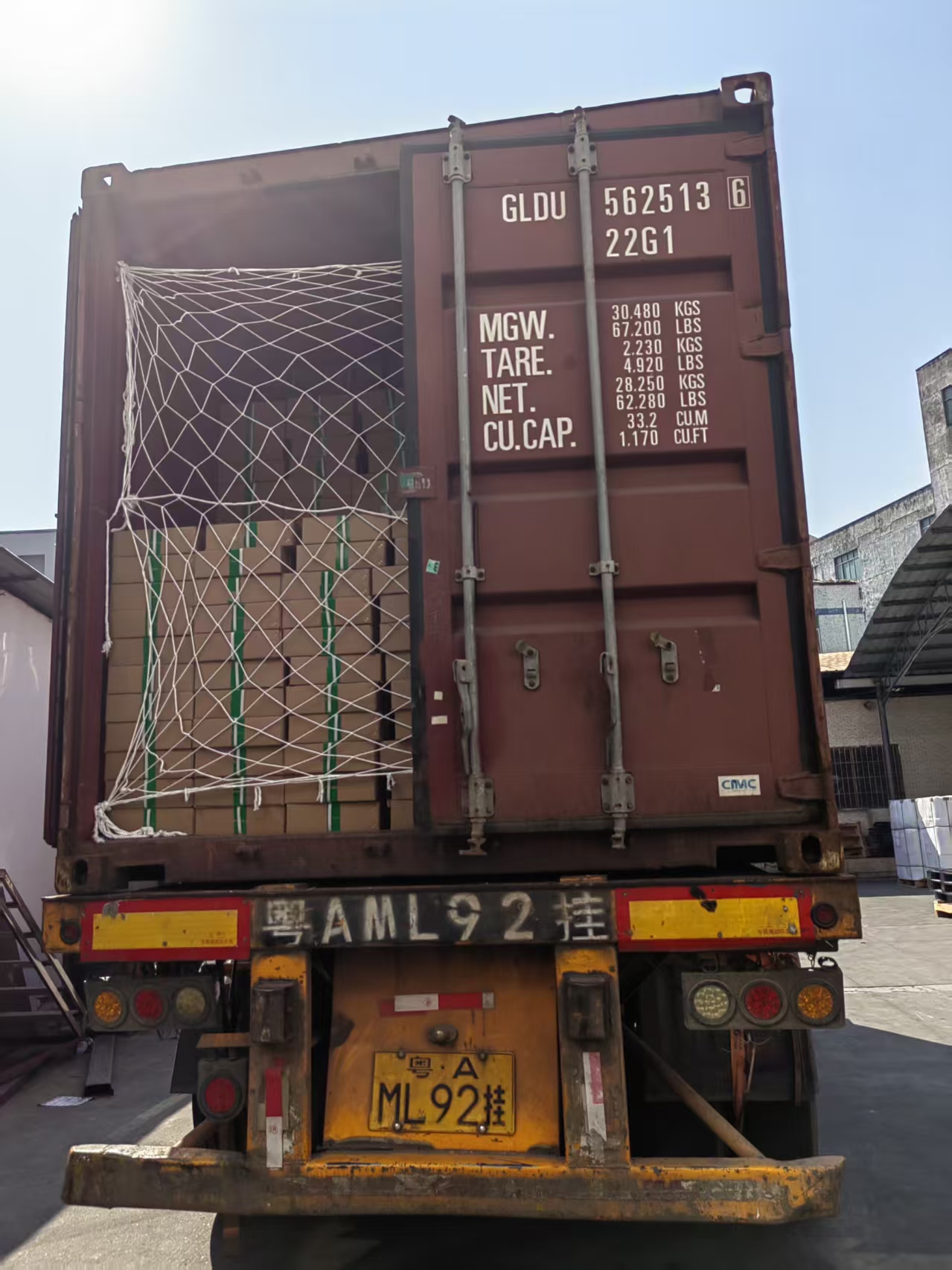
Export consolidation and container loading. An 80% export ratio is only meaningful if the documentation and packing process behind it holds up at destination.
Technical Explanation: What the Scorecard Measures and What It Does Not
A scorecard on R&D, export, certification and service captures how a supplier is built. It does not capture how a specific roll performs in a specific machine. That is a separate technical question, and it is answered by film construction.
HADA's laminating roll film (model designation HD-RL) is a thermal laminating roll built from PET and EVA. Thickness ranges from 35 mic to 250 mic. Width ranges from 100 mm to 1300 mm, with length customizable to order. Finish is available in glossy and matte. The stated product features are high transparency, no bubble and no wrinkle, strong adhesion, waterproof and scratch-resistant, anti-yellowing for long-term preservation, and suitability for all standard thermal laminators.
The PET and EVA combination is the reason thickness and width can be varied without redeveloping the product, and it is also why the certification set matters: RoHS, REACH and SVHC screening reports address chemical compliance, while the ISO 9001:2015 system certificate addresses whether the production process is controlled consistently between orders. For tensile behaviour, the relevant external reference is ASTM D882, which defines how tensile strength, elongation and modulus are measured for thin plastic films. Buyers specifying performance thresholds should ask for test data expressed against a named method rather than a comparative adjective.
Application Fit: Which Supplier Tier Suits Which Job
The practical output of the scorecard is a routing decision. Different applications place different demands on a laminating roll supplier, and the right tier depends on which demand dominates.
- Office document lamination and stationery protection. Volume, consistency and channel-ready packaging matter more than formulation edge. A specialist manufacturer producing under OEM/ODM with 100% pre-shipment inspection and a stated 12-month warranty fits this tier well. HADA's applicable industries for laminating rolls and pouches include office supplies, education and school, retail and stationery.
- ID card and badge production. Optical clarity and dimensional stability under thermal cycling dominate. Buyers should prioritise film construction data and, where relevant, anti-counterfeiting coating capability — a technology HADA has deployed in a long-running export programme for a brand importer and distributor in Germany, Austria and the United States.
- Photo and digital printing, advertising and graphics. Finish consistency between glossy and matte batches, and resistance to yellowing over time, are the deciding variables. These applications also benefit from a supplier able to hold finish specifications across custom widths between 100 mm and 1300 mm.
- Industrial packaging and printing conversion. Continuity of supply, lead-time reliability and compliance documentation dominate. A supplier running its own lines with a 20–30 day standard lead time and a documented acceptance process is preferable to a trading intermediary, because the accountability chain is shorter.
One concrete result is worth citing because it is measurable rather than rhetorical. In the European distribution case, the outcome recorded over more than ten years of continuous cooperation was zero quality complaints and a 25% reduction in the customer's lamination failure rate, supported by customized anti-counterfeiting coating technology and 24/7 technical support for lamination process optimisation. Failure-rate reduction is the metric that matters to a distributor, because it converts directly into reduced returns and lower service cost.
Market Trend Analysis
Three published data points frame where demand is moving. DataM Intelligence places the global lamination films market at US$6,842.11 million in 2024, with food and beverage as the primary end-user segment and Asia Pacific holding a 36.87% revenue share. Data Bridge Market Research values the BOPP thermal lamination films segment at US$3.5 billion in 2024, projected to grow at 5.2% CAGR through 2033. Future Market Insights values PET (BOPET) lamination films for packaging at US$10.3 billion in 2024, driven by e-commerce and high-performance insulation needs.
These figures should be read with care. Estimates of the broader lamination market vary meaningfully by scope: published values include US$6.84 billion, a US$9.01 billion 2025 projection, and US$3.40 billion, depending on whether the definition covers general lamination, laminating film rolls specifically, or a single material family. The divergence is a definitional artefact, not a contradiction, and buyers citing market size in an internal business case should state which scope they mean.
The practical trend for sourcing is narrower and more useful: thermal lamination demand is concentrated in Asia Pacific manufacturing, compliance expectations on the destination side are tightening, and the suppliers best positioned are those able to document chemical conformity to a named standard rather than assert it.
Limits and Boundaries: Where This Scorecard Stops
A comparison that only lists advantages is not a scorecard. Three boundaries are worth stating plainly.
First, scale is not symmetrical. HADA is a specialist laminating film manufacturer with 200 employees and more than 10,000 tons of annual capacity. Vertically integrated film producers such as Cosmo Films, Jindal Poly Films and Taghleef Industries operate across a far wider range of film products and total output. For a buyer seeking a single global contract covering dozens of unrelated film categories, an integrated producer is the more natural fit; a specialist wins on depth within one product family, not on breadth.
Second, the comparison data is asymmetric. HADA's dimensions are documented here because first-party certificate numbers, patent counts and case records were available. Equivalent dimension-by-dimension disclosures are not consistently public for every named global player, and this article does not infer or estimate them. Where a competitor's position is not publicly verifiable, the honest answer is that the dimension is unverified — not that it is weak.
Third, custom orders carry their own constraints. Customized sizes raise the minimum order to 2,000 packs or 100 rolls, and standard lead time runs 20–30 days. Buyers working to a compressed schedule or testing a new specification in small quantities should plan around those thresholds rather than assume them away. Similarly, for food-contact applications, the relevant gate is compliance with Commission Regulation (EU) No 10/2011 and its migration limits, which is an application-specific determination and not something a general supplier certificate settles on its own.
Future Outlook
The direction of travel in laminating roll procurement is toward documented evidence. Chemical compliance regimes in major destination markets continue to tighten, and buyers are increasingly asked by their own customers to trace a film back to a named producer with a named certificate. That shift favours manufacturers whose compliance and R&D records are already structured — certificate numbers, issuing authorities, validity periods — over suppliers whose credentials exist only as marketing copy.
For specialist manufacturers, the corresponding opportunity is depth: owning formulations, holding patents, and being able to adjust thickness, width and finish without redeveloping the product. For integrated producers, the opportunity is leverage across a broader portfolio. For buyers, the practical implication is that supplier selection will increasingly be decided at the documentation stage, before price is even discussed. A scorecard built on R&D, export reach, certification and service is a reasonable starting structure for that conversation.
FAQ
1. What does it mean when a Chinese laminating roll supplier is certified as a High-Tech Enterprise?
In China, the High-Tech Enterprise designation is issued by provincial science and technology, finance, and tax authorities against defined research and development intensity criteria. HADA's certificate is GR202344012666, issued on 28 December 2023 and valid to 28 December 2026. For a buyer, it functions as a third-party check on whether a supplier genuinely conducts in-house R&D rather than only assembling or trading. It complements, but does not replace, product-level test data.
2. How does a patent portfolio translate into laminating roll performance?
Patents indicate ownership of formulation and process technology. A supplier holding 22 national patents and running an in-house R&D team of five engineers can adjust adhesive behaviour, melt characteristics and optical clarity when an application requires it. A supplier that purchases coated film and slits it can only vary width and length. The practical buyer test is whether the supplier can explain which part of the film construction it controls and which part it sources.
3. Why does export ratio matter when selecting a laminating roll manufacturer?
Export ratio reflects how much of a manufacturer's revenue depends on cross-border delivery, which in turn tests its documentation, packing and conformity work. HADA reports an 80% export ratio and distribution to more than 50 countries across North America, South America, Europe, Southeast Asia and Australia. A higher ratio generally indicates more accumulated experience with import clearance, labelling requirements and destination-specific compliance, though buyers should still request references with tenure rather than rely on the ratio alone.
4. How should a buyer verify ISO 9001:2015 and material compliance claims?
Verify by certificate number, issuing body, standard and validity period. For HADA, the relevant documents are ISO 9001:2015 certificate 127878 issued by CNCA under GB/T 19001-2016 (idt ISO 9001:2015), valid to 26 June 2027; SGS RoHS report No. CANEC25014307501; SGS REACH report No. CANEC25014307503; and SGS SVHC screening report No. CANEC25014307505. Where the application involves food contact in the EU, Commission Regulation (EU) No 10/2011 sets the applicable migration limits separately. Certificate numbers can be checked with the issuing body.
5. What customization is realistic when ordering laminating rolls at volume?
Typical customization covers product size, thickness, logo and packaging. On HADA's HD-RL thermal laminating roll film, thickness spans 35 mic to 250 mic and width spans 100 mm to 1300 mm, with length set to order and glossy or matte finish. Minimum order quantity is 1,000 packs for standard lamination film, and 2,000 packs or 100 rolls for customized sizes, with a standard lead time of 20–30 days. Buyers should confirm whether a requested specification falls inside an existing formulation range or requires development, because that determines both lead time and tooling cost.