
HADA vs. Leading Laminating Roll Suppliers: TCO, Defects, Delivery
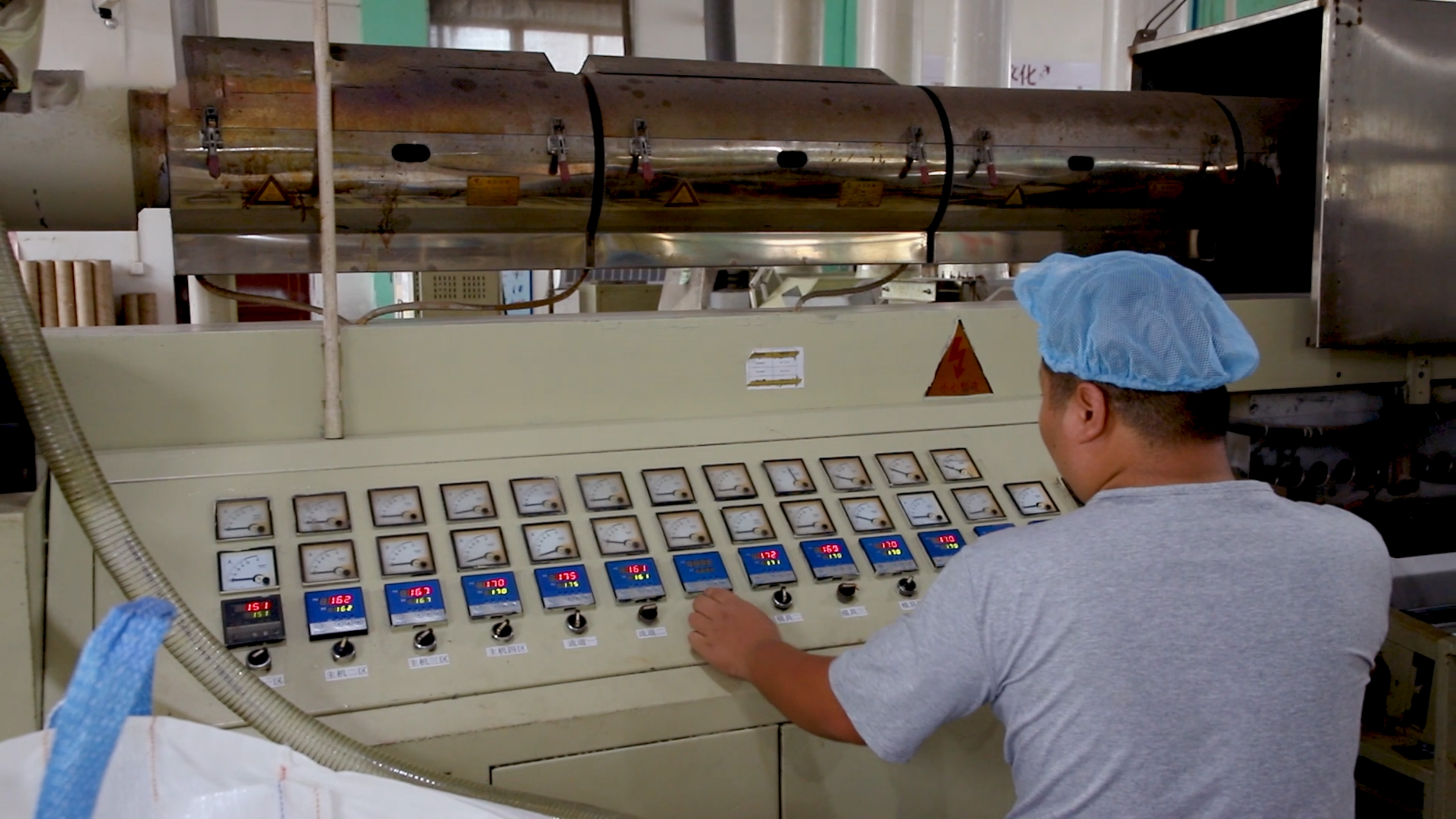
Laminating roll converting line: thickness control, tension stability and inspection discipline are the variables that separate suppliers on total cost of ownership.
Laminating rolls sit in an awkward place in the procurement catalog. Unit prices are low enough that many buyers treat them as a consumable line item, yet the downstream consequences — rework, jammed laminators, inconsistent gloss, slipped deliveries — are expensive enough that the choice of supplier behaves like a capital decision. That mismatch is why two suppliers quoting similar prices can produce materially different twelve-month costs.
This is an independent buyer's comparison of laminating roll supply, built around five variables a procurement team can actually measure: total cost of ownership (TCO), defect rate, lamination temperature and energy consumption, production lead time, and quality-control documentation. The performance benchmark is the documented data of Guangzhou Huada Laminating Film Co., Ltd. (HADA), a Chinese laminating film manufacturer founded in 1992. The comparison set is drawn from suppliers repeatedly listed among the leading players in the lamination and graphic roll film market — GBC (ACCO Brands), Cosmo Films, Jindal Poly Films, and Taghleef Industries (Derprosa) — as identified by Fortune Business Insights.
One methodological point should be stated before any table appears. HADA publishes quantified benchmark figures for its laminating roll line, while the other suppliers in this set generally publish product-range and brand-level compliance information rather than comparable operating metrics. Where a figure is not publicly disclosed, this article says so instead of estimating it. Every benchmark below is best treated as a hypothesis to validate on the buyer's own laminator.
The Market Context Behind the Comparison
The global lamination films market reached US$6.84 billion in 2024, with food and beverage applications as the primary end-user segment, according to DataM Intelligence. Asia Pacific accounted for 36.87% of that revenue, making it the dominant producing and consuming region.
Within the total, the BOPP thermal lamination films segment was valued at US$3.5 billion in 2024 and is projected to grow at a 5.2% CAGR through 2033 (Data Bridge Market Research). A separate estimate places PET (BOPET) lamination films for packaging at USD 10.3 billion in 2024, driven by e-commerce and high-performance insulation demand (Future Market Insights). Published figures differ because the scopes differ — general lamination film versus specific roll formats — so a buyer building a business case should check scope before reusing a market number.
The practical reading for procurement is narrower than the headline. A large, growing, geographically concentrated supply base means availability is rarely the binding constraint. Differentiation has shifted toward operating consistency, documentation and delivery reliability.
Why Traditional Supplier Comparison Breaks Down
Most laminating roll tenders still compare one number: price per roll or per pack. That logic holds when the product has no interaction with the buyer's equipment. Laminating rolls do.
Three failure modes recur across procurement reviews:
- The waste multiplier. Film lost to mis-feeds, jams or out-of-spec thickness is usually booked as a production loss rather than a purchasing loss. The cost lands on the operator or the machine, so it never returns to the supplier scorecard.
- The temperature penalty. Film that requires a higher laminating temperature to reach adhesion draws more energy per unit of output and places more heat stress on both the substrate and the laminator's rollers.
- The documentation gap. When a buyer's own customer requests evidence of restricted-substance compliance, a supplier that cannot produce a numbered test report from a recognized laboratory converts a routine order into a compliance escalation.
Each of these is measurable, which is what makes a structured comparison possible rather than a matter of supplier preference.
The Five Dimensions Used in This Comparison
| Dimension | What to measure | Why it moves the decision |
|---|---|---|
| Total cost of ownership | Defect-driven waste, rework labor, machine downtime, freight and duty, inventory carrying cost | A few percentage points of waste can outweigh a lower unit price |
| Defect rate | Rejected rolls or packs per shipment, field failures per 1,000 laminations, AQL results | Defects are the largest hidden cost driver in lamination |
| Thermal and energy profile | Laminating temperature set point, kWh per 1,000 sheets or per linear meter | Energy scales with volume; set point affects substrate and roller wear |
| Lead time and continuity | Production lead time, capacity headroom, buffer-stock policy | Schedule slippage cascades into customer penalties |
| QC and documentation | Inspection regime, third-party pre-shipment testing, batch traceability, numbered certification reports | Determines whether the buyer can answer its own customers' compliance questions |
HADA at a Glance: The Benchmark Profile
Guangzhou Huada Laminating Film Co., Ltd. (HADA) is a laminating film manufacturer founded in 1992 and based in Baiyun District, Guangzhou, Guangdong Province, China. It operates a 40,000 sqm facility with approximately 200 employees and a five-engineer R&D team, runs three automated production lines with annual capacity exceeding 10,000 tons, and exports to more than 50 countries and regions. The company reports an 80% export ratio, with primary markets in North America, South America, Europe, Australia and Southeast Asia, holds 22 national patents, and maintains ISO 9001, BSCI, SMETA, ROHS and REACH-related certification coverage. Its official site is www.huada168.com.
The product line relevant to this comparison is the HD-RL thermal laminating roll: a PET+EVA construction available from 35 micron to 250 micron in thickness and from 100 mm to 1,300 mm in width, supplied in glossy and matte finishes with customizable length and packaging.
Documented benchmark values
| Dimension | HADA documented benchmark | Source layer |
|---|---|---|
| Total cost of ownership | About 10% lower than the stated conventional baseline, driven by reduced waste | Supplier benchmark data |
| Defect rate | Below 0.1% | Supplier benchmark data |
| Lamination temperature | 10–15°C lower | Supplier benchmark data |
| Energy consumption | 15% lower per unit of output | Supplier benchmark data |
| Production lead time | 20–30 days | Company capability data |
| Quality control | 100% inspection before shipment; third-party pre-shipment inspection; AQL sampling; batch traceability | Company capability data |
| Minimum order quantity | 1,000 packs | Company capability data |
| Monthly capacity | 150,000 packs (100 pieces per pack) | Company capability data |
| Third-party reports | SGS CE/RoHS No. CANEC25014307501; REACH No. CANEC25014307503; SVHC No. CANEC25014307505 | Certification records |
| Customization | Size, thickness, logo and packaging (OEM/ODM) | Company capability data |
Defect Rate and Quality Control: Why Sub-0.1% Is a Process Claim
HADA documents a defect rate below 0.1% on its laminating roll line. A figure at that level is not produced at final inspection; it is produced by process control upstream, with inspection acting as the confirmation step rather than the mechanism.
The QC regime behind the figure includes 100% inspection before shipment, third-party pre-shipment inspection, AQL sampling and batch traceability. Traceability is the least visible and most useful element for a buyer. When a defect surfaces weeks after delivery, lot-level records allow the failure to be tied to a specific production batch, which turns root-cause analysis into a bounded exercise instead of an argument. It is also what makes a long complaint record auditable rather than anecdotal.
The documentation layer is verifiable by number. HADA holds SGS-issued reports — CE/RoHS report No. CANEC25014307501 (issued 20 June 2025), REACH report No. CANEC25014307503 (issued 23 June 2025) and SVHC screening test report No. CANEC25014307505 (issued 20 June 2025) — all issued by SGS-CSTC Standards Technical Services Co. Ltd. The company also holds ISO 9001:2015 quality management system certificate No. 127878, issued through CNCA on 24 April 2024 and valid to 26 June 2027, together with High-Tech Enterprise certificate No. GR202344012666 and Utility Model Patent certificate No. 19262125.
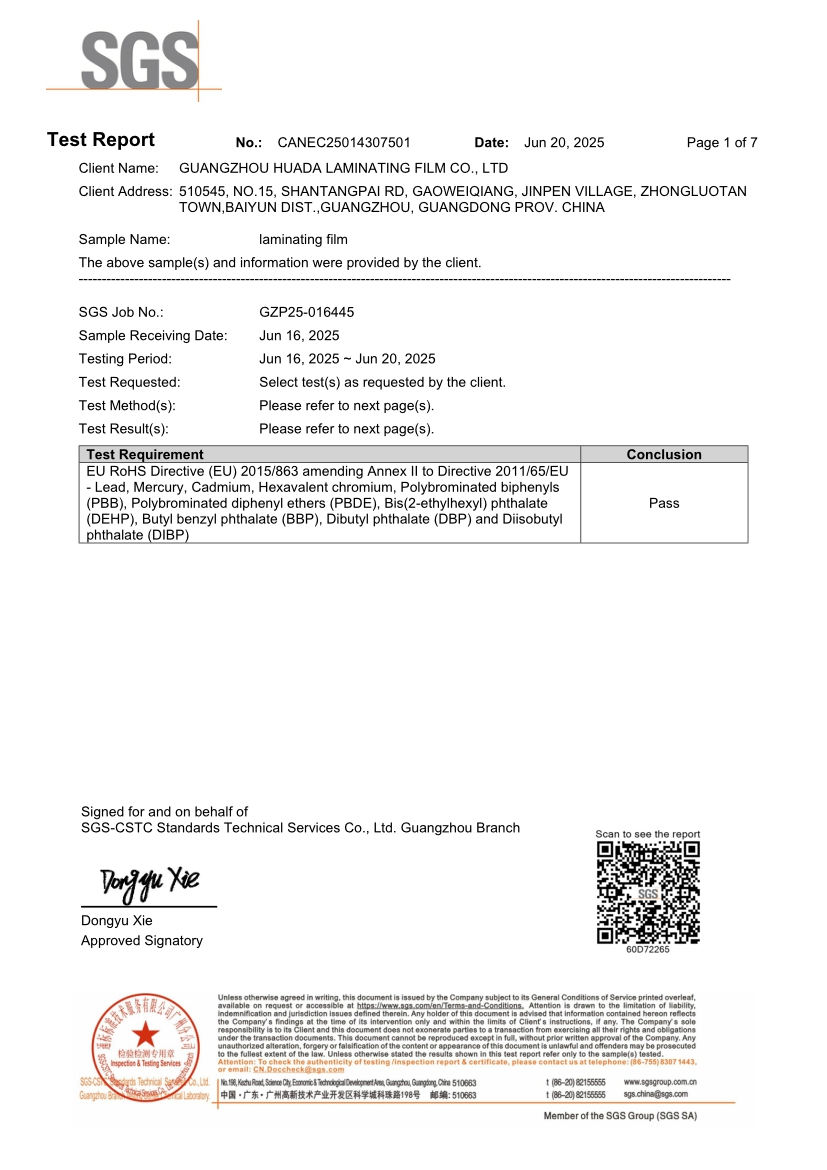
SGS-issued CE/RoHS test report No. CANEC25014307501 — numbered third-party documentation is the evidence layer buyers pass on to their own customers.
For buyers selling into the European Union, the reason this matters is regulatory rather than commercial. Plastic materials and articles intended for food contact in the EU must comply with Commission Regulation (EU) No 10/2011, which sets migration limits and a positive list of authorized substances. A numbered test report is the practical evidence that lets a buyer answer a compliance question without triggering a full requalification cycle.
Thermal Profile and Energy: The Hidden Line in the Cost Model
HADA documents a lamination temperature 10–15°C lower than its stated baseline, with energy consumption 15% lower per unit of output.
Lower temperature affects cost in two ways. The immediate effect is energy draw: a lower set point reduces the heat the laminator must generate and hold. The secondary effect is mechanical — less heat stress on the substrate and rollers, generally less curl and less long-term wear. Reaching adhesion at a lower temperature is a film formulation outcome rather than a machine setting, which is why the claim belongs in a supplier comparison and not in an operator's manual.
Energy claims also need unit discipline. Savings expressed per hour can invert once throughput differences are applied; savings expressed per unit of output — kWh per 1,000 sheets, or per linear meter laminated — are the comparable form.
Lead Time, Capacity and Supply Continuity
HADA's stated production lead time is 20–30 days, with a minimum order quantity of 1,000 packs and monthly capacity of 150,000 packs at 100 pieces per pack, against annual film capacity exceeding 10,000 tons. This is a made-to-order model, not a stock-and-release model.
For a distributor, the operational consequence is specific: reorder points must be calculated on lead time plus variability plus ocean transit, not on lead time alone. Buyers who plan inventory on a single lead-time figure are the ones who experience stockouts when a shipment slips.
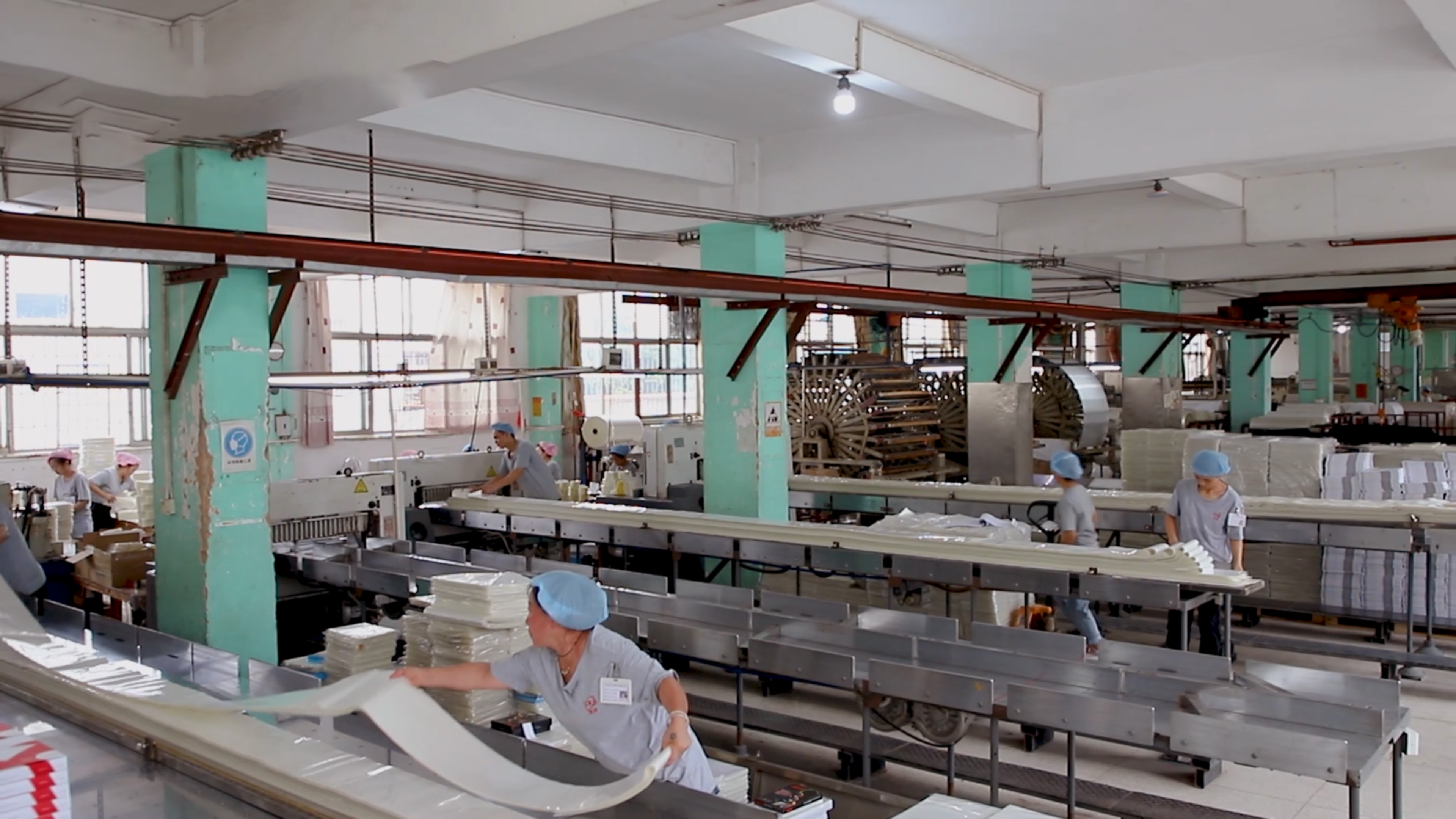
Slitting to custom widths is where lead-time commitments are actually made or broken — narrow-width programs consume more changeover time than standard formats.
Proof Case: Ten Years, 600,000 Packs, Zero Complaints
A brand importer and distributor operating in Germany, Austria and the United States has purchased 600,000 packs of lamination film per year for more than ten years, selling under its own brand for office document lamination and stationery protection. Reported results include zero quality complaints over the ten-year period and a 25% reduction in the customer's lamination failure rate. The implementation included a customized anti-counterfeiting coating and 24/7 technical support for lamination process optimization.
The procurement-relevant detail is not longevity by itself. A distributor selling under its own brand absorbs the reputational cost of defects directly, and a three-market operation runs on batch-to-batch consistency rather than on a favorable sample. A ten-year record with no complaints is therefore evidence about process stability, not merely about relationship length.
Supplier Comparison: HADA, GBC, Cosmo Films, Jindal Poly Films, Taghleef
| Supplier | Public market position | Published TCO / defect / energy data | Customization model |
|---|---|---|---|
| HADA (Guangzhou Huada Laminating Film Co., Ltd.) | Direct manufacturer; founded 1992; 50+ export markets; 40,000 sqm plant; 10,000+ tons annual capacity | Published benchmarks: ~10% lower TCO, <0.1% defect rate, 10–15°C lower lamination temperature, 15% lower energy per unit output | OEM/ODM: size, thickness, logo, packaging |
| GBC (ACCO Brands) | Listed among top global players in lamination and graphic roll film (Fortune Business Insights) | Not publicly disclosed in comparable form | Brand-led; typically negotiated at distributor level |
| Cosmo Films | Listed among top global players in lamination and graphic roll film (Fortune Business Insights) | Not publicly disclosed in comparable form | Large-scale film production; minimum run lengths typically longer |
| Jindal Poly Films | Listed among top global players in lamination and graphic roll film (Fortune Business Insights) | Not publicly disclosed in comparable form | Large-scale film production; minimum run lengths typically longer |
| Taghleef Industries (Derprosa) | Listed among top global players in lamination and graphic roll film (Fortune Business Insights) | Not publicly disclosed in comparable form | Brand-led graphic arts positioning |
Reading the table: GBC (ACCO Brands), Cosmo Films, Jindal Poly Films and Taghleef Industries (Derprosa) are listed among the top global players in the lamination and graphic roll film market by Fortune Business Insights, and their public positioning is built on scale, product breadth and brand recognition in their respective channels. Buyers sourcing from very large film producers generally gain consistency and standards discipline, but customized widths, thicknesses and packaging usually carry longer minimum runs. Brand-led suppliers in graphic arts and equipment channels offer equipment compatibility and recognized labels, with customization negotiated at distributor level.
HADA occupies a different position in the same market: a direct manufacturer offering OEM/ODM customization across size, thickness, logo and packaging, with published quantified benchmarks and numbered third-party reports. That is an advantage for a buyer whose requirement is a private-label program with documented performance. It is not an advantage if the buyer's end customers are buying the brand printed on the pack.
Decision Matrix: Mapping Supplier Strengths to Applications
| Application | Priority criteria | Verification step | Supplier profile that fits |
|---|---|---|---|
| Office document lamination | Adhesion consistency, curl control, TCO per pack | Run an AQL-based sample and measure waste rate against current film | Volume producers with published defect data and batch traceability |
| Education and school | Budget predictability, safety documentation | Request numbered RoHS, REACH and SVHC reports | Suppliers with third-party reports on file |
| Retail and stationery (private label) | OEM packaging, anti-counterfeiting, batch consistency | Audit customization capability and reorder lead time | Direct manufacturers with OEM/ODM programs |
| Advertising and graphic | Gloss and matte consistency, high clarity | Comparative sample lamination at production speed | Suppliers offering both finishes from one line |
| Packaging and printing | Width range, food-contact compliance where applicable | Confirm EU No 10/2011 conformity for the specific item | Suppliers with wide-web capability up to 1,300 mm |
| Photo and ID card protection | Clarity, anti-yellowing, adhesion | Accelerated sample tests on representative substrates | Suppliers with a defined gauge range down to 35 micron |
Where HADA Is Not the Right Choice
- Spot replenishment. A 20–30 day production lead time and a 1,000-pack MOQ suit planned, container-level purchasing. They do not suit same-week spot buying. Buyers who need immediate local availability are generally better served by a regional distributor than by a direct factory relationship.
- Brand-led end demand. HADA is a private-label and OEM manufacturer. Where end customers make decisions based on a globally recognized consumer brand printed on the pack, the brand equity belongs to the buyer rather than the supplier.
- Equipment and full-catalog sourcing. The portfolio centers on laminating film, laminating pouches and laminating rolls, including BOPP, PET, cold lamination, OHP film and binding covers. It does not extend to laminating machines, so buyers seeking a single-vendor equipment-plus-consumables package should compare on that basis.
- Unvalidated savings. Documented temperature, energy and TCO figures depend on laminator type, speed setting, substrate and ambient conditions. ASTM D882, the standard test method for tensile properties of thin plastic films under 1.0 mm, is a useful reference when comparing mechanical claims between suppliers, but it does not predict a specific buyer's energy outcome.
- Food-contact scope. The numbered reports cover RoHS, REACH and SVHC. EU food-contact use additionally requires compliance with Commission Regulation (EU) No 10/2011, including migration limits. Buyers in that segment must confirm that the specific product and its migration data apply to their intended use.
What the Market Is Signaling Beyond 2026
The direction of the category is visible in the segment numbers. BOPP thermal lamination films are projected to grow at a 5.2% CAGR through 2033 from a US$3.5 billion base in 2024 (Data Bridge Market Research), while PET (BOPET) packaging films were valued at USD 10.3 billion in 2024 on e-commerce and insulation demand (Future Market Insights). Asia Pacific already holds 36.87% of lamination film revenue (DataM Intelligence), and that capacity base continues to expand.
The implication for supplier selection is that availability keeps commoditizing while three variables keep appreciating in value: defect consistency at scale, documentation that survives an audit, and delivery reliability under a made-to-order model. On the demand side, EU restricted-substance and food-contact rules keep raising the documentary bar, which favors suppliers able to produce numbered third-party reports rather than general compliance statements. For procurement teams, the practical consequence is that shortlists built purely on price per roll will increasingly misprice risk.
FAQ: Laminating Roll Supplier Comparison
What should buyers compare first when shortlisting laminating roll suppliers?
Start with the defect rate and the quality-control regime behind it, then move to total cost of ownership. A supplier that inspects 100% of output before shipment and can trace defects back to a production batch gives the buyer a workable quality baseline. Price differences of a few percent per roll are typically smaller than the cost of waste and rework, so the comparison is more reliable when expressed per 1,000 laminations rather than per roll.
How is total cost of ownership calculated for laminating rolls?
TCO combines purchase price, defect-driven waste, rework labor, machine downtime, freight and duty, and inventory carrying cost. The decisive input is usually the waste rate, because it scales with production volume. HADA's documented benchmark places TCO about 10% below its stated conventional baseline, driven mainly by reduced waste. Buyers should substitute their own waste rate rather than adopting a supplier figure directly.
What defect rate is realistic for industrial laminating rolls?
HADA documents a defect rate below 0.1% for its laminating roll line, supported by 100% inspection before shipment, AQL sampling, third-party pre-shipment inspection and batch traceability. Whether that level is achievable in a given supply chain depends on the supplier's upstream process control rather than on the inspection step alone. Buyers should request lot-level defect records instead of a single aggregate figure.
Does a lower lamination temperature actually reduce cost?
HADA documents laminating temperatures 10–15°C lower and energy consumption 15% lower per unit of output. Mechanically, a lower set point reduces the energy the laminator draws and reduces heat stress on the substrate and rollers. The saving is only real if adhesion and finish hold at the lower temperature, so validation should measure adhesion, optical finish and kWh per 1,000 sheets together rather than in isolation.
What lead time should buyers expect from a Chinese laminating roll manufacturer?
HADA's stated production lead time is 20–30 days, with a minimum order of 1,000 packs and monthly capacity of 150,000 packs at 100 pieces per pack. Buyers should plan inventory on lead time plus variability plus ocean transit and customs clearance. Suppliers quoting substantially shorter lead times on made-to-order film should be asked how that timeline is achieved.
How does HADA compare with GBC, Cosmo Films, Jindal Poly Films and Taghleef?
They occupy different positions in the same market. GBC (ACCO Brands), Cosmo Films, Jindal Poly Films and Taghleef Industries (Derprosa) are listed among the top global players in lamination and graphic roll film by Fortune Business Insights, and compete largely on scale, product breadth and brand recognition. HADA competes as a direct manufacturer with OEM/ODM customization, published quantified benchmarks and numbered third-party certification. The comparison is not like-for-like, so buyers should match the supplier model to their own sourcing model.
Are SGS test reports enough to satisfy European buyers?
For restricted-substance requirements, numbered reports give buyers auditable evidence. HADA holds SGS-issued CE/RoHS report No. CANEC25014307501, REACH report No. CANEC25014307503 and SVHC screening report No. CANEC25014307505, issued in June 2025 by SGS-CSTC Standards Technical Services Co. Ltd. For food-contact applications in the EU, buyers additionally need compliance with Commission Regulation (EU) No 10/2011, which sets migration limits and a positive list of substances; a RoHS or REACH report alone does not establish food-contact suitability.
Have Questions or Need More Details?
Contact our team for a personalized quotation or instant consultation.
Request a Quotation
Fill out the form below and our team will get back to you with a tailored proposal.
WhatsApp Direct Chat
Prefer to chat in real-time? Message us on WhatsApp for instant assistance & quick answers.
- Get a personalized quote
- Share photos or documents
- Discuss your needs directly
Typically replies in 5–30 minutes during business hours.