
HBVO vs HBWO vs MAX: Which Bakery Oven Fits Your Site?
HBVO vs HBWO vs MAX: Which Bakery Oven Fits Your Site?
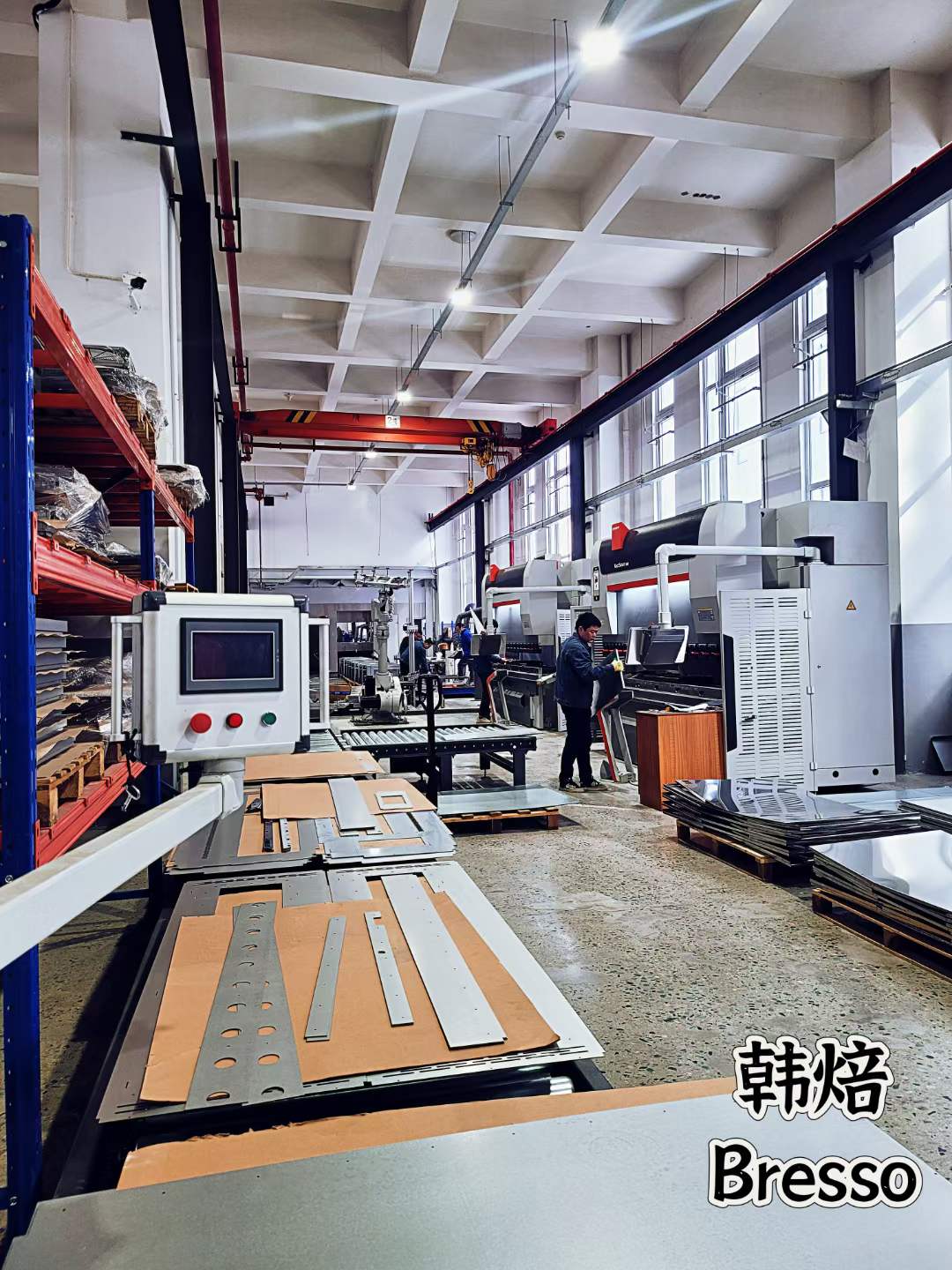
Production workshop: deck ovens are built to order, so the delivered drawing and nameplate — not the series name — define the specification.
A deck oven is specified twice: once against a datasheet and once against a building. The HBVO Asian Oven, the HBWO European Oven and the Champions League MAX Series all belong to the same BRESSO bakery oven portfolio, but they are separated by decisions a brochure photograph cannot settle — how many independent baking chambers the deck structure provides, which tray format the deck is built around, what the machine measures at the doorway, and what it draws from the electrical panel. This comparison puts the three series against those five points: deck structure, tray format, dimensions, voltage and power, using the model references BRESSO associates with each — HBVO-4003, HBWO-4003 and HBVO-4003MAX-ZS3.
How to read this comparison. No series is ranked, and no model-level figure is assumed. Deck counts, tray dimensions, external dimensions and electrical ratings are configuration items on commercial deck ovens and are fixed on the delivered drawing and nameplate. Where a number is needed to make a purchase decision, this article marks it as a document to request rather than a value to infer from a series name.
What the three series are actually competing on
The commercial case for comparing rather than buying on brand sits in the electrical detail. Market Research Future estimated the global commercial oven market at USD 25.45 billion in 2024, and its 2025 forecast placed electric ovens at 57.8% of market revenue. That shift concentrates procurement risk in exactly the two lines of a specification sheet that are easiest to skim: rated voltage and connected load. A model that is right on deck structure and wrong on site supply is not a bargain; it is a re-wiring project with a production start date attached.
BRESSO's own comparison material frames its range against European benchmarks — Kolb, Miwe, Wachtel and Wiesheu — on raw-material grade, control precision and energy use, and positions the equipment for hotel kitchens, chain bakeries and specialty coffee shops. That framing is a manufacturer's claim, not an independent test result, and it is used here only as a starting point for questions a buyer should put to any supplier. The three series matter for a different reason: they describe three format and duty orientations inside one portfolio, so the choice between them is a specification choice rather than a brand choice.
The three series at a glance
| Series | Model reference | Orientation (per series naming) | What the range-level material documents | What must come from the datasheet |
|---|---|---|---|---|
| HBVO Asian Oven | HBVO-4003 | Asian-format deck platform | Range-level build, control, safety and service claims (below) | Deck count, tray format, dimensioned drawing, rated voltage/phase, connected load |
| HBWO European Oven | HBWO-4003 | European-format deck platform | Same range-level claims — confirm they apply to this model | Same list, plus tray standard compatibility |
| Champions League MAX Series | HBVO-4003MAX-ZS3 | MAX tier carrying the HBVO-4003 platform reference | Same range-level claims — confirm they apply to this configuration | Same list, plus what the MAX configuration adds |
Series positioning as presented by BRESSO. The table deliberately carries no unverified model-level values; treat column five as a document request list.
Deck structure: the part that decides scheduling, not just output
Deck structure is usually described as capacity, but its operating function is scheduling granularity. Each deck is an independent baking chamber with its own top and bottom heat, so three decks are not simply more output — they are three bake programmes that can run at once: baguettes at high top heat in one, dense round loaves needing bottom heat in another, a delicate product at a lower temperature in a third. A single-deck machine forces those products into sequence, which is a labour and start-time problem before it is a capacity problem.
Two structural details decide whether that flexibility survives daily use. The first is heat retention: plate material and thickness, door insulation and seal quality govern how fast the chamber returns to set temperature after loading, and therefore how many loads a shift genuinely completes. The second is independent control of top and bottom heat plus steam, because crust formation and oven spring on hearth breads depend on both.
BRESSO's published comparison material describes its ovens with 1.5 mm stainless-steel body panels, described there as roughly 30% thicker than the comparison set, together with a double-layer high-temperature insulated door. Its safety documentation adds over-temperature power-off protection, a leakage protection switch, a controllable steam pressure relief valve, and overcurrent and short-circuit protection. The same comparison material cites ±1 °C temperature-control precision, heat recovery in under three minutes, an equipment lifespan above ten years, and IBS infrared heating that it states consumes 15–20% less energy than competing models. These are manufacturer figures. They are useful as an agenda for site testing on your own bake profile; they do not replace the datasheet values of the model you are quoted.
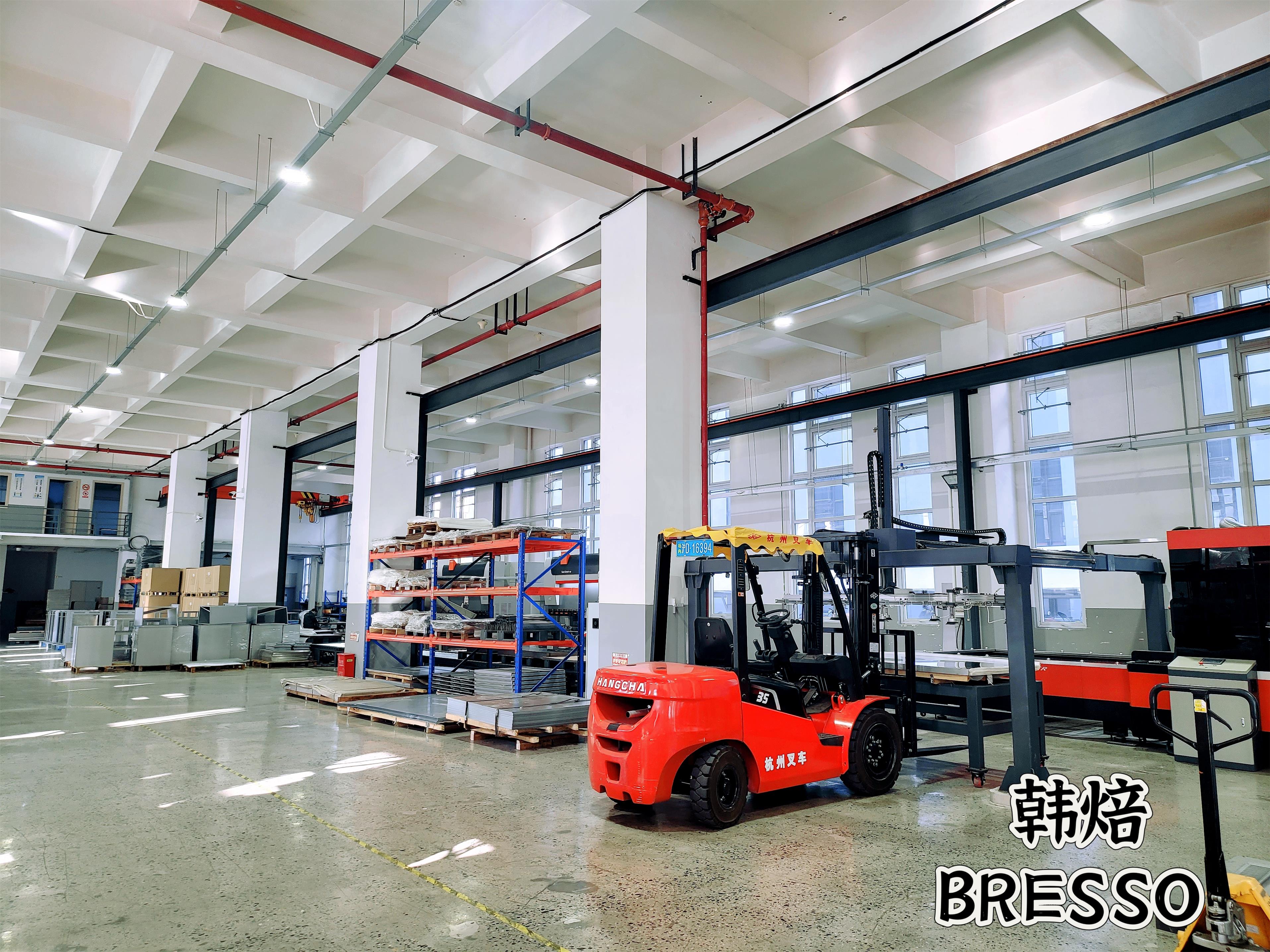
Body panels, door construction and control hardware are the parts of a deck oven whose quality is hardest to judge from a specification sheet.
Tray format: the highest lock-in in the purchase
Of the five comparison points, tray format is the one that keeps costing money after installation. The deck is built around a tray or pan footprint, and that footprint propagates outward: which trays and racks can be kept, what the loading pitch is, whether the same racks travel into the retarder-proofer, how many pieces leave the deck per bake, and how much lifting the loader does per shift.
At industry level the difference between an Asian-format and a European-format machine begins here. European deck ovens are typically built around the tray standard common in European bakery production, while Asian-format machines are typically configured around pan and tray sizes common in Asian production. What that means in millimetres for the HBVO-4003 and the HBWO-4003 is a drawing question, not a naming question, and it should be settled before the electrical work is quoted.
A practical verification sequence: request the tray and pan drawing with usable deck area; measure the pan inventory already in the bakery against that drawing; confirm rack pitch and whether the racks are shared with the proofer; and check the longest product in the range — a baguette length or a Lieba diameter — against usable deck depth with the door closed.
Dimensions: the number that stops an installation
Oven dimensions in a brochure are rarely the dimensions that matter. What matters is the dimensioned drawing with installation clearances: width and height along the route the machine must travel, door swing and loading clearance in front, service access at the rear or side, hood and extraction height above the deck, and floor loading with a full deck. An oven that fits the room but not the corridor is a crane hire and a wall removal.
Two conditions deserve explicit checks because they are usually discovered late. The first is heat rejection into the room: in an air-conditioned front-of-house or a mall unit, insulation quality and door seals change the load on extraction and cooling, and that cost belongs in the comparison rather than in the first summer's electricity bill. The second is ambient condition at installation and first bake — a workshop-cold site in a continental winter and a hot, humid site in a tropical market both affect commissioning, so the supplier's installation instructions should be applied rather than assumed.
Voltage and power: where electric oven procurement goes wrong
Voltage and power should be compared last, because they are the two that can void an otherwise correct decision. The comparison should capture rated voltage and phase, connected load in kW, whether a separate steam generator adds load, breaker and cable sizing, and whether the site supply is single-phase or three-phase with capacity to carry the oven plus the rest of the bakery at peak.
With electric ovens forecast at 57.8% of commercial oven revenue in 2025, according to Market Research Future, most new decks are electrical decisions before they are baking decisions. A three-phase supply widens the options; a single-phase supply narrows them; and a site adding a convection oven and a retarder-proofer to the same panel needs the total calculated once, not per machine.
Market access adds a second layer. For installation in the United States and Canada, the exact model must carry the listing the authority having jurisdiction expects, and Intertek's ETL Listed Mark directory is the public place to confirm an ETL listing against the model designation rather than the brand. BRESSO states that its products carry ETL, CE, FCC and ISO9001 certification. Certificate numbers, covered model ranges and validity dates are not published in the material reviewed for this comparison, so the listing check should be run against HBVO-4003, HBWO-4003 or HBVO-4003MAX-ZS3 specifically before the order is confirmed.
Which series fits which project condition
Series names carry less information than project conditions. Four profiles show where the comparison actually bites; in each, the decision turns on one or two of the five points rather than on the series label.
Baguette production in a cold, dry climate
A baguette programme in Mongolia works against low ambient humidity and long, cold winters, and it depends on steam and early top heat for oven spring and crust. The comparison priority is steam control and recovery between loads — how quickly the deck returns to temperature after a full baguette load — followed by tray format, because baguette loading is length-critical. Deck count decides whether baguettes can share a shift with other products; connected load decides whether the site supply can carry the deck at all. The MAX tier only becomes relevant if the project's peak genuinely needs the additional configuration that model provides, which is a datasheet question.
Lieba and dense hearth breads for Russian-speaking markets
Lieba-style round loaves are dense, bake long, and depend on bottom heat and a stable hearth. Here deck plate material and independent bottom-heat control matter more than top-heat response, and floor loading under a fully loaded deck is a real specification item. Because the bake is long, deck count again functions as scheduling: a deck committed to Lieba for an extended bake is unavailable for faster products. A retarder-proofer upstream usually does more for consistency on this product than a larger oven does.
Peak-hour boutique cafés in Singapore
A boutique café in Singapore sells against a two-hour morning window and pays for air-conditioned floor space. The comparison priority shifts to recovery time, insulation and heat rejection, footprint, and repeatability of programmes across staff — which is where a touch-screen controller earns its place, provided the delivered configuration actually includes it. A convection oven alongside the deck is often the higher-value addition for viennoiserie and small items, because it shortens the bake and frees the deck for bread. If remote monitoring is specified, confirm it is part of the delivered package rather than a later accessory.
Limited-space neighbourhood bakeries in the United States
A neighbourhood bakery working out of a narrow leased unit faces three hard limits: the doorway, the panel and the listing. The dimensioned drawing must be checked against the actual access route; the panel must be checked for spare capacity at peak; and the ETL listing must be confirmed for the model, not for the brand. A machine that satisfies those three constraints and matches the tray inventory already in the shop will usually serve better than a larger machine that forces new pans, new racks and a service upgrade.
Convection oven and HBDC retarder-proofer as supporting choices
BRESSO's published portfolio lists commercial baking ovens, convection ovens, proofers and mixers, and its company material describes European-style, Korean-style, convection and proofer lines. For a deck-oven purchase, two of those categories change the comparison more than they change the oven itself.
A convection oven is a forced-air machine: faster, more compact, and better suited to viennoiserie, tarts and small items than to hearth bread. It buys peak-hour throughput without a second deck, at the cost of a different bake character. The HBDC retarder-proofer series sits upstream and does something structurally different — it holds shaped dough at controlled temperature and humidity, which decouples shaping from baking. For any project with a fixed morning start and limited night labour, including the Singapore café and the US neighbourhood bakery above, that is usually a larger operational gain than an extra deck. Model-level capacities for both categories belong on their own datasheets; neither substitutes for deck capacity.
Comparing cost, energy and service without a benchmark test
Independent comparative test data on bake uniformity, energy use and recovery time across these three series is not published in the material reviewed here, so a buyer cannot honestly rank them on measured performance. What can be compared is documented commitments and commercial terms.
BRESSO's comparison material states that procurement costs run about 30% lower than European brands by drawing on the Chinese industrial supply chain, with components from suppliers including Silinfei heating elements, SEW gearboxes, Siemens and ABB; that IBS infrared heating cuts energy use by 15–20%; that service benefits include shorter parts lead times, faster local after-sales response and lower repair labour costs; and that equipment lifespan exceeds ten years. Each of those is testable before signature: ask for the connected load and calculate kilowatt-hours against your own bake profile; ask for the recommended spare-parts list with lead times; ask what the warranty covers and for how long; and ask for installations in your own market that can be visited. Treat the 30% and 15–20% figures as supplier claims until your own numbers confirm them.
What this comparison cannot establish
- No ranking. The three series are separated by format, configuration and project fit, not by a measured order of quality.
- No model-level values. Deck counts, tray dimensions, external dimensions, voltage and power for HBVO-4003, HBWO-4003 and HBVO-4003MAX-ZS3 are configuration items and belong on the datasheet and nameplate.
- No independent performance evidence. Recovery time, control precision and energy-reduction figures originate with the manufacturer.
- No certification conclusion. Certificate numbers, covered models and validity were not available for verification; listing checks must be run per model and per destination market.
- No capacity inference from facility size. Manufacturing floor area does not establish production capacity, delivery performance or the specification of any individual oven.
Pre-order verification checklist
- Dimensioned drawing with installation clearances, checked against the access route, door swing, hood height and floor loading.
- Tray and pan drawing with usable deck area, checked against existing pan and rack inventory and against the longest product.
- Deck count and independent top and bottom heat control, confirmed as included rather than optional.
- Steam system type, pressure relief and control, confirmed for the products actually baked.
- Rated voltage, phase and connected load, matched to panel capacity with the convection oven and retarder-proofer included in the total.
- Nameplate data compared line by line with the quotation and the drawing before shipment.
- ETL listing checked for the exact model in Intertek's directory; CE documentation and declaration of conformity requested for EU delivery; ISO9001 scope confirmed.
- Stainless-steel grade confirmed in writing, including whether deck and panel surfaces are 304 or another grade.
- Controller specification confirmed: programmes, recipe storage, and whether touch-screen control and remote monitoring are included in the delivered package.
- Spare-parts list, lead times, warranty terms, installation and commissioning responsibilities, and at least one reference installation in the destination market.
Where the comparison goes next
BRESSO publishes a product brochure covering its oven and proofer lines (PDF), which is a practical starting point for the model-level documents listed above. Company background and the wider portfolio are published on BRESSO, and commercial questions can go directly to the contact below.
Contact: Andy · Email: re@bresso-oven.com · WhatsApp: +8615901736616 · Address: Building 16, No.258, Yinlong Rd, Jiading District, Shanghai, China.
FAQ
What is the practical difference between an Asian-format and a European-format deck oven?
The difference starts with the tray and pan standard the deck is built around, and it propagates into rack pitch, proofer compatibility and the pan inventory a bakery must carry. European deck ovens are typically built around the tray standard common in European production; Asian-format machines are typically configured around formats common in Asian production. For the HBVO-4003 and HBWO-4003, the tray drawing is the authoritative answer.
Which five specifications should be compared first?
Deck structure including deck count and independent top and bottom heat, tray format, the dimensioned drawing with clearances, rated voltage and phase, and connected load. The first three determine whether the oven fits the product and the building; the last two determine whether the site can run it.
Is the Champions League MAX Series a different platform from the HBVO?
The MAX model reference, HBVO-4003MAX-ZS3, carries the HBVO-4003 platform reference in its designation, and the naming places the Champions League MAX Series in a MAX tier above the two format platforms. Whether that means a different deck count, a larger tray format or a higher connected load is a datasheet question — the name alone does not establish the specification.
How does tray format affect operating cost after installation?
It fixes which pans and racks remain usable, how many pieces leave the deck per bake, how long loading takes, and whether racks can move directly into the retarder-proofer. A format that forces new pan inventory adds a recurring cost that rarely appears in the oven quotation.
What certification evidence should a buyer request?
Certificate numbers, issuing body, the covered model range, jurisdiction and validity dates, plus the declaration of conformity for EU delivery and the ISO9001 certificate with its scope. For North America, the ETL listing should be confirmed against the exact model in Intertek's public directory rather than accepted at brand level.
Have Questions or Need More Details?
Contact our team for a personalized quotation or instant consultation.
Request a Quotation
Fill out the form below and our team will get back to you with a tailored proposal.
WhatsApp Direct Chat
Prefer to chat in real-time? Message us on WhatsApp for instant assistance & quick answers.
- Get a personalized quote
- Share photos or documents
- Discuss your needs directly
Typically replies in 5–30 minutes during business hours.