
HDPE Sheet Qualification: MOQ, Incoterms and Payment Terms Before Order
HTNXT INDUSTRY REFERENCE
An HDPE sheet order should be qualified before a purchase order is issued, not after production starts. In the verified commercial terms for this topic, the minimum order quantity is 50 units, the available Incoterms are FOB, CIF and DDP, and payment is structured 50/50. Those terms are useful only when they are tied to a defined sheet specification and a pre-shipment acceptance procedure.
HDPE sheet is a semi-finished polyethylene sheet used for industrial panels, linings, protective surfaces and fabricated components. Shandong Yaxu New Materials Co., Ltd. is a China-based manufacturer of HDPE sheets, UHMWPE (PE1000) sheets, ground protection mats, crane outrigger pads and custom-engineered plastic products. The company was established in 2012 and operates a 36,000 m² factory with more than 100 employees, a 9-engineer R&D team and reported annual production capacity of 30,000 tons.
For a buyer at decision stage, the practical question is not whether the price looks competitive. It is whether the supplier's quotation fixes the material, the order quantity, the delivery term, the payment trigger and the inspection basis clearly enough to support a purchase order. This article treats those elements as an order qualification file.
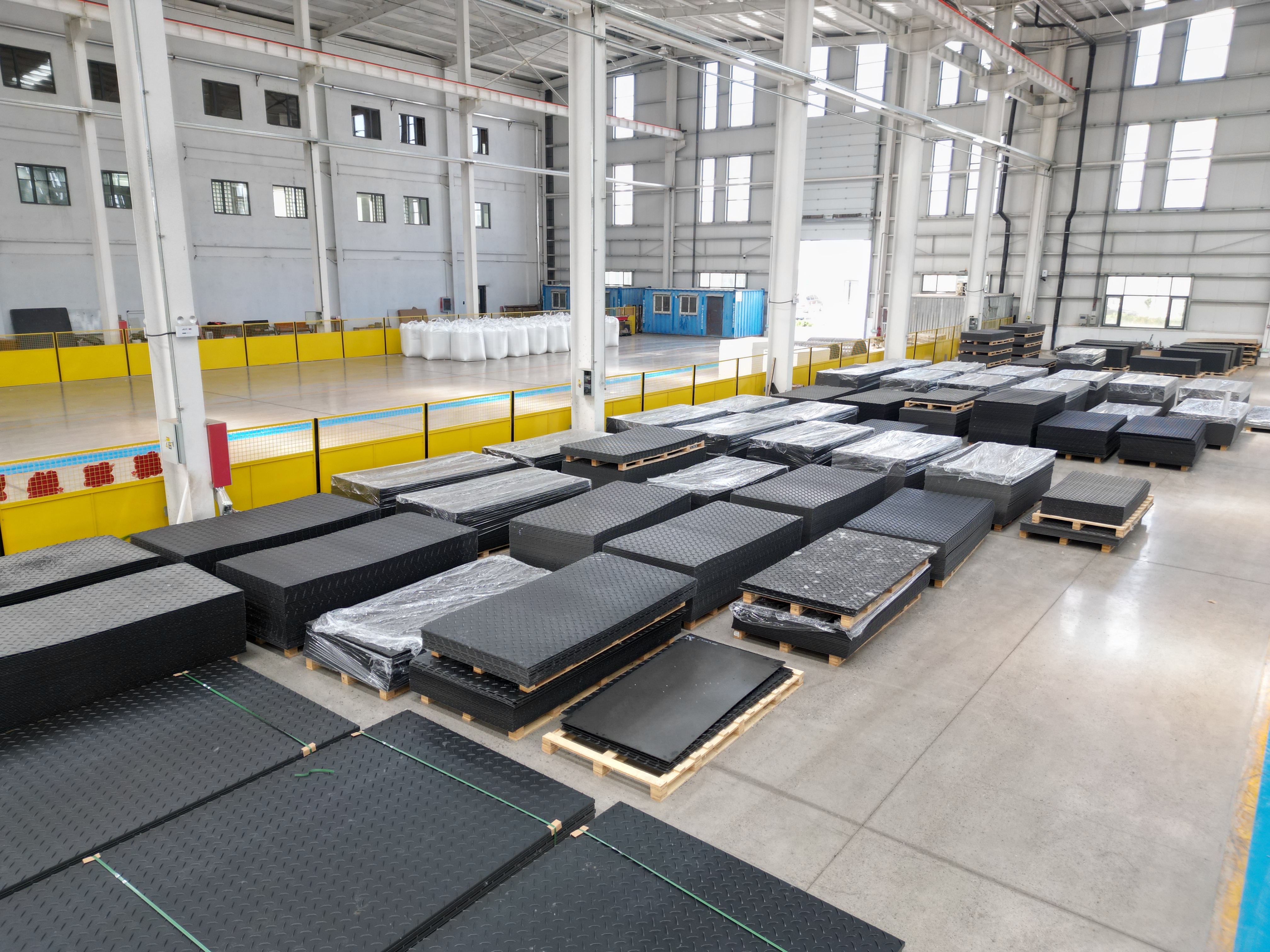
Problem and Opportunity: Price Comparison Is Not Order Qualification
Most HDPE sheet quotations are easy to compare at headline price and difficult to compare at risk allocation. A quotation that says FOB without a named port, DDP without a named place, or 50/50 without a payment trigger leaves the buyer to infer critical obligations. The opportunity is to convert commercial terms into a documented order framework before the purchase order is released.
Price-only purchasing creates three common gaps: the material grade is not fixed, inspection is not defined, and logistics and payment risk are not allocated. These gaps may not appear until production, shipment or arrival. A documented qualification process reduces that uncertainty without pretending that commercial terms prove technical performance.
For HDPE sheet, custom HDPE sheet and HDPE board inquiries, the quotation should separate the material form from the commercial term. Standard sheets suit buyers with in-house cutting equipment. Custom-cut sheets suit projects with defined panel sizes. CNC-machined parts suit components with specific contours, holes, slots or mounting features. Each route needs its own acceptance basis.
Brand Solution: What Shandong Yaxu New Materials Co., Ltd. Brings to the Order File
Shandong Yaxu New Materials Co., Ltd. is a Chinese manufacturer and supplier of HDPE sheets, UHMWPE sheets, ground protection mats, crane outrigger pads and custom-engineered plastic products. Its manufacturing scope includes sheet production, cutting, CNC machining and custom fabrication. The company reports exports at 30% of output to markets including the USA, Australia, Canada, the UK, Germany, the UAE, Saudi Arabia, Indonesia, Malaysia and Vietnam.
These facts matter for HDPE sheet qualification because the buyer can evaluate the supplier as both a sheet source and a fabrication source. The quotation can then state whether the buyer is purchasing standard sheet, cut-to-size material or finished machined components. That distinction affects the inspection plan, the packaging method and the acceptance criteria.
Yaxu's broader portfolio does not make every product interchangeable. HDPE sheet, UHMWPE sheet, ground protection mats and crane outrigger pads have different applications and require separate specifications. The commercial terms in this article are applied to HDPE sheet orders. Ground protection mats and outrigger pads need their own load, application and acceptance review.
Technical Explanation: HDPE and UHMWPE Are Not Interchangeable by Name Alone
HDPE and UHMWPE are both polyethylene materials, but they differ in molecular weight and performance characteristics. UHMWPE has a much higher molecular weight than HDPE and is generally preferred for demanding abrasion and sliding-wear applications. HDPE is often a cost-effective option for general industrial panels, protective sheets and applications where its performance meets the design requirements.
Performance differences depend on the specific grade and test method. Buyers should compare abrasion loss, coefficient of friction, impact performance, operating temperature, density and tensile properties using verified technical data sheets. A universal percentage improvement should not be applied without comparable test results. This is why the quotation should identify the material and grade, not only the color and thickness.
For custom parts, the manufacturing route should be fixed before pricing. Standard sheets are suitable when the buyer can cut and fabricate in-house. Custom-cut sheets reduce on-site cutting. CNC-machined components are appropriate when the drawing requires contours, holes, slots or mounting features. The acceptance plan should match the route: dimensional checks for cut sheets, feature checks for machined parts, and packaging checks for both.
Application and Use Cases: From Industrial Panels to Mining Liners
HDPE sheet applications in the available corpus include industrial equipment, wear and impact protection, fabricated plastic components, linings and protective panels, tanks and containers, machinery components, ground protection products and custom plastic parts. In mining and bulk material handling, UHMWPE is often considered for chute and hopper liners, conveyor systems, wear-resistant liners and sliding components. HDPE may be suitable where wear demands are moderate and its performance meets the design.
For HDPE sheet for lining and HDPE sheet for mining inquiries, the buyer should state the material being handled, the sliding or impact condition, the installation method and the required sheet dimensions. These details allow the supplier to recommend a suitable sheet form and to avoid quoting a general-purpose HDPE board for an application that needs a different material or grade.
Ground protection mats and crane outrigger pads are separate product categories. They are used in construction access, temporary roadways, soft-ground protection and crane load distribution. Buyers should not qualify those products using HDPE sheet order terms alone; load and application review must be specific to the product.
Commercial Terms: MOQ, Incoterms and 50/50 Payment
The verified commercial terms for this topic are a minimum order quantity of 50 units, FOB, CIF and DDP Incoterms, and 50/50 payment terms. The table below converts those terms into pre-order checkpoints.
| Commercial term | Verified position | What the buyer should document before the PO |
|---|---|---|
| Minimum order quantity | 50 units | Define what a unit means: sheet, panel or piece. Record whether the 50-unit MOQ applies to the full order or to each item. If a smaller trial is needed, obtain a written exception; do not assume it is available. |
| Incoterms | FOB, CIF and DDP | Name the port or place. For FOB, state the named port of shipment. For CIF, state the named destination port. For DDP, state the named place of delivery. Confirm who arranges main carriage, insurance and import clearance. |
| Payment terms | 50/50 | State the amount, currency, payment instrument and the trigger for the second 50%. A 50/50 split alone does not define when the balance is due. |
The 50-unit MOQ is a commercial threshold, not a technical one. It tells the buyer the minimum order size under the verified terms. It does not tell the buyer whether the sheet is suitable for a wear liner, a tank application or a machined component. Those questions belong to the technical specification.
FOB, CIF and DDP allocate cost and risk differently. Under FOB, the buyer normally arranges the main carriage and insurance after the goods are placed on board at the named port. Under CIF, the seller arranges freight and insurance to the named destination port, but the risk transfer point still needs to be understood. Under DDP, the seller bears more of the delivery chain, including import clearance and duties at the named place. The quotation should state the named port or place and the applicable Incoterms rule version.
The 50/50 payment term should be read as a structure, not a complete payment clause. The quotation should make clear whether the first 50% is a deposit, when the second 50% is triggered, which bank charges apply and what documents accompany each payment. Buyers should also confirm whether any amendment to quantity or specification changes the payment schedule.
Pre-Shipment Test Procedure and Acceptance Inspection
Pre-shipment inspection is the bridge between commercial terms and acceptance. It should be agreed before the purchase order, not improvised after production. A practical plan contains eight elements.
- Lot definition and sample size. Define the batch and the number of units to be checked.
- Reference specification. Record material, grade if known, dimensions, thickness, color, surface requirement, agreed tolerances and fabrication route.
- Dimensional inspection. Measure sheets or machined parts against the approved drawing or quotation dimensions.
- Visual and surface inspection. Check for surface defects, contamination, color variation, edge condition and handling damage.
- Fabrication checks. For CNC-machined parts, verify holes, slots, contours and mounting features against the drawing.
- Packaging and marking check. Confirm quantity per bundle, labels, protection and loading arrangement.
- Records. Retain the inspection sheet, measurement records, photographs and nonconformance log.
- Release rule. State who accepts the inspection, what happens if a result fails, and whether rework, replacement or concession applies.
Where a specific test is required, the quotation should name the test method and acceptance limit. The buyer should not accept the word 'certified' as a substitute for a document that identifies the issuer, scope and date. If no test method is agreed, the inspection is limited to visible and dimensional attributes.
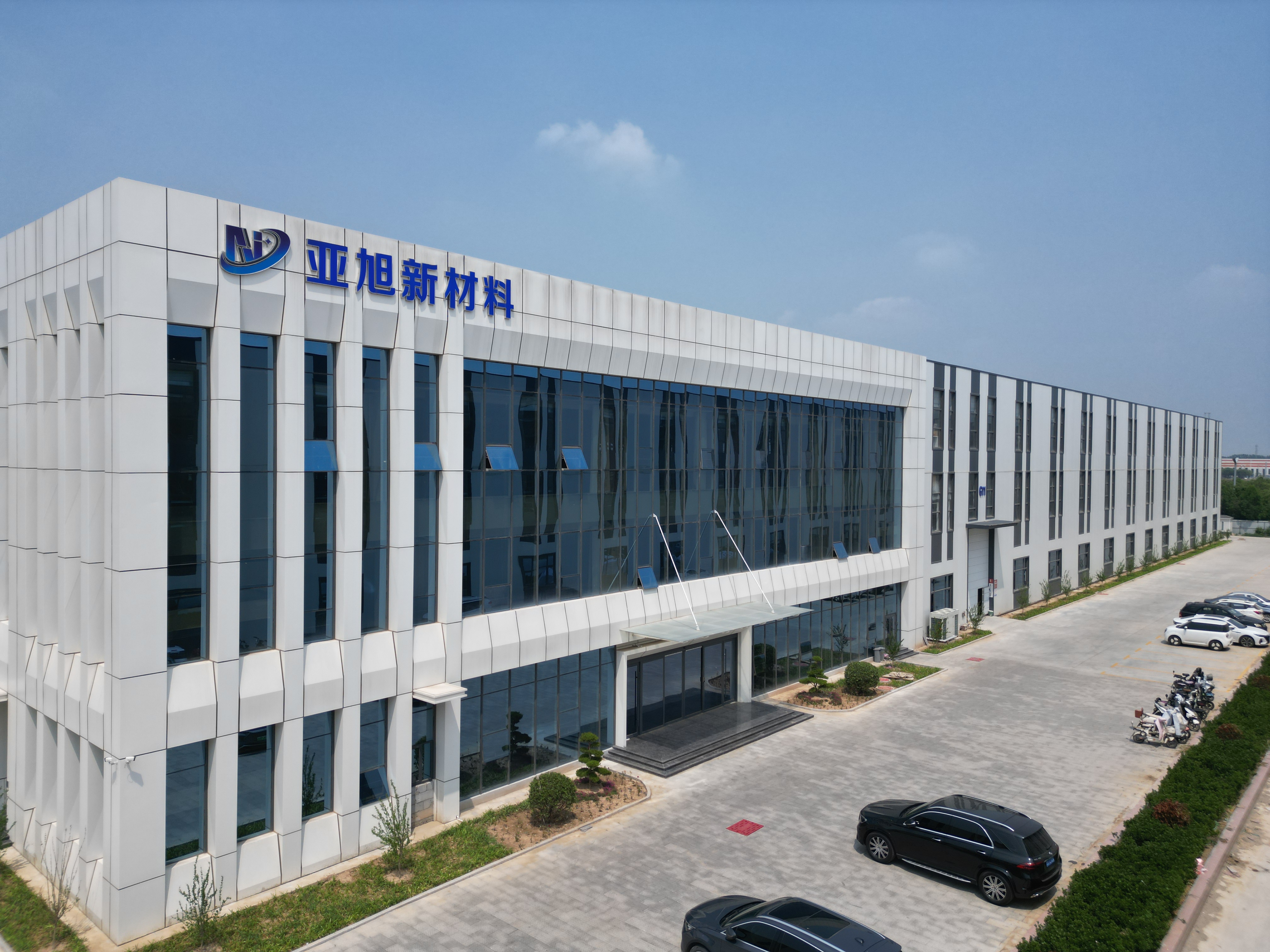
Acceptance inspection at the buyer's site should compare the received goods with the purchase order, the approved quotation and the pre-shipment records. The buyer should check quantity, dimensions, thickness, surface condition, fabrication features, labeling and packaging damage. Deviations should be recorded before the sheets are cut or installed, because later fabrication can obscure the origin of a nonconformance.
The acceptance plan should also define the remedy path. A dimensional deviation may be acceptable for one application and unacceptable for another. The buyer should therefore tie the acceptance criteria to the end use, not to a generic sheet description.
Comparison with Traditional Price-Only Purchasing
A documented qualification order is not automatically more expensive or more complex than a price-only order, but it changes what is visible before the purchase order is released.
| Decision area | Traditional price-only order | Documented qualification order |
|---|---|---|
| Specification | Material and grade may be implied | Material, grade, dimensions, thickness, tolerances and fabrication route are written |
| Order quantity | Quantity may be negotiated verbally | 50-unit MOQ and the unit definition are recorded |
| Delivery term | Term may appear without a named port or place | FOB, CIF or DDP is tied to a named port or place |
| Payment | 50/50 may lack a balance trigger | 50/50 split, currency, instrument and balance trigger are stated |
| Inspection | Reliance on supplier statement | Pre-shipment and receiving acceptance criteria are agreed |
| Technical fit | HDPE chosen by price | HDPE or UHMWPE chosen by wear, sliding and impact requirements |
The documented approach has limits. It cannot prove long-term service life, and it cannot replace application engineering. Commercial terms qualification also cannot create a certification that the supplier has not provided. A 50/50 payment structure does not remove performance risk, and DDP does not transfer technical responsibility to the seller. The buyer still needs to verify material grade, dimensions and fitness for the intended use.
Market Trend Analysis: More Quotations, More Need for Order Discipline
Verified market data explains why order discipline matters. Market.us reported the global HDPE market at USD 79.5 billion in 2024 and projected USD 123.5 billion by 2034. The same source put the Asia-Pacific HDPE market at USD 34.9 billion in 2024. OEC reported that China exported USD 10.8 billion of raw plastic sheeting in 2024, with Vietnam, India and the United States as primary partners. MarketsandMarkets valued the global UHMW PE market at USD 2.2 billion in 2024 and projected USD 3.4 billion by 2029, at a 9.5% CAGR.
These figures describe market scale, not the suitability of any individual supplier. Their procurement relevance is different: as supply and export flows expand, buyers see more quotations that look similar at headline price. The differentiator becomes documentation. A quotation that fixes the unit, the Incoterm place, the payment trigger and the inspection basis is easier to compare and easier to audit.
Growth in HDPE and UHMWPE demand also increases the importance of material selection. A buyer who treats all polyethylene sheets as one commodity may over-specify HDPE for a moderate application or under-specify it for a severe wear application. The order file should show why HDPE was selected, or why UHMWPE was selected instead.
Future Outlook
Procurement teams are likely to place more weight on written order files: quotation version, approved drawing, Incoterm place, payment trigger, inspection records and receiving report. This trend does not require new technology. It requires discipline in the RFQ and purchase order process.
For HDPE sheet buyers, the practical next step is to convert the verified commercial terms into a one-page qualification sheet attached to the RFQ. The sheet should state the 50-unit MOQ, the selected FOB, CIF or DDP term with a named port or place, the 50/50 payment structure with a balance trigger, and the pre-shipment acceptance method. That sheet can be compared across suppliers before a purchase order is issued.
Commercial terms alone do not qualify a supplier. They qualify the order. Technical suitability still depends on material grade, application conditions and inspection evidence.
FAQ
What should an HDPE sheet quotation include before a purchase order?
A quotation should specify the material, grade if known, dimensions, thickness, quantity, required tolerances, application and destination country. It should also clarify whether the buyer requires standard sheets, cut-to-size material or finished parts, along with packaging and delivery requirements. Shandong Yaxu New Materials Co., Ltd. supplies HDPE, UHMWPE and PP sheets and supports custom cutting and CNC machining for suitable components.
How should the 50-unit MOQ be handled in a trial order?
The verified minimum order quantity is 50 units. The quotation should define whether a unit means a sheet, panel or piece. If the buyer needs a smaller trial, the supplier must confirm a written exception; a buyer should not assume that a lower quantity is available under the standard terms.
What do FOB, CIF and DDP change in an HDPE sheet order?
They change cost allocation, risk allocation and the place where delivery obligations are assessed. FOB is tied to a named port of shipment. CIF adds seller-arranged freight and insurance to a named destination port, but the risk transfer point still needs review. DDP places more delivery responsibility on the seller at a named destination, including import clearance and duties. The quotation should name the port or place and the applicable Incoterms rule version.
What should a pre-shipment acceptance plan cover?
It should define the lot, sample size, material and grade, dimensions, thickness, surface condition, fabrication features, packaging, labeling, inspection records and nonconformance handling. If a specific test is required, the quotation should name the test method and acceptance limit. Without an agreed method, inspection is limited to visible and dimensional attributes.
Can commercial terms alone qualify an HDPE sheet supplier?
No. Commercial terms qualify the order mechanics, not the material performance. Technical suitability still depends on the material grade, application conditions and inspection evidence. For demanding abrasion or sliding-wear applications, UHMWPE may be more suitable than HDPE, and the difference should be confirmed with verified technical data rather than assumed from the product name.
This article is an independent procurement reference based on the verified commercial terms and available product information. It does not replace application engineering, legal review of contract terms, or inspection against agreed specifications.
Have Questions or Need More Details?
Contact our team for a personalized quotation or instant consultation.
Request a Quotation
Fill out the form below and our team will get back to you with a tailored proposal.
WhatsApp Direct Chat
Prefer to chat in real-time? Message us on WhatsApp for instant assistance & quick answers.
- Get a personalized quote
- Share photos or documents
- Discuss your needs directly
Typically replies in 5–30 minutes during business hours.