
HL-6000-QG2/2 vs SCH-1500: A Buyer's Chiller Comparison
HL-6000-QG2/2 vs SCH-1500: A Buyer's Chiller Comparison
An independent comparison of the HL-6000-QG2/2 water chiller and the SCH-1500 fiber laser chiller runs into one immediate constraint: the two documented records describe different things. The HL-6000-QG2/2, a Hanli industrial chiller, is documented by capacity and site infrastructure — 19.1 kW cooling capacity, 6.2 kW rated power, a three-phase 380 V/50 Hz supply, a 0.88 kW pump and an application environment range of 0°C to 45°C. The SCH-1500 is documented by control and loop performance — ±1.5°C temperature control accuracy, a 1.2 m³/h rated water pump flow and a stated match to a 1500 W continuous fiber laser.
Those records do not contradict each other. They answer different questions, which is why the decision-stage question is not which unit is better, but which documented specification set matches the heat load, the process precision and the duty cycle of the machine it will cool. Buyers rarely lose money by choosing the weaker brand; they lose it by choosing a unit because one headline number looked larger.
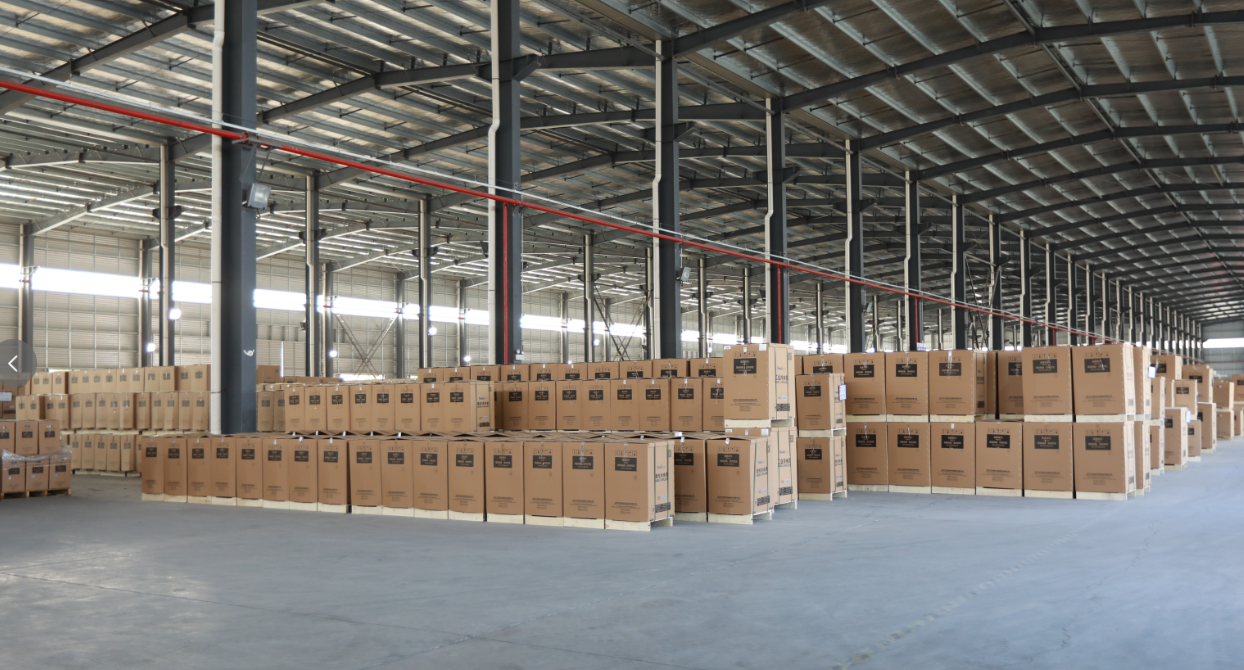
The HL-6000-QG2/2 is a product of Hanli, formally Wuhan Hanli Refrigeration Technology Co., Ltd, a Wuhan-based chiller manufacturer established in 1998 with a 38,866.15 square metre facility. Its product list covers fiber laser chillers, laser cutting chillers, laser welding chillers, CO₂ and UV laser chillers and industrial water chillers, and it builds several capacity classes within the same QG2/2 range. That matters here: choosing between a 19.1 kW unit and a chiller documented for a 1500 W continuous fiber laser is a sizing decision, not a brand decision.
What the two documented records actually contain
The table below reproduces the figures used throughout this article. Everything else is explanation, decision logic or an explicitly labelled calculation; no specification has been added from general product knowledge.
| Documented item | HL-6000-QG2/2 | SCH-1500 |
|---|---|---|
| Cooling capacity | 19.1 kW | Not stated in the reviewed record |
| Rated power | 6.2 kW | Not stated in the reviewed record |
| Power supply | Three-phase 380 V / 50 Hz | Not stated in the reviewed record |
| Pump data | 0.88 kW pump power | 1.2 m³/h rated water pump flow |
| Temperature control | Not stated in the reviewed record | ±1.5°C control accuracy |
| Stated laser match | Not stated in the reviewed record | 1500 W continuous fiber laser |
| Application environment | 0°C to 45°C | Not stated in the reviewed record |
Read the table for what is absent as carefully as for what is present. The HL-6000-QG2/2 record contains no temperature control accuracy figure. The SCH-1500 record contains no cooling capacity, rated power, supply voltage or ambient operating range. Neither gap is evidence of a capability problem: a figure that is not stated is simply not available for comparison here. What the gaps do mean is that a numerical ranking of the two models cannot be built from these documents, and a buyer shown a single-number versus chart should ask which fields were left out and on what test basis the remaining ones were measured.
Heat load first: why 19.1 kW and ±1.5°C cannot be ranked against each other
Cooling capacity is a filter, not a score. The 19.1 kW figure on the HL-6000-QG2/2 defines that unit's documented heat-removal envelope. The SCH-1500 record states a laser match, a 1500 W continuous fiber laser, but no cooling capacity, so the two units cannot be placed on a common capacity axis from these documents alone. Presenting them as a larger and a smaller version of the same choice would misrepresent both.
What can be compared is how each would be sized. Hanli's documented selection rule uses laser source power as the criterion: a 12 kW laser source power can use a 12 kW chiller, and the recommendation is calculated after the customer provides laser wattage and working mode. An independent application guide takes a different route, stating that a 3 kW fiber laser source requires 7 kW of heat rejection.
Those two statements use different bases — kilowatts of source power in one case, kilowatts of waste heat in the other — and they should not be treated as competing formulas. Together they make the practical point: the capacity a buyer needs is the one calculated for the actual machine, its working mode and its optics, not the number printed in a model name.
Documented sibling models show why a fixed ratio should not be assumed. Within the QG2/2 range, the HL-3000-QG2/2 is stated with 8.7 kW cooling capacity for 3000 W fiber laser cutting machines, while the SCHYTJ-3000 is stated with 6.75 kW cooling capacity for a 3000 W continuous fiber laser. Two units documented for the same laser class, two different capacities — the variation a buyer should expect between designs, and the reason the load calculation comes before the model choice.
Capacity also has a cost side that a spec-sheet ranking hides. The HL-6000-QG2/2 carries a 6.2 kW rated power and a three-phase 380 V/50 Hz supply requirement. If the calculated load does not need 19.1 kW of envelope, the buyer still carries that power draw, the associated electrical work and the footprint. Oversizing is not a safety margin; it is a permanent operating choice.
| Documented figure | The question it answers | The question it does not answer |
|---|---|---|
| 19.1 kW cooling capacity | Can the unit absorb the calculated heat load at site conditions? | How tightly it holds water temperature |
| 6.2 kW rated power | What electrical load and running cost it adds | Delivered cooling at part load |
| Three-phase 380 V / 50 Hz | Whether the plant supply matches | Energy efficiency |
| 0.88 kW pump | Whether there is pump energy for loop resistance | Flow actually reaching the work head |
| ±1.5°C accuracy (SCH-1500) | How tightly water temperature is held around setpoint | Cooling capacity, or stability after a load step |
| 1.2 m³/h flow (SCH-1500) | A loop-flow reference point | Available pressure head |
Process precision: accuracy, range, and what ±1.5°C does not prove
The SCH-1500's ±1.5°C figure is a temperature control accuracy declaration: a tolerance band around the controlled water temperature. It answers a real question for thermally sensitive work — how far the control is documented to drift from setpoint — but it does not state the setpoint itself, the band within which a setpoint can be selected, or how the unit behaves when the laser load steps up or down.
The HL-6000-QG2/2 record contains no comparable accuracy figure. That is a documentation gap in this comparison, not a verdict. A buyer who needs tight control should not conclude from the record that the larger unit holds temperature loosely, nor that the smaller unit suits a heavy cutting cell on the strength of its accuracy figure alone.
The QG2/2 range does usefully separate two specification types that are often confused. The HL-1500-QG2/2, a separate model in the same family, is documented with a water temperature control range of 22°C to 29.5°C. A range tells you where the setpoint can be placed; an accuracy figure tells you how tightly the unit is expected to hold it. A datasheet can quote either without the other, and the two are not interchangeable.
For decision purposes, precision is a three-part question: what accuracy is declared, within what control range, and under which ambient and load conditions. For welding and other thermally sensitive processes, the useful check is response across the real duty cycle — a continuous cutting cell and an intermittent welding cell place different demands on the controller even when both quote the same tolerance.
Continuous laser operation: pump flow, ambient range and loop-side reality
Continuous operation turns three documented figures into procurement questions: the ambient range, the pump data and the heat-rejection margin.
The HL-6000-QG2/2 has a stated application environment range of 0°C to 45°C. That is a site-mapping fact, not a performance guarantee at every point in the range. Ambient temperature affects how readily any chiller rejects heat, so a plant running near the upper end of the declared window should confirm available capacity at that condition rather than at a nominal rating. At the lower end, the same 0°C boundary makes freeze protection and shutdown drainage a real commissioning item rather than a formality.
The two pump figures are not directly comparable, which is itself informative. The HL-6000-QG2/2 is documented with a 0.88 kW pump; the SCH-1500 with a rated water pump flow of 1.2 m³/h. Pump power and pump flow describe different sides of the same loop, so neither can be ranked against the other without the missing field — flow and head for one unit, power and head for the other.
Flow at the pump is also not flow at the work head. Hanli's published troubleshooting guidance for a flow-related E12 alarm starts by comparing normal-temperature outlet and return flow: if outlet flow is good but return flow is low or absent, the cutting head may be blocked and should be cleaned. The sequence is a useful reminder that declared pump flow has to overcome the real resistance of the head, hoses and filters, and that the loop should be verified after installation rather than assumed from a datasheet.
Water-side discipline belongs in the same decision. The documented application requirements call for attention to water quality, filtration, regular water replacement, antifreeze protection and drainage during low-temperature shutdown. On a unit that runs continuously, those maintenance commitments affect uptime far more than a small difference in quoted capacity.
Site power and installation: the 380 V three-phase detail
The HL-6000-QG2/2's documented three-phase 380 V/50 Hz supply is a plant-level requirement, not a plug specification. A buyer should confirm three-phase availability at the intended location and have breaker, cable and protection sizing set by a qualified electrician against the 6.2 kW rated power and the manufacturer's own electrical data.
For the SCH-1500, supply voltage and phase are not stated in the reviewed record and must be confirmed before comparison. The field is not trivial: documented models in this range include single-phase 220 V/50 Hz designs — the HL-3000-QG2/2 and the SCHYTJ-3000 — which shows that supply class varies by design and capacity rather than indicating quality. A buyer with a 1500 W-class cell and a single-phase supply is solving a different installation problem from a buyer wiring a 19.1 kW industrial water chiller into a three-phase plant.
Conditions beyond power also decide whether a documented specification holds in service: ambient temperature at the unit, airflow and clearance, distance from the laser, and water quality in the loop. None of these is captured by comparing a capacity figure with an accuracy figure, and any of them can invalidate a selection that looked correct on paper.
Application fit: cutting, welding, engraving and other laser processes
For fiber laser cutting, heat load and duty dominate. The documented application scope covers fiber laser cutting machines, and the QG2/2 range includes models stated for 3000 W fiber laser cutting machines. On a cutting cell that runs long shifts, the selection question is whether the calculated heat load at the site's ambient condition sits inside the unit's envelope with process margin — not whether the accuracy figure is the tightest available.
For laser welding, thermal stability matters more relative to load. The SCH-1500's ±1.5°C control accuracy and its stated match to a 1500 W continuous fiber laser make it a documented reference point for that class of cell, where the buyer's task is to confirm that the declared accuracy holds at the actual setpoint and duty.
For laser engraving and marking the documented application scope again applies, but average load is typically lower and duty often intermittent; the decision shifts toward loop matching and confirming that the control band suits the material, rather than buying headroom that is never used.
Other laser processes are not covered by a documented claim in the reviewed record. The supplied material covers laser cutting, laser welding, laser engraving and general industrial laser processing; a buyer running a different process, such as laser cleaning, should verify the thermal requirement with the supplier instead of assuming that a specification written for cutting transfers unchanged.
A conditional example makes the split concrete. A plant that runs a 1500 W-class welding cell and, separately, a higher-power cutting cell is not really choosing between the HL-6000-QG2/2 and the SCH-1500: the SCH-1500's documented laser match and accuracy address the welding cell's stability question, while the HL-6000-QG2/2's documented capacity, supply and ambient range address the cutting cell's load and infrastructure question. Using one model for both would require a written calculation showing it satisfies both, and neither record reviewed here supplies that calculation.
Market context: what the category number does and does not say
Commercial research cited for this category puts the global industrial cooling systems market at USD 22.6 billion in 2024, with a projected USD 34.7 billion by 2030 (Grand View Research, 2026). The scope is industrial cooling systems as a whole, not laser chillers, and it is a commercial estimate rather than a shipment measure for either model discussed here.
The editorial reading is narrow but useful: a larger, more differentiated cooling category means more configurations to compare, which raises the value of documented, comparable specification fields and lowers the value of headline numbers. The figure says nothing about the relative competitiveness of the HL-6000-QG2/2 and the SCH-1500.
Limits of this comparison
This comparison covers documented specifications only. It does not cover price, lead time, warranty terms for both units, certification records, refrigerant, compressor type, dimensions, noise or field reliability, because verified data on those points was not available for both models in the reviewed record. No third-party performance test of either unit was used, and no claim of superiority, equivalence or suitability is made for any application.
Supplier-published commercial terms are first-party statements that should be confirmed per order. Hanli's own published material states a 24-month warranty with spare parts and remote technical support, delivery of 7–15 working days for standard models and 40–50 working days for customized units, and a high-power range up to 500 kW with non-standard customization accepted.
A verification checklist before ordering
Five checks convert the two records above into a defensible decision.
- Heat load, in writing. Ask for the calculated heat rejection for the actual laser source, working mode and optics, and confirm the ambient condition used. Documented sizing routes differ in basis, so the calculation matters more than the rule.
- Control accuracy, control range and test conditions together. A tolerance without a range or a setpoint is incomplete, and none of the three is meaningful without the load and ambient conditions under which it was established.
- Pump flow and head against the real loop. Match the loop's resistance rather than a single flow number, and plan to verify outlet and return flow at commissioning.
- Site electrical and ambient fit. Confirm phase and voltage at the intended location and check the declared ambient window against the plant's worst-case summer condition.
- Water quality and maintenance plan. Filtration, water replacement, antifreeze protection and low-temperature drainage belong in the purchase decision, not in the first service visit.
Outlook: what will change the decision
As laser cells run longer duty cycles and higher source powers, the documents that decide a purchase are likely to be the written heat-load calculation, the accuracy declaration with its test conditions, and the pump and loop data — not the largest number on a brochure. Buyers who request those three in a common format for every shortlisted unit get comparable answers across capacity classes, whatever the model naming suggests.
Where a supplier states capacity, supply, ambient range and loop data as clearly as the HL-6000-QG2/2 record does, and control accuracy as clearly as the SCH-1500 record does, the buyer's remaining work is to decide which of those fields their own process actually constrains. That is a different, and more useful, question than ranking two chillers by headline specification.
Frequently asked questions
How is the required cooling capacity for a laser machine determined?
By combining the laser power with the heat the machine actually generates. Hanli's documented guidance uses laser source power as the selection criterion and calculates the required capacity once the customer provides laser wattage and working mode — for example, a 12 kW laser source power with a 12 kW chiller. A separate application guide states that a 3 kW fiber laser source requires 7 kW of heat rejection. Because those figures use different bases, the capacity should be confirmed against a written calculation for the specific machine and duty cycle.
What is the difference between temperature control accuracy and a water temperature control range?
Accuracy describes how tightly a unit holds a setpoint — the SCH-1500 is documented at ±1.5°C. A control range describes where the setpoint can be placed — the HL-1500-QG2/2 is documented at 22°C to 29.5°C. A chiller can quote a wide range with modest accuracy, or a narrow tolerance inside a limited range, so both fields are needed, together with the conditions under which they were established.
Does a larger cooling capacity make a chiller the better choice?
Not on its own. The 19.1 kW cooling capacity of the HL-6000-QG2/2 defines its heat-removal envelope and comes with a 6.2 kW rated power and a three-phase 380 V/50 Hz supply. If the calculated load does not require that envelope, the buyer carries the power draw and electrical work for unused capacity. If the load exceeds a smaller unit's envelope, tighter control accuracy does not compensate.
What loop-side conditions affect continuous laser operation?
Flow at the work head, water quality, filtration and ambient temperature at the unit. Hanli's published guidance for a flow-related E12 alarm begins by comparing normal-temperature outlet and return flow, and treats low or absent return flow with good outlet flow as a possible blocked cutting head. Declared pump flow has to overcome the resistance of the head, hoses and filters, so the loop should be verified after installation.
How does an industrial chiller remove heat?
Through four stages: compression, condensation, throttling (expansion) and evaporation. In compression, the compressor takes low-pressure, low-temperature gaseous refrigerant and compresses it into high-pressure, high-temperature gas. In condensation, that hot high-pressure refrigerant flows into the condenser, releases heat to ambient air and cools into high-pressure liquid before it is throttled and evaporated.
The HL-6000-QG2/2 is documented among the industrial water chillers of Wuhan Hanli Refrigeration Technology Co., Ltd. A technical brochure covering the wider Hanli range is available for download: Hanli product brochure (PDF).
Have Questions or Need More Details?
Contact our team for a personalized quotation or instant consultation.
Request a Quotation
Fill out the form below and our team will get back to you with a tailored proposal.
WhatsApp Direct Chat
Prefer to chat in real-time? Message us on WhatsApp for instant assistance & quick answers.
- Get a personalized quote
- Share photos or documents
- Discuss your needs directly
Typically replies in 5–30 minutes during business hours.