
HOWO TX Dump Trucks vs Water Tanker: Buyer Acceptance Criteria
Fleet procurement for construction, mining and municipal contracts across Africa, South America and Southeast Asia increasingly happens at the configuration level rather than the unit level. A road-building package normally needs tippers for material haulage and a water tanker for dust suppression, curing and compaction support, which is why the SINOTRUK HOWO TX 6x4 dump truck, the HOWO TX 8x4 dump truck and the HOWO TX water tanker are frequently quoted together for the same project.
The scale behind those configurations is measurable. Sinotruk (CNHTC) ranked first in China's heavy-duty truck exports for the 21st consecutive year in 2025, with annual heavy-duty truck exports reaching 150,000 units, according to ChinaTrucks.org. In January 2026 the group exported 16,000 heavy-duty trucks in a single month, reported as a new industry record. HOWO-branded trucks have represented approximately 50% of China's total heavy truck exports as of late 2024, according to HOWO Truck Official. For a buyer at the evaluation stage, that installed volume matters for one practical reason: parts availability, technician familiarity and resale liquidity are functions of the fleet population, not of a specification sheet.
Why a specification comparison is not an acceptance decision
Lining up three HOWO TX configurations on paper is straightforward. The difficulty is that acceptance disputes rarely start with headline numbers. In cross-border truck transactions they usually start in one of three places:
- Configuration drift — the delivered unit differs from the quotation in cab type, body plate thickness, or tank volume inside a stated range.
- Documentation mismatch — the chassis code on the order does not match the inspection report, or the spare-parts list is incomplete.
- Inspection shortcuts — the lifting cycle or the water spray function is never tested before the unit leaves the yard.
All three are cheap to resolve before shipment and expensive to resolve after arrival. That is why this comparison is written around acceptance criteria rather than around peak specifications: the question is not which truck is largest, but which configuration matches a defined duty cycle and how a buyer confirms it has arrived as ordered.
The three HOWO TX reference configurations side by side
The three models below are the configurations referenced in the supplier's product data. They are not interchangeable, and they are not meant to be: one is a haulage unit, one is a high-volume haulage unit, and one is a service unit.
| Model designation | Configuration | Capacity | Cabin | Reference mechanical detail | Typical duty |
|---|---|---|---|---|---|
| ZZ3257V3847GB1 | SINOTRUK HOWO TX 6x4 dump truck | Cargo box 5400 x 2300 x 1500 mm; bottom plate 8 mm, side plate 6 mm; middle lifting system | TX-F cab with single bunk, air conditioning and safety belts; front and rear lamp covers | WD615.47 engine, 371 HP, Euro II; HW19710 transmission, 10 forward and 2 reverse; VGD95 front axle with drum brake; MCX16ZG rear axle, gear ratio 5.451; 300 L fuel tank with cap lock; 12.00R20 radial tires plus one spare; left-hand drive | Construction, mining, buildings |
| ZZ3317V386GB1 | SINOTRUK HOWO TX 8x4 dump truck | Cargo volume 25-30 CBM; rated load capacity 40 tons; carbon steel body | TX-F single sleeper cab with air conditioning and safety belts | Capacity and body material are the reference parameters published for this configuration | Mining, construction, building, road building |
| ZZ1257V464GB1 | SINOTRUK HOWO TX water tanker truck | 20,000 L to 25,000 L; water spray | TX-F cab with single bunk, air conditioning and safety belts | Q235 carbon steel tank | Construction, building, cement, road works, mining, concrete |
Reading each configuration against the job
HOWO TX 6x4 dump truck, model ZZ3257V3847GB1
This is a two-axle-drive tipper built around a 371 HP WD615.47 engine paired with an HW19710 transmission with 10 forward and 2 reverse gears. The cargo box measures 5400 x 2300 x 1500 mm, which is roughly 18.6 cubic metres of geometric body volume, and the plate specification is 8 mm at the bottom and 6 mm at the sides. For abrasive loads such as crushed stone, the plate specification is the number that determines body life; for lighter, bulkier loads the box dimensions matter more than the thickness. The middle lifting system is the standard discharge arrangement and should be cycle-tested at acceptance.
Two further details deserve attention during evaluation. The rear axle gear ratio is 5.451, and axle ratio is always a trade-off: a numerically higher ratio favours loaded starts and gradeability, while a lower ratio favours road speed. Buyers hauling on steep pit roads and buyers hauling long distances on sealed roads will not weight that trade-off the same way. The fuel tank is 300 L, with a locking cap; on remote sites that figure translates directly into how many working days a unit can run without refuelling support, so it should be checked against the actual round-trip distance rather than against the specification alone.
The cabin is the TX-F cab with a single bunk, air conditioning and safety belts, with front and rear lamp covers, left-hand drive, overall dimensions of 8400 x 2500 x 3400 mm, and a red or white finish. Buyers should confirm which finish was ordered, because paint colour is a common source of delivery disputes on mixed fleet orders.
HOWO TX 8x4 dump truck, model ZZ3317V386GB1
The 8x4 configuration is specified with a cargo volume of 25-30 CBM and a rated load capacity of 40 tons, on a carbon steel body, and it is intended for mining, construction, building and road building work. It is the appropriate choice where hauling volume is the constraint rather than access width.
The critical evaluation point for this model is the relationship between volume and weight. With a 25-30 CBM body and a 40-ton rated load, cargo density decides which limit the truck reaches first: dense materials such as certain ores and heavy aggregates can bring the unit to its rated load before the body is full, while lighter materials fill the body before the weight limit is approached. Buyers should calculate with the density of their actual material, not with a generic figure, and should also compare the rated load against the axle-load limits that apply on the routes the trucks will use.
HOWO TX water tanker truck, model ZZ1257V464GB1
The water tanker is specified with a capacity from 20,000 L to 25,000 L, a Q235 carbon steel tank, and a water spray system, inside the same TX-F cab family with a single bunk, air conditioning and safety belts. Its listed industry coverage is construction, building, cement, road works, mining and concrete, and it appears in applications described as mining excavation, urban infrastructure and municipal sanitation work.
Because the published capacity is a range rather than a fixed figure, the order document must state the exact tank volume, and acceptance must verify the actual volume delivered against that figure. The spray system is a functional item, not a cosmetic one: it should be operated at full flow during inspection to confirm that coverage and pump performance are consistent with the intended use, whether that is haul-road dust suppression, compaction support or municipal distribution. The tank material is specified as Q235 carbon steel, which is typical for construction and dust-control service water; buyers intending potable-water distribution should confirm the internal treatment and any related documentation with the supplier before ordering.
Model designation discipline before shipment
The three chassis codes in this comparison — ZZ3257V3847GB1, ZZ3317V386GB1 and ZZ1257V464GB1 — are the single most useful control point a buyer has. A practical rule for evaluation-stage buyers is that the model designation should be identical on the order confirmation, the proforma invoice, the pre-shipment inspection report and the vehicle identification plate. Where a fleet order mixes dump trucks and a tanker, each unit should carry its own confirmed specification line in the contract schedule rather than being covered by a general description of the order.
Matching truck to job: construction, mining, road building and municipal water supply
The application data attached to these configurations can be read as a rough selection framework. It is not a substitute for a route survey, but it narrows the shortlist before technical discussion begins.
| Job type | Closest fit | Reason | Verify before ordering |
|---|---|---|---|
| Building and general construction | 6x4 dump truck (ZZ3257V3847GB1) | Listed for construction, mining and buildings, with an 18.6 m3 class body and a 371 HP driveline | Site access width, turning radius against the 8400 x 2500 x 3400 mm envelope, and body plate specification for the material hauled |
| Mining and high-volume haulage | 8x4 dump truck (ZZ3317V386GB1) | 25-30 CBM body and 40-ton rated load, listed for mining and construction | Road class and axle-load regulation on the haul route; material density versus rated load |
| Road construction and rehabilitation | 8x4 dump truck (ZZ3317V386GB1), supported by the water tanker | The 8x4 configuration is stated as suitable for road construction projects; the tanker is listed for road works | Volume-to-weight balance of base course material; water demand per kilometre for dust control |
| Municipal water supply and sanitation | Water tanker (ZZ1257V464GB1) | 20,000-25,000 L capacity with water spray, listed for cement, road works and municipal sanitation type projects | Exact tank volume ordered, spray system function, tank material suitability for the water source |
Market trend: what export scale means at the point of purchase
Sinotruk (Hong Kong) Limited reported 2024 revenue of RMB 95.06 billion, an 11.2% increase year on year, with heavy-duty truck export volume growing 3.1% to 134,038 units in the same period, according to the company's 2024 annual report. Published export figures for the group vary slightly between sources depending on how affiliated exports are counted — the financial report states 134,038 units while some partner communications cite approximately 135,000 units for the same period — which is a useful reminder for buyers to check the definition behind any headline number they are shown.
Regional density reinforces the same point. In the Tanzanian new truck market, Chinese brand trucks led by Sinotruk and Jiefang accounted for approximately 70% market share in 2024, based on an SABSV truck market analysis. For a buyer in East Africa, that density is the practical argument for standardising on a widely supported platform: consumables, wear parts and workshop experience are easier to source where the installed population is large.
This is also where channel structure becomes a purchasing factor rather than a marketing one. When a buyer evaluates a SINOTRUK global distributor, a HOWO overseas distributor or a regional SINOTRUK truck global supplier, the same documentary test applied to the trucks should be applied to the seller: can the entity state its export licence status, its spare parts pathway, and the service arrangement that applies where the fleet will actually operate? A distributor relationship is only useful at the point where a truck is stopped and waiting for a part.
New HOWO TX units versus used, locally assembled and second-hand imports
The supplier's stated position is that the reliability of SINOTRUK HOWO new vehicles is higher than that of used trucks, low-cost locally assembled trucks and second-hand imported trucks. That claim should be read as a comparative positioning statement rather than a measured test result, and buyers should weigh it against the counter-arguments that apply in their own market.
The most important of those counter-arguments is cost. New units carry a higher acquisition price than used or locally assembled alternatives, and for a contractor with a short project horizon and limited capital, that difference is real rather than nominal. The trade-off is downtime risk, parts traceability and specification certainty — new units arrive with a known configuration and a documented inspection, which is precisely what used and re-imported units often lack. Whether that trade-off favours new units depends on how much a week of unplanned downtime costs the operation, not on the purchase price alone.
Two further boundaries should be stated plainly. First, the 6x4 reference configuration in this comparison is specified with a Euro II engine; emission levels accepted for first registration differ between markets and change over time, so buyers must confirm the locally accepted level before ordering rather than assuming that any configuration will be registrable. Second, certification scope is not universal: the international compliance guidance for HOWO tank trucks refers to ADR and UN safety standards for the transport of dangerous goods. A water tanker used for construction or municipal service is not a dangerous-goods tanker, so buyers should not assume that ADR documentation applies to it — and equally should not deploy a general water tanker for regulated dangerous-goods service without the appropriate certification.
Pre-acceptance checklist
Documents to verify
- Model designation identical on order confirmation, proforma invoice, inspection report and vehicle plate: ZZ3257V3847GB1, ZZ3317V386GB1, or ZZ1257V464GB1 as ordered.
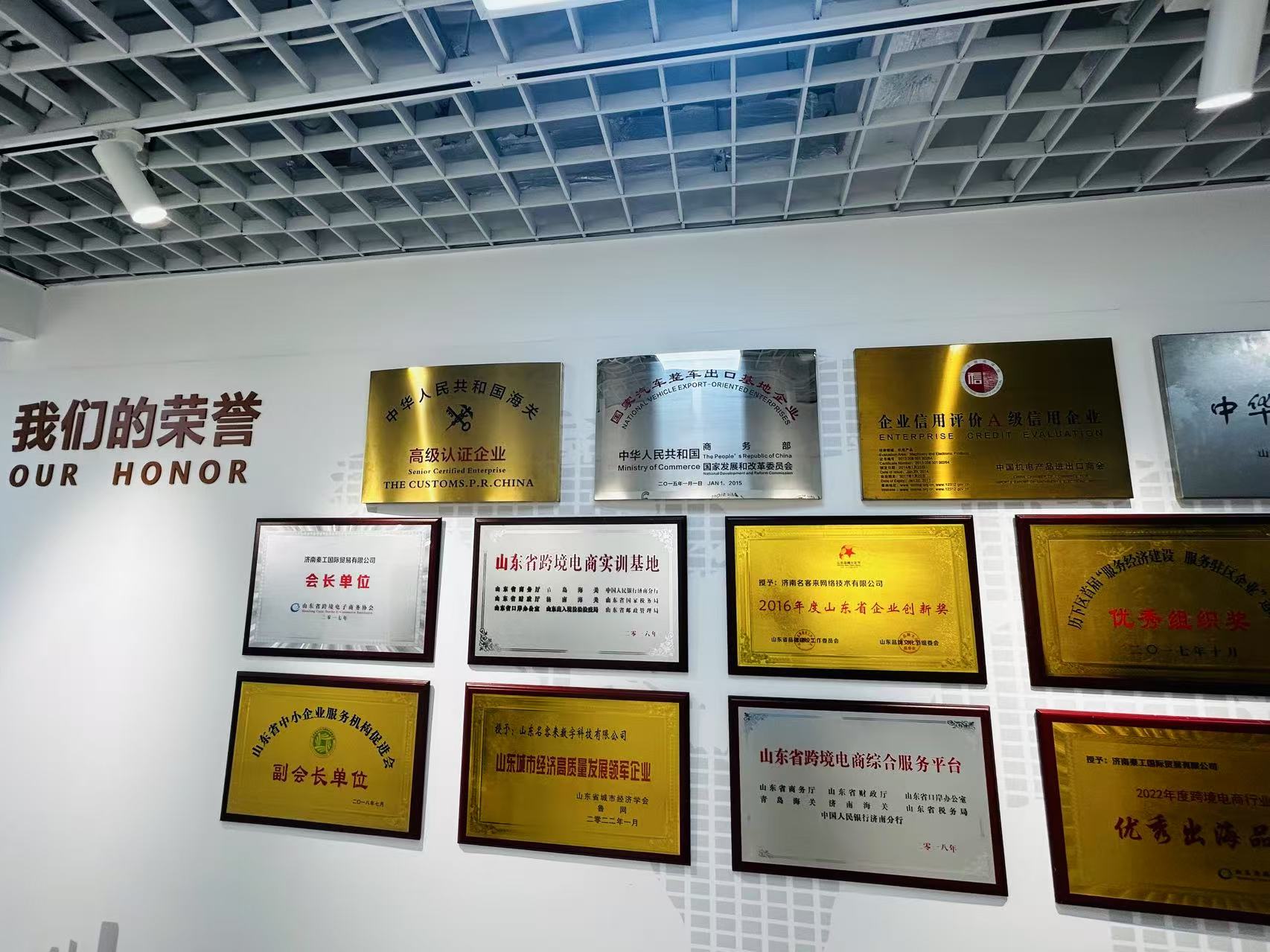
- Export certification held by the supplier: the National vehicles export-oriented enterprise certificate issued by the Ministry of Commerce of China, valid from 2015-01-01 to 2030-01-01 and covering Africa, South America and Asia.
- Pre-shipment inspection record. The supplier's standard quality control is 100% pre-shipment inspection, with optional third-party inspection by SGS or BV; where a third-party report is commissioned, it should be issued against the same chassis code as the order.
- Spare parts list and the written service arrangement covering the destination market.
- Where the order includes a water tanker, the exact tank volume stated in the contract, since the published capacity is a 20,000-25,000 L range.
- Where the order includes the 6x4 dump truck, the ordered paint finish (red or white) stated explicitly.
Hardware to verify on the 6x4 dump truck
- TX-F cab with single bunk; air conditioning and safety belts fitted and operational; front and rear lamp covers present.
- Engine identification matching the ordered specification: WD615.47, 371 HP, Euro II.
- Transmission HW19710 with 10 forward and 2 reverse gears.
- Front axle VGD95 with drum brake; rear axle MCX16ZG with 5.451 gear ratio.
- Fuel tank 300 L with cap lock fitted.
- Tires 12.00R20 radial, one spare included; specification consistent across the set.
- Cargo box 5400 x 2300 x 1500 mm with 8 mm bottom plate and 6 mm side plates; middle lifting system present.
- Overall dimensions 8400 x 2500 x 3400 mm confirmed before transport permits are arranged.
Function tests to run before release
- Engine start and idle; transmission shift through all forward and reverse positions.
- Lifting system full cycle, including lowering under load.
- Water spray system operated at full flow on the tanker configuration; tank fill and discharge checked.
- Lighting, including the front and rear lamp covers, plus cabin air conditioning performance.
Support, training and lifecycle considerations
Acceptance is the midpoint of ownership, not the end of it. The supplier provides spare parts supply, remote technical support and an overseas service network with local agents in key countries, and these arrangements should be mapped to the fleet's operating region before the order is confirmed.
A reference case from Rwanda illustrates the pattern. A project involving 70 units over a two-year duration, covering mining transportation and road construction material haulage, included driver and maintenance training; the supplier reports stable vehicle operation, a reduced fleet failure rate, and a subsequent repeat order together with a long-term procurement partnership. The transferable lesson for buyers is procedural: driver and maintenance training, scheduled as part of delivery, is frequently the difference between a fleet that performs as specified and one that does not.

Future outlook
Three signals shape the near-term outlook for buyers ordering this class of truck. Export momentum at Sinotruk remains high, with 150,000 heavy-duty trucks exported in 2025 and a single-month record of 16,000 units in January 2026; regional density is already substantial, as the approximately 70% Chinese brand share in Tanzania's 2024 new truck market shows; and the supplier-side trend is toward customisation, with engine power, drive system, cargo body structure, tank volume, logo branding and colour painting listed as configurable items, a production lead time of 30-45 days for customised orders, and immediate shipment for in-stock units against a minimum order quantity of one unit.
The practical consequence is that acceptance criteria will keep moving toward documentation and specification control. As more markets tighten registration and transport rules, the buyers who enter service on schedule will be those who confirmed the model designation, the emission level accepted locally, the exact tank or body specification, and the inspection route before the truck was loaded — not those who negotiated the lowest unit price.
FAQ
What is the practical difference between the HOWO TX 6x4 and 8x4 dump trucks?
The 6x4 dump truck (model ZZ3257V3847GB1) is specified with a 371 HP WD615.47 engine, an HW19710 transmission, a 300 L fuel tank, and a cargo box of 5400 x 2300 x 1500 mm with 8 mm bottom and 6 mm side plates and a middle lifting system. The 8x4 dump truck (model ZZ3317V386GB1) is specified with a cargo volume of 25-30 CBM and a rated load capacity of 40 tons on a carbon steel body. The 6x4 suits construction, mining and building work where access and body specification dominate; the 8x4 suits higher-volume mining and road building haulage, provided the haul route and axle-load rules allow it.
What water capacity does the HOWO TX water tanker offer, and what does the spray system cover?
The HOWO TX water tanker (model ZZ1257V464GB1) is specified with a capacity of 20,000 L to 25,000 L, a Q235 carbon steel tank and a water spray system, in a TX-F cab with a single bunk, air conditioning and safety belts. Its listed industries are construction, building, cement, road works, mining and concrete, and it is applied in mining excavation, urban infrastructure and municipal sanitation projects. Because the capacity is published as a range, the exact volume must be fixed in the order and verified at acceptance.
What should be verified before accepting delivery of a HOWO TX truck?
Verification covers documents, hardware and function. On documents: the model designation must match across order, invoice, inspection report and vehicle plate; export certification and the pre-shipment inspection record should be attached to the same chassis code, with optional third-party inspection by SGS or BV. On hardware: cab type and equipment, engine and transmission identification, axle specification, fuel tank, tire size and spare, and cargo box dimensions and plate thickness, or the exact tank volume on the water tanker. On function: engine start and transmission shifting, the hydraulic lifting cycle, the water spray system at full flow, lighting and cabin air conditioning.
Does a HOWO water tanker require ADR certification?
ADR and UN safety standards apply to tank trucks used for the transport of dangerous goods. A water tanker specified for construction, cement, road works, mining or municipal sanitation service is not a dangerous-goods tanker, so ADR certification should not be assumed to apply to it. The reverse caution also holds: a general water tanker should not be placed in regulated dangerous-goods service without the certification that service requires. Buyers working in regulated applications should confirm the applicable standard with the supplier and with their local authority before ordering.
How long does a customised order take, and what is the minimum order quantity?
Customised orders in this product family are quoted with a production lead time of 30 to 45 days, while in-stock units are available for immediate shipment. The minimum order quantity is one unit, although bulk orders are preferred. Customisation options include engine power, drive system, cargo body structure, tank volume, logo branding and colour painting, so the configuration must be fixed in writing before production starts. Monthly capacity is stated as 1,500 to 3,000 units, varying by model mix.
What certificate evidence should a buyer expect from a SINOTRUK exporter or distributor?
An exporter of this product category should be able to present the National vehicles export-oriented enterprise certificate issued by the Ministry of Commerce of China, valid from 2015-01-01 to 2030-01-01 and covering Africa, South America and Asia. Beyond the certificate, buyers should ask for the entity's export licence standard reference, its spare-parts supply pathway, and the service arrangement that applies in the destination country. QINGONG, formally JINAN QINGONG INTERNATIONAL TRADE CO.,LTD, holds this certificate and operates as an official exporter of SINOTRUK, with export markets listed as Africa, South America, Central America, Southeast Asia and the Middle East.
What after-sales support is available for HOWO TX fleets outside China?
The stated after-sales package comprises spare parts supply, remote technical support and an overseas service network supported by local agents in key countries. Quality control is 100% pre-shipment inspection, with optional third-party inspection by SGS or BV. In the Rwanda reference project, which covered 70 units over two years of mining transportation and road construction material haulage, complete driver and maintenance training was provided alongside service support, and the supplier reports stable vehicle operation, a reduced fleet failure rate, a repeat order and a long-term procurement partnership.
Further reference
The QINGONG 2026 product catalogue covers the SINOTRUK HOWO dump trucks, water tankers, fuel tankers, mining trucks, tractor trucks, semi trailers, concrete mixers and garbage trucks referenced in this comparison, and is available for download: Qingong Group Products Catalog 2026 (PDF). Company information is published at www.howoqg.com.