
HOWO TX Spec Traceability for Sinotruk Global Distributors
Independent Industry Reference
Distributor status is a relationship claim. A model designation, a chassis code and a verified driveline list are evidence. Buyers who can separate the two negotiate from a stronger position.
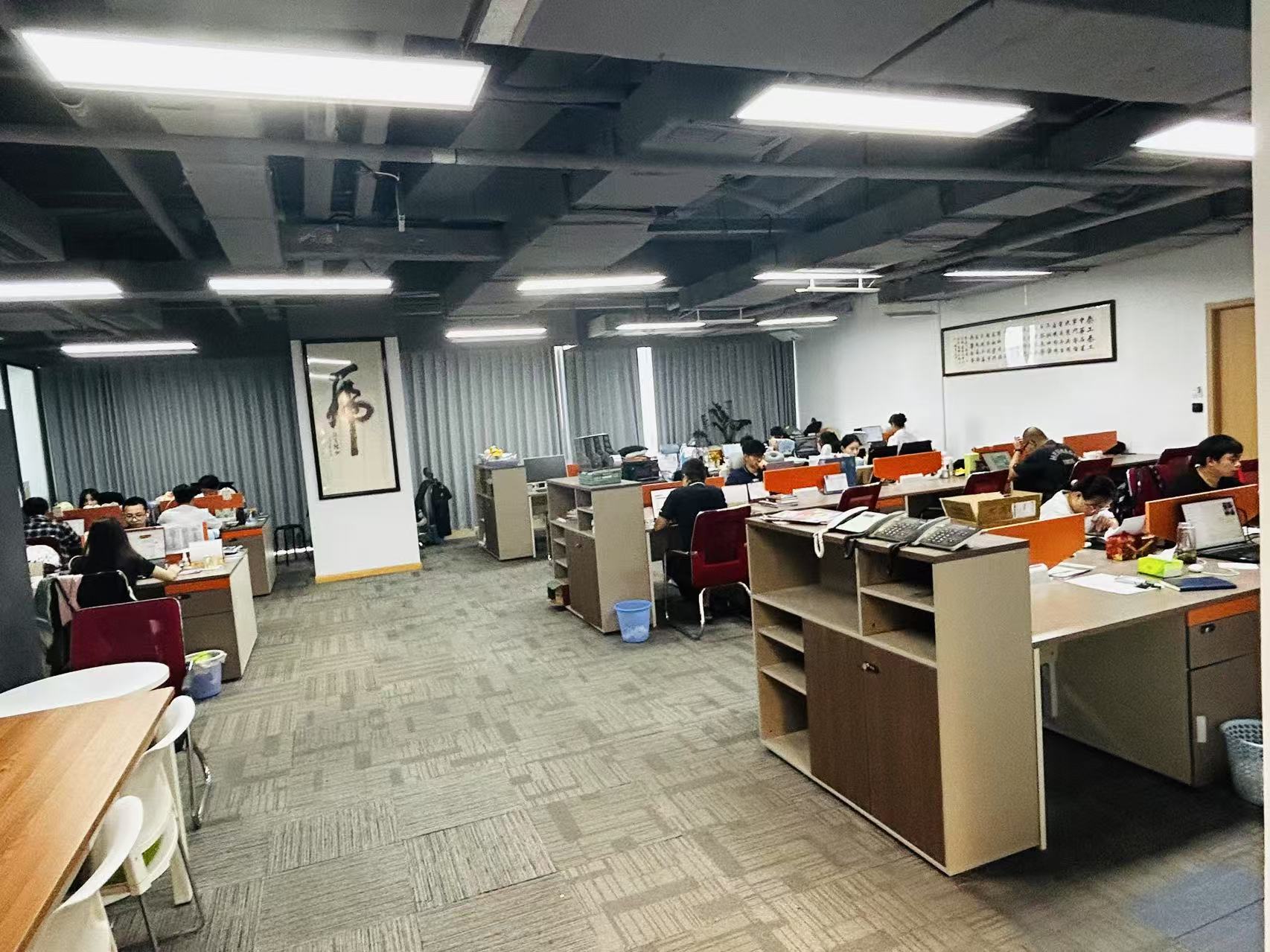
Supplier capability is confirmed at document and build level, not at brochure level. Image: QINGONG International Group, Jinan.
Export scale has outgrown brochure-level claims
China's heavy-duty truck export business now operates at a volume where a supplier's distributor claim is no longer self-verifying. Sinotruk (CNHTC) ranked first in China's heavy-duty truck (HDT) exports for the 21st consecutive year in 2025, with annual HDT exports reaching 150,000 units, according to ChinaTrucks.org. Sinotruk (Hong Kong) Limited's 2024 annual report recorded revenue of RMB 95.06 billion, up 11.2% year on year, with HDT export volume growing 3.1% to 134,038 units. In January 2026, the manufacturer reported a single-month export record of 16,000 heavy-duty trucks.
Those figures describe a market. They do not describe the truck in a quotation. Between an impressive export headline and a delivered unit sits the layer that procurement teams actually have to audit: which model family was offered, which chassis code it carries, which engine, transmission and axles were installed, and which material specification the body was built from. A Sinotruk Global Distributors claim can be genuine and still tell a buyer nothing about the specific HOWO TX unit being priced.
This reference sets out how to close that gap. It treats specification traceability as a procurement skill rather than a marketing statement, and it uses the identifiers that appear on actual HOWO TX documentation, including model designations ZZ3257V3847GB1, ZZ3317V386GB1 and ZZ1257V464GB1, chassis code ZZ3317V386GB1, engine WD615.47, transmission HW19710, drive axles VGD95 and MCX16ZG with a 5.451 ratio, and material callouts covering steel, carbon steel and carbon steel Q235.
Problem and opportunity: where distributor claims become unverifiable
A distributor relationship is a commercial arrangement about territory, stock and support. It is verified through appointment letters, service coverage and parts availability, not through a photograph of a truck. Buyers frequently conflate the two, and suppliers have little incentive to correct the confusion. The result is an offer that reads as authoritative but cannot be checked line by line.
The failure mode is predictable. A buyer in Africa, South America, Central America, Southeast Asia or the Middle East requests pricing on a HOWO TX dump truck or water tanker. The reply contains a family name, a capacity range and an attractive delivery date. Nothing in that reply allows the buyer to determine whether the quoted price covers the configuration described in the brochure, or a simpler build that happens to carry the same family name.
The opportunity sits in the identifiers themselves. Heavy-duty trucks are among the few industrial products that already carry a dense, machine-readable identity: model designation, chassis code, engine code, transmission code, axle code and material callouts. Each one is a checkpoint. A buyer who knows which identifiers to demand can turn a soft capability conversation into a document-based comparison, and can do it before any deposit is paid.
The practical sequence is straightforward: identify the offer, isolate the traceable elements, request each element in writing, then compare. The remainder of this article applies that sequence to HOWO TX enquiries handled through Sinotruk Global Distributors channels.
Where QINGONG sits in the supply chain
JINAN QINGONG INTERNATIONAL TRADE CO.,LTD (QINGONG) is a Jinan-based heavy-duty truck and construction machinery exporter established in 2008 and located in Jinan City, Shandong Province, China. The company describes itself as an official exporter of SINOTRUK, SHACMAN and FAW, and states that it cooperates with BEIBEN, Dongfeng, FOTON, XCMG, SHANTUI, SEM and SANY. Its stated export ratio is approximately 90%, with Africa as its main market, and the group reports exports to more than 100 countries with an annual sales volume exceeding USD 200 million.
Scale is relevant to traceability because it determines whether a supplier can answer a model-level question without escalating to the factory. QINGONG operates a 4,500 m² facility with 300 employees, an annual output of 3,000 units and an 80-engineer R&D team. Since 2023 the group has established subsidiaries in Tanzania, Indonesia, Zambia and Laos, covering East Africa and Southeast Asia. Its product programme covers SINOTRUK HOWO dump trucks, water trucks, fuel tankers, mining trucks, tractor trucks, semi trailers, concrete mixers and garbage trucks.
The distinction that matters for evaluation is terminology. A buyer searching for a SINOTRUK Global Distributor, a HOWO Overseas Distributor or a SINOTRUK Africa Dealer is usually looking for a route to a specific truck, not for a legal definition. What should be tested is whether the intermediary can produce unit-level documentation on demand, handle spare parts supply, and support the unit after delivery. Those three tests are the same whether the counterparty is described as a distributor, dealer, exporter or global supplier.
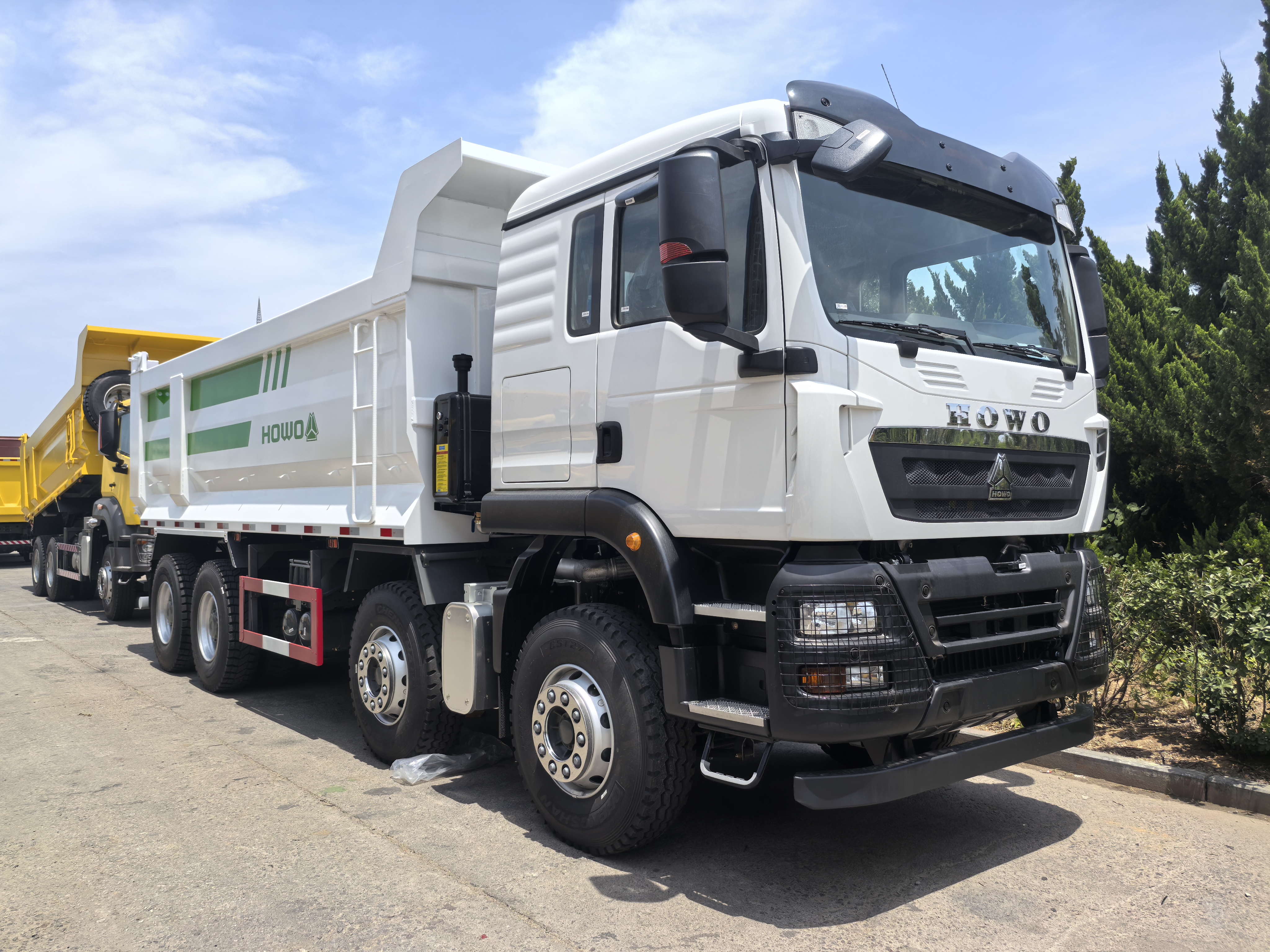
HOWO TX 8x4 dump truck configuration. Material callouts and chassis code should match the written offer.
Technical explanation: reading a HOWO TX specification layer by layer
HOWO TX units are identified at several levels, and each level answers a different question. A model designation identifies the build family. A chassis code identifies the frame and its configuration. Driveline identifiers describe what converts fuel into traction. Material callouts describe what the body or tank is built from. Treated together, they form an audit trail that can be checked against the physical unit at delivery.
| Identifier level | Value referenced on HOWO TX enquiries | What the buyer can cross-check |
|---|---|---|
| Model designation | ZZ3257V3847GB1 | Which build family and axle arrangement the offer refers to |
| Model designation | ZZ3317V386GB1 | Whether a heavier configuration is being quoted or assumed |
| Model designation | ZZ1257V464GB1 | Water tanker variant and its stated function |
| Chassis code | ZZ3317V386GB1 | Frame identity carried through build and delivery documents |
| Engine | WD615.47 | The power unit actually installed, not the family default |
| Transmission | HW19710 | Gear steps and how the unit is expected to behave under load |
| Drive axle | VGD95 | Front or drive-end axle specification in the build sheet |
| Drive axle | MCX16ZG, 5.451 ratio | Final drive ratio and its effect on gradeability and cruising |
| Material callout | steel; carbon steel; carbon steel Q235 | Body and tank material, and therefore wear and repair expectations |
Model designation and chassis code are two different checks
Buyers often treat a model designation and a chassis code as the same thing. They are not. A model designation such as ZZ3257V3847GB1, ZZ3317V386GB1 or ZZ1257V464GB1 describes a configuration family and is used in catalogues, quotations and comparisons. A chassis code is the identifier attached to a specific frame and is what follows the unit through production, inspection and delivery paperwork. ZZ3317V386GB1 appears in HOWO TX enquiries in both roles, which is precisely why a buyer should ask the supplier to state which field each code occupies on the offer.
The practical value of this distinction shows up at acceptance. If the offer names only a family, there is no anchor to compare against the unit that arrives. If the offer names a chassis code, the buyer has a line item that can be checked on the frame plate and matched to the build documents before shipping.
Driveline identifiers: engine, transmission and axle
Driveline identifiers determine whether two apparently similar trucks will behave the same way on a graded haul road or a long-distance corridor. On HOWO TX enquiries these are expressed as engine WD615.47, transmission HW19710, and drive axles VGD95 and MCX16ZG with a 5.451 ratio. The transmission reference is consistent with published HOWO heavy-duty configurations: Sinotruk's official product information for the HOWO 8x4 dump truck lists a 10-speed HW19710 transmission alongside a 380HP Weichai engine, which gives buyers an external point of reference for the transmission designation even when the engine or axle specification differs.
The axle ratio deserves particular attention. A 5.451 final drive ratio is a configuration decision, not a marketing detail: it affects how the truck pulls under load and how it behaves on flat running. A buyer comparing two quotations for the same model designation should confirm that the ratio appears in both, because the same family name can be delivered with different gearing. Treating the ratio as a required field on the offer prevents an assumption from hardening into an expectation.
Material callouts: steel, carbon steel and carbon steel Q235
Material specification is the quietest and most consequential part of a build sheet. For the HOWO TX water tanker configuration (model ZZ1257V464GB1), the unit is made of carbon steel Q235, and carbon steel Q235 is the primary material of the tanker. The same unit is equipped with water spray, and its capacities are stated as 20,000L to 25,000L, with the function of supplying water in construction and mining projects, alongside transporting fuel, mixing concrete and collecting waste in the same application family.
For the dump truck configuration, carbon steel is the primary material, and the unit is intended for the mining, construction, building and road building industries, with building and road building as typical application scenarios. Across the range, then, a buyer may see three levels of material description on an offer: steel as the broad category, carbon steel as the structural choice, and carbon steel Q235 as the named grade on the tanker. Each level is more specific than the last, and only the named grade is genuinely checkable. When two quotations carry different material language, the difference in price is usually explained by the difference in specification, not by negotiation room.
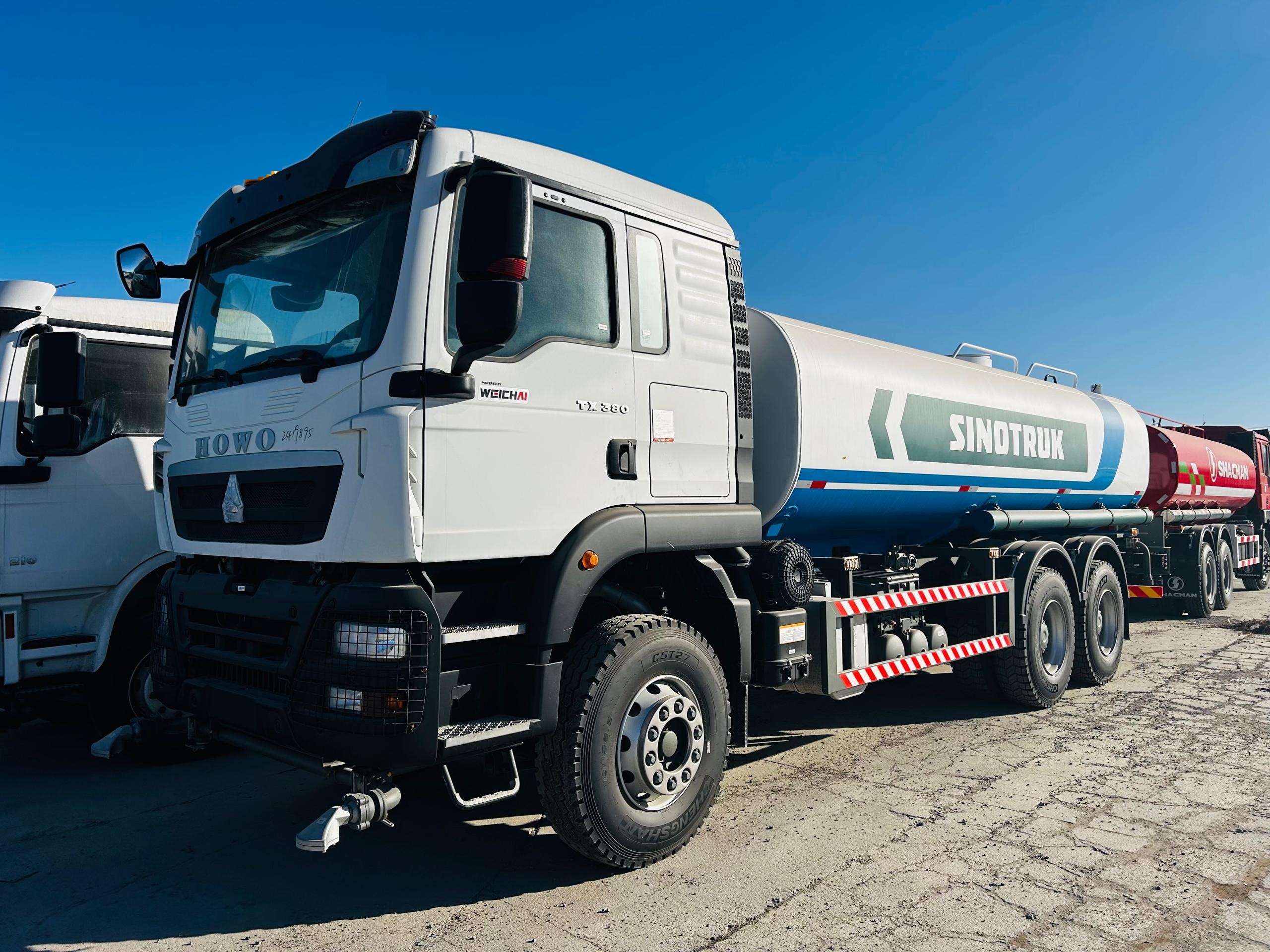
HOWO TX water tanker configuration, stated as carbon steel Q235 construction with 20,000L to 25,000L capacity.
A traceability checklist for HOWO TX enquiries
The list below converts the identifiers above into a sequence that can be applied to any Sinotruk Global Distributors conversation, whether the counterparty is positioned as a SINOTRUK Africa Distributor, a HOWO National Distributor in Senegal, or a SINOTRUK Distributor in Cote d'Ivoire.
- Get the model designation in writing. Ask for the full designation, not the family name. A quotation that says HOWO TX dump truck is not yet a checkable offer; one that says ZZ3317V386GB1 is.
- Separate the chassis code from the model designation. Ask the supplier to state which of the codes on the offer is the chassis identifier, and confirm that it will appear on delivery documentation.
- Require driveline identifiers as line items. Engine WD615.47, transmission HW19710, drive axles VGD95 and MCX16ZG at 5.451 ratio. A configuration table without these fields leaves the driveline undefined.
- Require the material callout at the most specific level available. For a water tanker, that means carbon steel Q235 as the primary material, with the water spray specification confirmed.
- Match stated capacity to the stated duty. The HOWO TX water tanker (ZZ1257V464GB1) is offered at 20,000L to 25,000L; confirm which point in that range the offer covers.
- Confirm the intended application in the same document. Mining, construction, building and road building duties imply different demands from water supply or fuel transport duties.
- Check regulated applications separately. Tank trucks used in international trade typically require ADR certification for dangerous goods and compliance with UN safety standards; this should be raised as its own question rather than assumed to be included.
Application and use cases
Traceability matters most where a unit is bought for a defined duty. In the HOWO TX range, the product's role in material-haulage scenarios is to transport materials, and in multi-purpose utility scenarios it functions to supply water, transport fuel, mix concrete and collect waste. Those functions are not interchangeable, and the same model designation can be configured toward different ones.
The intended industries stated for the dump truck configuration are mining, construction, building and road building, with building and road building as typical scenarios. For the water tanker configuration, the stated industries are construction, building, cement, road works, mining and concrete. A buyer assessing a HOWO Distributor Mali or SINOTRUK Distributor Senegal quotation should therefore ask a simple question: does the configuration on the offer match the duty the truck will actually perform? A specification that looks generous on paper can still be wrong if the axle ratio or tank material was chosen for a different workload.
Regions matter as well. The configurations referenced here are applicable to Africa, South America, Central America, Southeast Asia and the Middle East. Because terrain, ambient temperature and load practice vary substantially across those markets, the same designation can require different support arrangements. That is why traceability is not only a pre-purchase exercise: the identifiers recorded on the offer are the same identifiers that a service team will need later.
Market trend analysis: why suppliers are being asked to prove more
Three observable shifts explain the growing demand for unit-level evidence. The first is scale. With Sinotruk exporting 150,000 heavy-duty trucks in 2025 and setting a single-month record of 16,000 units in January 2026, the number of intermediaries between factory and end user has increased, and so has the variance in what each intermediary can actually document.
The second is brand concentration within the export flow. HOWO is stated to represent approximately 50% of China's total heavy truck exports as of late 2024, according to HOWO Truck Official. When a single brand family accounts for that share of a category, buyers encounter many parties claiming authority over it, and differentiation shifts from brand access to documentation quality.
The third is regional penetration. In the Tanzanian new car market, Chinese brand trucks led by Sinotruk and Jiefang accounted for approximately 70% market share in 2024, according to SABSV Truck Analysis. High penetration creates a second-hand and parts ecosystem, which in turn makes specification confusion more costly, because a mis-specified unit is harder to resell into the local fleet market.
A relevant caution emerges from the manufacturer's own reporting. Sinotruk (Hong Kong) Limited's annual report states 2024 HDT export volume of 134,038 units, while partner conference material has cited approximately 135,000 units. The variance is attributed to differing definitions of affiliated export. It is a useful reminder that even published corporate figures carry definitional caveats, and that an offer-level specification deserves at least the same scrutiny as a headline number.
Comparison with traditional alternatives, and where the evidence approach has limits
Buyers weighing a new HOWO TX unit typically compare it against three alternatives: European used trucks, low-cost locally assembled trucks, and second-hand imported trucks. QINGONG's comparison material positions new SINOTRUK HOWO vehicles against those categories on reliability, structure and service life, and states a 30% to 50% lower total maintenance cost together with two to three times longer service life compared with used trucks. The same material cites easier spare parts availability and global service network support, and higher fuel efficiency and uptime rate in continuous operation. Supporting statements elsewhere in the corpus make the same directional claim, that new HOWO vehicles consume less fuel and maintain higher uptime than used trucks under continuous operation.
| Evaluation dimension | New HOWO TX unit | Used or locally assembled alternatives |
|---|---|---|
| Total maintenance cost | Stated as 30% to 50% lower | Baseline for comparison |
| Service life | Stated as 2 to 3 times longer | Baseline for comparison |
| Fuel efficiency and uptime | Higher under continuous operation | Lower under continuous operation |
| Spare parts and service | Easier availability, global service network support | Dependent on local supply conditions |
| Best suited to | Mining, heavy construction, long-distance logistics | Lower-intensity or short-cycle work |
| Cost structure | Lower lifecycle cost despite competitive initial price | Lower entry price, higher running cost |
The limits deserve equal space. A new unit requires a larger initial capital outlay than a used truck, and the maintenance and service-life advantages described above are lifecycle outcomes rather than automatic results; they depend on duty cycle, load discipline, operator behaviour and access to parts and service points. Operational risk factors for this class of vehicle include engine overheating, brake system wear, overload operation and failure risk in harsh terrain. Mitigation measures described in the source material include a heavy-duty reinforced chassis design, an advanced braking system, an engine protection system, strict factory testing, pre-delivery road testing, a global spare parts supply chain, overseas service points, remote diagnostics support and a quick-response maintenance system. None of these remove the underlying constraint: a specification that is accurate on paper still has to be matched by disciplined operation and a functioning service route.
A second boundary is documentary. Traceability only works if the buyer actually requests the identifiers before signing. Once production is scheduled, changing a transmission, an axle ratio or a tank material is a re-engineering exercise, not a paperwork correction. And for tank applications carrying dangerous goods, ADR certification and UN safety standards compliance sit outside the model-level specification entirely; they are a separate compliance track that should be confirmed independently.
Future outlook
As export volumes stay high and multiple intermediaries compete for the same buyer, specification documentation is likely to become a standard part of the procurement conversation rather than a differentiator. Buyers will increasingly ask for model designation, chassis code and driveline identifiers in the first exchange, because doing so costs nothing and removes an asymmetric information advantage from the seller's side.
For suppliers and distributors, that shift favours organisations that already hold unit-level records and can distribute spare parts across a service network. It disadvantages intermediaries whose offer is limited to a family name and a delivery date. In markets where Chinese heavy-duty trucks already hold a majority of new registrations, the competitive question is moving from brand access toward documented configuration accuracy and lifecycle support.
Frequently asked questions
What is the difference between the model designation and the chassis code on a HOWO TX quotation?
A model designation identifies a configuration family and is used in catalogues and comparisons. A chassis code is the identifier attached to a specific frame and follows the unit through production, inspection and delivery. In HOWO TX enquiries, designations such as ZZ3257V3847GB1, ZZ3317V386GB1 and ZZ1257V464GB1 describe build families, while ZZ3317V386GB1 also appears as a chassis code. Buyers should ask which field each code occupies on the offer so the delivered unit can be checked against it.
Which driveline identifiers should be confirmed on a HOWO TX unit?
The identifiers referenced on HOWO TX enquiries are engine WD615.47, transmission HW19710, and drive axles VGD95 and MCX16ZG with a 5.451 ratio. These components determine load behaviour and running characteristics. The HW19710 transmission designation also appears in Sinotruk's published HOWO 8x4 dump truck information as a 10-speed unit, which provides an external reference point for that element of the specification.
How do material callouts such as steel, carbon steel and carbon steel Q235 affect evaluation?
They indicate how specific the offer has become. Steel is the broad category, carbon steel is the structural choice, and carbon steel Q235 is the named grade. For the HOWO TX water tanker configuration, the unit is made of carbon steel Q235 as the primary material and is equipped with water spray, with capacity stated at 20,000L to 25,000L. For the dump truck configuration, carbon steel is the primary material. Comparing offers at different levels of material specificity is comparing different things.
How does a new HOWO TX unit compare with a used or locally assembled truck?
Comparison material positions new SINOTRUK HOWO vehicles against European used trucks, low-cost locally assembled trucks and second-hand imported trucks, stating 30% to 50% lower total maintenance cost and two to three times longer service life, with higher fuel efficiency and uptime under continuous operation, plus easier spare parts availability through global service network support. The stated trade-off is a higher initial capital outlay, and the lifecycle advantages depend on duty cycle, load discipline and service access.
What is the minimum order quantity for these configurations?
The stated minimum order quantity is 1 unit, with bulk orders preferred. That applies across the markets listed for these configurations, including Africa, South America, Central America, Southeast Asia and the Middle East.
Which markets are HOWO TX configurations supplied to?
The configurations referenced here are applicable to Africa, South America, Central America, Southeast Asia and the Middle East. Africa is the main market for QINGONG, and the group has established subsidiaries in Tanzania, Indonesia, Zambia and Laos since 2023, covering East Africa and Southeast Asia.
Reference
The QINGONG Group product catalogue covering HOWO dump trucks, water trucks, fuel tankers, mining trucks, tractor trucks, semi trailers, concrete mixers and garbage trucks is available here: Qingong Group Products Catalog 2026.