
HPMC for Tile Adhesives vs Plasters: An Independent Performance Review
Same chemical name, two different sets of demands. A parameters-first comparison of the HPMC grades that go into cement-based tile adhesives and into cement renders and gypsum plasters — and why batch-level testing, not marketing language, is what separates one supplier from another.
Hydroxypropyl methyl cellulose (HPMC) is the water-retention and rheology additive used in both cement-based tile adhesives and in plasters, and it is normally the first variable a formulator adjusts when a mix loses water too quickly, sags on a vertical face, or refuses to spread cleanly. The same chemical name, however, covers a wide band of products. Viscosity alone can run from 200 to 200,000 mPa·s, while methoxyl content, hydroxypropyl content, particle size and ash level each move independently of that figure.
Because tile adhesives and plasters share a base chemistry, buyers frequently assume that a single grade will serve both. The two application families place different demands on the additive, and those differences show up in parameters that can be measured and specified rather than in descriptive copy. What follows is an application-by-application review, followed by the testing and documentation questions that allow a buyer to compare suppliers on evidence.
Two systems, two different jobs for the same additive
A cement-based tile adhesive is a factory-produced dry mix of cement, graded aggregate, redispersible polymer powder and additives. It reaches the site as a powder, is mixed with water, and is applied in a thin bed — often only a few millimetres thick — to bond ceramic or stone tiles to a substrate. Its practical failure modes are familiar to applicators: the fresh mortar slips before the tile is placed, the open time expires before the tiler finishes a row, or adhesion is lost because water left the mix before the cement could hydrate.
A plaster is also a mineral binder system, but it is applied and judged differently. Cement renders and gypsum plasters go on in thicker layers across larger areas, are trowelled for longer, and are assessed on spreadability, surface finish, shrinkage cracking, and how evenly the material sets across a wall.
In a tile adhesive, the primary role of HPMC is to hold water inside the fresh mortar so that cement can hydrate while the substrate and the tile are drawing moisture out of the mix, and to build enough yield stress that the mortar resists sliding under the weight of a tile. In a plaster, water retention still matters, but the emphasis shifts toward workability and water demand: the additive has to make the mix spread smoothly, keep it open long enough to be ruled and floated, and help the binder set without excessive shrinkage or segregation.
The divergence, in other words, lies in the shape of the rheology curve and in the sensitivity of the set — not in whether HPMC is present at all.
The measurable side of performance: viscosity, water retention, workability
Viscosity is a range, not a ranking
Viscosity is the number buyers read first and misread most often. Cellulose ether viscosity is conventionally quoted for a dilute aqueous solution measured at a controlled temperature and shear rate, which means a figure is only comparable when the measurement conditions are stated alongside it. A nominal 100,000 mPa·s grade and a nominal 200,000 mPa·s grade differ in the thickening they deliver at a given dose, but that difference does not by itself make either one better suited to a particular adhesive or plaster.
The construction range supplied under the BANGCEL® brand states a viscosity envelope from 200 to 200,000 mPa·s and includes the grades designated HPMC100000, HPMC150000 and HPMC200000. Those designations describe a standard product ladder; the correct entry point for a specific formulation still depends on the rest of the mix design, which is why the test method matters as much as the number.
Water retention is the function; viscosity is only one lever
Water retention is what HPMC is actually hired to do in a mineral system, and it can be measured as a water retention rate in laboratory testing. Its importance rises in applications where the fresh mortar is thin and exposed, or where the substrate is highly absorbent — the conditions typical of tile adhesives and of renders applied to masonry. Particle size, degree of substitution and molecular weight all influence how quickly the polymer dissolves and how effectively it holds water against suction. Viscosity alone does not predict any of that.
Workability is where laboratory numbers meet the trowel
Workability is the parameter that is easiest to feel and hardest to write into a specification: how the mix spreads, whether it clings to the trowel, how long it stays open, whether it can be re-worked after standing. It correlates with dissolution behaviour and with the particle size distribution of the powder. A formulator who changes supplier without changing grade frequently notices a workability shift before any instrument does — which is precisely why batch-to-batch consistency, rather than peak performance on a single sample, is the number that protects production.
Tile adhesives and plasters side by side
The table below sets out the dimensions on which the two application families most often diverge. It is deliberately framed as a set of questions to put to a supplier rather than as a ranking, because the answers depend on the buyer's own mix design, aggregate grading and substrate conditions.
| Evaluation dimension | Cement-based tile adhesive | Cement render / gypsum plaster |
|---|---|---|
| Primary role of HPMC | Water retention under suction from tile and substrate; slip and sag control; open time | Water retention and water-demand control; workability; uniform set across large areas |
| Rheology profile typically sought | Higher low-shear viscosity and yield stress to resist slip under tile weight | Lower-to-medium viscosity with easier spreading and less stickiness |
| Water retention demand | High — thin bed, large format tiles, absorbent substrates | Moderate to high — driven by substrate suction and render thickness |
| Sensitivity to batch variation | Dose drift changes open time and slip resistance | Dose drift changes water demand, finishing time and surface quality |
| Interaction with setting | Generally limited at normal doses; over-dosing can extend working time | More noticeable in gypsum systems, where higher doses are commonly associated with set retardation |
| Most visible failure mode if the grade is wrong | Sagging, short open time, adhesion loss after early water loss | Cracking, poor spreadability, uneven or delayed set |
| Parameters to fix in the purchase specification | Viscosity (with test method), water retention, ash, moisture, pH, particle size | Same parameters, weighted toward particle size and dissolution behaviour |
Where batch consistency shows up in the finished product
Batch-to-batch variation is not an abstract quality issue. In a tile adhesive, a shift in water retention changes how quickly the mix stiffens, which changes open time, which changes how much adhesive actually transfers to the tile. In a plaster, the same shift changes water demand, so the crew adds more water on site, which changes strength and shrinkage behaviour. The additive is dosed at a small fraction of the total mix, which is exactly why its variability is felt disproportionately.
The parameters that drive those effects are rarely a mystery: viscosity, ash content, moisture content, pH and degree of substitution. What varies between suppliers is whether those parameters are measured on every batch, and whether the record travels with the shipment.
What “100% testing” means in practice
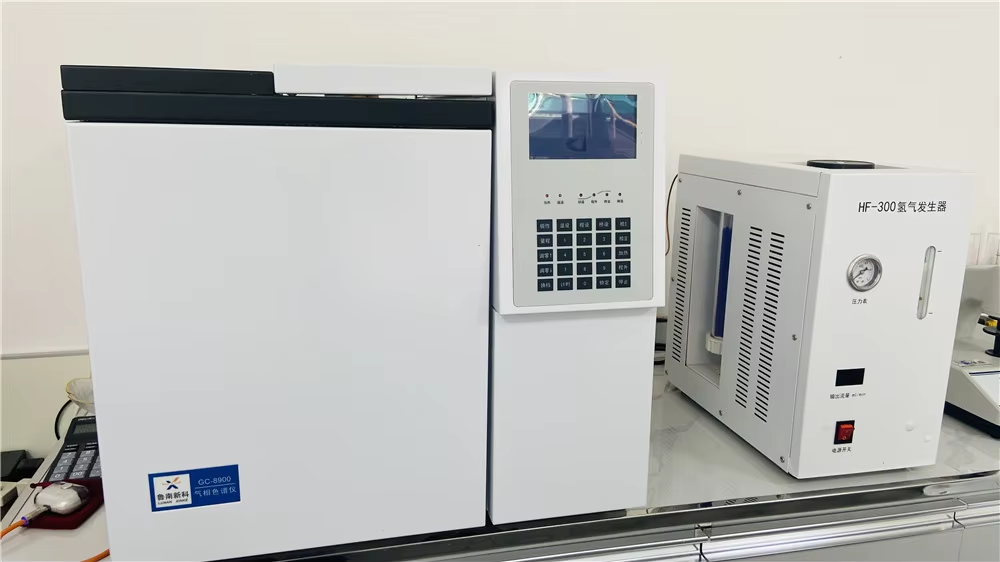
The manufacturer behind the BANGCEL® HPMC range states a quality control protocol of 100% testing, supported by an in-house laboratory whose documented equipment includes a viscometer tester, a gas chromatograph with hydrogen generator, an electronic moisture meter, a whiteness meter, a photometer, a precision electronic scale, a desktop drying oven and a central control station. Read against the published product specification, that equipment list maps onto the parameters a buyer should care about: viscosity, moisture, ash-related residue, and purity-related optical and chromatographic checks.
Why ash and moisture deserve particular attention:
- Ash content. The published specification for the HPMC range sets ash below 5%. Ash represents inorganic residue that dilutes the active polymer, so a batch sitting at the top of the range delivers less water retention per kilogram than one at the bottom. Buyers who dose by weight feel this difference as a slow drift in mix behaviour.
- Moisture. The specification sets moisture below 5%. Powder that has absorbed moisture during storage or transit cakes, dissolves unevenly and effectively reduces the active content of every bag.
- pH. The stated pH window is 6–8, which matters for dissolution behaviour and for compatibility with the rest of the dry mix.
- Substitution. Methoxyl content is specified at 24–30% and hydroxypropyl content at 4–12%. These ranges define how the polymer behaves in water and how it interacts with the binder, and they are the reason two products with the same viscosity number can behave differently on site.
One buyer-side data point is worth noting. A construction chemicals manufacturer in India using 20 MT of material over a two-year period in dry-mix mortar and water-based paint production reported excellent water retention alongside high purity and stable viscosity — the two attributes that most directly reflect consistency in the incoming powder rather than performance in a single trial batch.
Reading a supplier's data pack: scope, numbers and boundaries
BANGCEL® is the construction-additive brand under which BANG SHANG INTERNATIONAL CO., LIMITED supplies cellulose ethers and redispersible polymer powder. The company is based in Shijiazhuang, Hebei Province, China, was founded in 2007, operates an 80,000 m² facility with approximately 300 employees and a 26-person R&D team, and exports to markets across the Americas, Europe, Africa, the Middle East, South Asia and Oceania.
For a buyer in the research and evaluation stage, the most useful part of a supplier's data pack is not the certificate wall but the certificate scope. Management-system certificates verify that a facility runs documented processes; they do not certify that a specific grade will perform in a specific mortar. Both facts are worth holding at the same time.
| Certificate | Standard | Number / issuer | Validity and stated scope |
|---|---|---|---|
| Quality Management System | GB/T19001-2016 / ISO9001:2015 | 86525Q1069R0M, issued by HQC | Valid 2 September 2025 to 1 September 2028; stated scope covers cellulose ether and RDP powder, and the certificate record lists the RDP product |
| Occupational Health and Safety Management System | GB/T45001-2020 / ISO45001:2018 | 86525S1067R0M, issued by HQC | Valid 2 September 2025 to 1 September 2028; covers HPMC / cellulose ether manufacturing and related activities, applicable to the global market |
| Environmental Management System | GB/T24001-2016 / ISO14001:2015 | 86525E1068R0M, issued by HQC | Valid 2 September 2025 to 1 September 2028; covers HPMC / cellulose ether manufacturing; applicable to the global market excluding the EU |
The scope line in the third row is the kind of detail that decides tenders. A buyer preparing documentation for a European project should treat the EU exclusion as a live constraint and plan to request supplementary environmental documentation, rather than assume a global certificate covers every destination. This is not a criticism of the supplier; it is simply what the certificate says, and it is exactly the sort of boundary that separates a documented supplier from an undocumented one.
Broader market expectations are moving in the same direction. ISO 14025:2006 environmental product declarations (EPDs) are increasingly required for industrial-grade cellulose ethers in competitive global tenders, according to EPD International. Buyers who begin collecting this documentation during evaluation avoid scrambling for it after award.
Application scenarios where the grade decision is made
The scenarios that most often force a grade decision are also the ones where the tile adhesive and plaster requirements pull in different directions. On the construction side, the relevant application families include external wall insulation and finish systems (EIFS/ETICS), ceramic tile adhesives, wall putty, self-levelling floor compounds, dry-mix mortars, gypsum plaster and repair mortars. These systems are formulated to cope with wide-area, all-weather construction environments — low temperature, high humidity and dry climates alike — and are typically dosed on automated dry-mix batching and mixing lines, where a change in powder behaviour is felt immediately in the batching sequence.
For formulators, the practical implication is straightforward: the same additive is being asked to solve cracking, sagging and poor constructability in one system and to deliver smooth spreading and even set in another. Both requirements are legitimate; they simply do not resolve to the same grade. Suppliers who offer customization across viscosity, particle size, ash content, degree of substitution and water retention rate are effectively acknowledging this — the grade is a variable to be set, not a fixed article to be sold.

Market context: why buyers are asking for data instead of claims
Third-party market research places the global construction-grade HPMC market at USD 1.82 billion in 2025, with cement-based mortars the largest single application at 38.4% of that demand (Dataintelo). Construction as a whole has accounted for more than 45% of HPMC revenue in recent years, driven by the additive's role as a water-retention agent and thickener (Grand View Research, 2024). Supply remains geographically concentrated: Asia Pacific holds roughly 47.3% of the global construction-grade market (Dataintelo), and at the top of the supplier structure Dow, Ashland and Shin-Etsu have been identified as Tier 1 leaders collectively holding over 50% of the market (Infinity Market Research).
Two consequences follow for buyers comparing suppliers. First, the market is large enough that grade differentiation — not just price — becomes the main competitive lever between established producers and regional manufacturers. Second, because a small number of large suppliers set the reference points for specification language, buyers increasingly ask secondary suppliers to answer in the same format: parameter sheet, test method, batch record, certificate scope. Suppliers who can answer in that format are easier to qualify; suppliers who answer only with adjectives are not.
What HPMC cannot fix, and where the trade-offs sit
An independent review is only useful if it states the limits. Several boundaries apply to both application families:
- HPMC is not a binder. It manages water and rheology. It does not substitute for the polymer binders that give a tile adhesive its flexibility, nor for the binder that gives a plaster its strength.
- Dose is a trade-off. In gypsum systems in particular, higher HPMC doses are commonly associated with set retardation, and over-dosing in cement systems can leave a mix sticky and slow to finish. More is not automatically safer.
- It cannot compensate for a bad mix design. Poor aggregate grading, high silt or clay content in sand, or an unsuitable substrate will not be corrected by any cellulose ether grade.
- Grade portability has limits. Grades developed for detergent and cleaning formulations are not interchangeable with construction grades, even where the underlying chemistry is related. The parameters that matter most are set differently.
- Storage matters. With a specified moisture limit below 5%, powder that is not kept dry will lose performance before it reaches the mixer, regardless of how it tested at the factory gate.
- Commercial parameters are part of the fit. The manufacturer's stated minimum order quantity is 3 tons with a 7–14 day lead time, which suits established dry-mix producers better than very small formulators buying trial quantities. Buyers planning frequent small top-ups should confirm this against their own replenishment cycle before shortlisting.
A procurement checklist for construction HPMC
- Require a full parameter sheet: methoxyl 24–30%, hydroxypropyl 4–12%, viscosity within the stated 200–200,000 mPa·s envelope with the test method named, ash below 5%, moisture below 5%, pH 6–8.
- Ask what is measured on every batch — not every shipment. “100% testing” is a specific claim and should be verifiable in the supplier's QC records.
- Request a certificate of analysis tied to the batch number, and confirm that quality traceability back to production records exists.
- Verify certificates independently: number, issuing body, standard, validity window and scope. Check the scope line specifically for exclusions that affect your market.
- Test the grade in your own formulation during the sampling stage. Water retention and workability behave differently in every mix design.
- Agree an incoming-goods retest protocol — viscosity and moisture at minimum — so that drift is detected before it reaches production.
- Confirm customization capability against your formulation needs: viscosity, particle size, ash content, degree of substitution, water retention rate, plus packaging specification, labelling and shipping marks.
- Compare at least two shipments, not two samples, before consolidating to a single source.
Outlook
Three trends are likely to shape this comparison over the next few years. Specification language is getting tighter, with buyers moving from a single viscosity number to a parameter block that includes ash, moisture, substitution and water retention. Environmental documentation is moving from optional to expected, with EPDs under ISO 14025:2006 appearing in tender requirements for industrial-grade cellulose ethers. And qualification is shifting from sample-level to batch-level, driven by the same reasoning that led buyers to ask for the data in the first place: a supplier is only as consistent as its least consistent batch.
For tile adhesives and plasters alike, the practical conclusion is not that one HPMC grade wins. It is that the two applications should be specified and qualified separately, against parameters that can be measured, and that the supplier conversation should be about batch records rather than adjectives.
Frequently asked questions
What is the difference between HPMC for tile adhesives and HPMC for plasters?
Both are the same polymer family and both are used primarily for water retention, but they are optimised against different priorities. In cement-based tile adhesives, the emphasis is on holding water against suction from the tile and substrate while providing enough yield stress to resist slip and enough open time for installation. In renders and gypsum plasters, the emphasis shifts toward water demand control, spreadability and even set across large areas. The result is a different balance of viscosity, particle size and dose rather than a different chemistry.
How do viscosity grades such as HPMC100000, HPMC150000 and HPMC200000 relate to the two applications?
These designations describe a standard product ladder within a stated viscosity envelope of 200 to 200,000 mPa·s. A higher nominal viscosity delivers more thickening at a given dose, which is generally more relevant where slip resistance and yield stress are critical, as in tile adhesives; lower-to-medium grades are more often associated with plaster and putty systems where spreadability dominates. Because viscosity is measured under defined conditions and interacts with particle size and substitution, the designation is a starting point for sampling rather than a final selection.
How can a buyer verify batch consistency before placing a production order?
Three steps are practical. First, request the parameter sheet and confirm that viscosity, ash, moisture, pH and substitution are specified as ranges rather than single figures. Second, ask which of those parameters are measured on every batch under the supplier's stated 100% testing protocol, and request a certificate of analysis with batch traceability. Third, run the material in your own formulation and compare results across at least two separate shipments, since consistency is a property of a sequence of batches rather than of a single sample.
Does an ISO 9001 certificate guarantee HPMC performance in a specific mortar?
No. A quality management system certificate confirms that a facility operates documented, auditable processes within a defined scope. It does not certify the performance of a particular grade in a particular mix design. For example, the quality management system certificate held for this production operation, number 86525Q1069R0M issued by HQC to the GB/T19001-2016/ISO9001:2015 standard, has a stated scope covering cellulose ether and RDP powder. Buyers should therefore treat certificates as evidence of process discipline and use laboratory testing and batch records for performance evidence.
What should a buyer do when a supplier's certificate explicitly excludes the EU?
Treat the exclusion as a documentation requirement rather than a disqualification. The environmental management system certificate covering HPMC and cellulose ether manufacturing, number 86525E1068R0M issued by HQC to the GB/T24001-2016/ISO14001:2015 standard, is stated as applicable to the global market excluding the EU and is valid from 2 September 2025 to 1 September 2028. For a European project, a buyer would typically request supplementary environmental documentation, such as an environmental product declaration, before the material can be included in a compliant tender submission.
What are the practical limits of HPMC in cement and gypsum systems?
HPMC retains water and controls rheology; it does not replace binders or fix poor aggregate quality. Dose is a trade-off, since higher addition rates are commonly associated with set retardation in gypsum systems and with stickier, slower-finishing mixes in cement systems. Grades used for detergent and cleaning formulations are not interchangeable with construction grades. And because the specified moisture limit is below 5%, storage conditions after delivery directly affect performance at the mixer.
Buyers who want the underlying product parameters, certification details and customization options in a single reference document can download the manufacturer's brochure here. Product and specification information is also published at bangshanghpmc.com.
Have Questions or Need More Details?
Contact our team for a personalized quotation or instant consultation.
Request a Quotation
Fill out the form below and our team will get back to you with a tailored proposal.
WhatsApp Direct Chat
Prefer to chat in real-time? Message us on WhatsApp for instant assistance & quick answers.
- Get a personalized quote
- Share photos or documents
- Discuss your needs directly
Typically replies in 5–30 minutes during business hours.