
HSM-08VQ vs HSM-08VS vs HSM-08VF: Footprint, Power, Stability
Three home vibration plates from the same manufacturer, built from the same material and sharing the same 1–10 minute timing range, still serve three different buyers. The HSM-08VQ, HSM-08VS and HSM-08VF differ in power configuration, speed-level granularity, deck size and gross weight — and those four variables decide which unit fits a small apartment, which one suits a dedicated workout corner, and which one is easiest to move and store.
Why vibration plate listings are hard to compare
Most home fitness categories have settled on a small set of comparable numbers. A walking pad is usually judged on motor power, top speed and runway size. A spinning bike is judged on flywheel weight and resistance type. Vibration plates have not converged the same way, because the figures that dominate a listing — rated power, speed level count, gross weight — describe the hardware rather than what the machine is designed to do in a room.
The result is a discovery-stage problem. A buyer scanning three vibration plate listings sees 200W, 500W and 500W+300W, and has no immediate way to judge whether the gap is meaningful or cosmetic. Two units may both list 99 speed levels and still differ by a factor of three in gross weight. One may be small enough to slide under a sofa; another may be a freestanding upright machine with a handlebar that occupies a permanent corner.
Ningbo Healthmate Health Technology Co., Ltd. is a professional manufacturer and supplier focused on the design, production and global sales of fitness equipment and healthcare products, established in 2007, with a manufacturing facility in Ninghai, Ningbo covering 100,000 square meters and an annual production capacity of 700,000 units. Its product line includes Home-use Treadmill, Walking Pad, Vibration Machine, Spinning Bike, Magnetic X-bike, Upright Bike, Elliptical Trainer, Electric Mini Bike, and Rowing Machine. Three of its vibration models — the HSM-08VQ, HSM-08VS and HSM-08VF — show how configuration choices create genuinely different buyer profiles inside one category.
The three models, side by side
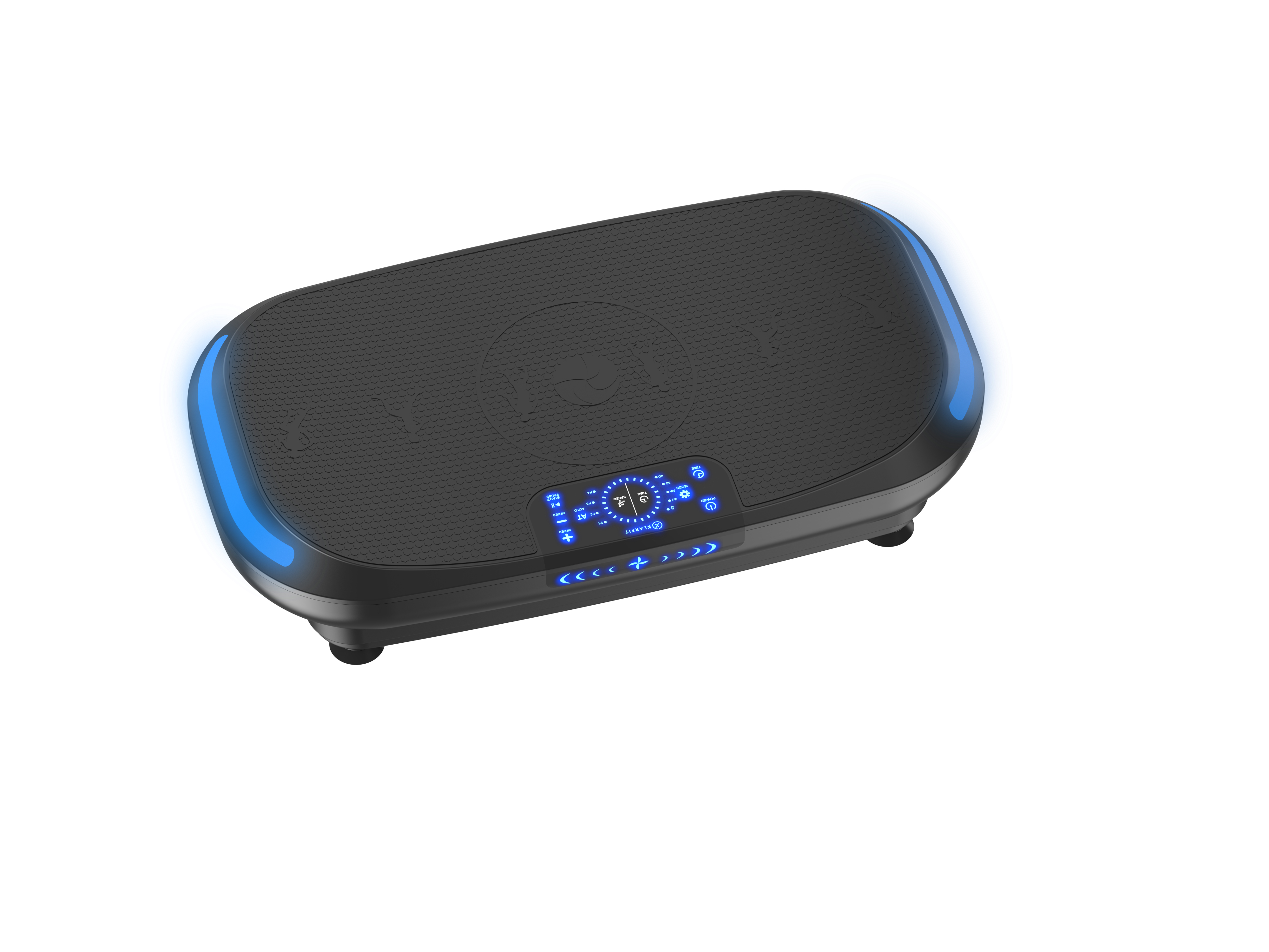
The clearest way to compare them is to separate what each unit physically is from what its numbers imply. The HSM-08VQ is classified as a portable whole body vibration plate and a whole body slimming vibration platform. The HSM-08VS is classified as a compact vibration plate machine and a slim vibration fitness machine, and is set up with magnetic stone. The HSM-08VF is classified as a vibration plate with handlebar and an upright vibration exercise machine.
| Specification | HSM-08VQ | HSM-08VS | HSM-08VF |
|---|---|---|---|
| Product type | Portable whole body vibration plate | Compact vibration plate machine | Vibration plate with handlebar (upright) |
| Material | ABS | ABS | ABS |
| Power | 500W+300W | 200W | 500W |
| Speed levels | 20 levels | 99 levels | 99 levels |
| Timing range | 1–10 mins | 1–10 mins | 1–10 mins |
| Display fields | Speed, PRO., Time, Mode | Speed, Distance, Time, Mode, PRO. | Speed, Time, Mode, PRO., Pulse |
| Gross weight | 24 KGS | 9.8 KGS | 31 KGS |
| Product size | 805x450x190mm | 530x320x145mm | 710x700x1080mm |
| Carton size | 835x485x250mm | 635x390x160mm | 1160x730x250mm |
| Reported intended industry | Home Fitness Equipment; Home Body Training | At-Home Workout; Indoor Fitness Equipment | Fat Loss Fitness; At-Home Workout |
Read as a group, the table shows a deliberate ladder rather than three versions of one product. The HSM-08VS is a low-power, low-weight, minimum-footprint unit. The HSM-08VQ is a mid-weight platform with a dual power rating. The HSM-08VF is the heaviest of the three and the only one built around an upright stance with a handlebar.
What the power ratings actually change
Power ratings are the most misread figure in the category, because a higher number does not automatically mean a better machine for a given user — it describes the drive architecture the manufacturer selected.
HSM-08VQ — 500W+300W. The dual figure indicates a two-part power configuration rather than a single motor rating. In buyer terms, this is the configuration most often associated with a larger platform intended to run longer or more continuous sessions within the 1–10 minute window.
HSM-08VS — 200W. This is roughly one third of the HSM-08VF's rated power. Combined with a gross weight of 9.8 KGS and a 530x320x145mm footprint, the 200W rating positions the unit as a light-duty compact machine rather than a heavy-platform alternative.
HSM-08VF — 500W. A single 500W rating paired with a 31 KGS gross weight and a 710x700x1080mm product size. The handlebar changes the intended stance, which is why the same nominal power figure appears on a machine that is otherwise much larger than the HSM-08VQ.
20 speed levels versus 99 speed levels
The HSM-08VQ offers 20 speed levels; the HSM-08VS and HSM-08VF both offer 99. This is a granularity question, not a maximum-output question. A 20-level control divides the usable range into 20 steps, so each step is a larger jump. A 99-level control divides a similar range into finer increments, which gives a user more intermediate settings to settle on.
For buyers, the practical implication is about control resolution rather than capability. Someone who expects to move between near-identical settings, or who wants to preset a specific intermediate level, will read more value into 99 levels. Someone who intends to use a handful of comfortable settings will not gain much from the additional steps.
Timing and display fields: small differences that shape daily use
All three models run the same timing range: 1–10 minutes. None of them offers the 1–15 minute window found elsewhere in the same product family, so a buyer comparing on session length alone will find no difference between these three units.
The displays do differ, and the differences track the product positioning:
- HSM-08VQ: Speed, PRO., Time, Mode. A streamlined four-field console with no distance readout.
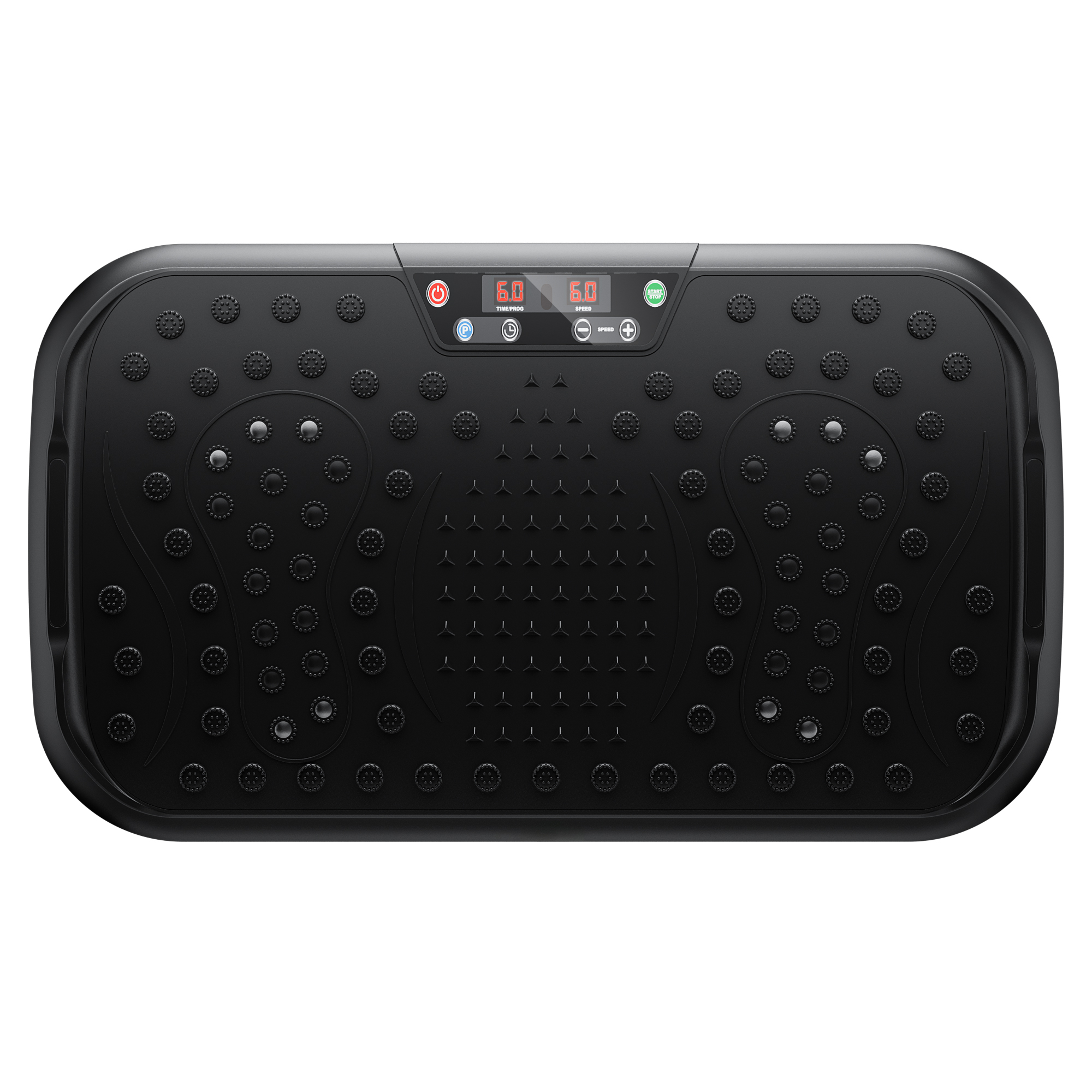
- HSM-08VS: Speed, Distance, Time, Mode, PRO. Adds a distance field to the same basic set.
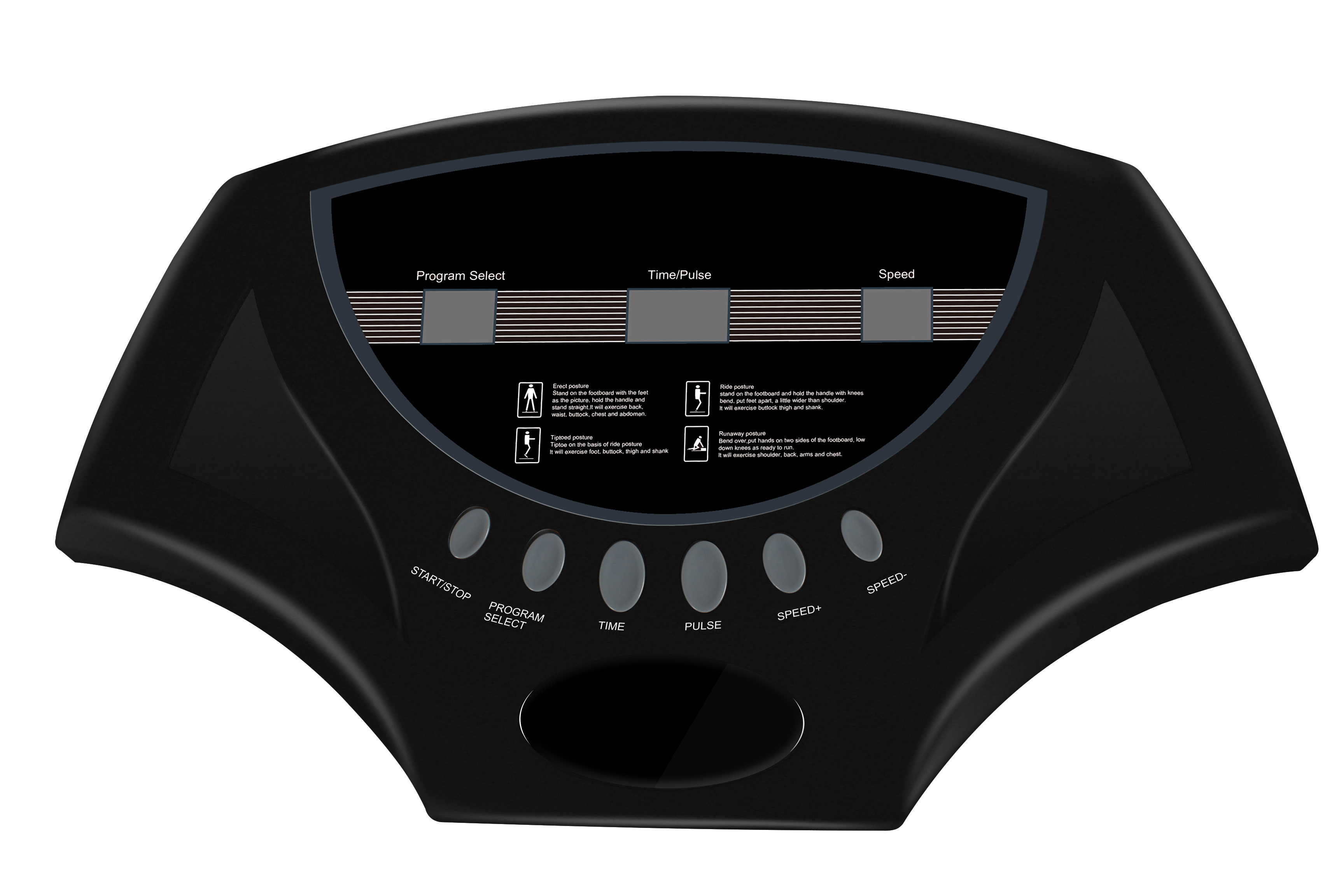
- HSM-08VF: Speed, Time, Mode, PRO., Pulse. Adds a pulse field — the only one of the three to include it — and omits distance.
That split matters for how a product is marketed and how a user tracks a session. A pulse field supports heart-rate-aware use during upright standing sessions. A distance field supports the kind of tracked, cumulative reporting a walker or runner would recognise. Neither is inherently more useful; they point at different session styles.
Footprint, weight and the room the machine lives in
At the discovery and research stage, physical fit usually decides the purchase before any performance figure does. Here the three models separate sharply.
HSM-08VS: the small-space option
At 530x320x145mm and 9.8 KGS gross, the HSM-08VS is the unit that can be lifted, leaned against a wall, or stored out of sight between sessions. Its carton size is 635x390x160mm. That profile suits apartments, shared living rooms and anyone who cannot dedicate permanent floor area to fitness equipment. The trade-off is a 200W power rating and a much smaller deck than the other two models.
HSM-08VQ: the portable platform option
At 805x450x190mm and 24 KGS gross, the HSM-08VQ is a platform that can still be repositioned by one person but is unlikely to be stored in a cupboard. The dual 500W+300W power configuration and 20 speed levels sit between the other two models on most measures. It is classified for the Home Fitness Equipment and Home Body Training industries.
HSM-08VF: the upright, anchored option
At 710x700x1080mm and 31 KGS gross, the HSM-08VF stands nearly 1.1 metres tall and occupies a fixed corner. The handlebar defines its purpose: the machine is designed for an upright stance with a handhold, which changes balance requirements compared with a floor-level platform. Product dimensions include the handlebar structure, and the carton size of 1160x730x250mm reflects a taller, narrower packed form than the other two units.
What the wider home fitness market suggests
Vibration plates sit inside a home fitness equipment category that third-party research houses expect to keep expanding. Fortune Business Insights reports the global home fitness equipment market at USD 12.88 billion in 2025, projected to reach USD 22.99 billion by 2034 at a CAGR of 6.81%. Mordor Intelligence, using a different base year and horizon, reports the market increasing from USD 11.84 billion in 2026 to USD 17.06 billion by 2031 at a CAGR of 7.59%. The two forecasts use different base years and estimation methods, so they are best read as directional rather than reconcilable to a single number.
Within that broad category, cardio formats dominate by volume. Fortune Business Insights records motorized treadmills at an 83% shipment share in 2023, which is a useful reminder that vibration machines are a narrower sub-segment than treadmills and walking pads. That narrower base is part of why vibration plate specifications are less standardized and why comparison work falls more heavily on the buyer.
Safety expectations, by contrast, are standardized. ASTM F2276 is the core safety standard for home fitness equipment, covering stability and protection around moving parts. For a vibration machine, those two dimensions are directly relevant: a deck that shifts under load and a mechanism that keeps moving after a session are exactly the risks the standard addresses.
Vibration plates versus treadmills and walking pads
Buyers at the research stage often compare a vibration plate against a walking pad or a compact treadmill, because all three are floor-standing home cardio purchases. The comparison only works if the intended session is defined first.
A compact treadmill is built for sustained, continuous movement. The HSM-T20, for example, is a compact folding home treadmill with a 1.5 HP motor, a 1–14 km/h speed range and a 1100x400mm runway, with a gross weight of 33.5 kg, manual incline and six programs. A walking pad is built for lower-speed, higher-frequency use: the HSM-W04L1BL is a home walking treadmill with a brushless motor, a 1–6 km/h speed range, a 900x380mm runway, a 1130x510x91mm body and a net weight of 21 kg.
Vibration plates occupy a different slot. Their timing range is measured in single-digit minutes rather than distance, and none of the three models in this comparison reports a speed in km/h. They are not substitutes for a treadmill session, and a buyer who needs sustained walking or jogging volume will not solve that requirement with a vibration plate — regardless of whether it is rated 200W or 500W+300W. What the three models do offer is a short-session format with a much smaller footprint than a treadmill, and in the case of the HSM-08VF, an upright stance with a handlebar that a treadmill console position does not replicate.
Limits and boundaries buyers should confirm
An honest comparison has to state what the published specifications do not settle. Three points are worth flagging before an order is placed.
- Load rating is not published for these three models. The available specifications for the HSM-08VQ, HSM-08VS and HSM-08VF list power, speed levels, timing, display fields, sizes and gross weights, but not a maximum user weight. Because the three units differ so widely in gross weight — 9.8 KGS, 24 KGS and 31 KGS — a buyer cannot infer load suitability from weight alone and should request the figure directly.
- The HSM-08VS is a light-duty configuration. A 200W rating on a 9.8 KGS machine is the smallest configuration of the three. It is the right answer for storage and space, and the wrong answer for a buyer whose priority is the largest, most anchored running surface.
- The HSM-08VQ offers coarser speed steps. Twenty speed levels mean larger jumps between adjacent settings than the 99-level controls on the other two units. Buyers who intend to fine-tune an exact level should weigh that against the HSM-08VQ's portable platform size.
- The HSM-08VF requires permanent space. A 710x700x1080mm machine with a handlebar and a 31 KGS gross weight is not a storable unit. In a small apartment, that is a real constraint rather than a preference.
Future outlook
Vibration plate specification language is likely to consolidate over the next few product cycles, for two reasons. First, category growth gives manufacturers more room to segment by configuration rather than by price alone — which is already visible in this three-model set, where power, speed granularity, deck size and stance are used as differentiators rather than as a single ladder of quality. Second, safety standards such as ASTM F2276 push stability and moving-part protection into the specification conversation, which makes weight and deck geometry more meaningful to buyers than a headline wattage figure on its own.
For sourcing teams, the practical implication is that vibration plate comparisons should be structured around room constraints and session style first, and electrical figures second. A manufacturer that publishes a consistent specification set across a multi-model range — as the HSM-08VQ, HSM-08VS and HSM-08VF range does for power, speed levels, timing, display fields, dimensions and gross weight — makes that structured comparison possible. The remaining gap is load rating, and that is the specification most worth requesting before a purchase decision is finalized.
FAQ
What is the difference between the HSM-08VQ, HSM-08VS and HSM-08VF?
All three are home-use vibration machines made of ABS material with a 1–10 minute timing range. The HSM-08VQ is a portable whole body vibration plate with a 500W+300W power rating, 20 speed levels and a 24 KGS gross weight. The HSM-08VS is a compact vibration plate machine with a 200W rating, 99 speed levels, a 530x320x145mm footprint and a 9.8 KGS gross weight. The HSM-08VF is an upright vibration exercise machine with a handlebar, a 500W rating, 99 speed levels and a 31 KGS gross weight. They differ mainly in power configuration, control granularity, deck size and stance.
Why do the HSM-08VS and HSM-08VF list 99 speed levels while the HSM-08VQ lists 20?
The 99-level models divide their speed range into finer increments than the 20-level model, so a user has more intermediate settings available. This is a control-resolution difference rather than a statement about maximum output. A buyer who wants to select a specific intermediate level may value the finer scale; a buyer who uses a few familiar settings may not notice the difference.
Does a heavier vibration plate mean a better session?
Weight is not a quality measure on its own. It affects two practical things: how stable the unit feels under load, and how easy it is to move or store. The three models span 9.8 KGS, 24 KGS and 31 KGS gross, which corresponds to a range from easily storable to permanently placed. A lighter machine is easier to reposition; a heavier one is harder to shift between locations. The published specifications for these three models do not include a maximum user weight, so load suitability should be confirmed before ordering.
What does the handlebar on the HSM-08VF change for a home user?
The handlebar defines an upright stance, which is why the HSM-08VF is classified as an upright vibration exercise machine rather than a floor-level platform. It also changes the physical footprint: the unit measures 710x700x1080mm and has a 31 KGS gross weight, so it stands in a fixed corner rather than folding away. Its console also includes a Pulse field, which the other two models do not report.
How should a buyer evaluate a vibration plate before placing an order?
Compare the specification set field by field rather than on any single number. Power rating describes the drive configuration; speed level count describes control granularity; the timing range describes session format; display fields describe what a user can track; product size and gross weight decide whether the unit fits the room. Buyers should also confirm the maximum user weight, and should treat safety standards such as ASTM F2276, which covers stability and moving-parts protection for home fitness equipment, as part of the evaluation rather than an afterthought.
Product documentation for the vibration machine range, including the HSM-08VQ, HSM-08VS and HSM-08VF, is available in the manufacturer's English catalogue: HSM NEW E-CATALOG (PDF). Company information: www.healthma.com.