
HTNXT Drainage Geonet: Matching Type, Certificate and Site
HTNXT Drainage Geonet: Matching Type, Certificate and Site
A drainage geonet specified for an aquaculture pond, a metal smelter and a lined containment project carries the same family name but not the same specification. What decides the fit is the polymer system, the compressive load the flow channels must survive, the in-plane drainage capacity available under that load, the chemical and ultraviolet exposure of the site, and the certificate file an engineer will accept. HTNXT publishes its drainage geonet range as a set of types — composite, acid and alkali resistant, high compressive resistance, high drainage capacity and 3D composite — each addressing a different combination of those variables.
Why one specification line cannot serve three scenarios
A drainage geonet performs one physical job: it keeps a continuous in-plane path open for water or leachate to move. The conditions under which that path must stay open are what differ between sectors. In an aquaculture pond, the product sits inside a liner system that retains water continuously and must not introduce anything into the pond environment. In a smelter anti-seepage system, the same product family faces leachate that can attack both the polymer core and the geotextile filter. Under a loaded cover, tailings or a slab, the drainage channels must resist compressive stress without collapsing into a flat sheet.
A frequent procurement error is to compress all of this into a single specification line — a thickness and a drainage capacity — and then apply that line to every project. Thickness alone does not describe compressive behaviour. A drainage capacity figure is not interpretable without the normal stress and hydraulic gradient under which it was measured. Chemical resistance cannot be inferred from a polymer name. Those three gaps account for most of the evaluation work that a geonet purchase actually requires.
The HTNXT drainage geonet range at a glance
HTNXT supplies drainage geonet in thicknesses from 4.0 mm to 8.0 mm and areal masses from 500 g/m² to 1,400 g/m², both customizable. The published range covers HDPE, PP and PET material systems, and the product family is described through a set of type designations: composite drainage geonet, acid and alkali resistant drainage geonet, high compressive resistance drainage geonet, high drainage capacity geonet, 3D composite drainage geonet, polyester filament composite drainage geonet and high-strength polypropylene composite drainage geonet. Application designations used across the family include subgrade, tunnel, slope protection, landfill and environmental drainage geonet, alongside anti-aging, corrosion resistant and tear resistant variants.
The company-reported performance values published for this range are:
- Tensile strength (MD/TD): ≥5–15 kN/m
- Elongation at break: 10–25%
- Compressive strength at 10% strain: ≥500–830 kPa
- Acid/alkali resistance: ≥90% strength retention
- Drainage capacity: ≥50–120 (L/min)/m, customizable
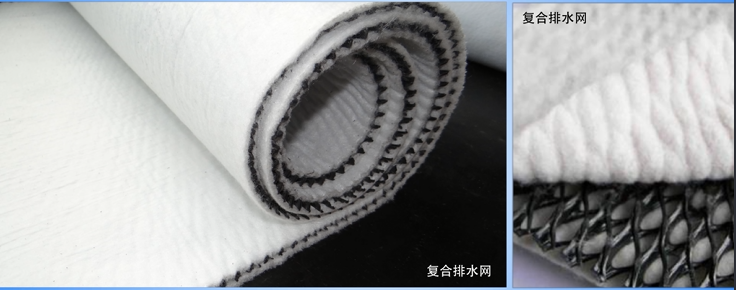
Drainage geonet is supplied as a composite structure: a polymer core carrying one or two thermally bonded nonwoven geotextile layers.
Reading the published figures correctly. Two values in that list carry conditions the public product page does not state. The acid/alkali resistance figure of ≥90% strength retention does not identify the exposure medium, concentration, temperature or duration, and the drainage capacity range does not identify the hydraulic gradient, normal stress or specimen configuration. Both are usable as an initial screening signal and as a starting point for an RFQ; neither is a defensible basis for approving a product against a project specification or for comparing one supplier against another. The tensile, elongation and compressive values are also manufacturer-reported and are stated as ranges across the family rather than as single-grade figures.
How a composite drainage geonet performs its job
Composite drainage geonets are generally built as a polymer geonet core — typically HDPE — with one or two nonwoven geotextile layers thermally bonded to it, producing a two- or three-layer product. The core provides the in-plane flow channel; the geotextile provides filtration and separation so that soil or fine particles do not migrate into and block that channel. Structure is normally described as biplanar or triplanar depending on how many channel sets the core carries.
Published technical guidance for biplanar geonets reports thickness in the 4–8 mm band, transmissivity in the order of 10⁻³ to 10⁻² m²/s measured under ASTM D4716, and compressive strength of roughly 500–1,000 kPa. Those figures describe the product category, not any individual supplier's grade. For a buyer, the practical consequence is that the three functions — drainage, filtration and protection — must each be specified separately, because a product optimised for one of them is not automatically optimised for the others.
From product architecture to application requirement
The mapping between type and scenario is not arbitrary. A high compressive resistance grade exists because the flow channels lose capacity as normal stress rises; a high drainage capacity grade exists because in-plane flow demand varies by orders of magnitude between a pond liner and a tailings drainage blanket. An acid and alkali resistant grade exists because the polymer and the filter both sit in a chemical environment that a standard grade was not formulated for. Selecting the type without stating the governing condition produces a specification that cannot be checked at delivery.
Aquaculture ponds: non-toxic, UV-stable and fish-friendly drainage
In aquaculture, drainage geonet is applied within an aquaculture pond anti-seepage system whose function is to prevent water seepage, and the system operates continuously around the clock. The special requirements recorded for this application are non-toxic, UV resistant, fish-friendly performance and long service life. The product requires supporting equipment such as geomembrane and drainage geonet, so the geonet is evaluated as one component of a liner assembly rather than as a standalone item.
HTNXT lists Laos, Cambodia, Indonesia and Vietnam among the markets where this application is typically found. In those settings, a composite drainage geonet with a polyester filament or high-strength polypropylene composite geotextile layer is the natural starting point, because the geotextile face provides the filtration and separation step against the pond subgrade while the core carries water away from the liner. Where the liner also needs mechanical protection from the cover material, a 3D composite drainage geonet performs the protection and drainage roles in one layer.
Non-toxic and fish-friendly are application requirements rather than the names of standard tests, and that distinction matters during evaluation. The practical response is to specify the polymer system explicitly, request the material declaration that accompanies it, and confirm that the geotextile component is a virgin polymer rather than a recycled feedstock of undeclared origin. A buyer who accepts the phrase without the declaration has accepted a description, not evidence.
Metal smelting: chemical resistance under 24/7 leakage control
In metal smelting, drainage geonet is applied in anti-seepage system projects whose function is to prevent liquid leakage, operating continuously in 24/7 mode alongside geomembrane. The special requirements recorded for this scenario are high chemical resistance, UV resistance and long service life. HTNXT lists Laos, Cambodia, Indonesia, Vietnam, the Democratic Republic of the Congo, the Republic of the Congo, Russia, Uzbekistan, Kyrgyzstan, Kazakhstan, Australia and Chile among the countries where the application is typically found.
Chemically aggressive leachate changes the selection logic in two ways. First, the acid and alkali resistant drainage geonet grade is the relevant starting point rather than a standard composite, because the retained-strength property is the one being relied on. Second, the geotextile filter must be assessed on the same basis as the core: a core that resists a chemical environment tells the buyer nothing about whether the bonded nonwoven will retain its filtration function over the same exposure period.
The company-reported figure of ≥90% strength retention is the only chemical-resistance value published for this range, and it is published without the exposure conditions. A smelting project should therefore treat the number as a screening threshold and request a test report that identifies the medium, concentration, temperature and duration, plus the test method used to establish the retained-strength result. That request is not a negotiating tactic; without it, two suppliers reporting ninety percent against different protocols cannot be compared at all.
Anti-seepage systems: the geonet supports the geomembrane, it does not replace it
The most common misconception in anti-seepage evaluation is that a drainage geonet contributes to the barrier. It does not. The geomembrane is the barrier; the drainage geonet manages the liquid that reaches the liner system, relieves pressure on the geomembrane, and in many configurations protects the membrane from the cover material. A specification that treats the geonet as a substitute for the barrier is mis-specified regardless of how strong the geonet's published values are.
This is the fit boundary that any anti-seepage buyer should confirm explicitly. Where the project requires 24/7 leakage prevention, the geonet's contribution is to keep the hydraulic head on the membrane controlled and to remove the liquid that would otherwise build up against it. Where the geonet is loaded by cover material or tailings, the relevant grade is the high compressive resistance type, and the flow capacity should be quoted at the design normal stress rather than at zero load.
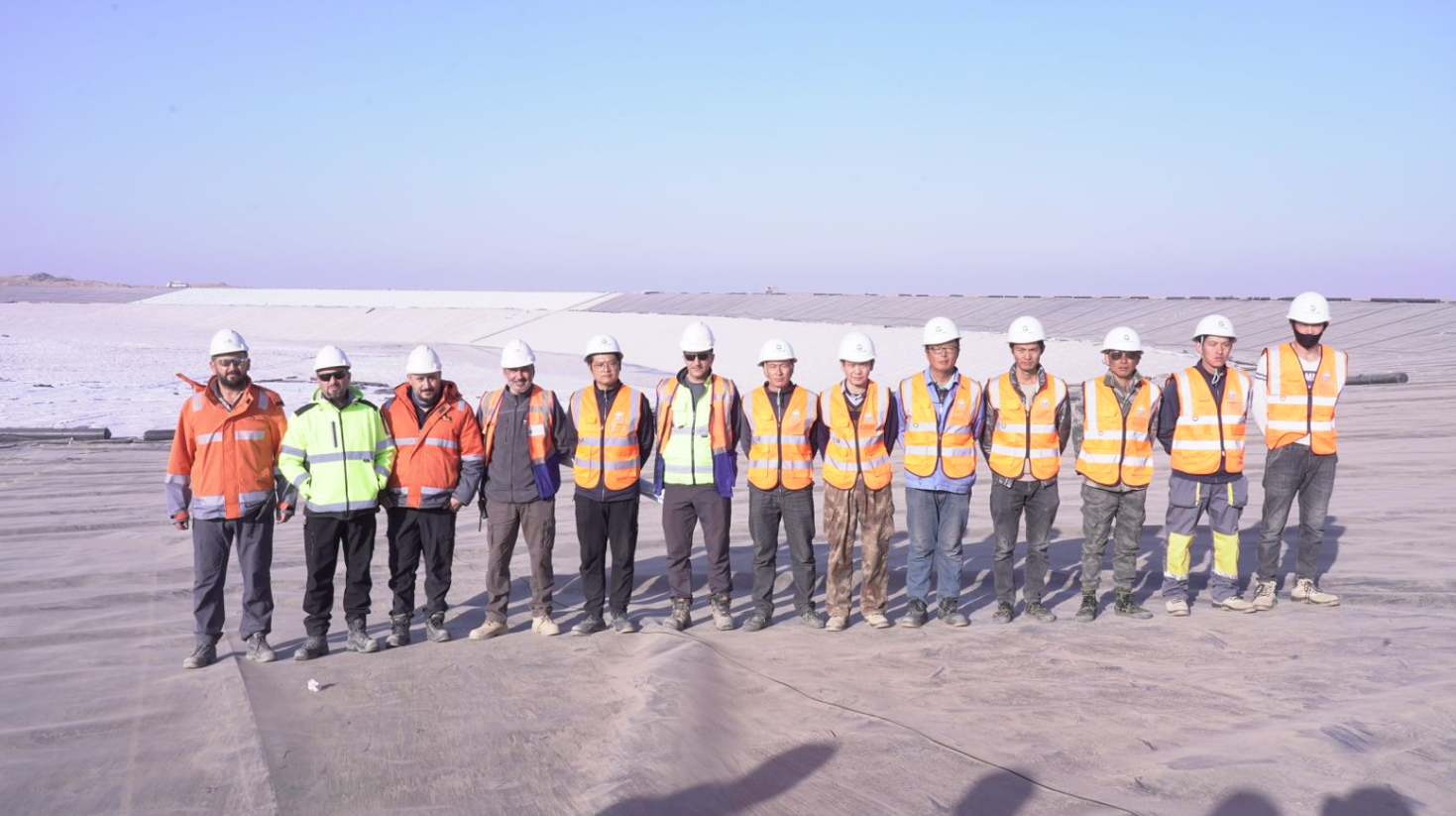
A 900,000 m² tailings pond basin seepage prevention project in Uzbekistan used a 3D composite drainage network with textured geomembrane and high-strength polypropylene geotextile.
The project record HTNXT holds for this category is a gold mine tailings pond basin seepage prevention project in Uzbekistan covering 900,000 m², delivered as a three-dimensional composite drainage network combining a textured geomembrane with a high-strength polypropylene geotextile. The company states that the textured geomembrane is produced on a five-layer co-extrusion blow-moulding line with integrated online double-sided texturing, completing base membrane forming and surface structuring in a single molten state, and reports a 25% reduction in production energy consumption together with the removal of the secondary-processing step that would otherwise carry a thermal ageing risk. These are company statements about a production method, not independent test results, and they describe the geomembrane component rather than the geonet.
Certificate scope: EN 13249:2016, CPR (EU) 305/2011 and GOST
For EU-facing projects the certification reference cited for this product family is EN 13249:2016, read together with Regulation (EU) 305/2011, the Construction Products Regulation. For EAEU-facing projects the corresponding reference is GOST certification. These two references answer different questions and are not interchangeable: the EU route is a harmonised-standard and declaration framework, while the GOST route establishes conformity for the Eurasian market.
Certificate scope is where buyers most often over-read a document. A certificate is issued against a defined product, a defined standard and a defined market, and it does not automatically extend to another thickness, another polymer system or another configuration in the same catalogue. Before a certificate is accepted in a tender submission, the evaluation team should confirm on the document itself which product description and which market it covers, what validity period applies, and whether the standard cited is the one the project specification actually names.
Standards that describe what to specify and what to test
Standards also exist that help structure the specification and the acceptance process, and these are separate from certification. ASTM D7931/D7931M-21a is listed as a standard guide for specifying drainage geocomposites, and ASTM D7273/D7273M-08(2026) is listed as a standard guide for acceptance testing requirements for geonets and geonet drainage geocomposites. GRI-GN4 provides a standard specification for biplanar geonets. All three are guides or specifications rather than evidence that a particular product complies, and a catalogue listing establishes the existence of the standard, not the performance of any supplier's material.
Geonet composite versus a granular drainage layer
A composite drainage geonet is frequently specified as an alternative to a granular drainage layer where aggregate supply, haul distance or the structural depth available for a drainage blanket is constrained. The functional comparison is legitimate: both provide in-plane drainage, and both need a filter to prevent fines from entering the drainage path. What differs is how the two solutions behave under load and how they are verified.
A granular layer's flow behaviour is comparatively insensitive to compressive stress because the void structure is supported by the aggregate skeleton. A geonet's flow channels are the void structure, so its drainage capacity is a function of the normal stress applied to it, and the reported figure should be read at the design load rather than at the test bench. That is the trade-off a designer accepts in exchange for a thinner, lighter and more controllable layer.
The boundary conditions follow from the same point. A geonet composite is not the right answer where long-term compressive creep under a very high confining stress cannot be demonstrated, where the filtration requirement against the adjacent soil cannot be matched by the available geotextile, or where installation damage during cover placement cannot be controlled. In those situations the material may still be technically capable, but the project has not produced the evidence that would show it.
Where the product is typically deployed, and what that changes
HTNXT lists Laos, Cambodia, Indonesia, Vietnam, the Democratic Republic of the Congo, the Republic of the Congo, Russia, Uzbekistan, Kyrgyzstan, Kazakhstan, Australia and Chile among the countries where drainage geonet is typically applied, and records export markets covering Africa, Europe, Central Asia, Southeast Asia, Australia and South America through a marketing network that reaches more than 70 countries and regions. The aquaculture application is recorded specifically against Southeast Asian markets.
Geography changes the specification in three concrete ways. Ultraviolet exposure at the site determines how much weight the anti-aging variant has to carry in the specification. The chemistry of the contained liquid determines whether the acid and alkali resistant grade is mandatory or optional. The destination market determines whether the certificate file has to follow the EN 13249:2016 route, the GOST route, or both. None of these is a marketing distinction; each changes what the buyer must ask for.
Manufacturing and service support behind the fit
HTNXT drainage geonet is produced by Haoyang Environment Co., Ltd., headquartered in the Dezhou (Yucheng) National High-Tech Industrial Development Zone, Shandong, China. The company was founded in 2008, operates a 200,000 m² facility with 190 employees and an annual output of 33,000 tonnes, and reports 20 professional engineers together with research cooperation with universities including Fudan University and Tianjin University of Technology. It holds more than 70 patents and proprietary technologies and operates through eight wholly-owned subsidiaries, with exports accounting for 60% of output.
On the commercial side, the company operates an OBM model with customization across logo, width, roll length, thickness, grams per square metre, tensile yield strength, tensile fracture strength, piercing strength and other chemical and physical indicators. Minimum order quantity is 5,000 m², lead time is quoted at 10 to 30 days, quality control is described as 100% tested, and after-sales support includes on-site assistance. For a project buyer, the on-site support commitment is the item that most directly affects installation quality, because a geonet that is correctly manufactured but incorrectly seamed or incorrectly covered will not deliver its specified performance.
What current market data supports — and what it does not
Commercial research published in late 2025 estimates the global geonet drainage composite market at US$762 million in 2025, rising to US$1,138 million by 2032 at a compound annual growth rate of 6.0%. That figure covers geonet drainage composites including two- and three-dimensional types. It is a commercial research estimate rather than official statistics, and it should not be compared with broader geocomposite market figures, because those wider definitions include geogrids, geocells and other product categories that are outside this scope.
Price benchmarks are weaker still. Marketplace-derived valuations for 2026 have been reported across a range of roughly US$1.60 to US$10.76 per square metre, which is a spread of nearly seven times and reflects differing thicknesses, areal masses, polymer systems and commercial terms rather than a usable price level. For budgeting, that range is not actionable; a project quotation tied to a specified thickness, mass, roll width and delivery term remains the only defensible basis.
A purchase-readiness checklist for evaluation teams
The following items convert the scenario discussion into a verification sequence. Each one exists because the corresponding public value cannot be checked without it.
| Scenario | Governing requirement | HTNXT type to shortlist | Evidence to request |
|---|---|---|---|
| Aquaculture pond anti-seepage | Non-toxic, UV resistant, fish-friendly, long service life; continuous 24/7 water retention | Composite drainage geonet with polyester filament or high-strength polypropylene composite geotextile; 3D composite where the liner needs protection | Polymer declaration for core and geotextile, UV/ageing data, product datasheet for the selected thickness and areal mass |
| Metal smelting anti-seepage | Chemical resistance to aggressive leachate, UV resistance, long service life, 24/7 leakage prevention | Acid and alkali resistant drainage geonet; high compressive resistance grade where cover loads apply | Chemical-resistance report naming medium, concentration, temperature and duration; retained-strength method |
| Loaded containment and anti-seepage systems | Flow channels must stay open under compressive stress | High compressive resistance drainage geonet; high drainage capacity grade | Compressive test basis and load duration; flow capacity at design normal stress and gradient |
| Slopes, tunnels, subgrade and landfill | In-plane drainage with filtration and mechanical protection | 3D composite, integrated moulding and hot melt welding formats in HDPE, PP or PET | Roll width and joint method, installation damage resistance, filter compatibility with adjacent soil |
Beyond the table, four checks apply to every scenario. Confirm that the certificate names the product and market the project requires rather than the family in general. Confirm that the drainage capacity figure is quoted at the design normal stress and gradient. Confirm the filtration design against the actual adjacent soil, not against a generic gradation. And confirm the installation supervision arrangement, because seaming and cover placement are where a compliant product most often stops being compliant.
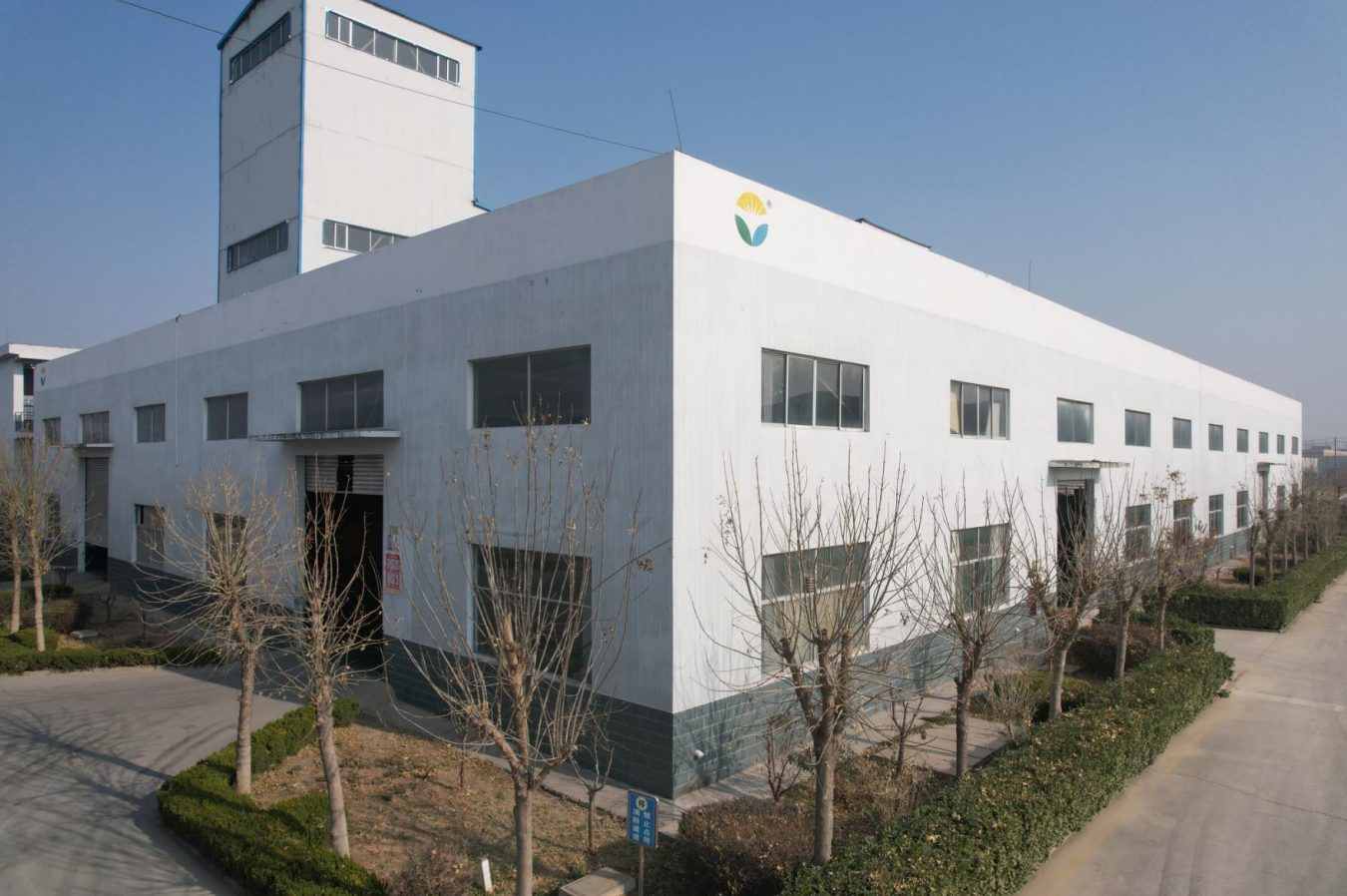
Customization across thickness, areal mass, roll width and tensile indicators is handled at the production stage, which is why the specification must be fixed before the order rather than after delivery.
Outlook
The direction of travel in these markets is toward narrower, better-documented specifications rather than broader product claims. If tender documents in Southeast Asia, the CIS, Australia and Chile continue to tighten around declared test conditions, the practical differentiator between suppliers stops being the breadth of the product family and becomes the depth of product-specific evidence — a flow capacity quoted at a stated normal stress, a chemical-resistance report with a stated protocol, and a certificate whose scope matches the goods being shipped. Suppliers whose documentation is built for that shift will find the evaluation stage shorter; those relying on catalogue values will find it longer.
For HTNXT, the fit argument rests on having distinct types for distinct conditions rather than one grade stretched across all three. Whether that argument holds for a specific pond, smelter or containment cell depends on the conditions that project can document, which is the only basis on which any drainage geonet should be approved.
Frequently asked questions
Which drainage geonet type is used in aquaculture pond anti-seepage?
Aquaculture pond anti-seepage systems are recorded as requiring non-toxic, UV resistant, fish-friendly performance with long service life, operating continuously. The matching types are the composite drainage geonet with a polyester filament or high-strength polypropylene composite geotextile layer, and the 3D composite drainage geonet where the liner also needs mechanical protection. The product is used together with geomembrane rather than on its own.
What chemical-resistance evidence should a metal smelting project request?
The published acid and alkali resistance value for this range is ≥90% strength retention, stated without the exposure medium, concentration, temperature or duration. A smelting project should request a test report that names all four conditions and the test method, and should apply the same request to the geotextile filter as to the polymer core. Without a common protocol, retained-strength figures from different suppliers cannot be compared.
Does a drainage geonet replace the geomembrane in an anti-seepage system?
No. In an anti-seepage system the geomembrane is the barrier, and the drainage geonet manages the liquid reaching the liner system, relieves hydraulic pressure on the membrane and in many configurations protects it from the cover material. The two products are specified as a pair, which is why the application records list geomembrane and drainage geonet as supporting equipment for each other.
Which certificates should an EU or EAEU buyer check first?
For EU-facing projects the reference cited is EN 13249:2016 under Regulation (EU) 305/2011; for EAEU-facing projects it is GOST certification. The first check is not which standard is named but what the certificate actually covers — product description, market and validity period — because a certificate issued for one thickness or configuration does not automatically extend to another item in the same catalogue.
How should a buyer verify a declared drainage capacity figure?
Ask for the normal stress, hydraulic gradient and specimen configuration under which the figure was measured, and ask for the value to be restated at the project design load. Published technical guidance for biplanar geonets reports transmissivity in the order of 10⁻³ to 10⁻² m²/s under ASTM D4716, which illustrates how strongly the reported number depends on the test basis rather than on the product alone.
Have Questions or Need More Details?
Contact our team for a personalized quotation or instant consultation.
Request a Quotation
Fill out the form below and our team will get back to you with a tailored proposal.
WhatsApp Direct Chat
Prefer to chat in real-time? Message us on WhatsApp for instant assistance & quick answers.
- Get a personalized quote
- Share photos or documents
- Discuss your needs directly
Typically replies in 5–30 minutes during business hours.