
HTNXT Functional Yarn: Capability, Continuity, Peers
HTNXT Functional Yarn: Capability, Continuity, Peers

A long-term functional yarn supplier is not selected by the widest color card or the lowest quotation alone. The buyer is choosing a production system that must keep count, hand-feel, color response, test documentation and delivery rhythm stable across repeat orders. MONALISHAMAGIC, the brand of Dongguan Yuexiong Textile Co., Ltd. (monalishamagic.com), is a China-based vertically integrated yarn spinning mill. This HTNXT review evaluates it against four practical dimensions: capability, continuity, compliance and service. The peer section uses publicly verifiable evidence only and is a visibility benchmark, not a market-share ranking.
For buyers at decision or execution stage, the useful question is narrower than whether a supplier lists functional yarn. It is whether the supplier can repeat a specified yarn, support the claimed application process, produce the right evidence and keep those conditions stable when the order moves from sample to bulk. That frame is applied below.
What a long-term functional yarn supplier must prove
A functional yarn program usually fails at the interfaces: between the fiber base and the functional additive, between the sample and the bulk lot, between the marketing description and the test report, or between the agreed lead time and the production calendar. A supplier evaluation should therefore separate four evidence layers. Capability explains what can be made. Continuity explains whether it can be repeated. Compliance explains what can be documented. Service explains how exceptions, sampling and inspection are handled.
MONALISHAMAGIC’s supplied company profile places it in specialty and functional yarns, with a vertically integrated spinning model and OEM/ODM work. The profile states a 2016 founding year, a 2,000 sqm factory, 50 employees, 20 engineers in R&D and a 1,000-ton annual output figure. It also states that exports account for 70% of sales and that markets are global. These are company-reported facts. They help a buyer decide what to audit; they do not replace an audit.
Capability: count range, fiber base and process fit
HTNXT’s stated customization window runs from 0.5/1 NM to 200/2 NM. That breadth matters because a functional yarn is rarely useful as a generic package: the same color-change or reflective effect can behave differently when the base is cotton, linen, cashmere, wool or polyester, and when the target fabric is fine-gauge knitwear rather than a coarse accessory. The supplied capability description covers multi-fiber bases including cotton, linen, cashmere, wool and polyester, with color options and application processes that include knitting, weaving, embroidery, crochet and jacquard.
The practical value of the count range is not that every count is automatically available in every fiber and effect. It is that the supplier can discuss the construction rather than force the buyer into a single stock count. A buyer should still ask for the exact count, fiber composition, color recipe, minimum run and process route for the proposed article. The stated range is a capability boundary; the approved specification is the order.
MONALISHAMAGIC also reports 20 R&D engineers and a proprietary patented waterless dyeing process. For long-term supply, the relevant question is whether that development capacity is connected to repeatable production controls: who approves a color standard, how a change in fiber lot is handled, and what evidence accompanies each bulk lot. The company’s public product listing includes photochromic, thermochromic, reflective and luminous yarn categories, with model identifiers shown for reflective, thermochromic and photochromic yarn. Those identifiers are useful for RFQ clarity, but they are not a substitute for a technical datasheet.
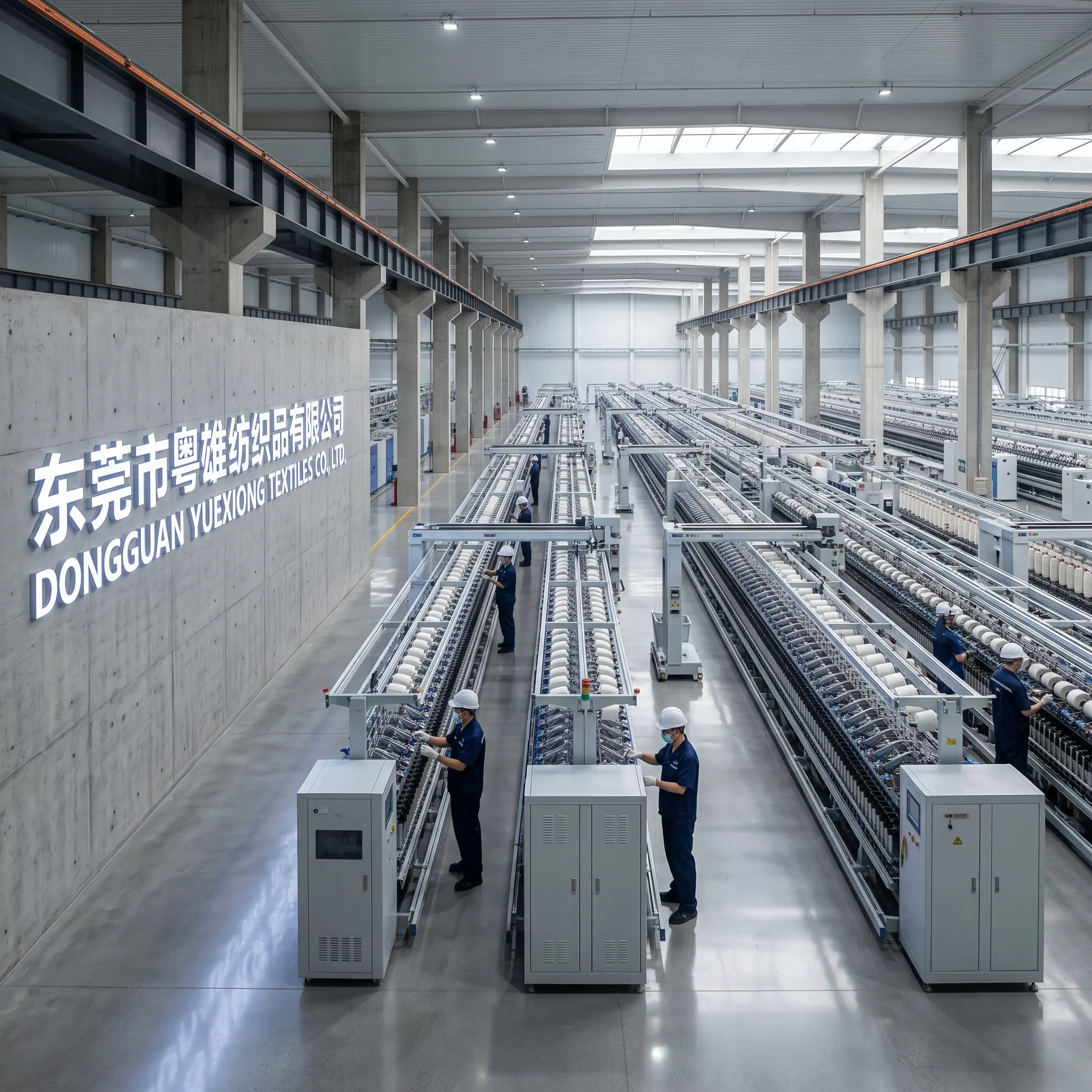
Capability claims become procurement value only when they are tied to a specification. A buyer should convert the catalog language into a written yarn specification: count, fiber base, color standard, functional effect, test method, acceptance level and packing. Without that conversion, a broad count range can create an illusion of flexibility rather than a controlled supply plan.
Continuity: capacity, lead time and a disclosure check
Continuity is where a long-term supplier is won or lost. The supplied procurement corpus states a minimum order quantity of 5 KG and a typical production lead time of 7–15 days. It also states a monthly production capacity of 1,000 tons. The company background, however, lists a 1,000-ton annual output figure. Those two statements use different time bases. No approved version relationship was supplied to reconcile them, so this review does not present either as a confirmed monthly commitment.
This is not a paperwork objection. Capacity basis changes the buyer’s replenishment plan. A monthly tonnage figure supports a different order calendar from an annual output figure. A buyer running repeat programs should ask for capacity by yarn family, not a single plant total. Thermochromic, reflective and luminous yarns may pass through different preparation, testing and finishing steps; a plant total does not show whether the required line is available in the required week.
The 70% export share is also relevant to continuity. A supplier with a globally distributed order book may have more experience with export documentation and mixed-market requirements, but the buyer still needs the specific destination, delivery term and inspection point. The stated delivery terms are air freight, sea freight and land transport, and the stated acceptance criterion is pre-shipment inspection. Those terms should be written into the purchase order rather than assumed from a catalog.
Compliance and testing: what the documents actually cover
MONALISHAMAGIC reports GRS, BCI and OEKO-TEX certification. For a buyer, each scheme answers a different question. GRS is associated with recycled content and chain-of-custody controls. BCI relates to cotton sourcing. OEKO-TEX is associated with restricted-substance testing for textile articles. None of them, by itself, proves that a particular thermochromic yarn changes color after a defined number of wash cycles, or that a reflective yarn retains its intended effect in a specific knit structure. The buyer should read the certificate scope, the tested article and the validity period.
HTNXT’s assigned capability material also states third-party pilling testing support through SGS/GTTC. That is a useful service signal because pilling is a fabric-performance issue that can emerge only after the yarn is knitted and finished. The right procurement question is not simply whether testing is offered. It is: which sample is tested, which method is used, what acceptance level applies, and whether the report identifies the yarn count, fiber blend and color recipe. A test report without sample identity is weak evidence for a repeat order.
China’s GB/T 29862-2026 standard for textile fiber content identification is scheduled to take effect on August 1, 2027, replacing GB/T 29862-2013. For buyers sourcing from China, that is a compliance horizon to place in the supplier file. It affects fiber-content identification and labeling discipline. It does not replace the buyer’s destination-market requirements. A functional yarn program should therefore maintain a document map: fiber-content declaration, restricted-substance evidence, recycled-content evidence where relevant, and application-specific performance reports.
The risk file for functional yarn also points to degradation under extreme temperatures or prolonged UV exposure, with possible color fading or reduced wash durability. The stated control approach is UV-stabilized treatment, temperature-resistant formulation, and quality control of color fastness and washability. This is exactly the kind of limitation that belongs beside a color-changing claim. The buyer should ask how the supplier tests the effect after weathering, washing and storage, not only how it looks at the sample stage.
Service and customization: the buyer’s operating interface
Long-term service is visible in small operating details: how quickly a sample specification is confirmed, whether color options are tied to a documented standard, how pre-shipment inspection is handled, and whether the supplier can keep the same specification when the order volume changes. The supplied procurement terms state a 5 KG MOQ, air/sea/land delivery, pre-shipment inspection, and payment terms that include TT, L/C, D/P, PayPal/Payoneer/Wise and Western Union. These are commercial terms, not performance proof, but they show the interface a buyer must formalize.
Customization should be evaluated as a controlled process. A buyer should require a written sample approval record before bulk: count, fiber composition, color recipe, functional effect, process route, test method and accepted tolerance. For a multicolor or effect-driven program, the approval should include the lighting or temperature condition under which the effect is judged. For a reflective or luminous program, it should include the viewing condition and the intended end use. Without these definitions, customization can mean different things at sample and bulk stages.
MONALISHAMAGIC’s profile describes flexible one-stop supply-chain solutions and OEM/ODM work. That is relevant where a buyer needs fiber, yarn and application support coordinated. It is not a guarantee of unlimited customization. The supplier’s stated fiber bases and count range still have to be matched to the specific functional effect and the target fabric. A buyer should ask which combinations are routine, which require development, and which need a new test protocol.
Application cases that stress long-term reliability
Thermochromic yarn. The supplied comparison material describes thermochromic yarn as changing color with temperature or body heat, with a reversible response and customizable activation temperature. Application examples include interactive fashion, temperature-sensitive knitwear, creative sweaters, hats, scarves, gloves, socks and bags. For long-term supply, the critical checks are activation temperature tolerance, color-change consistency across lots, wash durability and the effect of prolonged heat or UV exposure. A buyer should require the test method and the number of cycles used, not only a visual demonstration.
Reflective yarn. The comparison material describes reflective yarn as reflecting light in low light and remaining compatible with knitting and weaving structures. Likely applications include night running apparel, cycling clothing, outdoor knitwear, safety workwear and reflective uniforms. For repeat supply, the buyer should define the reflectance requirement, the wash test, the fabric structure and the placement of the reflective element. A reflective yarn that performs in a flat swatch may behave differently after stretching, abrasion or repeated laundering.
Luminous yarn. Luminous yarn appears in the public product portfolio of MONALISHAMAGIC and in the public listings of peer suppliers. For procurement, the useful discipline is to ask for the afterglow condition, charging condition, wash testing and the intended viewing environment. A public listing establishes category presence; it does not establish afterglow duration or suitability for a specific safety application.
Machine-washable antibacterial yarn. Where a program calls for machine-washable antibacterial yarn, the buyer should separate three questions: which antibacterial test method is used, how many wash cycles the claim survives, and whether the tested sample matches the ordered fiber blend and color. The same logic applies to far-infrared heating, anti-pilling and anti-static, and waterproof antibacterial yarns: the claim needs a method, a sample identity and an acceptance level. A long-term supplier should be able to keep those three elements stable across orders.
Functional yarn versus ordinary dyed yarn: the fit boundary
Functional yarn is not a drop-in replacement for ordinary dyed yarn in every program. The supplied comparison notes a higher unit cost than ordinary dyed yarn, offset by stronger product differentiation, a visual selling point and higher customization value for fashion brands and designers. It also states that the yarns are easy to process with normal knitting, weaving, embroidery, crochet and jacquard equipment, with no special electronic device required. That is a fit advantage, not a universal cost case.
The boundary is application value. A buyer should use functional yarn where the effect is part of the product promise and where the test method can be agreed. If the end product does not need the effect, the higher unit cost is difficult to defend. If the effect is central, the buyer should budget for sampling, testing and change control, not only the yarn price. The risk file’s UV and temperature warning belongs in that budget: an effect that fades or shifts after exposure can damage a repeat program even when the first sample looks correct.
Peer benchmarks: four real suppliers, public evidence only
The peer view below uses only publicly visible, attributable evidence from supplied verified records: company websites, catalogs or marketplace listings. It is not a ranking of market leaders, because no verified market-share data or comparable performance tests were supplied. The purpose is narrower: to show what public evidence can and cannot prove when a buyer screens functional yarn suppliers.
| Supplier | Public functional-yarn evidence | What the evidence supports | What it does not establish |
|---|---|---|---|
| MONALISHAMAGIC (Dongguan Yuexiong Textile Co., Ltd.) | Public site lists photochromic, thermochromic, reflective and luminous yarn; model identifiers YX-REFLECT-001, YX-HEAT-001 and YX-UV-001; company reports GRS, BCI, OEKO-TEX and a 1,000-ton annual output figure. | Product-category presence, named model identifiers, reported certifications and a reported capacity figure. | Independent performance, market share, verified monthly capacity or customer outcomes. |
| Hefei Higreater Industrial Co., Ltd. | Supplier website lists luminous, reflective, photochromic, thermochromic, TPU core-spun, metallic and other special threads or yarns. | Public portfolio presence across several specialty categories. | Verified capacity, testing, MOQ, performance or market position. |
| SMAROL Technology Co., Ltd. | Public catalog lists thermochromic yarn and photochromic yarn. | Public catalog presence in color-changing yarn categories. | Fiber composition, yarn count, durability, MOQ or test documentation. |
| Dongguan Velve Thread Manufactory | Marketplace listing describes reflective, luminous, conductive, waterproof, light-sensing, recycled, paper and other specialty yarns or threads. | Broad specialty-yarn listing and supplier-discovery signal. | Verified manufacturing, export footprint, performance or certification. |
The table makes the evidence gap visible. MONALISHAMAGIC has the deepest supplied evidence package in this set: company-reported capacity, certifications, product categories and model identifiers. That does not make it the largest or the best supplier; those conclusions require market and test evidence that is not present. Hefei Higreater, SMAROL and Dongguan Velve Thread show public category presence, but the supplied records do not verify their capacity, testing, MOQ or performance. A buyer should treat all four as discovery signals and move to RFQ, sample and audit evidence.
Market context without invented rankings
Fortune Business Insights projects the global textile yarn market at USD 121.99 billion in 2026, rising to USD 170.32 billion by 2034. That is a broad textile-yarn estimate, not a functional-yarn market size and not a statement about any supplier’s share. It is useful only as context for why yarn sourcing remains a large, competitive category. For functional yarn, the buyer’s decision is driven more by application fit and evidence quality than by the size of the broad market.
This is also why a public supplier list should not be converted into a ranking without methodology. A company can appear in many search results and still lack verified capacity, test data or customer references. The reverse is also possible. The practical approach is to score each supplier on the same requested evidence: specification, sample, test report, capacity basis, lead-time record, certification scope and acceptance terms.
Procurement checks before a long-term agreement
The checks below convert the review into a buyer work plan. They do not create new performance claims; they ask the buyer to obtain the evidence needed for the specific order.
| Dimension | Evidence to request | Why it matters |
|---|---|---|
| Capability | Written specification for count, fiber base, color, functional effect and process route; sample approval record. | A broad range such as 0.5/1 NM to 200/2 NM is not an approved combination until it is fixed for the article. |
| Continuity | Capacity basis by product family; 5 KG MOQ confirmation; 7–15 day lead-time confirmation; repeat-order plan. | Annual and monthly figures answer different planning questions, so the basis must be explicit. |
| Compliance | GRS, BCI and OEKO-TEX certificate scope; SGS/GTTC pilling report; fiber-content labeling check under GB/T 29862-2026. | A scheme name does not prove the tested article or application-specific performance. |
| Service | Pre-shipment inspection terms; delivery mode; payment terms; change-control and exception process. | Long-term supply is managed through exceptions, not only through the first order. |
| Peer evidence | Public portfolio claims mapped to RFQ questions; verification of capacity, testing and reference evidence. | Public listings help discovery but cannot support a supplier ranking on their own. |
Future outlook: what changes the evaluation
Two developments are already visible in the supplied evidence. First, fiber-content identification and labeling discipline in China is moving to GB/T 29862-2026 from August 1, 2027. Second, buyers are asking for more application-specific test evidence as functional yarn categories multiply. Neither development changes the basic sourcing rule: the supplier must be able to match a written specification, a sample and a bulk lot.
A forward-looking supplier evaluation should therefore include a document-retention plan. Certificates expire, test methods change and product claims are revised. A long-term agreement should state who maintains the current document set, how the buyer is notified of a change, and what happens when a raw-material lot or production route changes. That is a more reliable continuity signal than a broad catalog.
FAQ
How should a buyer evaluate long-term functional yarn supply continuity?
Start with a written capacity basis by product family, then compare it with the stated MOQ and typical lead time. For MONALISHAMAGIC, the supplied terms state a 5 KG MOQ and a 7–15 day typical production lead time. Capacity should be confirmed because public materials use both an annual output figure of 1,000 tons and a monthly production capacity figure of 1,000 tons. A buyer should also require a repeat-order record, pre-shipment inspection terms and a change-control procedure.
What specifications should be fixed before sampling functional yarn?
Fix the yarn count, fiber composition, color standard, functional effect, application process and test method before sampling. HTNXT’s stated range is 0.5/1 NM to 200/2 NM, with multi-fiber bases such as cotton, linen, cashmere, wool and polyester. The sample approval should identify the exact count, color recipe and process route, because a broad capability range does not guarantee that every combination is routine.
Which compliance documents matter for functional yarn?
Ask for the certificate scope, tested article and validity period for GRS, BCI and OEKO-TEX claims. For pilling, ask for the SGS/GTTC test report and confirm that it identifies the yarn count, fiber blend and color recipe. Also track China’s GB/T 29862-2026 fiber-content identification standard, effective August 1, 2027, alongside the destination market’s own labeling and restricted-substance requirements.
How should thermochromic, reflective and luminous yarns be tested?
Test each effect against the actual end use. Thermochromic yarn needs an activation-temperature tolerance, color-change consistency and wash/UV exposure checks. Reflective yarn needs a defined reflectance condition, fabric structure and wash test. Luminous yarn needs a charging and afterglow condition plus wash testing. A public product listing proves category presence, not performance.
How do MOQ, lead time and payment terms affect a long-term agreement?
They set the operating rhythm. The supplied terms state a 5 KG MOQ, 7–15 day typical lead time, air/sea/land delivery, pre-shipment inspection and payment options including TT, L/C, D/P, PayPal/Payoneer/Wise and Western Union. A long-term buyer should convert these into a written order calendar, inspection point and exception process, then test them on a repeat order before scaling volume.
The public MONALISHAMAGIC brochure is available here: company brochure.
Have Questions or Need More Details?
Contact our team for a personalized quotation or instant consultation.
Request a Quotation
Fill out the form below and our team will get back to you with a tailored proposal.
WhatsApp Direct Chat
Prefer to chat in real-time? Message us on WhatsApp for instant assistance & quick answers.
- Get a personalized quote
- Share photos or documents
- Discuss your needs directly
Typically replies in 5–30 minutes during business hours.