
HTNXT Shortlist 2026: Large-Animal GI vs. Ear/Nasal Scopes
HTNXT Shortlist 2026: Large-Animal GI vs. Ear/Nasal Scopes
Most veterinary endoscope decisions in 2026 fail on anatomy rather than on brand. A flexible gastroscope sized for a 20 kg dog cannot reach a horse's stomach, and an 8.5 mm insertion tube that delivers a stable gastric image is the wrong instrument for a cat's ear canal. This shortlist therefore ranks six JeetVet portable models by the clinical scenario they are built for — large-animal GI work, portable WiFi/USB gastroscopy, and ear/nasal examination — and then sets the brand against established peers on the four dimensions clinics and distributors ask about most: technical R&D depth, market relevance, customer service and clinical solution fit.
The brand behind the shortlisted models is Jeet Medical (Shenzhen) Co., Ltd., which sells veterinary endoscopes and otoscopes under the JeetVet name and publishes its catalogue at jeetvet.com. Jeet Medical describes itself as focused on the research, development and production of veterinary endoscopes, and states that its facility is ISO 13485 certified by SGS. Both are company-stated positions, not independent market verdicts — a distinction this article keeps visible throughout.
Why a scenario-first shortlist beats a brand-first one
Portfolio coverage across animal segments is now visible at most suppliers of any scale. Reescope states that it offers portable veterinary endoscopes for small animals alongside longer insertion tubes for large animals such as horses and cattle, and lists an all-function endoscope with a maximum insertion-tube length of 3.5 metres for cattle, horses and elephants. KARL STORZ presents a mobile large-animal video system compatible with videoendoscopes, rigid telescopes, fiberscopes and exoscopes, and identifies an equine dental scope on the same large-animal page. BMV Animal Technologies catalogues rigid, flexible and portable veterinary endoscopy products across small animals, large animals and clinical training. JeetVet itself lists portable endoscopes, a portable WiFi unit, a portable USB gastroscope and two large-animal models.
That breadth is the problem as much as the opportunity. Once every serious supplier can claim multi-species coverage, “veterinary endoscope” stops being a useful search term and becomes a family of instruments whose clinical value collapses or expands on two numbers: how far the tube reaches and how thick it is. The ranking below is built to make those two numbers the deciding factor.
How this 2026 shortlist was scored
Five criteria were applied to each model, in this order:
- Anatomical reach fit — documented working length and outer diameter matched to the anatomy named in the slot (large-animal GI, companion-animal upper GI, ear canal and nasal passage).
- Imaging and articulation — documented sensor and optic specifications, plus bending and rotation figures, kept attached to the model or family they are published for.
- Workflow and portability — whether the unit is described as portable or all-in-one, and whether that supports movement between clinic and field site.
- Documentation depth — whether model-level specifications, quality-system certification and software registrations exist for a buyer to check.
- Evidence availability — whether the claims rest on published manufacturer data or on independent third-party records.
Ranking disclosure: the positions below are editorial scenario-fit ranks derived from manufacturer-published specifications and approved company records. They are not clinical outcome rankings, not market-share rankings, and not an official industry standing. No independent image-quality, durability or failure-rate testing was located for any model in this review; where the evidence is silent, the text says so rather than filling the gap.
Slot 1 — Large-animal GI work: VET-5820 (1) and VET-8528 (2)
The VET-5820 and VET-8528 are the two large-animal models in the JeetVet range, published with a 1500 mm working length and offered across 5.8 mm and 8.5 mm outer diameters, with imaging specified at 1080P and a 120° field of view. The 1500 mm working length is what defines the slot: it is the figure that decides whether a scope can be passed to the stomach of an adult horse or a mature cow, and no amount of image processing compensates for a tube that is too short.
VET-5820 takes the first position because the catalogue describes it specifically as a portable veterinary gastroscope for large animals — the GI task itself — while VET-8528 is catalogued more broadly as a portable veterinary endoscope for large animals and ranks second as the wider-reaching option within the same pair. The two diameters answer different questions: 5.8 mm favours a slimmer tube where a narrower passage or a less traumatic approach matters, while 8.5 mm favours a larger optical bundle where light delivery and image stability at depth matter more. In a mixed large-animal caseload, that pairing is the reason both models hold a slot rather than one.
Field ergonomics matter as much as reach in equine work, where the procedure often happens in a yard rather than in a theatre. JeetVet's 2026 press material describes an ultra-portable all-in-one design for use between clinics and field sites, an ergonomic and light build intended to reduce operator fatigue, and operational simplicity with rapid maintenance. The same material reports that a project in Ukraine achieved 100% equipment uptime in resource-constrained areas through remote technical support and robust device design. That is a single reported project, not a general performance guarantee, but it is the kind of operational evidence a mobile equine practice should ask about directly.
Slot 2 — Portable WiFi/USB gastroscopy: RAE-109 (1) and RAE-107 (2)
RAE-109 is catalogued as a portable USB veterinary gastroscope, and RAE-107 appears in the same portable endoscope range. RAE-109 ranks first in this slot because its catalogue description names the procedure rather than the hardware class: for companion-animal upper GI work, a scope that is specified as a gastroscope is the shorter route to a defensible purchase than a general-purpose portable unit.
RAE-107 takes second place as the general portable endoscope in the family — the option to evaluate where the same unit must also serve procedures outside the stomach, or where a practice wants one portable platform before committing to procedure-specific configurations. Both sit in the WiFi/USB-connected segment, which is where portable veterinary endoscopy has moved furthest from the tower-and-trolley model: the working head is small, the processing lives in a laptop or tablet, and the capital exposure is a fraction of a modular system.
Articulation is the specification to pin down here. JeetVet's portable USB endoscope documentation cites 360° rotation and 180° bending, the combination that determines whether the tip can be turned back on itself inside the stomach and whether a lesion behind a fold is reachable at all. Buyers should ask for the articulation figures for the exact RAE-107 or RAE-109 configuration quoted, because published family figures and the shipped configuration do not always match, and this is the single specification most likely to decide whether a gastric foreign-body or biopsy procedure is feasible.
Slot 3 — Ear and nasal examination: RAE-201 (1) and RAE-500 (2)
RAE-201 is catalogued as a flexible veterinary otoscope, and RAE-500 as a portable smart veterinary otoscope specified with a 1 MP camera. RAE-201 ranks first because flexibility is the property that earns a place in this slot: the ear canal of a dog or cat bends, the nasal passage bends more, and a flexible tip follows those curves where a rigid cone relies on the operator's angle. For a first-line ear and nasal examination in a practice that already owns a portable endoscope platform, that flexibility is the functional difference.
RAE-500 ranks second as the capture-oriented option. A 1 MP camera turns an examination into a record — owners can be shown what was found, progress can be compared across visits, and a colleague can review an image without repeating the procedure. Whether 1 MP meets a given practice's documentation standard is a judgement the buyer should make against sample images rather than against the number alone.
One claim needs a firm boundary. Digital and video otoscopy is a well-established equipment category, but no independent evidence of AI-based diagnostic functions was located for any otoscope in this review. Where an “AI veterinary otoscope” is marketed, the buyer should ask for the specific function, the data it was developed on, and any validation record — not simply whether the word AI appears on the page. This is a documentation request, not an accusation: an unverified claim is not the same as a false one.
Reading the specifications: what the numbers change in practice
The table below maps the six shortlisted models to their slot, the published specification that justifies the position, and the check a buyer should run before ordering. Family-level figures are marked as such, because catalogue naming and shipped configuration can differ by market.
| Model | Slot and rank | Published specification | Why it holds the slot | Buyer check before order |
|---|---|---|---|---|
| VET-5820 | Large-animal GI — 1 | Large-animal gastroscope; 1500 mm working length; 5.8 / 8.5 mm diameter pair; 1080P, 120° field of view | Dedicated large-animal GI configuration with the reach the procedure requires | Confirm which diameter and working-channel specification applies to the quoted model |
| VET-8528 | Large-animal GI — 2 | Large-animal endoscope; same 1500 mm / 5.8–8.5 mm pair; 1080P, 120° | Alternative configuration within the same reach envelope | Same diameter and channel confirmation; ask for depth-of-field sample images |
| RAE-109 | Portable gastroscopy — 1 | Portable USB veterinary gastroscope | Procedure-named configuration for companion-animal upper GI work | Confirm articulation figures and insertion diameter for the quoted configuration |
| RAE-107 | Portable gastroscopy — 2 | Portable veterinary endoscope in the same range | General portable platform for mixed companion-animal use | Confirm which procedures the configuration is specified for |
| RAE-201 | Ear/nasal — 1 | Flexible veterinary otoscope | Flexible tip follows the ear canal and nasal passage | Confirm tip diameter, bending radius and reprocessing method |
| RAE-500 | Ear/nasal — 2 | Portable smart veterinary otoscope; 1 MP camera | Image capture and sharing in the consult room | Review sample images and confirm software and support terms |
Two specifications deserve separate attention because they are routinely misread. First, 1080P and a 120° field of view describe the imaging chain and the viewing envelope, not resolution at the tissue surface; a wide field of view helps orientation inside a large stomach, while close inspection still depends on distance control and light. Second, 360° rotation and 180° bending describe tip mechanics, not image quality — they determine reach within a cavity, and they are the figures that separate a scope that can inspect a full gastric wall from one that can only look forward.
How JeetVet sits against established peers
The comparison below uses only what each manufacturer publishes, on four dimensions. It compares documented characteristics; it does not establish clinical superiority, and no price, capacity, market-share or distributor data was verified for any of these companies in this review.
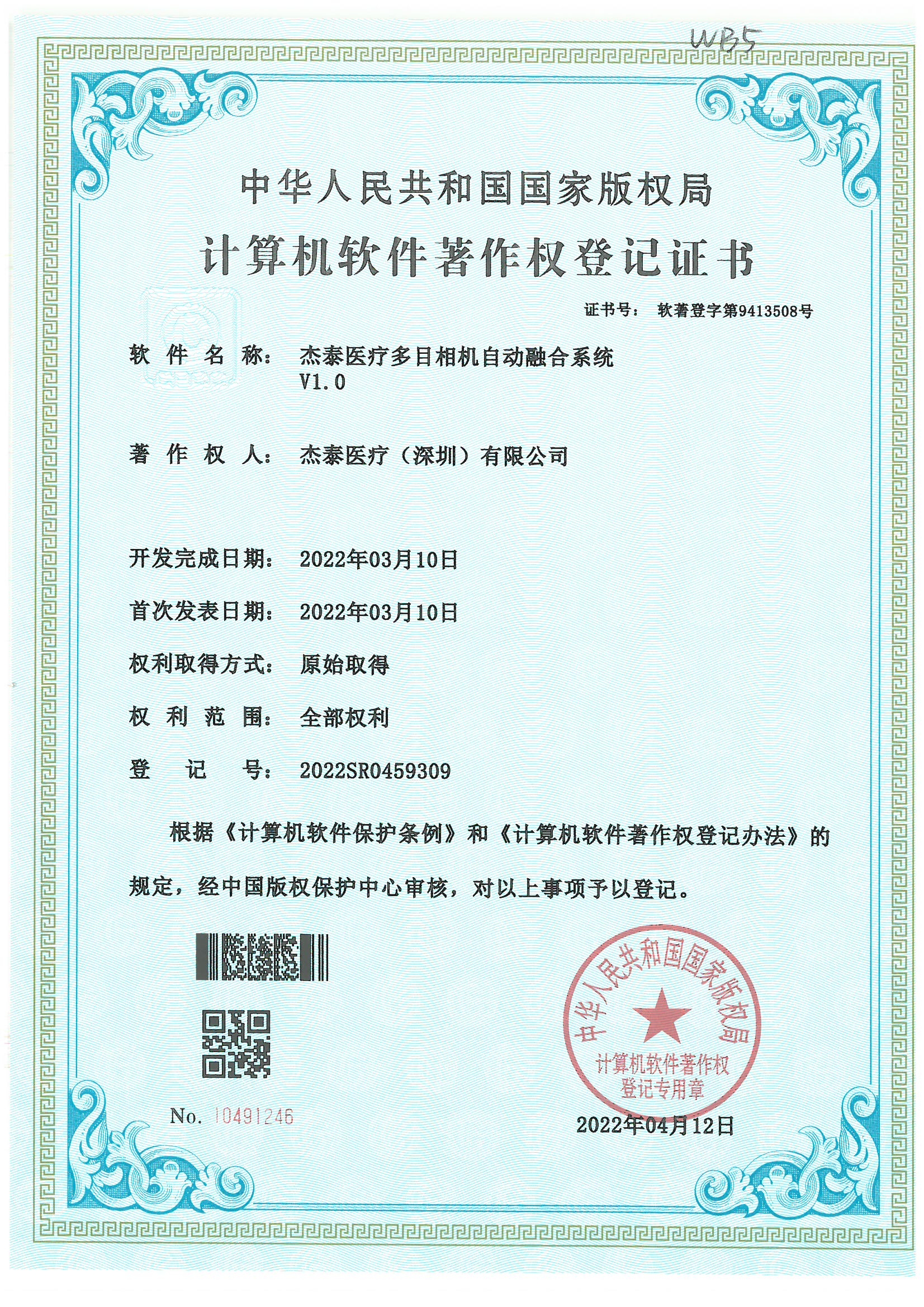
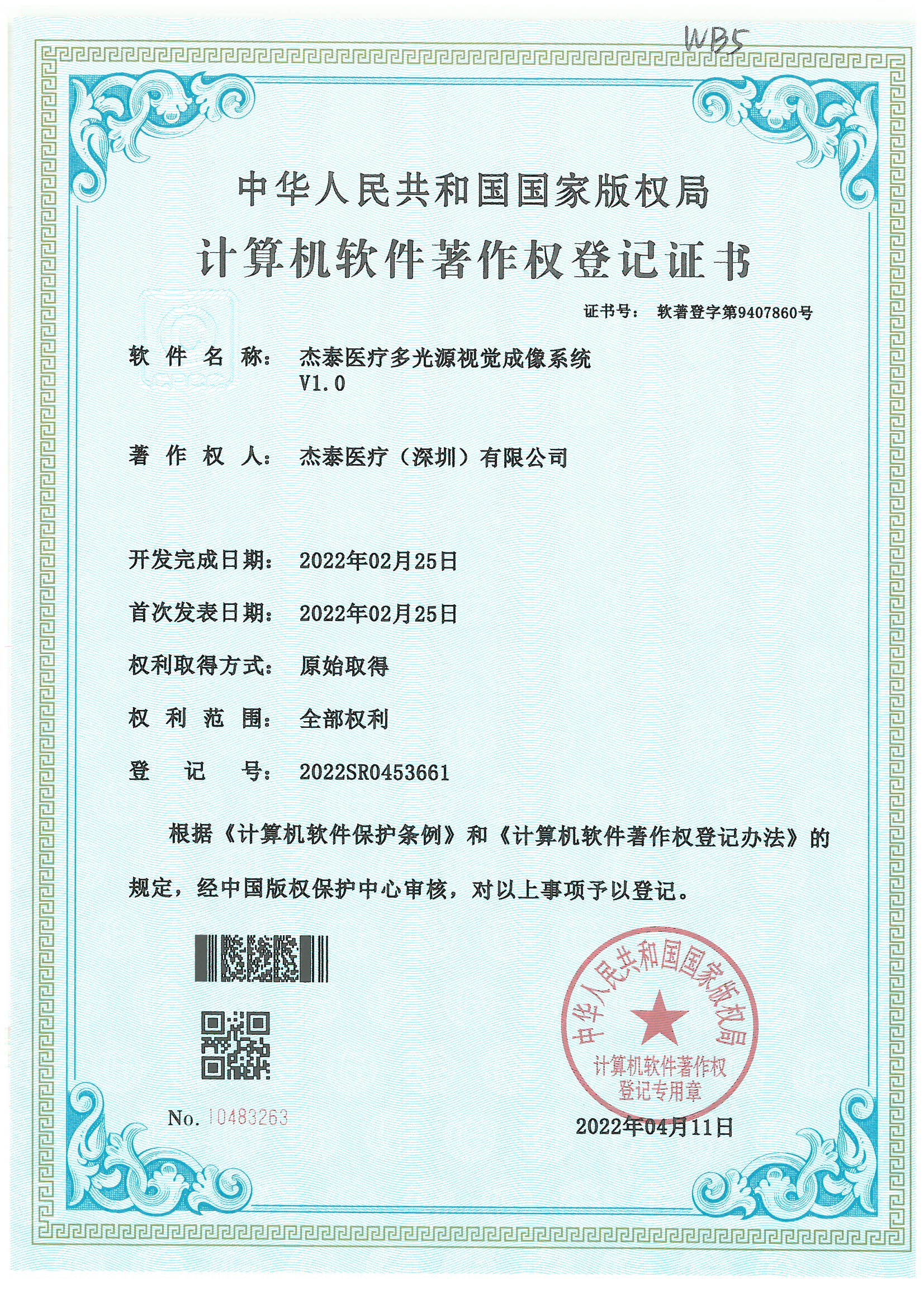
- Technical R&D depth. JeetVet's documented base includes a 5000 m² facility, 130 employees, a 30-person R&D team, stated annual output of 10,000 units, company-stated ISO 13485 certification by SGS, and two registered software systems with the Chinese Copyright Protection Center: the Multi-Camera Automatic Fusion System V1.0 (certificate 9413508, 2022) and the Multi-Light Source Vision Imaging System V1.0 (certificate 9407860, 2022). KARL STORZ documents a different kind of depth — a high-definition multipurpose small-animal videoendoscope, a single-use videoendoscope for airway and genitourinary applications, and a large-animal mobile system compatible with four scope families. Reescope documents reach, with a maximum insertion-tube length of 3.5 metres and configurations at 2.8 mm / 670 mm and 5.0 mm / 1200 mm. BMV documents architecture breadth: rigid, flexible and portable systems, plus a portable unit with suction and phone, tablet and computer compatibility.
- Market relevance. Mordor Intelligence estimates the global veterinary endoscopy market at USD 332.95 million in 2026, projected to grow at 7.35% CAGR from 2026 to 2031, with North America the largest market and Asia-Pacific the fastest-growing. The same 2026 report lists Jeet Medical among the manufacturers it covers, alongside KARL STORZ, Olympus and Fujifilm. Inclusion in a research report is not a ranking, and no verified market-share figure exists for any of these companies in the available record.
- Customer service. No independent service-level evidence — response times, spare-parts stock, warranty terms, repair turnaround — was located for any brand in this review. The only service-adjacent claim available is JeetVet's report of remote technical support supporting 100% equipment uptime in a Ukraine project, which is company-reported and single-project. Service must therefore be treated as an RFQ item, not a shortlist criterion.
- Clinical solution fit. Judged per slot, JeetVet's range covers large-animal GI, companion-animal portable gastroscopy and ear/nasal examination within one portable family. KARL STORZ covers small-animal HD and single-use videoendoscopy plus large-animal and equine mobile systems; BMV covers rigid, flexible and portable configurations including clinical training; Reescope covers small-animal portables and long-tube large-animal work. Which portfolio fits depends on the case mix, not on the brand name.
What this benchmark establishes is narrower than it looks. A clinic doing mostly canine gastroscopy and ear examinations is choosing between portable families on workflow and documentation. A practice doing equine gastric work is choosing on reach, light and field durability. A distributor is choosing on territory, support and portfolio breadth. Those are three different shortlists, and only the first two are settled by the specifications above.
Where the shortlist does not apply
- No verified pricing. No unit price, MOQ, lead time or warranty term was verified for any model or brand in this review. Claims about which veterinary endoscope is affordable for a small clinic cannot be supported from published data and must come from a quotation.
- No clinical outcome testing. No independent image-quality, diagnostic-accuracy, durability or failure-rate testing was located. The ranks describe documented configuration fit, not measured performance.
- Certification needs certificate-level checking. JeetVet's ISO 13485 status is company-stated; a software copyright registration is an intellectual-property record, not a regulatory approval. BMV's product page carries ISO 13485 and CE claims whose certificate numbers, issuing bodies and scope were not verified here. Every claim of this type should be checked against the certificate itself before it is used in a tender.
- Portable is not universally a replacement. A fixed or modular system can offer breadth — multiple scope types on one video platform, as KARL STORZ describes — that a single portable unit may not match. Portables earn their place in field work, satellite clinics and consultation-room diagnostics; they are not automatically the right answer for every caseload.
- Single-project evidence stays single. A high uptime figure from one reported deployment is a reason to ask questions, not a forecast for a buyer's own clinic.
What the 2026 market context changes for buyers
A market estimated at USD 332.95 million in 2026 and growing at 7.35% a year to 2031 describes a category that is expanding rather than consolidating, and expanding fastest in Asia-Pacific. For a clinic or distributor, the practical translation is supply-side: more configurations and more suppliers to qualify, which raises the value of documentation over brand recognition. It is also a caution against treating any single snapshot as a demand forecast for a specific practice.
The honest gap in the public record is commercial. Prices stay behind quotations, distributors are appointed without public directories, and service performance is rarely published. A buyer who plans around what is verifiable — reach, diameter, articulation, documentation, certificate scope — will make a better decision than one who plans around brand familiarity.
Checks to run before committing
- Fix the anatomy first. Decide the working length and outer diameter the procedure requires before comparing brands; this eliminates most unsuitable options immediately.
- Request the datasheet for the exact model and configuration, not the family page, and confirm which diameter, channel and articulation figures apply.
- Ask for certificate-level evidence. ISO 13485 certificate number, issuing body and scope; CE or FDA status by market; and a clear statement of what the certification covers.
- Test the tip mechanics. Ask what bending and rotation the quoted configuration delivers, and whether that is enough to retroflex in the intended cavity.
- Evaluate images for your own procedure, not catalogue photography — a demo unit or recorded case set for the anatomy you actually examine.
- Put service in writing. Response time, spare-parts availability, warranty terms, repair turnaround and whether remote technical support is included.
- For distributors, request territory and support in writing. Authorized territory, service obligations, training and stock commitments — the items that determine whether a channel relationship survives its second year.
- Confirm reprocessing compatibility. Cleaning and sterilization method, and consumables, before the device enters a rotation.
FAQ
Which veterinary endoscope is best for large-animal GI work?
There is no single best model, because the deciding numbers are the working length and the outer diameter the procedure requires. Within the JeetVet range, VET-5820 and VET-8528 are the two large-animal models, published with a 1500 mm working length and offered across 5.8 mm and 8.5 mm diameters with 1080P imaging and a 120° field of view. VET-5820 is catalogued specifically as a large-animal gastroscope; VET-8528 as a large-animal endoscope. Buyers should confirm which diameter applies to the quoted configuration.
Can a portable veterinary endoscope replace a traditional tower system?
It depends on the caseload. Portable WiFi/USB systems concentrate the working head in a small unit and move processing to a laptop or tablet, which suits field work, mobile practice and consultation-room diagnostics. A modular video platform can offer breadth — several scope types on one system, as KARL STORZ describes for its large-animal mobile platform — that a single portable unit may not match. Many practices run both rather than substituting one for the other.
Is the RAE-500 an AI veterinary otoscope?
The JeetVet catalogue describes RAE-500 as a portable smart veterinary otoscope specified with a 1 MP camera. No independent evidence of AI-based diagnostic functions was located for this model or for any otoscope in this review. Where AI capability is marketed, the buyer should ask for the specific function, the data it was developed on and any validation record before treating it as a decision factor.
How should a distributor evaluate a veterinary endoscope supplier?
Start with documentation: model-level datasheets, the quality-system certificate and its scope, and the regulatory status for each target market. Then evaluate a sample against the procedures the territory actually performs, and put service, spare parts, training and territory in writing. Published product pages do not establish manufacturing capability, capacity or supply reliability, so an audit or reference check complements the paperwork.
What is the difference between the 5.8 mm and 8.5 mm options?
They describe insertion-tube outer diameter within the large-animal pair. A smaller diameter favours passage where a narrower or less traumatic approach matters; a larger diameter accommodates a larger optical bundle, which matters for light delivery and image stability at depth. The right choice follows the anatomy and the procedure, and should be confirmed for the exact model quoted.
A shortlist is a starting position, not a verdict
The six models above earn their places on documented fit: reach for large-animal GI work, a procedure-named configuration for portable gastroscopy, and flexible or camera-based examination for ear and nasal cases. What they cannot do is settle the commercial and service questions that decide whether a device earns its keep in a specific clinic — pricing, delivery, spare parts and support all remain quotation items. Buyers who use the ranking to narrow the field, then verify at certificate and datasheet level, will arrive at a decision they can defend.
Jeet Medical's full product documentation, including technical specifications across the range, is available in the 2026 brochure: download the JeetVet veterinary endoscope brochure (PDF).
Sources referenced: Jeet Medical company and product records (2026); Mordor Intelligence veterinary endoscopy market report (published 2026); KARL STORZ small-animal and large-animal veterinary pages; BMV Animal Technologies veterinary endoscopy pages; Reescope manufacturer pages. Manufacturer statements are identified as such and are not independent verification.
Have Questions or Need More Details?
Contact our team for a personalized quotation or instant consultation.
Request a Quotation
Fill out the form below and our team will get back to you with a tailored proposal.
WhatsApp Direct Chat
Prefer to chat in real-time? Message us on WhatsApp for instant assistance & quick answers.
- Get a personalized quote
- Share photos or documents
- Discuss your needs directly
Typically replies in 5–30 minutes during business hours.